Lucia De Stefani
Photographer
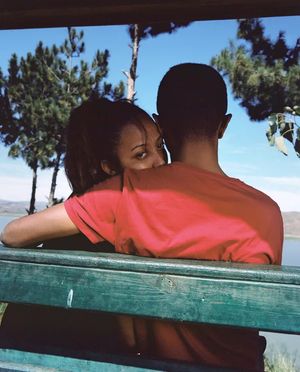
Charlotte Yonga Reimagining Youth And Belonging In Madagascar
In her series (Tsy) Possible, photographer Charlotte Yonga looks beyond stereotypes to capture the tenderness, connection, and quiet hopes of Madagascar's young generation imagining its future.

Dispatches From The Front: Sergey Melnitchenko On Ukranian Collective Memory
Disposable cameras sent to Ukrainian frontline soldiers return with letters, keepsakes, and fragments of memory, forming an intimate archive of life lived through war.

A Passport To Belonging: Keisha Scarville's Counter-Narratives On Migration
For over a decade, artist Keisha Scarville has returned to a single passport photo of her father to ask what such an image can hold, and what remains just beyond its edges.

Niharika Chauhan's River That Remembers
Chauhan returns to her ancestral village in Uttar Pradesh to document a crumbling house – and finds time itself as her subject.

The Living Ancestral Echoes Of Irene Antonia Diana Reece’s Family And Memory
Through family archives, lineage, and layered imagery, Reece turns grief, love, and remembrance into a quiet form of activism, exploring what it means to see and be seen.

Verdiana Albano: Between Two Cultures, Beyond Completion
Verdiana Albano's I Ain't From No East Coast reconstructs Afro-German history through fragmentation, family archives, and the absences official narratives leave behind.

Zekun Wang Transforming Memory And Imagination
Through field photography, rephotographed archives, and AI generated images, Wang’s vision creates a hybrid space that mirrors Shimenkan’s history of cultural collisions — a metaphorical landscape where magical realism and lived history converge.

Billy H.C. Kwok Documents A Mother's Search For Her Missing Son
Kwok’s photographs reveal the emotional moments behind and after a disappearance that the media never fully told—highlighting hope, loss, and resilience.

Amy Kim’s West Texas: Landscapes Of Labor, Symbols, And Change
Documenting a region transformed by oil, money, and technology, Amy Kim reveals the layered visual and social complexities of life in West Texas.

Witness In The Shadows: Hashem Shakeri Documents Resilience In Taliban-Era Afghanistan
Hashem Shakeri’s images trace the fragility of Afghan life after the Taliban’s return to power, revealing lives suspended between uncertainty and survival—not as a story of defeat, but of humanity staring back from the void.

Inherited Shadows: Marisol Mendez's Journey Through Masculinity And Its Haunting Legacy
Weaving together photography, archives, and letters, Padre examines the complexities of masculinity—how it is inherited, performed, questioned. Mendez’s images linger in the spaces between power and vulnerability, myth and memory, presence and absence.

Through The Border, Through Their Eyes: Lisa Elmaleh On The Humanity Of Migration
In her series Tierra Prometida/Promised Land, photographer Lisa Elmaleh exposes the deadly reality of the border wall while capturing the resilience and humanity of migrants, bringing to light personal stories too often overlooked.

Fragments Of Home: Sara De Brito Faustino Turns Personal Trauma Into Art
By reconstructing her childhood home, Faustino’s miniature world reshapes personal trauma into a visual narrative, inviting viewers to look closer and confront what lies beneath the surface.

Portraits Of Transition: Sara Abbaspour’s Poetic View On Iran
In a world sculpted by rapid social and political currents, the Iranian photographer has forged a personal path to document transformation—of spaces, people, and herself—delving into the liminal thresholds of her homeland.

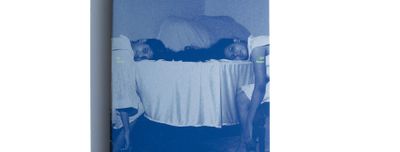
Ignacio Coló On The Timeless Bond Of Twin Lives
Through quiet fragments and tender moments, Coló tells a story of shared existence, love, and vulnerability.

Echoes In The Digital Void: Yuhang Jiang On Identity Erosion In An Age Of Endless Replication
Unnatural Collapse examines the value of self in the digital age, probing the fragility of personal identity within the online world, exploring the blurred boundaries between nature and artifice.

Máté Bartha’s Urban Echoes: Seeing Meaning Beyond The Surface
Máté Bartha explores connection, solitude, and the stories within everyday objects and landscapes. Drawing on philosophical and historical ideas, he invites us to find our own meanings, revealing the delicate interplay between reality and perception.

Khashayar Javanmardi's Journey Through The Caspian: A Visual Tale Of Beauty, Change And Connection
In his work, Caspian, Javanmardi captures the poignant transformation of the Caspian Sea, revealing how environmental change intertwines with the lives and stories of those who depend on its fading beauty.

Unveiling Humanity: Allie Tsubota’s 'Dead Letter Room' Through History And Imagination
Blending history, poetry, and photography, Tsubota explores the intersections of personal and collective memory, bridging the gap between impersonal and sterile military records and the profound depth of human experience.

Shelli Weiler On The Obsessions And Distortions Of Horror Film Sets
Through her compelling narrative, Weiler's dual role on film sets unveils both the beauty and harshness of fictional storytelling, while also reflecting on her personal journey with a constrained body.

Jaclyn Wright: Ecological And Historical Frontiers Of The American West
In High Visibility (Blaze Orange), Wright strives to deepen understanding of the intricate ecological and historical narratives of the American West, advocating for a transition to more sustainable land practices.

Marina Zabenzi: Crafting Stories Through The Lens Of Serendipity
Her photography intertwines instinct and intention to transcend realism and evoke novel emotions. Through her work, Zabenzi aims to foster a personal exploration within the intricate interplay of human life and the surrounding world.

Beyond Stereotypes: Ramona Jingru Wang's Photographic Ode To Hybridity And Individuality
Ramona Jingru Wang's project, "My friends are cyborgs, but that's okay," challenges Asian stereotypes in media, while exploring the depth of human complexity beyond societal norms.

Maria Montes Duran’s Journey Through Latino Heritage In America
As a first-generation American photographer, Montes Duran navigates her identity while reflecting on her family's immigrant experience, capturing both the struggles and joys of their culture.