Dispatches From The Front: Sergey Melnitchenko On Ukranian Collective Memory
-
Published26 May 2026
-
Author
- Topics Daily Life, War & Conflicts, Social Issues, Contemporary Issues, Documentary, Photobooks, Awards
Disposable cameras sent to Ukrainian frontline soldiers return with letters, keepsakes, and fragments of memory, forming an intimate archive of life lived through war.
Sergey Melnitchenko had already spent years documenting life in Ukraine when he began considering a different kind of approach. Since the start of Russia’s full-scale invasion in 2022, the Ukrainian photographer had volunteered extensively, traveling to frontline regions and building relationships with soldiers, some of whom were once his students, friends, or fellow photographers.
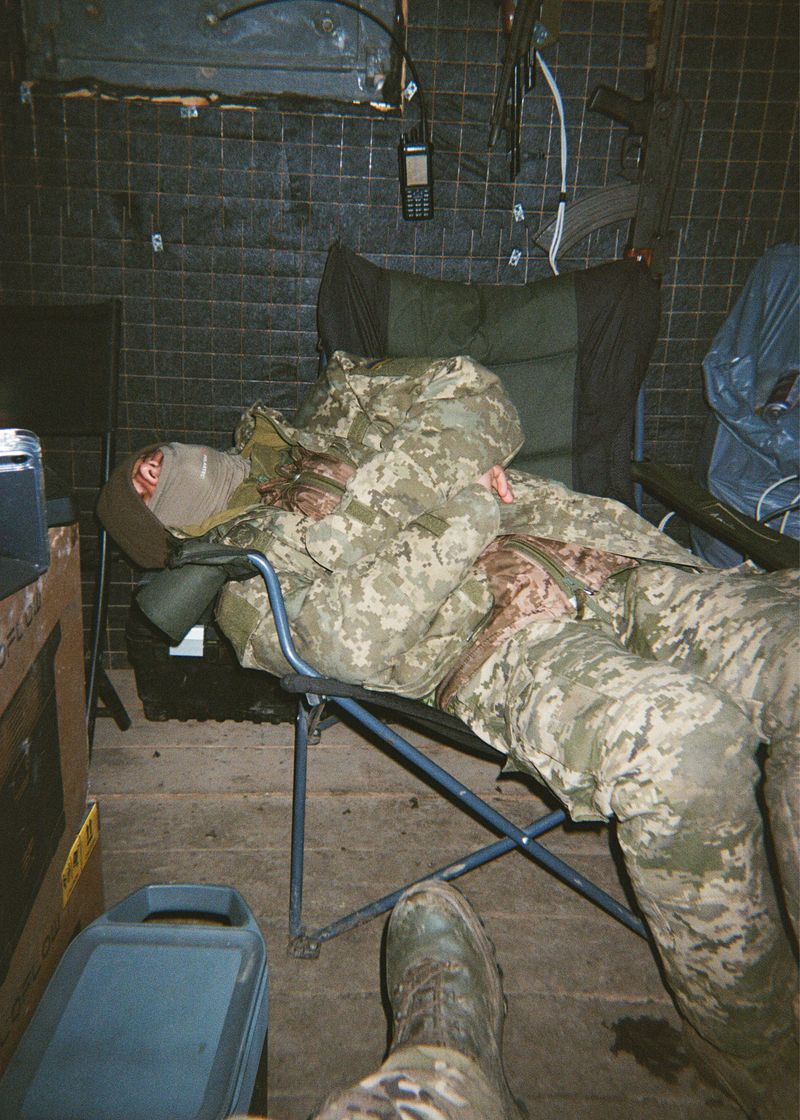
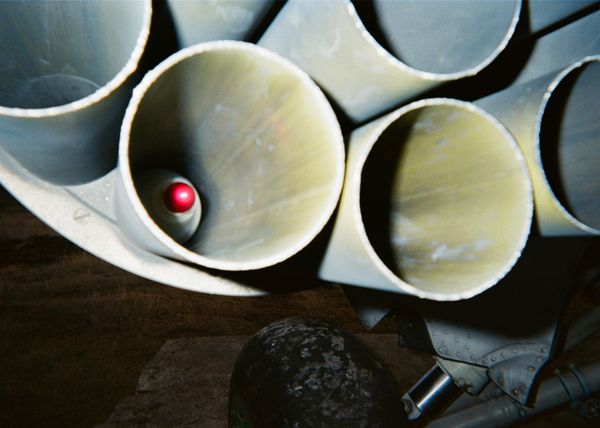
This time, he decided to move beyond his own image-making and create a collective project that would hand the camera directly to the soldiers themselves. That is how Frontline Rolls began.
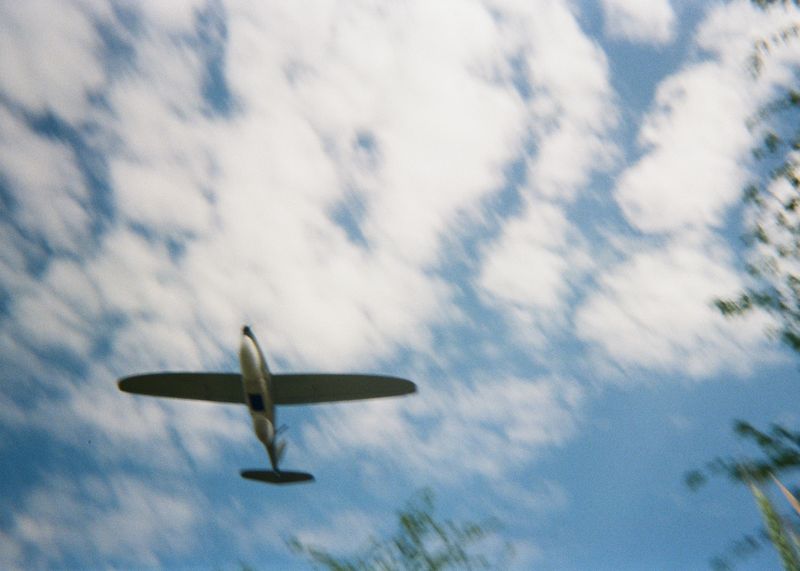
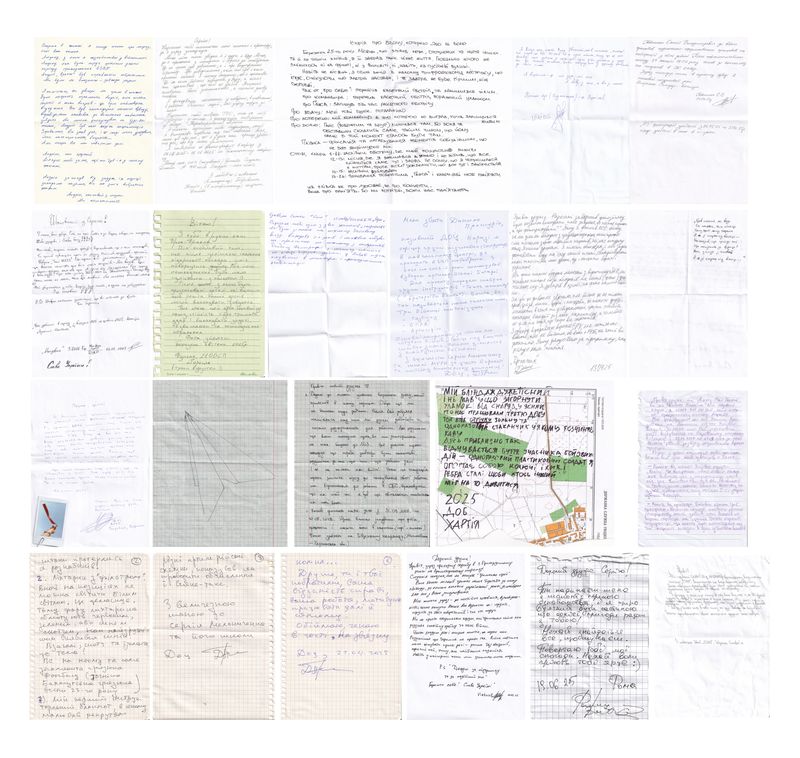
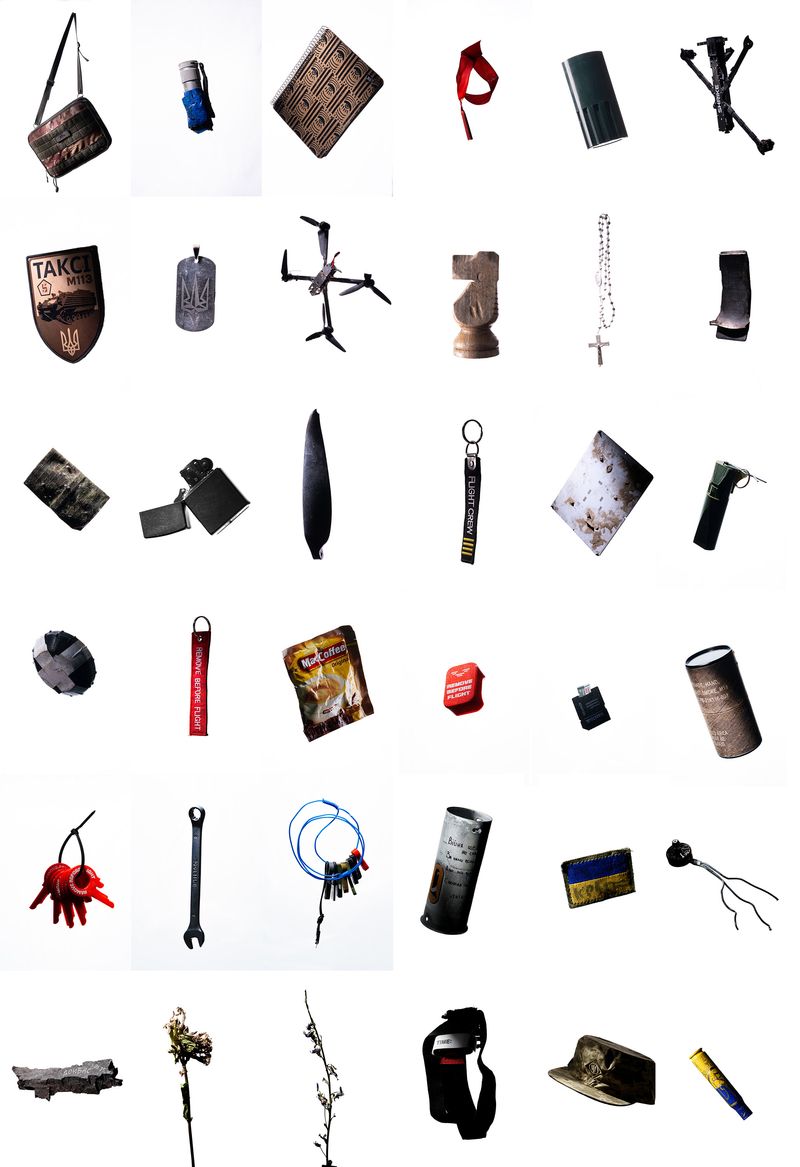
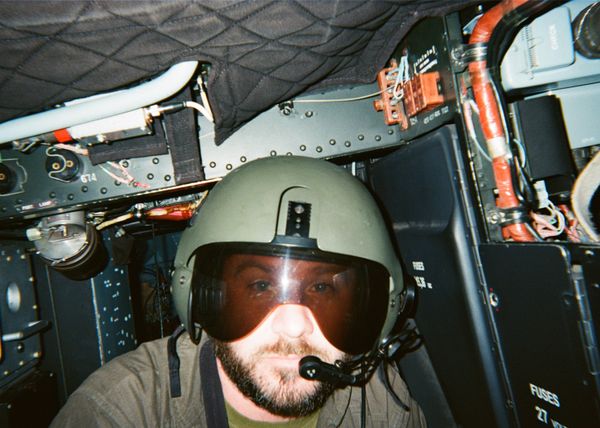
Melnitchenko partnered with the photography company Fotovramci, which supplied disposable film cameras, each loaded with 27 frames, that were mailed to soldiers at the front. In return, each soldier sent back the cameras, filled with their images, along with a personal letter and a physical artifact: a military patch, a keepsake, an object from their daily life. The letters varied wildly: Some were descriptions of the objects enclosed; others were advices, sometime poems – fragments of inner life in the midst of war.
“Sometimes you read and you have goosebumps from these letters, so powerful, so meaningful, and so thoughtful.”
Melnitchenko gave no guidelines but only asked the soldiers to be honest and open, encouraging them to photograph whatever felt meaningful to them.
“I just asked them to be mostly truthful to themselves and to me and to show the truth that they see and that they want to capture," Melnitchenko said. "We have more life in those photos rather than the fight and the death."
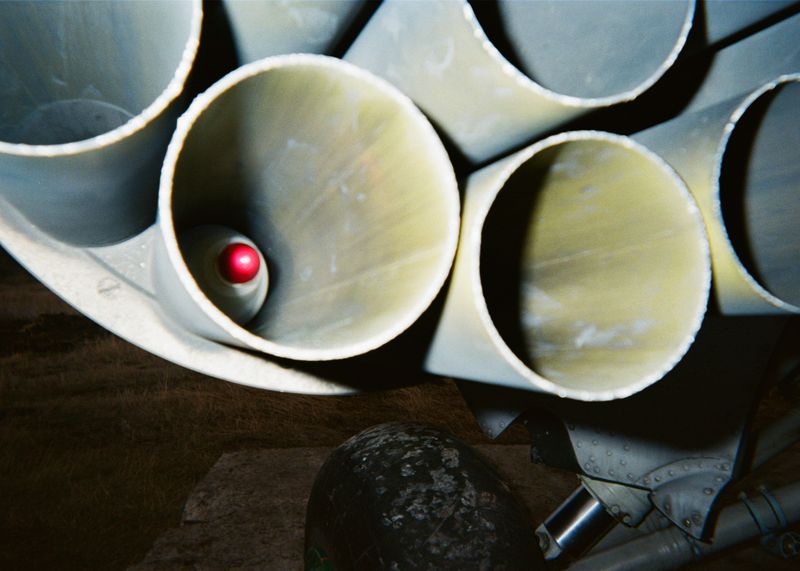
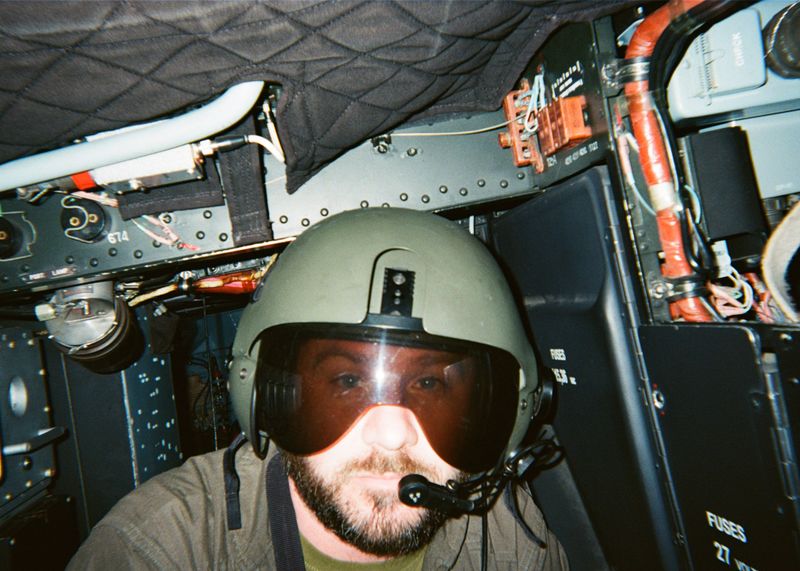
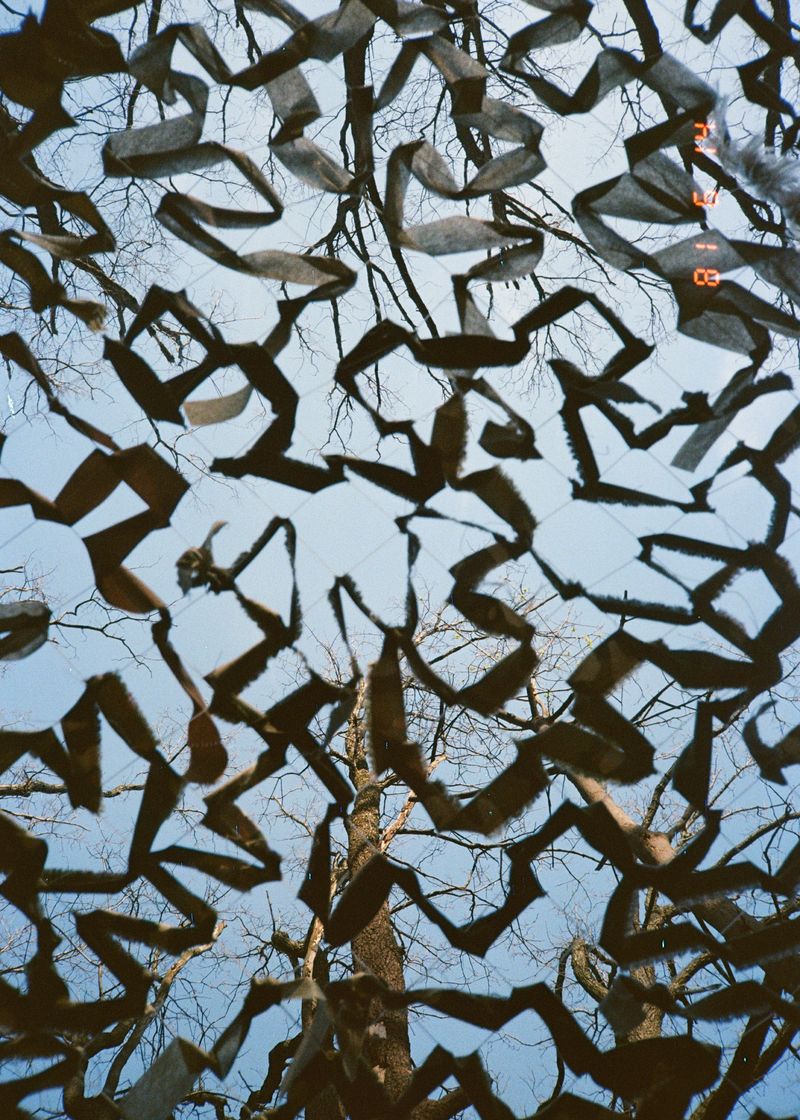
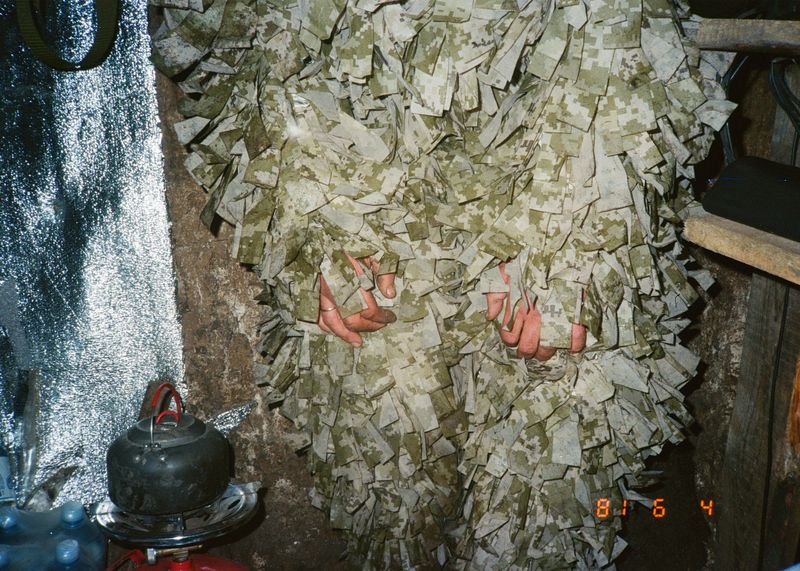
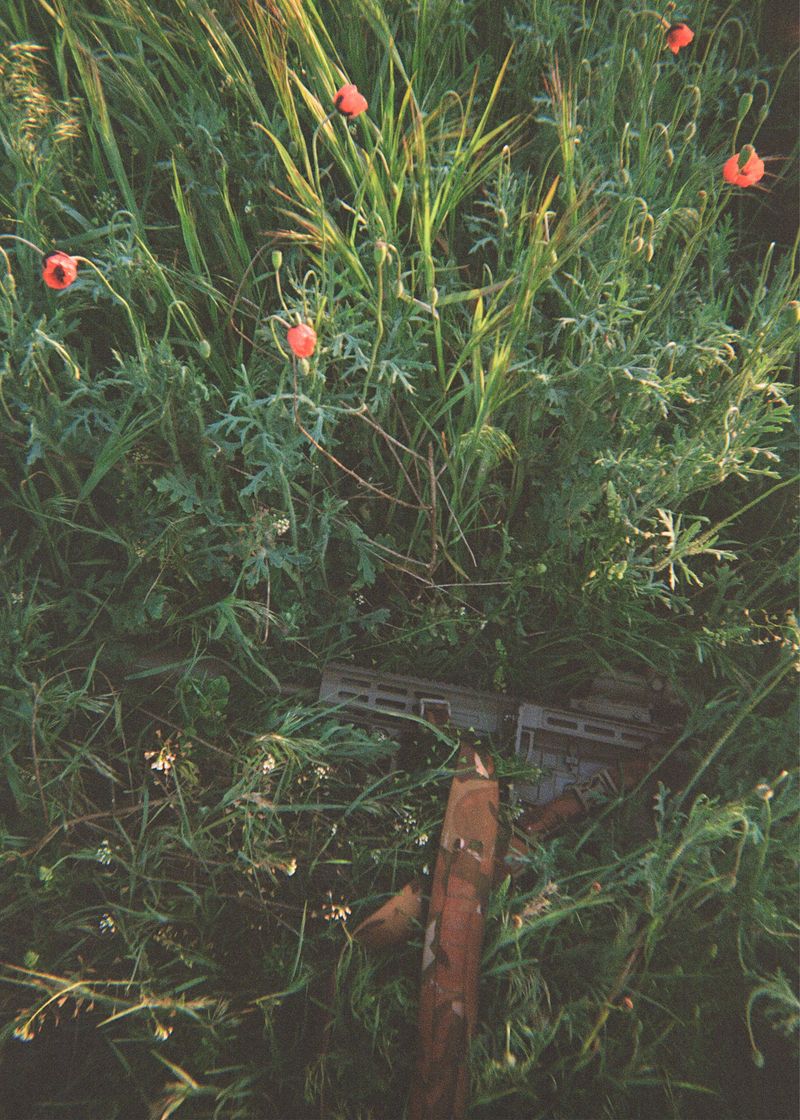
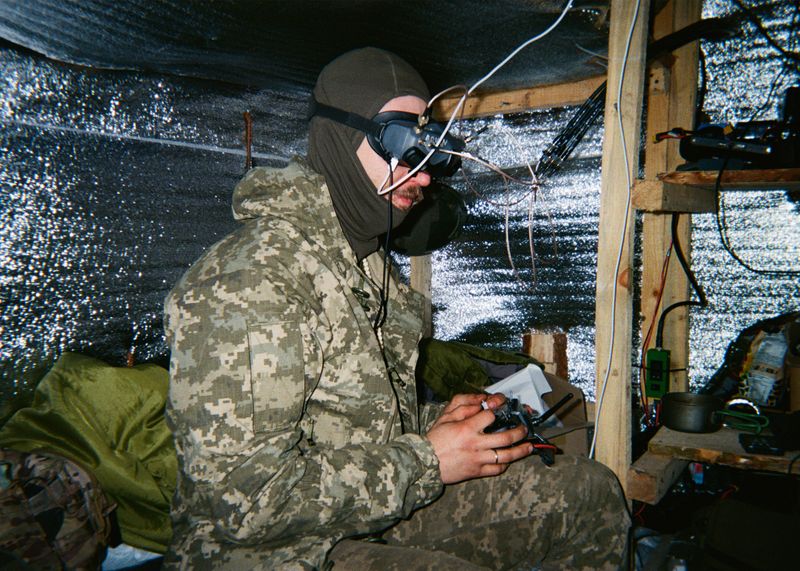
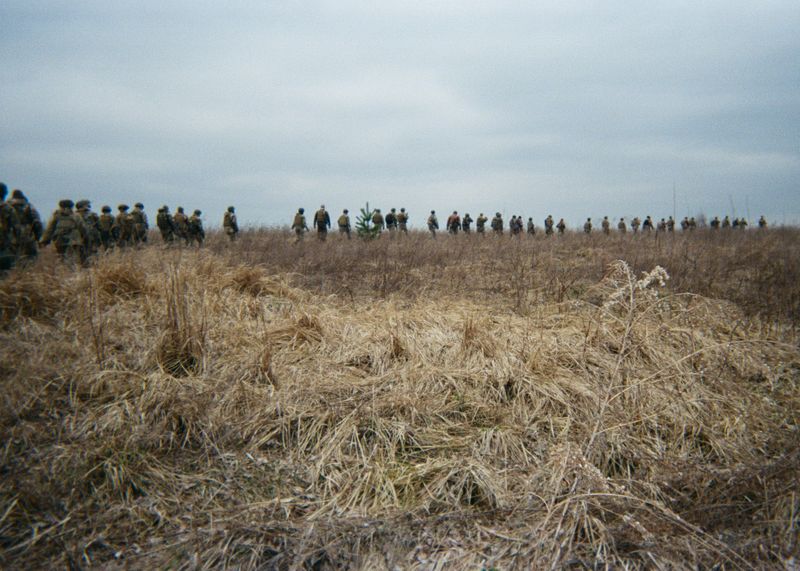
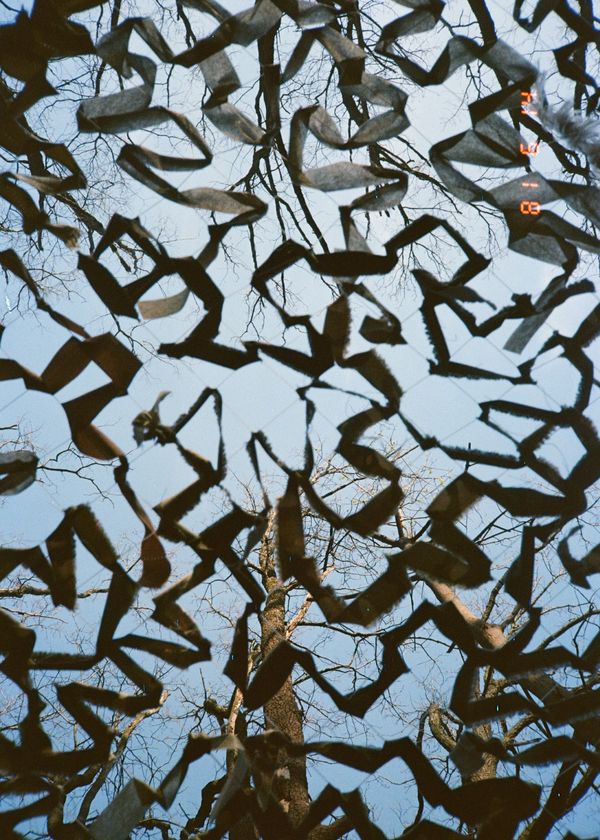
The images that arrived – each package collected at the post office carrying a suspended moment of surprise – opened onto unexpected and striking realities: Soldiers sleeping on makeshift bunk beds; stuffed animals hanging from military backpacks like good-luck charms; funeral ceremonies heavy with grief; fields crossed by thin lines of soldiers on the horizon; boots and cars covered in mud; flowers blossoming from dirt. But also smiles, embraces, a kiss, poses with friends or pets, self-portraits reflected in broken glass.
“I just asked them to make pictures of their everyday life, what they want to capture, what they see, what they want to show me, to show their audience, and I think that everyone opened their own characters through these photos.”
Some soldiers shot just some or all 27 frames within a few weeks; others held onto the cameras for months, treating each exposure as something deliberate.
What emerges is a deep sense of war as seen directly from the frontline – not only in the act of facing the enemy, but in what it means to live inside war every day, to be shaped by it, to fight for freedom, for one’s country, for life itself. What we see leaves us speechless as it reveals the existence that persists behind cruel, shifting lines: moments stretching into days, weeks, months; people we have never known or seen, yet whose lives at the front unwillingly fill the pages of the news, reduced to reports of bombardments, military advances, new ammunition, international negotiations.
(During the interview for this article, Melnitchenko paused mid-sentence as a loud noise interrupted the conversation, perhaps another warning from the sky: "I think we have some kind of attack right now," he said. "Okay, okay, maybe it's not… We had a massive attack today on Ukraine… and I think that we will have the missiles very, very soon or at night.")
The making of Frontline Rolls began to take shape in the autumn of 2025, when Melnitchenko started working on the book: the soldiers’ photographs printed, their objects—a chess piece, a lighter, a rosary – to be photographed against white backgrounds, their letters scanned and translated.
Taken together, the photographs form a complex portrait of what the theater of war truly is: its unspeakable tragedy, but also all the life that continues to move around it – unyielding and unending despite the devastation. The project reveals the persistence of human life in places where war attempts to extinguish it. The images in Frontline Rolls often lack the dramatic violence commonly associated with war coverage. Instead, they focus on moments of everyday existence: resting with friends, sharing a kiss, simply waiting. For Melnitchenko, that difference is central to the project’s meaning.
“I wanted to have an inner angle of the view of the war from the direct point of view, from the first person... to show the audience how it looks like,” he said.
The project also resists the familiar imagery through which war is usually understood and consumed, and that distinction resonated with audiences. It’s often said that viewers can grow desensitized to images of destruction and death in news coverage of conflicts, but here we witness not an evasion of truth but another, deeper dimension of it.
"They want to show us the life, because they want to continue that life," Melnitchenko said of the soldiers.
That distinction matters for the audience too. At the exhibit in Copenhagen, visitors who had been following the war in Ukraine through daily news coverage, were captivated by the photographs. They lingered. They read the letters. They were grateful to witness Ukrainian soldiers not as distant figures within a geopolitical conflict, but as people still carrying ordinary rituals through the instability of war.
The project has since evolved into both a book and a traveling exhibition shown in Ukraine and Copenhagen, as well as in the United States. As the archive expands, Melnitchenko sees himself as a curator of this collective memory, a role that carries emotional weight and some responsibility. The artifacts and letters entrusted to him are deeply personal, created by people living with constant uncertainty. Melnitchenko sees the project as an act of preservation – not of conflict, but of the humanity still living within it.
Together, the soldiers’ photographs become evidence of daily life persisting amid war: moments of humor, tenderness, exhaustion, and hope captured by the people living through it themselves.
Frontline Rolls was awarded the Main Prize at the 2026 PhMuseum Photography Grant.
-------------
All photos © Sergey Melnychenko, from the series Frontline Rolls
--------------
Sergey Melnychenko is a Ukrainian visual artist whose work bridges conceptual, staged, and documentary photography. He began working in photography in 2009 and became the first Ukrainian photographer to win the prestigious Leica Oskar Barnack Newcomer Award in 2017.
Lucia De Stefani is a writer and editor focusing on photography, illustration, and everything teens. She lives between New York and Italy. Find her on Instagram.