Yo Quería Ir Contigo (“I Wanted to Go with You”)
-
Dates2025 - 2025
-
Author
- Locations Middletown, Worcester
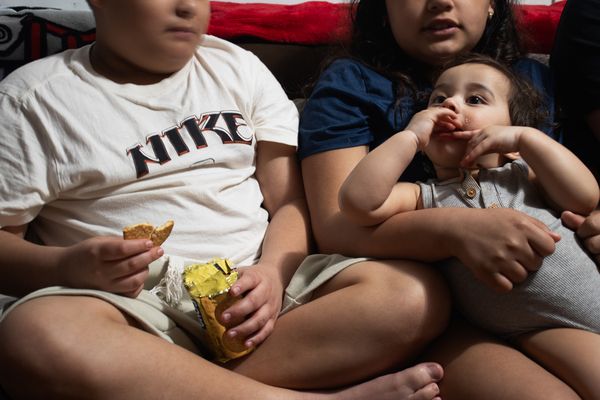
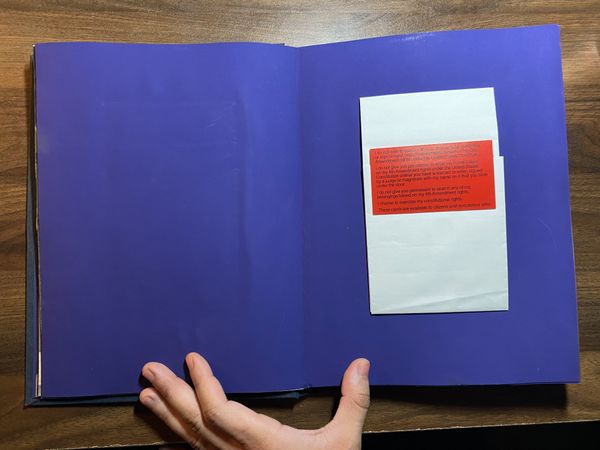
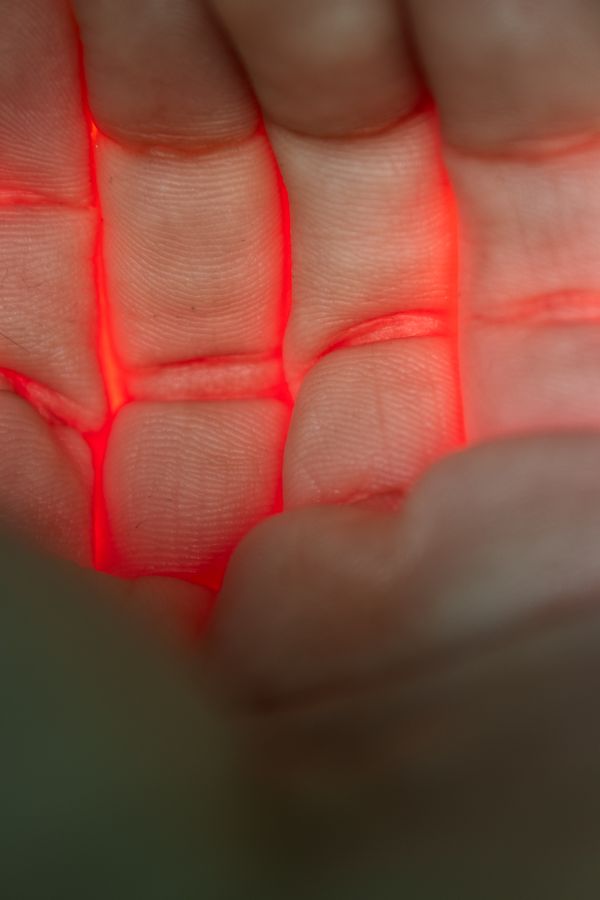
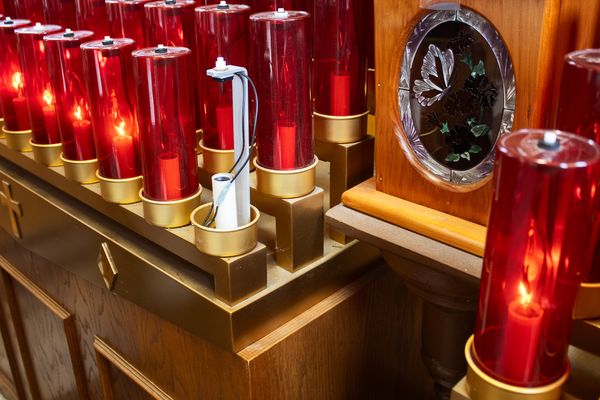
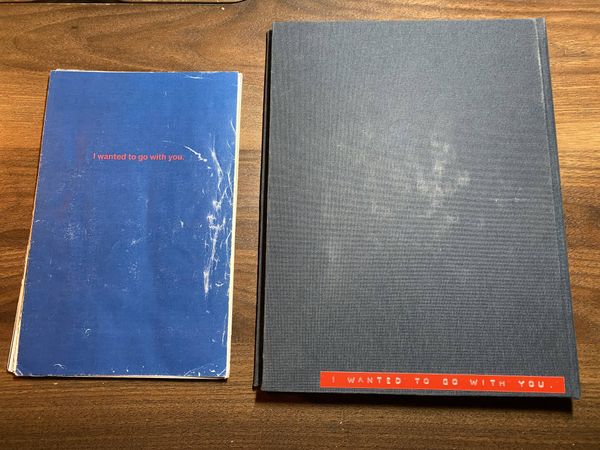
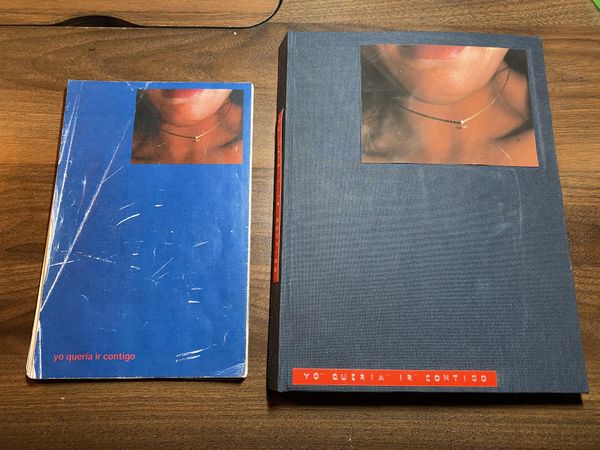
Yo Quería Ir Contigo is a photo book I workshopped and finalized during my last semester in college, exploring the grief created by inhumane immigration policy. Images of the physical book are included where appropriate.
Like a lot of my other photo and writing projects,Yo Querìa Ir Contigo operates as autofiction, entertaining the worst fears shared by my family with the places we know best as a backdrop. Even though my hometown Worcester, MA is considered a sanctuary city, that fact cannot quell the very real anxieties my family and countless others feel for simply engaging in public life. Being an immigrant in America is a form of social death, a state with limited mobility, visibility, sociality, and agency; the lack of mainstream discourse around this "social death" only compounds the isolation of the experience. I've only seen the immigrant experience depicted with such interiority in the work of international students at my university and the work of Julio Torres. Otherwise, despite my lifelong love and engagement with visual media, I've always sensed a gap in representation; I can only recognize and label this feeling as an ache that only occasionally—and productively—converts to urgency.
I needed this photo book to communicate the degree of interpersonal, unconditional care innate to families and communities like mine—as well as the irreversible grief and helplessness caused by the unnecessary loss of that family. My family is already spread out on account of legal and fiscal circumstance; I remember how young I am every time a new immigration story is relayed like a rite of passage. I've either heard enough to believe I've heard them all or only have so much aging left to hear the rest.
Yo Quería Ir Contigo is my story to relay.
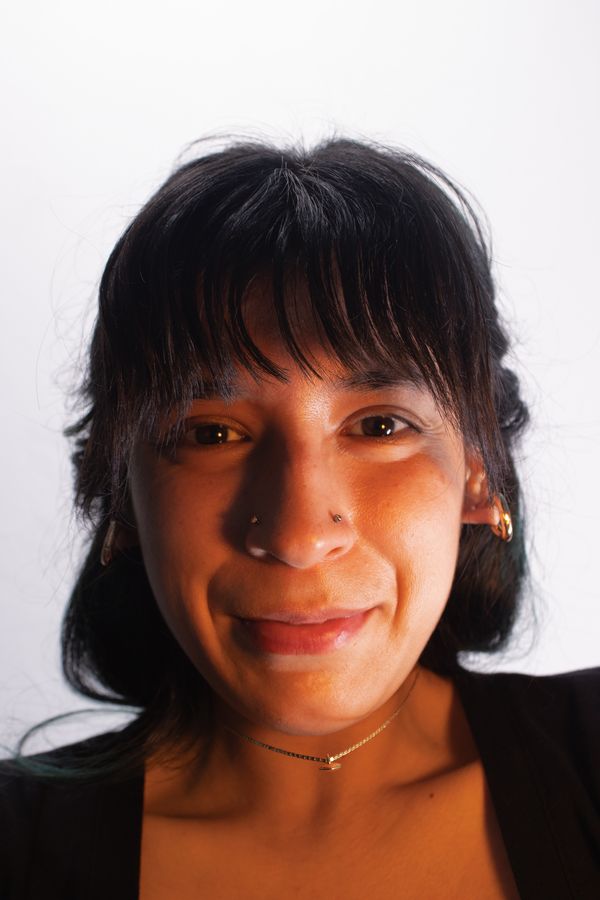
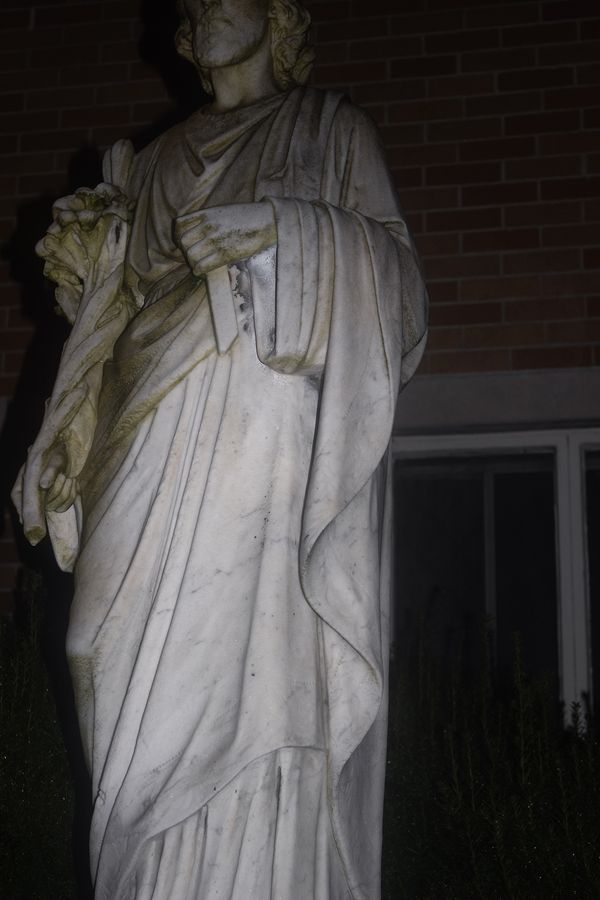
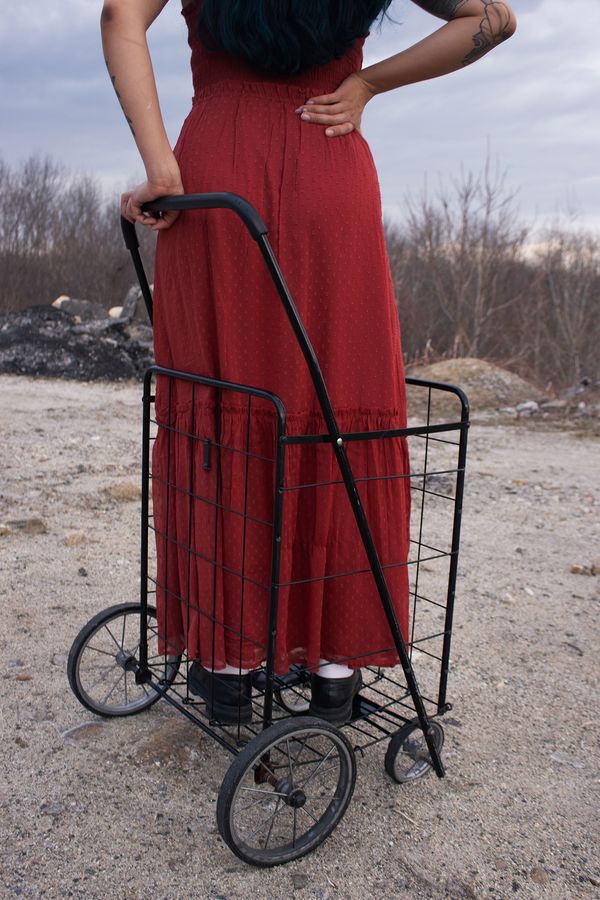
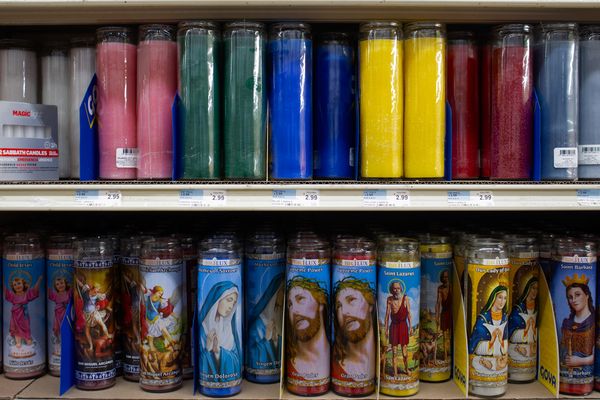
With the borders on "Icon in a Cart" and "Saint," I wanted to draw a parallel between the two as iconography, specifically how a monument may appear on a postcard. There was something about aligning a young Latina with a statue typical of most Catholic churches and producing iconography around her that felt weighty; her body language reads as self-assured while her surroundings offer her nowhere to go.
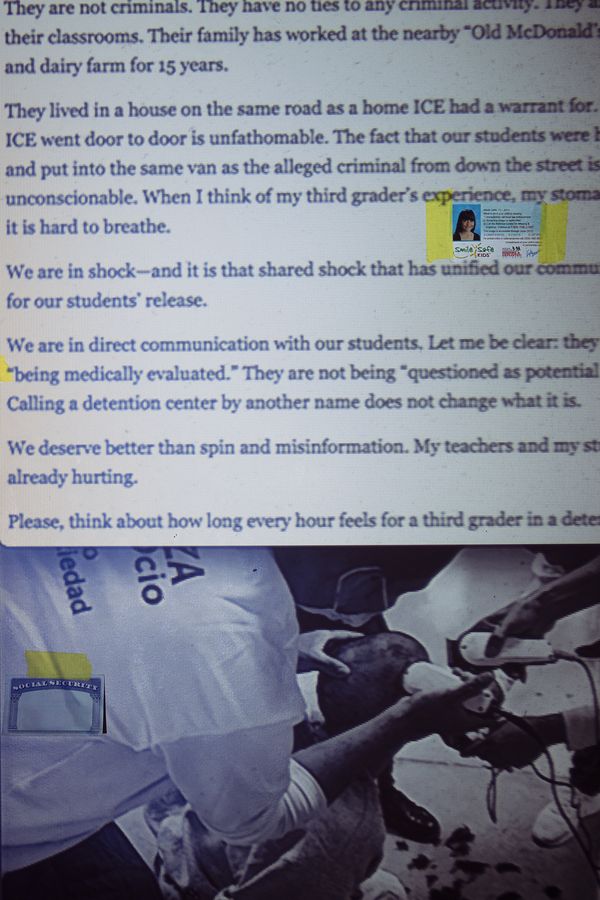
With the image "IDs," I knew it couldn't be printed in the book under the same conditions as the other images; there had to be an interactive element to the image—and the damning letter written by Sackets Harbor principal Jaime Cook—which recreated the privilege of engaging with such information voluntarily.