The nail that sticks out gets hammered down
Japan blends ancient tradition and modern technology, valuing harmony and conformity. Beneath its refined aesthetics lie trauma, social pressure and isolation. From atomic bombings to overwork, suicide and disappearances, tensions still shape society.

Japan is a country that combines ancient tradition and technological innovation, with a culture deeply rooted in respect, harmony and discipline. Society is organised according to strict hierarchies and collectivist values, where conformity is privileged over individualism. It is known for its extraordinary aesthetics, from Zen minimalism to attention to detail in every aspect of daily life. However, beneath this harmonious surface, deep contradictions coexist: between progress and isolation, affluence and social pressure. These tensions are reflected in the country's art, demography and social phenomena.

Among the deepest wounds of its recent history are those left by the two atomic bombs that devastated Hiroshima and Nagasaki in 1945. Two traumatic events that indelibly marked the population of the time and seared into Japan's collective memory.

In the decades that followed, Japan rebounded with dizzying economic and technological growth, establishing itself as a world power. An extraordinary achievement, made possible also thanks to an extreme work culture. More than 25 per cent of workers work over 50 hours of overtime a week and almost half of these go over 60. But this model of efficiency has a high human cost.

Since the post-war period, the country has recorded some of the highest suicide rates among industrialised nations. In the 1990s and 2000s, the number of deaths exceeded 30,000 per year. 

Suicide is still the leading cause of death among men between the ages of 20 and 44, and among women between 15 and 29. Added to this is a disturbing phenomenon: every year, some 80,000 people disappear voluntarily, in a phenomenon known as johatsu (evaporation). An escape from personal failure, debt, or the unbearable burden of social expectations..

These figures highlight the rigidity of a system well summarised by the proverb: “The nail that sticks out must be hammered in”. An oppressive social pressure that can drive the individual to extreme gestures: suicide, disappearance or, tragically, death by overwork (karoshi).

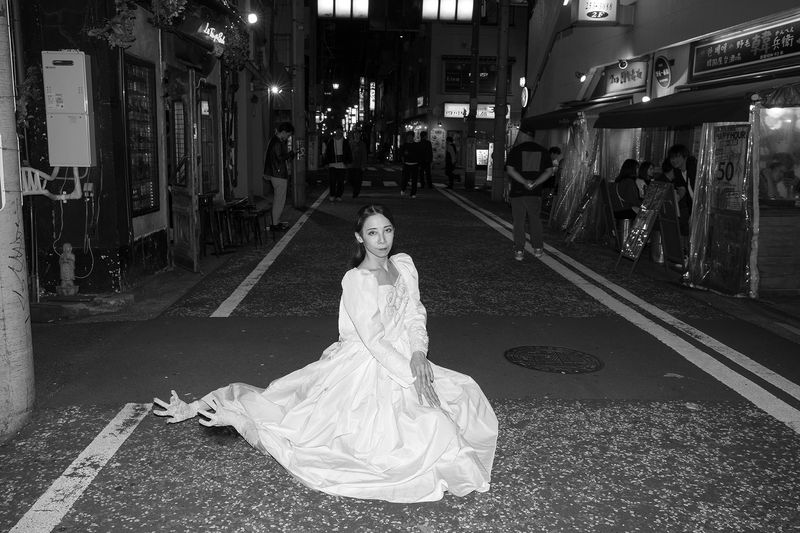
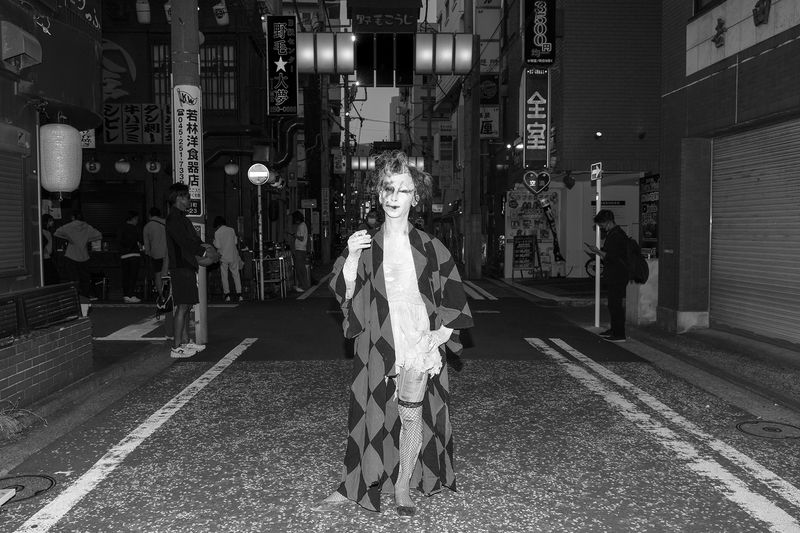
In the face of this often silent suffering, powerful forms of aesthetic and spiritual rebellion have emerged. Prominent among these is Butoh dance, which originated in the late 1950s thanks to choreographer Tatsumi Hijikata and dancer Kazuo Ohno.  It was a radical break with Western dance traditions and with post-war Japanese culture itself. Also called the “dance of darkness”, Butoh mixes grotesque movements, stillness and distorted gestures to explore the depths of human emotions and physical existence.

Its aesthetic is deliberately bare: shaved heads, bodies painted white, slow or convulsive movements and expressions that oscillate between agony, ecstasy and decadence. Butoh often deals with taboo subjects - suffering, sexuality, death, metamorphosis and deformation - pushing the boundaries of what can be expressed through the body. It is a profound, physical response to atomic trauma, social repression and the alienation of the modern individual.

© Filippo Venturi - Image from the The nail that sticks out gets hammered down photography project
i

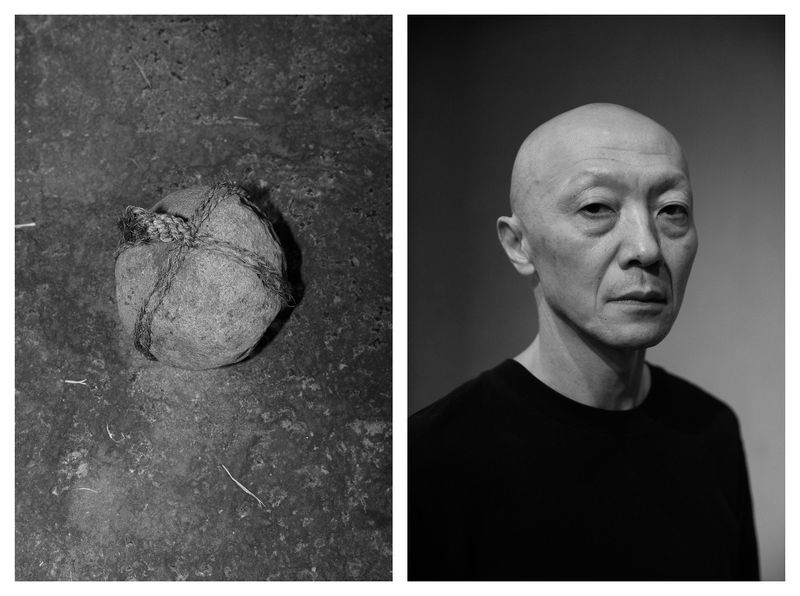
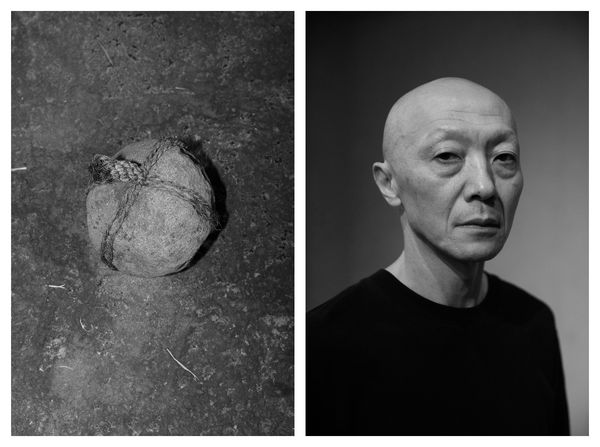
On the left, a stone wrapped with string tied in a central knot, traditionally used to discreetly mark forbidden access at the entrance of paths and passages. Isuien Garden, Nara. On the right, the Butoh dancer Temmetsu. He began studying Butoh in 1993 at Asbestos-kan, the school founded by renowned choreographer Tatsumi Hijikata, a pioneer of this dance form. Tokyo, Japan.

© Filippo Venturi - Image from the The nail that sticks out gets hammered down photography project
i

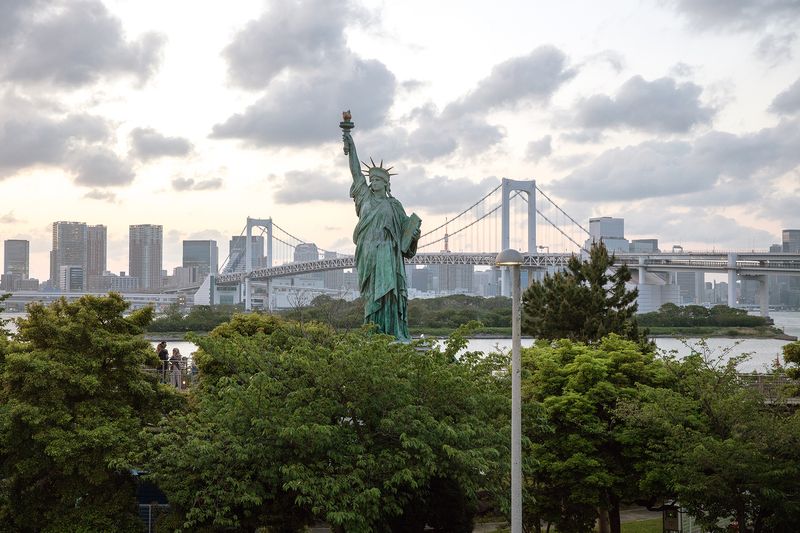
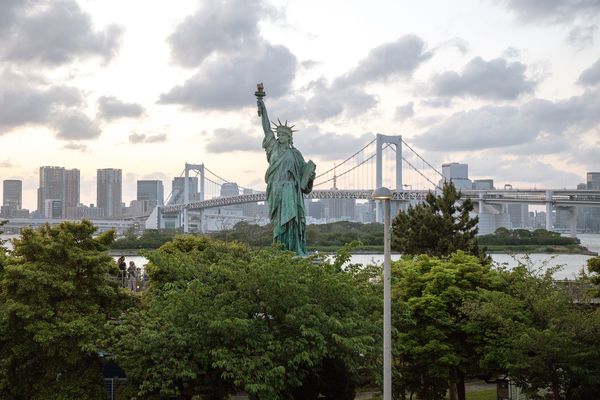
Replica of the Statue of Liberty (a symbol of the United States of America) in the Odaiba district, an artificial island in Tokyo Bay.In the background, the Rainbow Bridge. The replica was initially installed temporarily in 1998 to celebrate Franco-Japanese friendship.Later, due to its popularity, it was replaced with a permanent version in 2000. Tokyo, Japan.

© Filippo Venturi - Image from the The nail that sticks out gets hammered down photography project
i

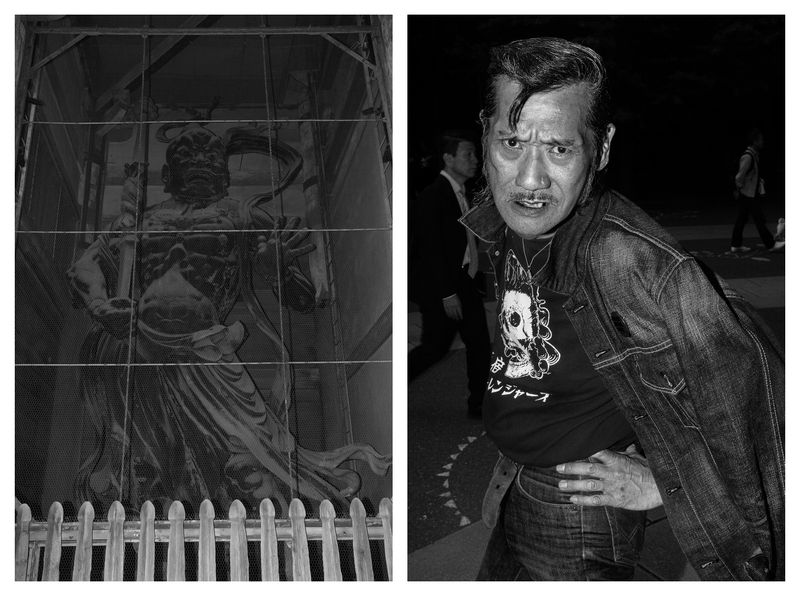
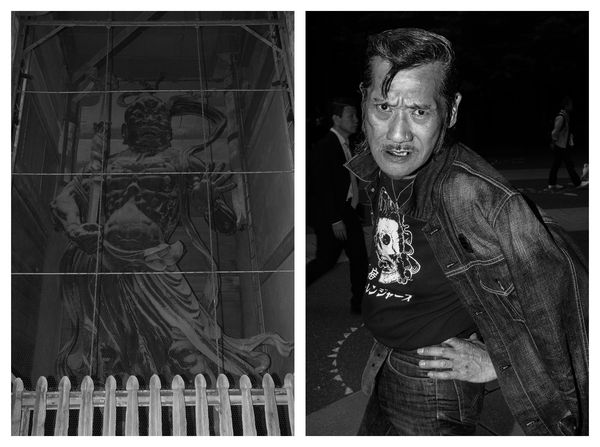
On the left, a monumental statue of a Niō. With a fierce expression and a body carved from wood, this guardian protects the temple from evil spirits and symbolizes the strength of the Dharma. Tōdai-ji Buddhist Temple, Nara. On the right, a rockabilly dancer at Yoyogi Park in Tokyo, where groups inspired by American culture perform near the Harajuku entrance.

© Filippo Venturi - Image from the The nail that sticks out gets hammered down photography project
i

Visitors at Expo 2025, this year's World Expo held in Osaka on the artificial island of Yumeshima, from April 13 to October 13, 2025.The theme of this edition is “Designing Future Society for Our Lives”. Osaka, Japan.

© Filippo Venturi - Image from the The nail that sticks out gets hammered down photography project
i

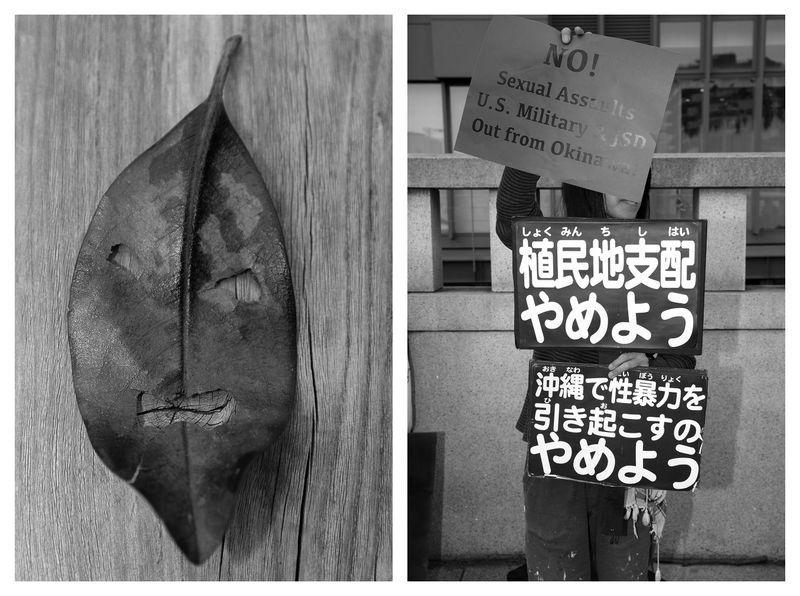
On the left, a leaf whose shape resembles a face, found in Isuien Garden, Nara. On the right, a protester peacefully demonstrates against the U.S. military presence in Okinawa near the Meiji-jingumae “Harajuku” station in Tokyo, highlighting a long-standing and often overlooked issue related to crimes committed by U.S. military personnel in Japan.

© Filippo Venturi - Image from the The nail that sticks out gets hammered down photography project
i

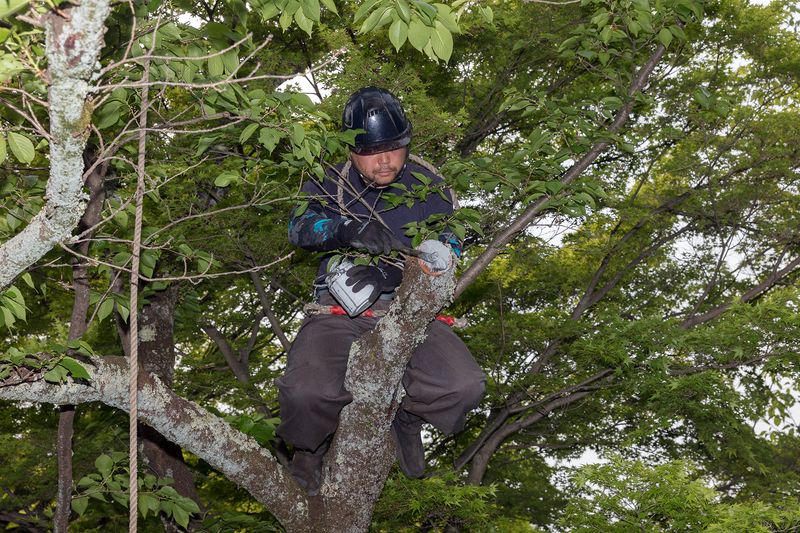
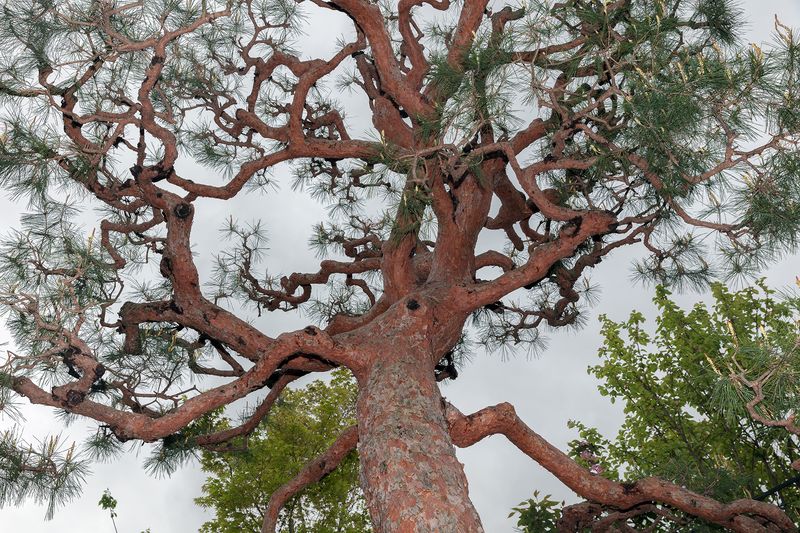
A Japanese gardener (niwashi) pruning a tree. Pruning is not only functional, but aims to guide the tree’s growth according to principles of balance, harmony, and controlled natural beauty. Kiyomizu-dera Temple, Kyoto, Japan.

© Filippo Venturi - Image from the The nail that sticks out gets hammered down photography project
i

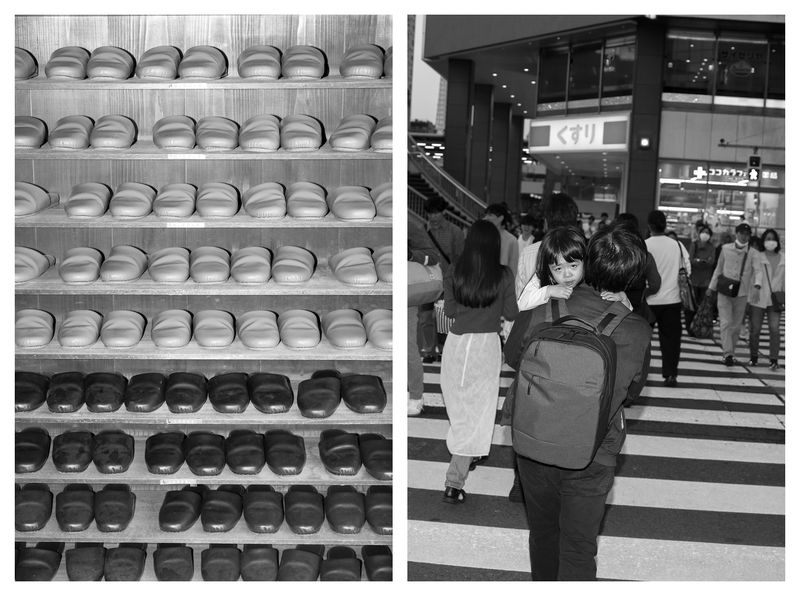
On the left, Japanese indoor slippers (surippa), used in public places where shoes must be removed, such as historic buildings. Isuien Garden, Nara. On the right, a young girl is accompanied while crossing an intersection in Tokyo.

© Filippo Venturi - Yellow spike plates installed along the railway tracks to prevent pedestrian access. Arashiyama Bamboo Grove, Kyoto, Japan.
i

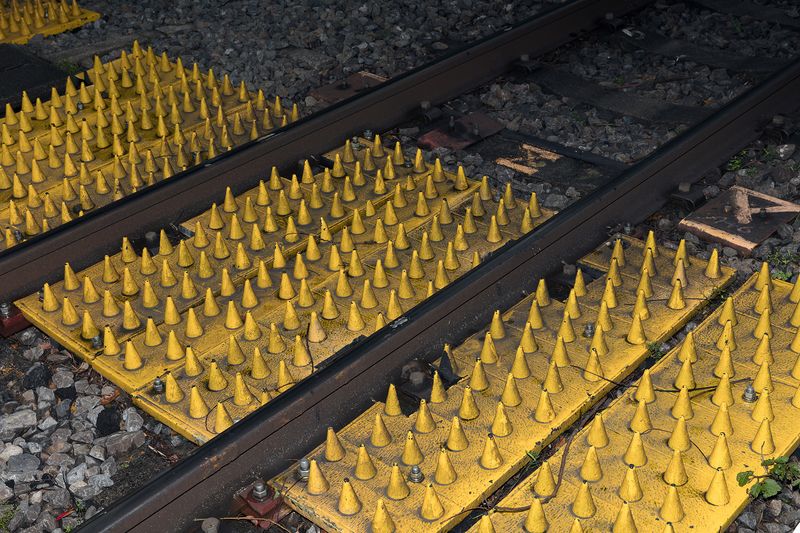
Yellow spike plates installed along the railway tracks to prevent pedestrian access. Arashiyama Bamboo Grove, Kyoto, Japan.

© Filippo Venturi - Image from the The nail that sticks out gets hammered down photography project
i

Butoh dancers Kohei Wakaba and Mana Kawamura are pictured on the streets of Yokohama wearing costumes from their performance Those Who Ain’t Damn Nobody, a work exploring the inseparability of opposing forces such as beauty and ugliness, sanctity and wickedness.

© Filippo Venturi - Dog sitter in the Shibuya district. Tokyo, Japan.
i

Dog sitter in the Shibuya district. Tokyo, Japan.

© Filippo Venturi - Image from the The nail that sticks out gets hammered down photography project
i

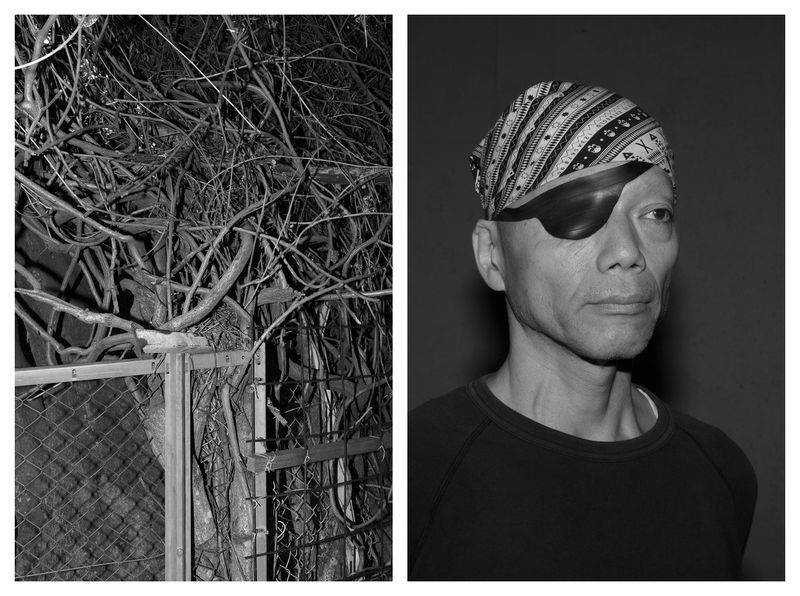
On the left, a detail of a railing intertwined with a tree trunk in Nara. On the right, Butoh dancer Kim Itoh from the group Wakaba Coffee, a Butoh collective founded in 2023 and led by dancers Kohei Wakaba and Mana Kawamura, composed of five members.

© Filippo Venturi - Image from the The nail that sticks out gets hammered down photography project
i

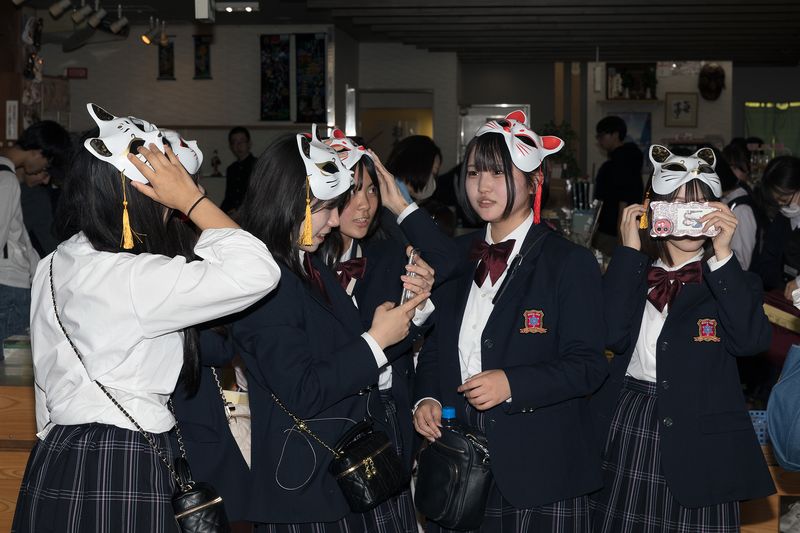
Japanese schoolgirls in uniform try on and wear fox masks, known as kitsune masks, inside a shop. These masks represent the fox spirits of Japanese folklore—magical creatures capable of taking human form and often associated with the Shinto deity Inari. In this context, the mask evokes themes of metamorphosis, disguise, and the delicate boundary between the human world and the supernatural.

© Filippo Venturi - Image from the The nail that sticks out gets hammered down photography project
i

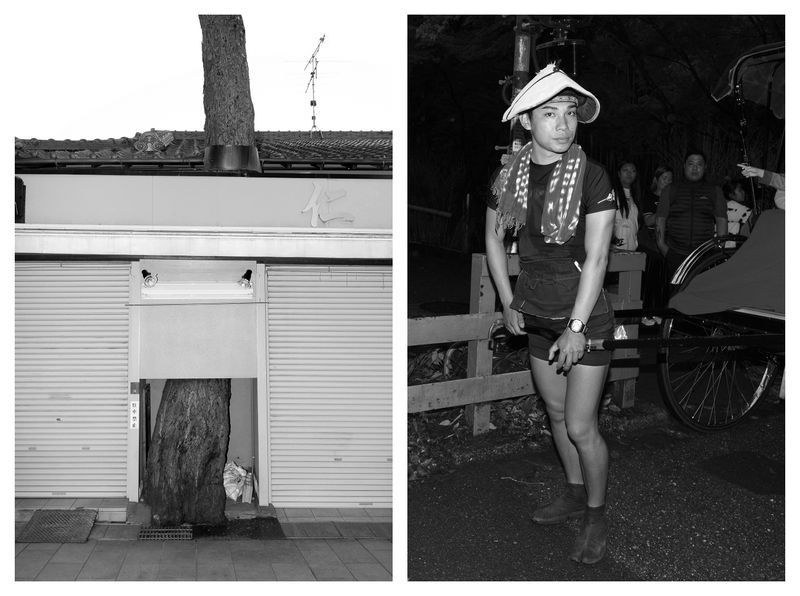
On the left, a tree incorporated into a building that houses several closed souvenir shops near the Tōdai-ji Buddhist Temple in Nara. On the right, a Japanese rickshaw puller (rikisha man) stands beside his traditional rickshaw at the Arashiyama Bamboo Grove, Kyoto.

© Filippo Venturi - Kyoto, Japan.
i

Kyoto, Japan.

© Filippo Venturi - Image from the The nail that sticks out gets hammered down photography project
i

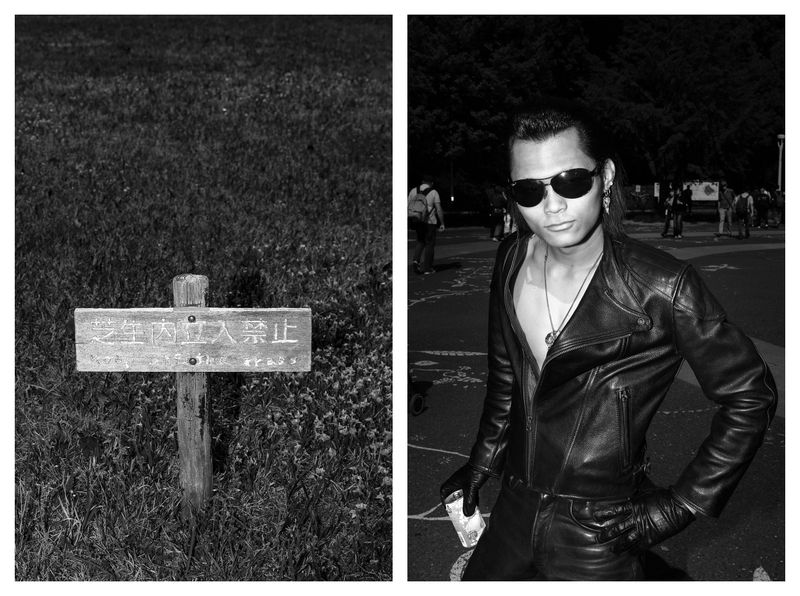
On the left, a sign displaying the notice “Keep off the grass.” Isuien Garden, Nara. On the right, a rockabilly dancer at Yoyogi Park, where every Sunday Japanese enthusiasts of American culture gather to perform near the Harajuku entrance in Tokyo.

© Filippo Venturi - Image from the The nail that sticks out gets hammered down photography project
i

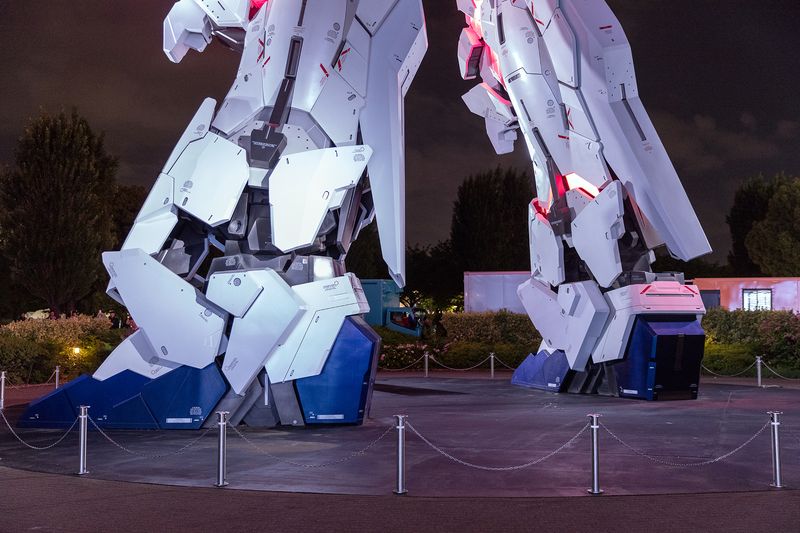
Detail of the life-sized Gundam statue — a Japanese franchise launched in 1979 spanning anime, manga, video games, and model kits, centered on giant robots called "Mobile Suits," often set in sci-fi war conflicts — displayed in the Odaiba district. Tokyo, Japan.

© Filippo Venturi - Image from the The nail that sticks out gets hammered down photography project
i

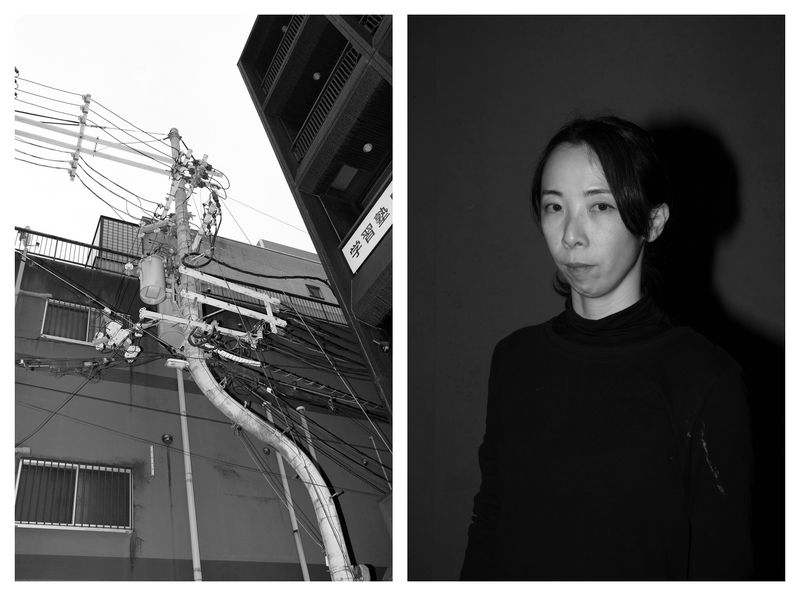
On the left, a utility pole wrapped in a dense web of cables. The decision not to bury power lines—due to frequent earthquakes, rapid urbanization, ease of maintenance, and other factors—has shaped this widely recognizable urban aesthetic. Kyoto. On the right, Butoh dancer Mana Kawamura, founder of Wakaba Coffee, a Butoh collective established in 2023.

© Filippo Venturi - Nighttime top view of Tokyo. Japan.
i

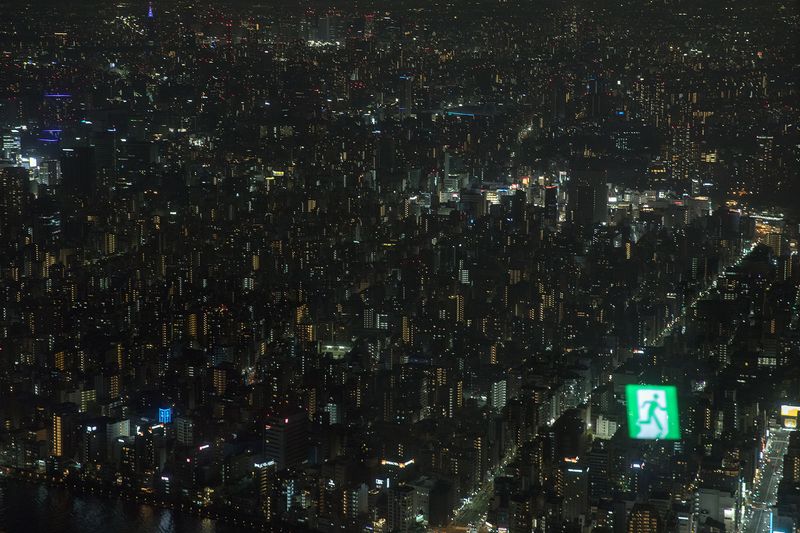
Nighttime top view of Tokyo. Japan.

© Filippo Venturi - Image from the The nail that sticks out gets hammered down photography project
i

Butoh dancer Kohei Wakaba, portrayed on a street in the Yokohama district while wearing the costume from his performance Those Who Ain’t Damn Nobody. The work explores the inseparability of opposites—such as beauty and ugliness, sanctity and wickedness—suggesting that dualism and unity are two sides of the same reality.

© Filippo Venturi - Tree in the shopping area near the bamboo forest in Arashiyama, Kyoto, Japan.
i

Tree in the shopping area near the bamboo forest in Arashiyama, Kyoto, Japan.

The nail that sticks out gets hammered down by Filippo Venturi

Prev Next Close