Petroleum Waterscapes
  • Dates
    2024 - Ongoing
  • Author
  • Topics Awards, Contemporary Issues, Documentary, Landscape, Nature & Environment, Social Issues
  • Locations Tabasco, Ciudad del Carmen, Paraíso

"Petroleum Waterscapes" maps the relationships between oil extraction and the humans and other species who share a precarious deltaic environment in the Mexican Gulf states of Tabasco and Campeche at a time of intensifying rains and coastal erosion.

Petroleum Waterscapes offers a meditation on the extraction and transport of fossil fuels in coastal Tabasco, where Mexico’s largest oil deposits are found. Popular songs and regional toponyms point to Tabasco as an Eden, the proverbial garden where vegetation is lush, rivers overflow every season, and tropical species abound. Yet since the 1960s, a different kind of abundance has come to dominate and shape the region’s landscapes and occupations, which now gravitate around its underground petroleum reserves. This photography series offers us a visual path through forms of life that take place side-by-side with the extraction and commercialization of millions of barrels of oil every single day.
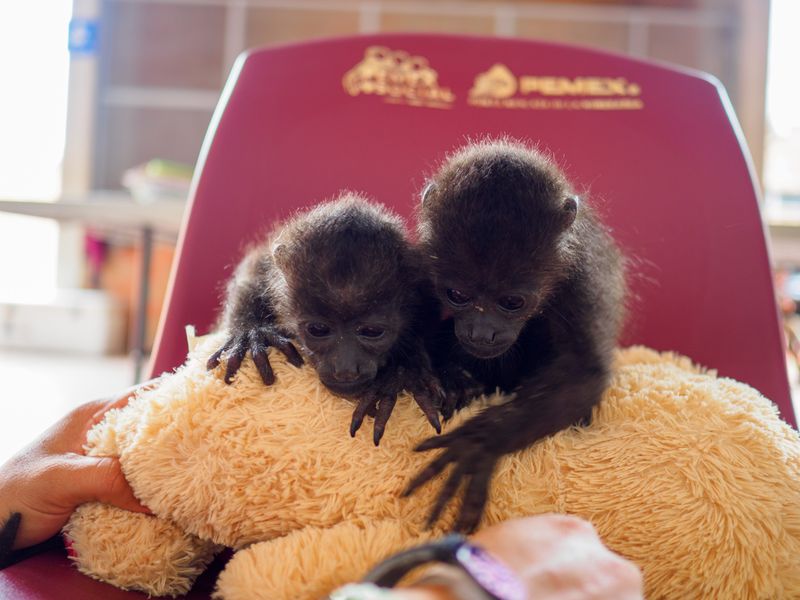
The following photographs dwell on the minute and large metamorphoses that a landscape and those who inhabit it undergo in order to produce fossil fuels. The camera shutter allows me to slow down the enormous kinetic flows of a region dedicated to and powered by burning oil, as well as to observe the slower gestures, contradictions, and still life that give character to this industrialized tropical lowland. Here, a receding coastline coexists with a brand-new oil refinery and endangered Yucatán black howlers receive care in chairs donated by the national petroleum company, Pemex.

I invite the viewers to follow me to industrial spaces such as fields crossed by pipelines, oil wells, shipyards, and refineries. Yet I also invite our gaze to those places left behind, and nonetheless thoroughly transformed, by industrialization and climate change: roads and houses eroded by rising sea levels, flooded streets where rainwater and gasoline mix, and contaminated delta lagoons where locals continue to swim or fish. This series asks us to bear witness to what comes before energy transition, and to spaces in the Gulf of Mexico where the current contradictions between our fossil fuel use and the earth system gain a physical and aesthetic form.
© Carol Iglesias Otero - Image from the Petroleum Waterscapes photography project
i

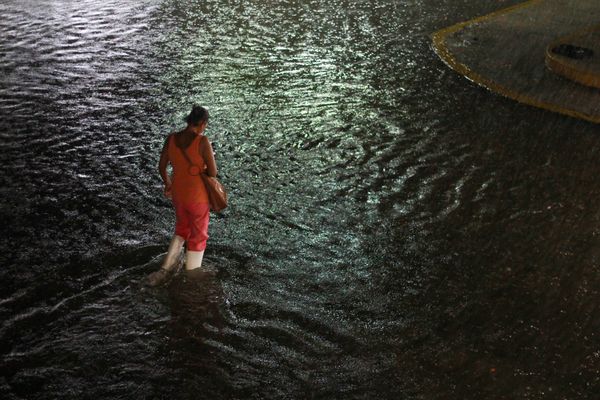
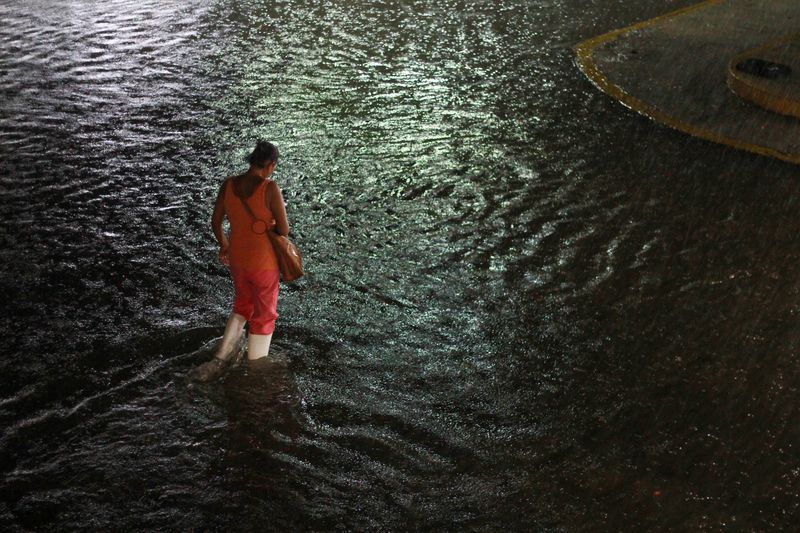
In Ciudad del Carmen, a port city in the Gulf servicing Mexico's offshore oil industry, a woman crosses a flooded street in front of a gas station. Every summer, the streets of the city flood with the evening rains.

© Carol Iglesias Otero - Image from the Petroleum Waterscapes photography project
i

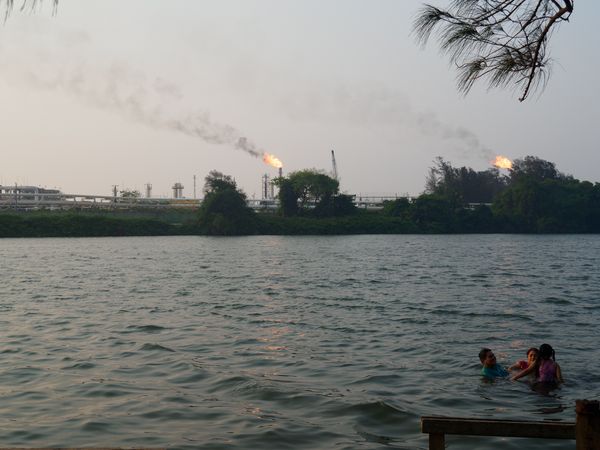
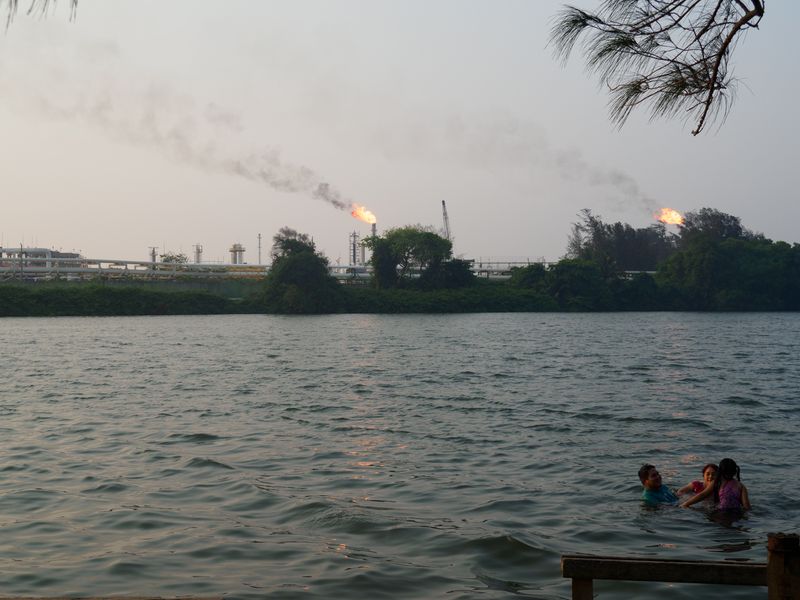
Less than 200 kilometers north of Carmen, in the town of Paraiso, an oil refinery has been built over the past six years. In front of the refinery, local families swim to escape soaring temperatures.

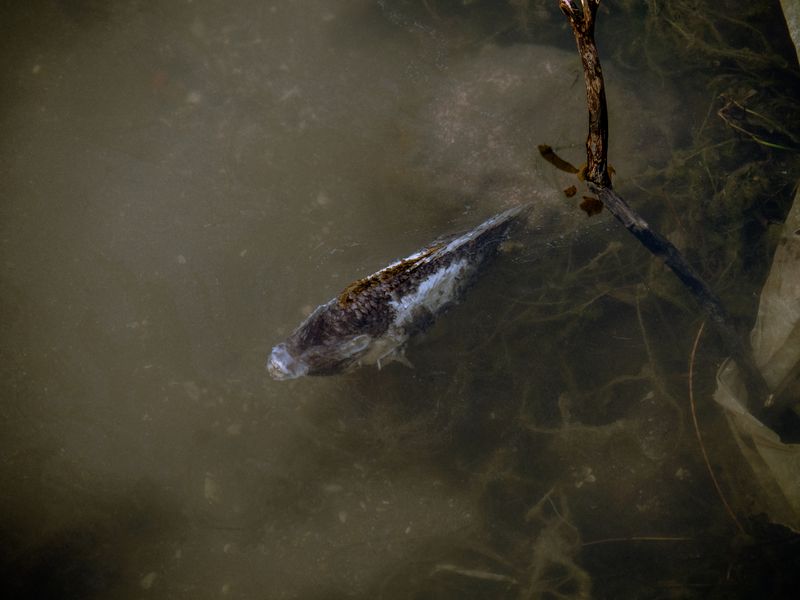
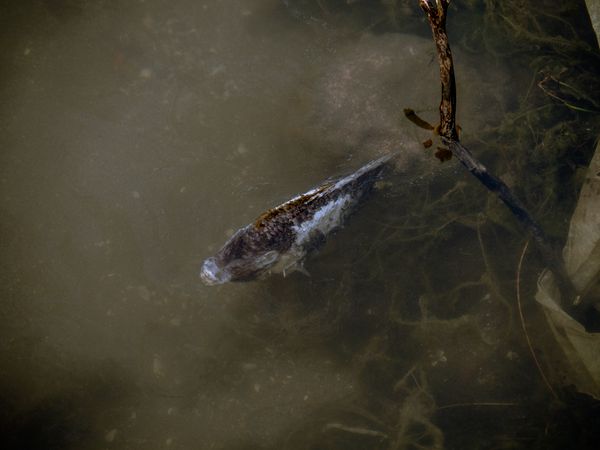
© Carol Iglesias Otero - It is in those same waters that I notice a dead fish, its body held in place by the dense algae surrounding it.
i

It is in those same waters that I notice a dead fish, its body held in place by the dense algae surrounding it.

© Carol Iglesias Otero - Image from the Petroleum Waterscapes photography project
i

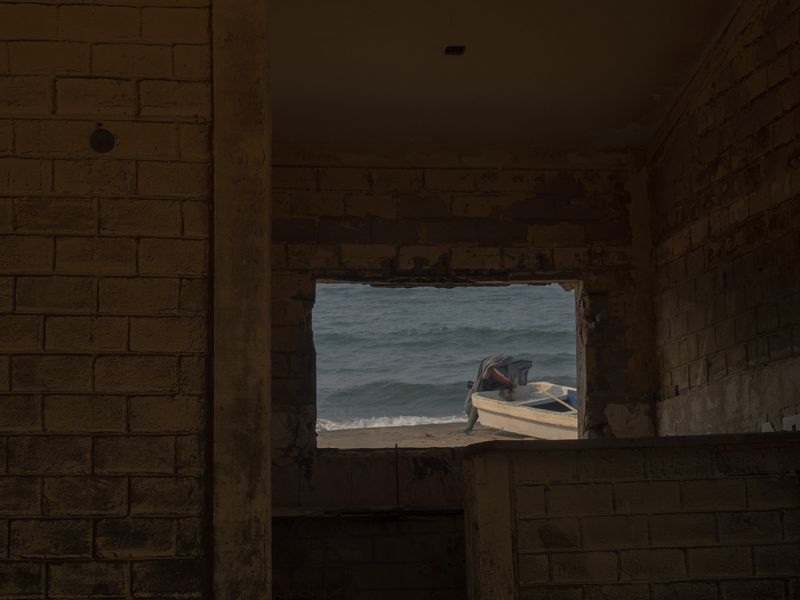
Erored by rising sea levels, an abandoned restaurant -- a few years ago a popular seafood joint where families spent their days at the beach -- becomes a frame for a fisherman's wooden boat.

© Carol Iglesias Otero - Image from the Petroleum Waterscapes photography project
i

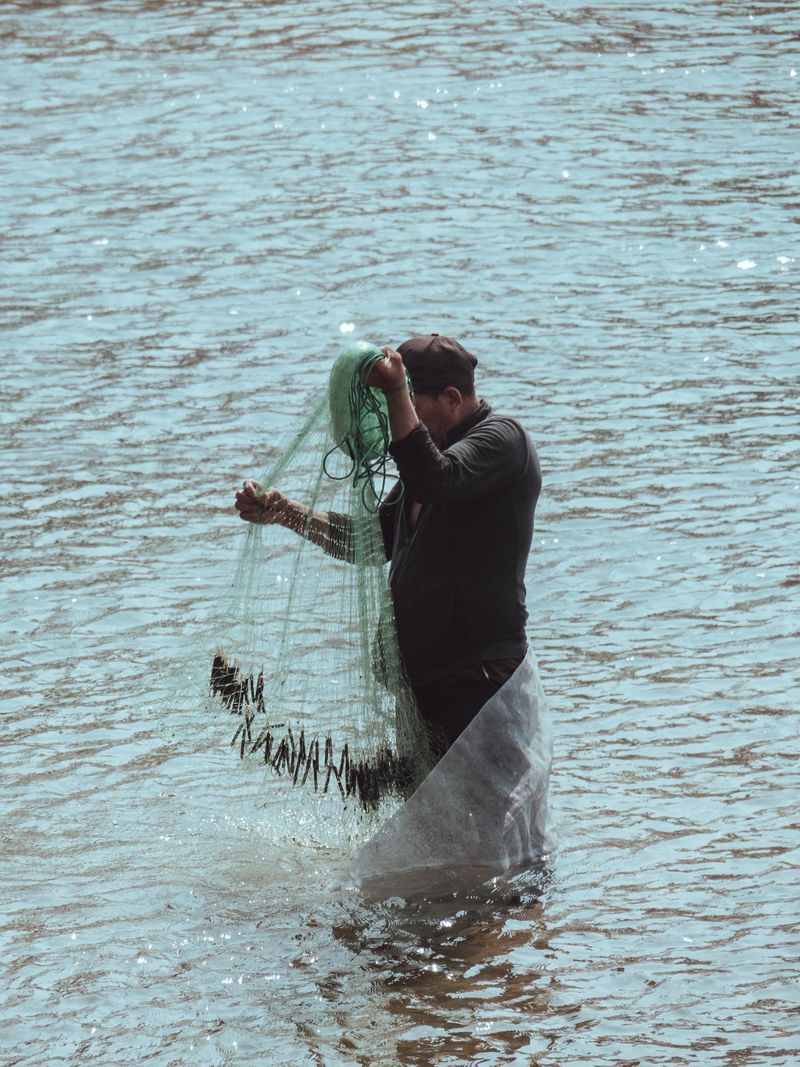
Water, like oil, is both a source of life and, at times, a danger to it. Despite acid rain, and repeated oil spills darkening beaches and fishing holes, people continue to find sustenance in the ocean waters that surround them.

© Carol Iglesias Otero - Image from the Petroleum Waterscapes photography project
i

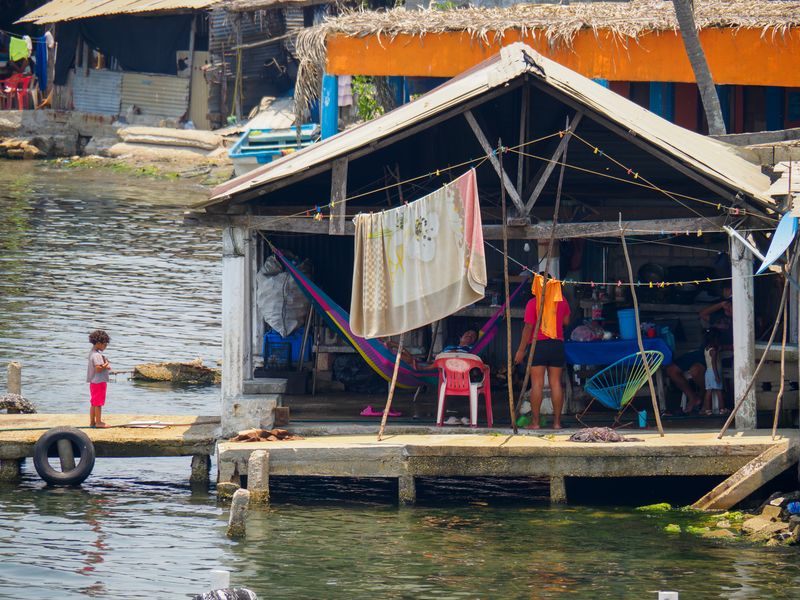
Homes are built directly on piers, some are open structures, letting light, rain, and breeze dissolve any separation between the interior and its surround.

© Carol Iglesias Otero - Image from the Petroleum Waterscapes photography project
i

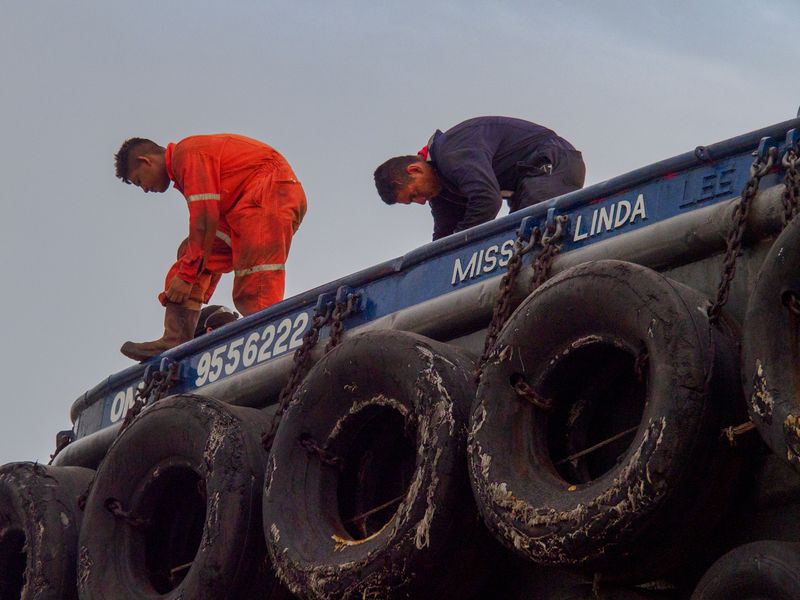
In Ciudad del Carmen's shipyard, two men repair a barge, Miss Linda, that transports oil platform workers across the waters of the Gulf.

© Carol Iglesias Otero - Many fishermen families turned to work on the shipyards as the oil industry settled in.
i

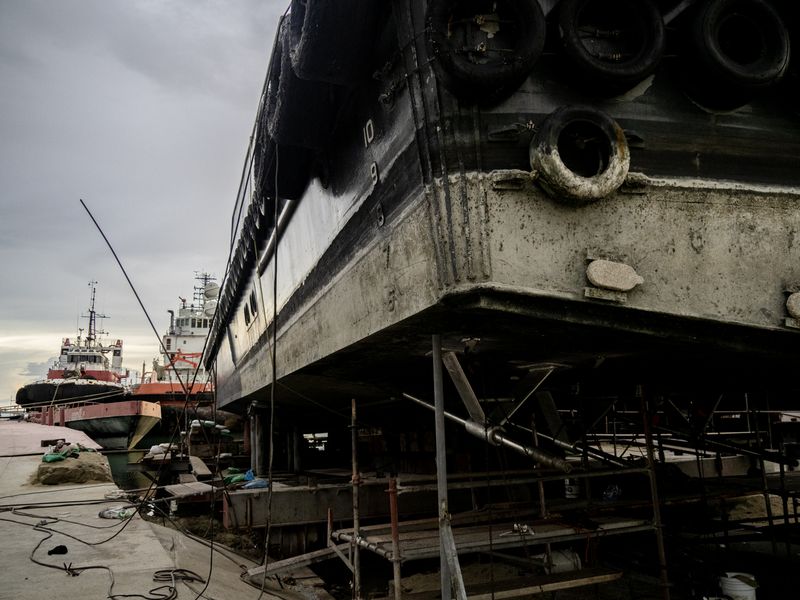
Many fishermen families turned to work on the shipyards as the oil industry settled in.

© Carol Iglesias Otero - And the shoreline is dotted by small wooden evangelical churches, often standing directly on the sand.
i

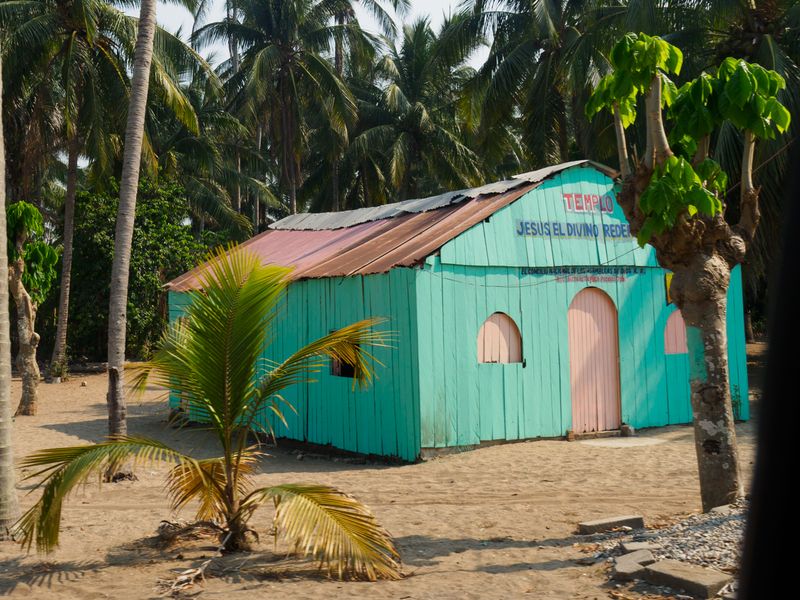
And the shoreline is dotted by small wooden evangelical churches, often standing directly on the sand.

© Carol Iglesias Otero - Image from the Petroleum Waterscapes photography project
i

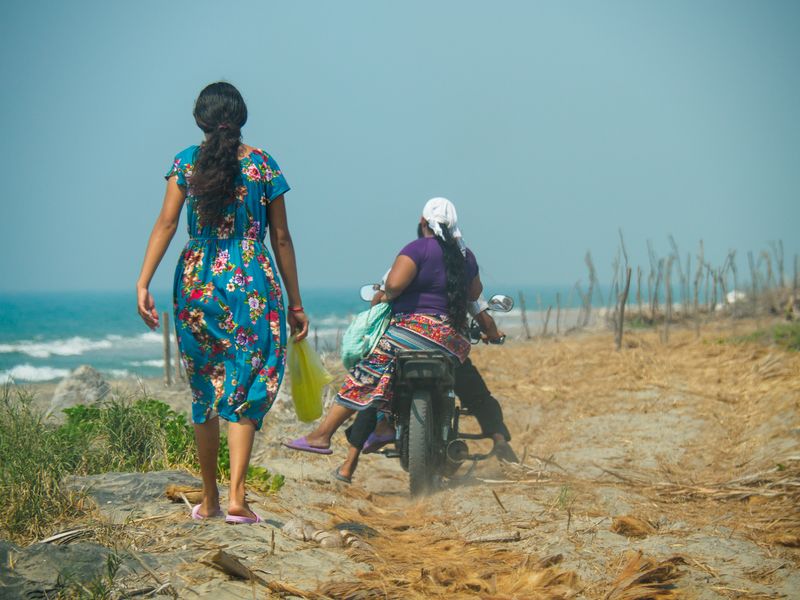
Nearby, where a road has been eroded up by rising sea levels, a girl dismounts her family's motorbike to make riding over the sand possible.

© Carol Iglesias Otero - Image from the Petroleum Waterscapes photography project
i

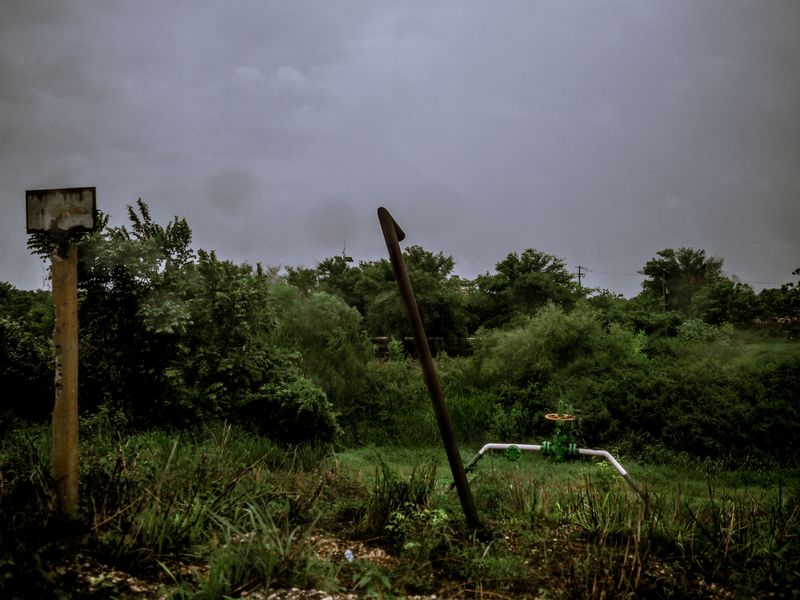
Agricultural fields, too, are transformed by the oil industry, now crisscrossed by pipelines and oil wells even when they continue to be used for pasture or sugar crops.

© Carol Iglesias Otero - Image from the Petroleum Waterscapes photography project
i

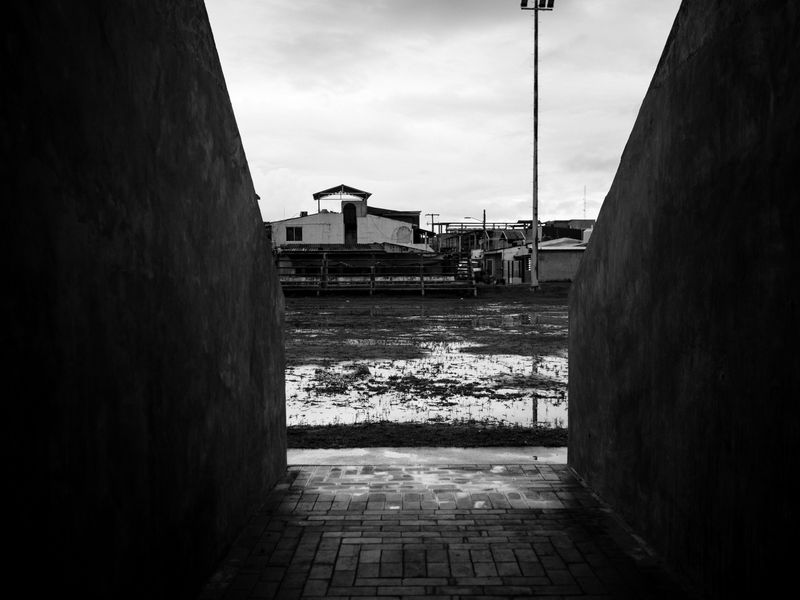
In May 2024, a town baseball stadium surrounded by cocoa, sugar, and oil fields, is turned into an emergency veterinarian station to provide care for an endangered monkey species suffering from the heatwaves.

© Carol Iglesias Otero - Image from the Petroleum Waterscapes photography project
i

In a period of three weeks, hundreds of Yucatán howler monkeys were found dead near these agricultural and oil fields. Here, two infant howler monkeys receive medical care to recover from severe dehydration.

© Carol Iglesias Otero - Image from the Petroleum Waterscapes photography project
i

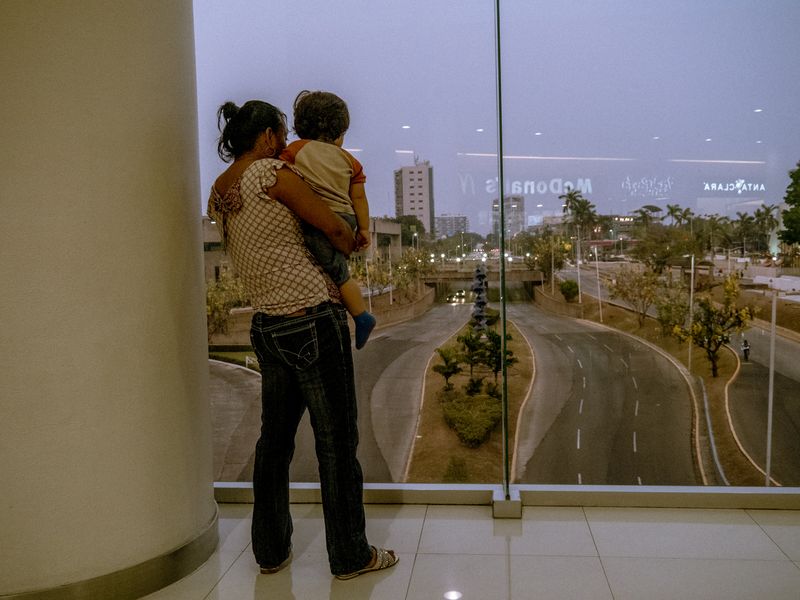
Meanwhile, families spend their days at the local malls to escape the soaring temperatures, the smoke, and the humidity that fill the city of Villahermosa.

© Carol Iglesias Otero - Image from the Petroleum Waterscapes photography project
i

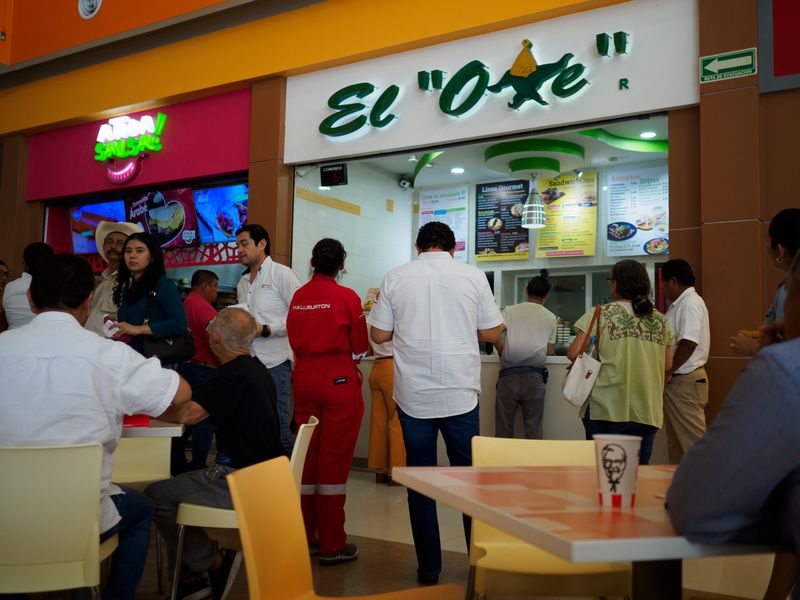
Even inside these malls, I constantly notice symbols of the oil industry. At lunchtime in Villahermosa's most popular mall, workers drive from nearby oil wells to have lunch in the cafeterias.

© Carol Iglesias Otero - Image from the Petroleum Waterscapes photography project
i

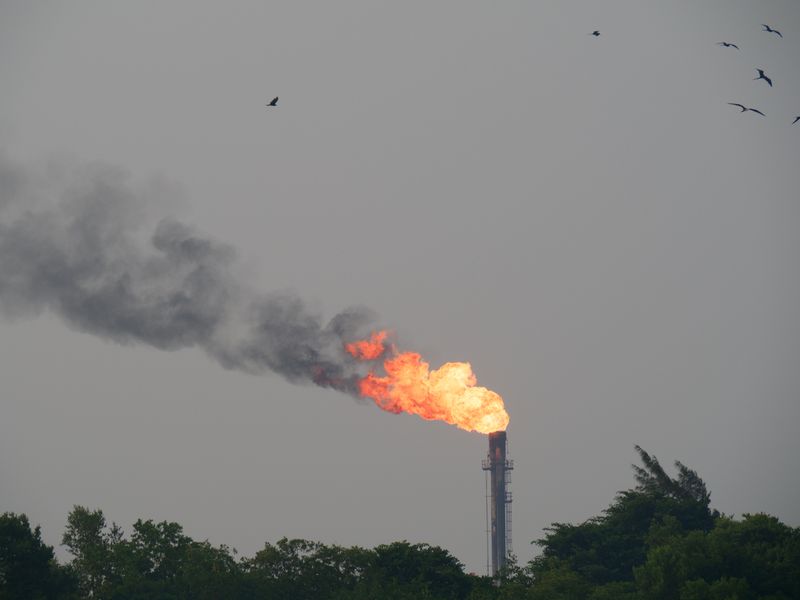
In the midst of large transformations wreaked by the oil industry, relationships between fossil fuel technologies, human, and other-than-human life continue to be made and remade.

© Carol Iglesias Otero - Image from the Petroleum Waterscapes photography project
i

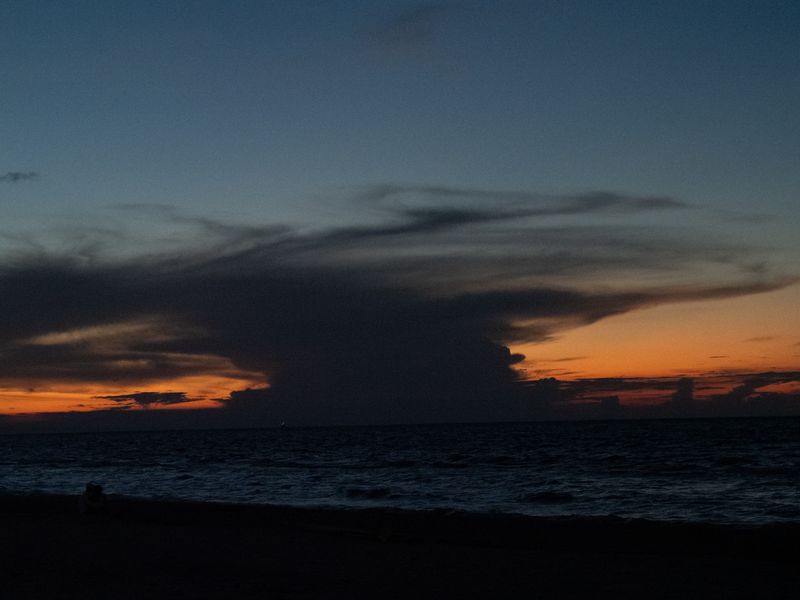
And every sunset and sunrise, every electrical storm, remind us that the earth wields energy at much larger scales than we do.

© Carol Iglesias Otero - Image from the Petroleum Waterscapes photography project
i

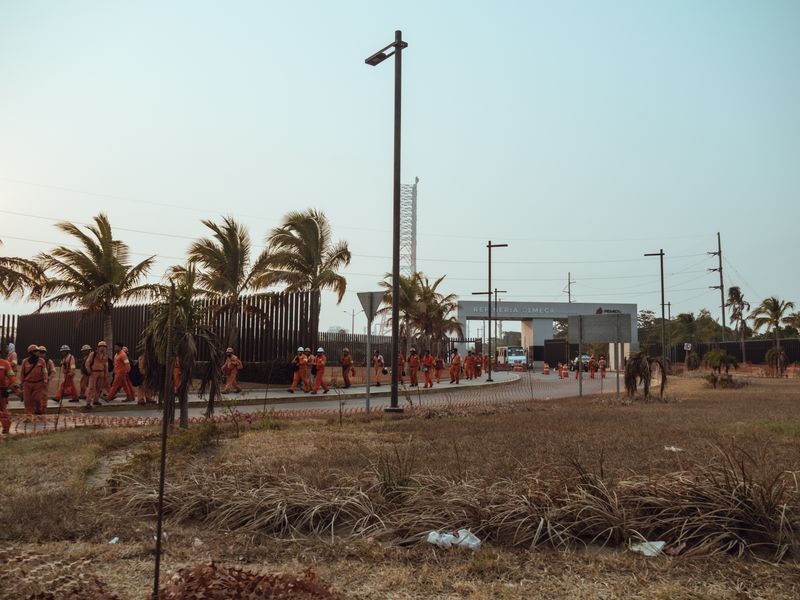
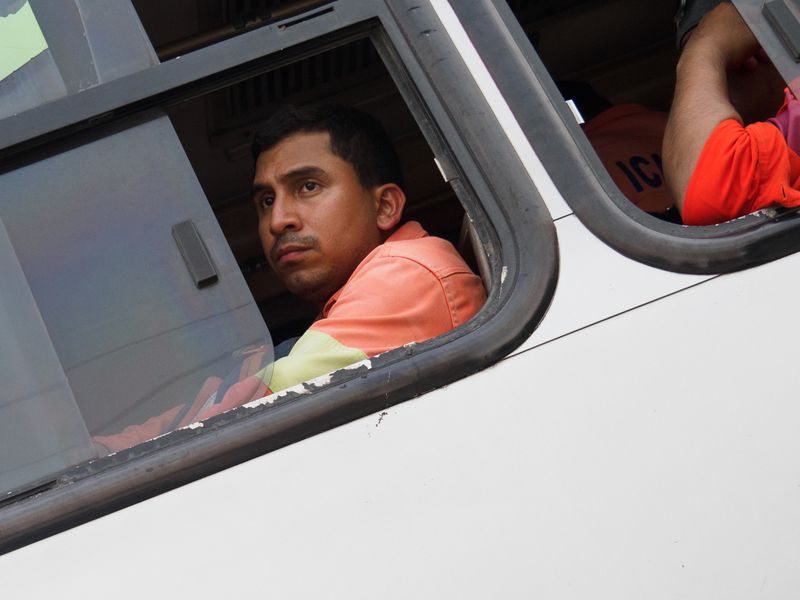
At around 6pm, in the town of Paraiso, workers leave the oil refinery. Their uniforms and schedules show another side of the oil industry: it creates new rhythms and regularities, it decorates the landscape with new color palettes.

© Carol Iglesias Otero - Image from the Petroleum Waterscapes photography project
i

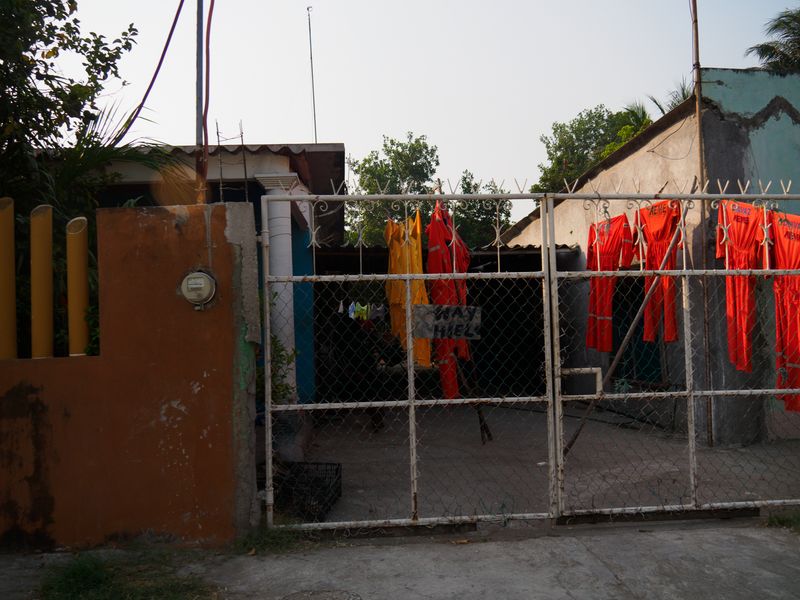
Every house patio reveals the cycles that underlie fossil fuel production. The uniforms left to air dry after each day of work create curtains of fluorescent orange.

© Carol Iglesias Otero - Image from the Petroleum Waterscapes photography project
i

It is the end of the workday. In a company bus, a man leaves the vicinity of the oil refinery surrounded by his fellow workers.