A Passport To Belonging: Keisha Scarville's Counter-Narratives On Migration
-
Published16 Apr 2026
-
Author
- Topics Portrait, Daily Life, Contemporary Issues, Documentary, Archive, Photobooks, Awards
For over a decade, artist Keisha Scarville has returned to a single passport photo of her father to ask what such an image can hold, and what remains just beyond its edges.
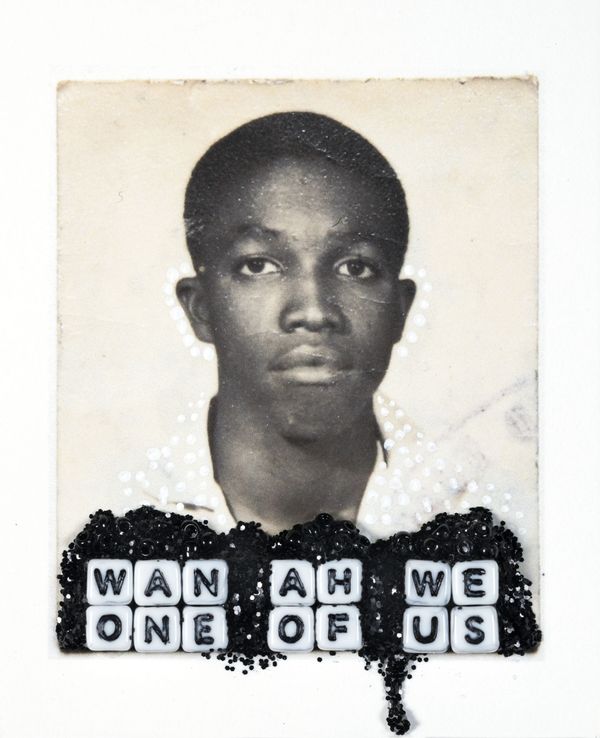
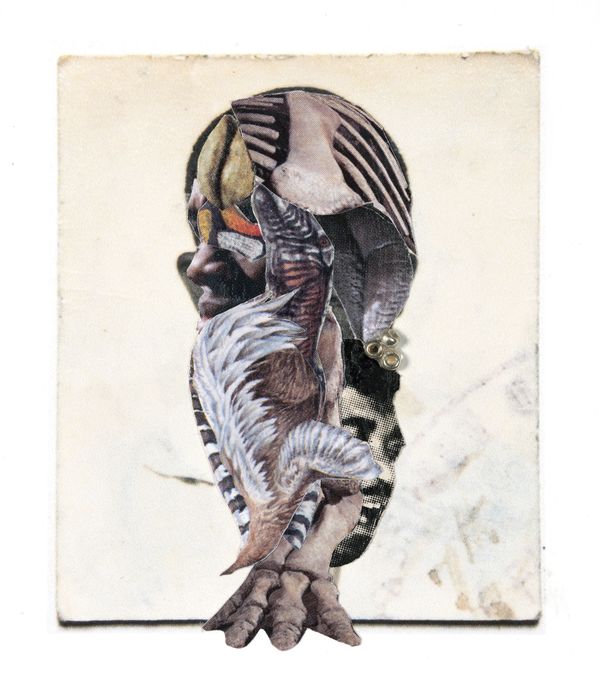
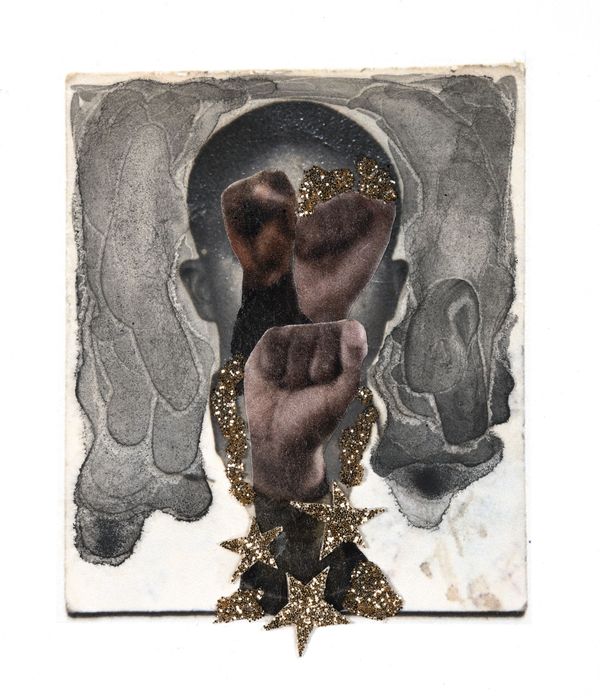
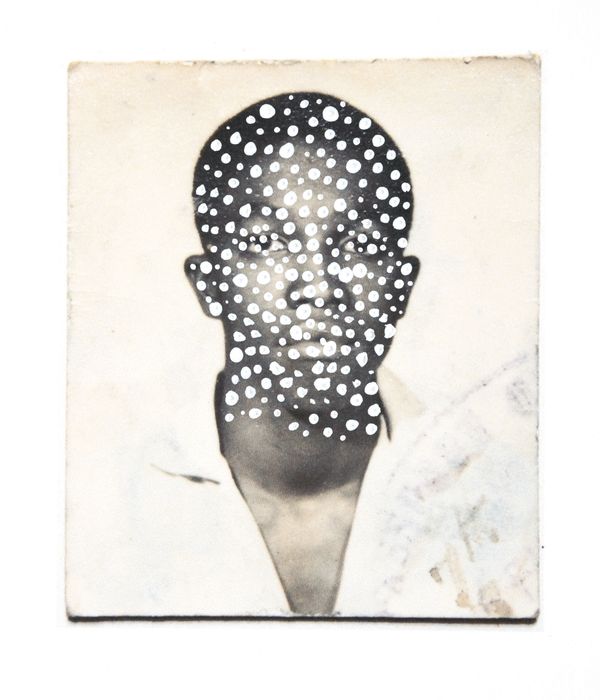
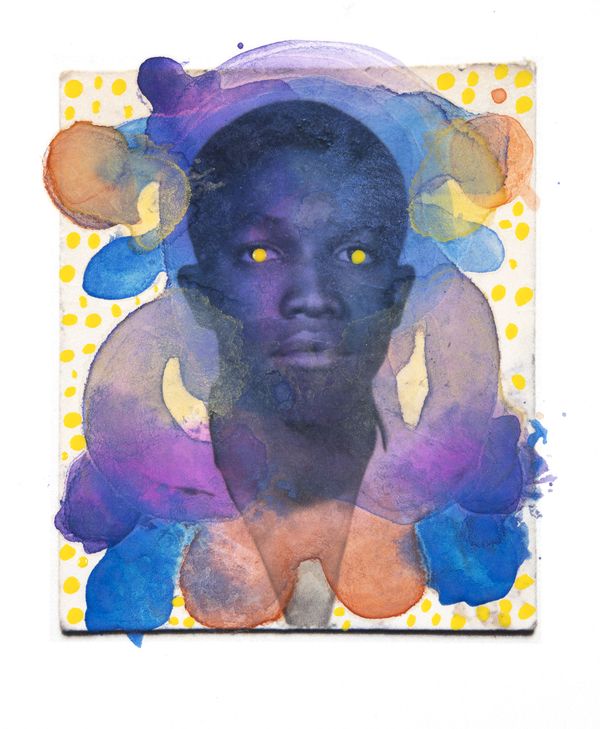
What begins with a single photograph – a 16-year-old boy posing for his first passport photo in Guyana – has gradually unfolded into an expansive, long-term photographic project. For over a decade, artist Keisha Scarville has returned, again and again, to that image of her father, transforming it into more than 300 distinct works. Together, they form Passports, a deeply personal exploration of migration, identity, and citizenship – while also opening an intimate space around family history, memory, and inherited narratives. It is as much an excavation of her father's life as it is a reflection on her own identity as a first-generation American.
The project emerged from intimate conversations. Scarville’s father immigrated to the United States from Guyana in the late 1960s, and it was through their ongoing exchanges – about his reasons for leaving, his relationship to the American landscape, and what was gained and lost – that the work first took shape. "I was really interested in counteracting the passport photo as this neutral space," Scarville explains. The bureaucratic passport image, with its blankness and controlled neutrality, became the perfect foil: a fixed point to push against, to complicate – restoring narrative, subjectivity, and depth to what is meant to remain still.
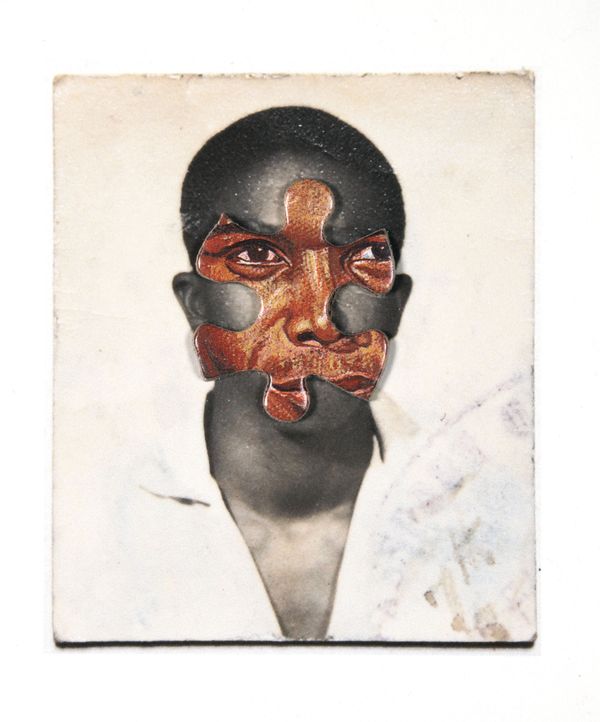
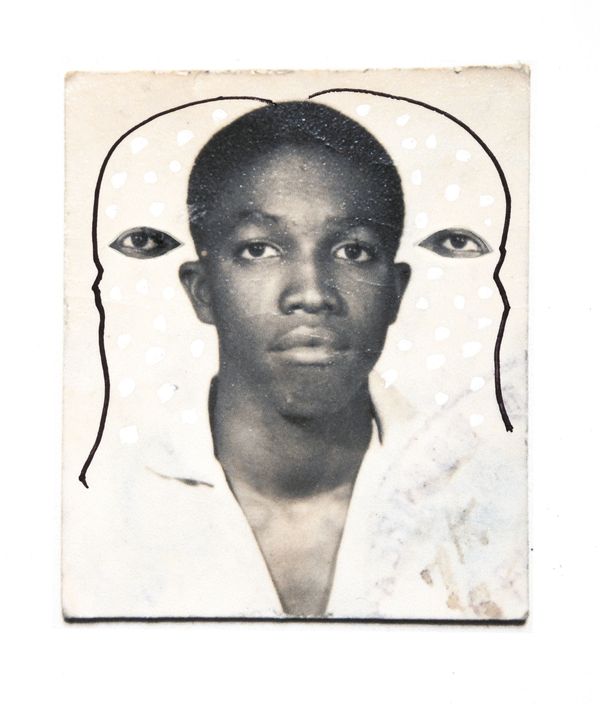
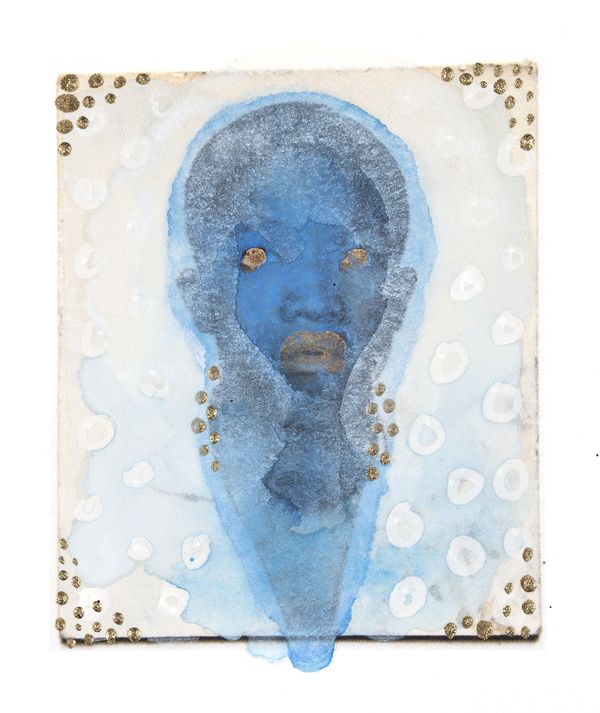
What followed is a sustained act of creative resistance. Working with collage, paint, watercolor, beads, hair, and even the raw scrape of a knife against photographic paper, Scarville reconfigures her father's image over and over. Each iteration emerges from a different conversation, a different question, a different emotional register, and what it means to remake oneself in a new country. She describes this repetition as a way of returning to a moment she never experienced – using the past to think through the present and imagine alternative futures. "Each image is a kind of possibility of who my dad could have become," she says, "but also a conversation about how his self has been transformed… The stories that a passport photo does not allow us to see."
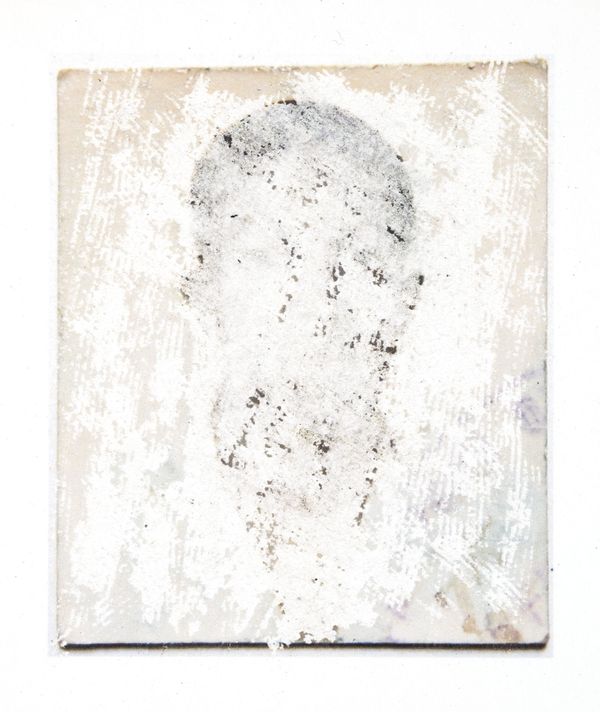
The materials themselves carry meaning. Watercolor introduces fluidity, loosening the rigidity of the photographic surface. Collage allows Scarville to unmake and rearrange images, opening space for reinventions. At times, a knife erases legibility altogether, stripping the image down to something that exists just beyond recognition. The original passport photograph is no longer a fixed object, but a generative platform – one that enables new ways of thinking about what an image can hold. In this way, the work resists precisely what the passport photo demands: stillness, certainty, a singular, containable self.
Passports becomes a broader meditation on migration as transformation. Scarville describes immigration as a process of becoming – one that involves both desire and uncertainty, fulfillment and loss: carrying forward what is left behind but also the construction of a new sense of self. These tensions are inseparable from questions of government, citizenship, and how the state defines personhood through images like the passport photo.
This sense of becoming extends into the structure of the project itself, now gathered into a forthcoming book – a process that took two to three years and unfolded with the same layered complexity as the work. Having created hundreds of passport images since 2012, Scarville uses the book not to catalogue them (around 160 appear in the final edit), but to expand outward, creating multiple points of entry. Archival photographs of Guyana from the time of her father’s departure appear alongside images she has taken during her own annual visits over the past decade. Contemporary portraits of her father in New York – among them a quiet series in Prospect Park, a place they have shared throughout her life – sit alongside transcripts of their conversations.
Landscape becomes a bridge between past and present. While her father largely stopped returning to Guyana in the early 1980s, Scarville has maintained an ongoing relationship with the country, revisiting and photographing it regularly. In the book, archival images are placed in dialogue with her contemporary photographs, often with her father’s image superimposed onto landscapes – Guyana seen at once through his absence and her return.
The inclusion of their conversations also carries particular weight. Scarville was intentional about making space for her father's voice – not only his image. "It’s still ultimately my gesture being seen on his passport," she acknowledges. "I wanted other people to be able to get a sense of his voice."
At its core, Passports is a first-generation reckoning. With both of Scarville’s parents born outside the United States, the project becomes a space for her own search for meaning as much as a tribute to her father. "I've always been trying to figure out what it means to be American, what it means to be Guyanese," she reflects – arriving, ultimately, at the understanding that no fixed answer exists. Identity, like the photographs she keeps remaking, is never static. It remains in motion, constantly renegotiated.
That openness extends to her understanding of photography itself. Rather than a fixed record, it becomes something mutable – open to reinterpretation over time. The book, then, becomes an opportunity to gather everything woven into Passports – family history, migration, memory, identity – into a single, flowing form: a work that, by its very nature, could have continued indefinitely.
Passports is a forthcoming publication with MACK, now available for pre-order.
-------------
All photos © Keisha Scarville, from the series Passports.
--------------
Keisha Scarville is a Brooklyn-born photographer whose work weaves together themes of loss, latency, and the elusive body. Her photographs have been widely exhibited, and she is a recipient of the 2026 Brooklyn Museum UOVO Prize. She is currently visiting professor in the Department of Art, Film, and Visual Studies at Harvard University and a faculty member at Parsons School of Design in New York.
Lucia De Stefani is a writer and editor focusing on photography, illustration, and everything teens. She lives between New York and Italy. Find her on Instagram.