Yolngu sign language
-
Dates2018 - 2018
-
Author
- Topics Editorial, Documentary
- Location Australia
A rich tradition of sign language among the Indigenous people of Arnhem Land is being documented and preserved by linguists and anthropologists before it disappears.
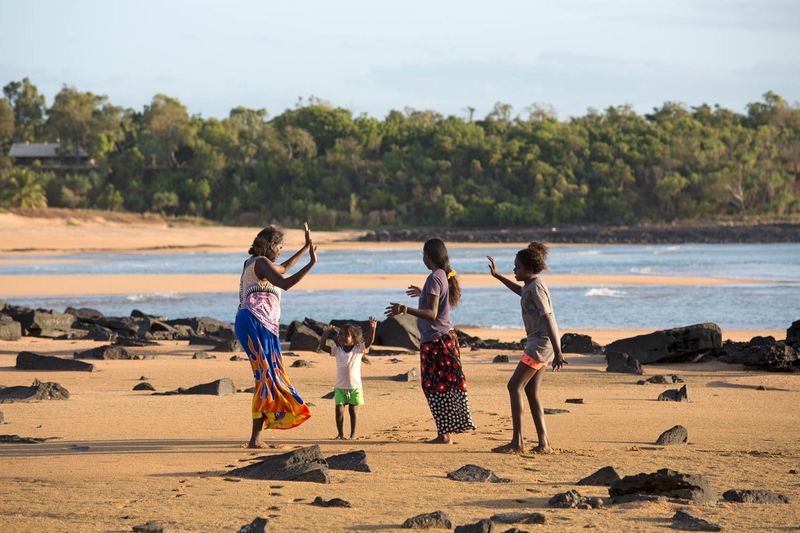
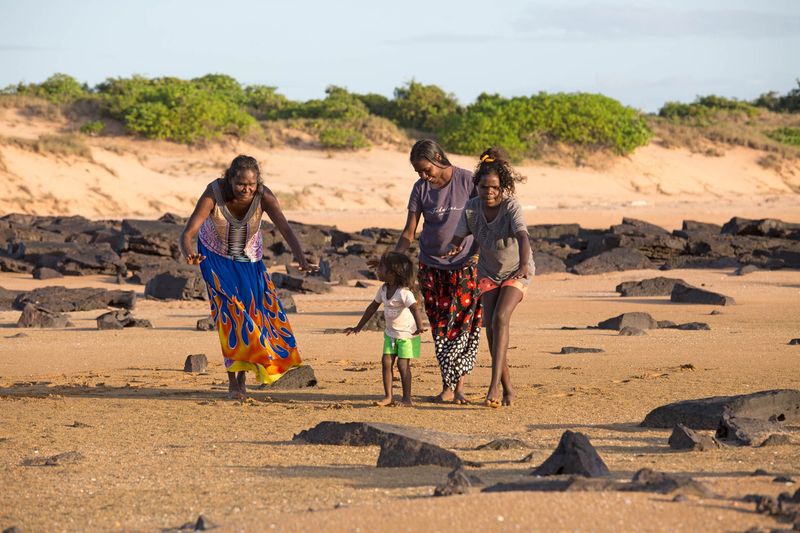
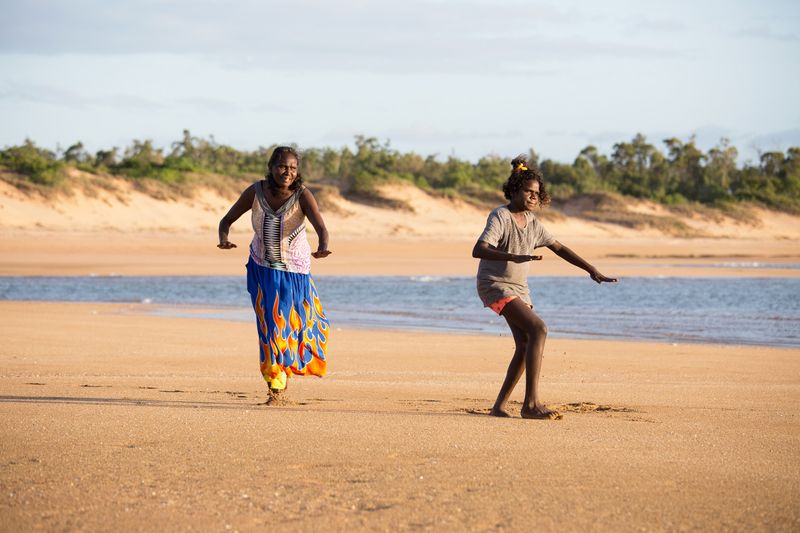
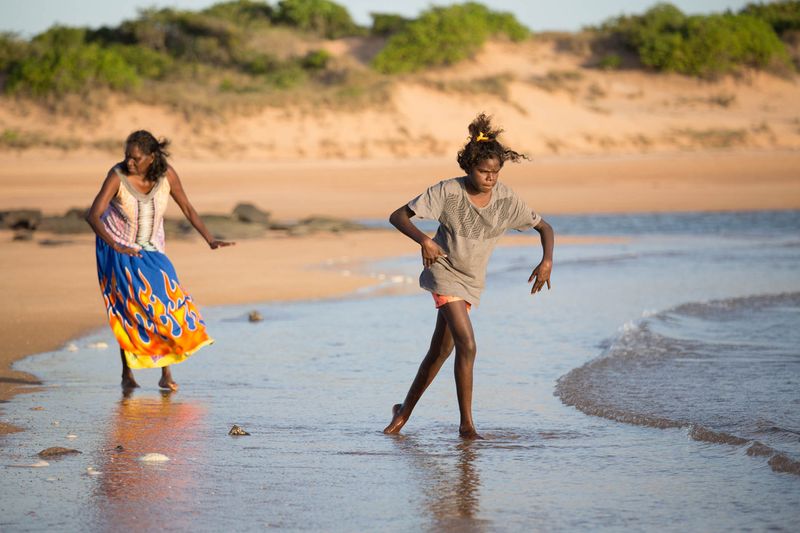
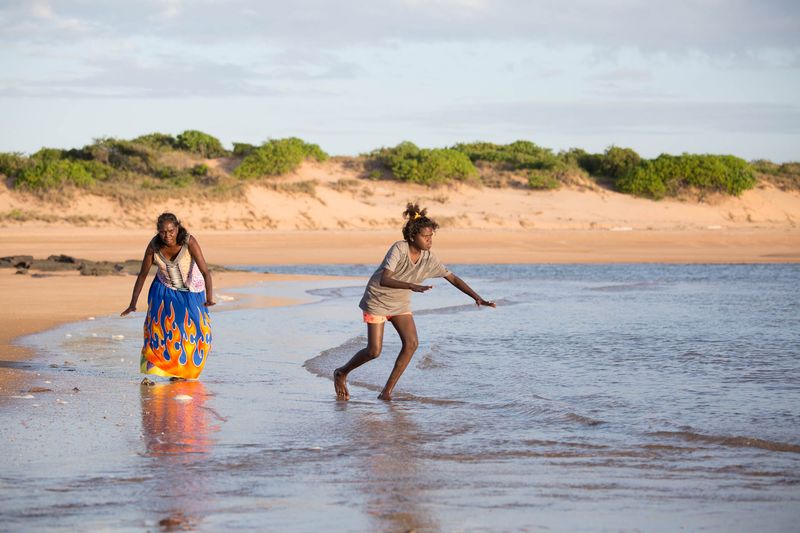
As rich afternoon light skips across the waters of the Arafura Sea bathing the sands of Elcho Island in a golden glow, Doris Yethun Burarrwanga moves lithely over the beach teaching her granddaughters the dance of baru, the saltwater crocodile.
Twelve year-old Grace Burarrwanga glides with the confidence of a young girl who has participated in many ceremonial events while her cousin, two year-old Rekisha Gaykamangu, watches with curiosity and wonder, mimicking their movements with childish gusto.
Baru is the main totem of the Gumatj clan of north-eastern Arnhem Land and the crocodile dance is performed at major ceremonies. Doris bends over and extends her arms forward and parallel to the beach and dips her hands – this is the “sign” of the baru and it is woven into the dance. They spend 20 minutes dancing together before moving on to search for maypal (shellfish) among the rocks. Later, the group – including Rakisha’s mother Abby Dhamarrandji, settles around a fire to eat and chat as the sun goes down.
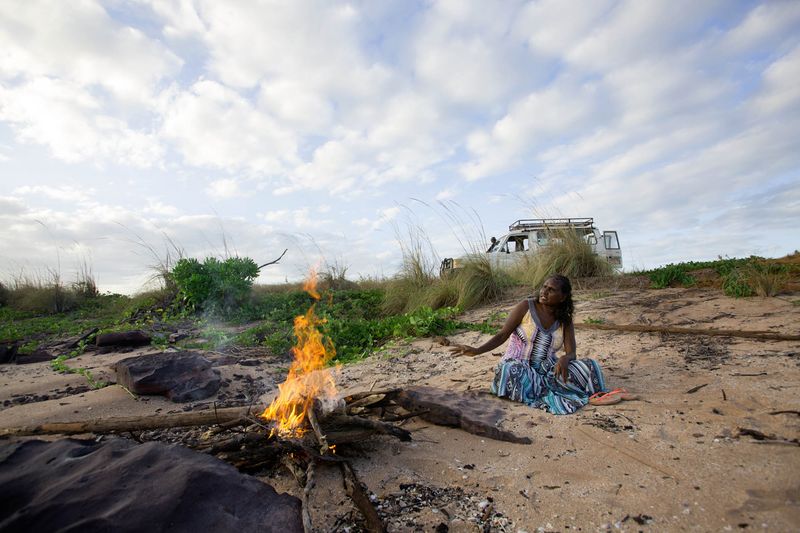
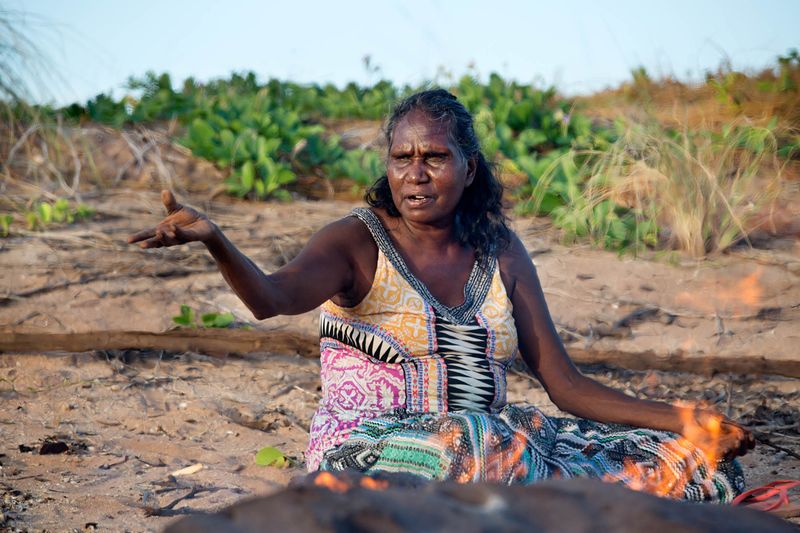
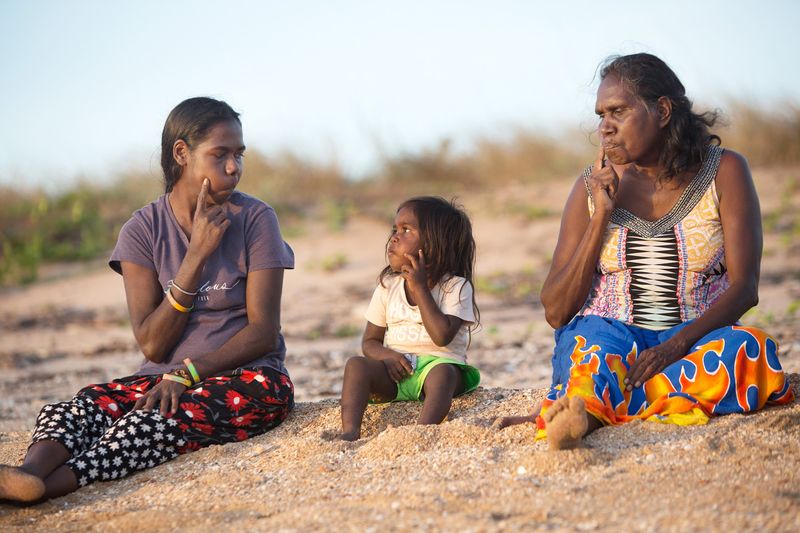
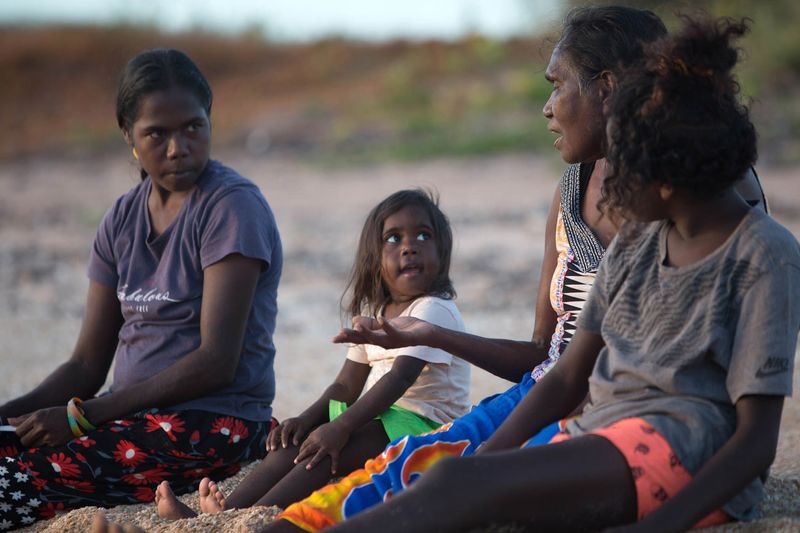
The group talks about clan totems, relationships and country in Yolngu Matha, the main language of north-east Arnhem Land. It is a conversation aimed primarily at Rakisha and Grace in a way that embeds Yolngu traditions. Interestingly, hand signs accompany all words and phrases.
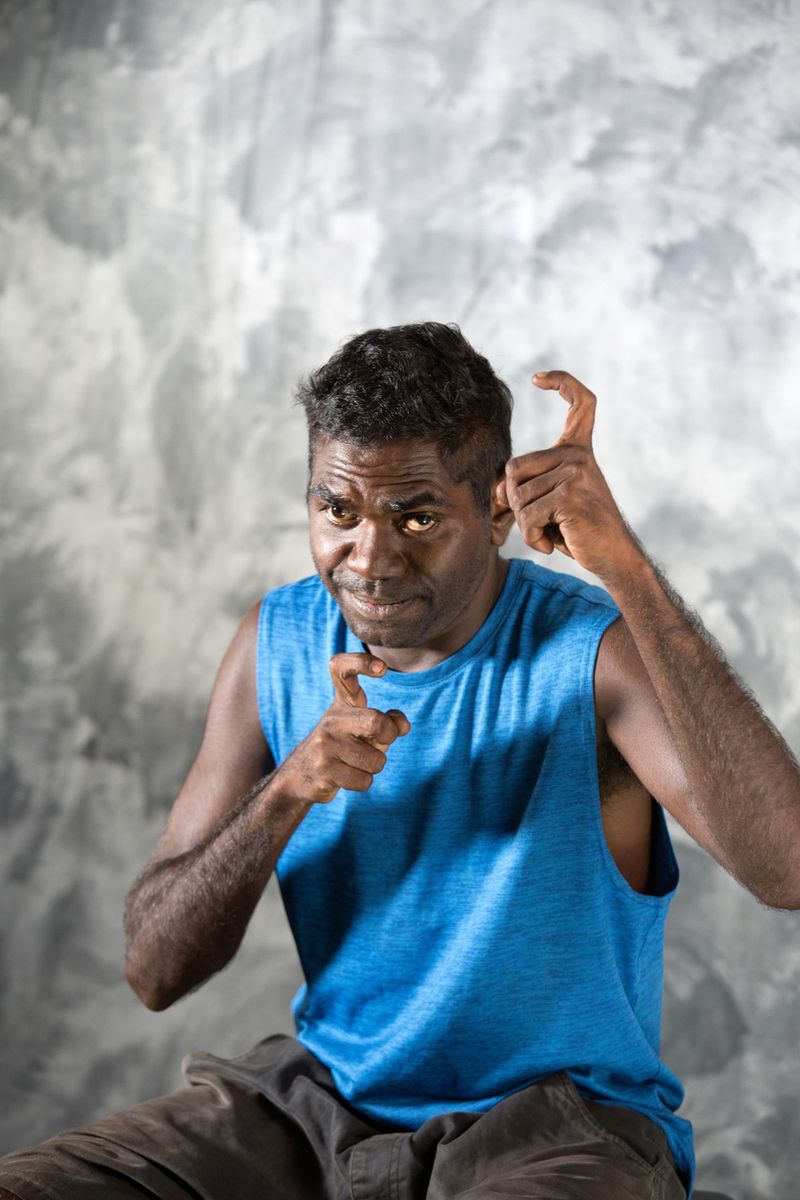
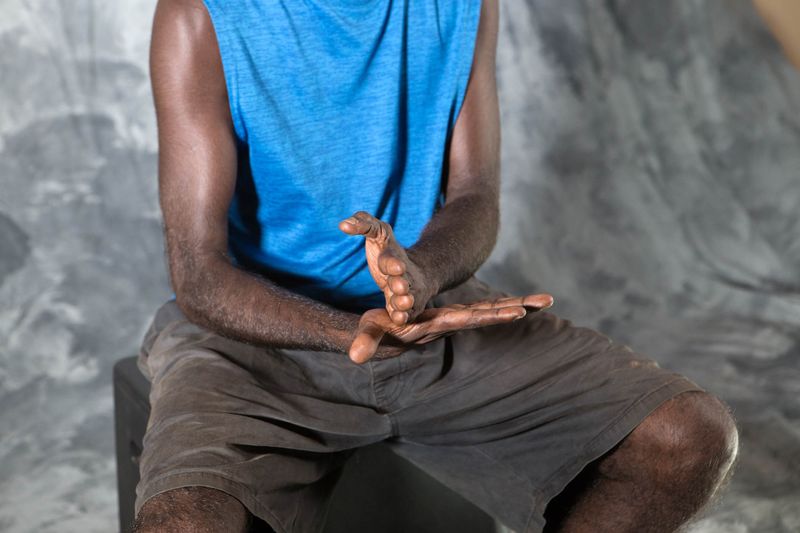
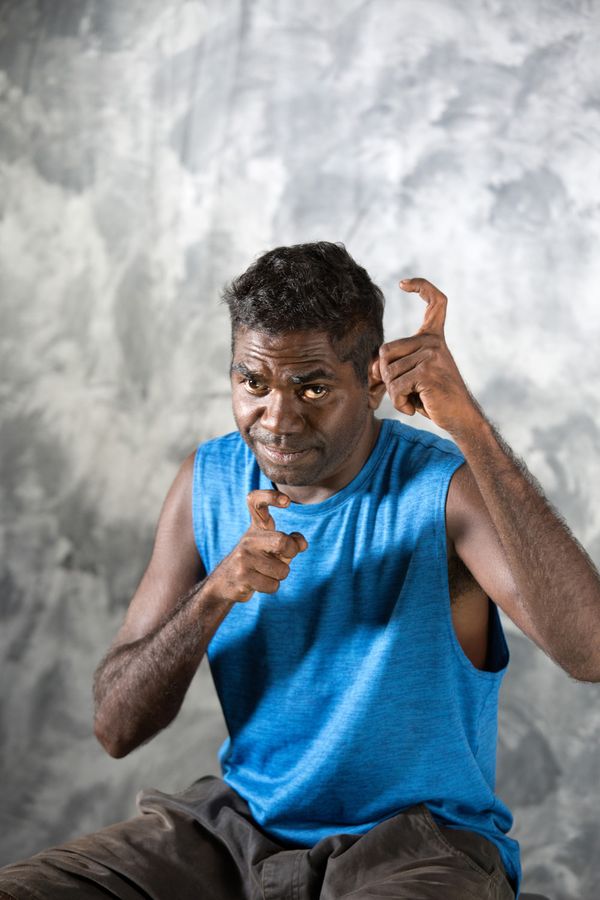
For example, the word “fire” (gurtha in Yolngu Matha) is expressed as breath being expelled from the mouth in accompaniment with a hand moving from the lips, “water” (gapu) is depicted as one cheek inflated whilst being tapped by the index finger. Most words have a corresponding sign and just as words are linked in sentences, hand signals are joined to create complex phrases, capable of expressing the full range of human experience.
Traditionally, Indigenous children of Arnhem Land grew up using this alternate language of hand signals in concert with everyday conversation and, importantly, in situations when cultural protocols demanded it.
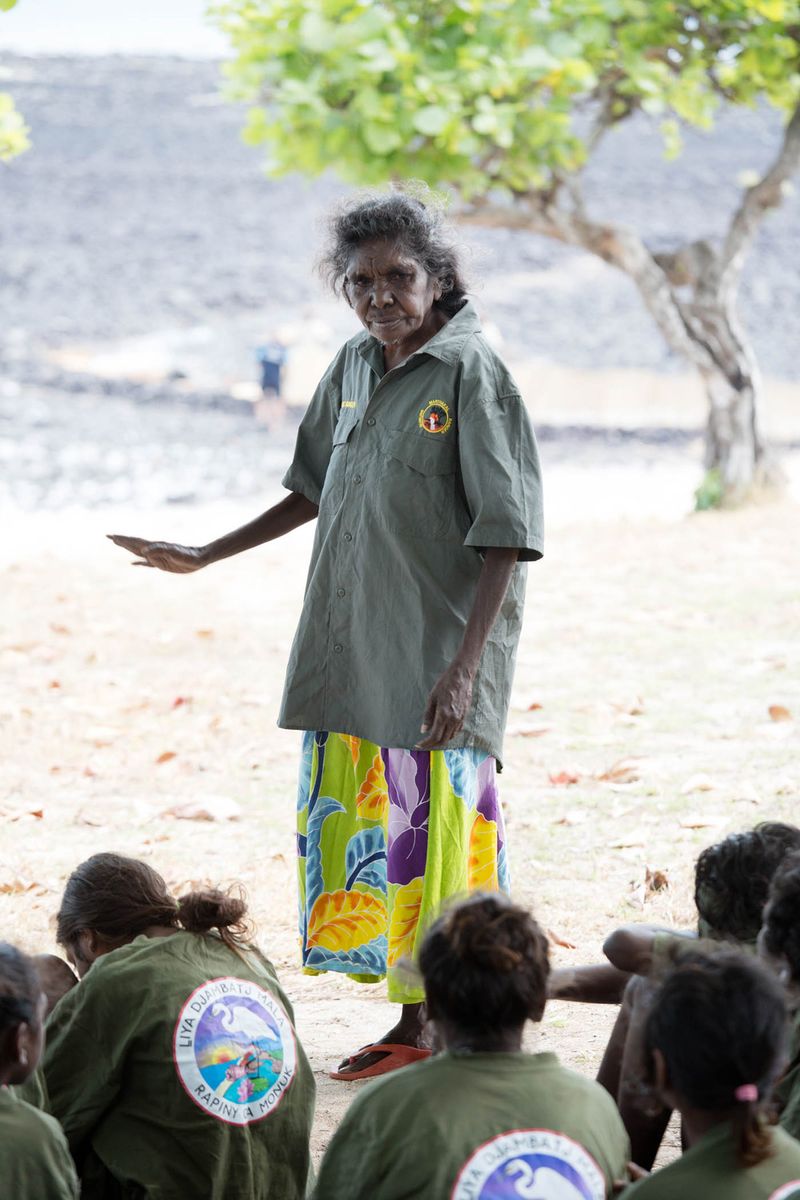
“In the past, every Yolngu person whether they could hear or not, used sign (language),” Doris says. “Children grew up understanding hand signs because they see people signing all the time. Signing is used in dancing, in bungul (ceremonies), with hunting and also when there is a need for quietness.”
Those times include initiation and mortuary ceremonies – in some groups, mortuary conventions require periods of public silence that may last for years. There are also certain kinds of avoidance relationships in Indigenous culture where two people are not permitted to communicate directly.
This alternate language is also useful in everyday situations such as when groups of people travel over bumpy or corrugated roads in noisy vehicles, while in boats and light aircraft, and when communicating over distance. Young Yolngu people are also expected to remain quiet out of respect, when visiting sacred sites and in the homelands of other families. Hand signs have always been a preferred method to make secret assignations.
For the small number of deaf and partially-deaf people in Indigenous communities sign language provides a way to easily integrate into society. Doris Burarrwanga’s nephew Michael Ganambarr who was born deaf is a talented painter and dancer who participates fully in ceremonial and social activities.
“He knows how to communicate with people,” she says. “The old people taught him by singing and clapping sticks – he can see them and see their actions. He can do the shark, crocodile and kangaroo dance and other important dances. He knows all these (ceremonial) things. He learned by reading lips, watching us closely and through actions. He has not been limited because he uses hand signs very effectively, and we all understand.”
Daisy Wulumu, a bilingual teacher for 33 years, with more than 20 of those at Shepherdson College at Galiwin’ku on Elcho Island, the largest settlement in eastern Arnhem Land, learned sign language from an early age.
“My uncle was deaf and I watched him and talked to him,” she says. “As a Yolngu teacher, I find it is a very handy thing to use in the classroom and going out on excursions or at a school camp out bush because I don’t have to yell as much.
“Children have fun with Yolngu sign language and I like it because it was taught a long time before I was born. It is a very ancient thing that links us to our ancestors.”
Unfortunately teaching of hand signals dropped away as Indigenous people were moved off their country and into large communities under European control. Mainstream, non-Indigenous education placed importance on English, thus eliminating local dialects and discouraging, or banning, hand signs in classrooms. Other factors include changed living conditions, fewer visits to country and European-style houses with walled rooms, compared to the open-air camps of yesteryear.
According to linguist and anthropologist Dr Bentley James, Indigenous hand signs were not recognised as an alternate language until the mid-to-late 20th Century. Early explorers and anthropologists, such as Baldwin Spencer, noted that Aboriginal people in northern and central Australia used hand signs but no comprehensive study was made until British academic Adam Kendon published a record of Warlpiri sign language in 1988.
“Starting from the time when I lived at Yuendemu with the Warlpiri people, his (Kendon’s) work gave me a fascination for hand signs that has stayed for a lifetime,” Bentley James says. “I have been frantically gathering hand signs in Arnhem Land for the past 25 years.”
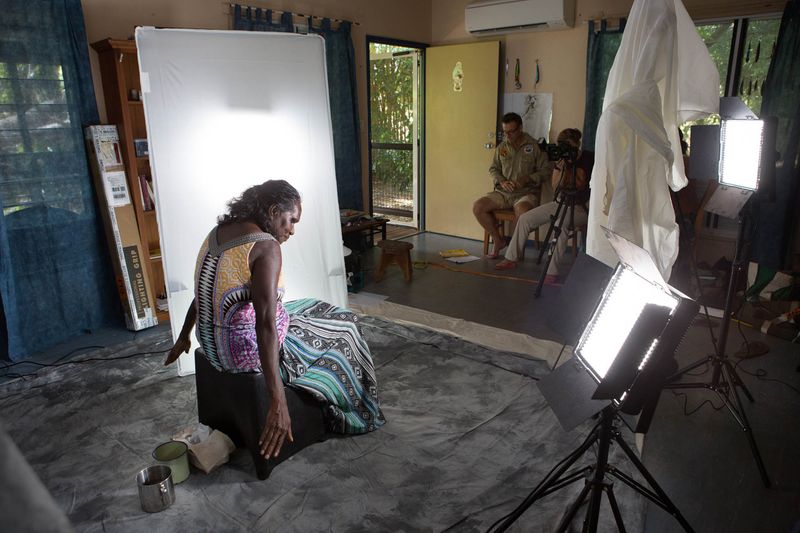
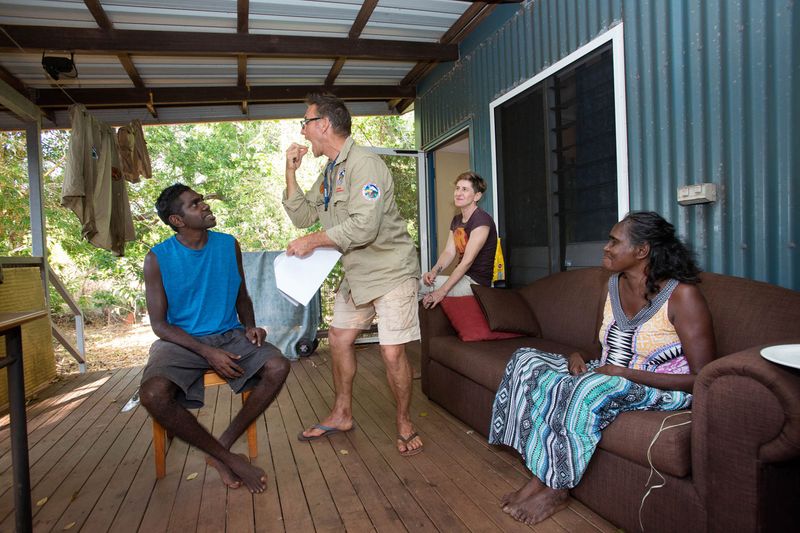
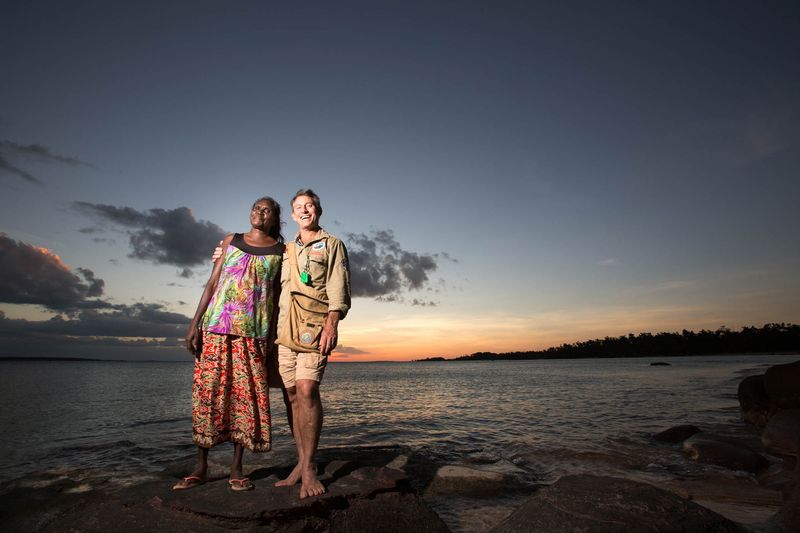
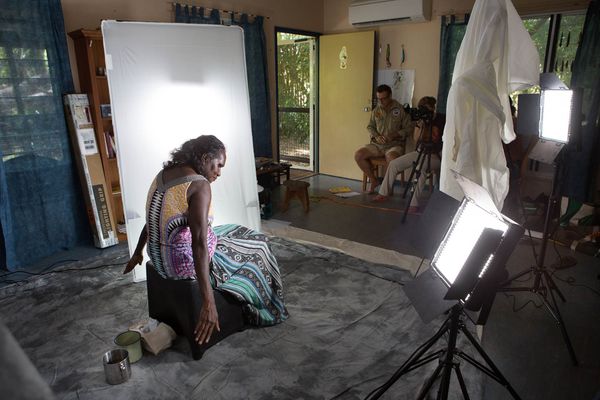
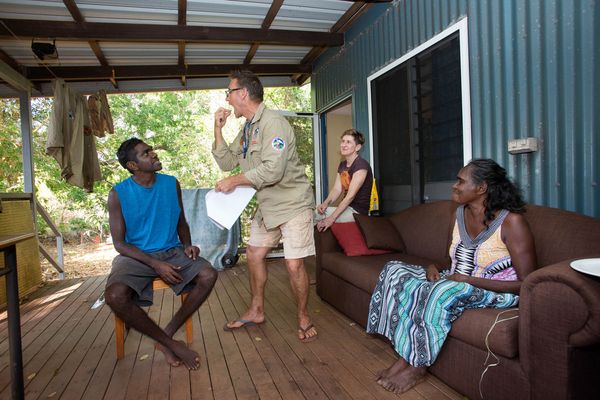
Dr James is working closely with Doris Burarrwanga and Professor Dany Adone of the University of Cologne, in Germany, to compile and publish a book of hand signs for the Yolngu and Yan-nhangu languages of coastal and north-eastern Arnhem Land.
Dr James believes there are about a thousand hand signs in the Yolngu Sign Language (YSL) with regional variations. He has focused on a portion: some 450 of the most relevant will be published –“otherwise you couldn’t carry the book”, he says.
“Linguistically, we have mapped many changes in Yolngu culture through hand signs. There is a whole raft of signs that deal with Macassan culture associated with navigation, boats, knives, axes, money, beer and tobacco.
“More recently, hand signals have evolved to describe the contemporary world. There are now signs for telephones, televisions, ipads, credit cards, motorcars and school.”
Dr James says Yolngu people have brought intensely imaginative constructions to represent a changing, modern world.
“Signs for television, air conditioning, washing machines and dishwashers are often signified by a rectangular outline; the iconic idea of a box that washes, or a computer – a box that thinks, a camera – a box that looks, a television – a box you look at, an ipad – a box you write into.”
The origins of the three-way collaboration with Doris Burarrwanga, Prof Adone and Bentley James reaches back twenty five years when they met at Galiwin’ku by chance.
“None of us imagined we would still be working on this book all these years later,” Bentley James says. “Sadly, so many who have helped us in this work have passed away but when it is published, the book will fulfill a desire from all of us to give back to the children of Arnhem Land the priceless inheritance of their alternative sign language.
“The document will also include a precise ethnographic and linguistic description of enormous interest to academics internationally.”
Text and photography: ©David Hancock