WHITELAND
-
Dates2023 - Ongoing
-
Author
- Topics Landscape, Fine Art, Documentary
- Location Gujarat, India
from those words, this mining landscape turned into a mythical landscape
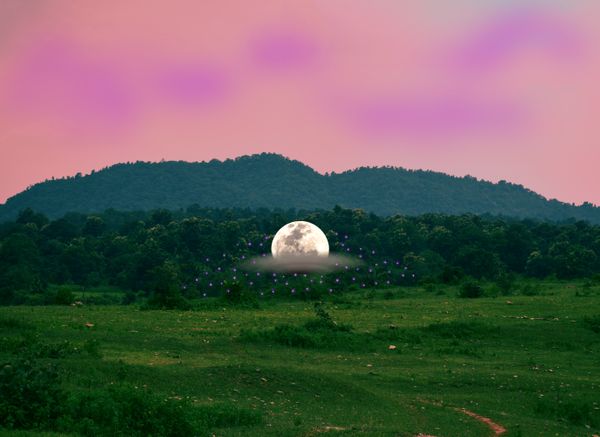
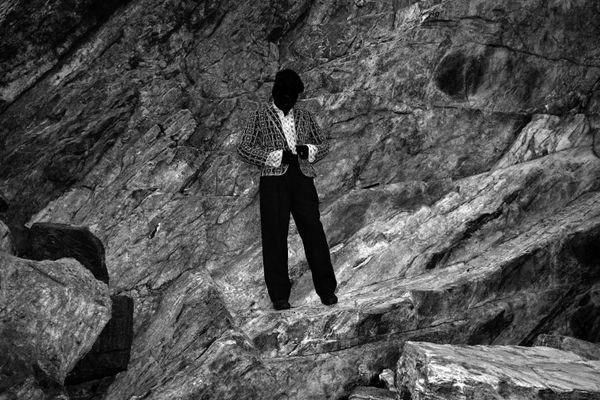
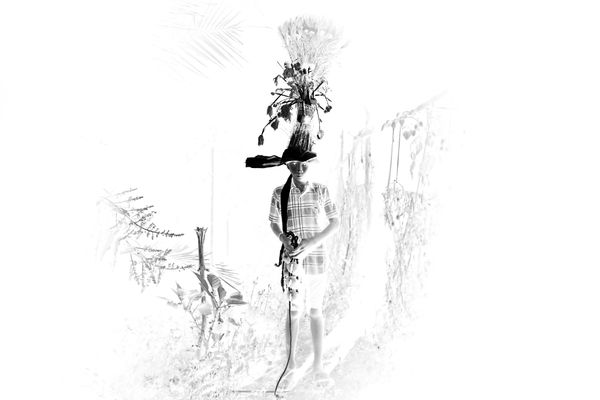
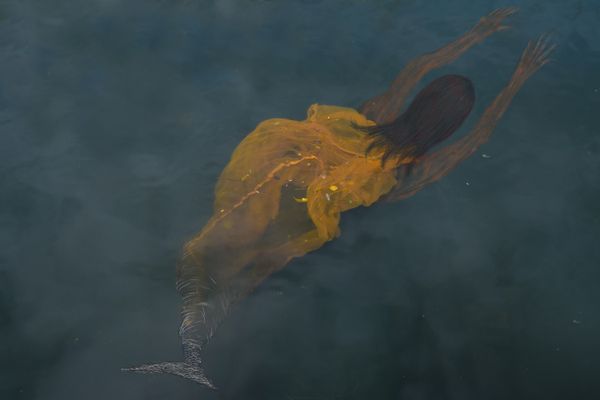
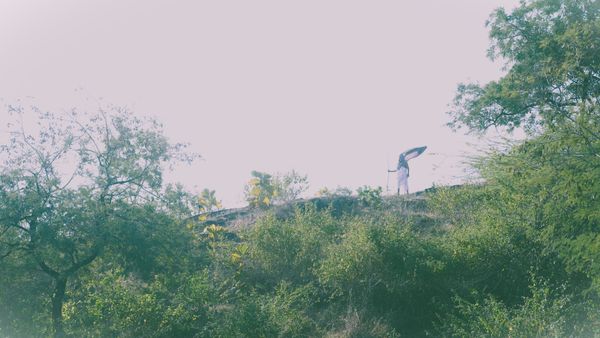
This project aims to make a film revolving around the various stories that take place in Chotta Udaipur, Gujarat, India at mining sites. Some are fictional, and some are about the everydayness of these activities. Fascinatingly, this mining landscape turned into a mythical landscape. The movie is shown from the perspective of one particular boy who lives here. He had imagined this landscape differently through his experience and tales that he had heard from his grandparents. Through the stories of his grandparents, he imagined this landscape in quite a fascinating way. This is a pure example of how one can explore the abandoned land their way and create a new way of looking at and exploring any particular site.
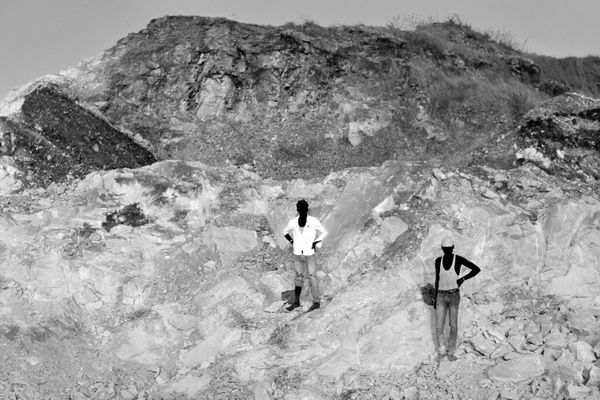
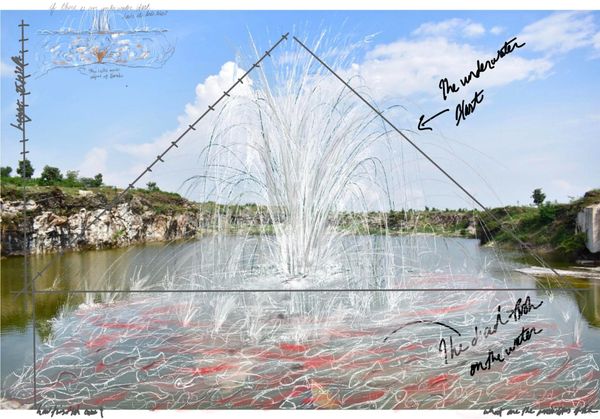
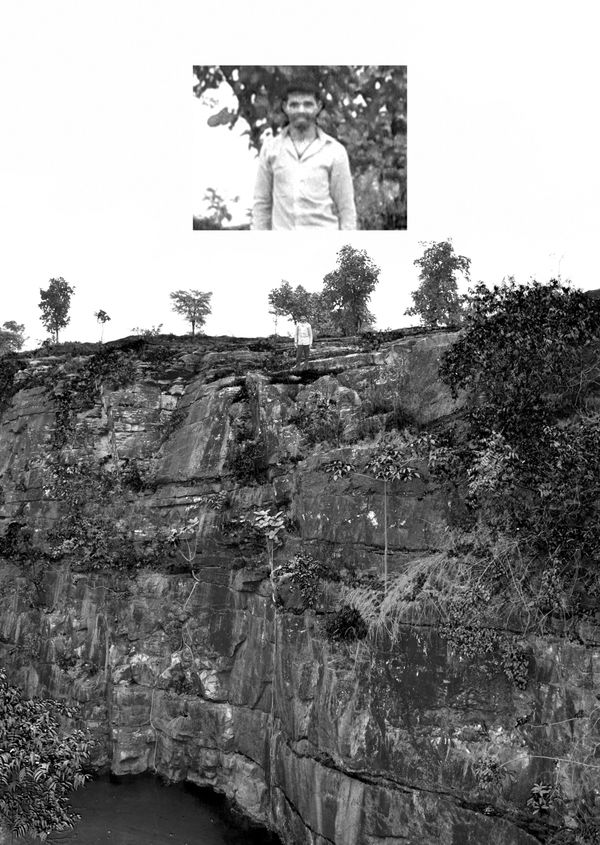
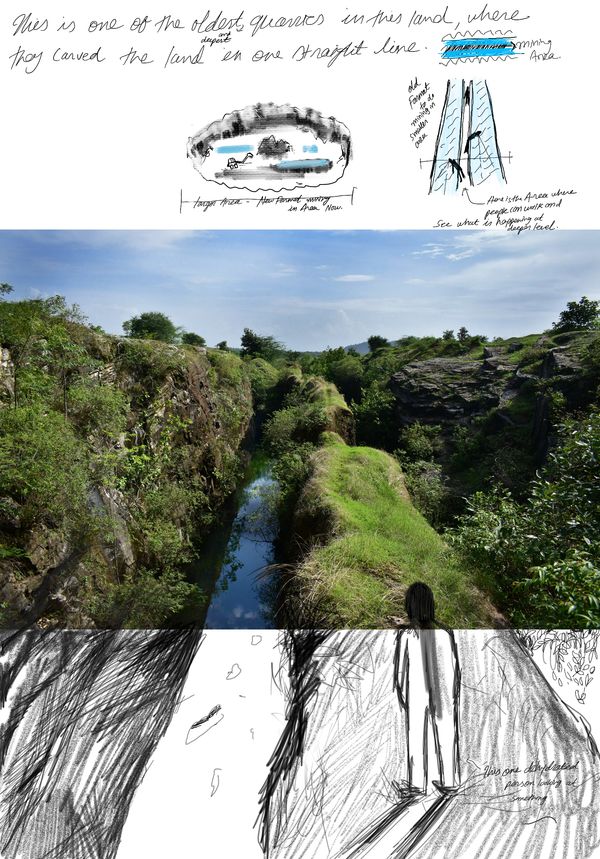
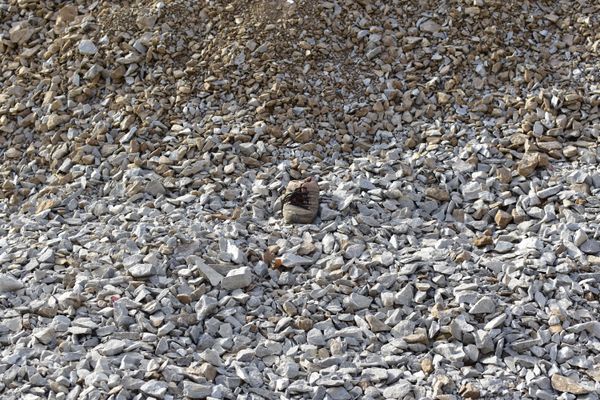
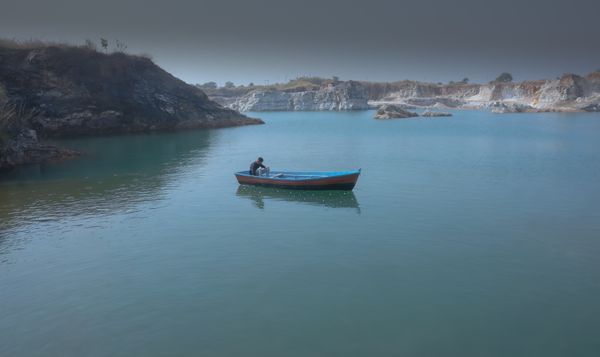
Almost 3 years ago, I had the opportunity to visit Whiteland, a region known for its white Dolomite stone. During my first visit, I was captivated by the unique landscape and became curious to learn more about its formation. Thankfully, a friend of mine accompanied me and assisted me during a visit. Without their support, exploring the area would have been quite risky. In Whiteland, I met two brothers named Sunny and his brother Rahul, who had been living there since birth. Who runs the only shop in the area, are highly regarded among the villagers. He graciously took us to various mining sites, some of which have been active for several decades. These two boys offered a distinct perspective on the landscape and shared numerous associated stories and events. The local children believe in the existence of a mermaid (Jalpari) residing in the mining water. According to their grandparents, she emerges primarily at night but occasionally during the day as well. Such mythical tales piqued their curiosity about the landscape. Beyond the geological and political aspects, this film aims to shed light on the mythical narrative through the experiences of a young boy living there and explore how they navigate life in this environment.
Situated in the remote village of Chhota Udaipur district in Gujarat, this particular location is renowned for its tribal community and notable folk art known as Pithora paintings, traditionally executed on walls within this region. Additionally, Chhota Udaipur is famous for its extensive market specializing in minerals and sands.
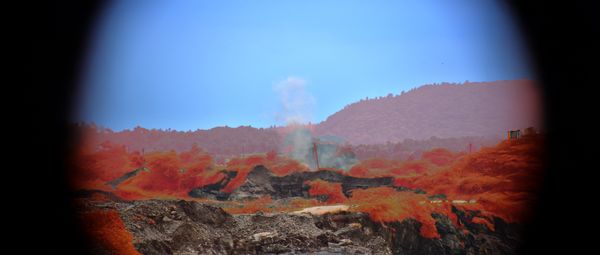
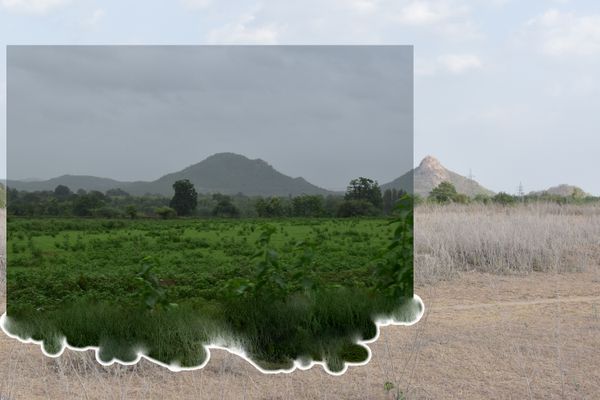
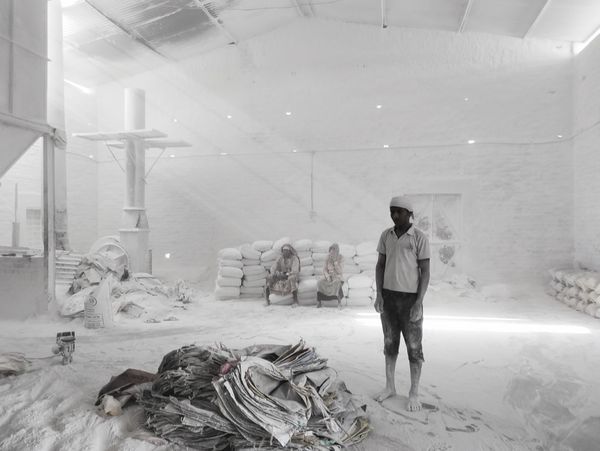
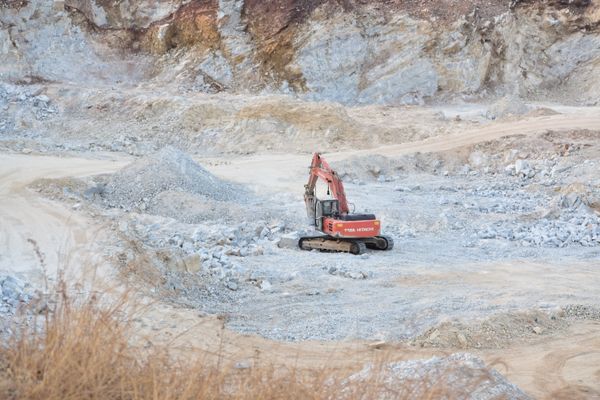
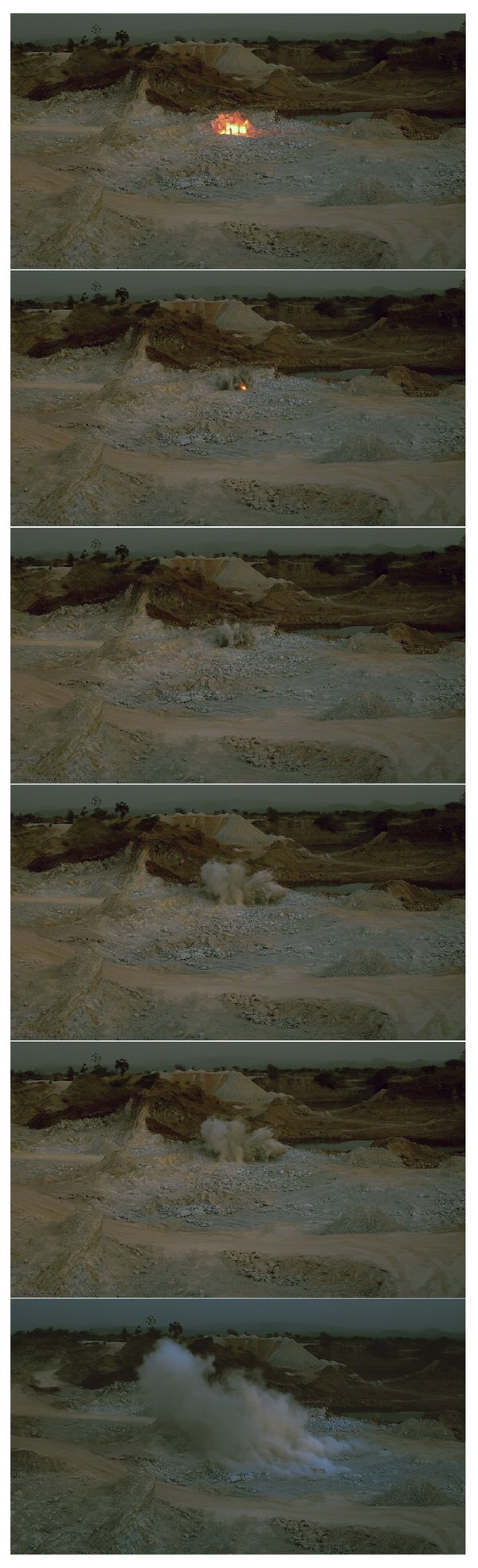
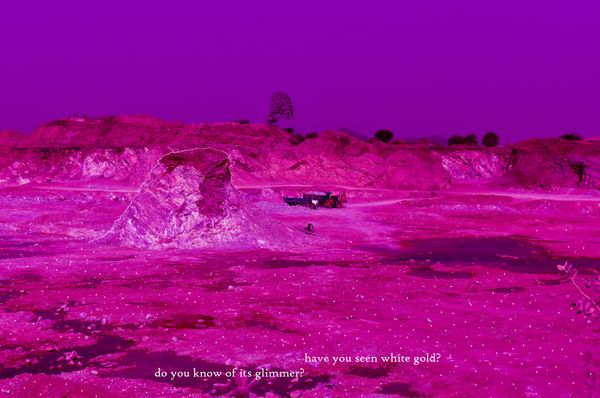
The site I have been exploring encompasses an expansive landscape shaped by both human activity and machinery. Specifically, it is a mining site dedicated to extracting Dolomite, a highly sought-after white stone that Chhota Udaipur is known for. While this stone can be found in various textures and forms, it typically exhibits a consistent tone. The site is characterised by constant and unpredictable transformations, stemming not only from natural phenomena but also from human interventions. Due to daily excavations and transportation, the white dust particles emitted by this mineral settled over the nearby villages. This phenomenon renders the entire surrounding greenery white until the arrival of the next rainfall. The process unfolding before me appears surreal, as I witness the profound changes in nature and the various utilities derived from these substances. Over the past three years, I have frequently observed this site, and what struck me most was the pervasive whiteness that dominates the landscape. From the soil to the grass and even the water beds, everything exudes a white hue.