Ways to Say Snow
-
Dates2024 - Ongoing
-
Author
- Location Akureyri, Iceland
According to an old proverb, there are over 100 ways to say snow in Icelandic.
Ways to Say Snow is a project made during a December artist residency in Akureyri, Iceland. My time was primarily spent in silence and solitude.
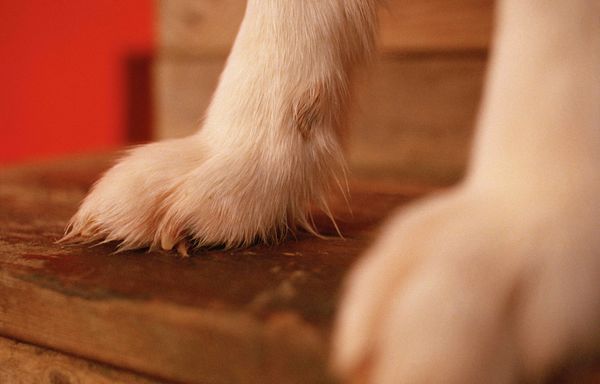
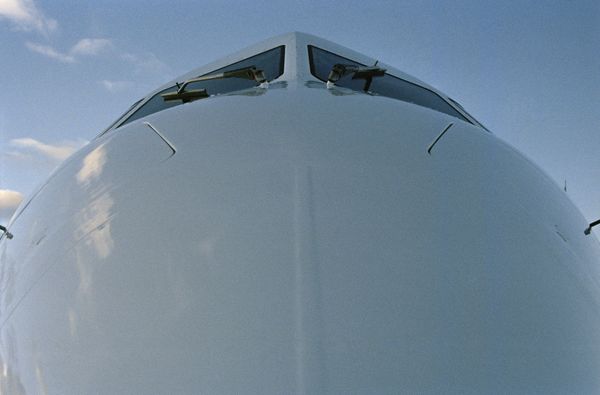
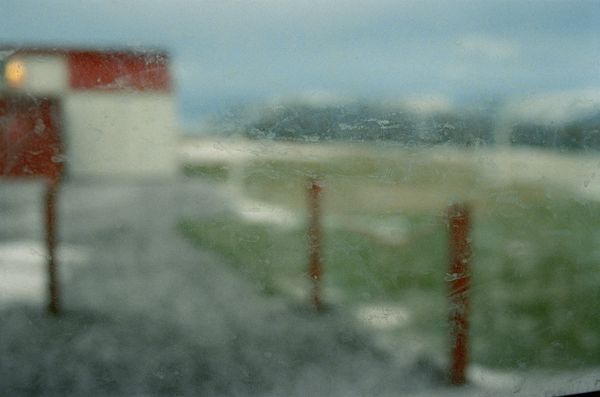
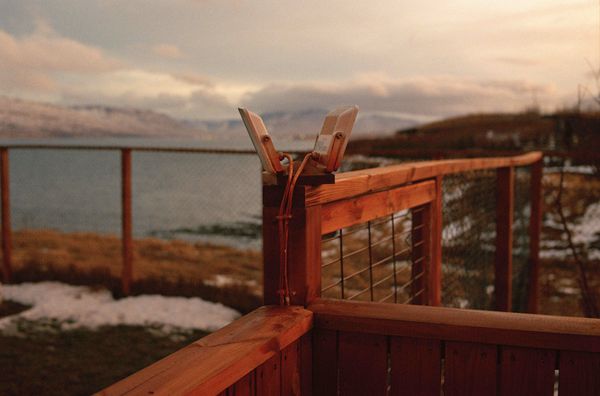
The Icelandic term "window weather" names the discrepancy between how something appears and how it actually feels. You press toward something—to understand it, to not lose it—and it remains itself, indifferent to being known. Dogs slip back to pack mentality when out of sight, planes will deteriorate long after their pilots are gone, snow will drift and build up where it wants.
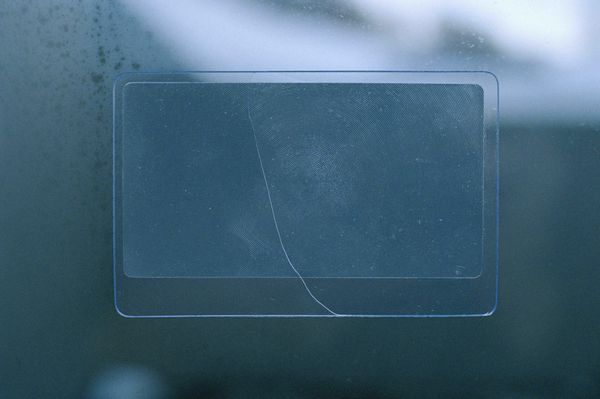
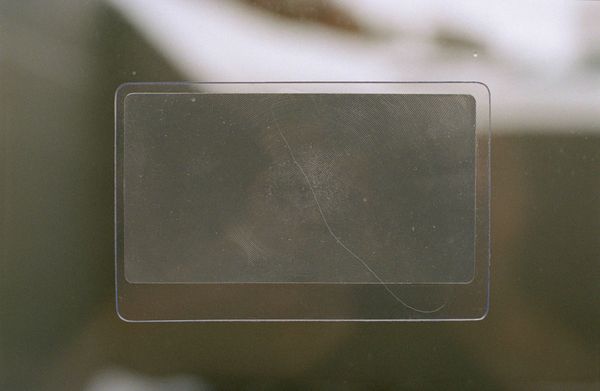
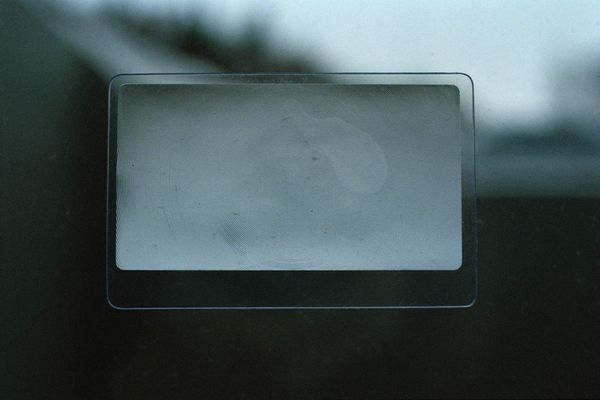
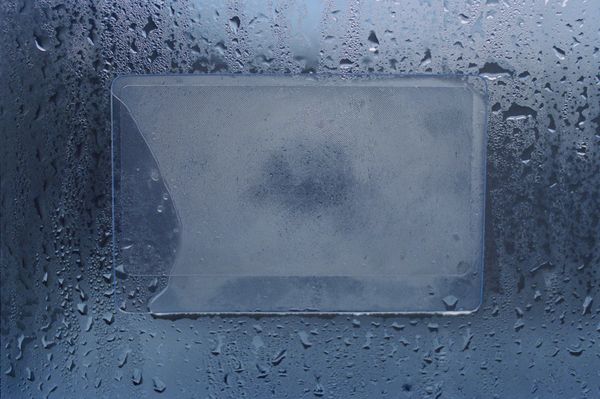
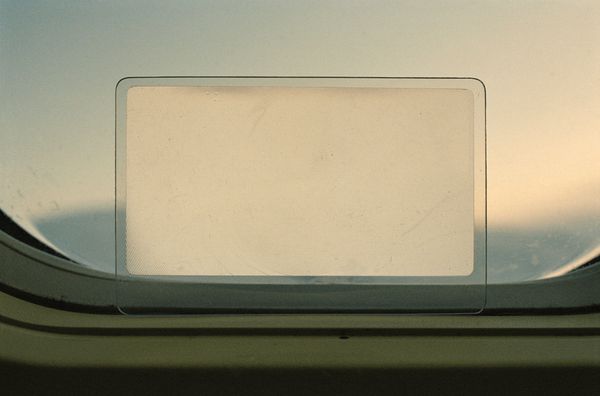
A magnifying sheet, a tool to clarify sight, sticks to the bedroom window with condensation. Photographed every morning for thirty days, it becomes a way of tracking light in a place where daylight lasts just over three hours. Repurposed as subject rather than instrument, it reveals something else: the patterns of the weather, the texture of frost, the light changing by degrees.
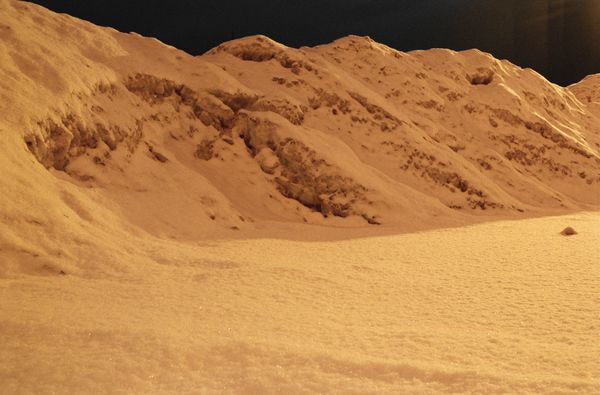
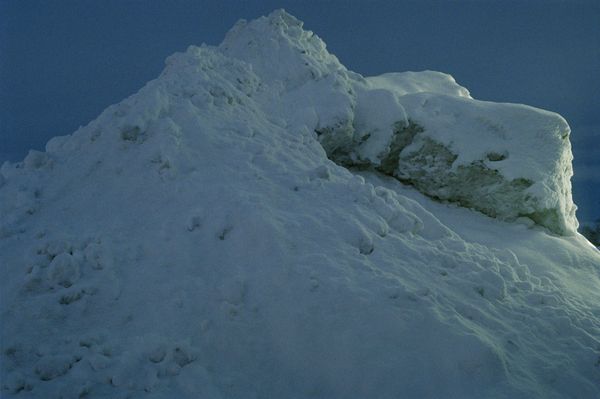
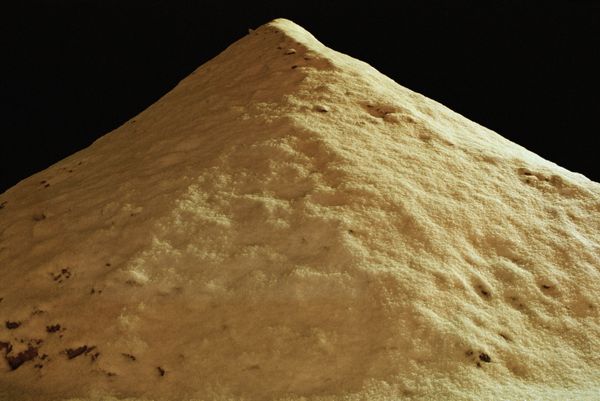
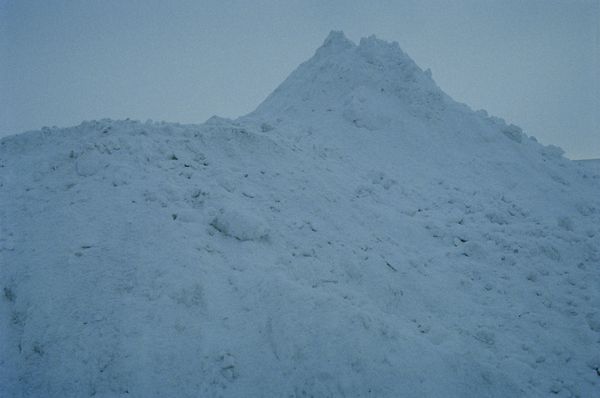
Confined to the city by the shifting weather, I found the surrounding mountains I couldn't reach reproduced in the corners of parking lots: accumulation and light remaking these landscapes quietly. These temporary mounds absorbed both the blue of the sky and the orange of the street lamps, holding a cold distance and a fragile warmth within a single surface.
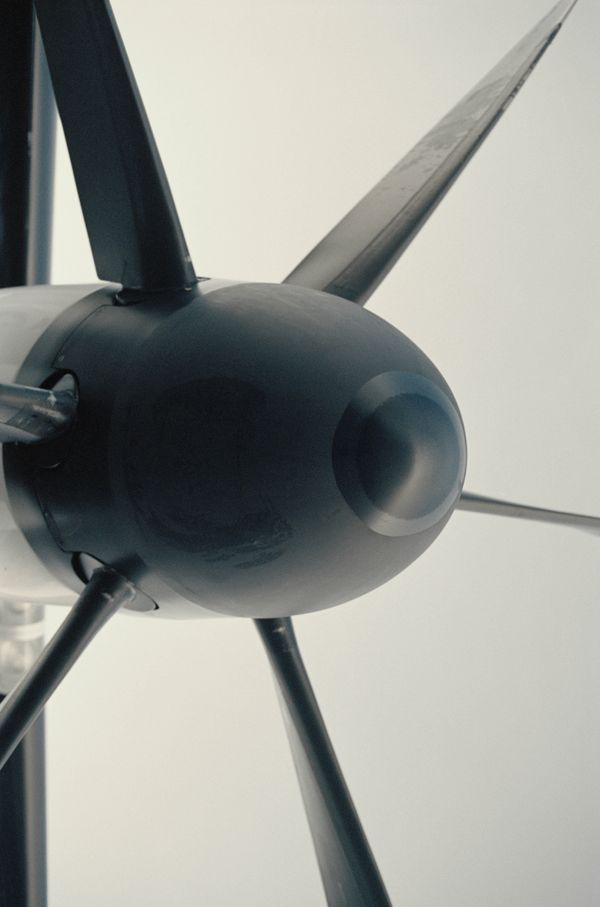
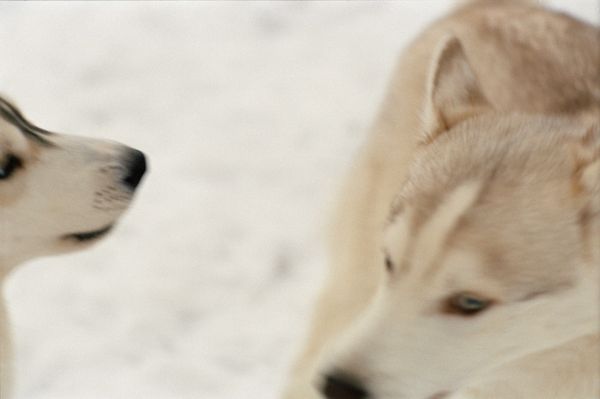
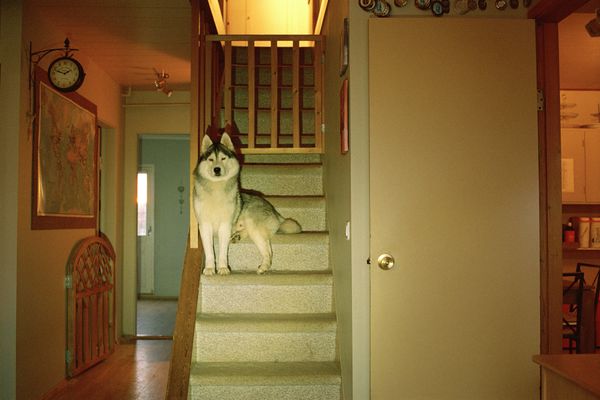
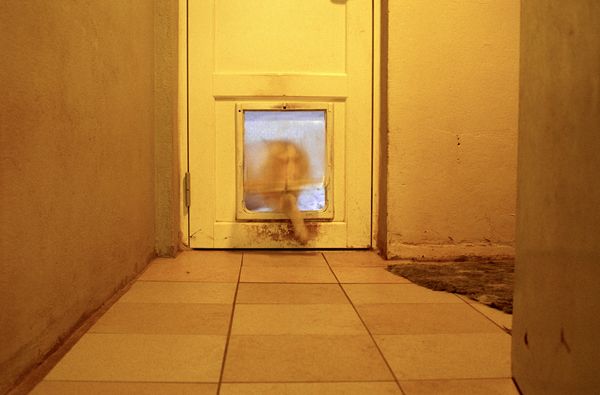
Details of planes are enlarged and abstracted to feel almost corporeal: a turbine's tip shines the way a husky's nose appears lacquered at sunset. A blurred dog moving through a dog door becomes a threshold, an entry and an exit at once. Dog doors become a sort of boarding; gates shift between domestic and structured passage, between permission and restriction.
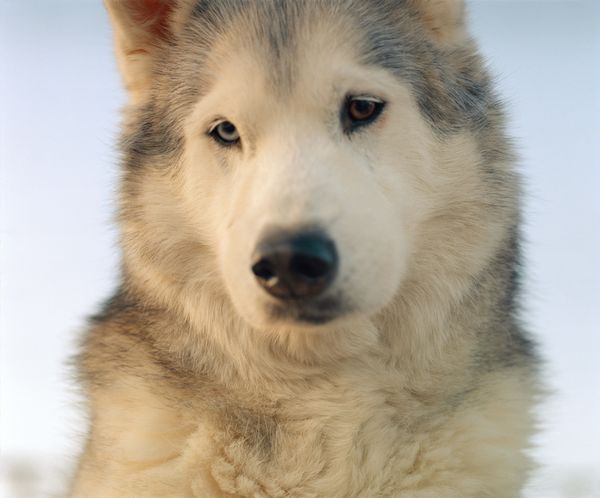
The gaze of the husky is secure yet nurturing, curious yet guarded. The cockpit fills the frame—it eats the sky—the mind of the plane, mirroring the impenetrability of the mind of a dog.
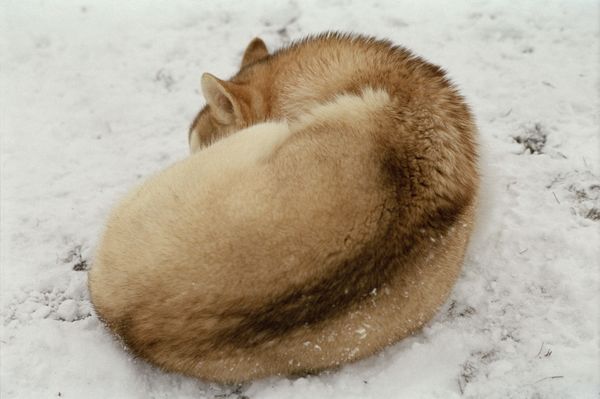
The 29 huskies I spent a week photographing carry names that translate to sleet, snow drift, deep snow, ice, and frost: closely related variations, easily overlooked distinctions. To know the difference is to have looked closer.