Trapped for Entertainment - Wildlife Tourism built on Suffering
  • Dates
    2025 - Ongoing
  • Author
  • Location Thailand, Thailand

Wildlife tourism is often marketed as harmless fun or cultural experience. But behind staged photos and animal shows lies a hidden reality of suffering and exploitation.

Wildlife tourism is often marketed as harmless fun or cultural experience. Photographed in various tourist locations across Thailand, this series documents the exploitation of primates under the guise of human entertainment.

Primates are intelligent and social animals naturally living in complex family groups. In many cases, they are taken from their mothers at an early age, often through illegal trade and kept in isolation. Trainers try to humanise these captive animals – dressing them up, making them perform through fear and punishment, turning them into props. What tourists perceive as entertainment is, in reality, a situation of suffering and deprivation for the animals involved.

Wildlife tourism thrives on ignorance and demand. Ending it requires more than exposing abuse - it demands a cultural shift in how we see animals and stronger protections against exploitation. Sanctuaries can offer safety, but often too late; years of captivity leave psychological damage that makes release impossible.

© Sandra Hoyn - Image from the Trapped for Entertainment - Wildlife Tourism built on Suffering photography project
i

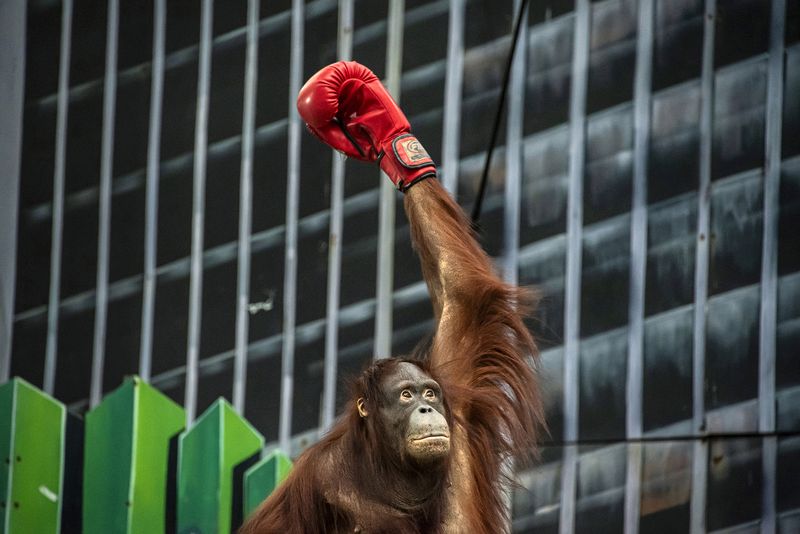
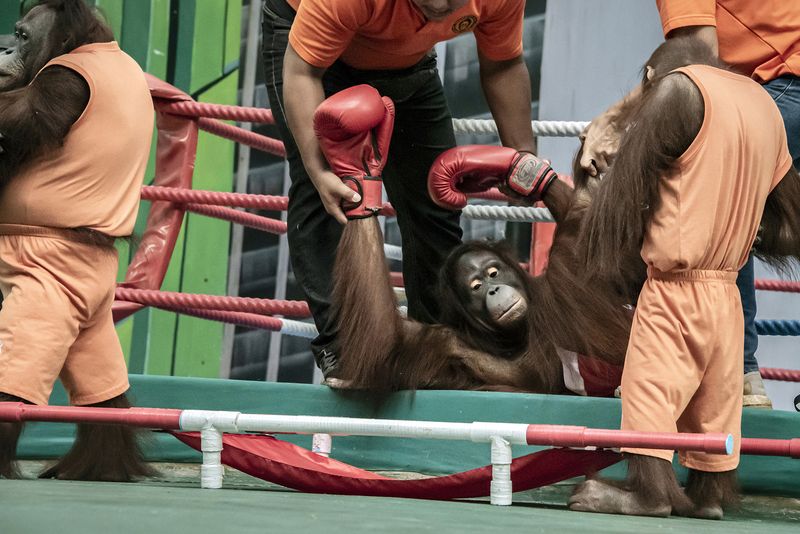
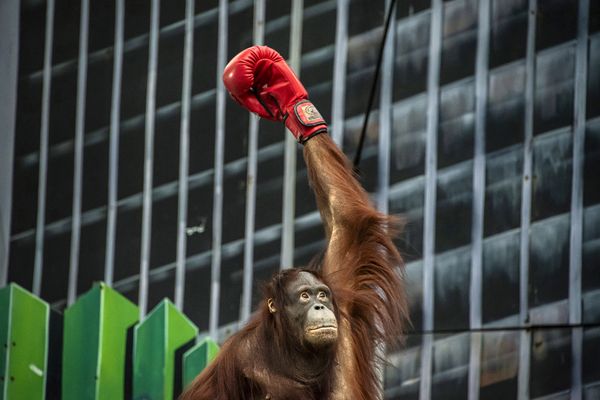
Dressed in boxing gloves, an orangutan raises his hand - not in victory, but on command. A symbol of strength, performed by one who never chose to fight. Trained to perform and stripped of his freedom, the picture of the orangutan in Safari World Bangkok shows the unequal power relationship between humans and animals used for entertainment.

© Sandra Hoyn - Image from the Trapped for Entertainment - Wildlife Tourism built on Suffering photography project
i

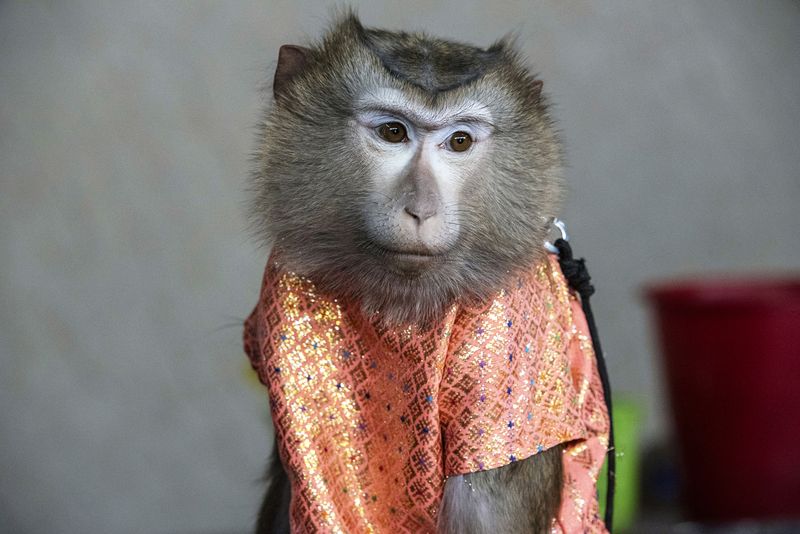
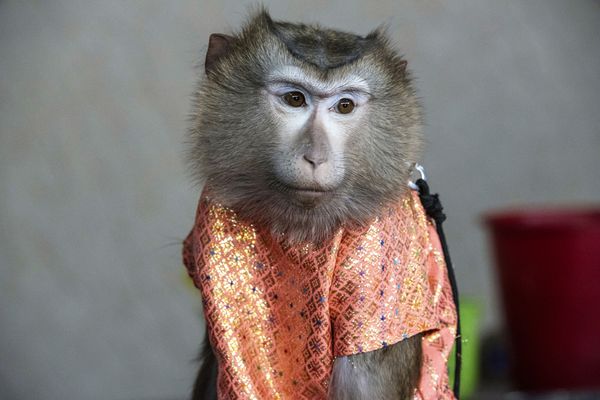
A trained pig-tailed macaque dressed up for entertainment, Chang Puak Farm, Thailand. Pig-tailed macaques are often used for entertainment, because they are quick learners, which makes them easier to train for unnatural performances.

© Sandra Hoyn - Image from the Trapped for Entertainment - Wildlife Tourism built on Suffering photography project
i

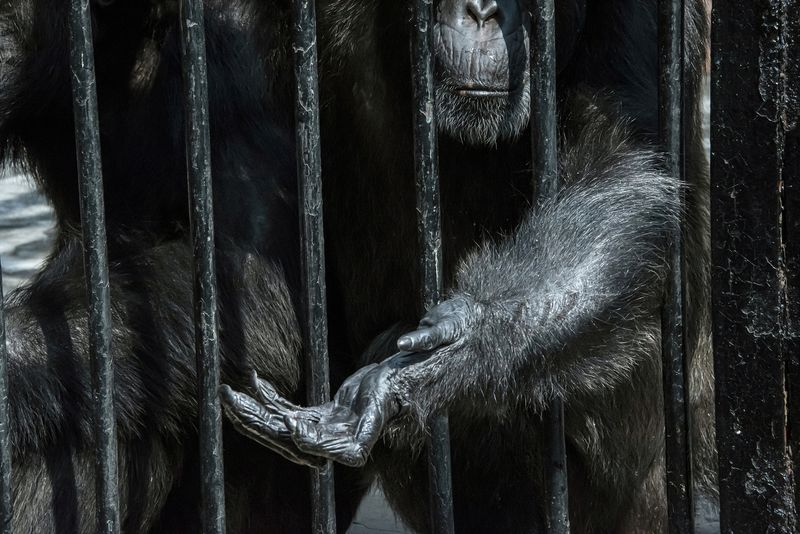
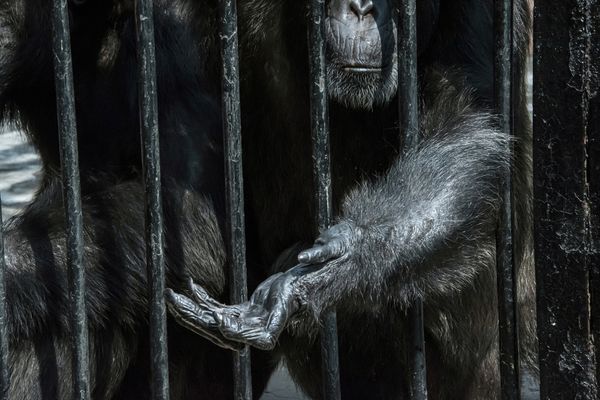
A Chimpanzee reaches his hand out of his cage, Samutprakarn Crocodile Farm and Zoo, Thailand. Chimpanzees are highly intelligent and social animals living in complex communities in the wild. In captivity they are denied these basic freedoms, this lead to physical and mental health issues, including stress, aggression and self-harming behaviors.

© Sandra Hoyn - Image from the Trapped for Entertainment - Wildlife Tourism built on Suffering photography project
i

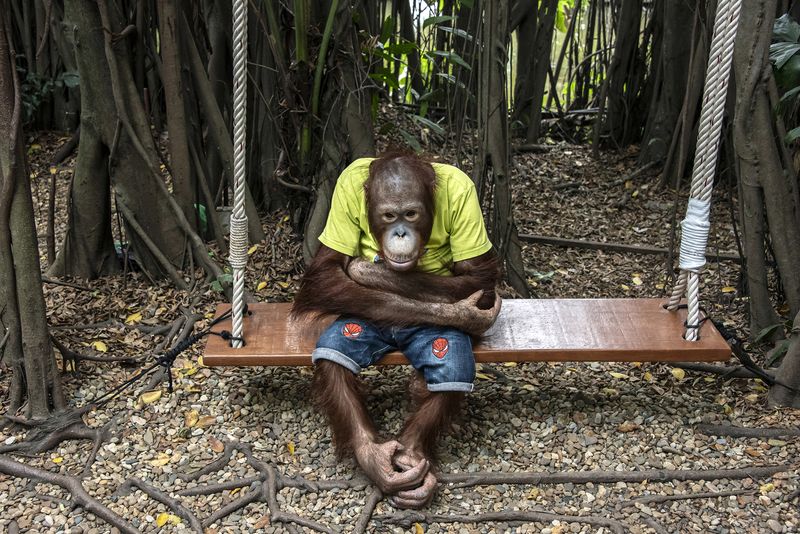
An Orangutan on a swing is waiting for tourists to take selfies, Safari World Bangkok. Close contact with humans and wearing clothing can be extremely stressful for an orangutan. Both the orangutan and tourists are at risk of zoonotic diseases, because diseases that can jump between species.

© Sandra Hoyn - Image from the Trapped for Entertainment - Wildlife Tourism built on Suffering photography project
i

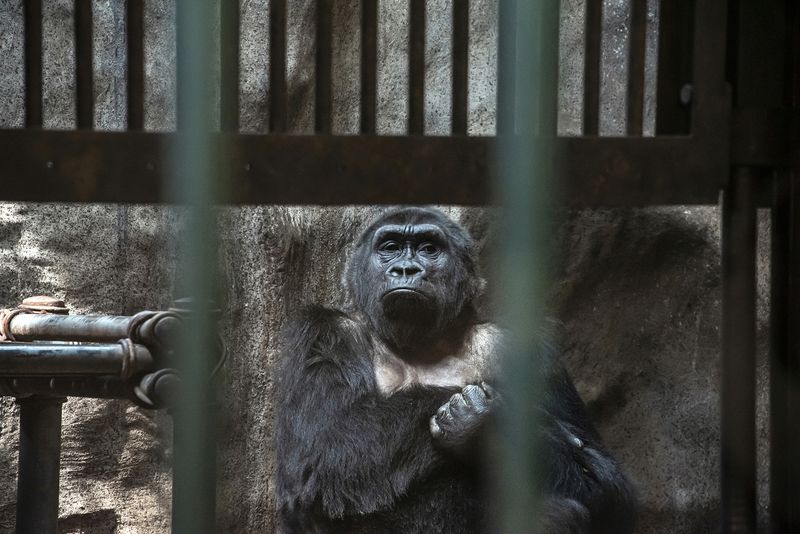
Bua Noi, a female gorilla, lives in captivity in the Pata Zoo on the seventh floor of a Bangkok shopping mall since 1987. In the wild, gorillas are social animals that live in family groups, forming complex bonds and thriving in rich, natural habitats. Bua Noi has never known this. Instead, she spends her days alone, without meaningful social interaction or environmental enrichment.

© Sandra Hoyn - Image from the Trapped for Entertainment - Wildlife Tourism built on Suffering photography project
i

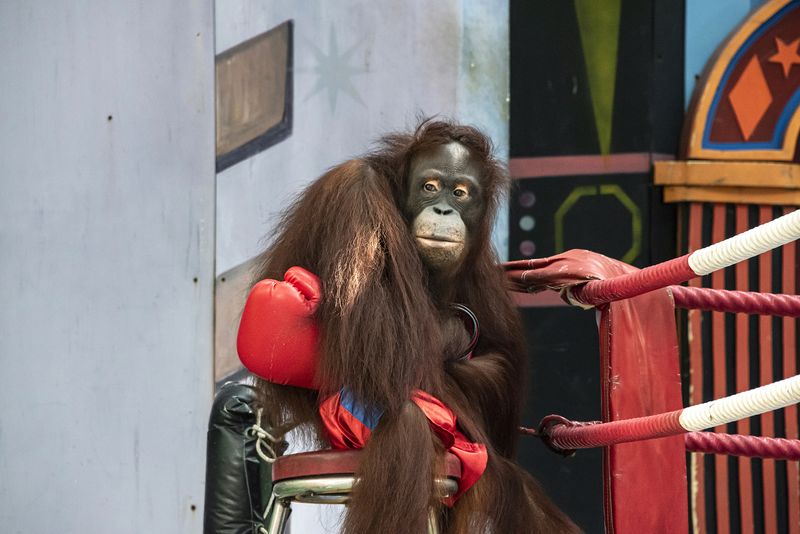
Orangutans perform a boxing show at Safari World Bangkok. Trainers humanised them in captivity – dressing them up, making them perform through fear and punishment, turning them into photo props.

© Sandra Hoyn - Image from the Trapped for Entertainment - Wildlife Tourism built on Suffering photography project
i

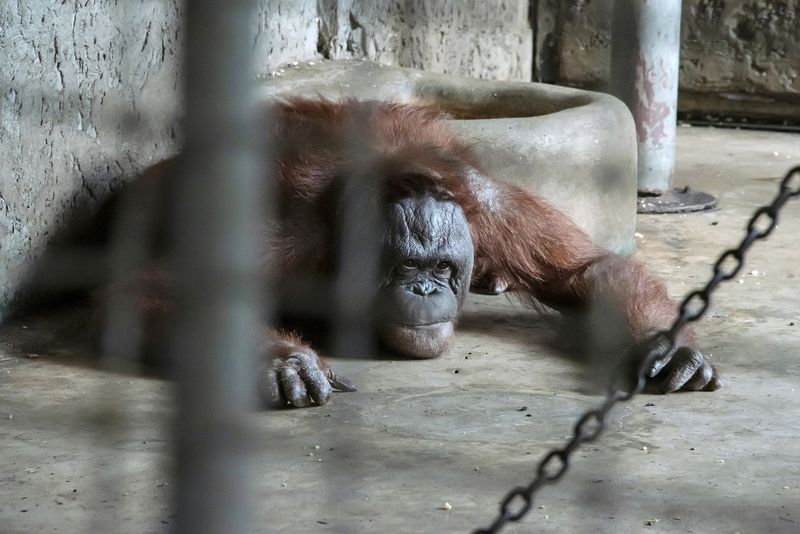
An Orangutan in the Pata Zoo on the seventh floor of a Bangkok shopping mall. Stripped of his freedom, the picture of the orangutans locked in concrete cage shows the unequal power relationship between humans and animals used for entertainment.

© Sandra Hoyn - Image from the Trapped for Entertainment - Wildlife Tourism built on Suffering photography project
i

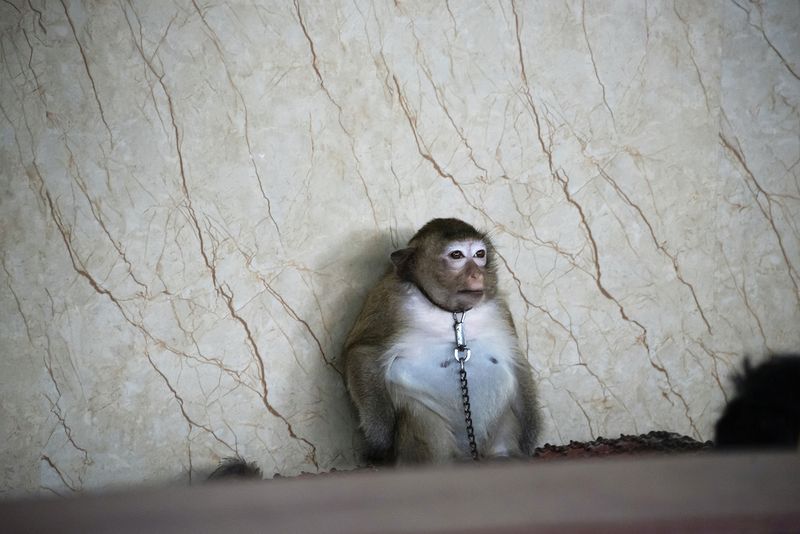
A chained pig-tailed macaque on his cage during a break of a monkey show, Chang Puak Farm, Thailand. Pig-tailed macaques are often used for entertainment, because they are quick learners, which makes them easier to train for unnatural performances. The macaque looks overweight, because he is in captivity, doesn’t get enough exercise and is overfed without a balanced diet.

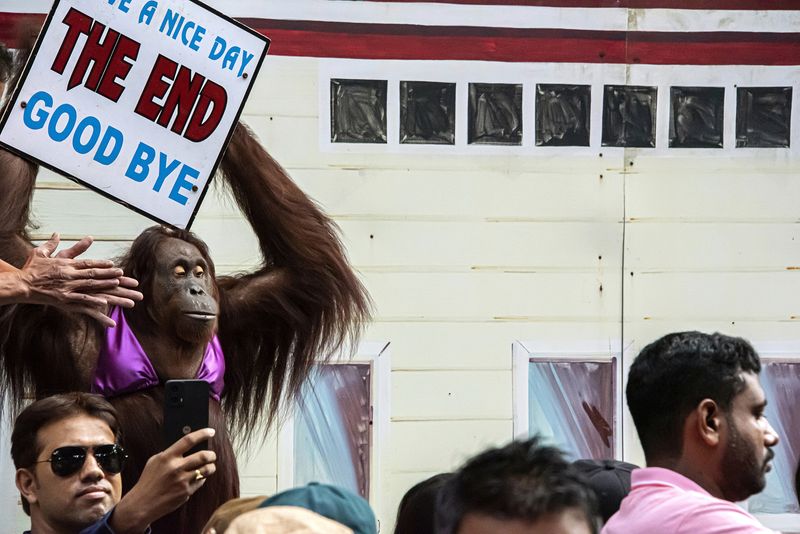
© Sandra Hoyn - Orangutan dressed in human clothes with a farewell sign, Safari World Bangkok.
i

Orangutan dressed in human clothes with a farewell sign, Safari World Bangkok.

© Sandra Hoyn - Image from the Trapped for Entertainment - Wildlife Tourism built on Suffering photography project
i

An Orangutan sitting outside a boxing ring during a performance, Safari World Bangkok. Trainers humanised him in captivity – dressing him up, making him perform through fear and punishment, turning him into a photo prop.