This Moon in Your Throat
-
Dates2025 - Ongoing
-
Author
- Locations Rochester, Seoul
This Moon in Your Throat engages with Korean collective, and historical trauma called Han. Through collages, still-lifes, and night time portraits of the diasporic Koreans living in the U.S., I examine where does the personal end and the collective begin.
This Moon in Your Throat engages an emotion known in Korean as Han. Often described as unresolved trauma transmitted across historical, collective, and personal dimensions, Han resists precise translation into a single English word. I sense that the affective residues of colonization and post-division migration are continually renewed as they intersect with assimilation pressures in the United States. Through photography, I examine how Han and Korean diasporic identity in America, including my own, shape one another.
For me, Han accumulates in the body and becomes visible through gesture, sensation, and recurring emotional patterns. It is a trauma that, through the body, entangles the flow of time. I often find its traces in the sensations carried by space, food, and family photographs. These traces also surface in still lifes and landscapes, where Han clings to objects and rooms beyond the body, organizing sensation and relationships and blurring the boundary between body and non-body.
Much of this work begins in night time. I photograph in homes at night with the lights turned off, using night as a condition in which the boundaries between subject and object, reason and reverie, loosen. My subjects are partially revealed and defined by the glow of household electronics produced by global conglomerates. Within this incomplete visibility, suppressed emotions resurface, and some subjects weep during the session. I understand the nocturnal process as a form of photographic shadow work, inspired by Carl Jung’s concept of the shadow, that creates a space for internal resolution.
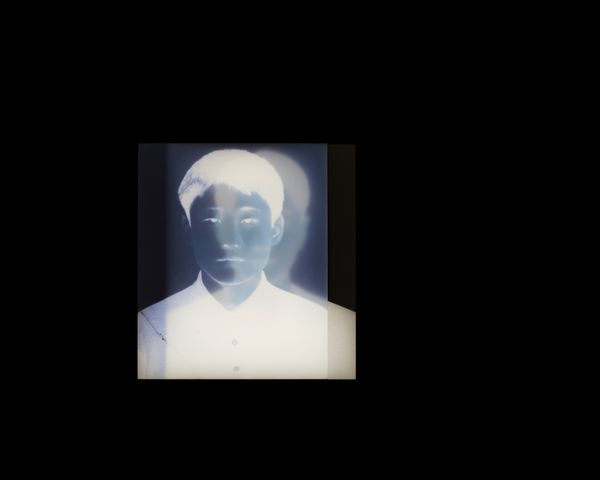
The images then move back into the archive. Working with my family photographs, I build composited images through layering, turning images into negatives, and collaging. This process allows the body, as an archive that holds Han, to appear within a non-linear temporality in which past, present, and future permeate one another. In doing so, I ask where the boundaries lie that distinguish trauma from identity, and further, that separate the living and the dead, the individual and the collective, the subject and the object.
Through This Moon in Your Throat, I attempt to reframe Han not only as an inherited burden carried in the body, but also as a site of imaginative reconfiguration where new inner and relational possibilities can begin to take shape.
Descriptions:
01. Me and My Father
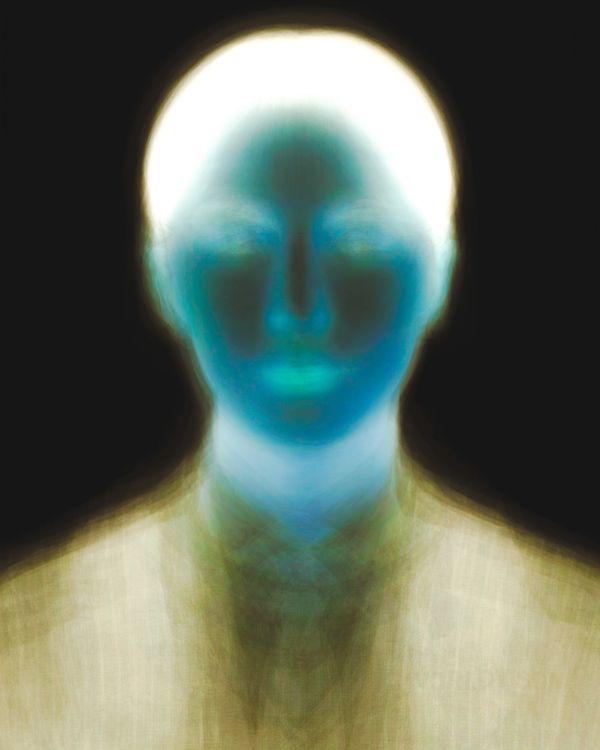
Two ID photographs, mine and my father’s, stacked and rephotographed as an inverted image.
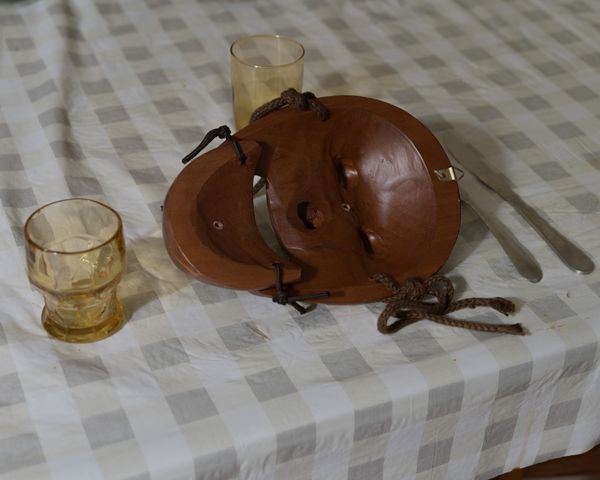
02. Hahoe Mask Upside Down
Still life of an upside-down Hahoe mask on a dining table. From Andong’s Hahoe Village, it connects to the Ryu family of Hahoe, an aristocratic lineage my father often invoked as an inherited ethic of responsibility, and a quiet source of anxiety.
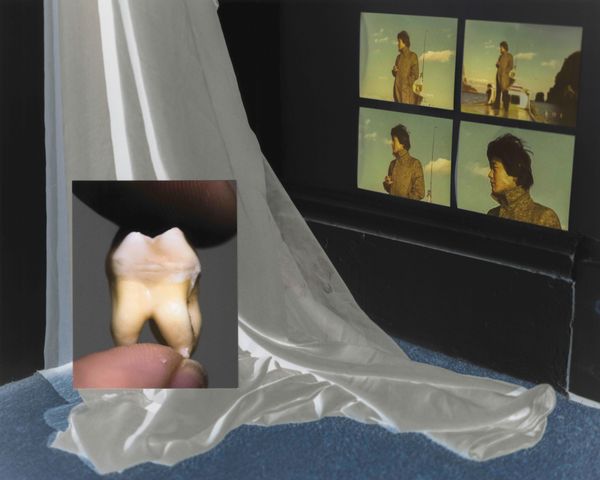
03. My Room and My Molar
Han passes down through body language. My father’s habit of clenching his jaw carried into my body. I remember the moment, as a child, that I mimicked him clenching. Years later, as an adult, I went through a three-month stretch when my anger would not lift, and I lived with my jaw clenched, until a molar finally cracked.
04. Pam with Her Phone
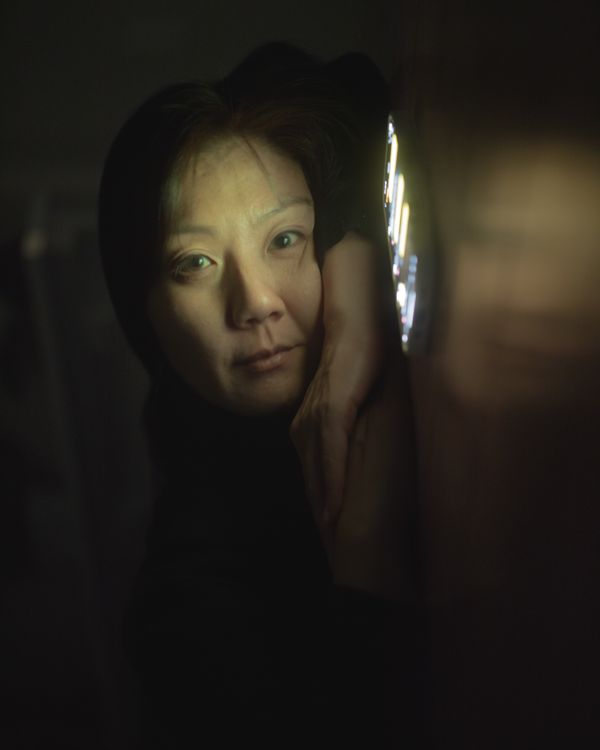
Long-exposure night portrait of Pam, made with the room lights turned off. She is lit by a phone screen showing KakaoTalk, a Korean messaging app.
Adopted from Korea to the United States, Pam lives with fibromyalgia, a chronic condition that causes ongoing pain throughout the body.
Before the photo shoot, I asked her to do a 10-minute free-writing exercise. She wrote: “People ask why I would give up a comfortable, wealthy life in America and try to return to Korea. I say I don’t know. I don’t know anything except that I want to eat kimchi. A part of my soul that died forever when I came to America wants to eat kimchi.”
Made three days before her departure from the U.S. to Korea.
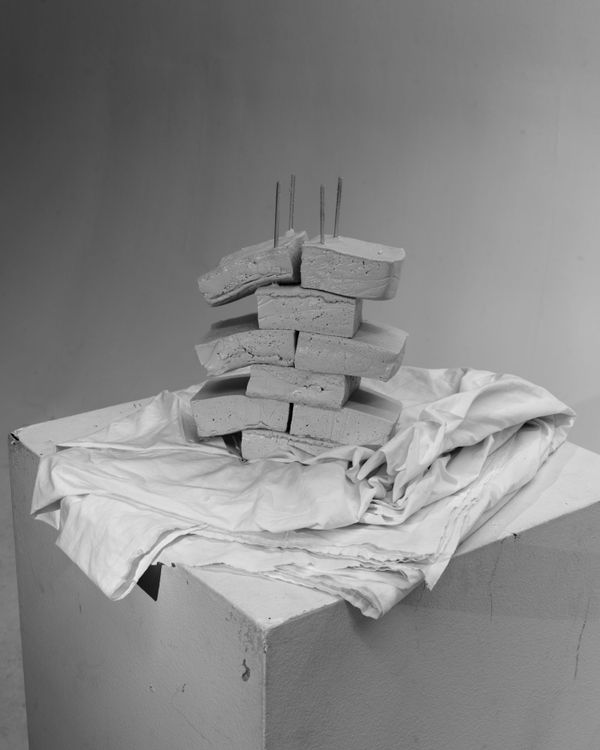
05. Blocks of Tofu
Still life of tofu blocks stacked to mimic bricks, a fragile structure that sags and breaks at the edges.
06. A Father within a Father
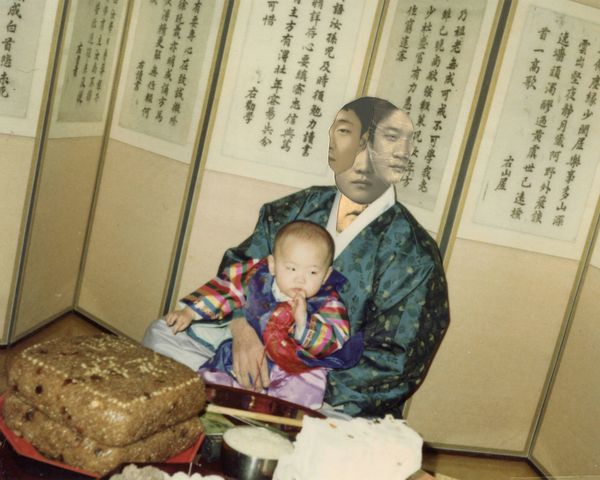
Composited from my older brother’s first-birthday portrait. Three generations share one frame: my grandfather’s body, my father’s younger face, and my brother as a child.
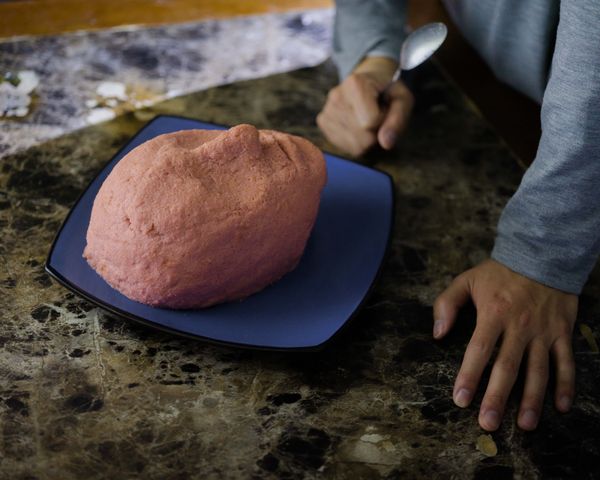
07. Spam Head
Still life of a molded block of Spam, placed on a plate on a dining table. A hand enters the frame with a spoon, suggesting an imminent act of eating.
Spam was introduced to Korea through U.S. military provisions around the Korean War and the postwar economies that formed around American bases. On tables marked by scarcity, it was translated into stews like budae-jjigae, and has since become a beloved food. In the United States, it often remains a cheap processed meat and a punchline. The same can of Spam carries different memories.
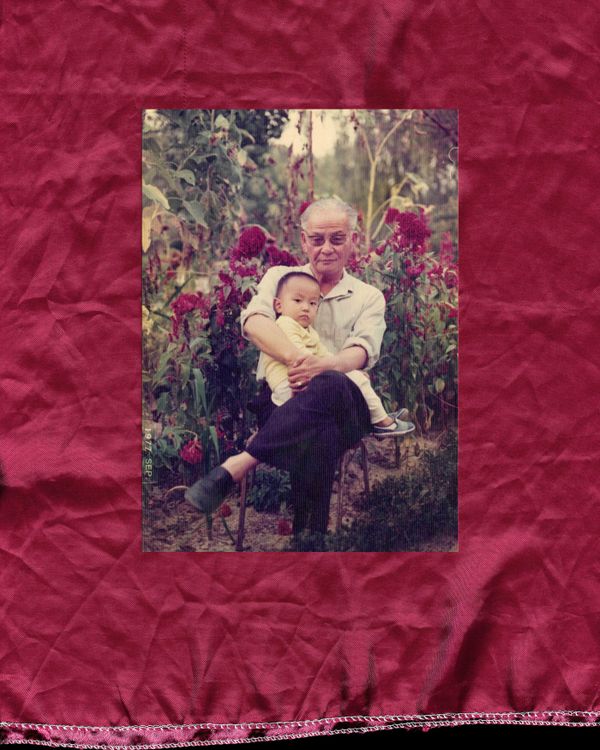
08. Grandfather on a Bottari
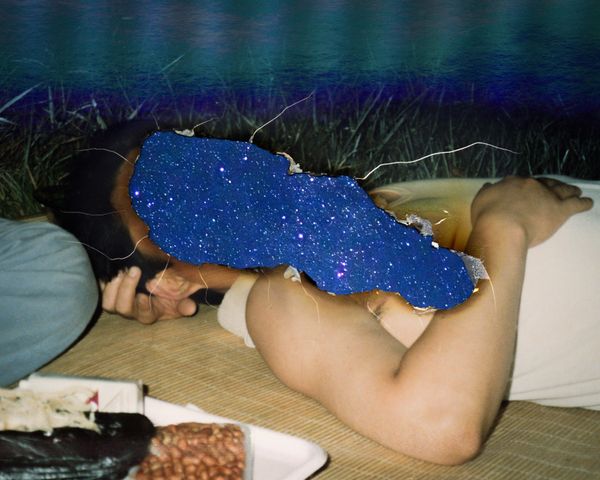
Archival family photograph of my grandfather placed under a bottari, a Korean cloth bundle used for wrapping and carrying belongings when moving.
09. At Night, a Body Becomes A Keyhole for Ancestors
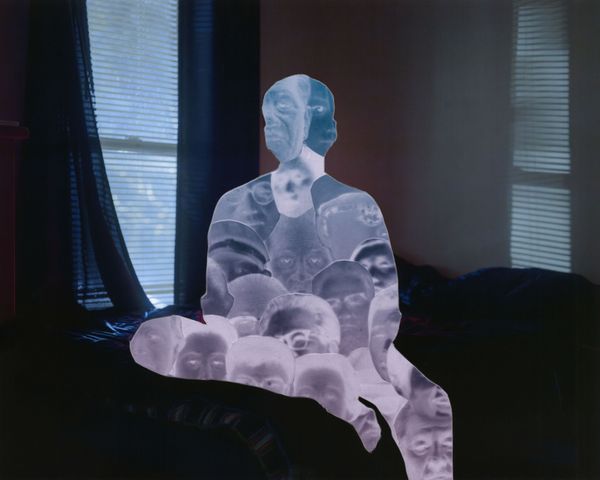
A cut-out silhouette of my subject’s body, filled with inverted faces from my family archive and assembled into a single figure.
Like my grandfather, my subject’s grandfather lost family while fleeing during the Korean War. He told me that, amid postwar modernization, the pressure to rebuild and provide for his family shaped their decision to move to the United States. Although he resents his Koreanness as something marked by Han, he says that in America he feels more Korean than ever. He asked to remain anonymous and did not want his face to be exposed.
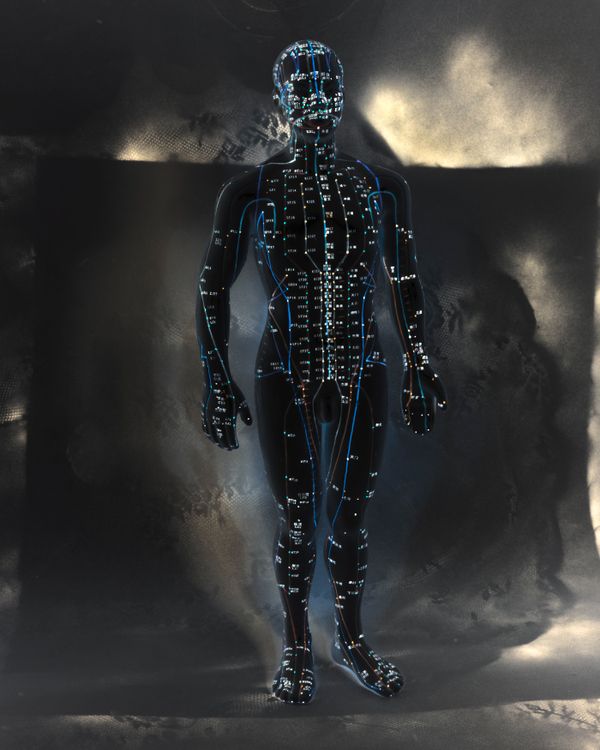
10. Arirang on a Body
Inverted image of an acupuncture model.
In Arirang, an old Korean folk song, there is a line that goes "There are many stars in the clear blue sky, and there is much Han in my chest.”
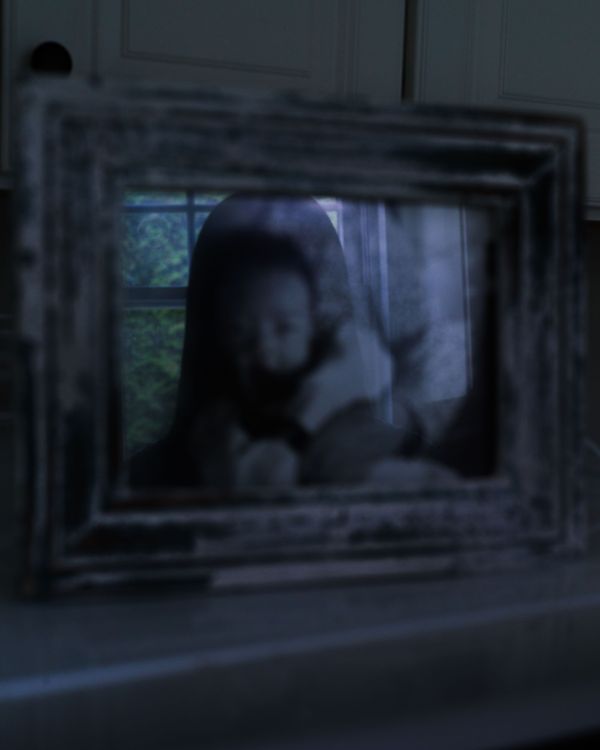
11. Olgool(Face)
One of my subject's present-day silhouette is overlaid with a photograph of her as a baby.
“Olgool” is a romanization of 얼굴, the Korean word for “face.” In a folk reading, it is sometimes heard as Ol(얼: spirit) + Gool(굴: cave), framing the face as a “cave” that holds the spirit.
12. A Portrait for The Departed
Layered and inverted passport portraits of Koreans.
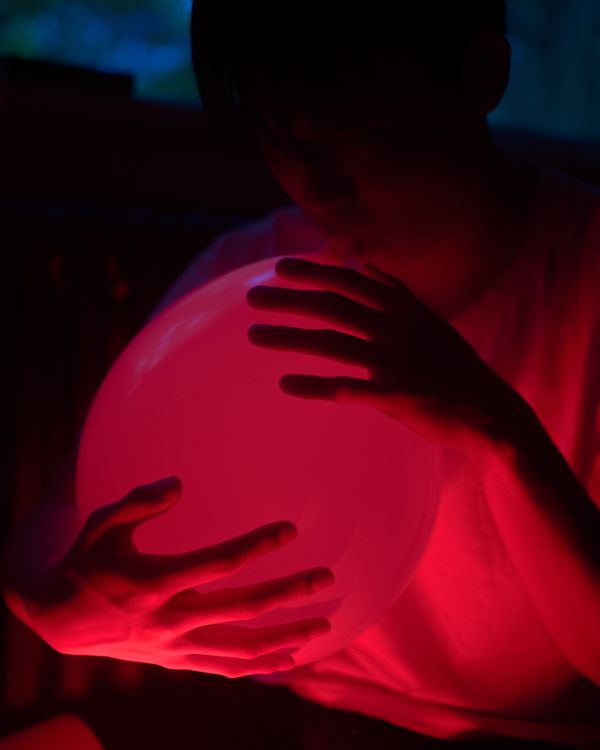
13. Red Moon
Long-exposure night portrait of Mok-In holding a white balloon, drenched with red light coming out from his digital clock. It is framed as a collected breath, a substrate for spoken language.
Mok-In, a student at the University of Rochester, told me that he feels as if something is stuck in his throat when he cannot make himself understood in English. Sometimes he wants to scream, to let out the part of himself that lives only in Korean, the part that does not come through in English. I felt that deeply too: moving through life as if something is caught in the throat.
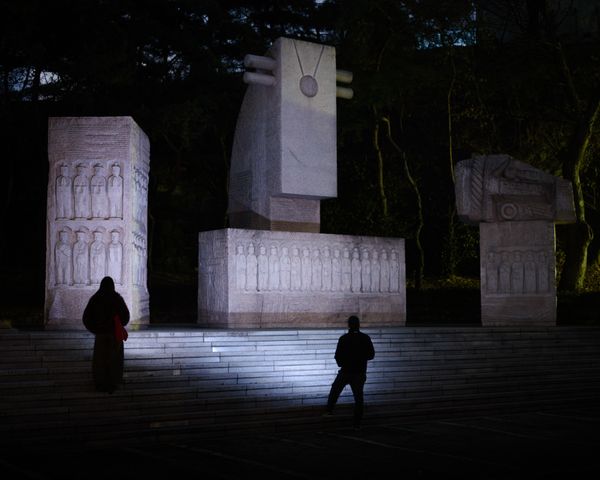
14. Caves within Caves
Photographed at Yanghwajin Foreign Missionary Cemetery, Seoul. Two people are shining the light onto the monument at night, revealing figures within figures.
15. Night Sky in Dad
A photograph of the night sky paired with a burned family photograph of my father.