

This American Dream

America has long lured us to her shores with the promise of the American Dream: Opportunity, prosperity, and success, regardless of your social circumstances. That through hard work and dedication anybody can achieve anything. The belief that economic independence is just around the corner, and that with homeownership begins the steady climb of upward mobility. That your toils guarantee a better, richer and fuller life for your children. That they will grow up safe in a land of opportunity, receive a good education, develop to their full potential, without any limitations. As Americans we are born to this national ethos and raised on an idealized vision of American life. With the dawn of mass media came a steady diet of cookie-cutter visions of this American Dream. A car, a home, a family – an upwardly mobile life with the promise of success for each following generation. We reached the apex of this rise without noticing, and now, find ourselves a society holding fast to ideals that do not hold true and may have never been meant for some at all. White America is just waking up to the reality that our system is inherently selective. The American Dream stopped at red lines across America. “Life, Liberty and the pursuit of Happiness”, but not in the suburbs. And now that the foundations of our dreams are crumbling, we realize that we have fallen vastly behind the rest of the developed world. Antagonistic politics weaponize the idea of American exceptionalism against us. They promote the idea that Americans are, by birth, elect, even as they deny citizens access to clean water, universal healthcare, or a decent education. This American Dream is an ongoing visual documentation based on my perception of my birth country, the United States, and how the concept of the American Dream does not reflect the reality and opportunities available to those that live it.


© Martina Borsche - Image from the This American Dream photography project
i

Freedom, 2019. The „Leader of the Free World“ was a colloquialism first used in propaganda by the United States during the Cold War to describe itself. Yet the question remains: Freedom for whom and to do what? Property qualifications and other restrictive voting laws disenfranchised legally free minorities and impoverished citizens from practicing their fundamental right to vote. A trend that continues today as certain states have introduced new legislation, in effect limiting voter access for low-income and minority populations.

© Martina Borsche - Image from the This American Dream photography project
i

Tack Shed (Old Glory), 2015. The flag of the United States is a ubiquitous element of the American landscape. It can to be found in the most unlikely places. And as with the flag, patriotism has long been a hallmark of American society. Freedom, education, opportunity, diversity, and the right to vote were listed among the top reasons for U.S. participants of a 2019 focus group to state that they were proud to be American. A long-running poll on patriotism found in 2012 that the percentage of Americans, who believe they are "very patriotic" had never fallen below 85% in 25 years. Just in the past few years, however, the term “patriot” has been co-opted and grown to mean something more extreme and even racist. Of the over 550 Capitol rioters charged in connection with the Jan. 6 insurrection, many defended their actions as "patriotic".

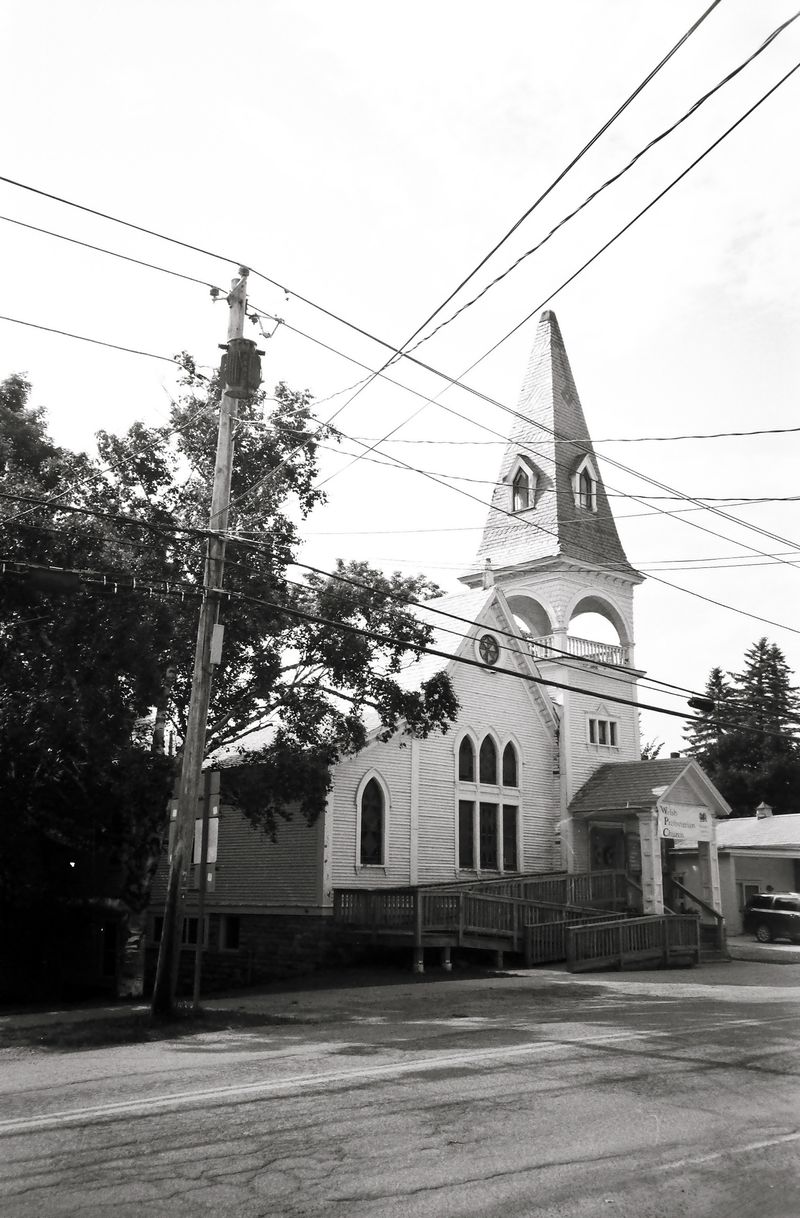
© Martina Borsche - Welsh Presbyterian (Power Lines), 2017.
i

Welsh Presbyterian (Power Lines), 2017.

© Martina Borsche - Image from the This American Dream photography project
i

Victory Bog, 2017. Since its inception the United States has been involved in 98 conflicts, many of which were fought on the American continent against indigenous tribes. Statistically, the U.S. has been at war 93% of the time – 222 out of 239 years – since 1776. In the 20th century, U.S. military involvement was seen as a peace-bringing effort to foster democracy and its ideals across the globe. The U.S. war in Afghanistan was the longest conflict the United States government has been involved in, lasting nearly twenty years. The U.S. involvement in the Middle East, including the Iraq war, has shifted the population's perspective on the country's foreign involvement. Over time, the public's perception of the wars in Iraq and Afghanistan has slowly changed, leaving a majority feeling that the United States has mostly failed to achieve its goals. In 2013, 52% of Americans believed that the United States should not get involved in foreign affairs, in 1964 only 20% of the population felt the same.

© Martina Borsche - Image from the This American Dream photography project
i

Office, Office, 2017. In the United States the belief is that hard work and dedication eventually pay off. For many the goal is to be self-employed – the master of your own fortunes. A report found that self-employed Americans and the people working for them together accounted for 30% of the nation’s workforce. However, there is a large gender gap in self-employment and job creation. Men greatly outnumber women among the self-employed and men are more likely than women to have paid employees. Even when employed, American women earn 85 cents on the dollar compared with their male counterparts. Pew Research found that daughters continue to earn lower hourly wages than fathers did on the same rung and that despite women‘s significant generational gains, men‘s wages remain more important to increasing couples‘ family income, a key factor for upward mobility.

© Martina Borsche - Image from the This American Dream photography project
i

Greg's Tire's, 2017. According to the U.S. Department of Education, 54% of U.S. adults 16-74 years old, about 130 million people, lack proficiency in literacy, and read below the equivalent of a sixth-grade level. Literacy directly correlates with personal income, employment levels, health, and overall economic growth. In terms of academic achievement, students in the United States lag behind their peers in other developed countries. In part this poor performance may be attributed to a lack of access. In 2015, 15% of U.S. households with school-age children did not have a high-speed internet connection at home and were more likely to face digital hurdles when trying to complete their homework. School-age children in low-income households are especially likely to lack broadband access. This aspect of the digital divide is often referred to as the “homework gap” and continues to be a serious obstacle, especially in regards to remote learning.

© Martina Borsche - Image from the This American Dream photography project
i

Grabowski Farm, 2018. Homeownership is the cornerstone to the American Dream. Since 2016, after the Great Recession and United States housing bubble caused homeownership to steadily decline, U.S. homeownership has slowly crept up almost reaching its modern peak of 69% from 2004. But according to Pew research a stark divide still persists when comparing homeownership in 2020 between the White (75%), Asian (69%), Black (46 %), and Hispanic (50%) population. Millennials, who were young adults or graduating at the start of the Great Recession, seem to have been most affected when it comes to homeownership. In 2016 Millennial households dominated the ranks of the nation’s renters. Despite being the largest living generation by population size, millennials remained far behind Generation X and Baby Boomers in the number of households they led. Among those that did head a household, more millennials were considered to be in poverty than households headed by any other generation.

© Martina Borsche - Stars and Bars, and Stag, 2018.
i

Stars and Bars, and Stag, 2018.

© Martina Borsche - Don't Give Up The Ship, 2018.
i

Don't Give Up The Ship, 2018.

© Martina Borsche - Image from the This American Dream photography project
i

Concession Stand, 2015. Over the past decades, there has been an increase in public health concern about the growing prevalence of obesity among both children and adults. In the United States, on average, one out of every three adults is obese, which is about 36% of the population. For children and adolescents aged 2-19 years in 2017-2018, the prevalence of obesity was 19.3% and affected about 14.4 million children and adolescents. Lower income is associated with a higher risk for subsequent obesity. However, the perspective of a potential reverse causality in which obesity is considered a cause or lower income, is often neglected. Studies on reverse causality indicated a more consistent relation between obesity and subsequent income.

© Martina Borsche - Image from the This American Dream photography project
i

Cemetery, 2017. Unlike most developed countries, the United States does not have universal healthcare coverage. According to the Kaiser Family Foundation, despite gains in coverage due to the Affordable Care Act, people of color remained more likely to be uninsured than their White counterparts as of 2016. Between 2016 and 2019 the number of uninsured increased across the board and was only exacerbated by job and income loss resulting from the COVID-19 pandemic, which has disproportionately affected people of color. This trend hits particularly close to home for black women in the United States, who are 22% more likely to die from heart disease than white women, but 243% more likely to die from pregnancy- or childbirth-related causes. Overall, the maternal mortality ratio in the United States is relatively high compared to other developed countries. According to the WHO the main factors affecting the MMR are poverty, distance to facilities, lack of information, and poor-quality services.

© Martina Borsche - The Wooden Soldier (Diner Scene), 2015.
i

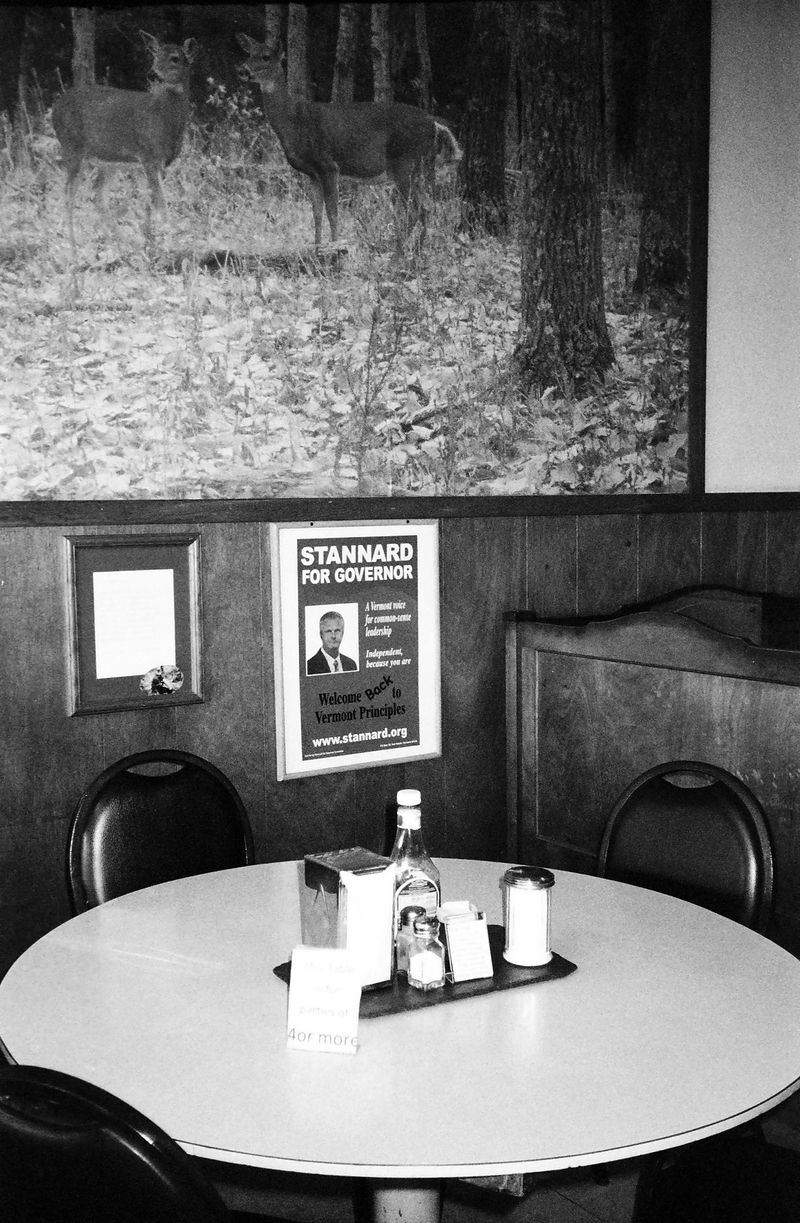
The Wooden Soldier (Diner Scene), 2015.

© Martina Borsche - Mexico (Diner Scene), 2018.
i

Mexico (Diner Scene), 2018.

© Martina Borsche - Image from the This American Dream photography project
i

Welcome, 2017. The U.S. foreign-born population reached a record 44.8 million in 2018, accounting for about one-fifth of the world’s migrants. Immigrants and their descendants are projected to account for 88% of U.S. population growth through 2065. Since its inception, the United States has been a nation of immigrants, yet from the beginning its relationship to immigration has been fraught. The United States began regulating immigration soon after it proclaimed its independence from Great Britain, often reflecting the prejudices and politics of the time. The first, the 1790 Naturalization Act, excluded non-white people from eligibility to naturalize. Only in 1870, was the right of citizenship extended to people of African origin. Later policies would limit or entirely exclude people of Asian, specifically Chinese, descent, polygamists, those with a contagious disease, anarchists, and beggars. Only in 1952 did the United States remove race as an exclusion for immigration and naturalization.

© Martina Borsche - Granby, 2017.
i

Granby, 2017.

© Martina Borsche - Image from the This American Dream photography project
i

Intersection, 2018. The narrative of the rural-urban divide propagates misconceptions regarding poverty in the United States. According to the Department of Agriculture’s definition, rural counties account for 84% of places struggling with persistent poverty. However, if we use census data, most people struggling with persistent poverty are in metro areas. Since 2000, suburban and small metro counties have also an overall increase of 51% in poverty, compared with a 23% rise in rural counties.

© Martina Borsche - Fire Wood, 2017.
i

Fire Wood, 2017.

© Martina Borsche - Image from the This American Dream photography project
i

Behind Eureka Lodge, 2015. The wealth gap between America’s richest and poorer families more than doubled from 1989 to 2016. Income inequality in the U.S. is the highest of all the G7 nations. According to the Stanford Center on Poverty and Inequality, when compared to 24 middle-income and high-income countries, the U.S. ranks 16th in the amount of intergenerational earnings mobility. This low level of mobility in the U.S. may arise in part because low-income children in the U.S. tend to have less stable families and less opportunities for advancement, creating a future downward spiral in economic mobility. A 2018 study by NYU professor of sociology Michael Hout came to the conclusion that "occupational status persists across generations in the United States to a degree incompatible with the popular concept of America being the ‚land of opportunity.‘"