things will remain to turn off the lights of the world
This essay revisits an abandoned flat from my early childhood, reanimating its objects through photographs and assemblages. In an era of excess and erasure, the work shifts the gaze toward things as silent witnesses, proposing new ways of inhabiting memor

This project originates from an abandoned flat that I have been photographing since 2017, located in the city where I was born, in the countryside of the state of Rio de Janeiro. I lived there during the first months of my life with my parents. It was also the home of my maternal great-grandmother until near the end of her life, alongside her paintings, domestic objects, and the traces of a quiet, unassuming existence. The project consists of an ongoing series of photographs and assemblages created from materials found in the flat, developed over several years through repeated visits and sustained observation.

Through these images and material interventions, the work proposes a displacement of the gaze — a counter-narrative to dominant historical perspectives centred on human agency and possession. At its core are multispecies relations and things stripped of their original functionality: what anthropologist Tim Ingold describes as “things” understood not as static objects, but as occurrences — processes in formation. By attending to what remains, to what grows, decays, stains, and accumulates, the project invites a position of alterity in relation to the built environment and to memory itself.

Left in abandonment and, more recently, used as a site for discarded materials from a neighbouring shop, the flat has gradually taken on ghostly contours. The people who once inhabited it are no longer present, and lived memory begins to blur. Yet the material traces persist. Wood swells and sprouts; walls crack; humidity stains doors and ceilings; dust and debris accumulate. These subtle movements reveal an autonomous vitality within matter, unsettling fixed hierarchies between subject and object. Rather than functioning as passive remnants of a past life, these elements actively reorganise space, proposing new forms of coexistence and temporality.

The project unfolds through close observation and a sustained engagement with this site of personal and collective memory. By combining photography with assemblages that recontextualise found materials, the work seeks to excavate layers of time embedded in surfaces and objects. The flat becomes not only a former domestic interior, but a living terrain where absence, transformation, and persistence intersect.

In a historical moment marked by climate catastrophes, wars, epidemics, and the excessive production of consumer goods driven by capitalist systems, we are confronted with the consequences of anthropocentric worldviews. We produce more than we will ever consume, while averting our gaze from the growing landscapes of waste. By turning attention back to what has been left behind — by gathering, observing, and re-signifying what persists — this project suggests another mode of relating to matter and memory. Through careful looking and material engagement, it proposes that listening to things, rather than dominating them, may open pathways for imagining different forms of inhabiting the world.

© Juliana Jacyntho - Image from the things will remain to turn off the lights of the world photography project
i

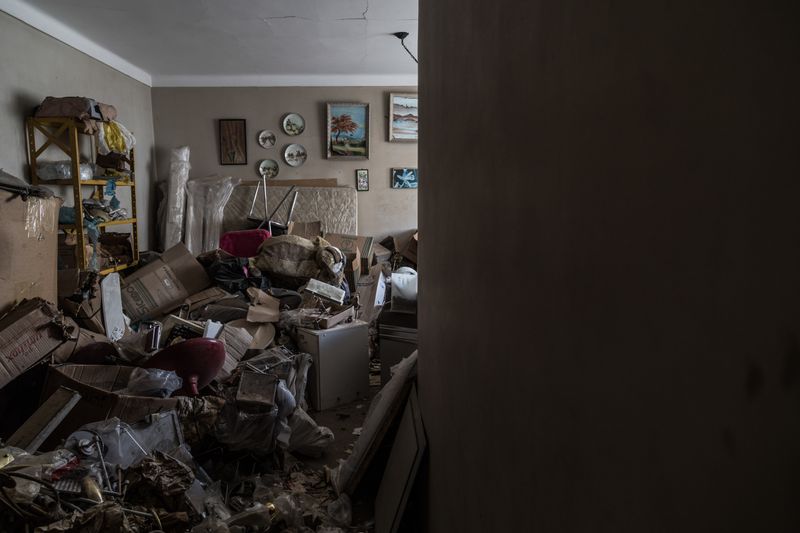
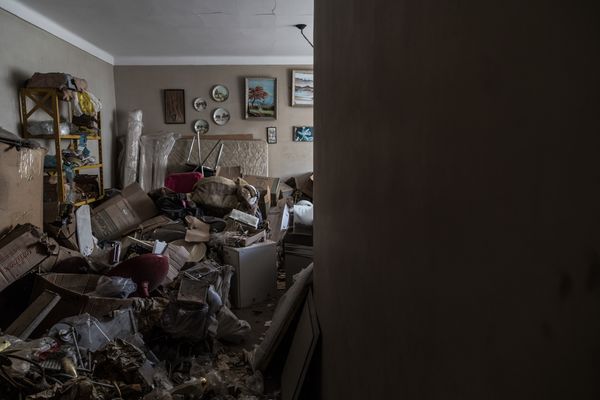
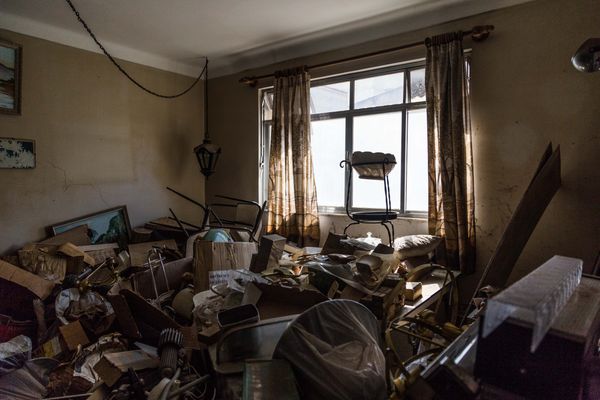
Image 01This image introduces the abandoned flat at the centre of the project, a place of origin seen from a threshold. Accumulated discards blur domestic space and waste, marking a return not as nostalgia, but as confrontation

© Juliana Jacyntho - Image from the things will remain to turn off the lights of the world photography project
i

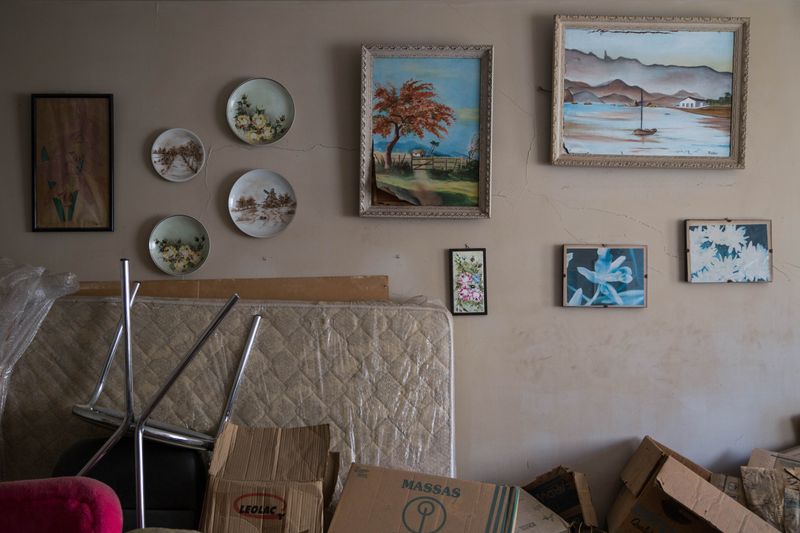
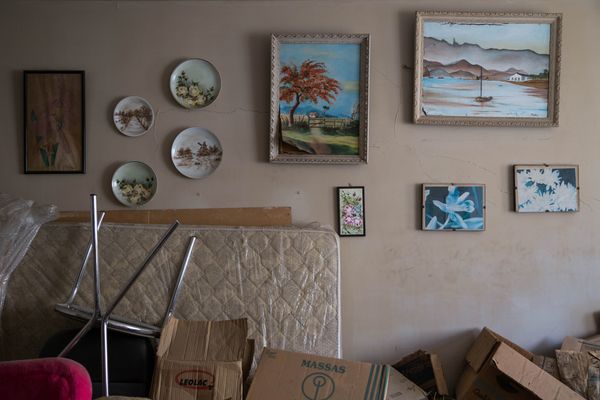
Image 02Domestic objects and framed images remain arranged on the walls, preserving traces of an earlier life. The photograph stages a space where memory resists disappearance, even as the structure begins to fracture and decay.

© Juliana Jacyntho - Image from the things will remain to turn off the lights of the world photography project
i

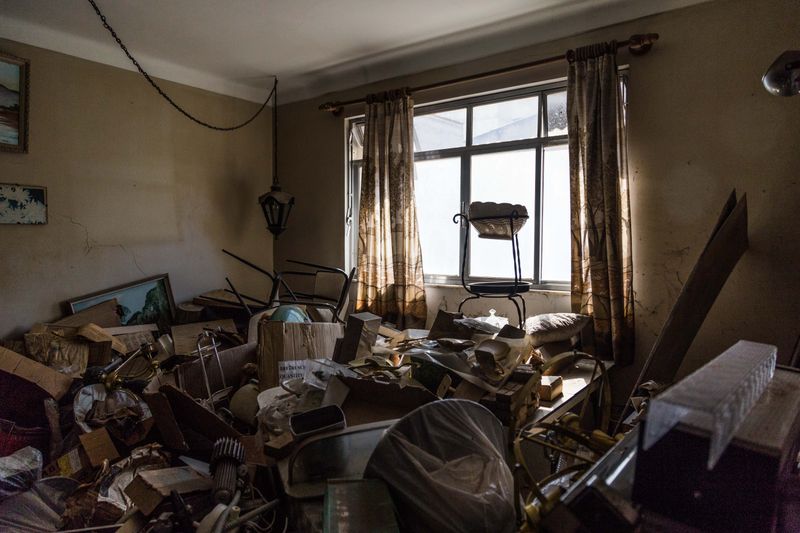
Image 03Piles of discarded objects accumulate inside the flat, forming layers of history. Without disturbing these mountains of waste, the repressed past remains inaccessible, staring back at us and questioning how we will continue breathing into the future.

© Juliana Jacyntho - Image from the things will remain to turn off the lights of the world photography project
i

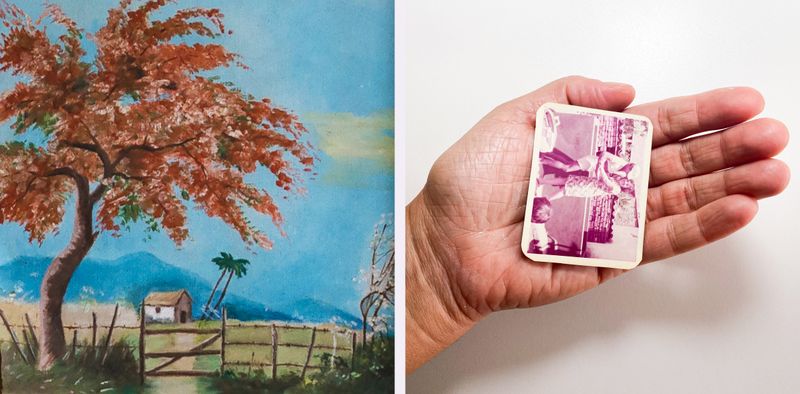
Image 04 (Diptych 01)A family photograph follows a painted image of a flamboyant tree, as if it had stepped out of the frame. Native to Madagascar and widely rooted in Brazil, the tree evokes migration and shifting origins, echoed in the hand that gathers shelter and memory.

© Juliana Jacyntho - Image from the things will remain to turn off the lights of the world photography project
i

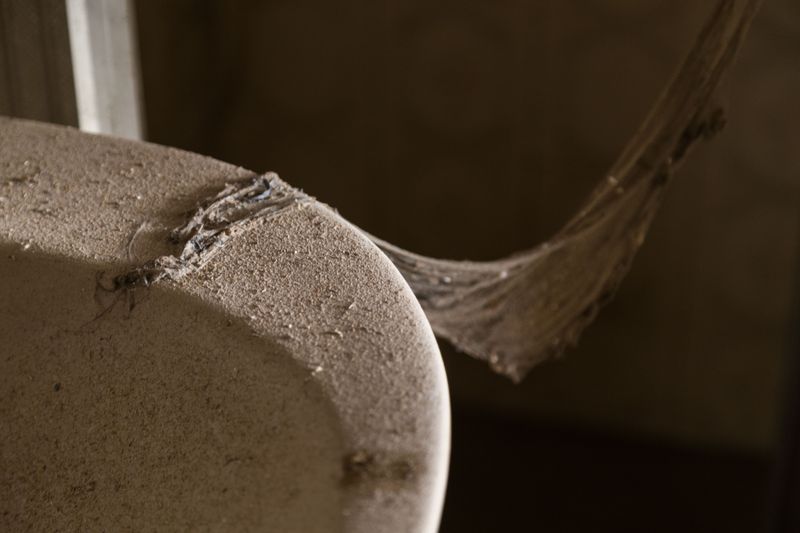
Image 05A spider’s web stretches across domestic remnants, revealing multispecies presence within the abandoned space. Time is registered through non-human gestures of occupation and transformation.

© Juliana Jacyntho - Image from the things will remain to turn off the lights of the world photography project
i

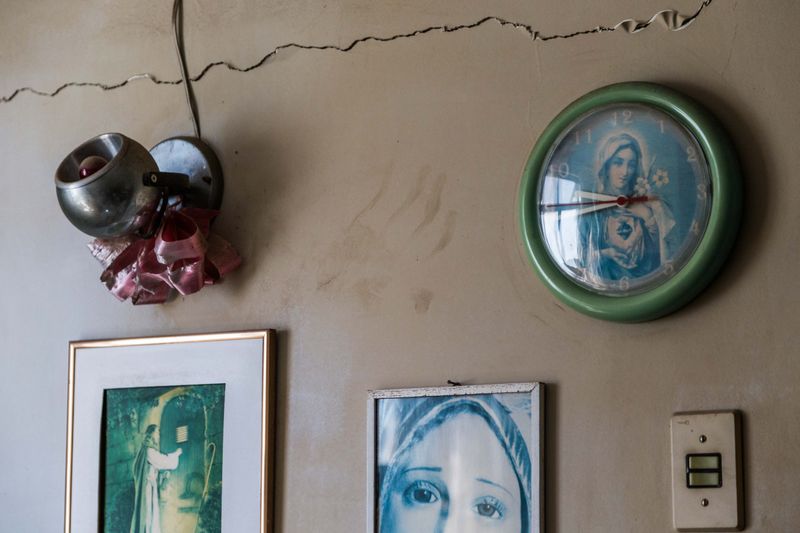
Image 06A wall clock and religious images stare at us, while cracks pulse through the surface. More than decay, the fissure suggests life persisting within the walls, asserting presence despite the passing of time.

© Juliana Jacyntho - Image from the things will remain to turn off the lights of the world photography project
i

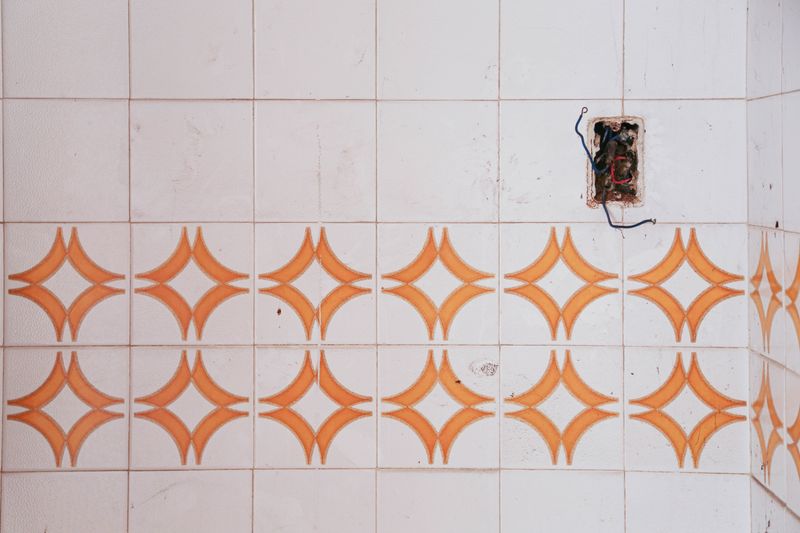
Image 07From the opened wall, electrical wires extend outward, exposing what usually remains concealed. The image continues the gesture of the surface giving way, revealing an inner structure that becomes legible beyond domestic order and abandonment.

© Juliana Jacyntho - Image from the things will remain to turn off the lights of the world photography project
i

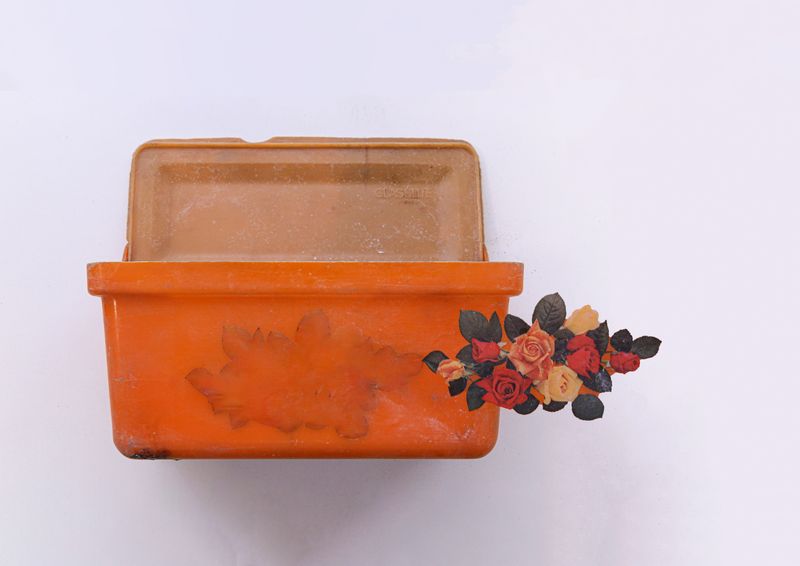
Image 08Roses detach from the surface of the kitchen salt shaker and push outward. No longer content as decoration, the flowers appear to seek light and air, asserting a desire to leave the functional life to enter the world as living presence.

© Juliana Jacyntho - Image from the things will remain to turn off the lights of the world photography project
i

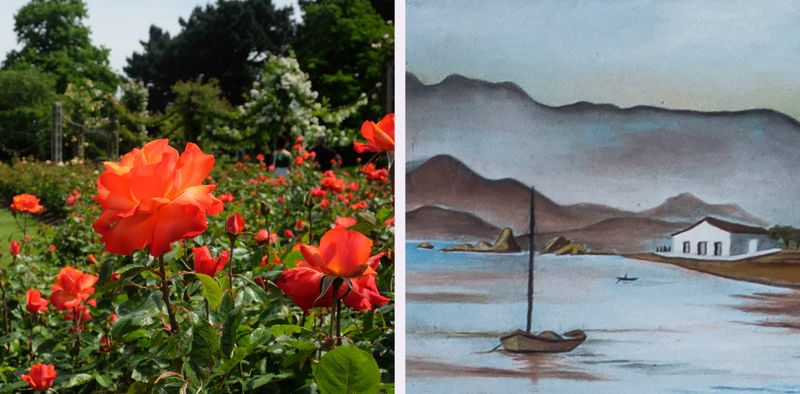
Image 09 (Diptych 02)An outdoor rose garden marks the passage from interior to exterior. Echoing other migratory forms in the series, stem and mast align as material presences that leave containment behind, continuing to unfold beyond objects, images and rooms.

© Juliana Jacyntho - Image from the things will remain to turn off the lights of the world photography project
i

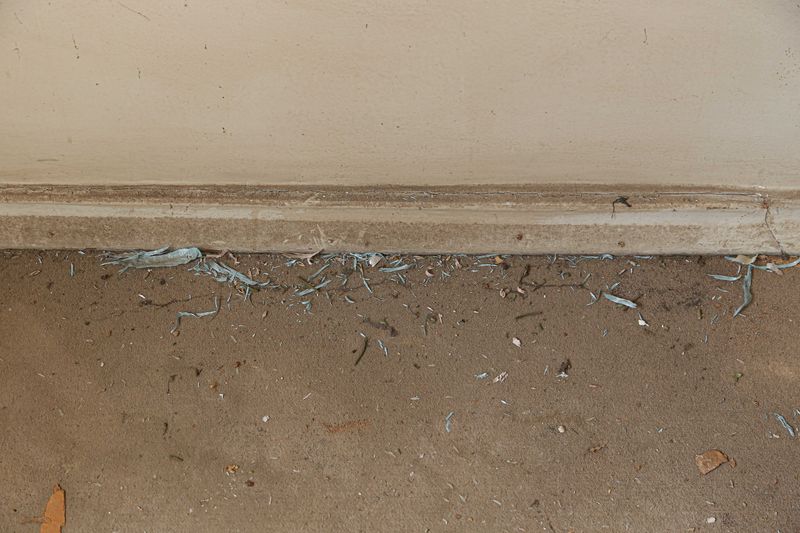
Image 10A close view of the floor reveals dust, paint fragments and scraps of tape and paper. Their colour echoes the water in the previous image, suggesting a shared flow — of water, of things, of life — circulating, settling, and continuing to move.