The Whisper of Maize
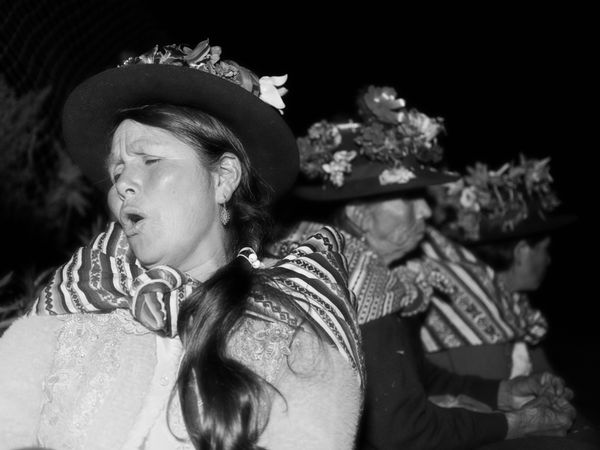
The protection of ancestral maize as a spiritual and ecological form of resistance. Guided by my grandmother’s memories, it follows Quechua–Wanka women who speak the language of the earth, safeguarding seeds through song, care, and continuity.

This project is born from the desire to return to a place that may no longer exist, except in memory, seeds, and songs. My personal search begins with my grandmother, who, whispering melodies, dreamed of her land of origin, of the wind brushing through the maize leaves. Her voice, her stories, and her personal archive guide my gaze as I pursue a path back through images and memories.

In the highlands of Peru, Quechua and Wanka elders continue to care for more than 54 native varieties of corn, seeds protected through over 7,500 years of agricultural and spiritual knowledge. Today, this living heritage is threatened by drought, state neglect, and the erosion of ancestral ways of life. Yet the land is still cultivated through ritual, patience, and collective memory. “We plant the seeds with the power of our singing,” says Magdalena, a Wanka elder.

Each variety carries its own shape, color, and spirit—each holds a story. What is being protected is not only biodiversity, but language, gesture, and ways of understanding the world. To work the land is to speak with it, to sing to it, and to listen—to practice the language of the earth so that the seeds may grow strong.

Through the strength of Quechua–Wanka women, I navigate an impossible homecoming: not a return to a fixed place, but a movement toward belonging, carried through care, ritual, and transmission. In times of environmental and cultural rupture, their acts of tenderness become radical—offering seeds, songs, and memory as pathways to remain human, and to imagine a future rooted in ancestral resilience.

This project is a candidate for PhMuseum 2026 Photography Grant

Learn more Present your project
© Florence Goupil - Image from the The Whisper of Maize photography project

i

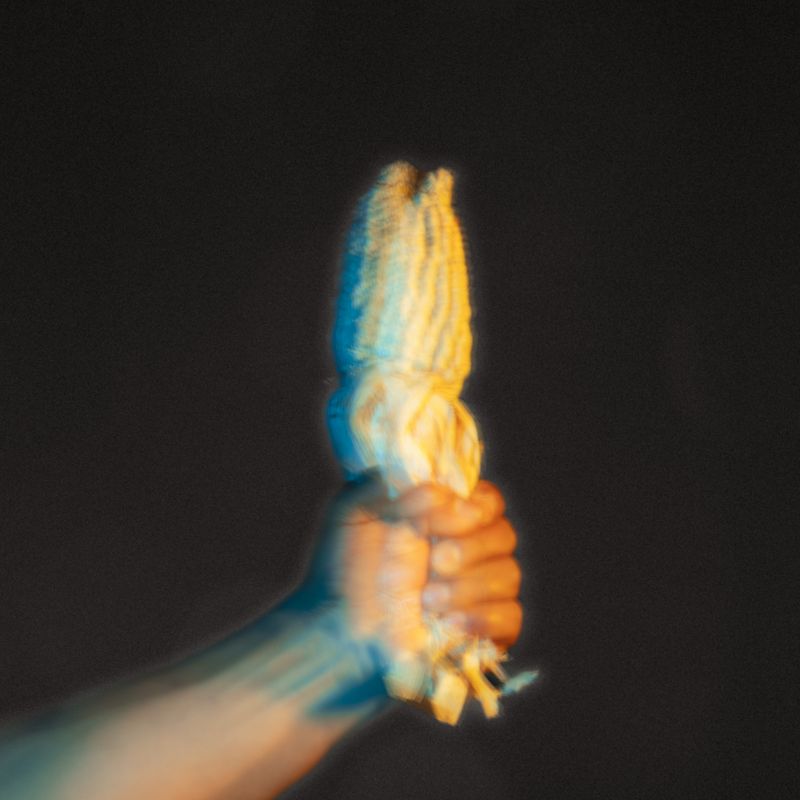
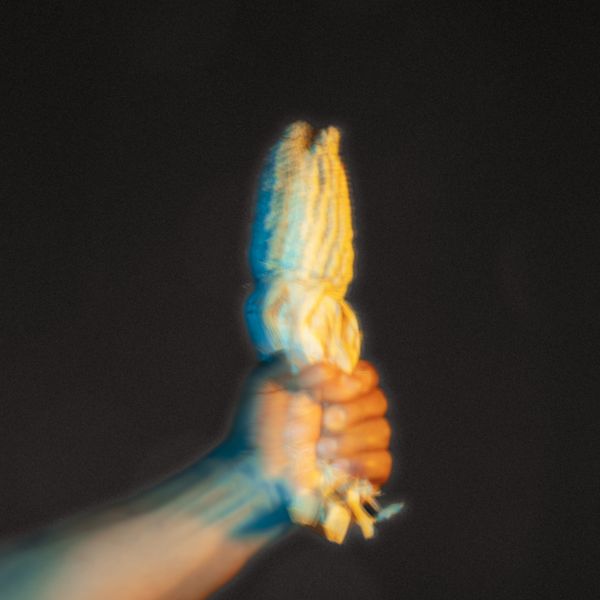
Ulises Hernández, an Otomi Indigenous seed guardian, holds a tunicated corn, one of the oldest maize varieties known. Believed to represent a transitional form between teosinte, the wild ancestor of corn, and domesticated maize, its continued existence depends entirely on Indigenous farmers who conserve it for its cultural and historical significance.

© Florence Goupil - Image from the The Whisper of Maize photography project
i

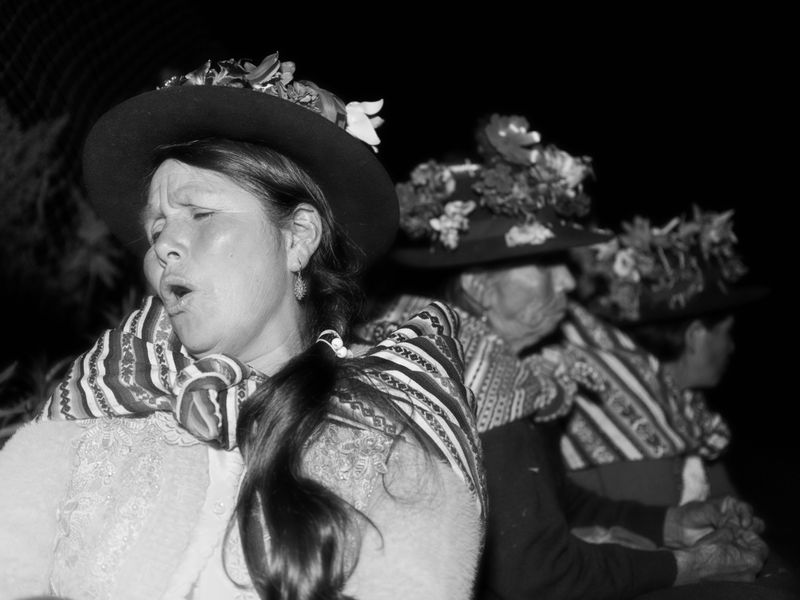
Portrait of Graciela Espinar, a Jarawi singer, alongside other Wanka Indigenous elders after a corn-planting journey in Huaylacucho. Jarawi is an ancient poetic form recited in polyphony—soft, high-pitched voices woven together until two singers sound like a single rising current. Passed from grandmother to granddaughter, these songs invoke mountains, winds, and water.

© Florence Goupil - Image from the The Whisper of Maize photography project
i

At night, the wall of the Sacsayhuamán archaeological sanctuary in Cusco. In these sacred places, corn and potato seeds were once adapted to thrive across diverse thermal elevations.

© Florence Goupil - Image from the The Whisper of Maize photography project
i

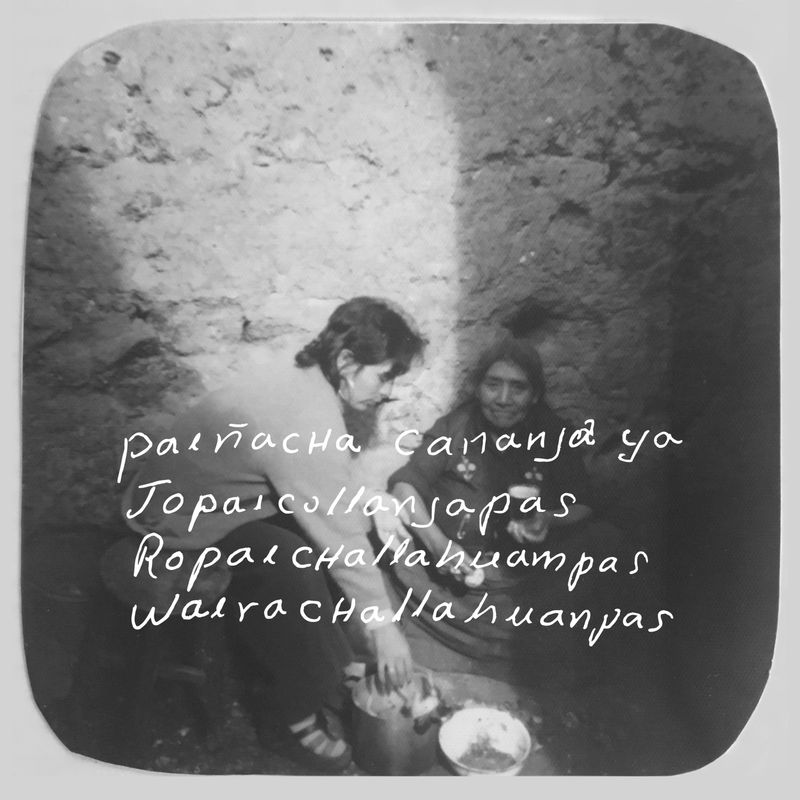
A photograph from my family archive: a portrait of my great-grandmother and grandmother sharing a quiet moment, peeling potatoes inside their adobe house in Cusco. Layered above, as a double exposure, is the transcription of a traditional Jarawi song once sung while planting, an ancestral chant entrusting the seed to the Earth.

© Florence Goupil - Image from the The Whisper of Maize photography project
i

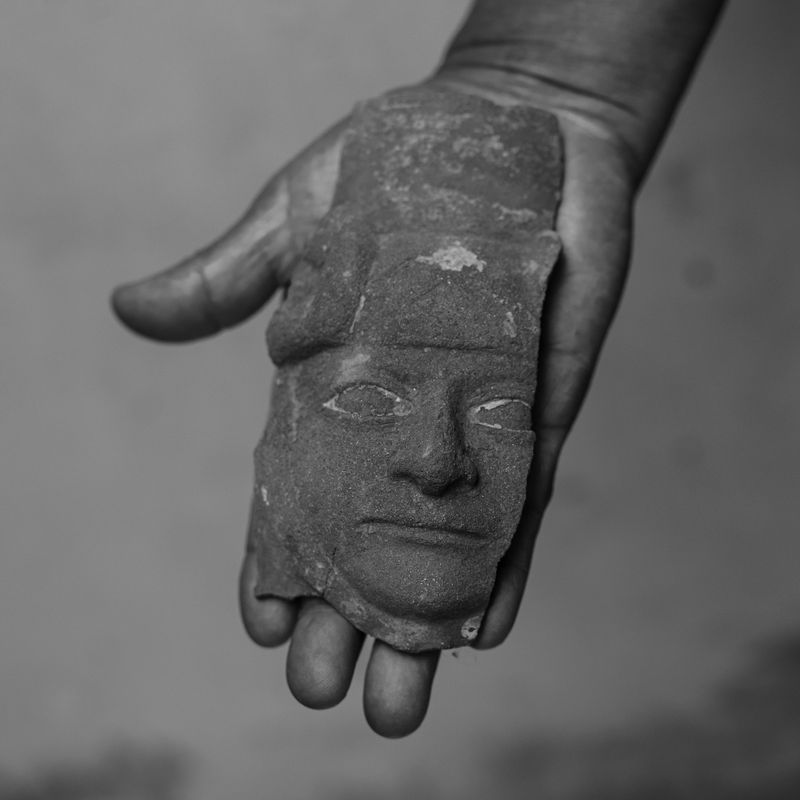
A fragment of a pre-Columbian ceramic found near a relative’s house, likely brought to the surface by erosion. We don’t know which ancient culture it belonged to, or whether it came from the Andes or the coast—perhaps it traveled between them, as my family once did. This broken face speaks of Indigenous migration toward the city, in search of a better future, carrying memory, stories, and songs.

© Florence Goupil - Image from the The Whisper of Maize photography project
i

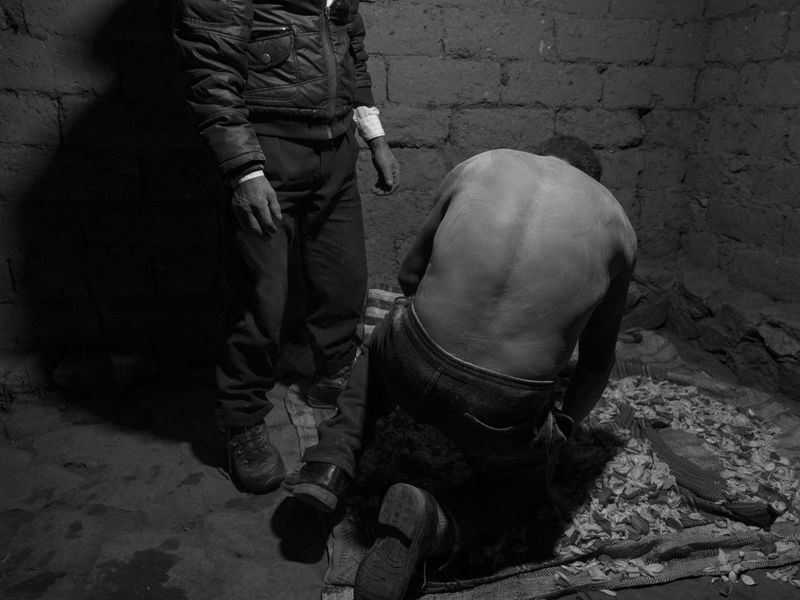
Victor Vargas, a Quechua-Wari medicine man, performs a healing ritual called "Shokma" using maize flour and rose petals to rub on his patient Daniel. Victor helps him overcome his physical weakness and depression so that Daniel can return to work his fields. According to Quechua-Wari cosmology, sudden weather changes and damaged agricultural cycles can make people physically and mentally ill.

© Florence Goupil - Image from the The Whisper of Maize photography project
i

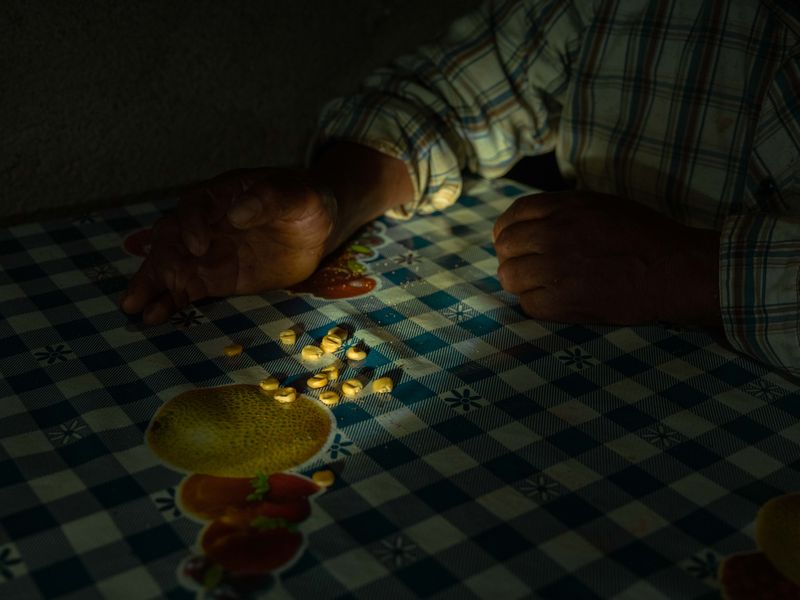
Detail of the hand of the Mixe indigenous healer, Ricardo Martinez, throwing his set of corn grains. Ricardo's technique consists of the pre-Columbian practice of reading the corn grains. This works as an oracle and serves to understand rain and agricultural cycles.

© Florence Goupil - Image from the The Whisper of Maize photography project
i

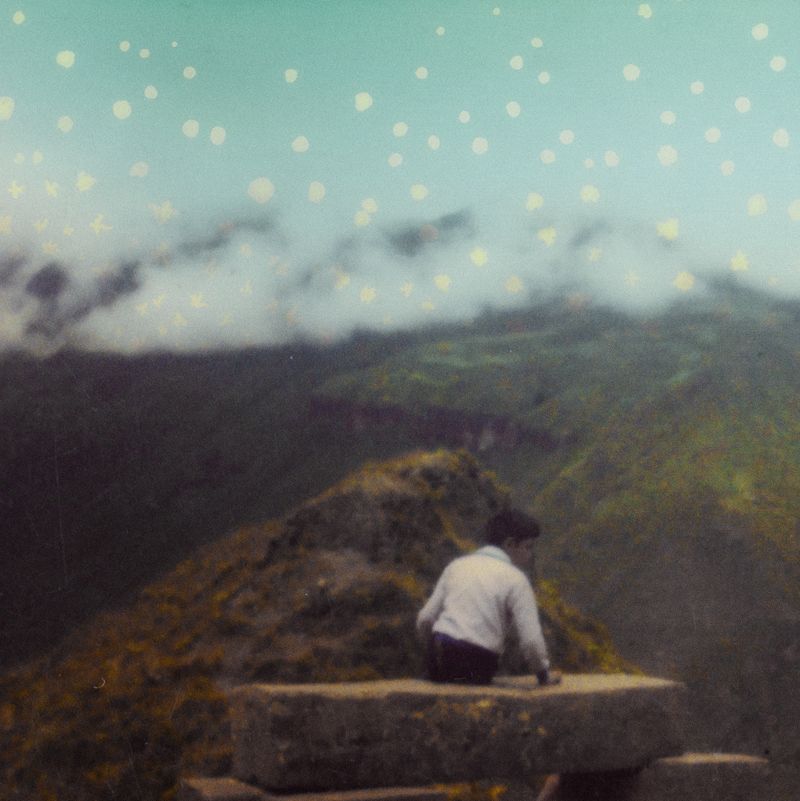
A family archive photo taken by my grandmother in the 1970s, marked by white specks—like drops of rainwater—from the passage of time. My uncle sits atop the ancient walls of the Pisac archaeological park in Cusco, which my family visited every year after they migrated to Lima, the capital.

© Florence Goupil - Image from the The Whisper of Maize photography project
i

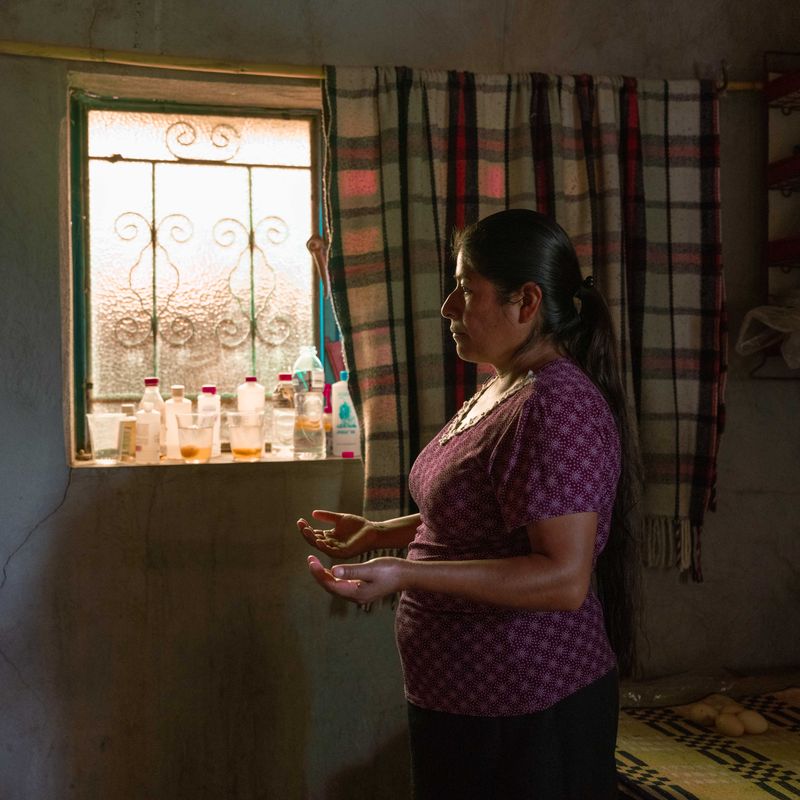
Portrait of Yolanda Cardoso, a Mixe healer, in her practice. Yolanda practices a pre-Columbian technique of reading corn grains, used as an oracle to diagnose illness, understand a patient’s complex situation, and interpret weather patterns to anticipate the harvest.

© Florence Goupil - Image from the The Whisper of Maize photography project
i

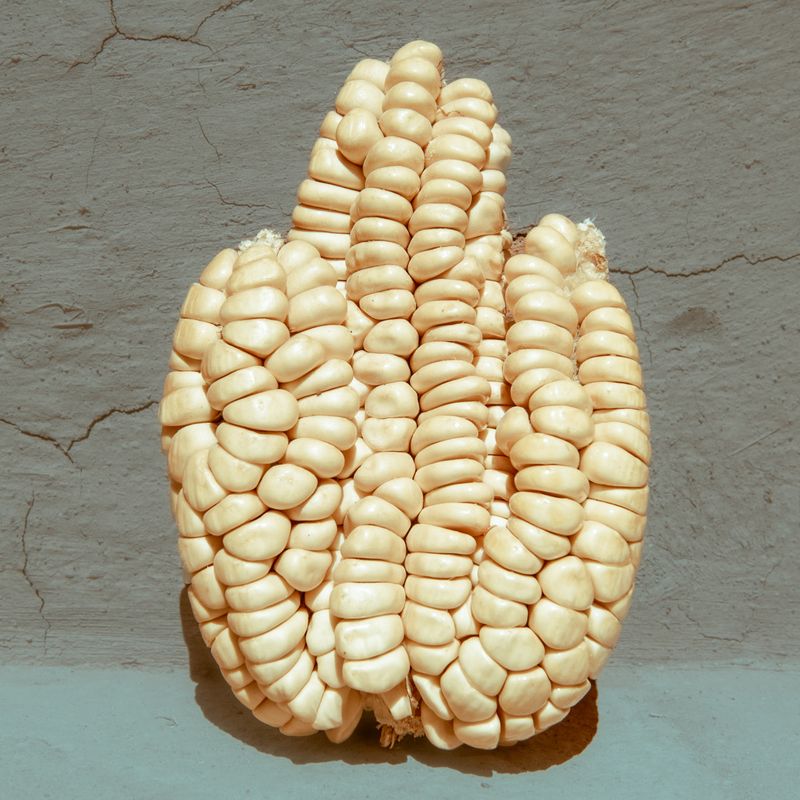
Detail of a white corn from the variety known as the “White Giant.” Cultivated by the Quechua farmers of the Sacred Valley of the Incas, in Cusco, this ancestral variety reaches grains up to 15 mm in diameter. Its remarkable size is preserved through careful seed selection and traditional pollination practices passed down through generations.

© Florence Goupil - Image from the The Whisper of Maize photography project
i

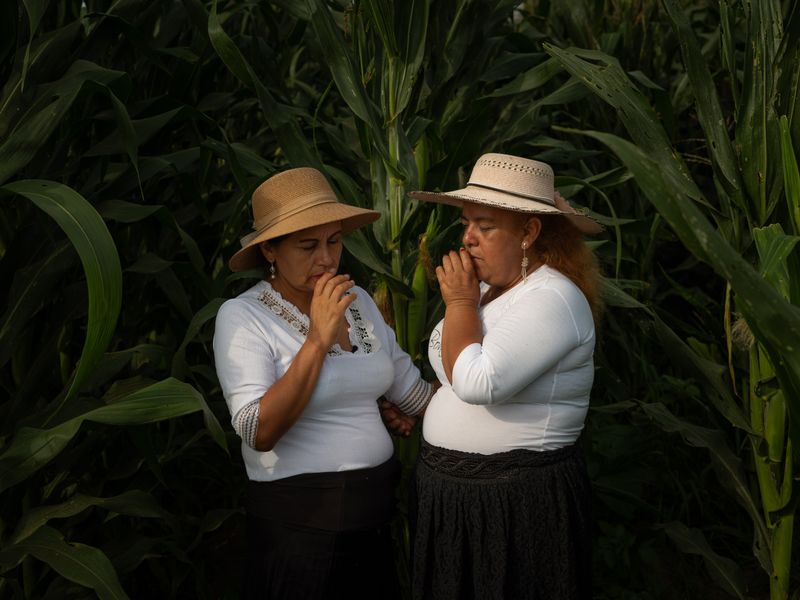
Following a severe drought in the Huancavelica region of Peru, Indigenous Quechua singers Magdalena Gamboa and Elvia Aguirre Palomino rehearse in a corn field, preparing for the planting ritual they will soon perform in their hometown. Though they now live as migrants, they return each planting season to help cultivate their ancestral corn using an ancient Andean chant known as Jarawi.

© Florence Goupil - Image from the The Whisper of Maize photography project
i

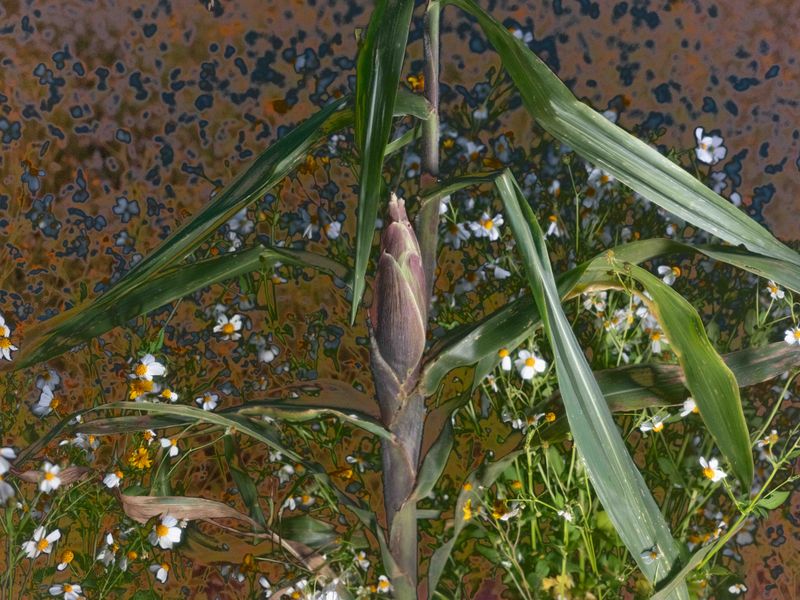
A corn plant with a ripe ear of white maize surrounded by a field of yellow flowers at night. Most of the rituals dedicated to corn are performed during the night and many times follows the moon cycle.