THE RED THAT STAINS
-
Dates2015 - 2025
-
Author
- Locations Tanzania, Bagamoyo
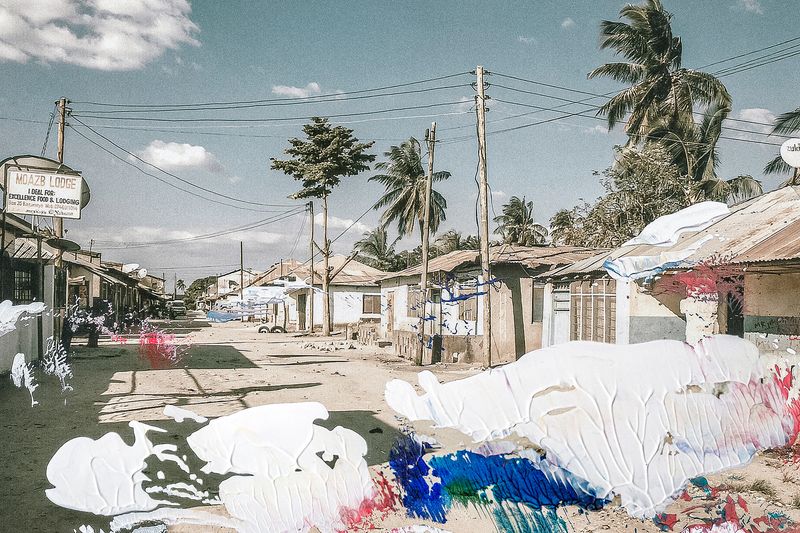
A mutating Tanzanian landscape shaped by histories of trade, extraction and globalisation. The photographic surface is a palimpsest of time and memory, revealing how slow, often unseen forces permeate land and life, leaving nothing unchanged.
ARTIST STATEMENT
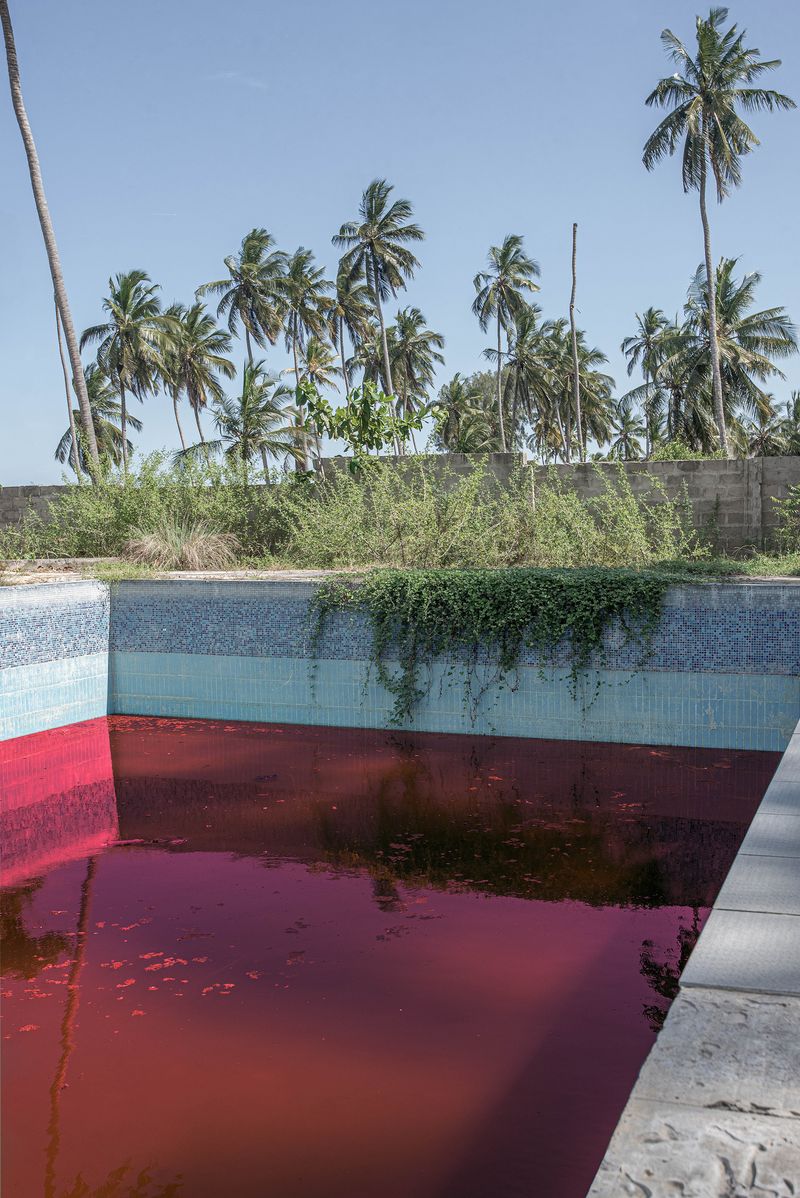
Slow violence is like a nosebleed—first a trickle, then a heavy red spreads, staining daily life. In Bagamoyo, Tanzania, this erosion has been centuries in the making. Extraction and global encroachment unfold quietly, yet their traces are everywhere.
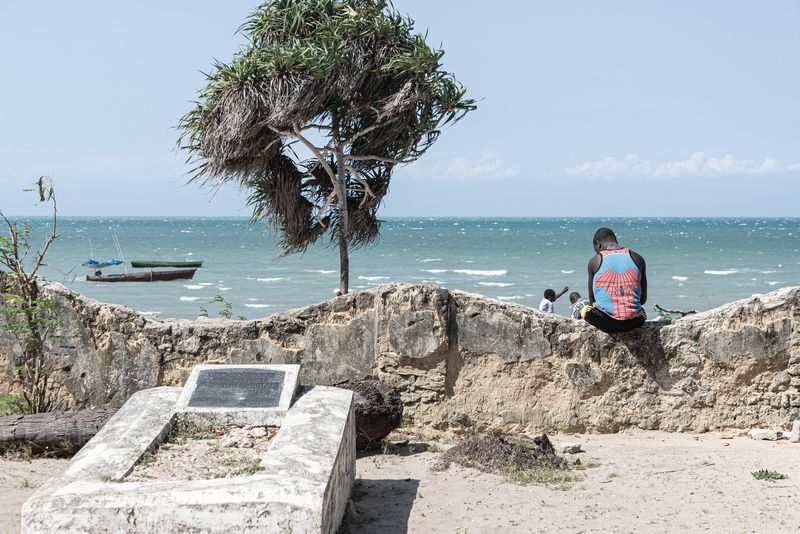
Once a waypoint on the East African slave trade route, this coastal town has long been shaped by external forces—colonial rule, resource extraction, and now, globalised investments that redraw its physical and social contours.
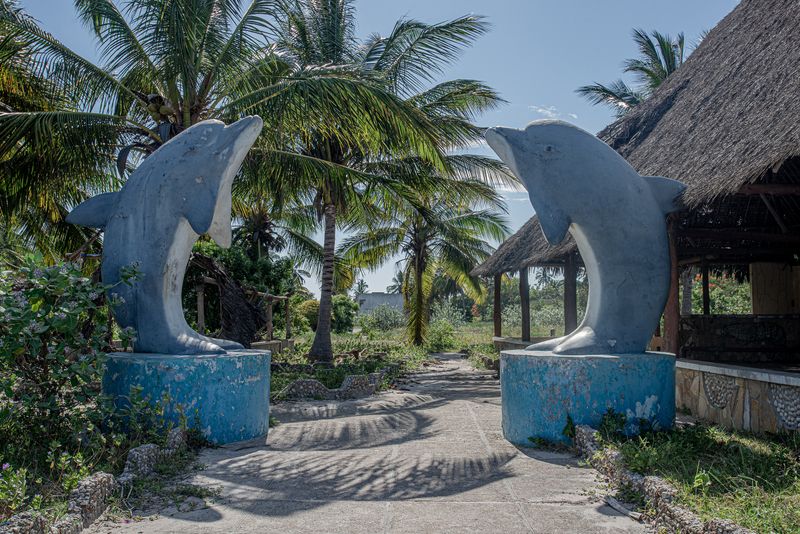
In the stillness of the image, I explore a violence of delayed destruction, dispersed across time and space. Behind an idyllic beauty, land, sea, and people are extracted, displaced, and recast in narratives not of their own making.
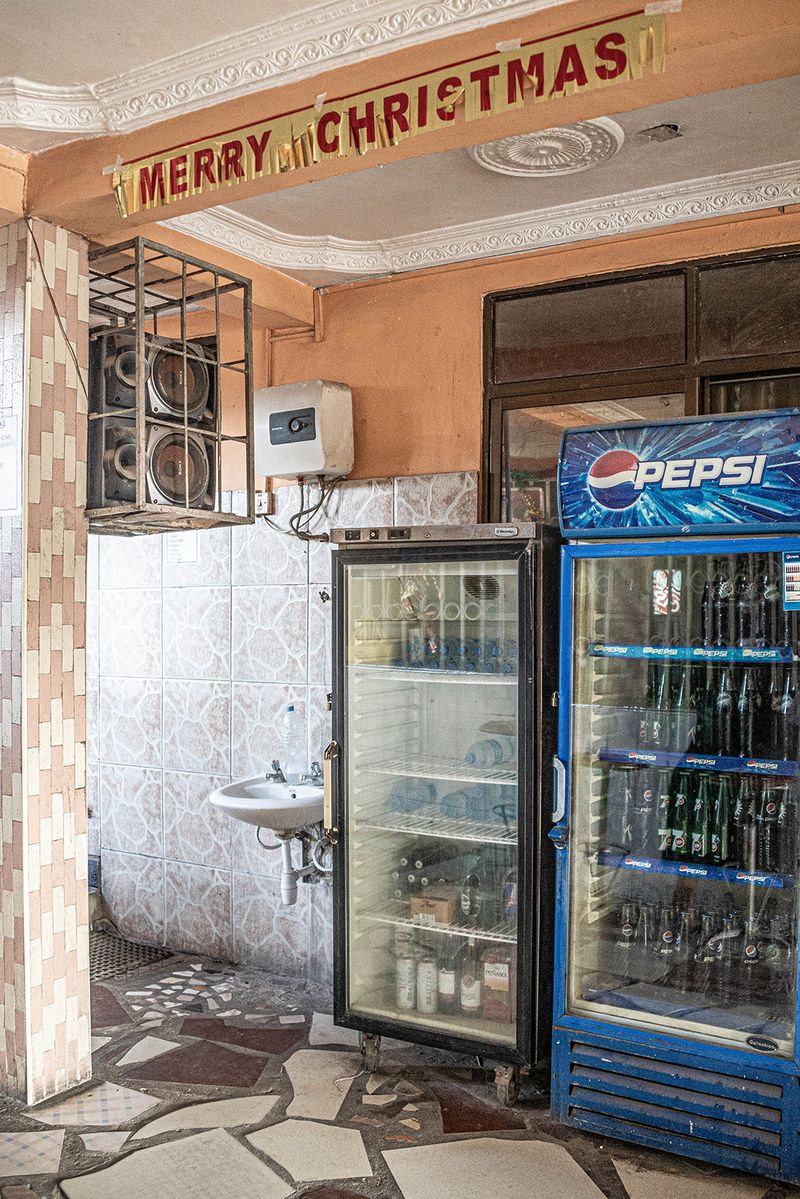
The images exist in an in-between—tradition and modernity, nature and urban, local and global—where identities shift like tides. My fragmented gaze echoes this fluid condition. Slow violence seeps in, imperceptible at first, until nothing is as it was.
Yet within erosion, new imaginaries begin to form.
The red remains.
PROCESS
The intent and critical engagement of The Red That Stains are outlined below, structured in response to guiding questions.
1. How did the idea for this work come about ?
The Red That Stains began with a question: how does a place—its culture, memory, and spatial identity—prevail in the face of accelerated transformation? In 2014, I initiated a long-term urban research project investigating the impact of rapid urbanisation on the cultural ecology of small settlements under intense global pressure. I was particularly interested in how globalisation erodes the tangible and intangible attributes that shape a community’s sense of self.
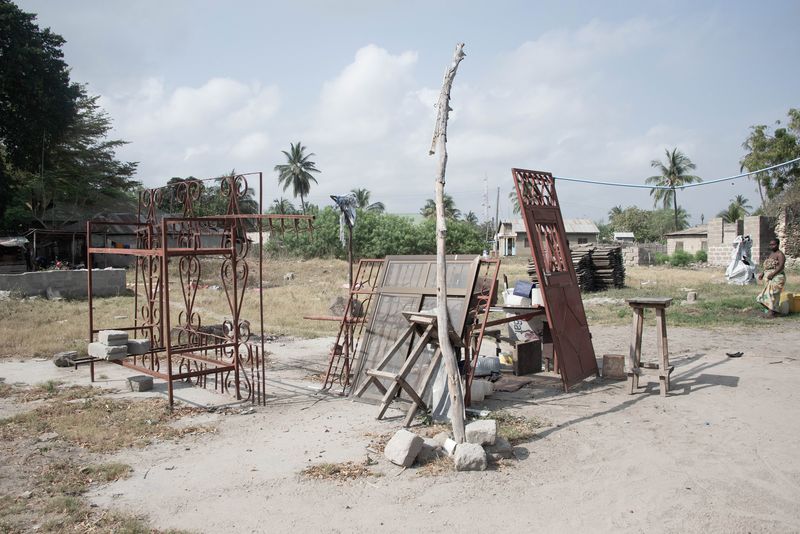
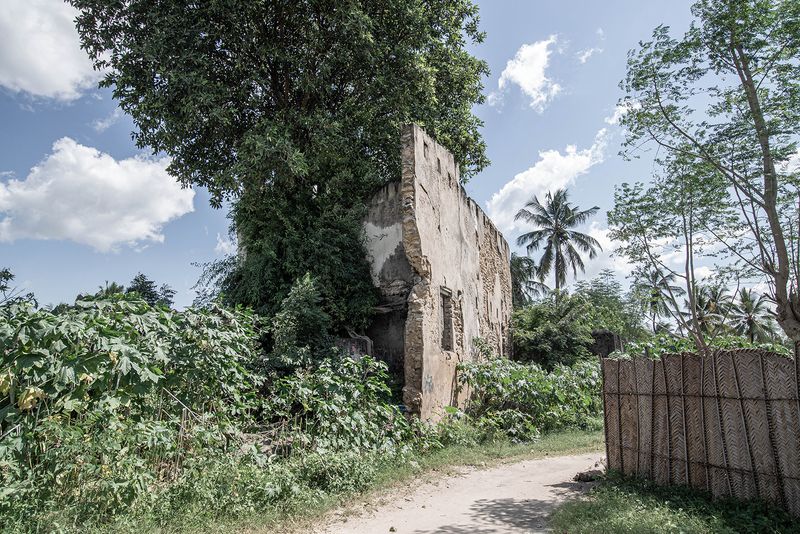
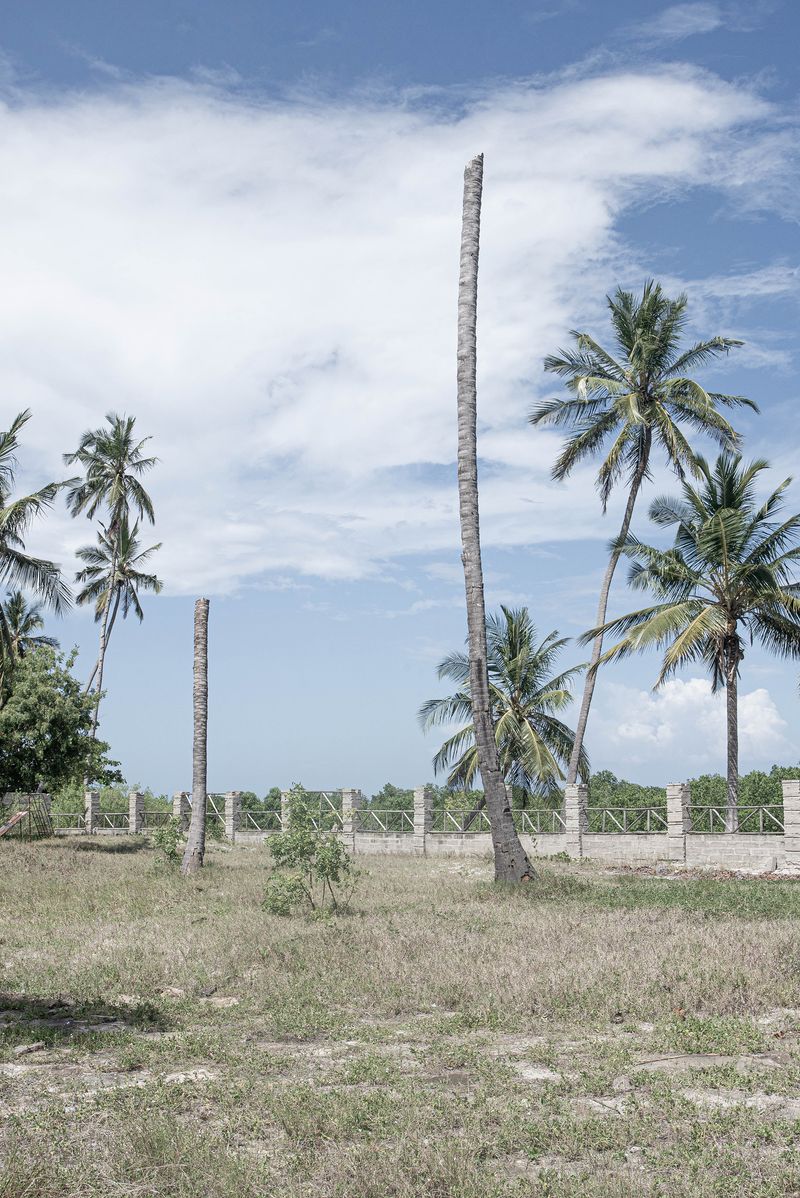
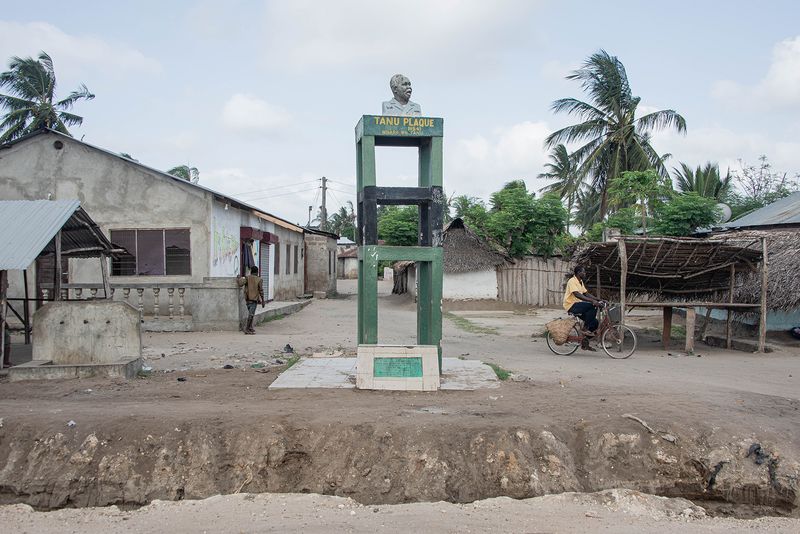
Over the course of four years, I spent extended periods in Bagamoyo, a coastal fishing town 75 kilometers north of Dar es Salaam, Tanzania. Once a key node in the East African slave trade, followed subsequently by German and British colonial rule, Bagamoyo is now marked by a new wave of external imposition: a massive infrastructural project to build East Africa’s largest container port, financed largely by China. I used photography as a method of inquiry—to map, witness, and reveal the layered spatial and cultural transformations quietly albeit fundamentally reshaping the town.
But it wasn’t until nearly a decade later that I began to revisit the images through a more poetic, reflective lens. The time distance allowed something to surface: a deeper, slower narrative that I had not fully seen while immersed in the original study. I began reworking my personal archive, not as documentation, but as a visual story—one that speaks of enchantment, and the residue of recasted narratives across time.
The Red That Stains emerged from this process: a meditation on slow violence, historical sediment, and the way global forces invisibly but powerfully stain the fabric of everyday life.
2. Why this title ?
The title The Red That Stains emerged organically, from the process of interpreting, distilling, and reshaping the work. It wasn’t imposed—it revealed itself as the work unfolded. At its core, the series deals with what lies beneath the surface: the disquiet unsaid, unseen, or deliberately concealed.
On one level, the images may be read as aesthetically seductive, embedded within their making is an act of rupture—deformation, erasure, transformation. Just as the landscape of Bagamoyo has been marked by waves of extraction, colonisation, and displacement, the images themselves carry a similar tension. Their beauty is not without consequence; it carries a weight.
The metaphor of slow violence guided my thinking. It’s like a nosebleed—barely perceptible at first, a trickle, and then suddenly, a deep red spreads, staining everything it touches. In Bagamoyo, these blood stains have been centuries in the making: colonialism, the slave trade, and now globalised investment continue to redraw its physical and cultural contours. These forces rarely erupt—they seep in, quietly, persistently, yet their traces are everywhere.
3. What themes are explored in the series ?
In my view The Red That Stains is not an objective work —it is a deeply political and poetic inquiry. While rooted in the specific geography of Bagamoyo, the work transcends place. It gestures toward global issues that confront us all: the legacies of extraction, the violence of displacement, and the quiet but persistent erasure of cultural agency.
I question how we define value—of land, of nature, of human life—and who gets to make those definitions. The series interrogates the lingering colonial logics that continue to shape power dynamics under the guise of progress.
The images intend to instil a temporal dissonance, a way of seeing past and future simultaneously through the lens of the present. They reflect on how societies navigate radical change—how adaptation can be both a necessity for survival and a vehicle for enforced transformation. Whose stories are being told, and who is left voiceless in the narrative of the future?
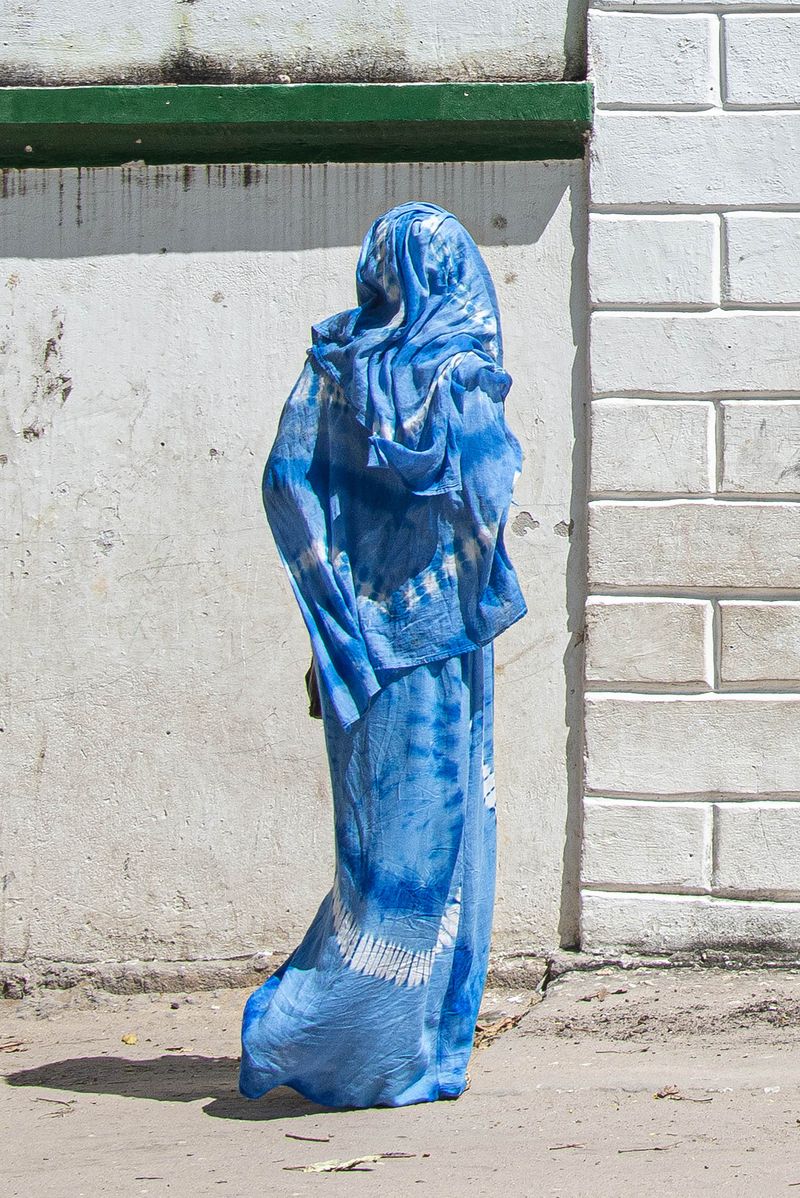
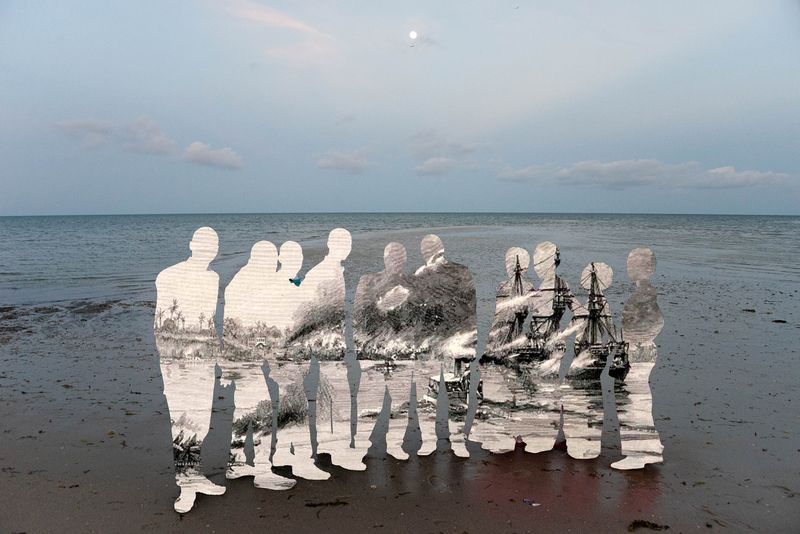
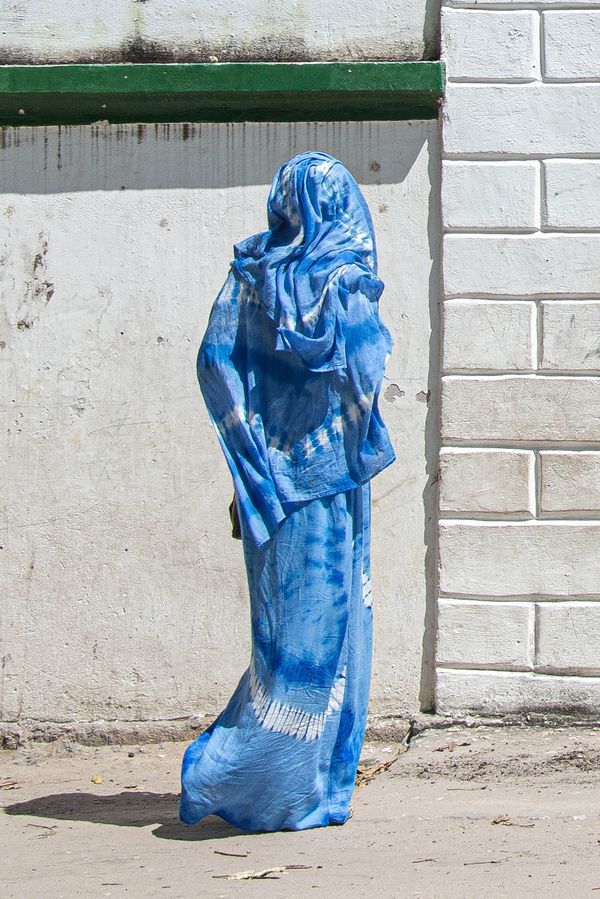
On a more subliminal level, the work engages with the enduring exotic gaze cast upon Africa. Through the reappropriation and subversion of colonial-era imagery and idyllic visual tropes, I question how the continent has long been objectified as a resource—romanticised, extracted from, and cast in narratives that are not its own.
4. What has been the creative process for this series?
The Red That Stains emerged through an open-ended, intuitive process.
Prolonged presence in Bagamoyo and in-depth research into its layered histories formed an embodied knowledge that instinctively guided the image-making.
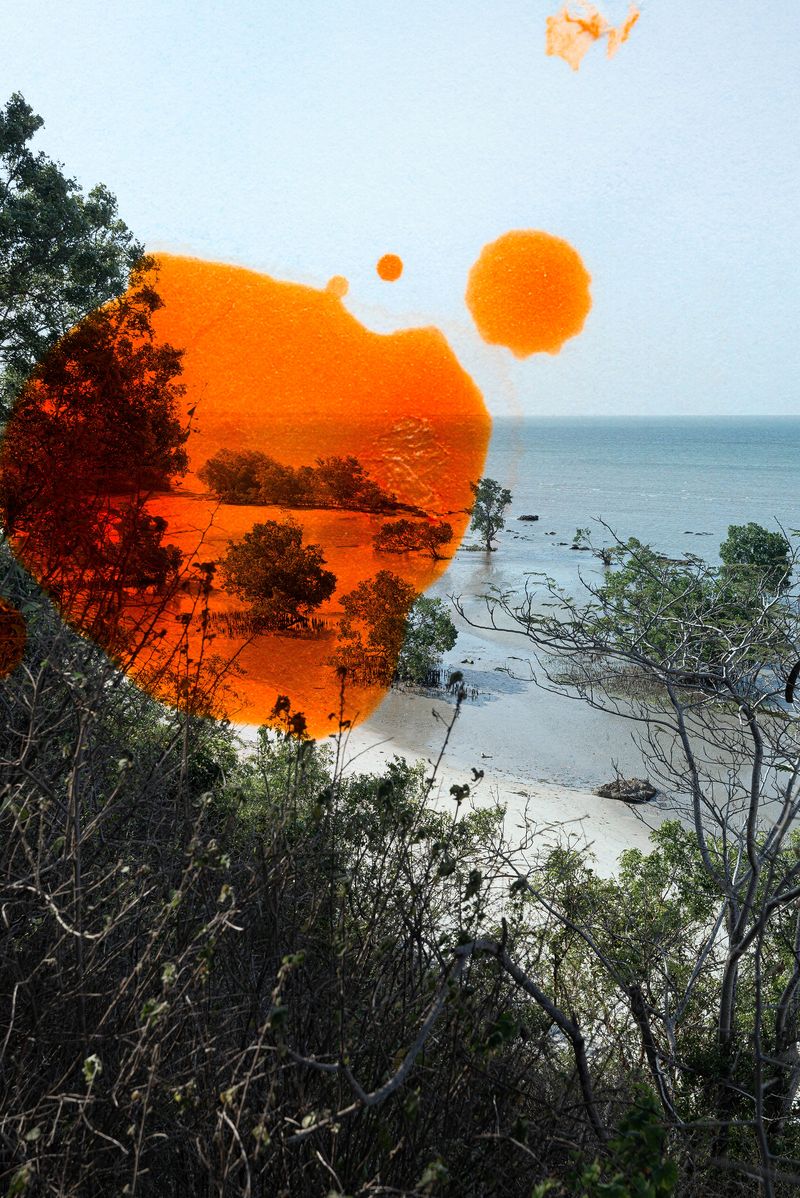
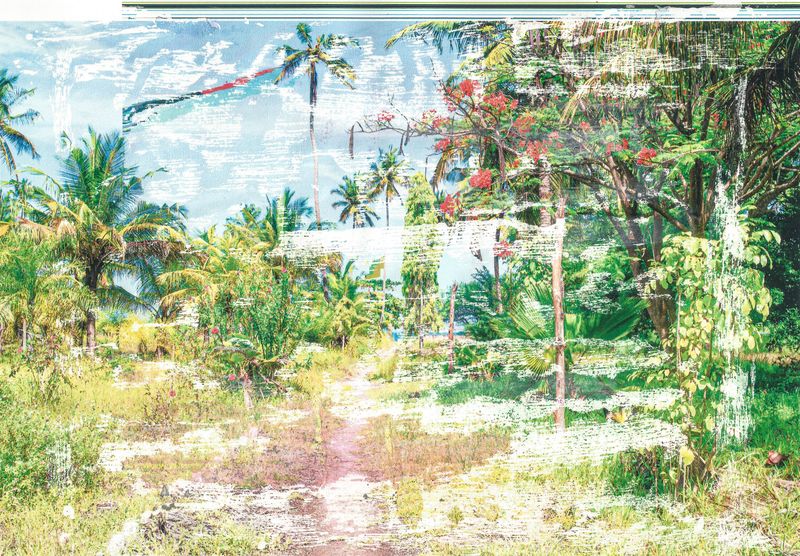
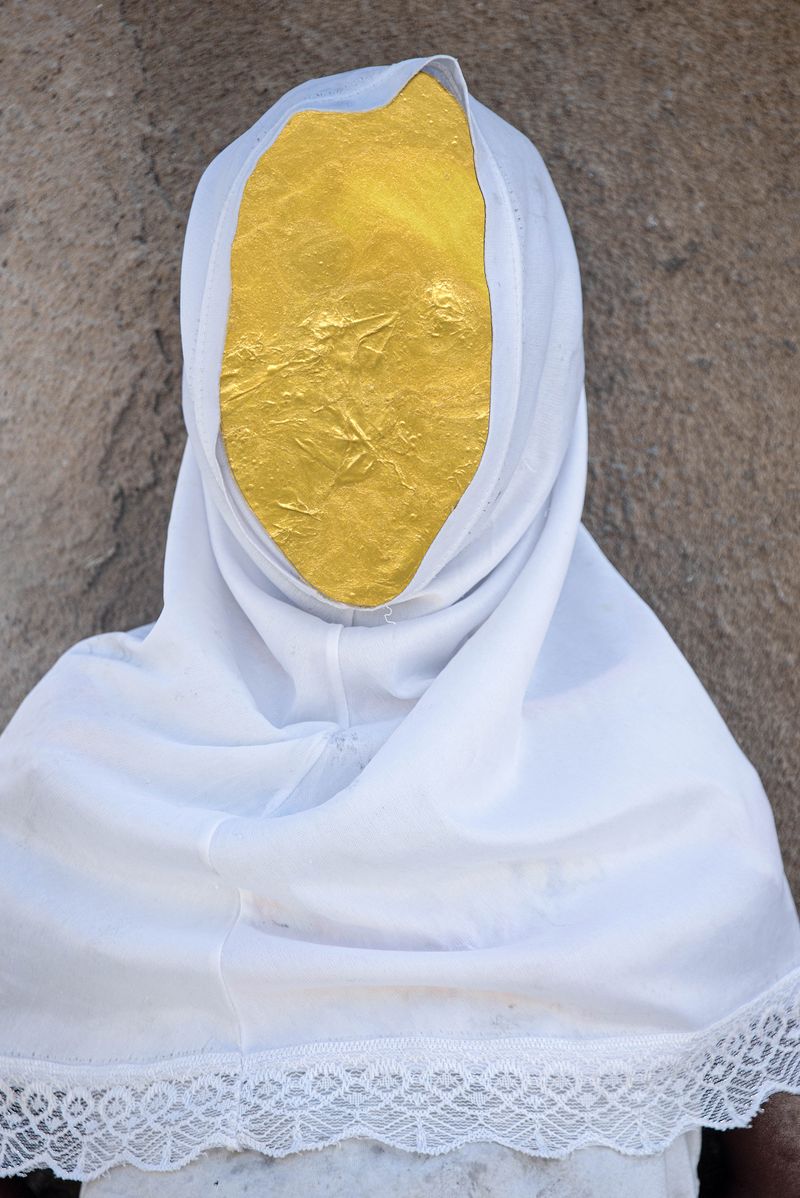
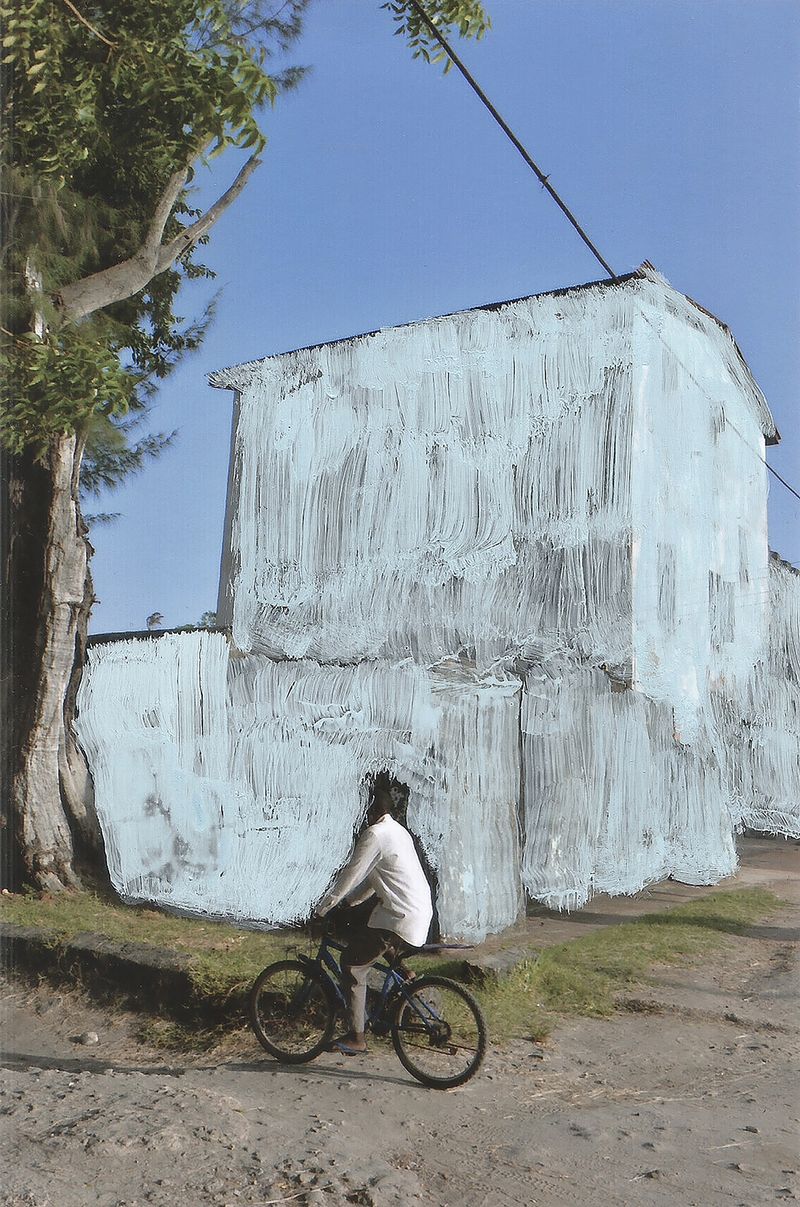
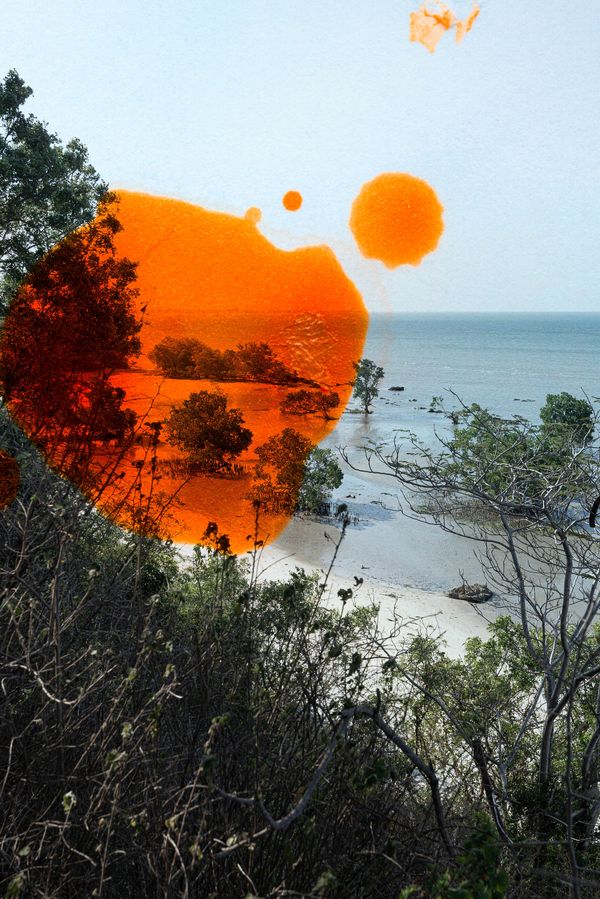
As I revisited my archive years later, the act of reinterpretation also became in part performative. Making the image often meant unmaking it—through staining, scratching, rupturing. In this destruction, there was a strange kind of clarity, echoing the violence, ambiguity, and erasure embedded in the subject itself.
This tactile engagement—painting onto photographs, layering emulsion, introducing physical disruption—enabled me to transform the photographic surface into a palimpsest of time and memory, and added a surreal element, resonating with the disquieting undercurrent of unstoppable change.
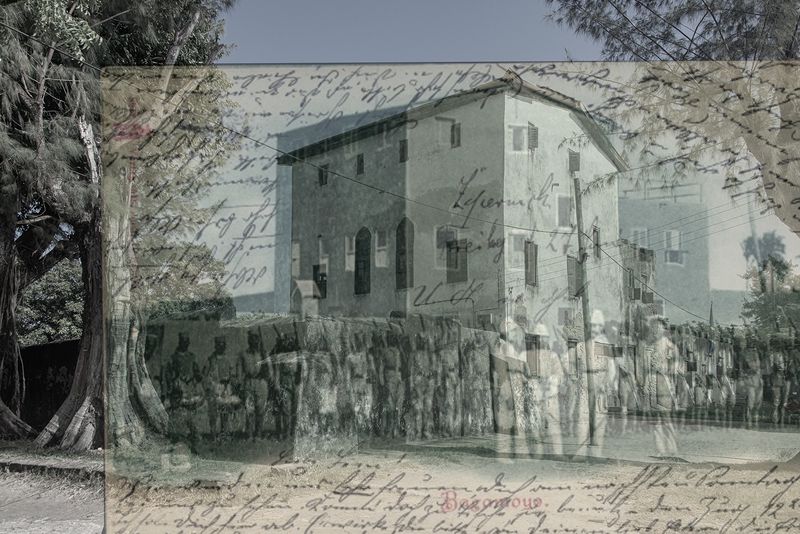
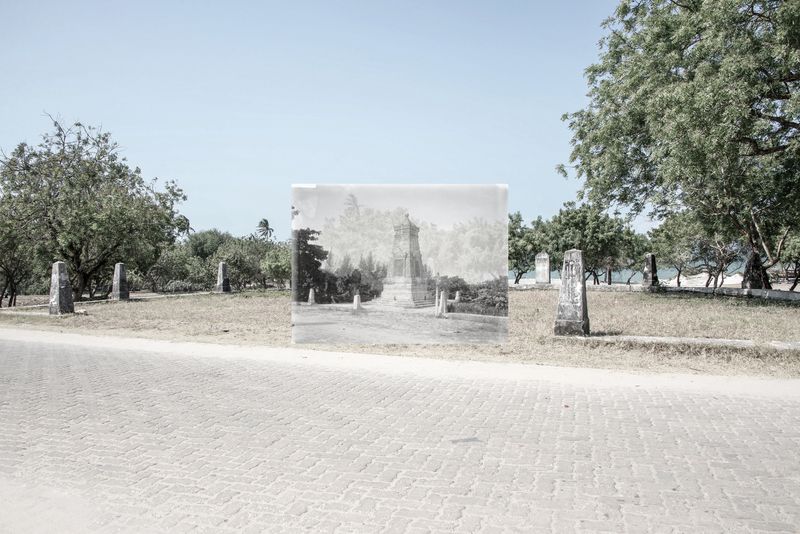
Colonial-era archival images are reappropriated and woven into the visual language of the series. By juxtaposing these with my own images, I seek to challenge inherited narratives and expose the continuity of extractive gazes over time. Abstraction becomes a method of distillation, stripping away the excess to uncover what lingers beneath.
I treat photography’s materiality as a field of tension—between what is seen and what is suppressed, between the figurative and the abstract.
5. Can you describe one image in more detail ?
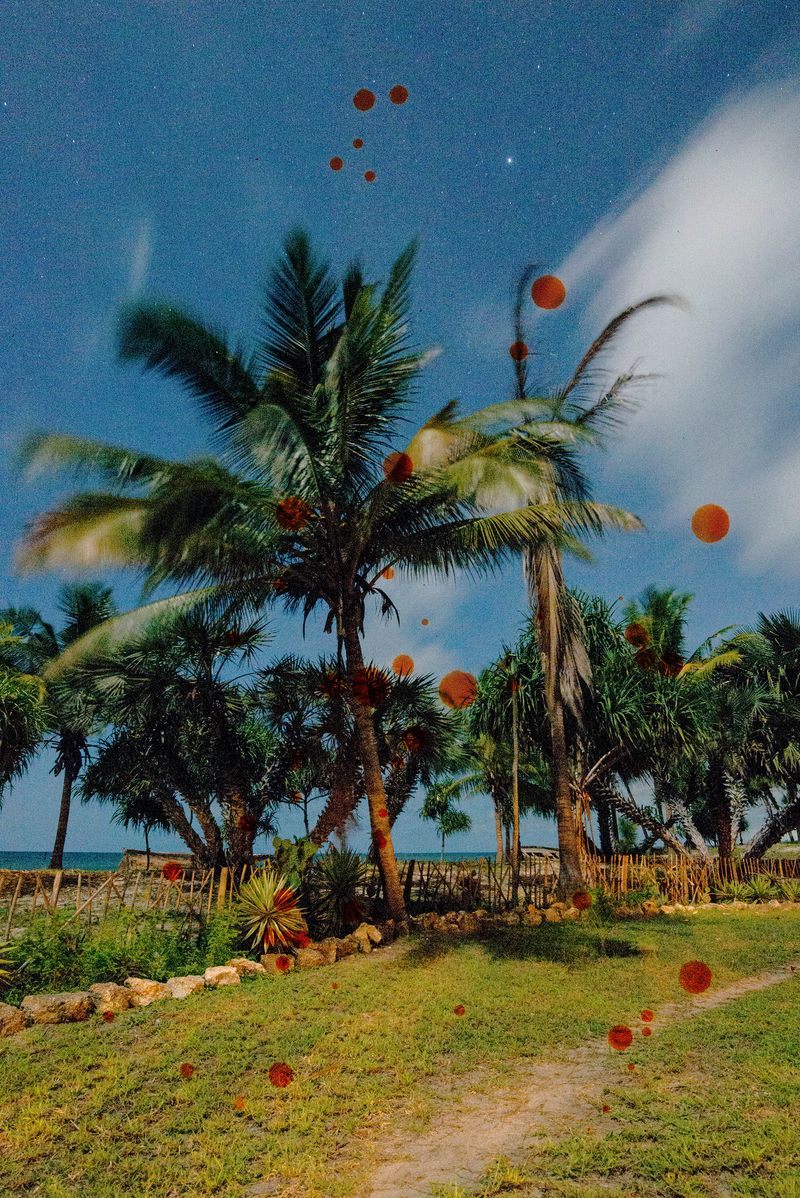
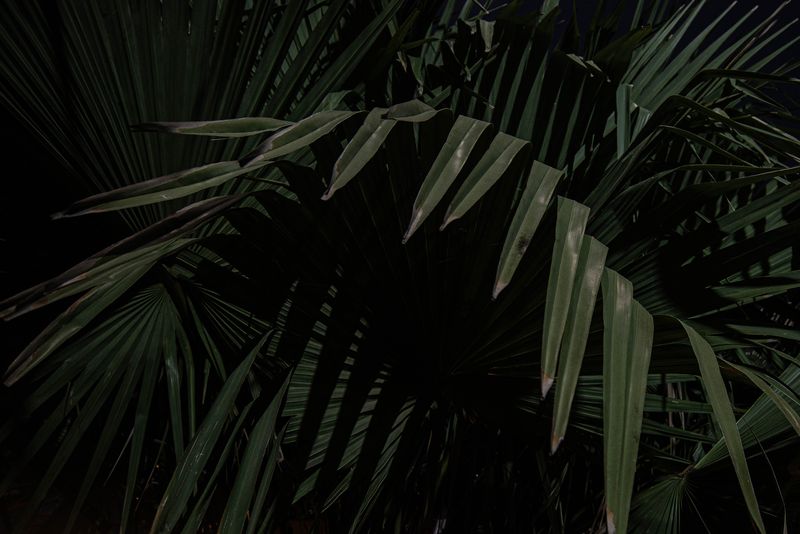
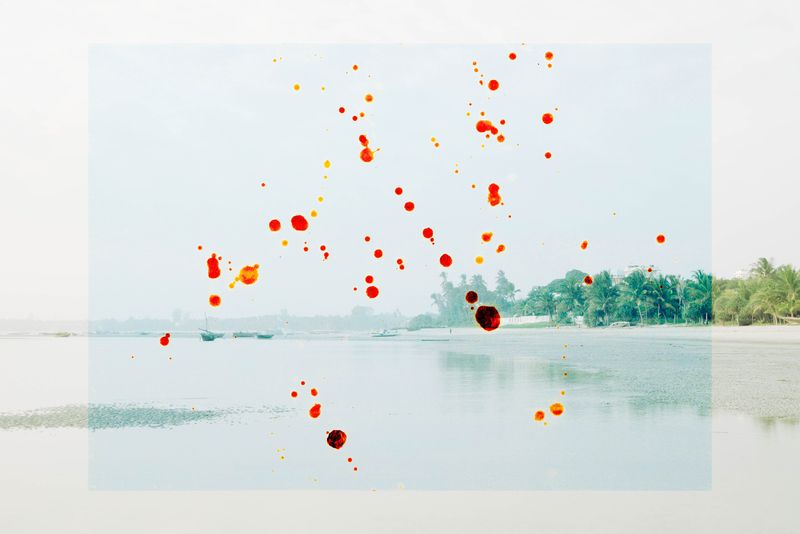
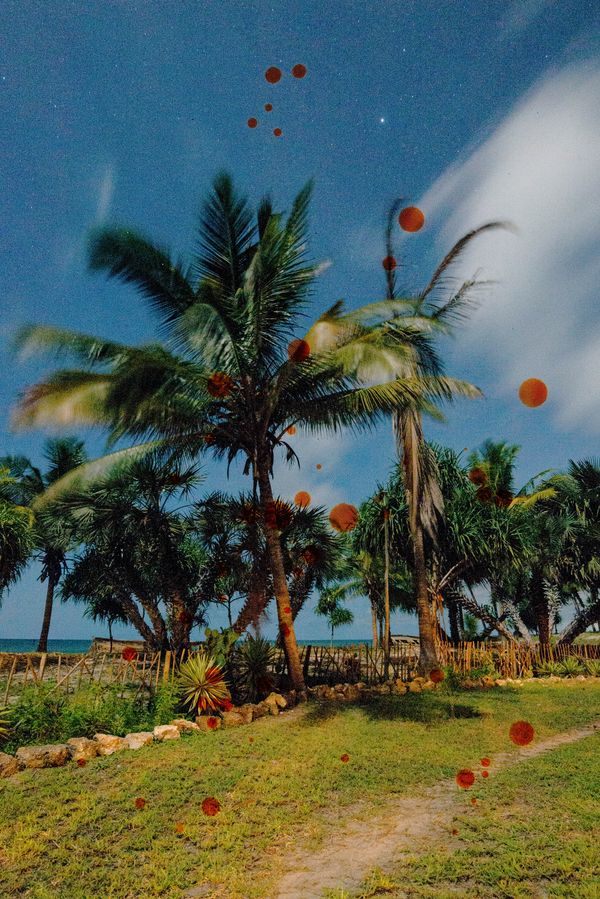
The first image in the portfolio selection Blood Stars holds a singular place within The Red That Stains. In my view it encapsulates the notion of “terrible beauty”—a moment where seductive visual allure is inseparable from an undercurrent of unease or latent danger. It’s an image that draws you in and holds you in tension.
At first glance, it flirts with the exotic gaze, reminiscent of colonial postcards—yet it resists and subverts it. There is an ambiguity of time: it’s unclear whether it is night or day, and this timelessness reinforces a sense of magic realism, as though we are witnessing an alluring dystopian paradise suspended between worlds.
I believe Blood Stars also connects, in a quiet way, to my cultural lineage. Its emotional register echoes the aesthetics of pain I absorbed growing up in Belgium—particularly the visual language of the Flemish Masters, who expressed the intricate intersection of suffering and beauty. Their ability to hold beauty and devastation within the same frame has always stayed with me.
In Blood Stars, beauty becomes a way to make the unbearable visible—not to soften the truth, but to allow us to live with it long enough to feel the weight of what is often hidden, unspoken, or erased.
.