The Poetry of Silence: Reflections on Vladimir Damjanović’s Photography
-
Dates2025 - 2026
-
Author
- Topics Fine Art
A photographic meditation on silence, transience and the hidden metaphysics of the ordinary, where urban fragments and landscapes become spaces of poetic attention.
Photographs © Vladimir Damjanović
A compelling photograph does not simply preserve what was seen; it reveals a manner of attending to the world. This is where Vladimir Damjanović’s photography begins.
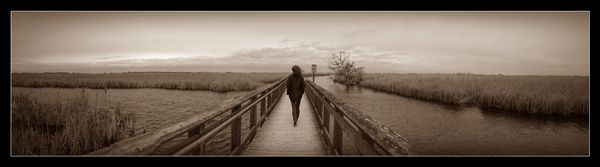
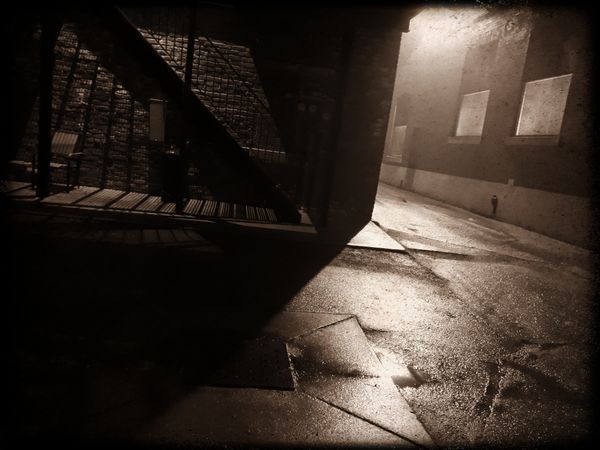
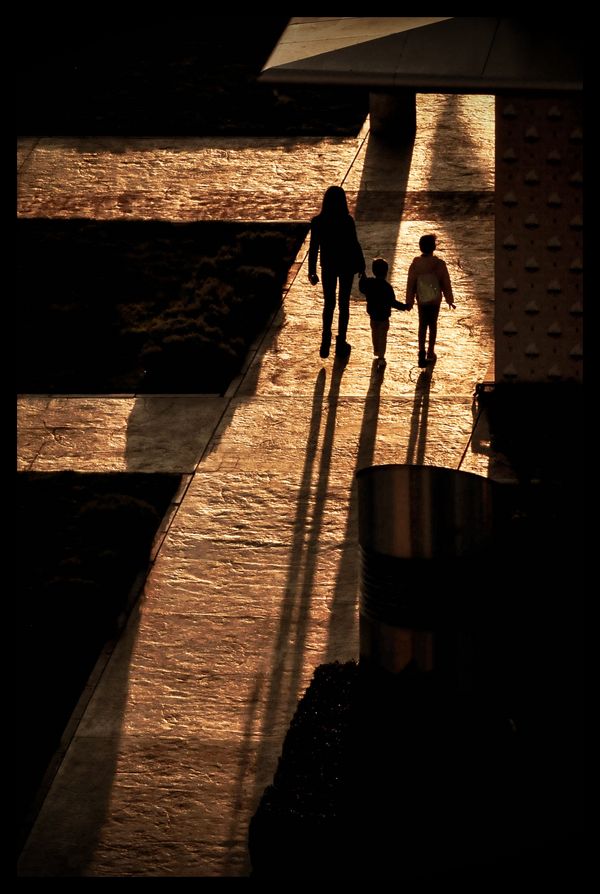
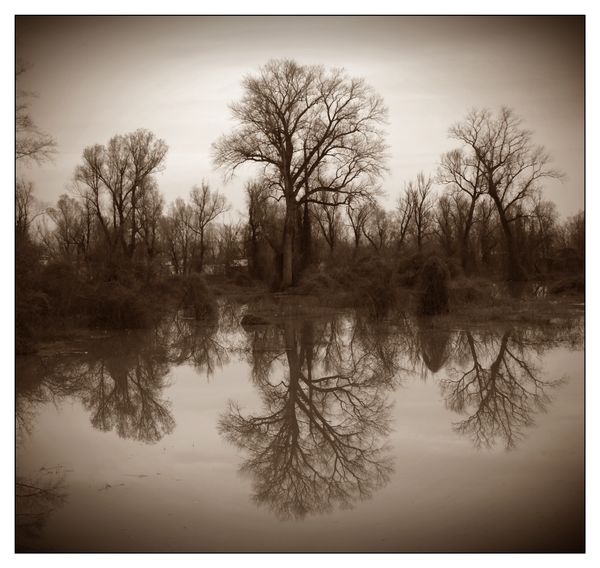
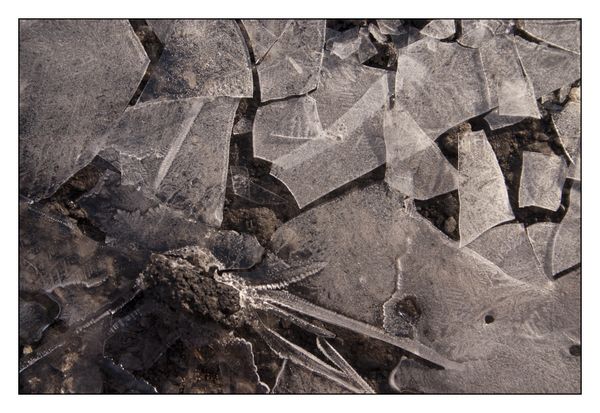
Whether he turns his lens toward a rain-darkened alley, fractured winter ice, flooded trees mirrored in still water, a solitary boardwalk dissolving into marshland, or the long shadows of anonymous
passers-by in evening light, what emerges is never mere documentation. These are not images of surfaces, but meditations in light.
What may strike the viewer most is that his urban photographs and landscapes do not belong to separate sensibilities; they breathe through the same inward gaze.
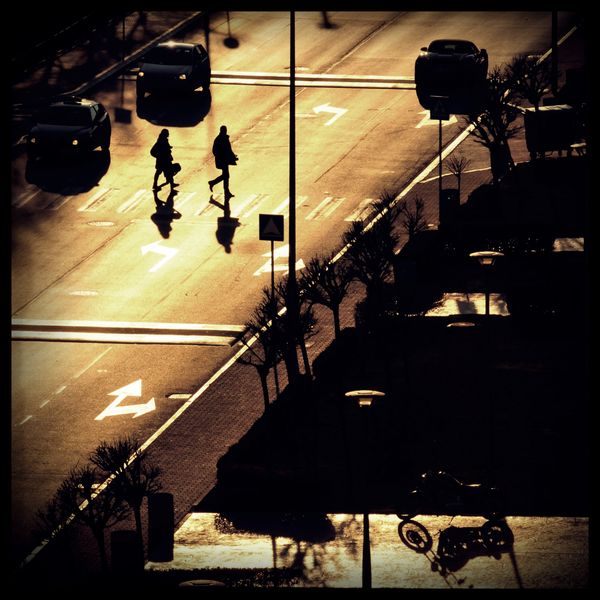
The city, in these works, is never reduced to architecture. It appears as atmosphere, as existential space shaped by crossings, thresholds, pauses, and the distances between beings. A figure disappearing into light beneath a stairway, two silhouettes crossing a luminous street, shadows elongated under a bridge; such scenes carry something almost cinematic, though without theatricality. Their drama is ontological rather than narrative: they do not depict events so much as disclose presence.
And then there are the landscapes.
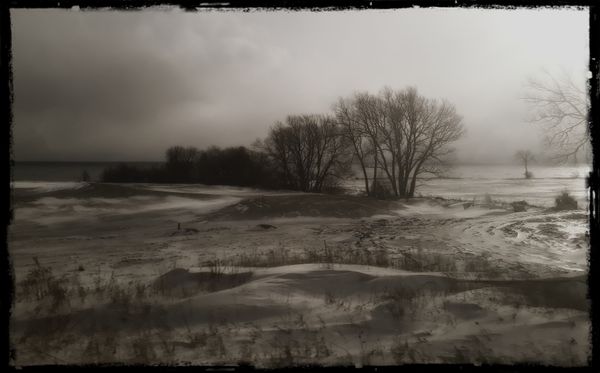
The cracked ice, the winter fields, the skeletal trees reflected in floodwater do not function as picturesque motifs. They feel discovered rather than composed. In them one senses not the desire to
aestheticise nature, but to enter into conversation with time itself, where ice resembles a script of fracture, water becomes a thinking medium, and trees stand almost as witnesses. Even emptiness in these photographs seems inhabited.
What distinguishes these photographs is their refusal of spectacle. There is no visual vanity here, no effort to astonish. The images trust quietness, and in a culture exhausted by pictures insisting on immediate effect, such trust feels almost radical.
Here lies the poetry of his photography. It is not because the images illustrate poetic ideas, but because they possess what poetry at its best possesses: compression, silence, resonance, an afterthought that lingers. They remain with you; they continue after being seen.
One could say his recurring subject is neither city nor landscape, but attention itself, a very rare subject, because attention, in its deepest sense, is an ethical as well as philosophical act: to pause before what others pass by, to perceive form in transience, to find dignity in erosion, to notice solitude without sentimentalising it.
This, perhaps, is what gives these photographs their contemplative force. Even where the imagery carries melancholy, it is never inert or decorative; it contains tension, endurance, inward movement. A kind of quiet metaphysics. At moments we are reminded that the strongest photography does not enlarge the world, but deepens it. That is what happens here. A fragment of ice, a flooded grove, wet asphalt under nocturnal light, things ordinarily overlooked begin to bear metaphysical weight. And that, I think, is a rare gift.
Perhaps the truest thing one can say is that these are not simply photographs of places, but photographs of consciousness meeting the visible world: not images asking to be consumed, but images inviting us to dwell.
And in an age of hurried looking, that may be a form of resistance, perhaps even a form of grace.