THE LAND REMEMBERS

  • Dates
    2021 - Ongoing
  • Author
  • Topics Social Issues, Editorial, Nature & Environment, Documentary
  • Location Türkiye

Land remembers what people forget. Across Central Anatolia, water is disappearing, yet its traces remain in the earth, abandoned machines, old photographs, and human memory. The Land Remembers explores what remains as a familiar landscape vanishes.

THE LAND REMEMBERS

Land remembers what people forget.

Across Central Anatolia, water is disappearing from landscapes that have sustained life for generations. Lakes retreat, wetlands shrink, groundwater falls, and sinkholes open across agricultural plains. Yet the traces of what once existed remain in the marks left by water on the earth, in abandoned structures, in obsolete farming machinery, in old photographs, and in the memories of those who have spent their lives on this land. The Land Remembers is a long-term documentary project about environmental change, but also about memory. I began by photographing the visible effects of drought and water loss. Over time, I realised the story could not be told through the landscape alone. It was also held by people who remember a different landscape. An elderly woman holds a photograph of herself working in the wheat fields when she was young. In a village coffeehouse, older men sit beneath an image of the surrounding landscape when water was still abundant. Inside an abandoned building, an old wheat machine remains where it was once used. These fragments of the past exist alongside a very different agricultural present: irrigated fields, water-intensive crops, and wells drawing groundwater from beneath increasingly dry soil. The project moves between aerial landscapes and intimate human encounters, between what can be measured and what can only be remembered. Seen from above, disappearing water leaves forms that can appear unexpectedly beautiful. On the ground, those same changes become part of everyday life, embedded in work, ageing villages, and the relationship between generations. The photographs do not attempt to reduce this transformation to a single cause. Climate change, prolonged drought, groundwater extraction, and shifting agricultural practices intersect in a region where water has become increasingly fragile. I am interested in what remains when a familiar landscape begins to disappear. A photograph survives on a wall. A machine remains in an abandoned room. A woman remembers the fields of her youth. Young people stand at the edge of the water and look toward a landscape they will inherit. The land remembers too. Its former waters remain as lines, scars, and mineral traces. Its surface collapses into sinkholes. Lakes become exposed earth. In places once shaped by water, its absence leaves traces of its own. What we are witnessing is not only the disappearance of water, but the gradual disappearance of a landscape as it has been remembered.
This project is a candidate for PhMuseum 2026 Women Photographers Grant

Learn more Present your project
© F.Dilek Yurdakul - Image from the THE LAND REMEMBERS photography project
i

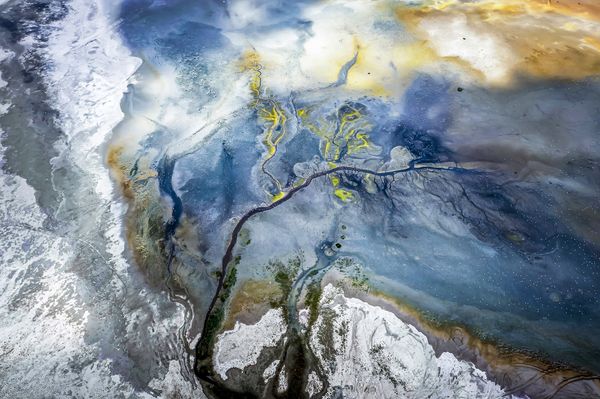
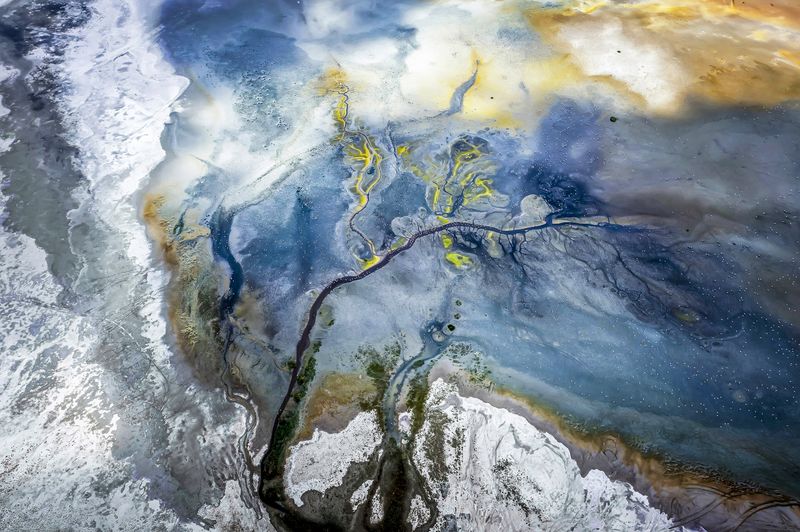
Düden Lake near Kulu is an important wetland habitat for flamingos and other migratory water birds. Seen from above, flamingos appear as small dots among branching patterns of water and mineral deposits, revealing the traces left by water as its boundaries shift across the wetland. Central Anatolia, Türkiye, 2024.

© F.Dilek Yurdakul - Image from the THE LAND REMEMBERS photography project
i

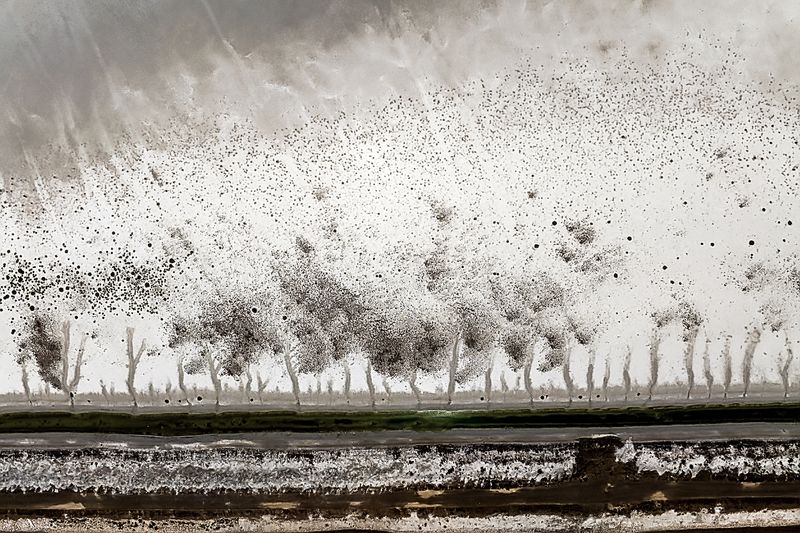
As water recedes at Acıgöl, exposed sediments form branching patterns resembling trees. Seen from above, the landscape creates an unsettling metaphor: nature appears to draw its own warning into the earth. Acıgöl, Central Anatolia, Türkiye, 2024

© F.Dilek Yurdakul - Image from the THE LAND REMEMBERS photography project
i

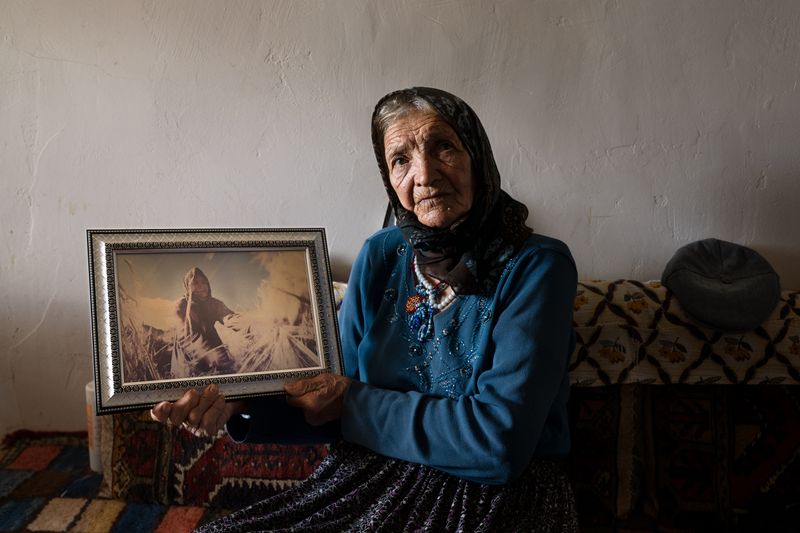
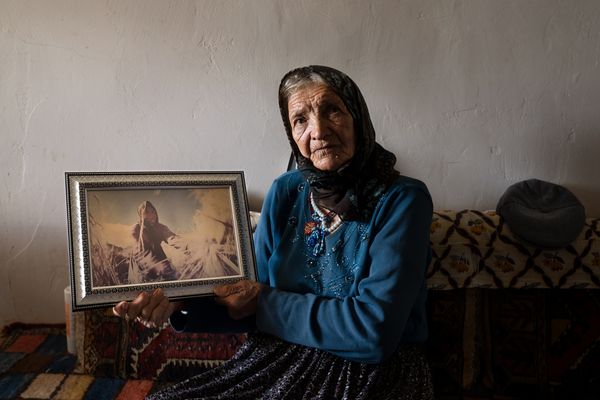
Gülenay Öztürk, born in 1942, holds a photograph of herself working in a wheat field when she was young. She remembers a time when wheat and barley dominated the surrounding farmland, before irrigated agriculture expanded across the region and traditional grain cultivation began to decline. Central Anatolia, Türkiye, 2026.

© F.Dilek Yurdakul - Image from the THE LAND REMEMBERS photography project
i

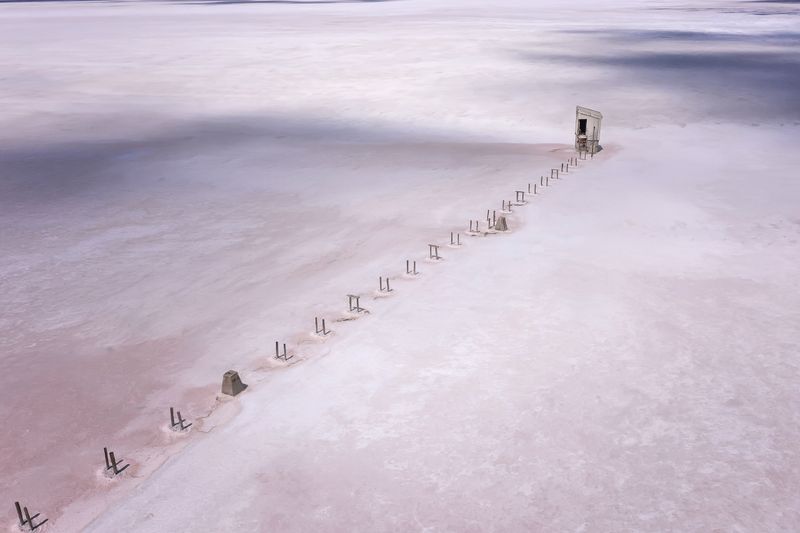
Remains of a bridge once used by a saltworks now stand on the exposed bed of Lake Tuz. Stranded far from the water, the structure marks where the lake once reached, becoming a physical trace of a landscape that has changed around it. Lake Tuz, Central Anatolia, Türkiye, 2024.

© F.Dilek Yurdakul - Image from the THE LAND REMEMBERS photography project
i

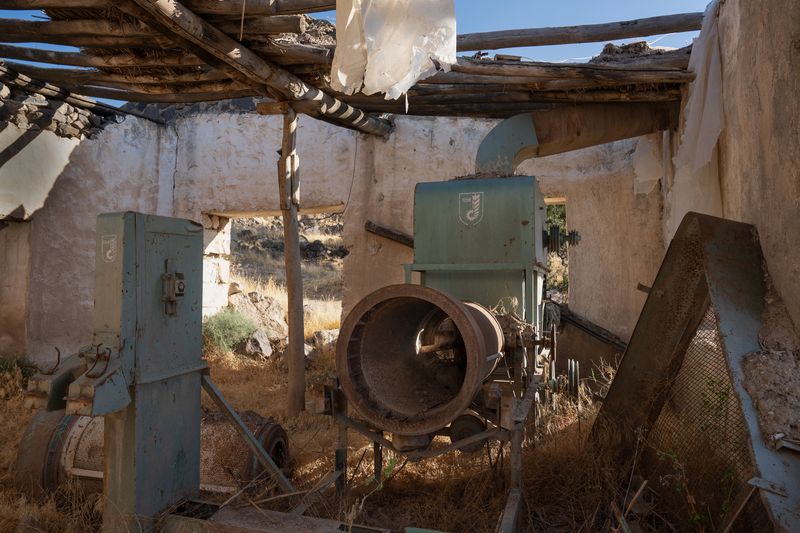
Once used when wheat and barley dominated farming in the Konya Basin, this government-supplied grain machine now lies abandoned inside a disused building. It remains as a physical trace of an earlier agricultural landscape, before irrigated, water-intensive crops expanded across the region. Konya Basin, Central Anatolia, Türkiye, 2026.

© F.Dilek Yurdakul - Image from the THE LAND REMEMBERS photography project
i

Workers harvest alfalfa in Central Anatolia, where the crop can be harvested several times a year and is widely used for livestock feed. Its economic value comes with a high demand for irrigation, adding pressure to declining groundwater reserves in one of Türkiye’s driest agricultural regions. Konya Basin, Türkiye, 2024.

© F.Dilek Yurdakul - Image from the THE LAND REMEMBERS photography project
i

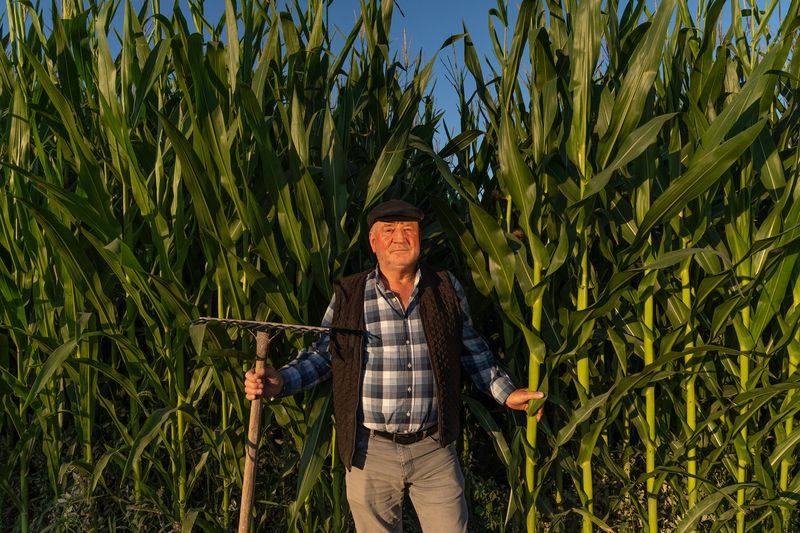
Farmer Bahri Nakipoğlu, born in 1965, stands in his cornfield in Karapınar. He remembers when wheat and barley dominated local farming. According to Nakipoğlu, the expansion of electricity-powered groundwater irrigation around two decades ago enabled farmers to increasingly shift toward water-intensive crops such as corn, alfalfa and sugar beet. Karapınar, Konya, Türkiye, 2026.

© F.Dilek Yurdakul - Image from the THE LAND REMEMBERS photography project
i

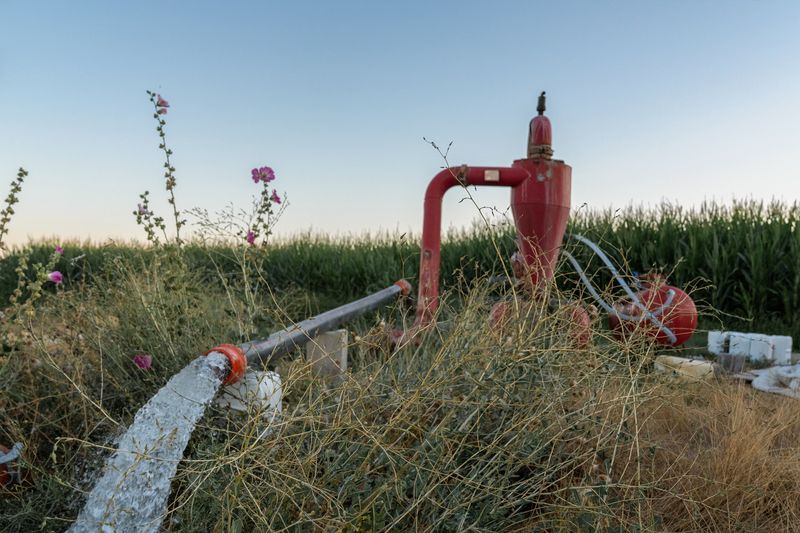
A groundwater well supplies irrigated farmland in Karapınar. Across the Konya Basin, about seven in ten identified wells are reported to be unlicensed. Intensive groundwater extraction contributes to falling water levels and the formation of sinkholes across the region. Karapınar, Konya, Türkiye, 2026

© F.Dilek Yurdakul - Image from the THE LAND REMEMBERS photography project
i

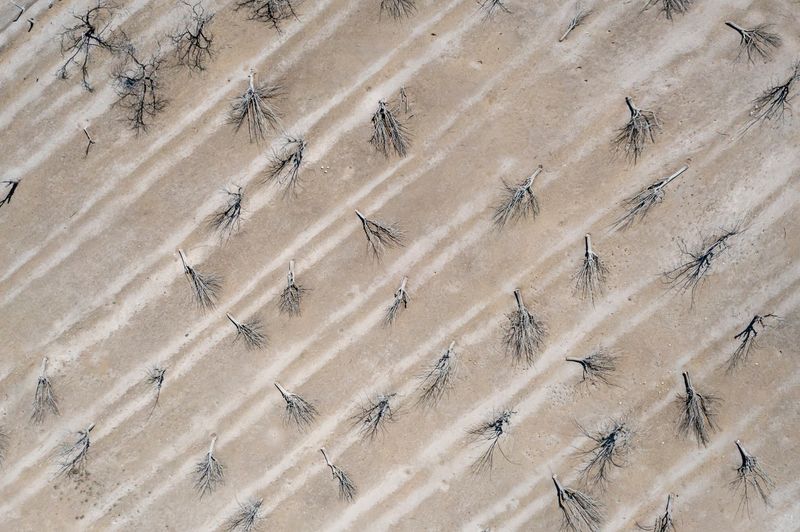
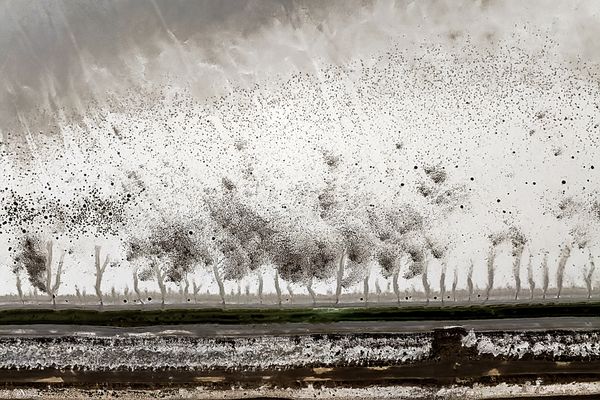
Dried trees mark an increasingly arid landscape in Central Anatolia. Seen from above, their exposed trunks and branches reveal how prolonged drought and diminishing water reshape not only lakes and soil, but also the vegetation that depends on them. Central Anatolia, Türkiye, 2021.

© F.Dilek Yurdakul - Image from the THE LAND REMEMBERS photography project
i

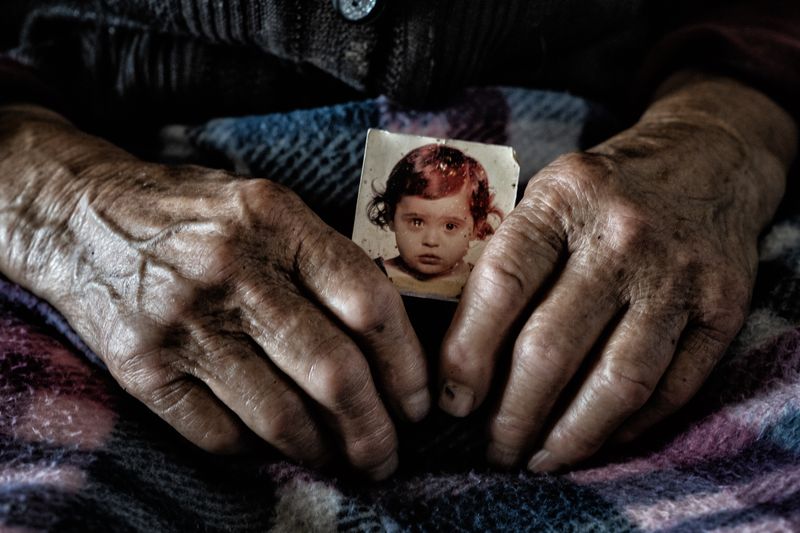
Arzu Denizer,92, holds a photograph of her great-great-grandchild in her village home in Central Anatolia. Hard of hearing and living alone, she speaks of loneliness and of younger generations leaving the village. Holding the image of a child several generations younger than herself, she embodies the distance between those who remain and those who will inherit a changing landscape. Turkiye,2026

© F.Dilek Yurdakul - Image from the THE LAND REMEMBERS photography project
i

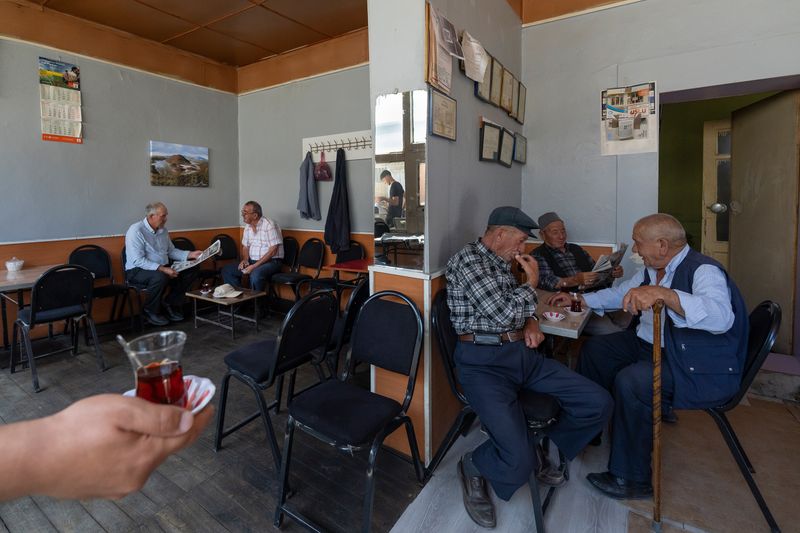
Older men gather in a village coffeehouse as younger generations increasingly leave rural villages for the cities. On the wall hangs a photograph of Meke Lake when it still held water. Today, the lake is dry. What remains on the wall is not only a photograph of the lake, but a memory of the landscape these men once knew. Central Anatolia, Türkiye, 2026.

© F.Dilek Yurdakul - Image from the THE LAND REMEMBERS photography project
i

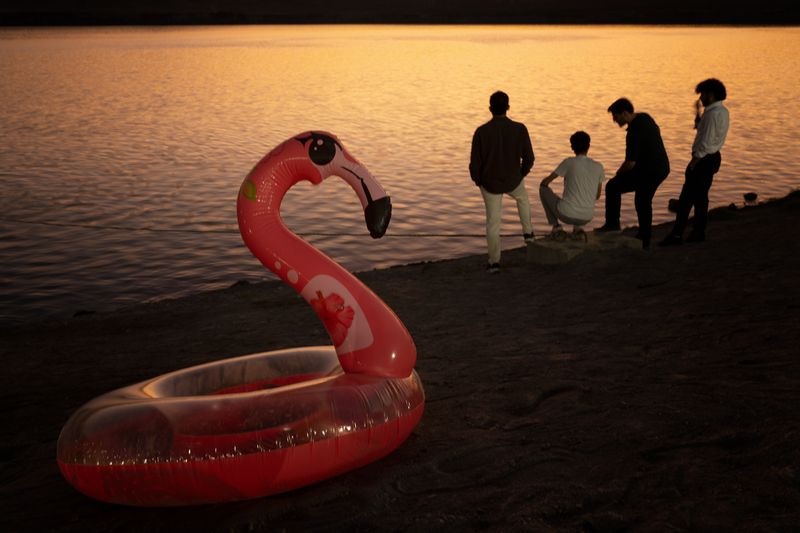
At sunset, young people gaze across Acıgöl as an inflatable flamingo rests on the shore. As wetlands shrink, flamingos and other water birds face the loss of their habitats. Against the changing lake, the artificial bird becomes a haunting metaphor for what may one day remain only as an image. Acıgöl, Central Anatolia, Türkiye, 2026

© F.Dilek Yurdakul - Image from the THE LAND REMEMBERS photography project
i

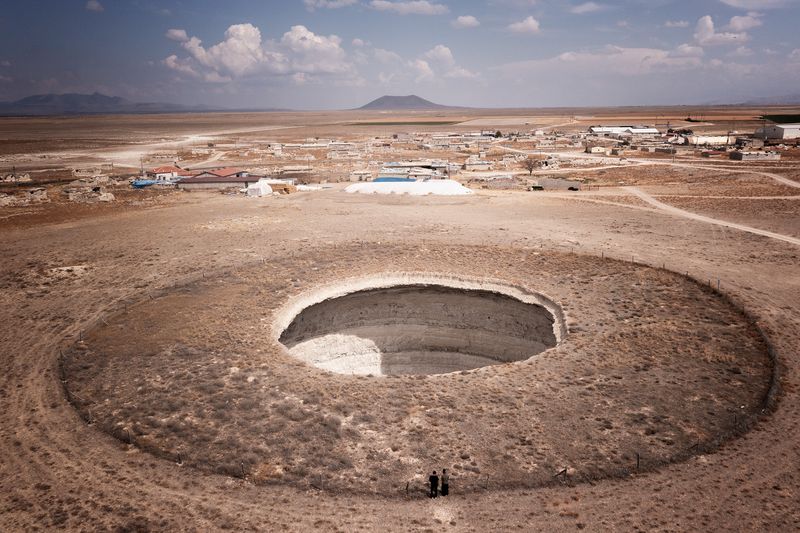
A sinkhole opens near a settlement in the Konya Basin, where hundreds have formed across the agricultural landscape. Their formation is linked to declining groundwater levels, intensified by prolonged drought and groundwater extraction for irrigation. As the ground gives way closer to villages and homes, an invisible water crisis becomes visible on the surface. Konya, Türkiye, 2024.

© F.Dilek Yurdakul - Image from the THE LAND REMEMBERS photography project
i

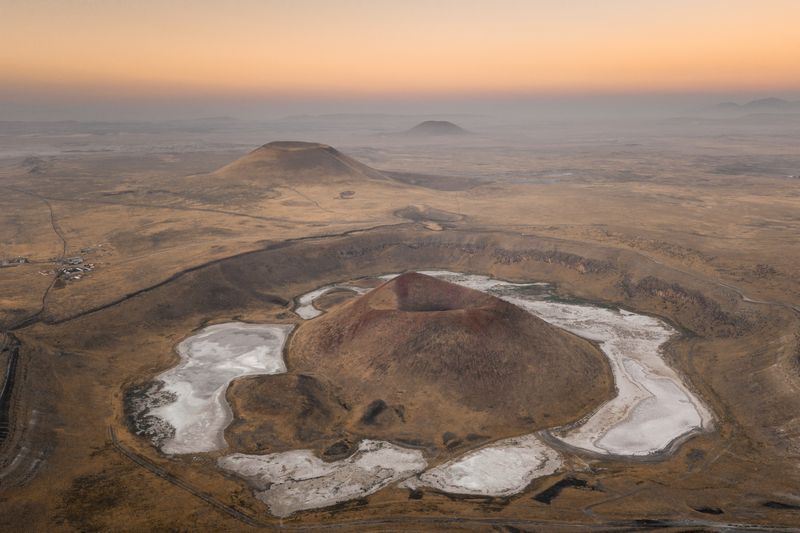
Once known as the “blue eye” of Central Anatolia, Meke Lake now lies completely dry. Prolonged drought and climate change, compounded by intensive groundwater extraction for water-demanding agriculture, have transformed one of the region’s most iconic lakes into a stark landscape of loss. Karapınar, Konya, Türkiye, 2026.

© F.Dilek Yurdakul - Image from the THE LAND REMEMBERS photography project
i

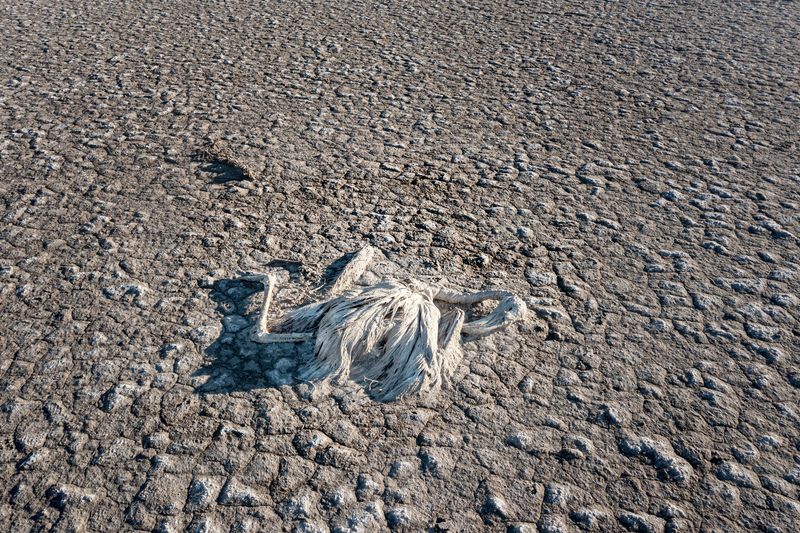
A dead flamingo lies on the cracked bed of a drying lake in Central Anatolia. Across the region, drought, climate change and declining water levels are shrinking the wetlands on which flamingos and other water birds depend. As water disappears, so too does the habitat that sustains life. Central Anatolia, Türkiye, 2021.