The Hands That Carry the Rite
-
Dates2026 - Ongoing
-
Author
- Topics Social Issues, Contemporary Issues, Documentary, Festivals
A photographic document of the women who carry Jingwansa Temple's 600-year-old Suryukjae forward — a living lineage of ritual knowledge passed from hand to hand, body to body, through generations of Buddhist nuns.
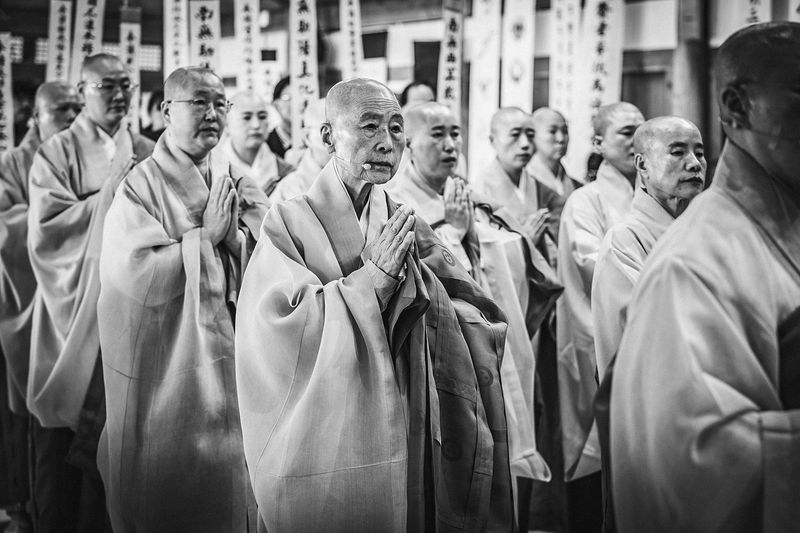
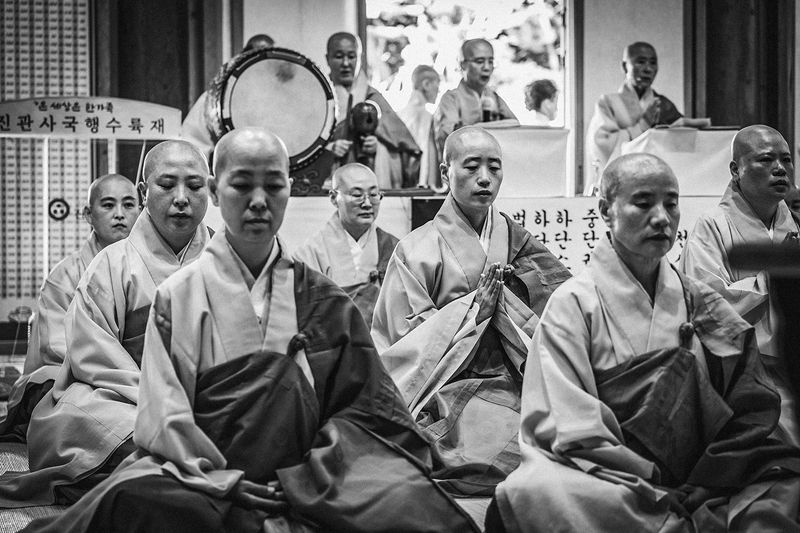
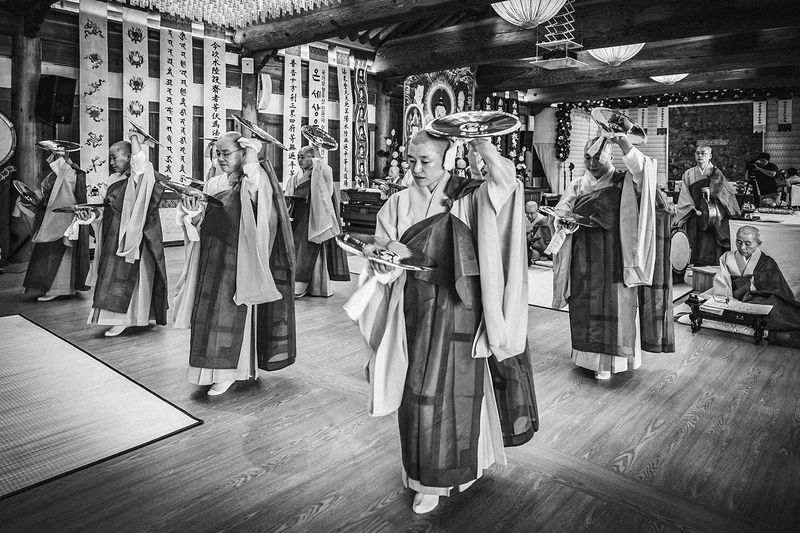
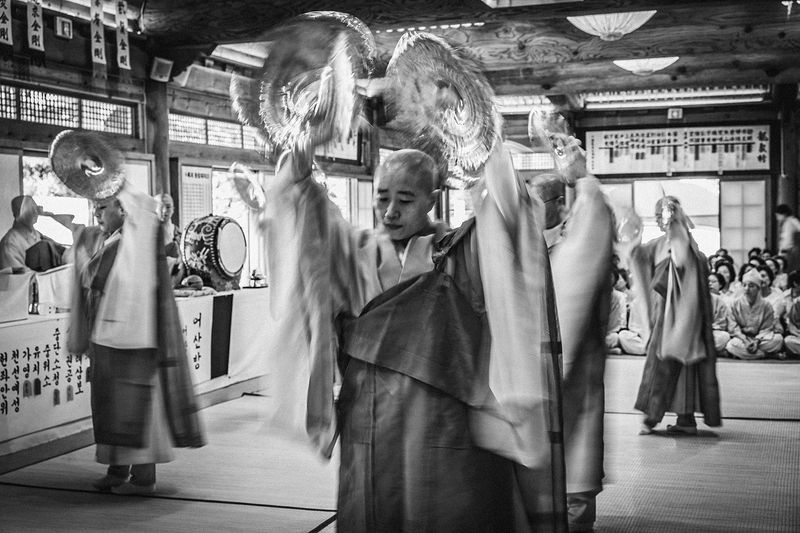
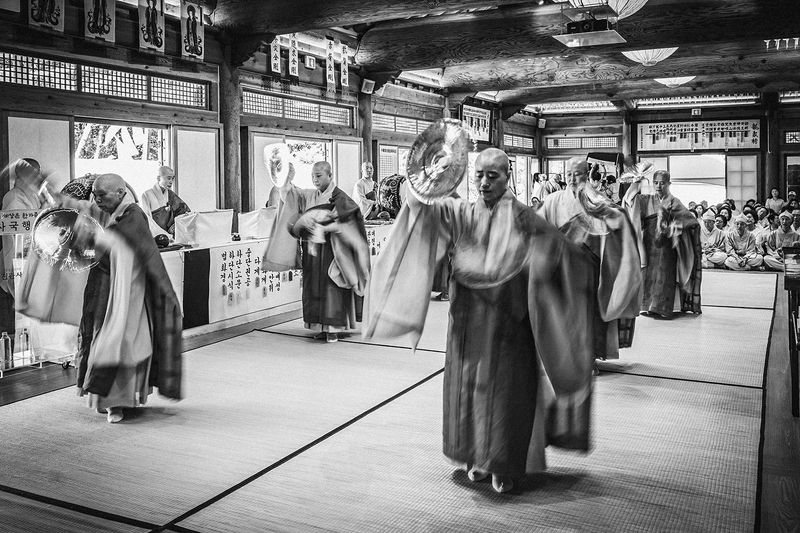
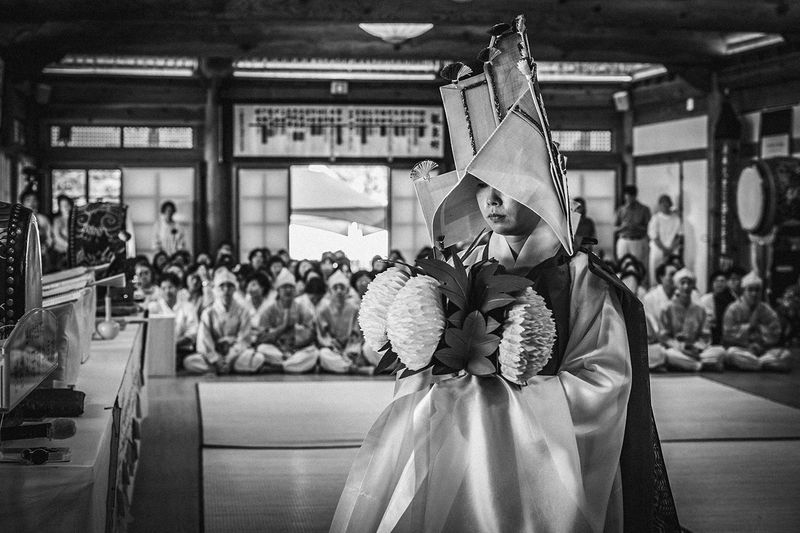
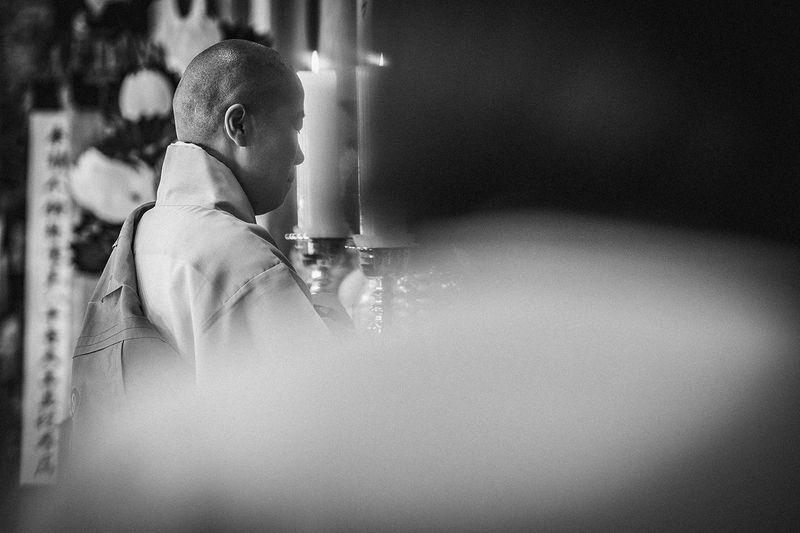
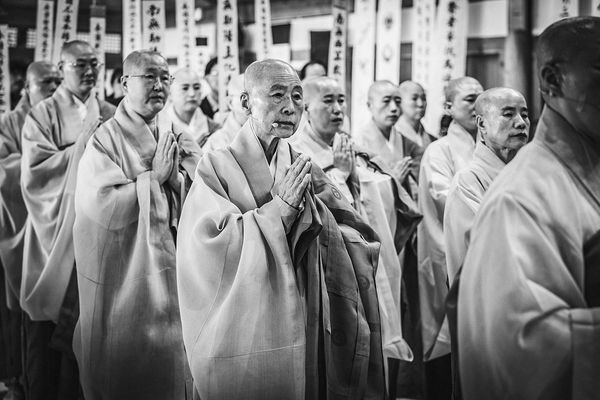
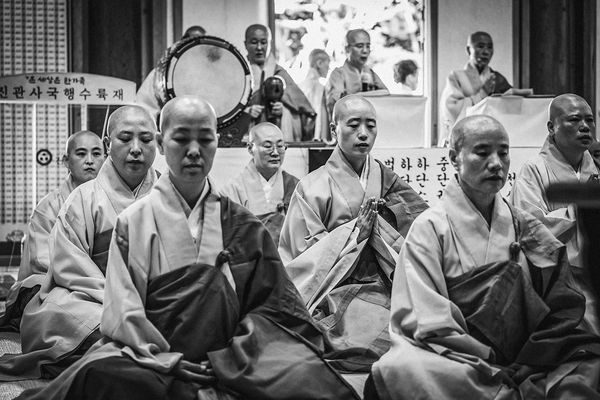
For six hundred years, Jingwansa Temple's Suryukjae has brought together ritual, music, movement, and devotion in an elaborate Buddhist ceremony dedicated to beings who have no one left to remember them. Today, the rite continues as a living tradition, carried forward through the knowledge and physical practice of Buddhist nuns.
At the heart of this work are their hands.
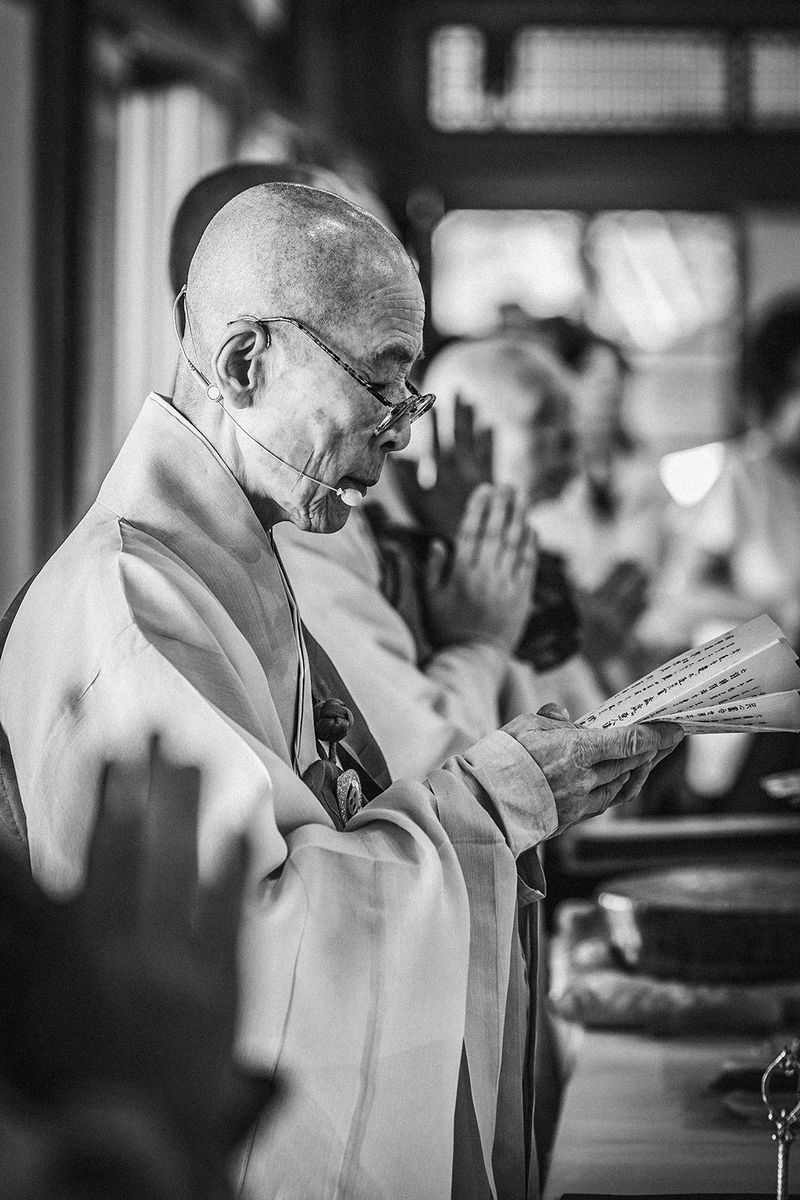
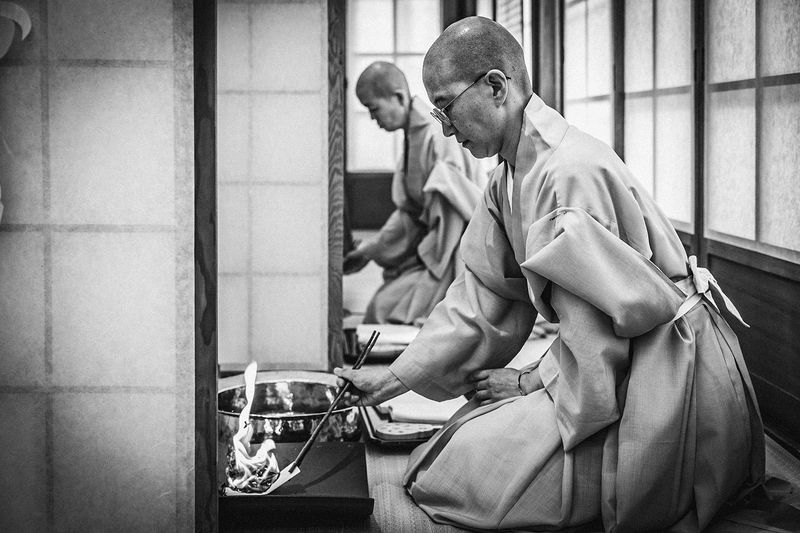
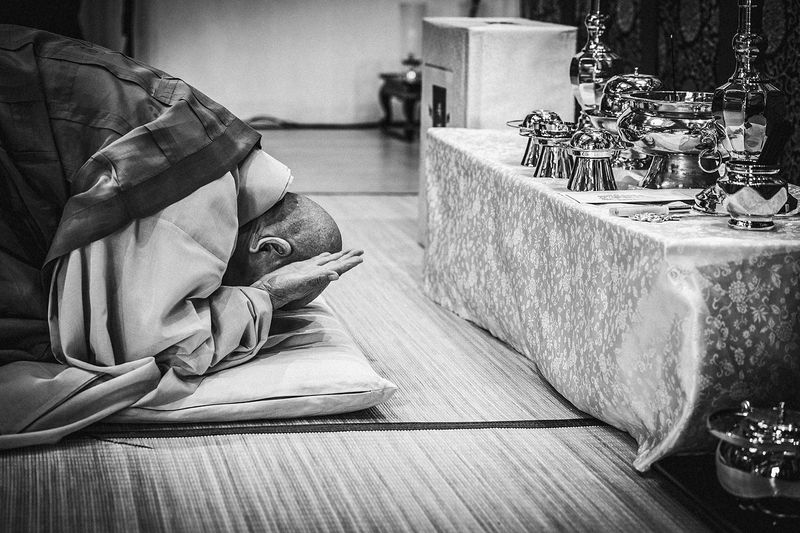
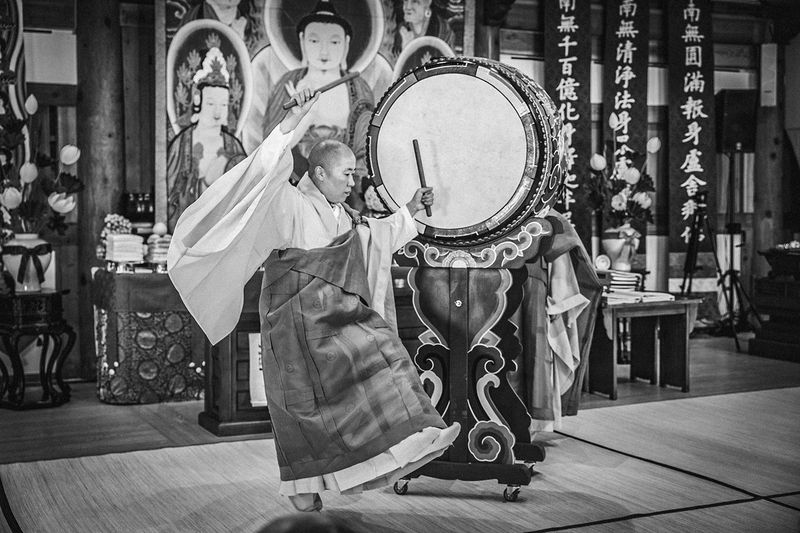
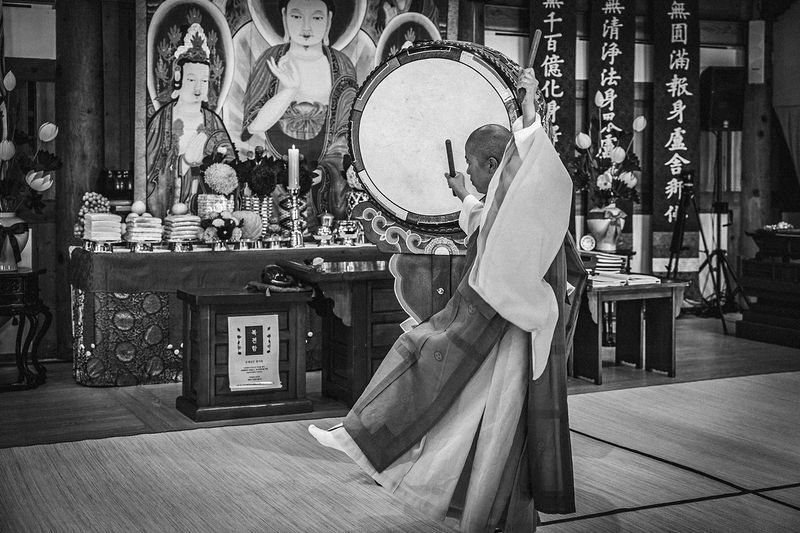
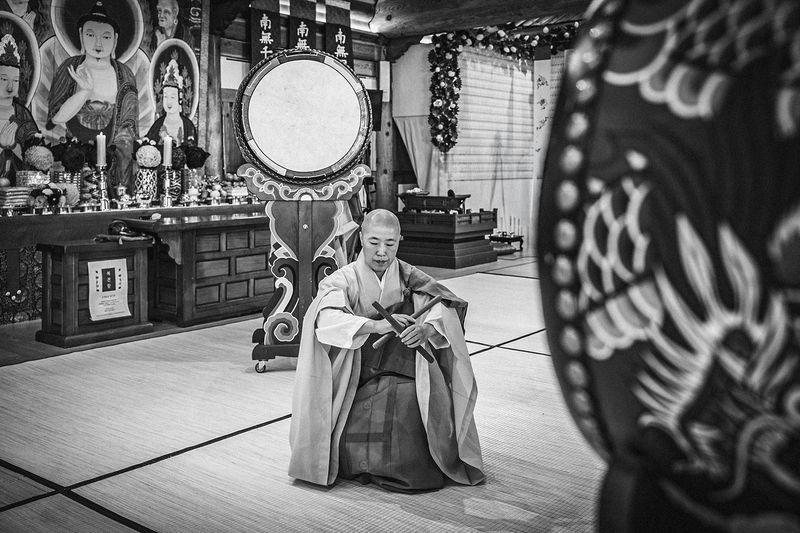
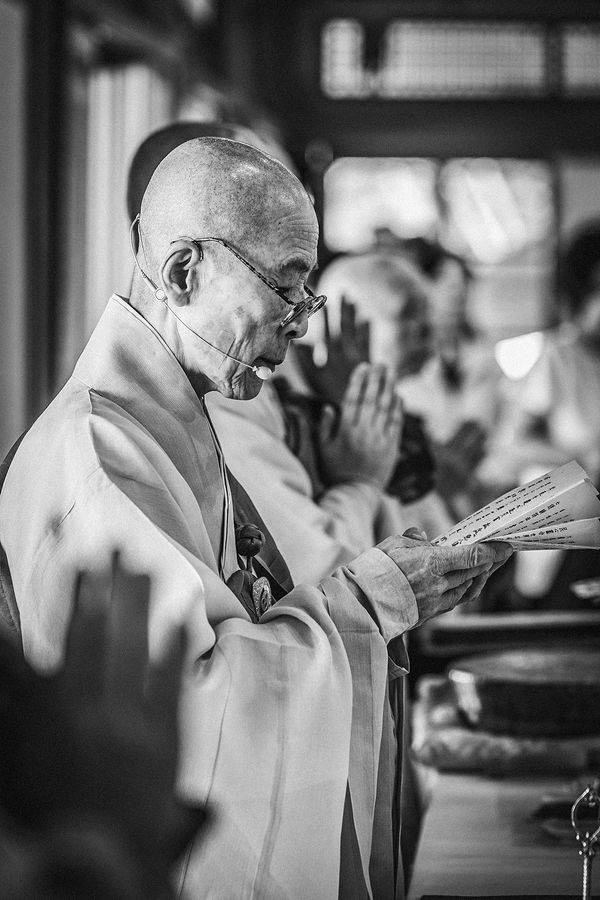
I photograph the moments in which ritual knowledge passes from one woman to another: an elder nun placing her hand around a younger nun's wrist to correct the angle of an offering bowl; fingers adjusting the position of a ceremonial object; hands cupping incense in the cold before dawn; hands holding drumsticks in the suspended moment before a strike. These gestures may appear small, but within them is the precision of an entire ritual.
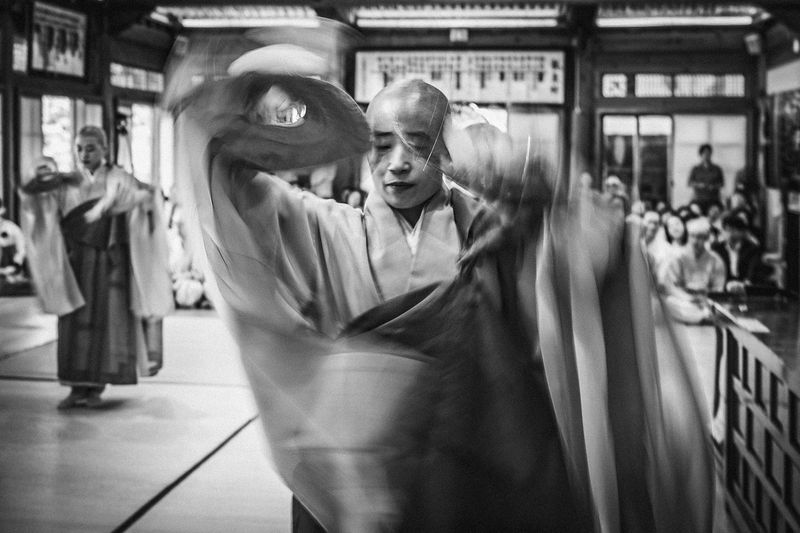
Suryukjae is not transmitted through written instruction alone. Its choreography lives in the body — in the angle of a wrist, the position of the fingers, the timing of a step, the height of a bow, the force with which a drum is struck. One nun watches another, imitates her, is corrected by her, and eventually places her own hands on the next generation. Knowledge moves through touch.
This is what I am photographing: not simply women performing a Buddhist rite, but women transmitting the knowledge that allows the rite to continue.
The hands become a visual language for this continuity. They reveal an intimate form of teaching that is rarely visible from the outside. A gesture is demonstrated, repeated, corrected, remembered, and eventually embodied. What one generation has learned becomes part of another generation's body.
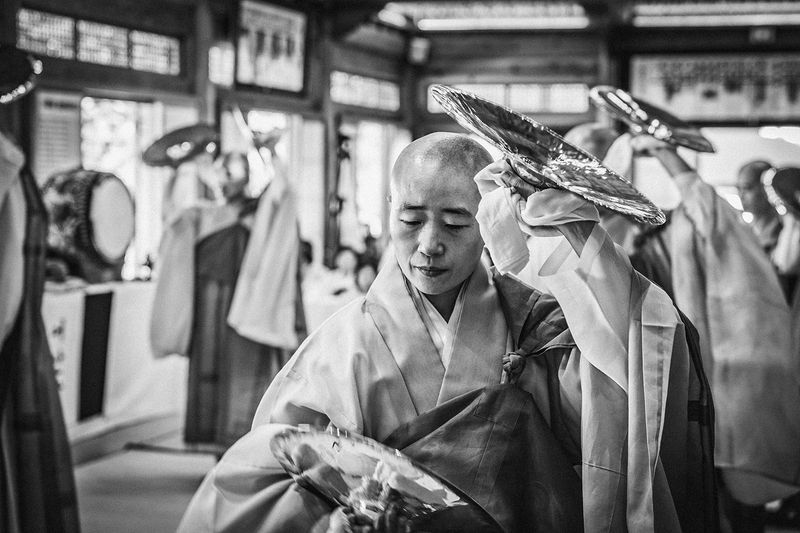
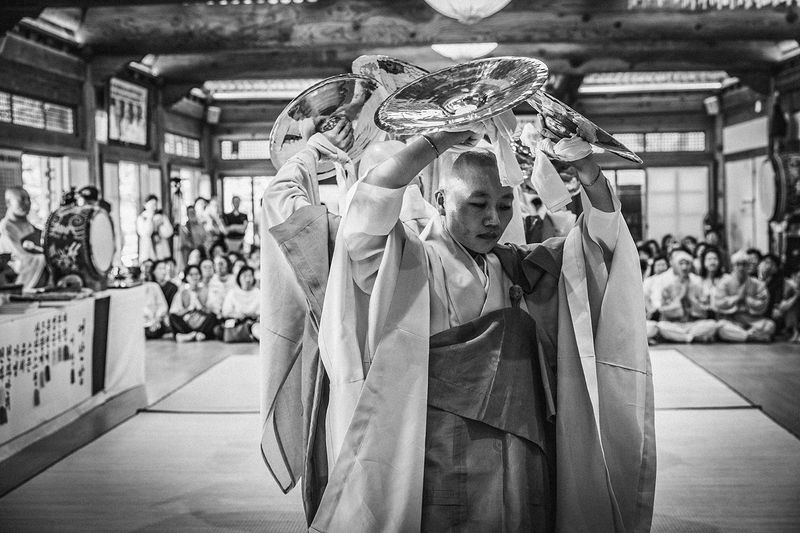
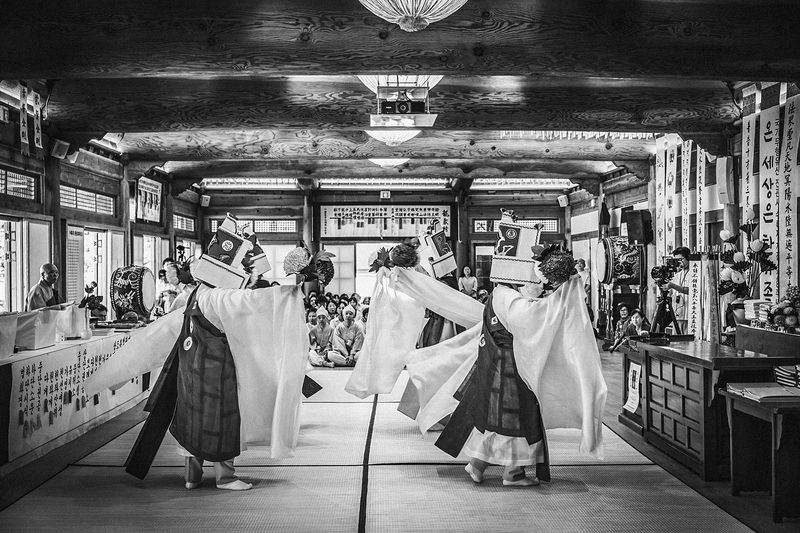
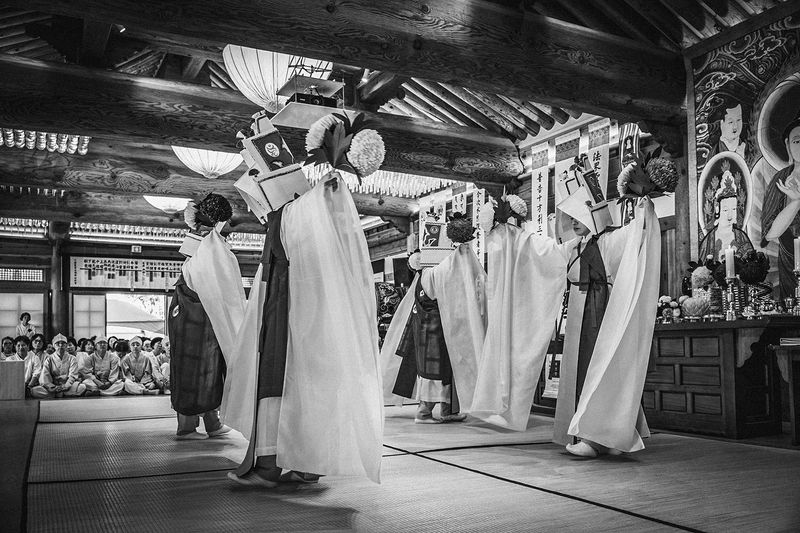
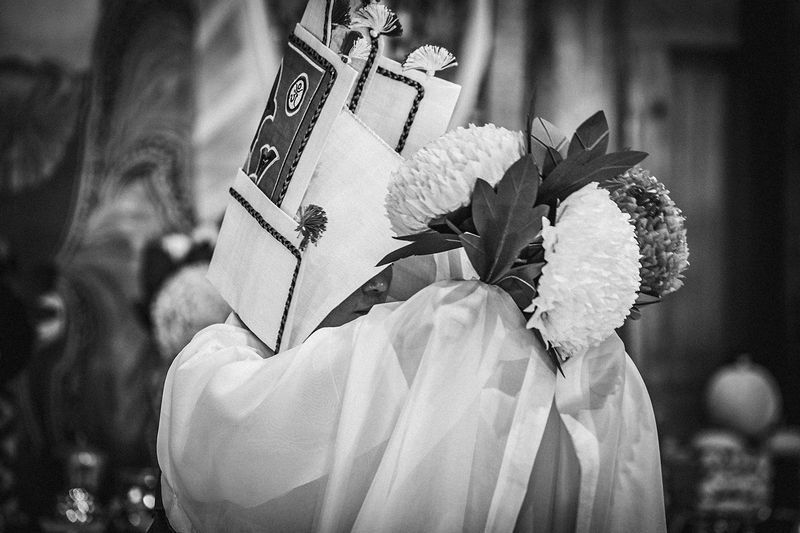
The images move between the collective scale of Suryukjae — the vast temple halls, the synchronized movements, ceremonial headdresses, cymbals and drums — and the intimacy of individual hands at work. The contrast is central to the project. The ceremony may appear monumental, but its continuity depends on countless precise physical acts carried out by individual women.
As a woman photographing these women, I have been given unusual access to this process of transmission. Over thirty months, I have watched teaching take place not only through words, but through proximity, repetition, touch, and attention. I am fifty-three, and witnessing an eighty-year-old nun still teaching another woman how to move her body through the ritual has also made me think differently about time, work, and what it means to pass one's knowledge forward.
Jingwansa's Suryukjae is part of Korea's intangible cultural heritage, and efforts continue to share and preserve its cultural significance internationally, including work toward UNESCO recognition. My photographs are made within that continuing present: not to document the disappearance of a tradition, but to look closely at how a tradition remains alive.
At the center of the work is a simple image: one woman's hand guiding another's.
From hand to hand, from body to body, the ritual continues.