Summits and Ashes
-
Dates2013 - 2020
-
Author
- Topics Contemporary Issues, Documentary
- Location Peru
We walk towards the highest that our legs and mind allow us. Here, where oxygen is diluted with every step, our breaths are lost among the explosions, screams and endless mountains,will we meet again?
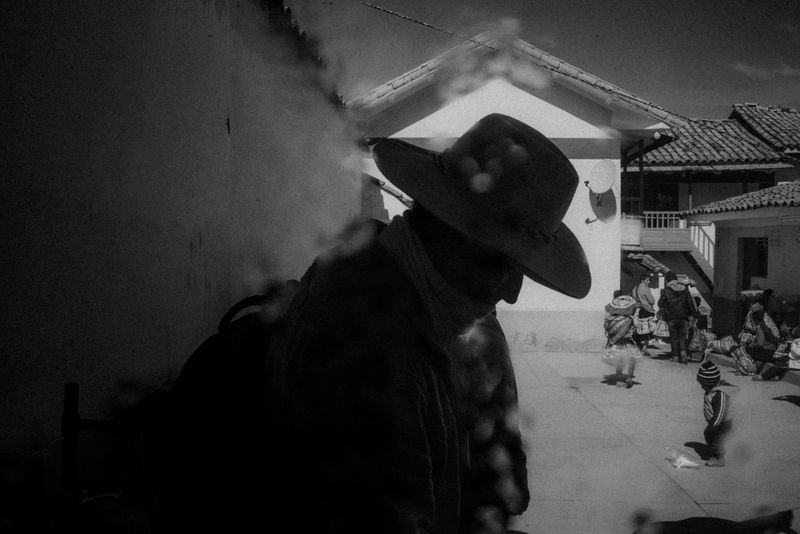
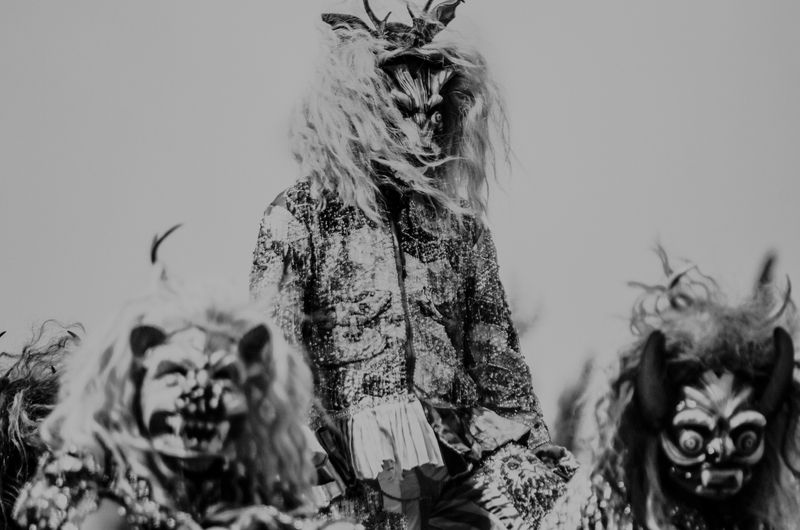
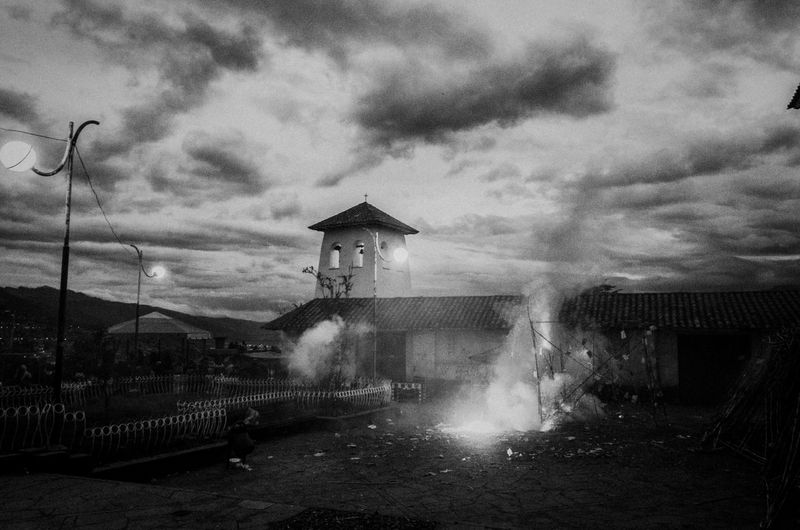
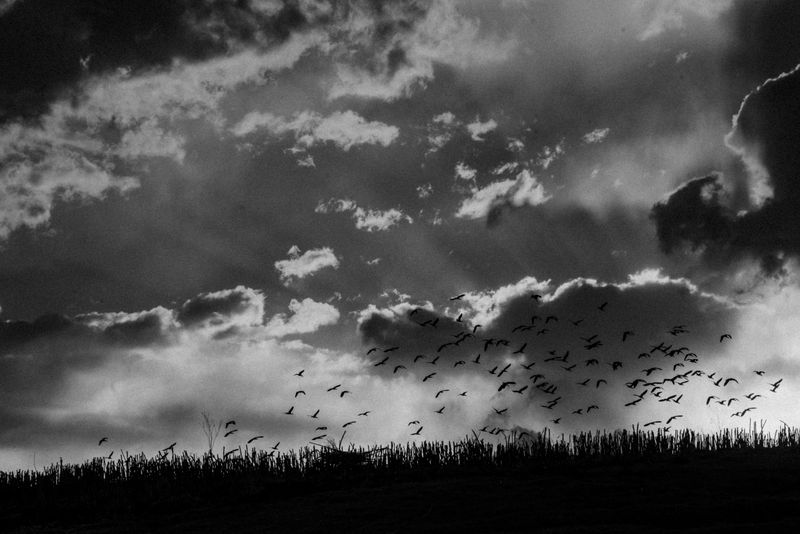
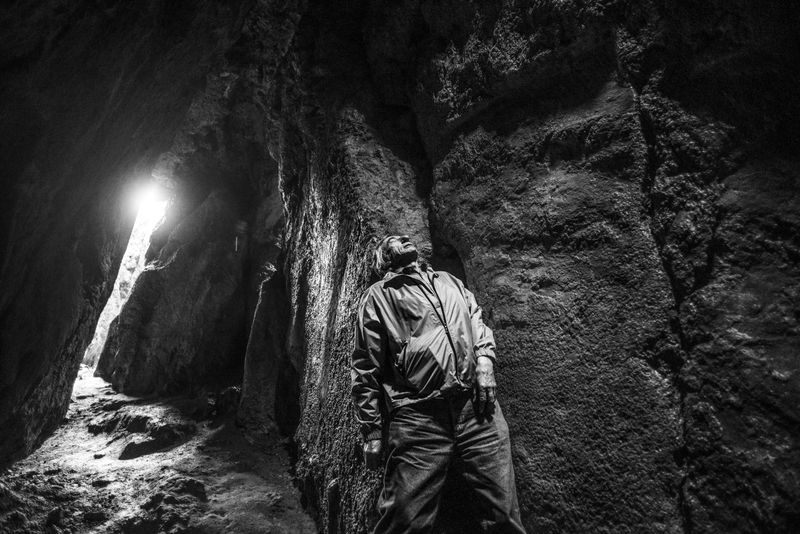
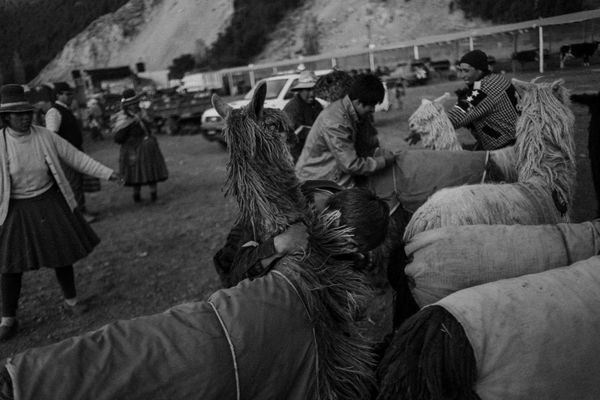
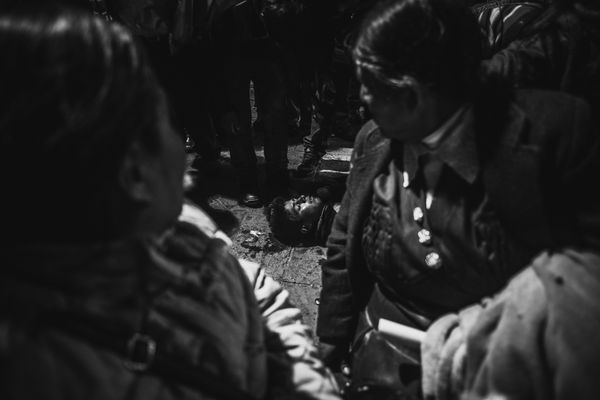
Fernando Criollo’s Summits and Ashes is a largely black-and-white ethnographic documentary shot in the Peruvian mountains. It begins memorably, with a shot of billowing smoke and birds flying overhead. As thunderous explosions are heard, it’s soon obvious that Criollo is rarely aiming to have the sound completely match his images — a decision that greatly amplifies the emotional and spiritual atmospheres of the ceremonies onscreen. Early on in the film, Criollo utilizes metallic ambience, recordings of celebratory brass and cymbals, and the aforementioned explosions to score a slow-motion shot.
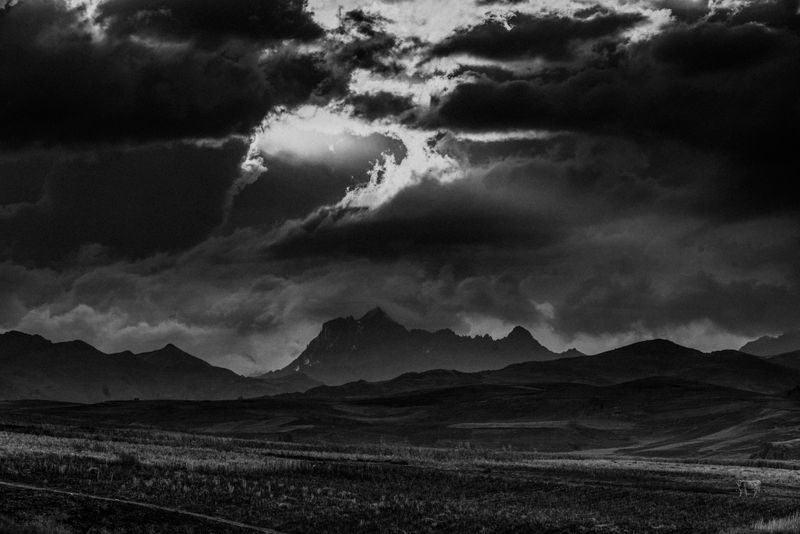
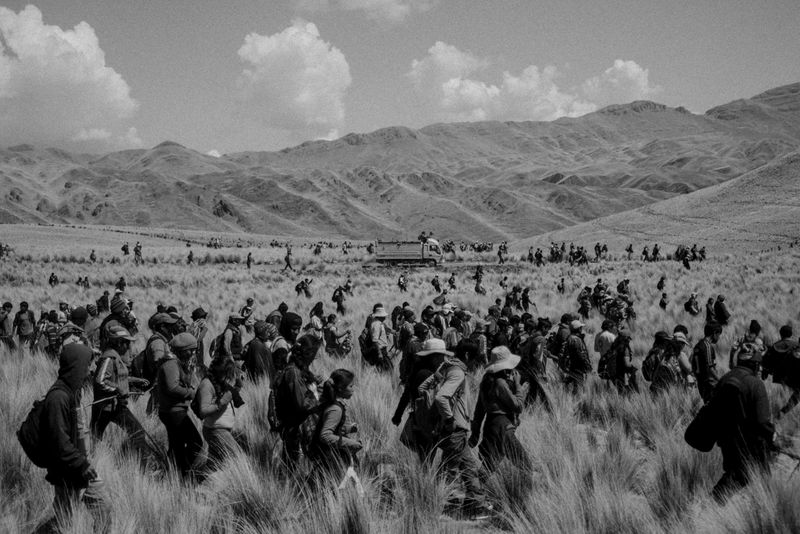
We see dozens of men aligned in rows while carrying a statue, and as all sound dissipates, the silence bolsters the grandiosity of the image. Criollo’s rationale for forgoing color is obvious: the grayscale images make everything feel interconnected, bleeding into each other — the people and the land, the mountains and the sky, the light and the dark.
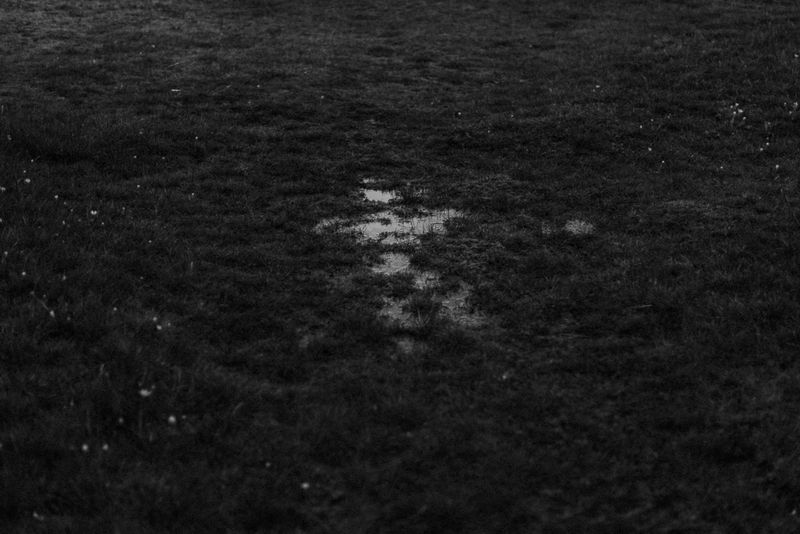
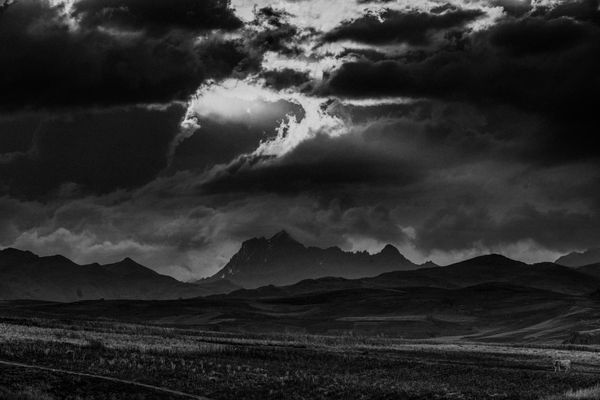
When we see pieces of white hail falling onto a dark patch of land, it feels no different than watching a group of people sing and wave flags on a street: we’re all but small beings in the grand scheme of things. Meanwhile, the woozy editing of music here is an invitation to appreciate these images and sound as something beyond mere textural elements; we’re asked to displace ourselves, to check our ego.
And even though the intent of these ceremonies isn’t ever explained, there’s an understanding of togetherness and community and the existence of something beyond our limited selves. When a reverb-drenched voice declares statements to the “Holy Father,” Criollo ends with a beautiful image of mountains and clouds, tinted with a golden yellow. It’s a recalibration; a visual and aural depiction of pre- and post-ceremony. In the aftermath, everything is sacrosanct.
- Joshua Minsoo Kim / In Review Online
|
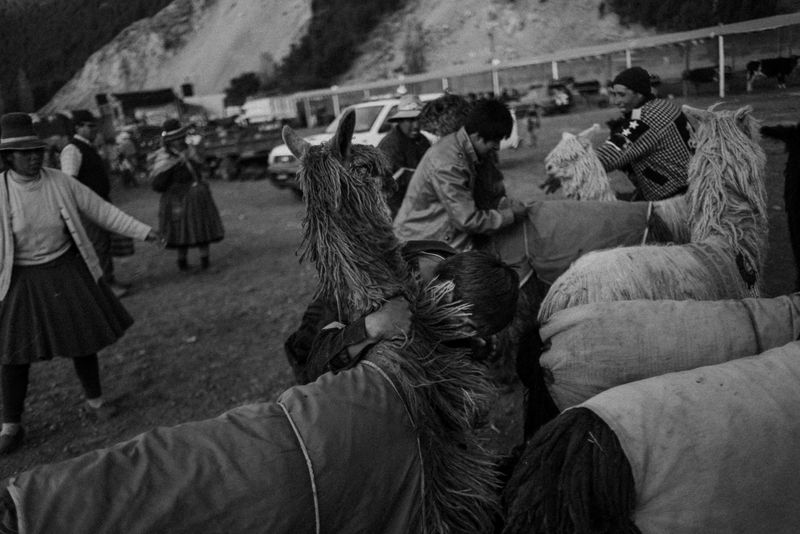
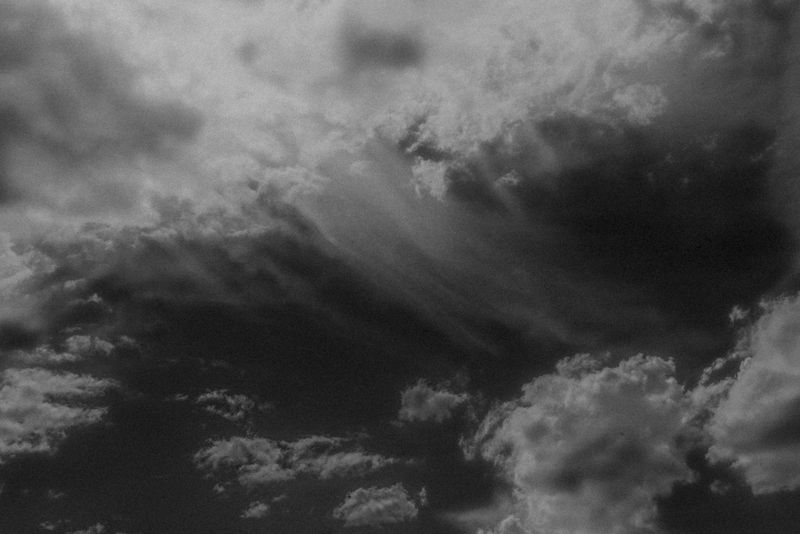
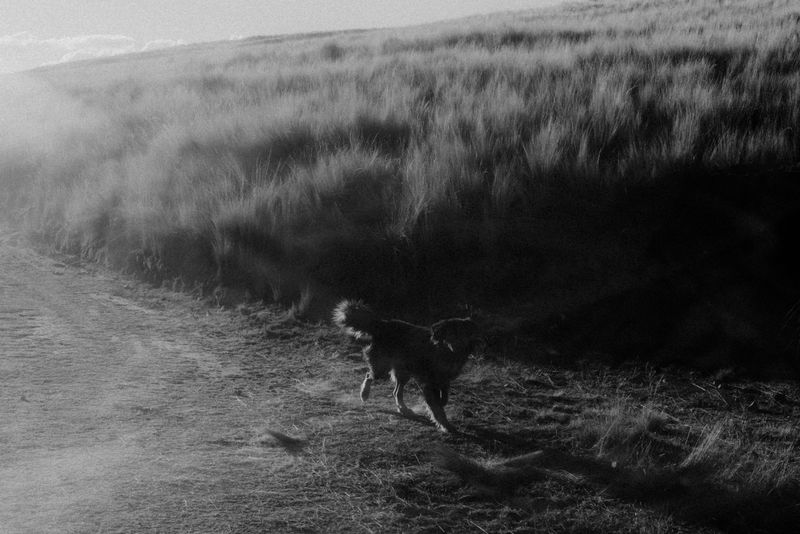
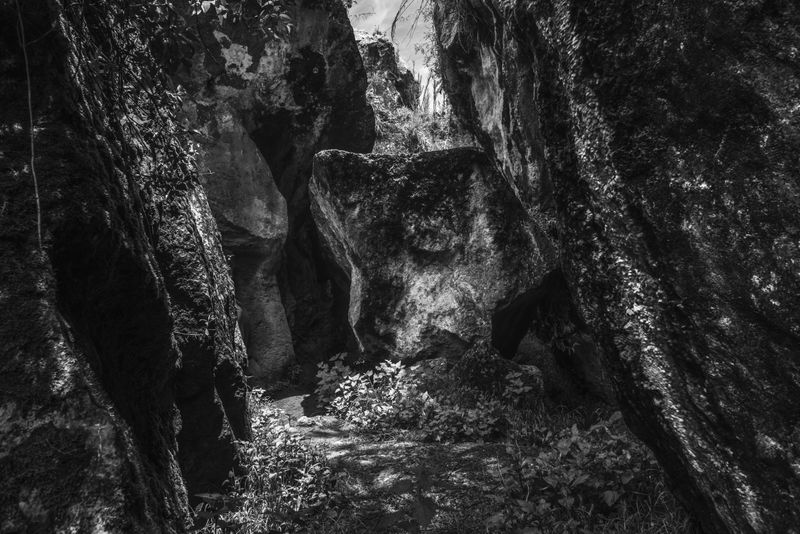
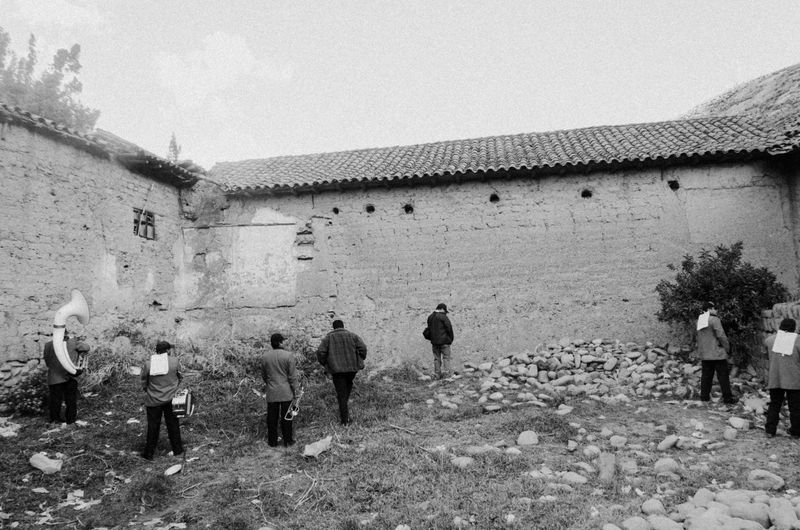
One of the most remarkable films in the section is Cumbres y cenizas (Summits and Ashes) by the Peruvian filmmaker Fernando Criollo. It is also, in part, an observational documentary without any narration to introduce or explain what we are witnessing. We see the mountain and a heterogeneous group of people gathered upon it. As in Destello bravío, a group marches in procession, carrying with some difficulty a religious figure (San Sebastián, perhaps?) on their shoulders. Another group of young men, wearing jackets that read “Scorpions,” sings enthusiastically in Quechua. Criollo not only focuses on the human actors of this sort of ritual—left unexplained diegetically—but also on the non-human environment: the mountain, the clouds, the hail; a conjunction of shifting physical elements of undeniable spectacle, appropriately captured in the director’s mostly black-and-white cinematography.
Here there is a ritual weaving of ties between earth and sky. Watching the film, I recalled a haiku by Natsume Soseki:
Heaven and earth
have merged into one:
first mist
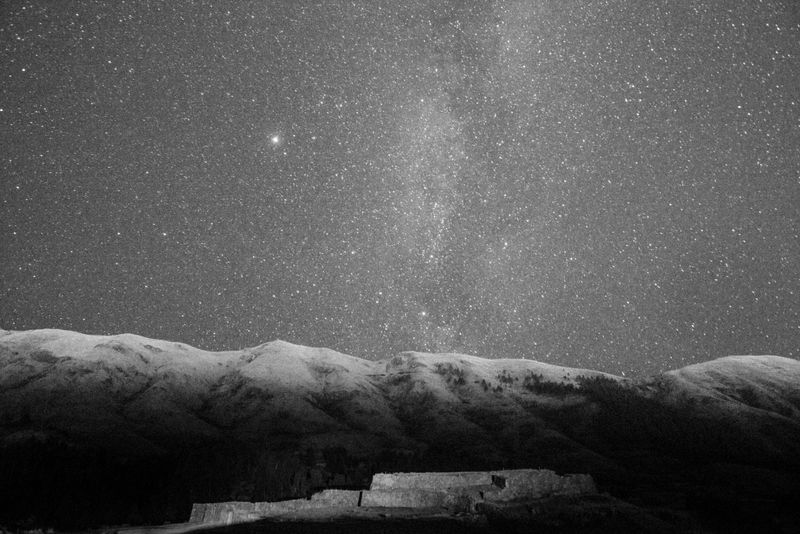
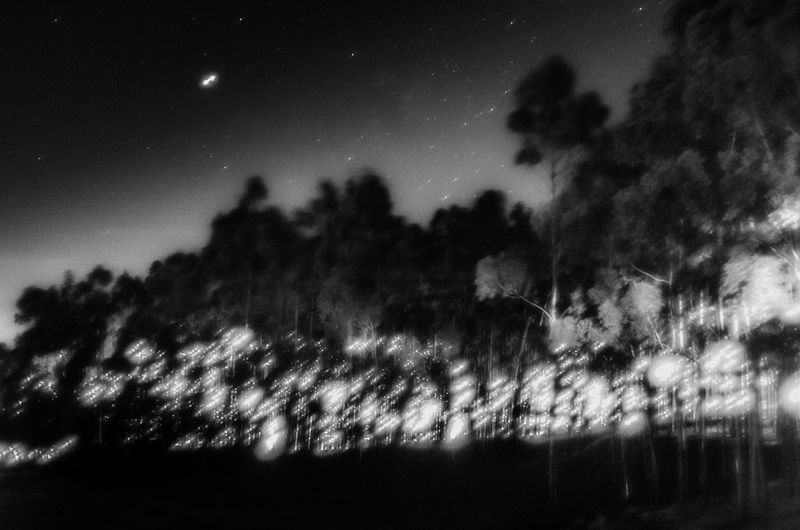
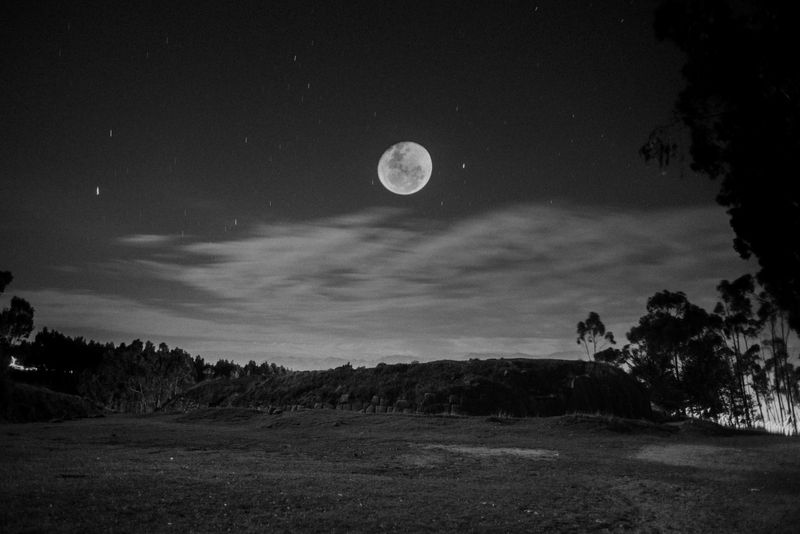
But whereas in the poet’s verse it is the mist that, like a veil, descends from the clouds to the ground—or rises from the ground to the clouds, depending on the perspective—in order to connect and generate continuity between those two opposing realms, in Summits and Ashes it is not mist but rather a blend of diffuse rituality (not diffuse in itself, but in the anti-explanatory manner in which Criollo chooses to show it) and a construction of shots and editing that moves from that Indigenous humanity gathered in the syncretism of Christianity (Heaven) and Pachamama worship (Earth), to the actual sky and earth, no longer ideal but material: a crescendo of mountains under dark and light storm clouds (another play of opposite yet continuous and complementary dualities, typical of Andean cultures in particular and American baroque in general: darkness and light), the moon and stars in the night sky, columns of smoke rising from the mountain into the heavens (remnants of human activity reaching toward the divine heights), ancient archaeological artifacts with flashes of artificial light (green and red). Finally, the city at night and, after a cut, a cloudy yellowish sky, like a sunrise or sunset. More than the fusion Soseki speaks of, there is here a connection, an upward-downward communication.
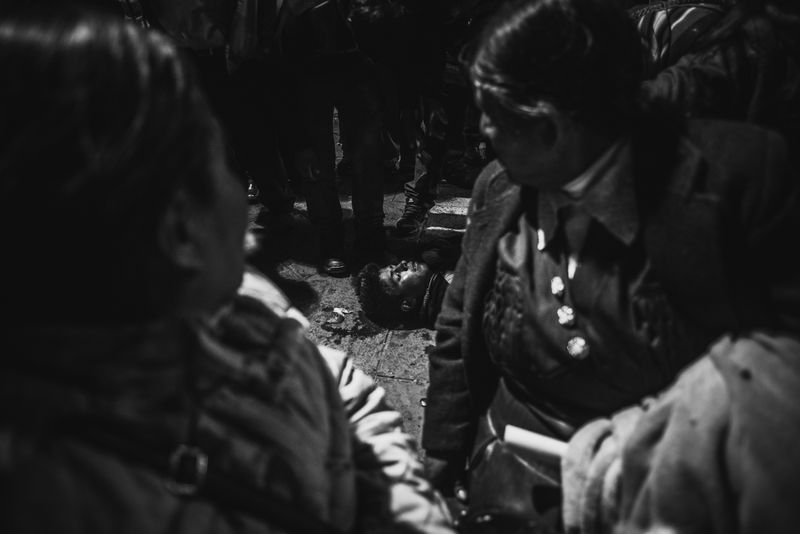
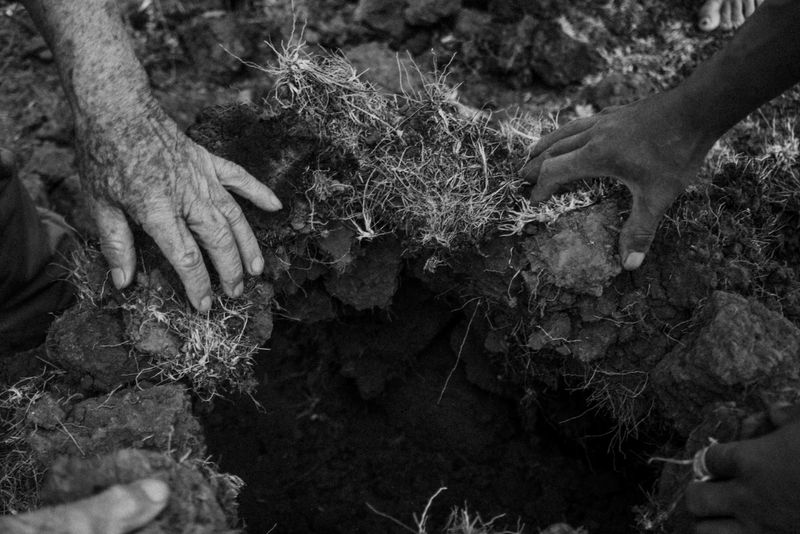
Regarding the rituals and their lack of explanation or contextualization, Criollo has said that they are not the subject of the film itself, that he did not wish to describe or speak of the celebrations. “I want the image and sound to allow us to witness the ritual in the invocation of our ancestors, those who walked through the same places before us. What is interesting is that, as in all rituals, especially rituals of blood, it is only fully witnessed by the person who performs the sacrifice, desecrating himself, becoming an enigma that cannot be seen by everyone.”
His plastic capacity as a photographer allows Criollo, if not to entirely avoid, then at least to brush against decontextualization through the expression of the cosmovisual signs involved and embodied in the ecosystem itself: the mountain and the clouds, darkness and light, earth and sky, Pachamama and Christ. This is a triumph.
- Ezequiel Iván Duarte / TAIPEI Magazine