Roots
-
Dates2025 - Ongoing
-
Author
- Location Cloppenburg, Germany
Roots is a visual study of early migration: self-portraits and domestic objects form a loop of memory in which a lost home contracts into a portable inner structure, continually reshaping identity.
Project — “Roots”
Roots is a visual investigation of the experience of a person who leaves their homeland at an early age and how this shapes identity. A departure that occurred more than 35 years ago remains not a completed event, but an ongoing process of inner negotiation. The project approaches migration not as a matter of geography, but as a sustained condition between spaces—between past and present, between memory and reality.
In the context of contemporary geopolitical transformations, mass displacement, and unstable borders, questions of inner belonging become especially urgent. “Who am I?”, “Where is my home?”, “Where do I belong?” are not rhetorical here; they function as structural forces. The project examines how the loss of a physical home transforms into the construction of an internal space—a portable form of home that exists within memory and the body.
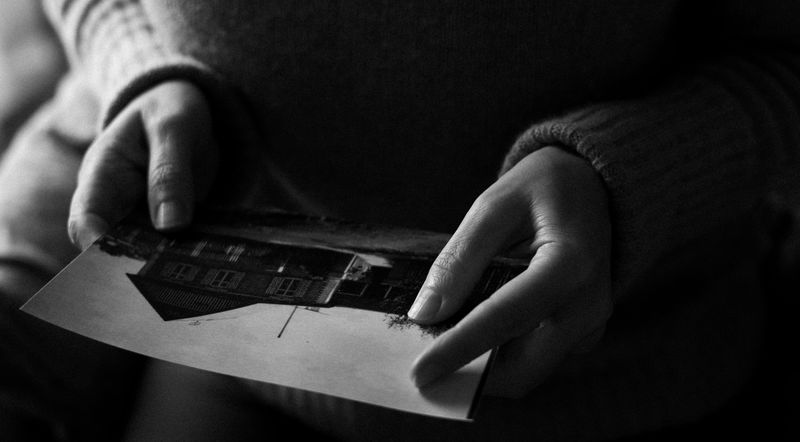
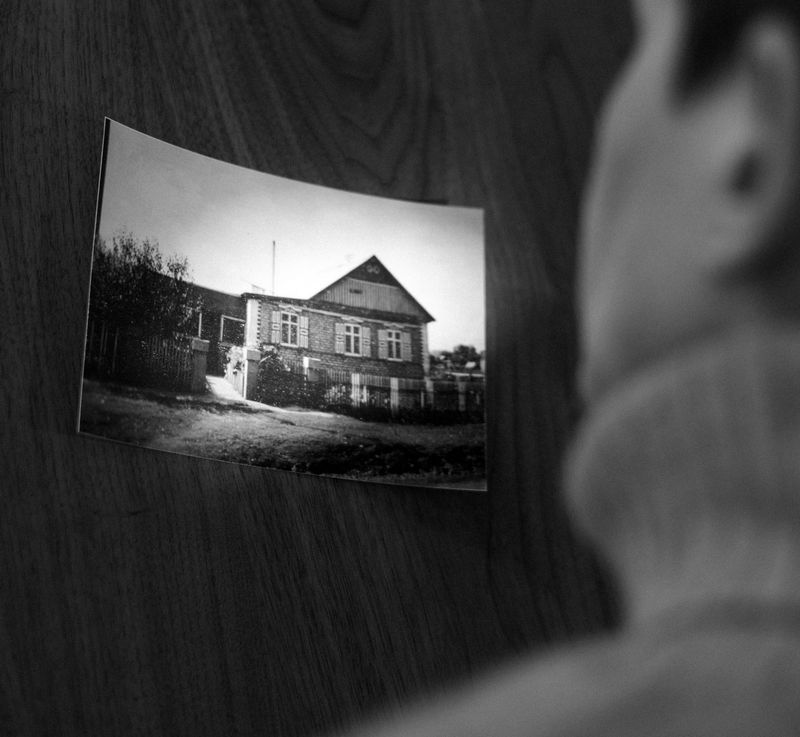
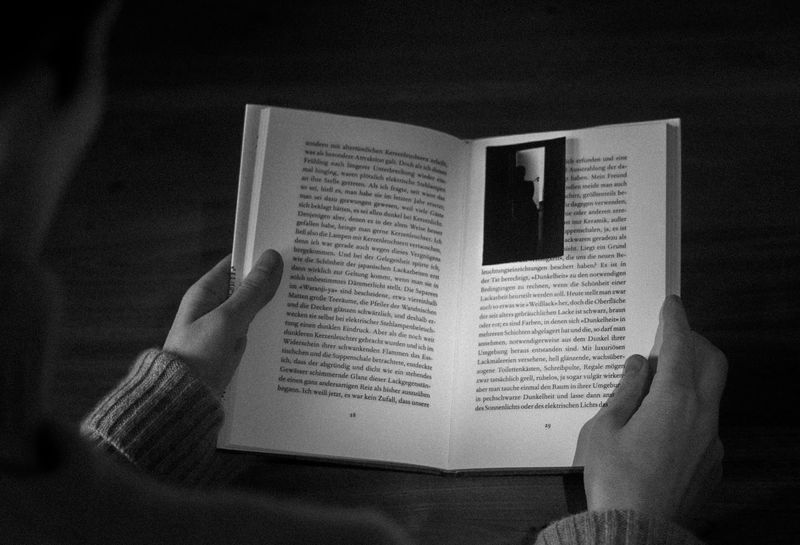
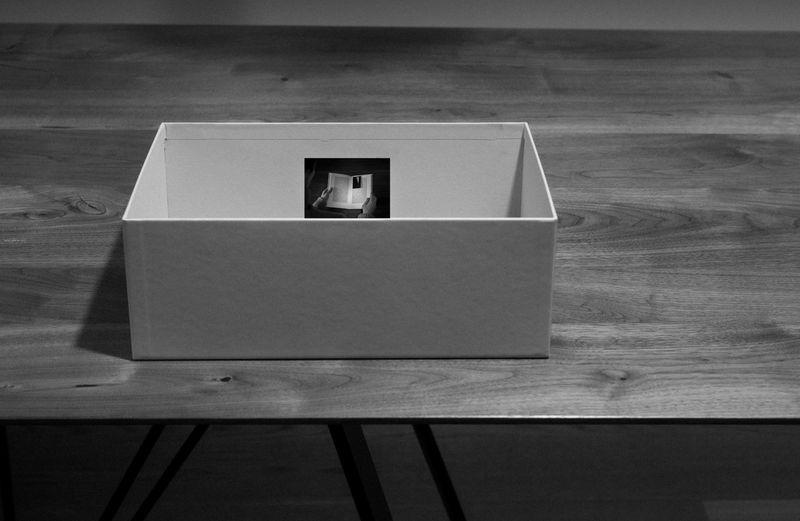
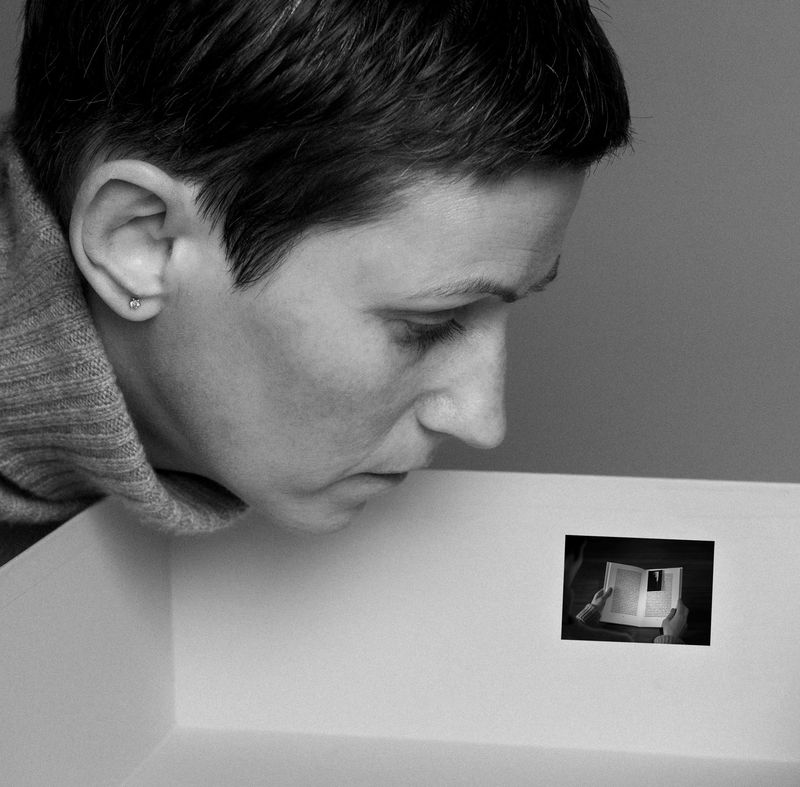
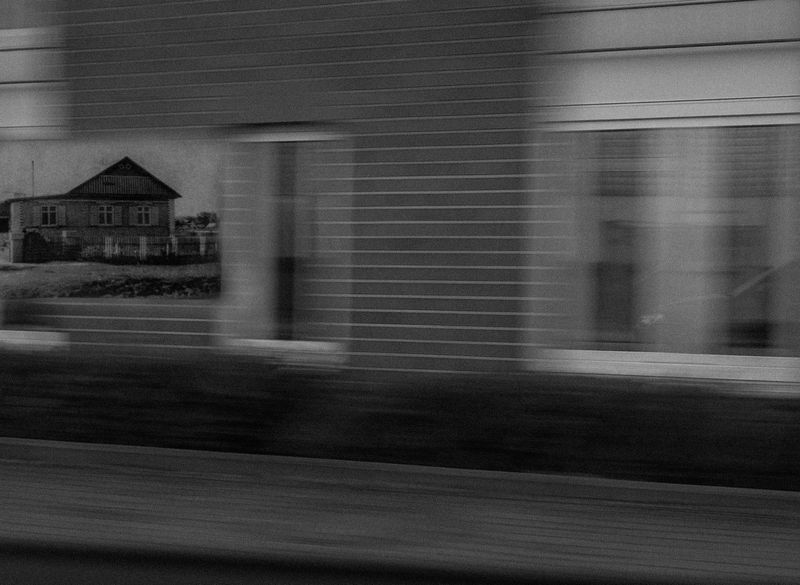
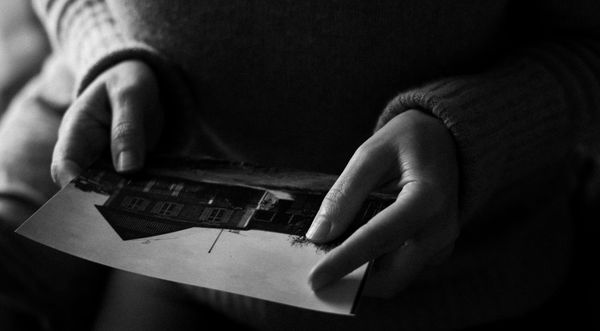
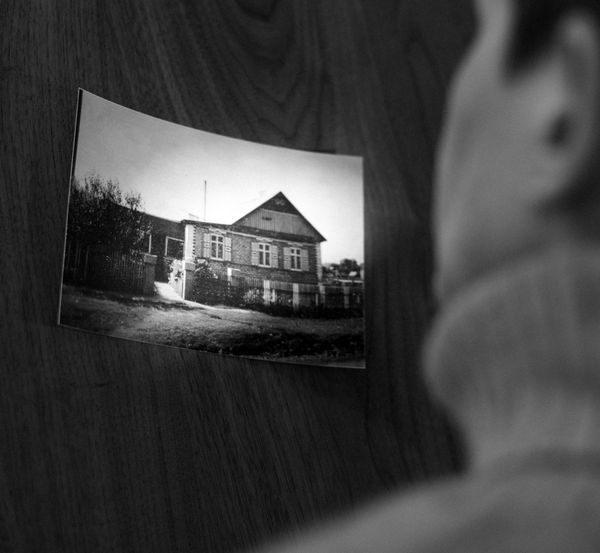
Methodologically, the work is built on repetition, embedding, and shifts in scale. Images appear within other images; a photograph becomes an object; the object becomes a model of a house; the model becomes a new visual trace. This recursive structure reflects the nonlinear nature of memory: recollections return fragmentarily and unexpectedly, producing the sensation of a closed loop.
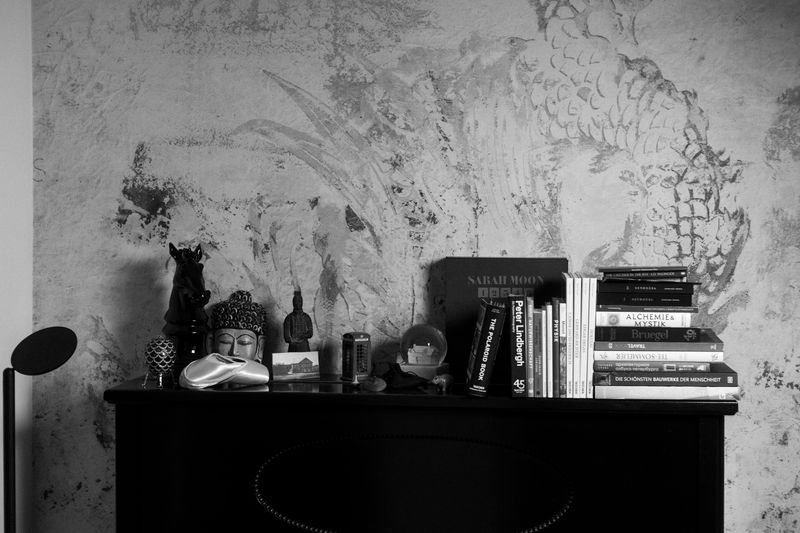
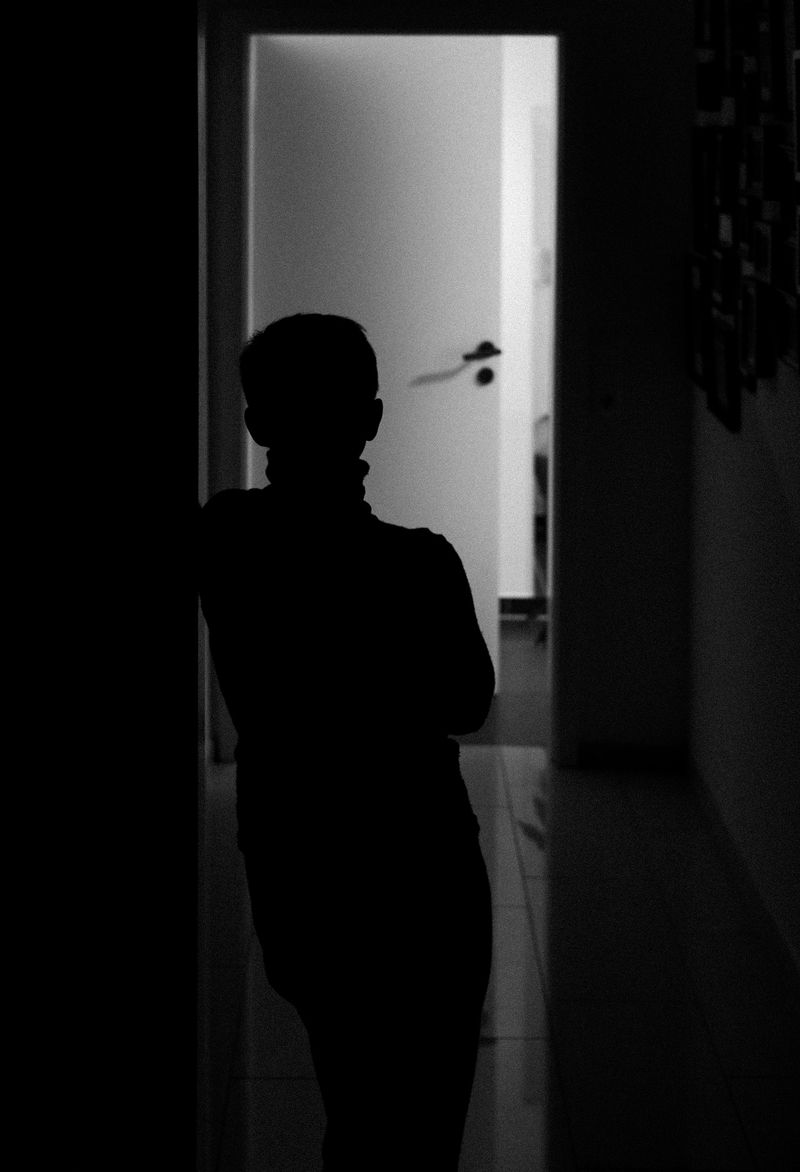
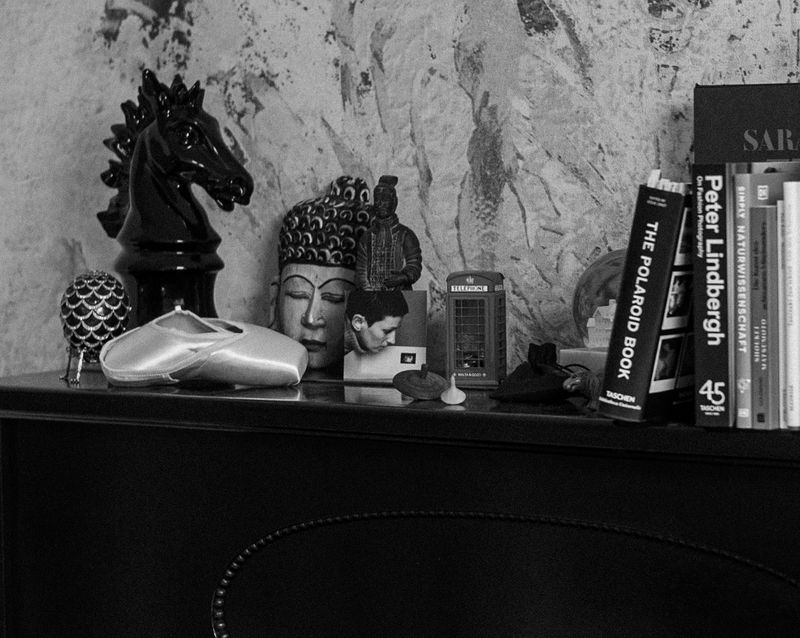
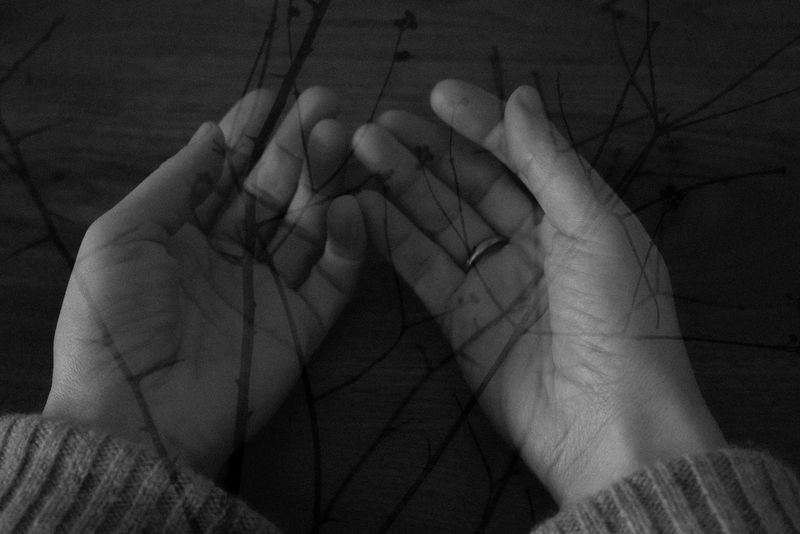
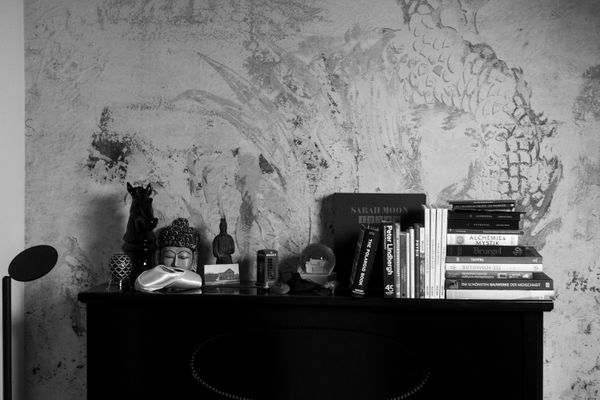
I work with self-portraiture, using my own body as both a carrier and mediator of memory. The domestic interior becomes a research laboratory—a stage where simple, accessible objects (a photograph, a book, a box as a house model) function as analytical tools. Minimalism is a deliberate choice: limiting visual means allows the work to focus on mechanisms of perception and the reconstruction of the past.
The project explores how memory reduces space into portable forms, and how visual repetition becomes an attempt to restore a lost sense of wholeness. Instead of linear narrative, the series develops a cyclical structure in which return is impossible, yet repetition is inevitable.
Going forward, I plan to expand the project by further investigating the relationship between body, space, and light as carriers of memory, and by deepening the theme of the internal home as a dynamic structure. My aim is to present Roots as an exhibition and publication, where the sequence of images functions as a route of inner inquiry.
Roots examines memory as a process and home as a construct—one that is continually re-formed under conditions of loss and ongoing movement.