Prêt.es.s.x à Brûler (Ready to Burn)
-
Dates2007 - Ongoing
-
Author
- Locations Singapore, French Polynesia, La Chaux-de-Fonds, Vientiane, Mexico City, Berlin, Paris, Amsterdam, Tuscany, Brussels, Bangkok, Lausanne, Florence, Rennes, Chiang Mai, Chiang Rai, Les Enfers, Hérémence
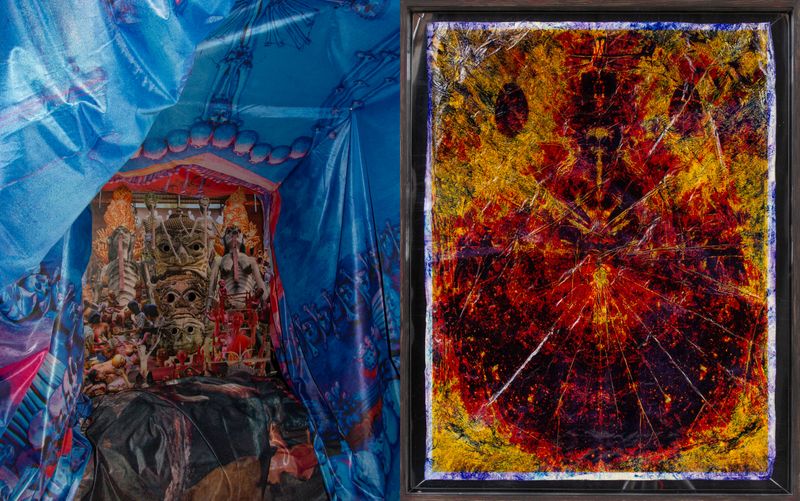
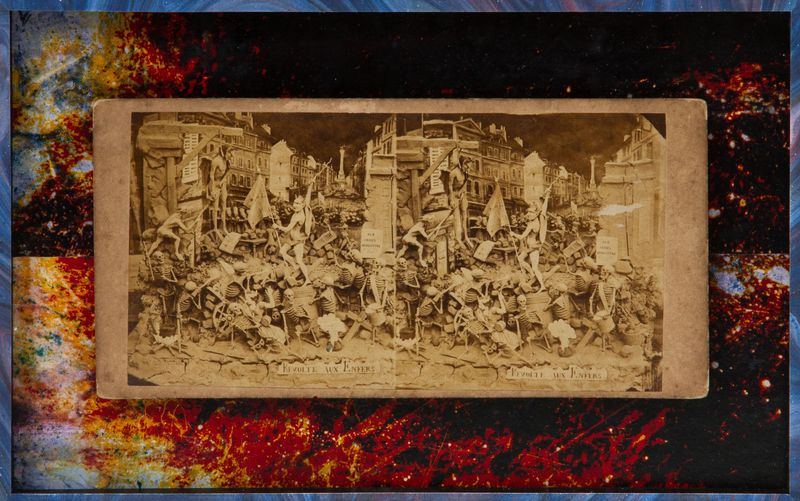
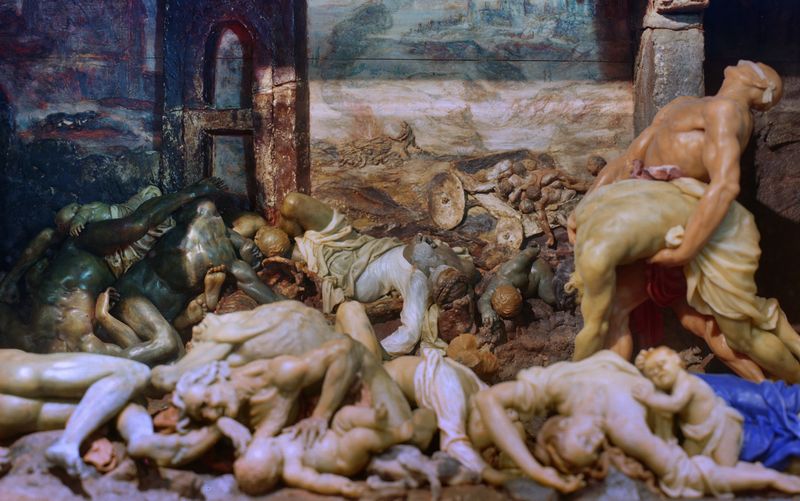
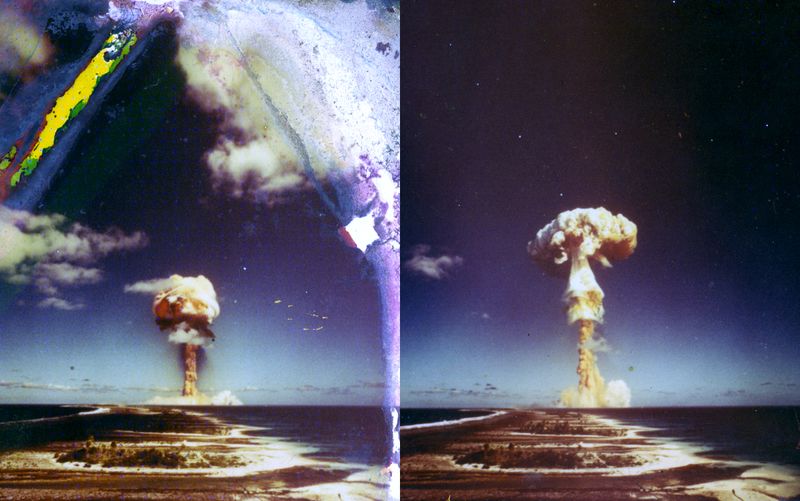
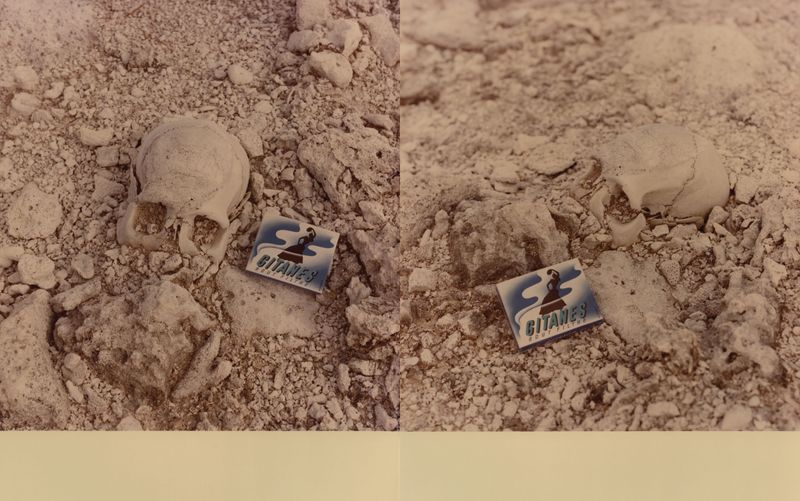
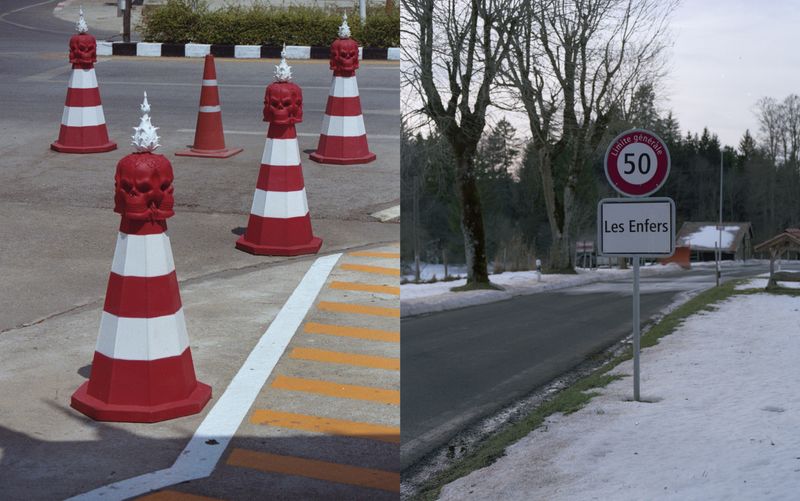
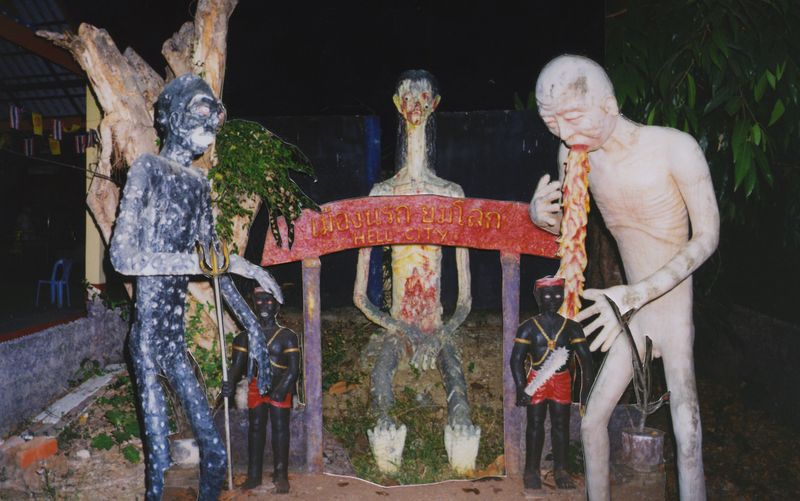
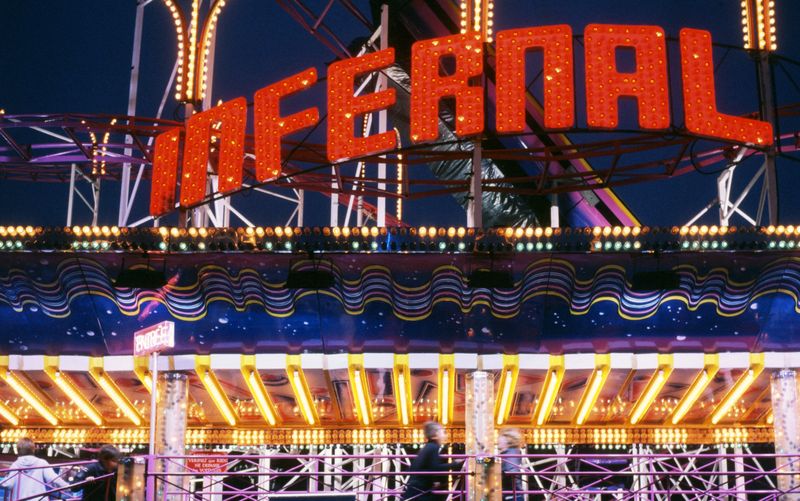
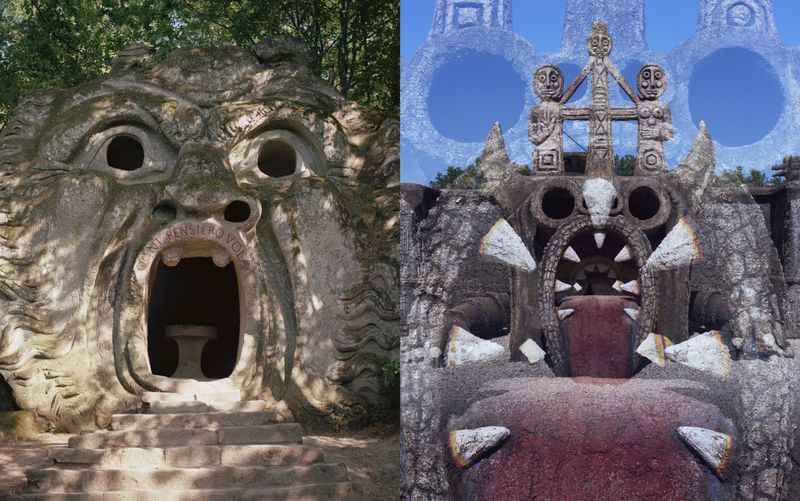
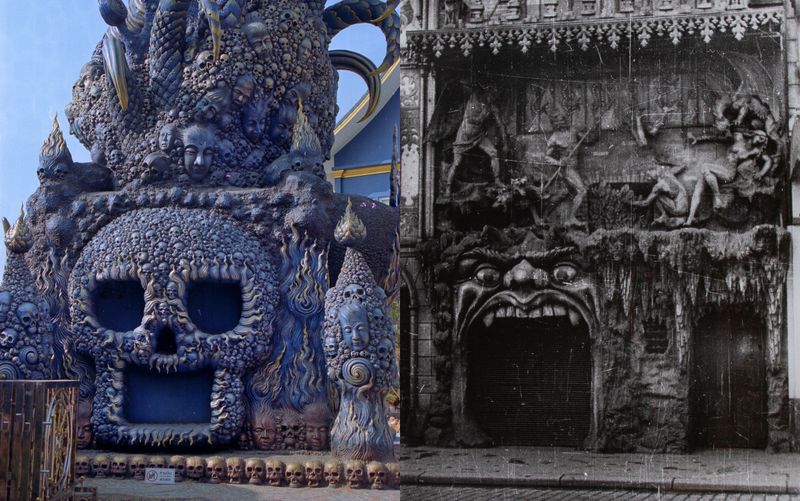
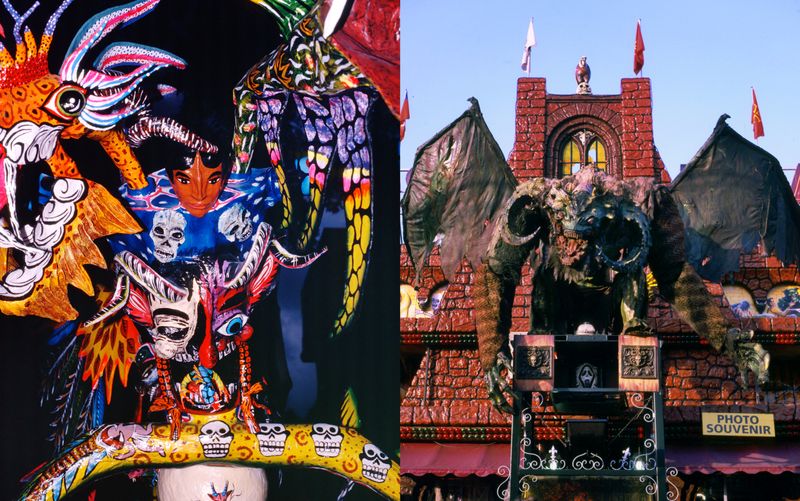
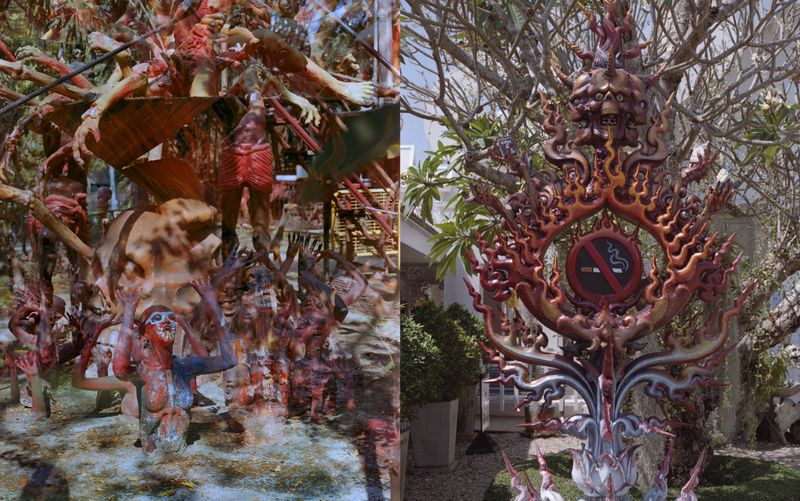
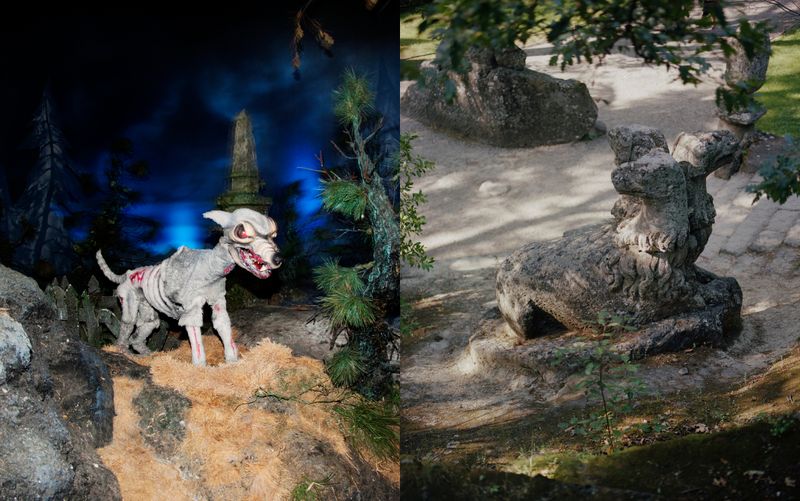
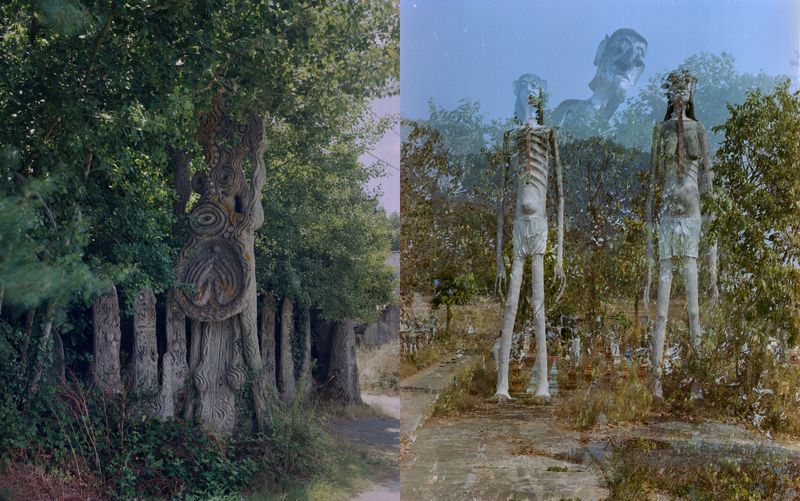
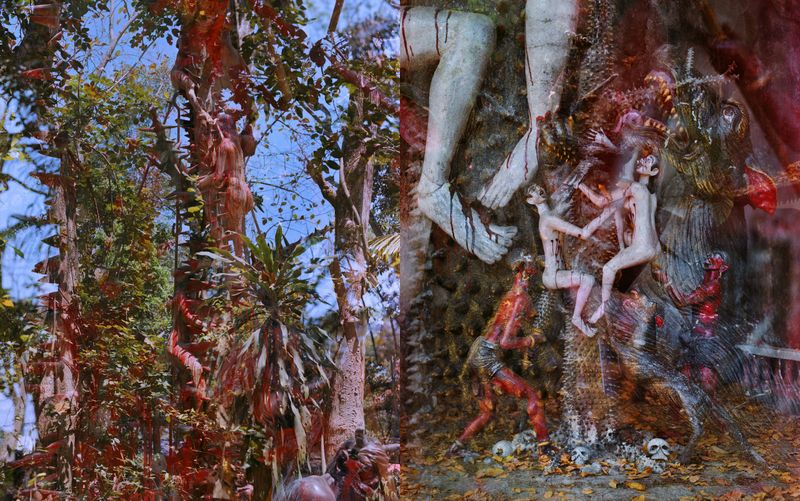
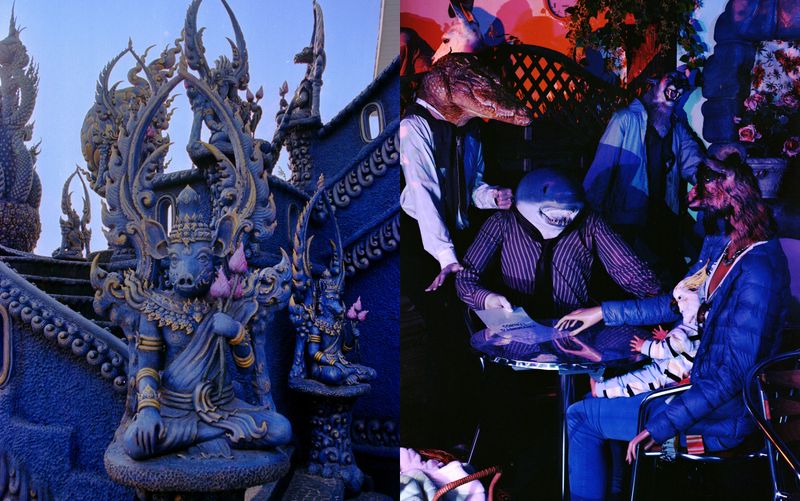
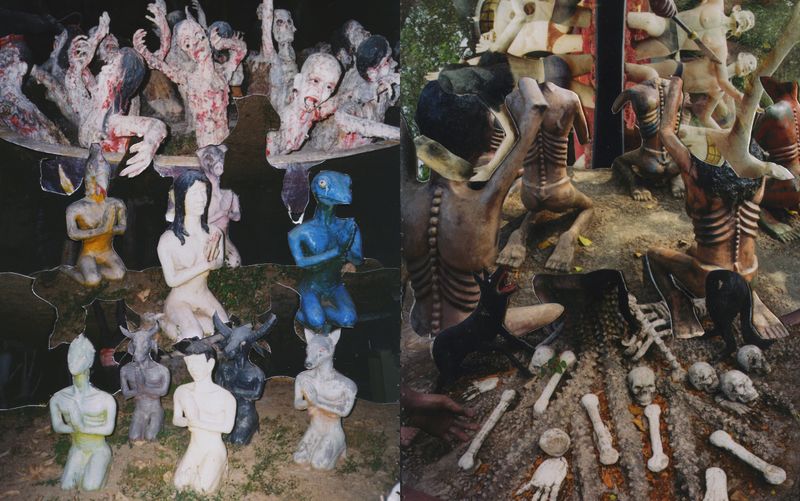
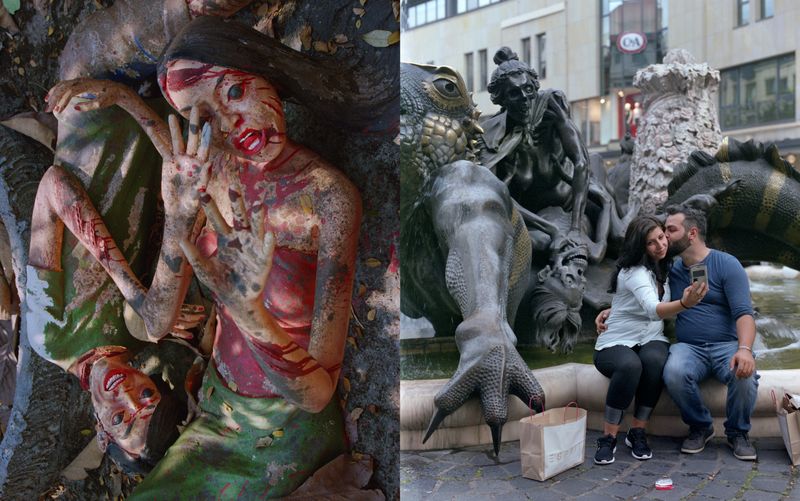
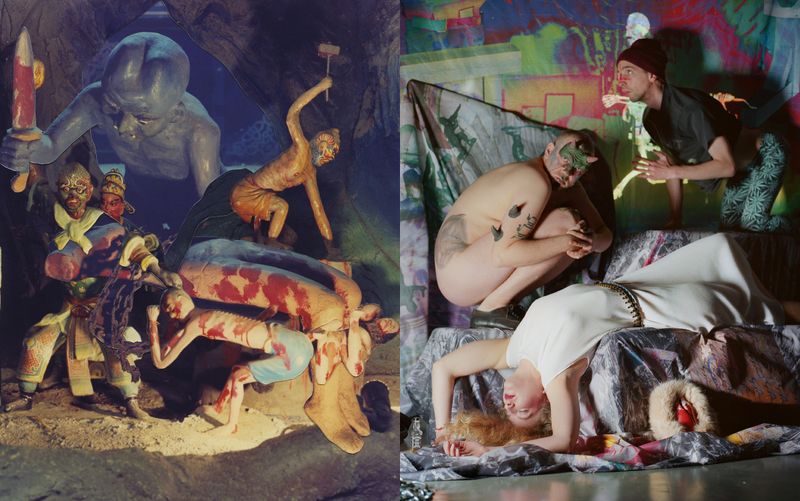
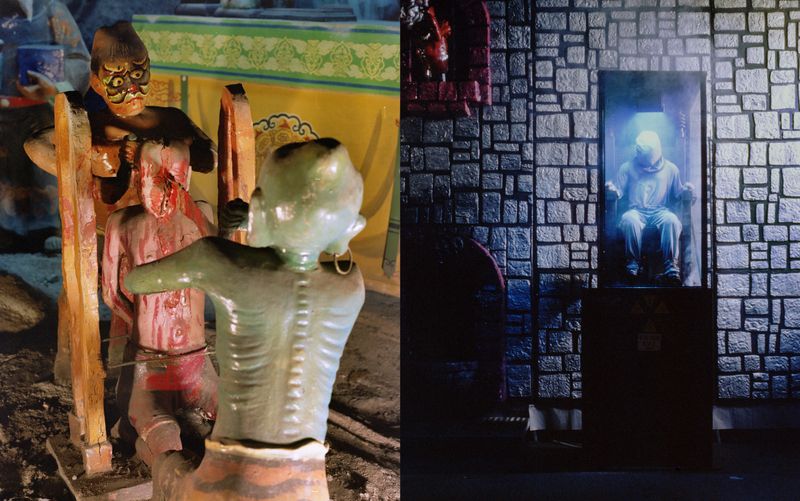
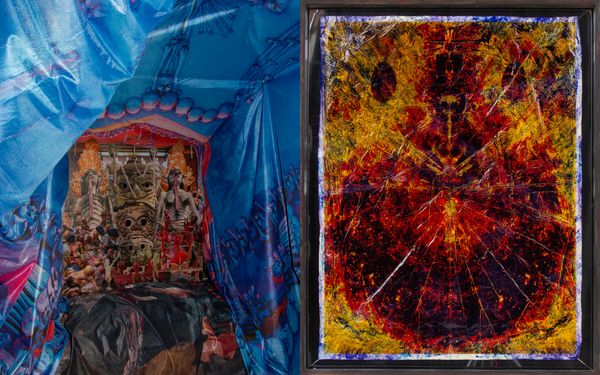
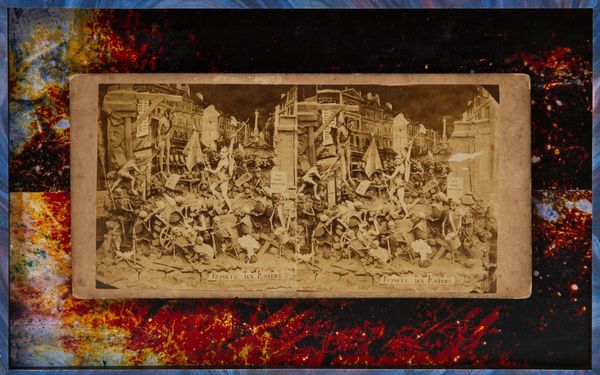
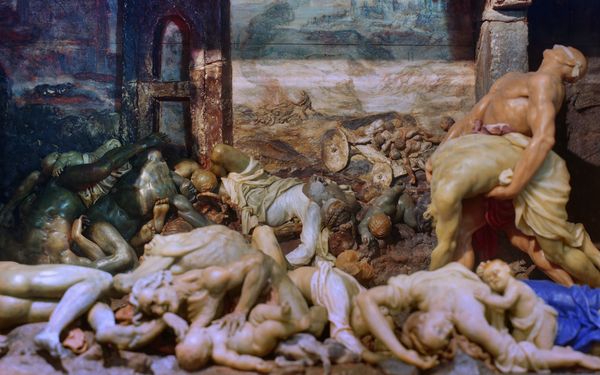
Prêt.es.s.x à Brûler (Ready to Burn) is an worldwide ongoing visual Atlas post-documenting hells representations, mainly in the sculptural forms. Started by the intense Hell Gardens in South East Asia, it was extended with various places and archives.
‘I place Hell not in the moment when one sees death, but in the moment when one sees one's life.’ Robert Escarpit, in ‘Open Letter to God’ (1)
The research of French artist Émile Barret, based between Brussels and Paris, is multifaceted and rhizomatic (2) such that it is impossible to know where the heart of the reactor truly lies from which he draws, on the one hand, the living, incandescent material of his work and, on the other, his insatiable curiosity, which is matched by an almost inexhaustible energy. "Plunge into the depths of the abyss, Hell or Heaven, what does it matter? To the depths of the Unknown to find something new!", as Charles Baudelaire already emphasised in ‘Les Fleurs du mal’.
Above all, one could invoke Aby Warburg's ‘Atlas Mnemosyne’ in relation to him, as, from project to project, he mixes an immeasurable iconography whose deciphering and interpretation are constantly being reworked, like Penelope's veil. Except that here, the day undoes what the night does. For in the light of the sun – which, it should be remembered, melted the wings of Icarus, drunk with space and freedom – Émile Barret seems to prefer, in the depths of the old Atlas breweries where his Brussels studio is located (3), the light of night; light to darkness; paradise to hell; established knowledge to other more empirical approaches, but no less rooted in ancestral relationships with reality, its artefacts and beliefs of all kinds. Similarly, Aby Warburg's Mnemosyne Atlas contains collections devoted to what he called ‘formulas of pathos’, in other words, visual expressions ranging from fear to pleasure, from torment to ecstasy, which find multiple incarnations or resurgences throughout the history, both large and small, of our civilisation. In Genesis, did God not extract Light from Darkness? Must darkness therefore exist for clairvoyance to occur? Must Hell exist for Paradise to be identified in return? Furthermore, the first cervical vertebra (C1) was named “Atlas” in reference to the giant Atlas who, according to the Greeks, carried the celestial sphere on his shoulders; Atlas therefore carries our head, our skull and, above all, our thinking brain. The question then becomes: who carries whom? What supports what? And on what or whom do we depend?...
For the Romans, ‘Orcus’ refers to the underworld, the realm of the dead – a belief probably inherited from the Etruscans. It is depicted as a sinister, dark cave from which the dead ritually emerge three times a year to visit the living. By extension, ‘Orcus’ refers to the God of the Underworld himself, whose wide-open mouth, ready to swallow poor humans, resembles the entrance to a cave. Nevertheless, this petrifying face of the ogre of death would become the façade of one of the most famous cabarets in Pigalle during the Belle Époque, "L'Enfer ‘ (4), which was located at 34 Boulevard de Clichy (5), next to ’Le Ciel‘ on one side and ’Le Néant" on the other, the latter having previously been established in Brussels. "While Le Ciel and L'Enfer, run by the amiable Mr Antonin, are worth a visit, the same cannot be said of Le Néant, frequented by hysterical and neurotic individuals; Mr Dorville is the founding owner of this cabaret of Death where, with the help of mirrors, customers are made to witness the work of trans mortem decomposition, the tables are coffins, the customers are corpses, the waiters are undertakers, and the rest is similar,‘ wrote Georges Renault and Henri Château in their 1897 work dedicated to ’Montmartre". (6)
Aby Warburg's Mnemosyne Atlas took the form of around sixty wooden panels covered with a black veil to better display hundreds of reproductions of works of art, as well as news photographs, maps of the world and the sky, and divinatory representations, particularly Etruscan ones. One would be wrong to consider this black veil as merely a support allowing each image to stand out from the others, or even as a neutral background making it easier to photograph the whole. Rather, it should be seen as the defining element of the project. Either as a mainsail enabling Warburg to reach his goal by playing on the force of the headwinds of institutionalised hierarchical classifications. Or as the shifting and moving cartography of the Atlas project itself, from which islands emerge, unfold and reveal themselves – lines, lineages – on whose shores the cannons of dominant knowledge will soon be broken, but in whose coves Aby Warburg – like Émile Barret – will land unscathed.
(1) Robert Escarpit, in ‘Lettre ouverte à Dieu’ (Open Letter to God), Paris, Éditions Albin Michel, 1966.
(2) This interweaves installation, sculpture, textile art, photography, self-published printed works, video games, archives, antiquarian books, exhibition curating, performances and music through the Music(for Eggplant) collective...
(3) The coincidence cannot really be fortuitous, especially since these former Atlas Breweries are located more precisely in Anderlecht at 15 Rue du Libre-examen, a sign, if ever there was one, of the freedom of action and thought of Icarus, Warburg and Barret!
(4) One of André Breton's studios was located on the 4th floor above ‘L'Enfer’. It was there that the famous mediumistic sleep sessions with Robert Desnos were organised during the 1920s.
(5) They disappeared in 1950 to make way for Monoprix, a French retail and distribution company founded on 29 October 1932. Currently, the premises are occupied on one side by a pharmacy and on the other by the ‘Moon City’ Hammam Sauna Spa.
(6) Georges Renault and Henri Château, ‘Montmartre’, Paris, Éditions Flammarion, 1897.
Text by Marc Donnadieu