Invisible Logging. Material Memories of the Amazon
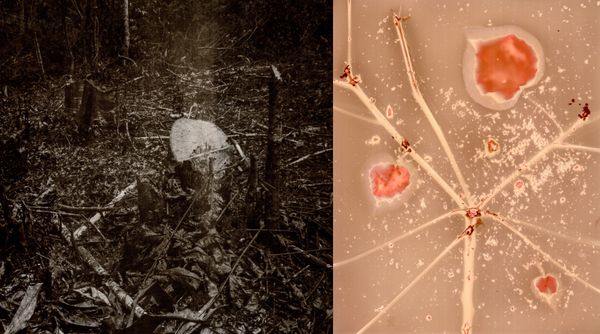
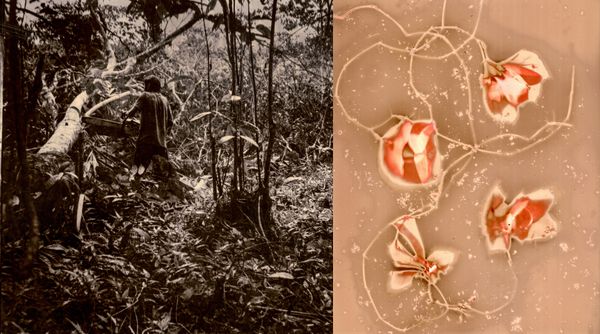
In the Peruvian Amazon, illegal logging operates as a hard-to-trace flow. Through plant-based photochemistry, this work questions the forces that turn the forest into exchange value, becoming material traces where extraction returns as sensory memory.

The Amazonian territory brings together precarious subsistence practices, fragile ecological systems, and informal timber trade circuits that sustain life in constant tension. In Iquitos, in the northeastern rainforest of Peru, the illegal logging of timber trees operates through short-lived, recurrent incursions that fragment the forest with selective cuts and clandestine burnings, producing a continuous and difficult-to-trace extractive flow. In the last year alone, the Loreto region lost more than 38,000 hectares of Amazon rainforest—equivalent to roughly 50,000 football fields. This loss degrades soils, reduces the forest’s complexity to exchange value, and expands the frontier of occupation, raising an unavoidable question about the real cost of its transformation.

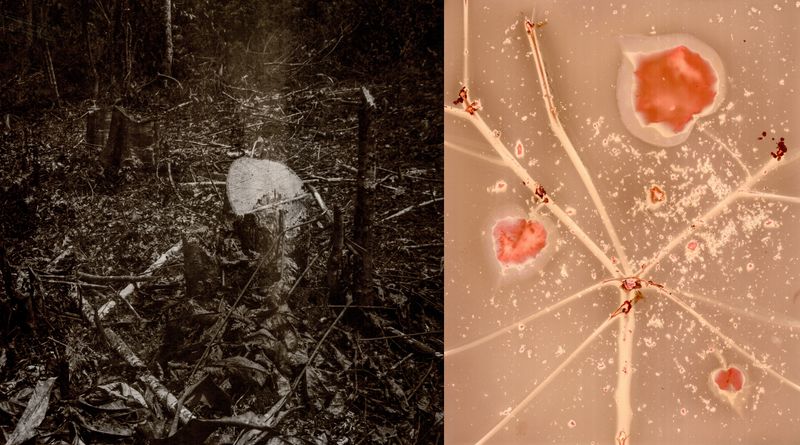
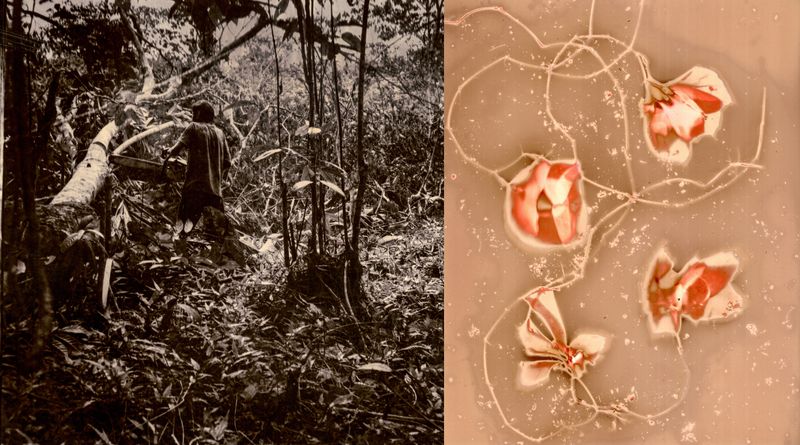
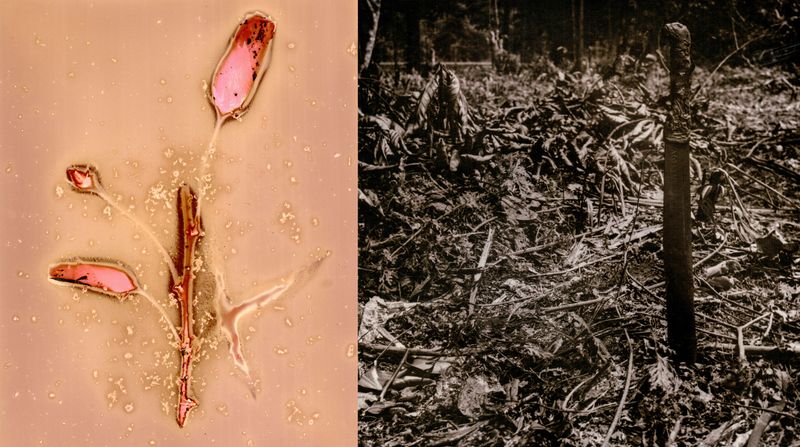
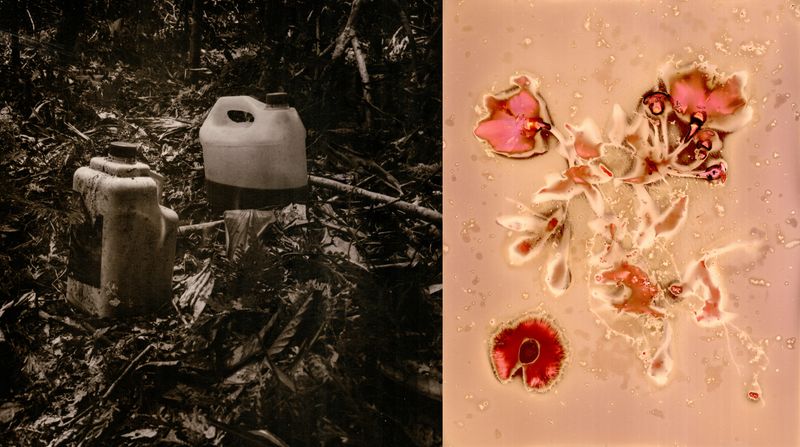
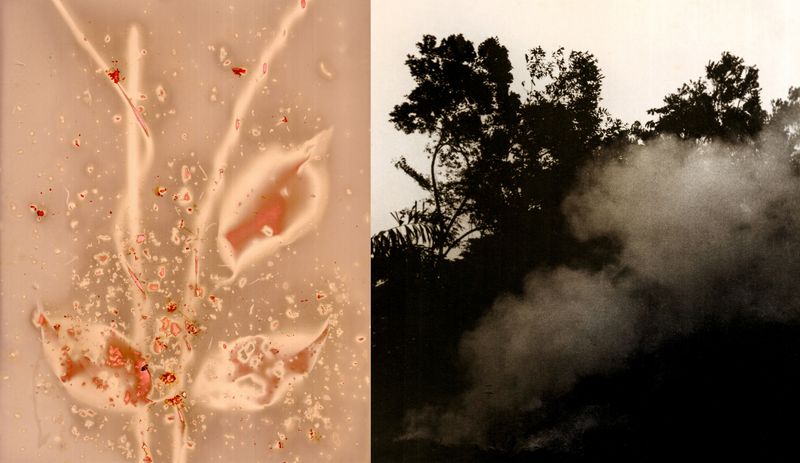
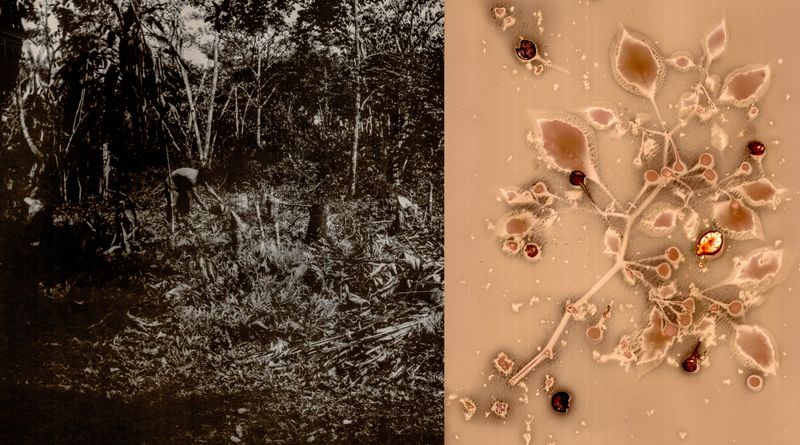
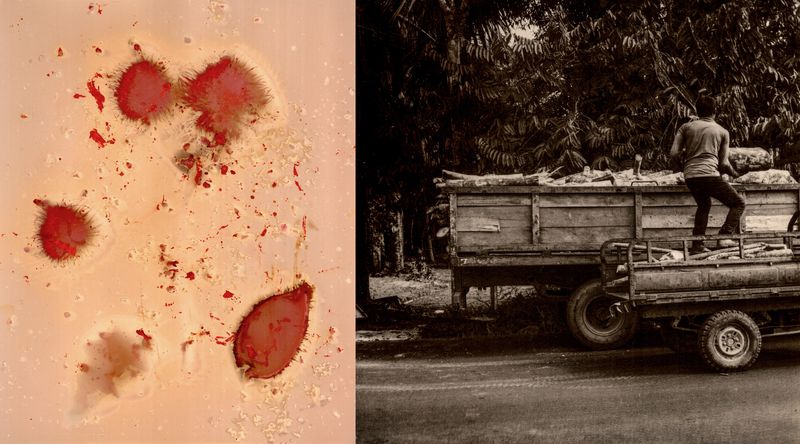
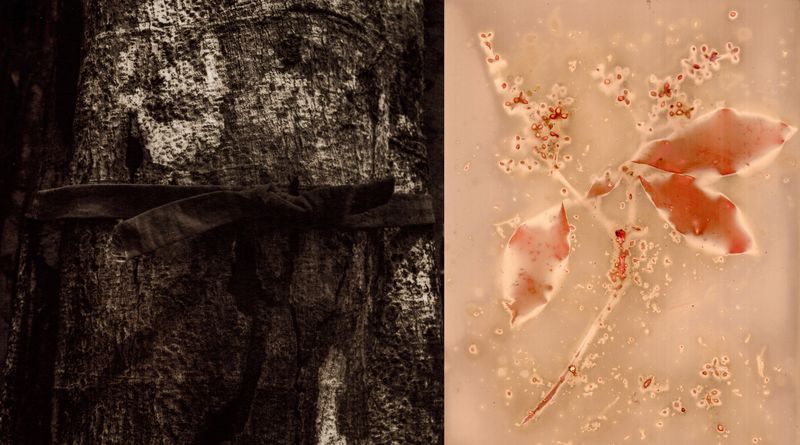
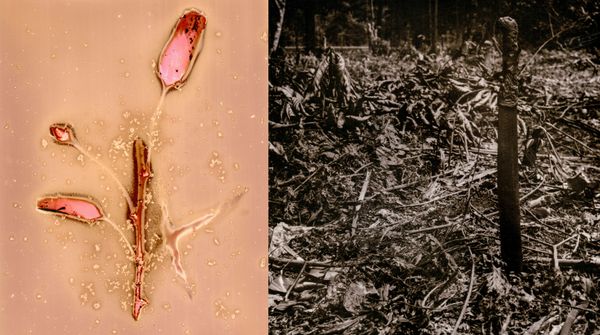
During the last week of December 2025, I documented a small group of loggers cutting timber illegally in a wooded area near the settlement of Zungarococha, on the outskirts of the city, to later sell the wood in the informal market. Inspired by the photochemical process known as Caffenol, the medium-format analog photographs were developed with extracts from natural plants collected in deforested areas, such as ayahuasca, chacruna, and sangre de grado—species regarded as sacred within Amazonian cosmologies. In parallel, the lumen prints, made with the leaves and bark of those same plants—associated with ancestral healing practices—expand the image and activate an ephemeral trace in which organic matter emerges as a vulnerable vestige that embodies the forest’s uncertain temporality and its continuous exposure to loss.

By chemically incorporating these organisms into the photographic process, the project seeks to relocate extractive logic within the image itself, as a gesture of restitution and an urgent act of memory. The photosensitive surface becomes territory and transforms the image into a sensorial archive of the Amazon. In this turn, what was taken from the forest returns transformed into a chemical agent and a trace of the ecosystem’s degradation, allowing us to “hear” its invisible breathing as a metaphor for its persistent fragility, opening a space for reflection on the economic structures of power that run through the Amazon.

© Franz Krajnik - Image from the Invisible Logging. Material Memories of the Amazon photography project
i

Croton lechleri (sangre de grado)Contrary to the common image of the Amazon rainforest—green and full of life—an intense solitude overtakes the logged landscape. The stumps, or truncated trees, are the only evidence left, standing as silent witnesses to deforestation. December 30, 2025. Zungarococha’s rural community, Iquitos (Loreto), Peru.

© Franz Krajnik - Image from the Invisible Logging. Material Memories of the Amazon photography project
i

Salvia splendens (banderilla)The persistent roar of a chainsaw rumbles deep in the forest. Its use speeds up the cut and turns logging into a systematic incursion. December 23, 2025. Zungarococha’s rural community, Iquitos (Loreto), Peru.

© Franz Krajnik - Image from the Invisible Logging. Material Memories of the Amazon photography project
i

Erodium moschatum (almizcle)The forest’s invisible tension becomes an object: a machete is left behind in the territory as a threat and a sign of return. December 25, 2025. Zungarococha’s rural community, Iquitos (Loreto), Peru.

© Franz Krajnik - Image from the Invisible Logging. Material Memories of the Amazon photography project
i

Gustavia augusta (chope rojo)Gasoline and kerosene trigger the burning and erase the traces of the cut, leaving scars that whisper this land once sustained life. December 25, 2025. Zungarococha’s rural community, Iquitos (Loreto), Peru.

© Franz Krajnik - Image from the Invisible Logging. Material Memories of the Amazon photography project
i

Banisteriopsis caapi (ayahuasca)As in a ritual, smoke rises and blocks the forest’s breathing. The crack of wood as it breaks announces the end of the logging day. December 28, 2025. Zungarococha’s rural community, Iquitos (Loreto), Peru.

© Franz Krajnik - Image from the Invisible Logging. Material Memories of the Amazon photography project
i

Capsicum frutescens (charapita)The forest falls silent: trunks deemed valuable for sale are cut into sections to conceal the wood’s origin—until it becomes a rumor. December 29, 2025. Zungarococha’s rural community, Iquitos (Loreto), Peru.

© Franz Krajnik - Image from the Invisible Logging. Material Memories of the Amazon photography project
i

Bixa orellana (achiote)Wood moves in small vehicles along secondary routes and at variable hours, diluting the trail and evading control. The path becomes a method: fragmentation as camouflage. December 29, 2025. Zungarococha’s rural community, Iquitos (Loreto), Peru.

© Franz Krajnik - Image from the Invisible Logging. Material Memories of the Amazon photography project
i

Psychotria viridis (chacruna)Gagged, unable to change its fate, a tree awaits the next cut—like a silent scream written into its trunk. Hundreds of trees are felled each week to be sold on the informal market. December 25, 2025. Zungarococha’s rural community, Iquitos (Loreto), Peru.