Humanscape: Tianjin, 39.0851° N, 117.1994° E
-
Dates2021 - Ongoing
-
Author
- Location Tianjin, China
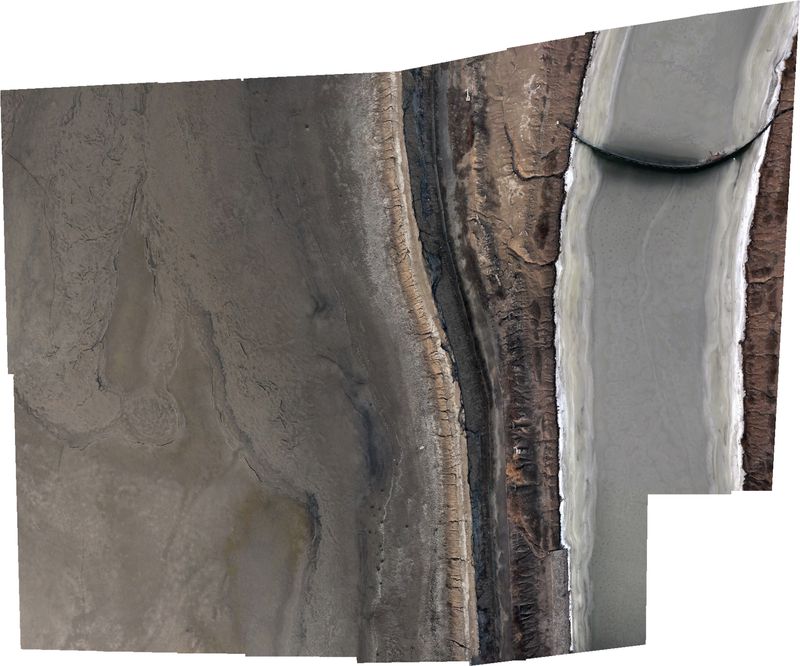
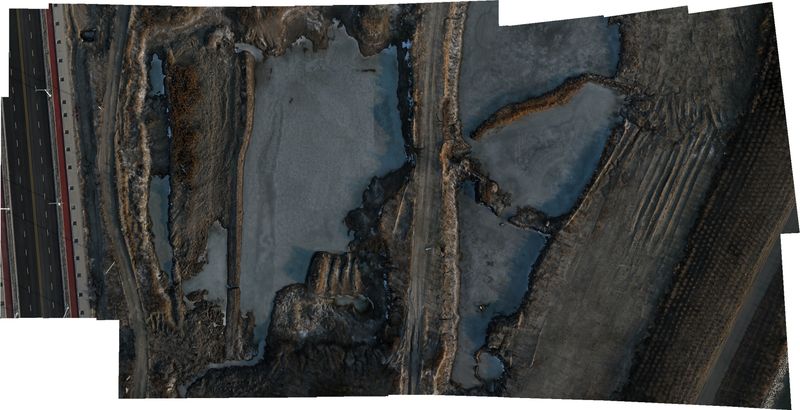
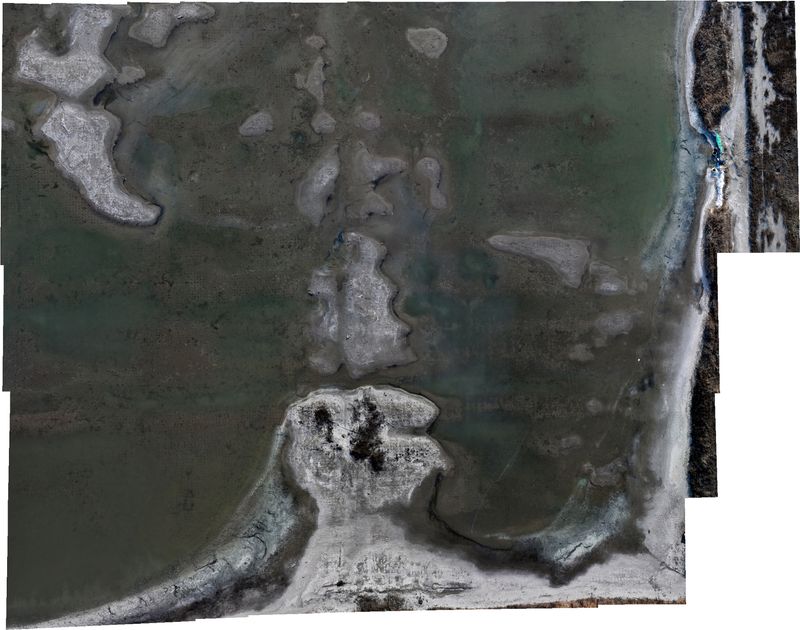
This is an investigation of one of China's largest reclaimed land in my hometown. Disoriented from the vast repaidly transforming landscape, the images try to reach the unreachable 'Humanscape' with multi-sensing informed by Traditional Chinese Medicine.
Introduction
Humanscape: Tianjin 39.0851° N, 117.1994° E unfolds from my sustained engagement with the reclaimed coastlines of my home city Tianjin (China) between 2021-2026. Here, new and artificial lands rise from the sea yet remains unsettled in form and meaning. My return to this shifting environment is guided by embodied walking—an intuitive and bodily way of moving with a latent landscape. In these marginal zones, where sediment hardens into districts and tides press against concrete, I encounter a terrain that mirrors states of disorientation, longing, and partial belonging.
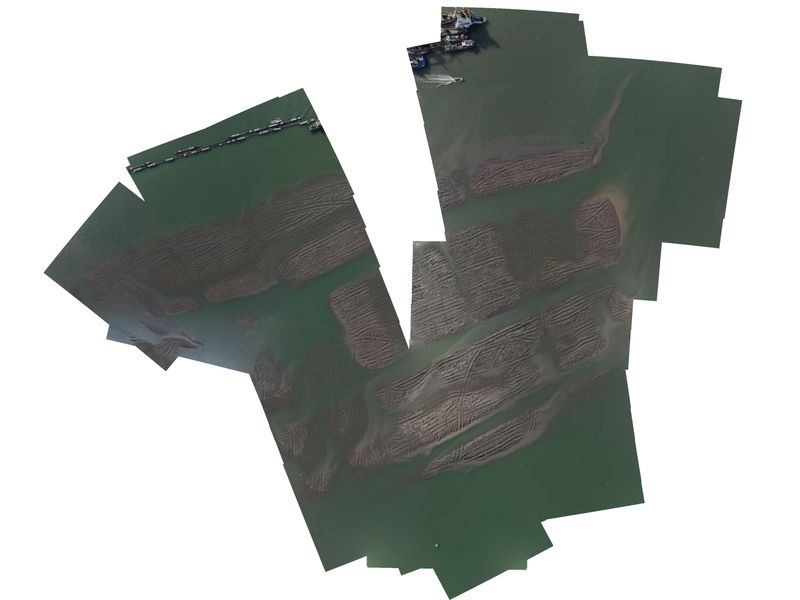
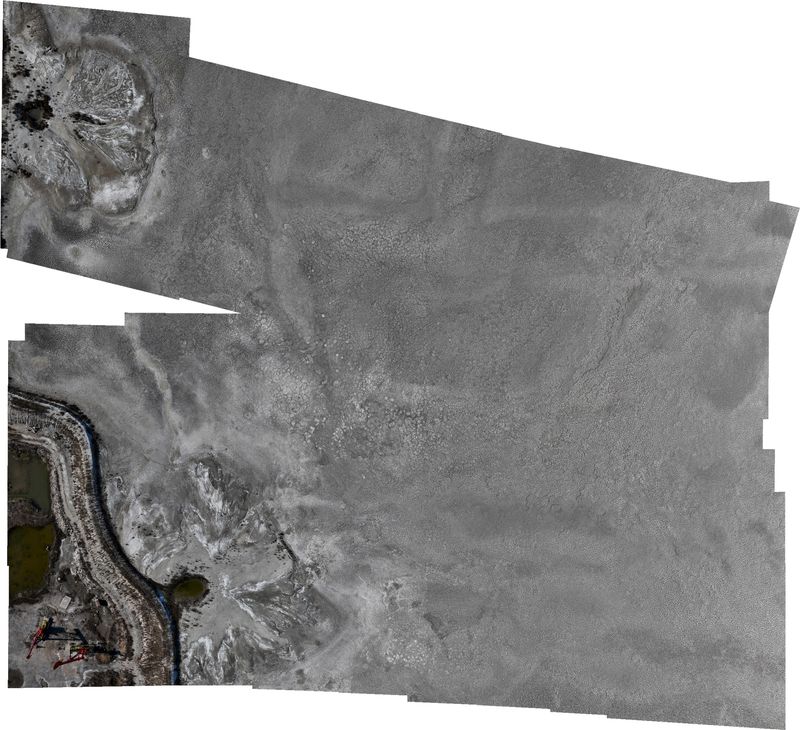
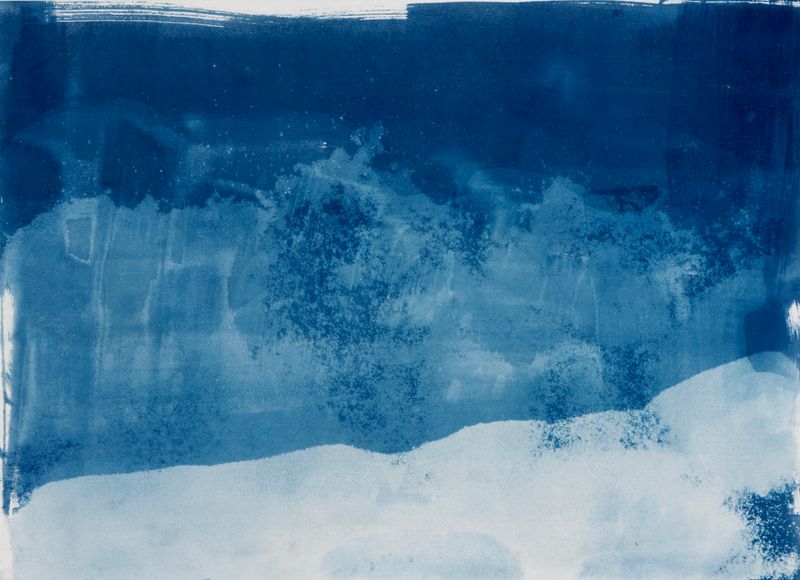
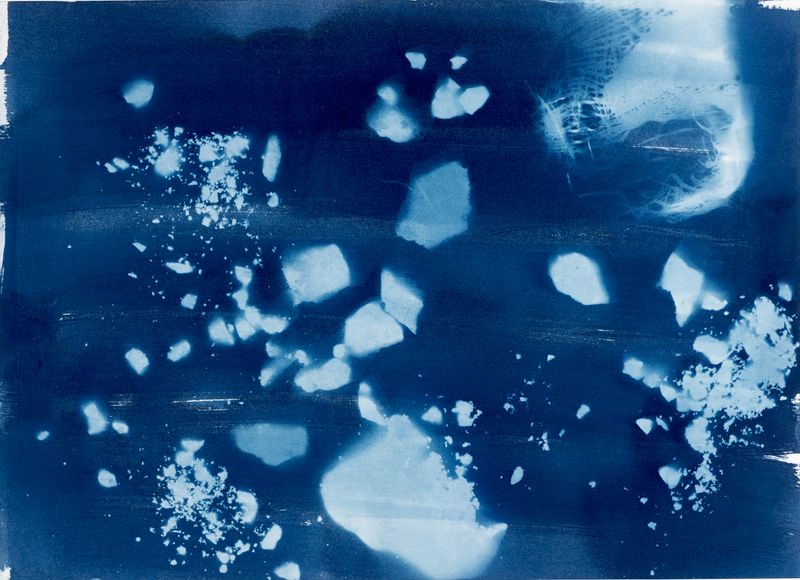
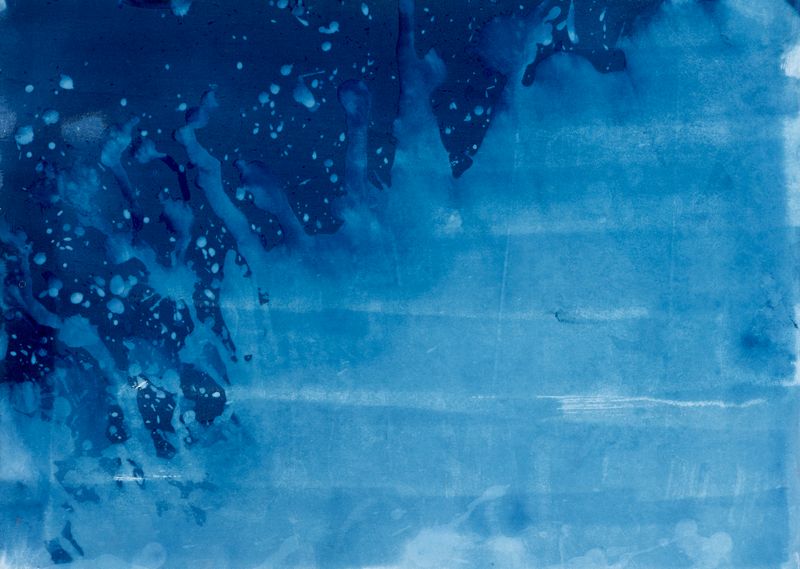
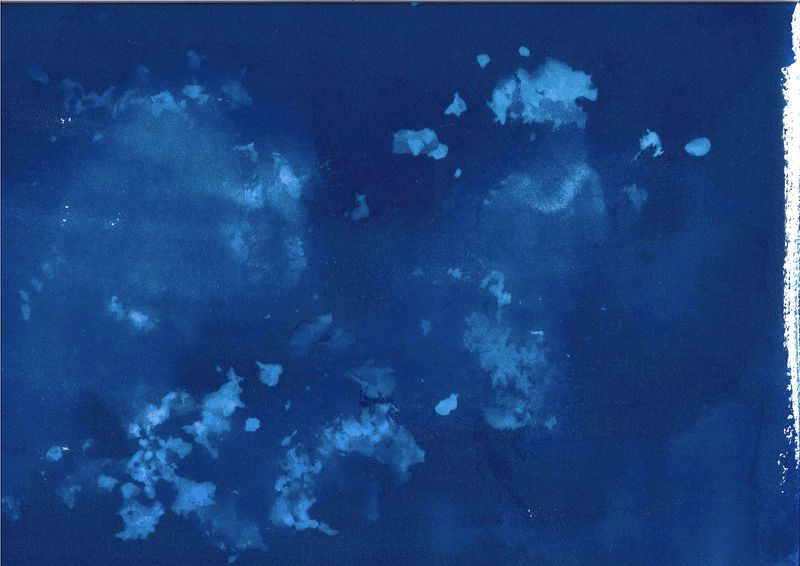
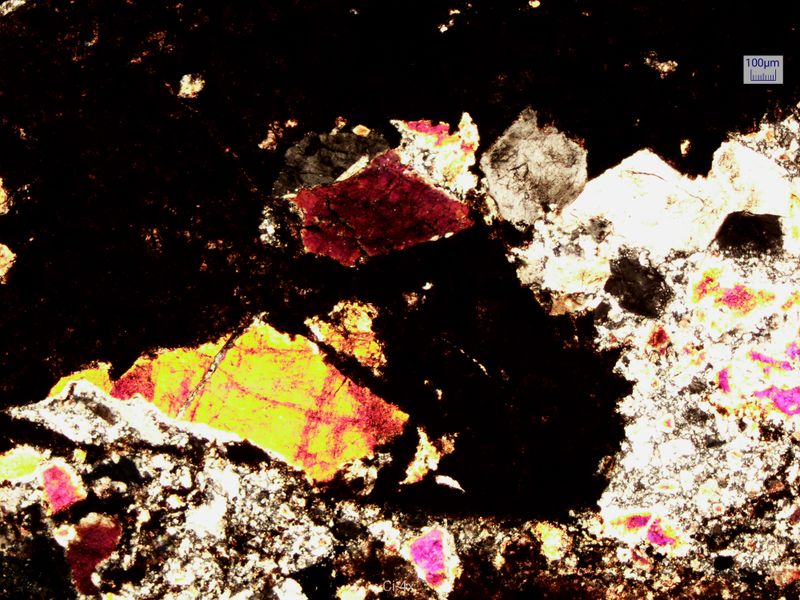
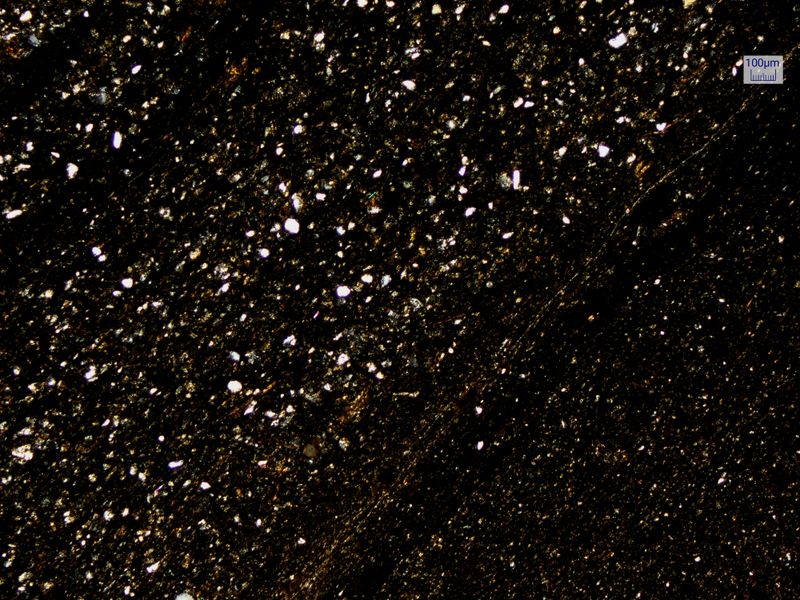
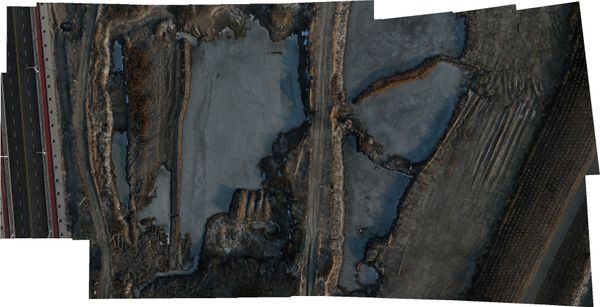
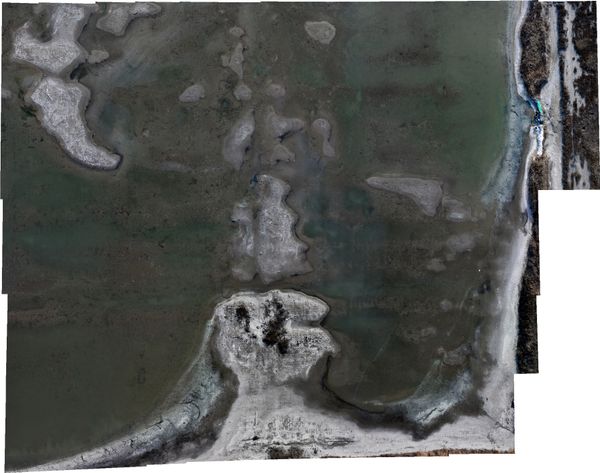
This experimental body of work maps the unstable threshold through a multimedia constellation: aerial drone collages, stone scans, contact cyanotype prints made in the sea, and creative writings. Together, these materials form my “earth writing”[1], an emotional and sensory response to an alienate place in constant (trans)formation. Using both old and new image-making techniques, the work celebrates the experiential knowledge by BEING THERE- physically on the site. It negotiates the dynamic between digital tools and human body, refining the concept of ‘Humanscape’. I use my own body and height (159 cm) as a tactile unit for sensing and measuring the reclaimed landscapes artistically, positioning my body as an active agent in perceiving and diagnosing the new place.
Layers of scale, from microscopic stone textures to distant coastal bird views, invite readers to navigate the land as a body: vulnerable, composite, and continually reorganised. Humanscape is a meditation on how bodies meet landscapes undergoing transformation and register with a manufactured landscape without roots, forming a new language for understanding a place. The newspaper format evokes maps, brochures, and the provisional circulation of information, echoing the instability, ambiguity, and inaccessibility of the terrain.
[1] Inspired by the study of Geopoetics, bringing by Kenneth White.
Creative Writing
Walking along the edge of a reclaimed coastline, tracing a seam stitched together—an uneven breath between water and land. Beneath the asphalt and concrete lies a ‘body’ not yet healed, a skin still acclimatising how to carry its weight. Here, the new land is claimed, layered, composed, and left to settle. This is a landscape in recovery, a terrain in transition, an openness with potential.
In the early 2000s, Tang Gu (塘沽) marked the edge of Tianjin, a place where land and river meet the sea. As a young girl, it felt like the tip of my ‘world’ where light, distance, and vastness merge. Since then, the coastline has more than doubled, stretching from around 151 kilometres to 366 kilometres through one of China’s largest land reclamation projects.[1] In its wake, zero metres of natural shoreline remain.[2] The new topography rose in parallel with my growth insentiently, yet it remains absent from my memory. It grew like a second skin that I did not feel forming. This ‘missing piece’ is physically present while emotionally unanchored—an unfamiliar extension of my home city, vast but largely uninhabited. The land is there, but it hasn’t been lived.
That absence—personal, spatial, and emotional—drew me back. My curiosity about what had been added and what had been lost led me to the question of what it means to reclaim. In this project, ‘reclaiming’ registers multiple layers: the geoengineering conquest of sea by land reclamation; my personal walking practice to reclaim the new land; and in time, the sea’s gentle reclamation of land through erosion, sediment, subsidence, and more...
To ‘reclaim’ the new land, I began this project by multi-sensing—looking, listening, asking, feeling—which is also rooted in the four diagnostic methods of Traditional Chinese Medicine (TCM). I see the reclaimed landscape as a human being, trying to read the pulse of a patient too vast to speak.
This is where ‘Humanscape’ emerged.
“-scape” refers to terrains- either diminutive or enormous, extended, could be seen with eyes from a distance, yet also walked with the body. And “Human-” narrows the scape, speaking to the subjective initiative, ambition and imagination of humans. Tianjin’s coast, when seen from above, is a patchwork reaching out from the original land. Here, I engage this artificial skin through subjective body walking. ‘Humanscape’ becomes both macro and micro: the massive human-made landscape and the human body sensing its boundary. This metaphor is a meeting point between internal pulse and external surface, between body and land. This is also a starting point- it does not define ‘Humanscape’ but begins to unfold it with my experiences and understanding. It is a preface—a diagnostic opening.
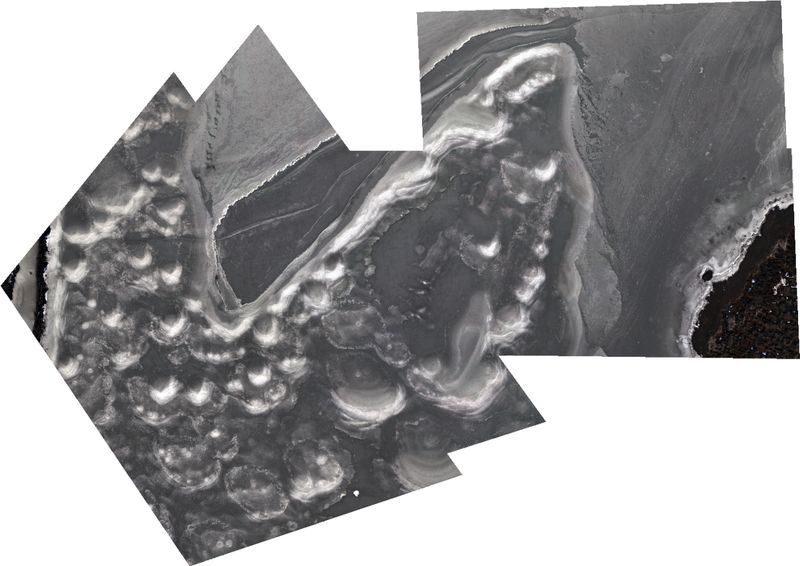
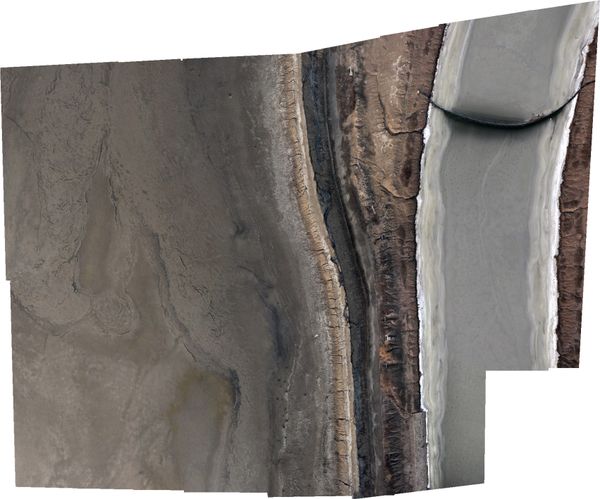
This publication is an atlas of expectation and imagination, seeing the ‘Humanscape’ across shifting scales, from micrometre (µm) to kilometre (km). The aerial and microscopic views negotiate between the intimacy and estrangement, miniature and vastness, fragmentation and continuity. Each image captured from above is stitched into an incomplete collage whose ragged edges and blank interruptions speak of the contingency, ambiguity and imbalance.
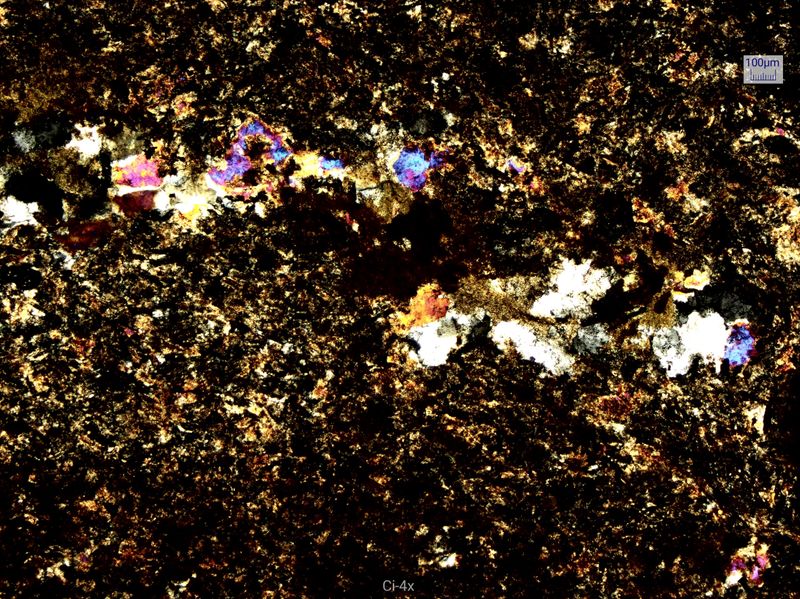
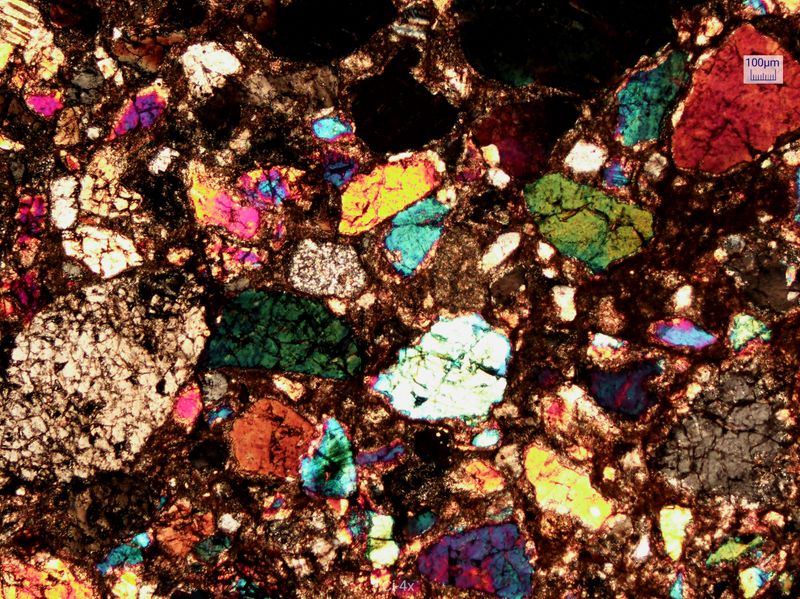
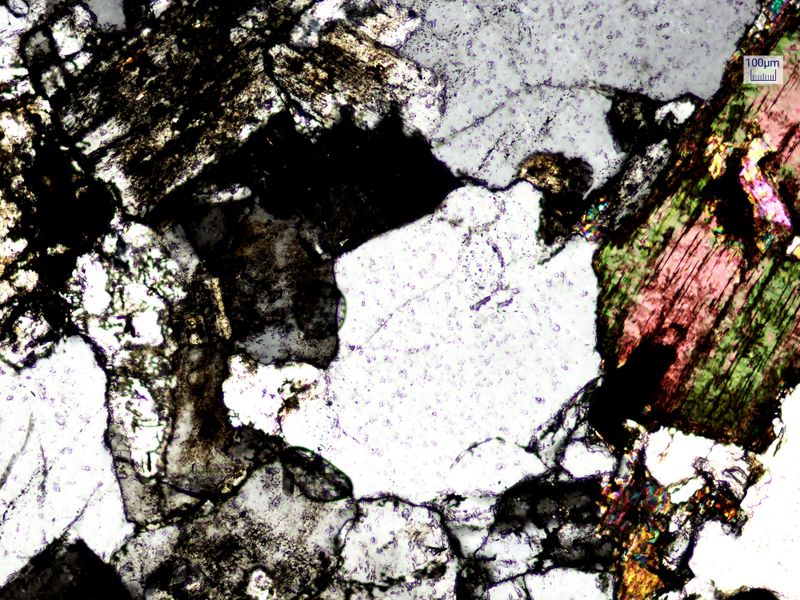
The microscope of the stone slices reveals more than mineral matter; it opens a ‘cosmos’ compressed into stone. A fragment of sediment becomes a topography of its own: ridged, scarred, cratered. The grain becomes terrain. These stone slices suggest the sense of satellite views of rivers, estuaries, and planetary surfaces, which interact with the aerial landscapes. The shift in scale transends the boundaries between stone, body, land, and even cosmos. It indicates the formations of a coastline, or the dream-mapped ridges of an alien world. The ‘Humanscape’ pulses between surface and stratosphere, stone and satellite, organism and orbit. These micro-territories become a rebellious reminder that every fragment contains a world.
Between the aerial and the cellular, cyanotype print processes sit at the scale of my body. Produced on-site with seawater, the images bear the imprint of salt, silt, wind in -10 ℃ in winter. At the human scale, the cyanotype becomes an embodiment of physical presence and atmospheric change. Their surfaces retain the trace of touch, the rhythm of sea movement, and even the markings of passing life, like the ghost-trail of a crab across coated paper. They are blue-tinted pulses of contact.
Together, this visual constellation forms different ways of seeing, an experiential experiment between what is close enough to touch and what remains distant and vast. Between fragmentation and flows, these images hold space for a landscape in flux—a ‘Humanscape’ not yet fully seen, but sensuous.
This work-in-progress is more a negotiation than representation. Each piece is a reflection of what I was allowed to reach, and a trace of what I could not see. Boundaries exist—some marked by constructions, some sensed with my body. The margins and abstractions are an invitation to imagine what lies beneath or beyond the visible, allowing time and space for the latent to emerge or conceal. They mark the limits of access, knowledge, and memory. And yet, through walking, imaging, and sensing, I begin to reclaim—not only the land, but my relation to it.
This is not a closure.
Rather, a reclamation and imagination in progress.
[1,2] WANG, Fei-cui et al. (2019) ‘Research on the coastline of Tianjin’, GEOLOGICAL SURVEY AND RESEARCH, 42(4), pp. 278–281.
Poem
beneath my feet—
a rhythm,
a vibration,
a tremor.
a place where water held breath,
and was told not to return.
the tide knows the border
before the land does.
I walk the skin of the land,
its texture bruised,
stitched with longing,
and belonging.
blue bleeds into paper—
a surface memory,
a pulse of salt.
I feel what shifts,
what remains.
each print a fragment,
a jigsaw of erosion and dream.
a sublime
an oasis,
dried/parched yet singing.
what is reclaimed
moaning with tide.
Humanscape—
not fixed,
pulsing.
the skin stretched
between presence and absence.
space becomes place.
place becomes body.
body with wound, scars, and patches,
the Anthropocene drifts
in blue shadows.
beneath the surface,
a future—
open,
ambiguous,
becoming.
I see,
I see myself seeing.
I lost,
l ong time no sea.