Headspace
-
Dates2023 - Ongoing
-
Author
- Topics Portrait, Social Issues, Contemporary Issues, Studio, Documentary
- Location Vancouver, Canada
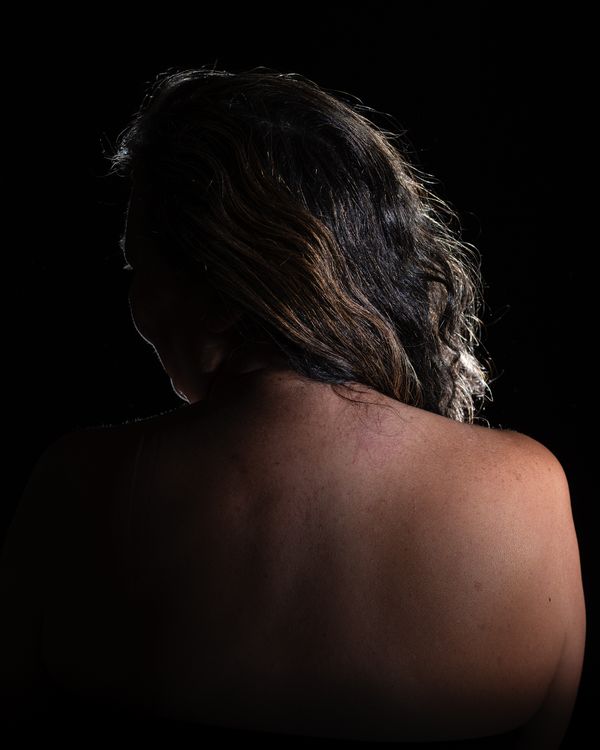
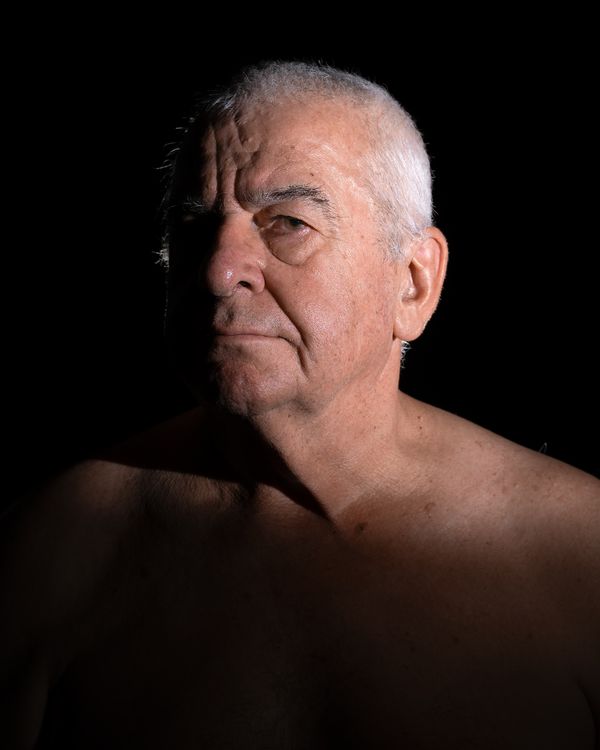
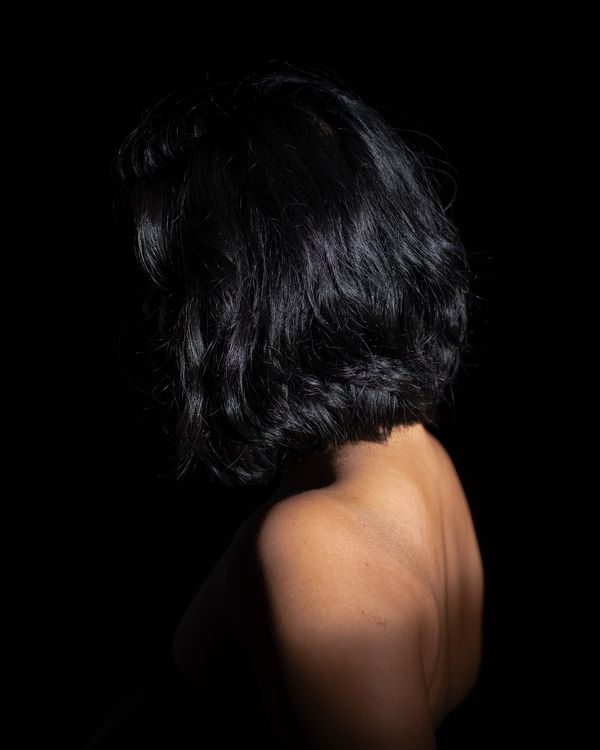
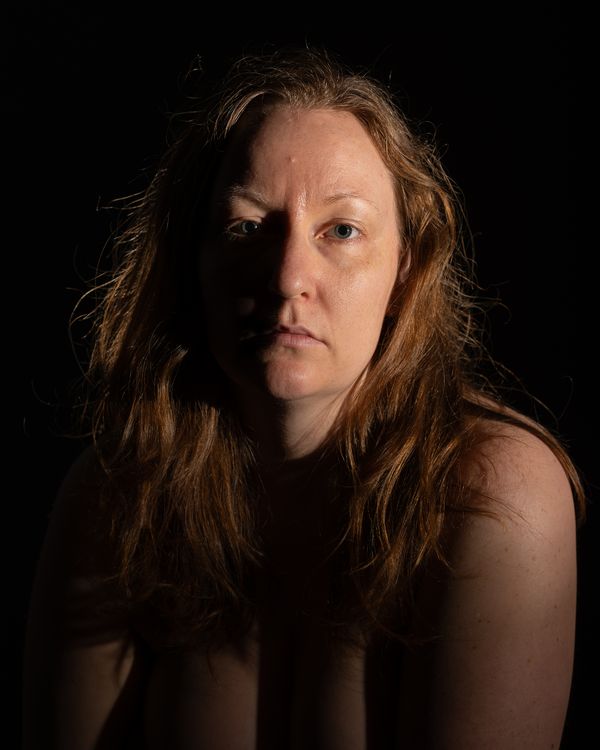
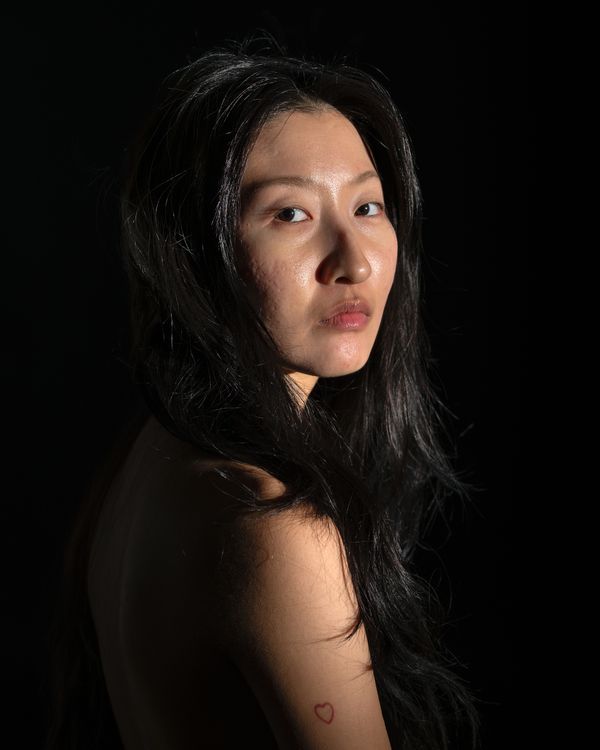
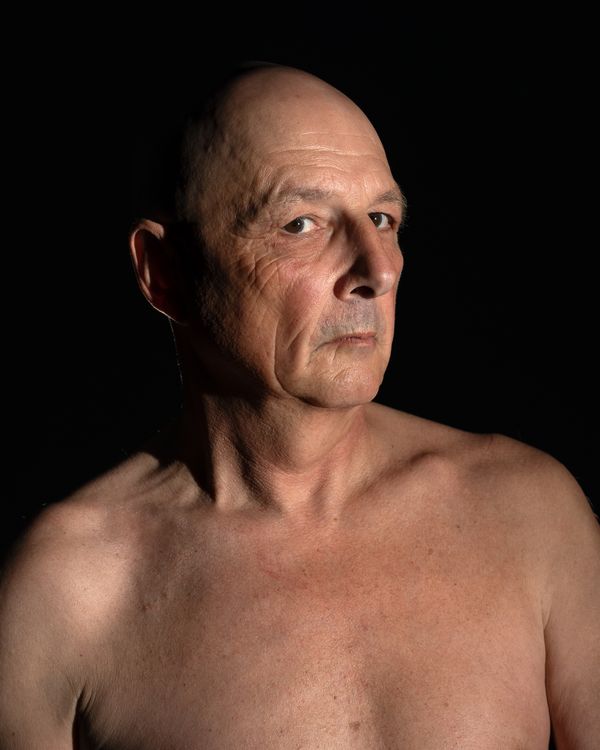
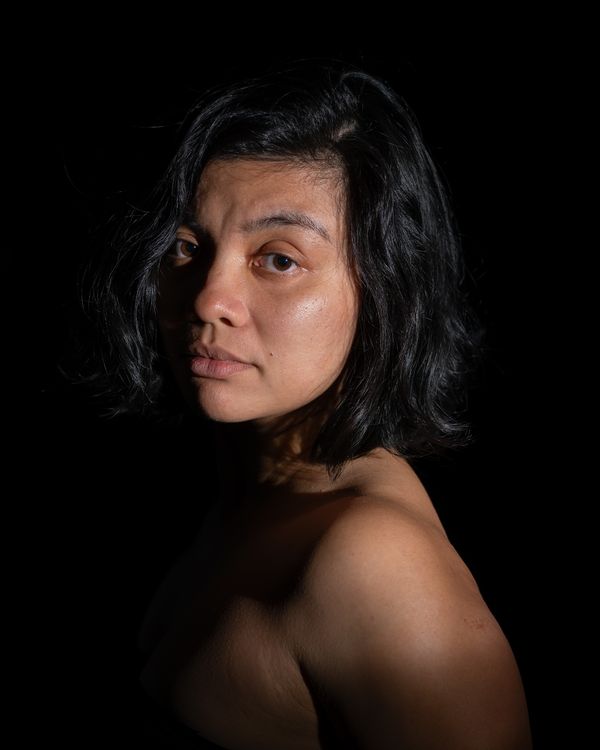
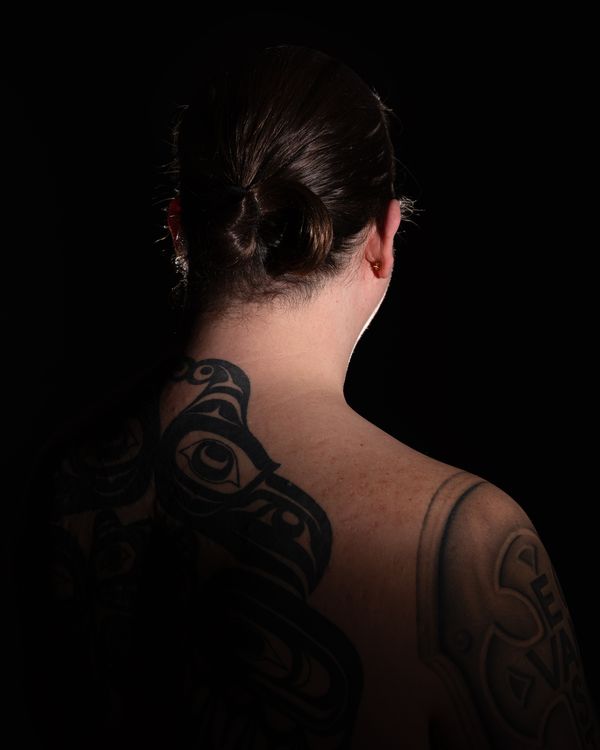
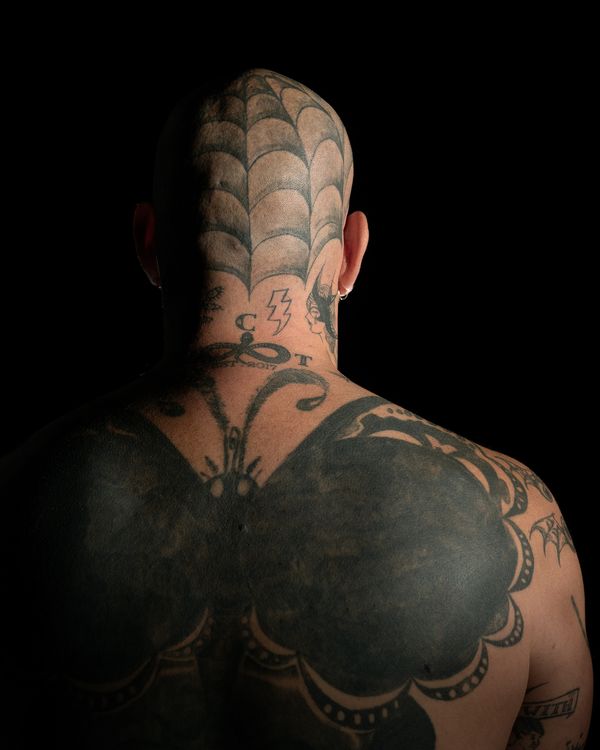
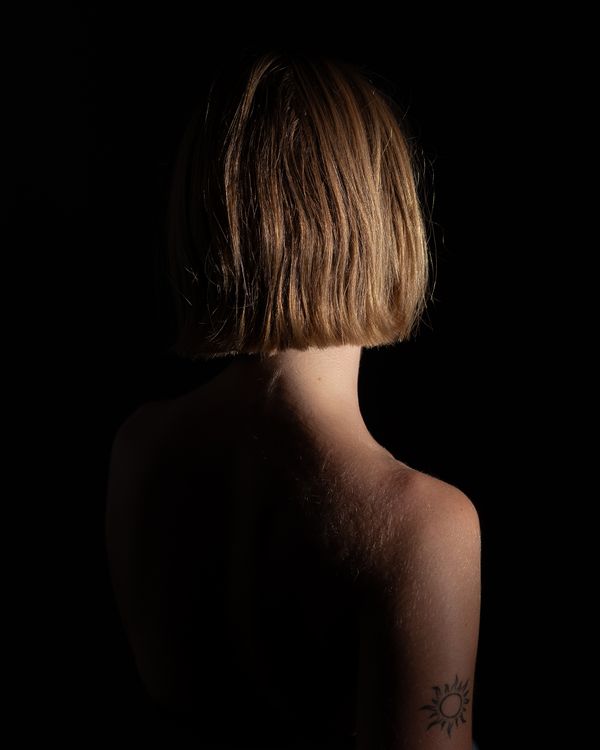
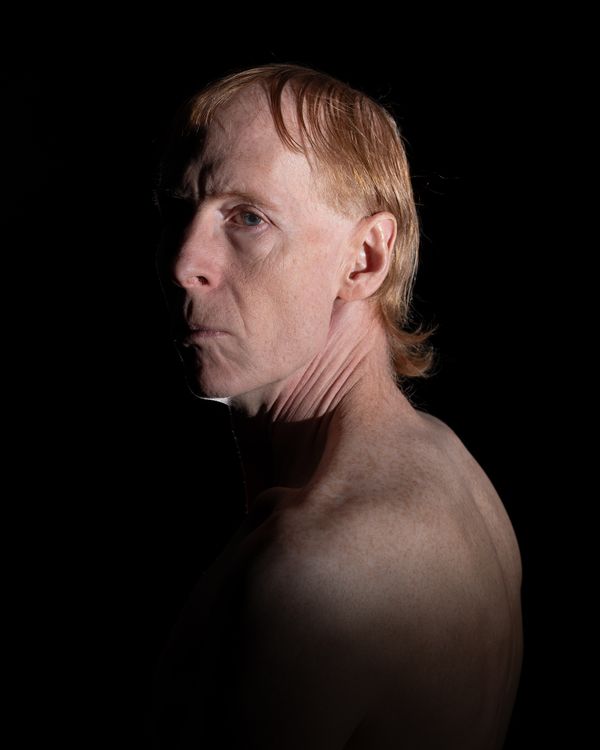
Headspace explores what it means ‘to see,’ ‘to witness,’ and ‘to be seen,’ & to consider what is exposed when using portraiture to discuss mental health. The artist includes herself in the project, desiring to resituate the aura within the self portrait.
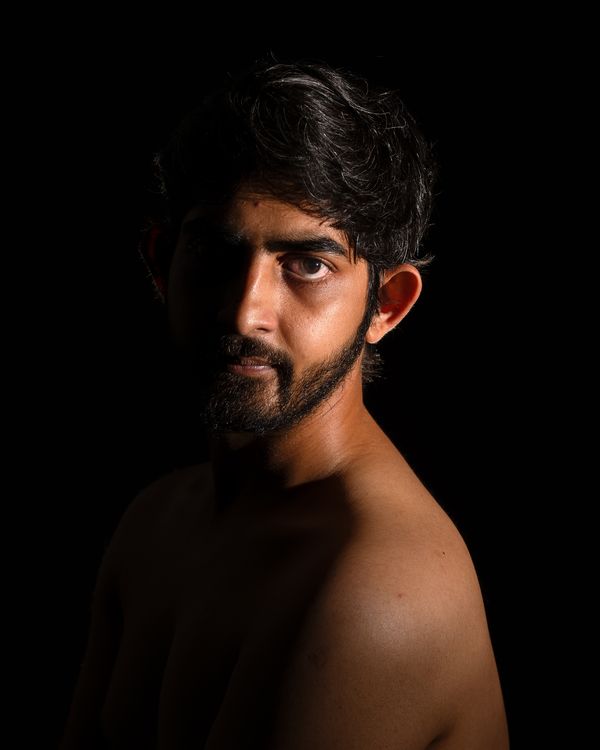
Headspace, by Andrea Bollen aka Andream, is an ongoing project of studio portraiture started in Sept 2023 while a student at art school. A connection is made between the photographer with anxiety and depression, and sitters who respond to a Craigslist post (strangers online) requesting volunteers identifying with mental health issues interested in the project.
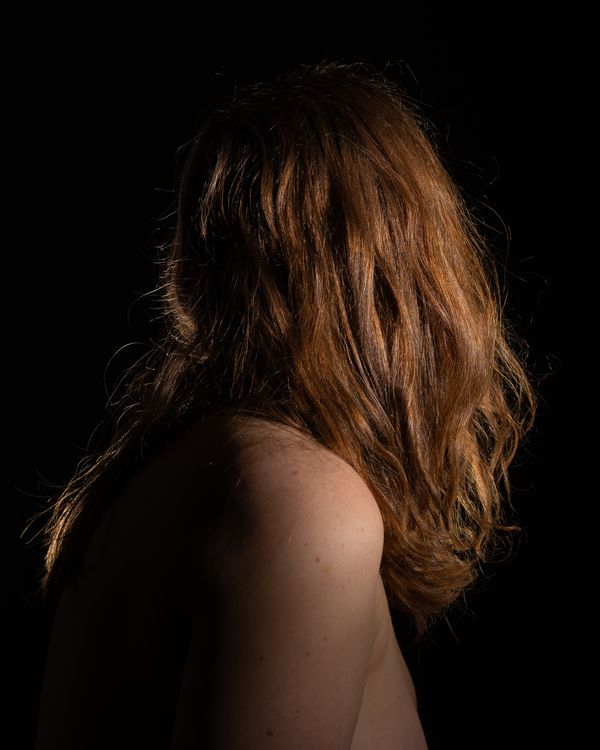
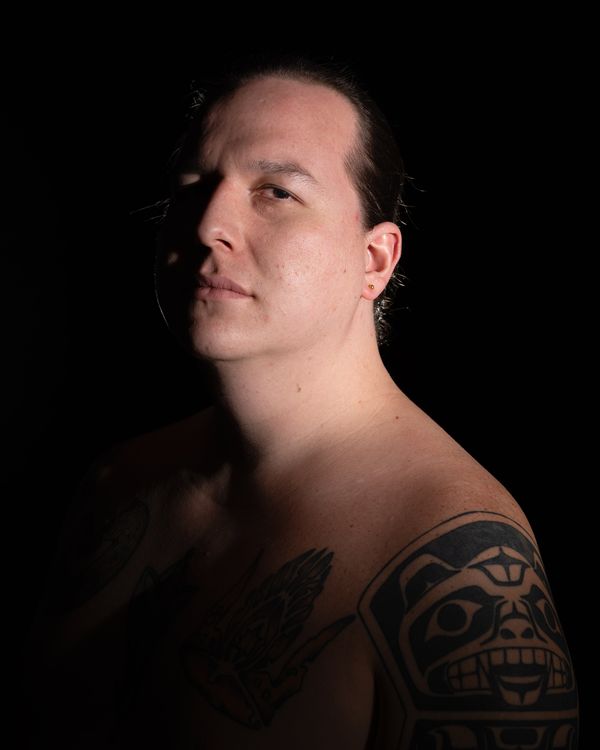
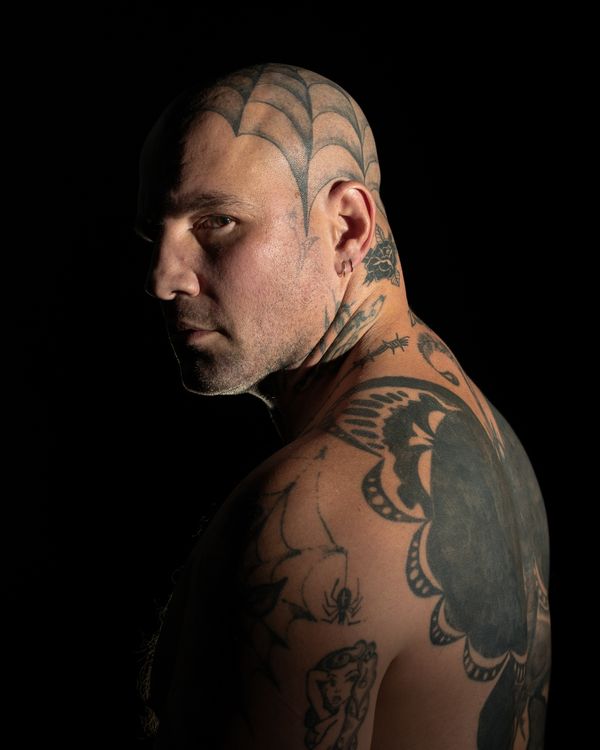
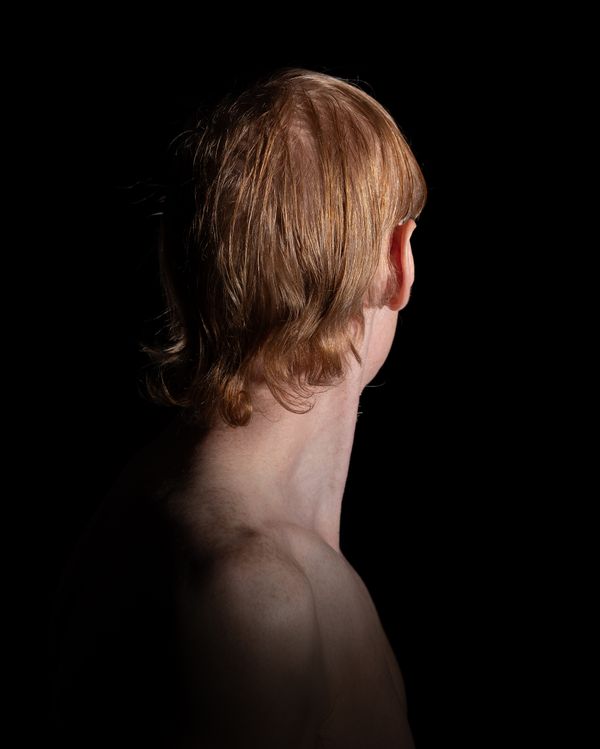
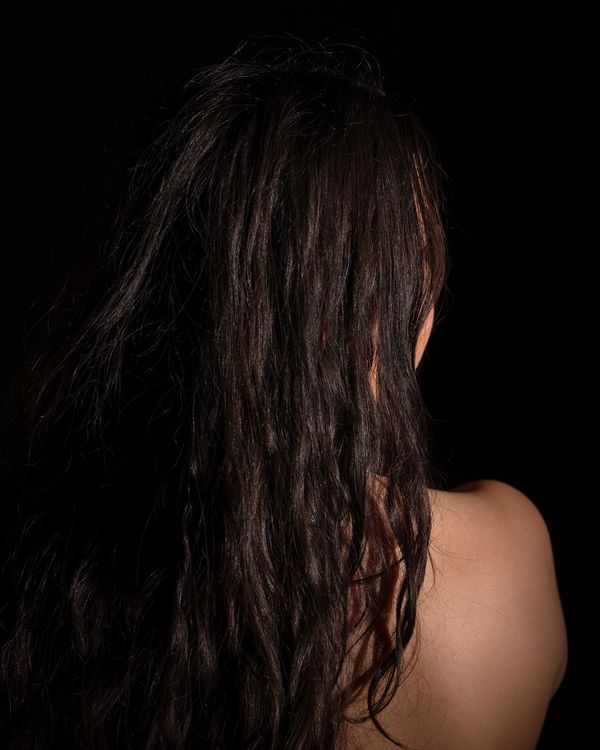
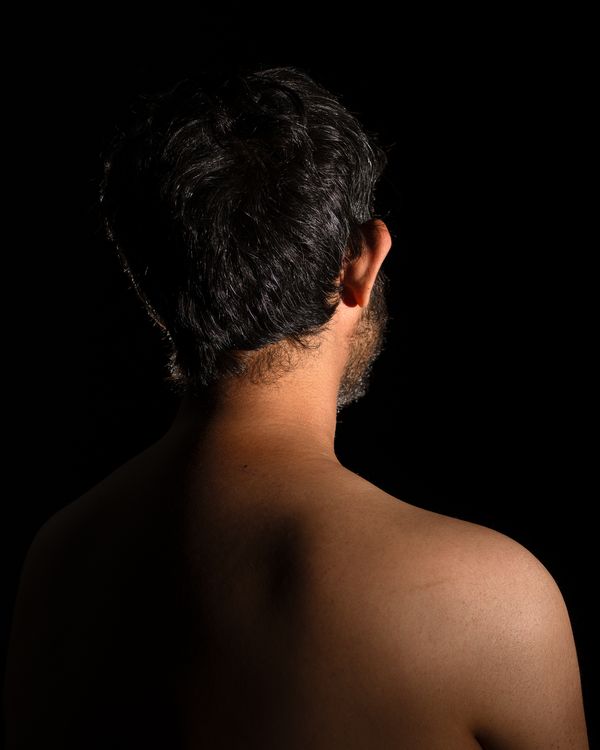
The space of encounter is a stripped-down studio with a spotlight and a stool in a dark environment. The resulting medium format portraits are a dialogue between the artist and the sitter. The viewer is an outsider witnessing a select and tight gaze of the subject.
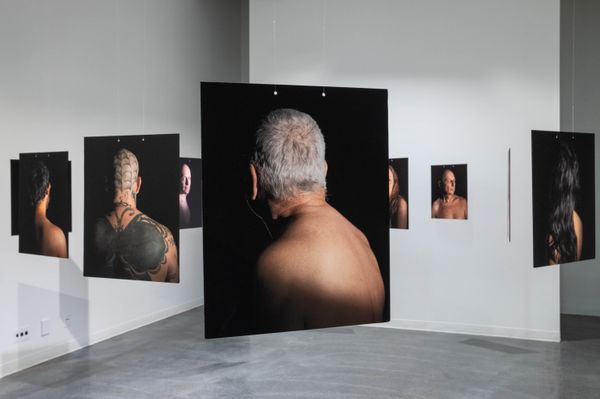
When exhibited, mental state of mind is explored with suspended portraits, both confronting and obscuring. Headspace is a mirror of the anxiety within the artist’s mind. The artist, Andream, includes herself within the project, desiring to resituate the aura within the self-portrait.
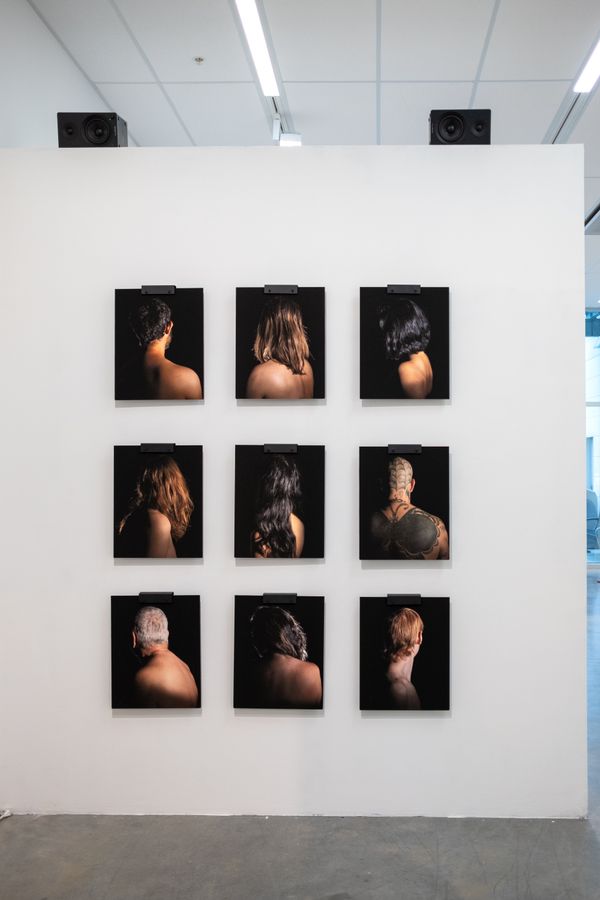
The flatness of the double-sided panels and the use of theatre-like chiaroscuro indicate the missing information, unable to be portrayed in a single portrait sitting. Sharp shadows and chromatic blacks, along with haunting direct gaze with the viewer challenge portrait photography aesthetics. The work is an embodied response to the documentary style in photo history of people with mental health issues.
Headspace has been exhibited in 2 different formats: panels mounted on a wall with custom brackets obscuring the "fronts" of the portraits, and suspended panels where the viewer walks around discovering both sides.
An audio component accompanies the portraits. The audio is the sitter’s responses to an anonymous online survey created by the artist, for each sitter to be able to speak about mental health, their experiences, and the studio portraits. The audio is read as anonymous, with Tyler Roth, voice actor, reading the responses.
The viewer is asked to question what assumptions are made based on appearance and their knowledge of mental health issues, what it means ‘to see,’ ‘to witness,’ and ‘to be seen,’ and to consider what is exposed when using photography to discuss mental health.
Supporting Research
Headspace offers an exploration of human experiences through personal stories. In an interview with Rajesh Punj, artist Muhannad Shono discusses the “power of narrative” (Punj). Stories “catch light in other people’s minds, and they can physically change everything around you” (Punj).
In Headspace, portraits are suspended, while a single voice shares their stories, restricting the viewer from knowing which story goes with what portrait. In the book, The Disabled Body in Contemporary Art, Ann Millett-Gallant references scholar, Rosemarie Garland-Thomson, who states that “representations cannot conform to categories of perception, and no representation is purely one-dimensional.” (12). Garland-Thomson refers to our heavily visual society “in which we are all pervasively gazing/staring at each other and forming our notions of ourselves both in identifications with and against other bodies” (Millett-Gallant, 14). Millett-Gallant talks about “the body on display (the spectacle)” and asks how you can “utilize its voyeuristic attention through artistic and political acts?” (14).
Artwork based on the topic of mental health lives on the fringes with disability studies. In their book, The Threshold of the Visible World, author, Kaja Silverman opposes “the provisional conferral of ideality upon socially devalued bodies” (4). How is the subject “psychically to negotiate [their] resulting apprehension of lack or distance from the ideal” (Silverman, 4). The subject is left with a “self-revulsion” or a complete dismantling of the “binary opposition of ideality and abjection – the notion of the “good enough”” (Silverman, 4). “We can only accede narcissistically to the principle of the “good enough” after we have been taught to exercise it in relation to other bodies, and here the image is all-important” (Silverman, 5).
In the book, Installation Art: A Critical History, author Claire Bishop suggests that installation art activates the viewer, with a need to “move around and through the work in order to experience it” which “activates the viewer, in contrast to art that simply requires optical contemplation (which is considered to be passive and detached)” (11). Headspace is participatory in that the viewer is able to physically walk amongst the photography panels and move closer to certain speakers to hear different stories.
In the section, the body of the audience, in Installation Art in the New Millennium, Nicholas De Oliveira et al. discuss how images or objects in an installation can change a viewers perspective. “The mirroring between the viewer and the viewed becomes endless” (Oliveira et al., 167). Oliveira et al. quotes Jacques Lacan: “I see myself seeing myself…I see outside, that perception is not in me…it is on the objects that it apprehends” (167).
Works Cited
Bishop, Claire. Installation Art: A Critical History. Routledge, 2005.
Millett-Gallant, Ann. The Disabled Body in Contemporary Art. Palgrave MacMillan, 2010, https://doi.org/10.1057/9780230109971.
Oliveira, Nicolas De, et al. Installation Art in the New Millennium: The Empire of the Senses. Thames & Hudson, 2003.
Punj, Rajesh. “From the Imagined World: A Conversation with MuhannadShono.” Sculpture, vol. 42, no. 5, Sept. 2023, pp. 14–25.
Silverman, Kaja. The Threshold of the Visible World (1st ed.). Routledge. 1996. https://doi.org/10.4324/9781315811581.
Find more about Headspace + Andream
The complete collection so far, including exhibition photos, transcripts of the audio piece, a sample video, and more, can be found here: https://2024.theshow.ecuad.ca/project/headspace/
Andream is an emerging artist who has worked in health care as an occupational therapist for 17 years and graduated with a BFA in Photography from Emily Carr University of Art + Design in 2024. She is interested in creating a photo book of the project, as well as exhibiting the photographs in other designed possibilities. She hopes to continue the project in other communities outside of Vancouver, possibly in an artist residency.
Her website is www.andream.art