Deviations in Mary’s Room
-
Dates2025 - 2026
-
Author
- Topics Contemporary Issues, Fine Art, Awards
- Location Spain
Deviations in Mary’s Room explores how perception is shaped in an image-saturated context. Drawing on Jackson and Putnam, it examines links between experience, language, and representation, framing vision as a cultural process shaped by technology and AI.
Every universe begins with an expansion, an initial event that breaks the inertia and gives rise to time. The catalyst in this case takes the form of a question: can we see something we have not yet learnt to see?
The question stems from the famous thought experiment known as Mary’s Room, proposed by the philosopher Frank Jackson in 1982. In it, we imagine Mary, a scientist who knows absolutely everything about colour perception from a physical and neurological point of view, but who has lived her entire life in a black-and-white room. When she finally leaves that room and sees blue for the first time, a persistent doubt arises: will she learn something new? This question has served to explore the relationship between knowledge and experience. However, the philosopher Hilary Putnam suggested that the problem might not lie in the answer, but in the way the question is phrased. Putnam defines this type of question as a deviated question, a question formulated in such a way that it cannot be resolved through experience.
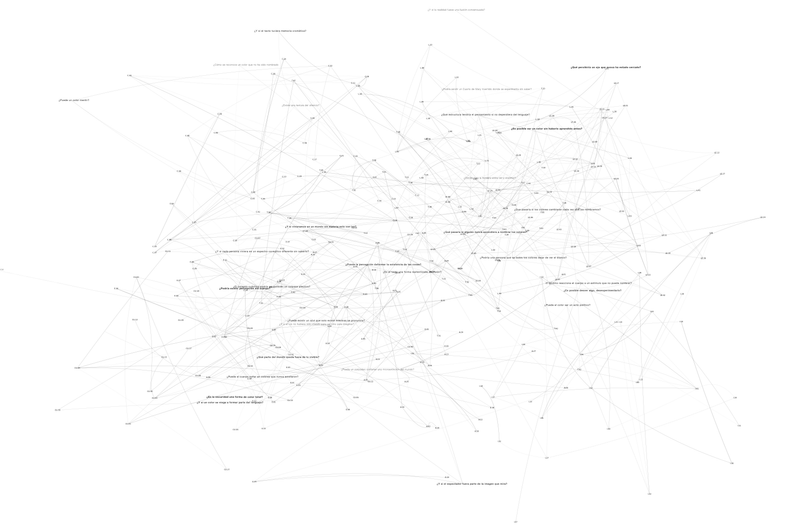
The project begins precisely at that point of deviation. Rather than attempting to answer the question, Deviations in Mary’s Room explores what happens when a question ceases to produce answers and begins to generate further questions. From there, an archive of over 200 deviated questions is constructed, grouped by thematic fields and then coded to be organised into a visual cartographic system. The map establishes relationships of proximity and distance, following a logic similar to that of a constellation; some questions can be read clearly, whilst others are situated in more distant positions, where the text begins to fade and only their codes remain visible. As with galaxies and stars in the night sky, distance determines how each element can be perceived. Cartography thus becomes a spatial representation of constantly expanding thought.
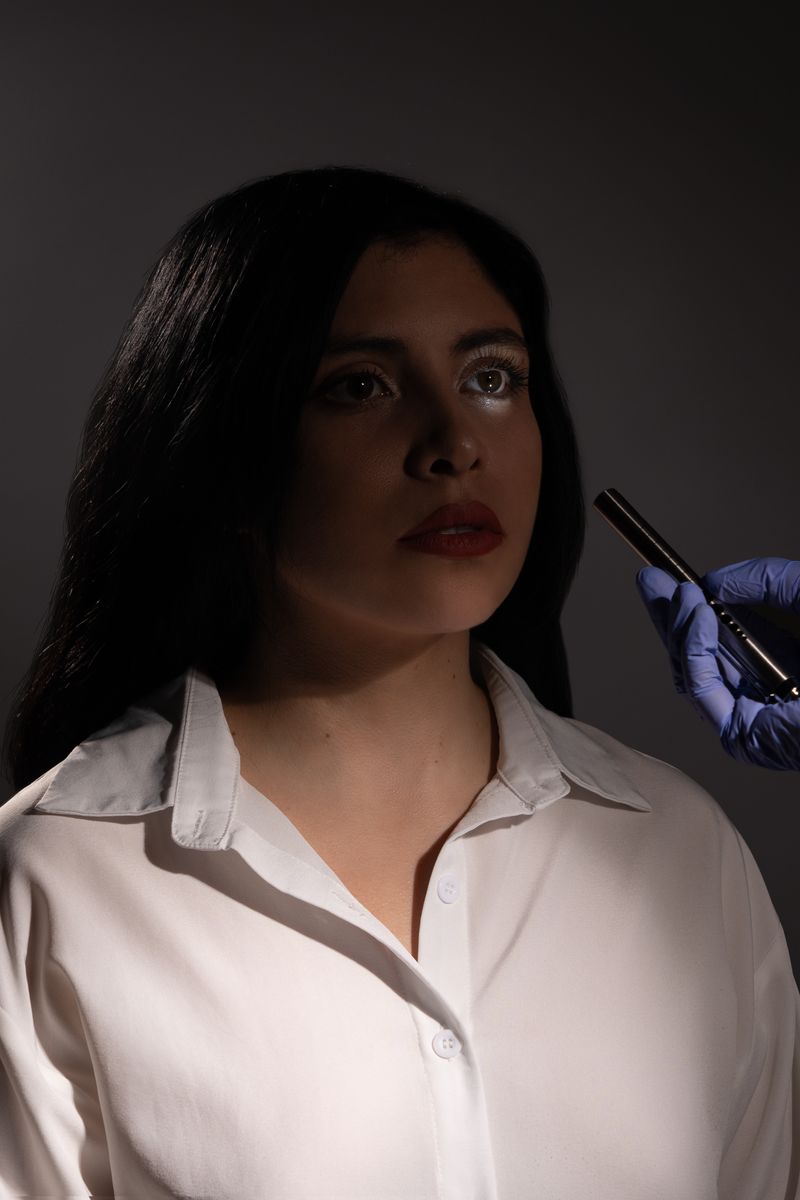
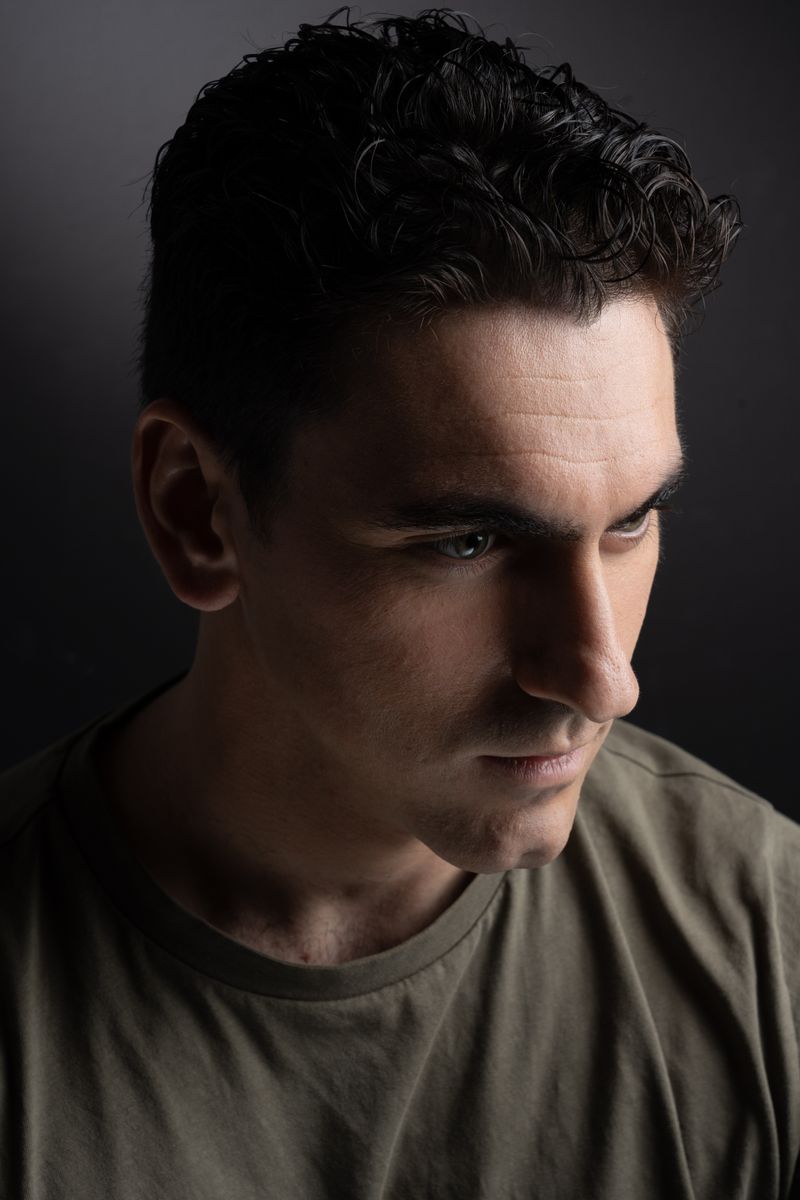
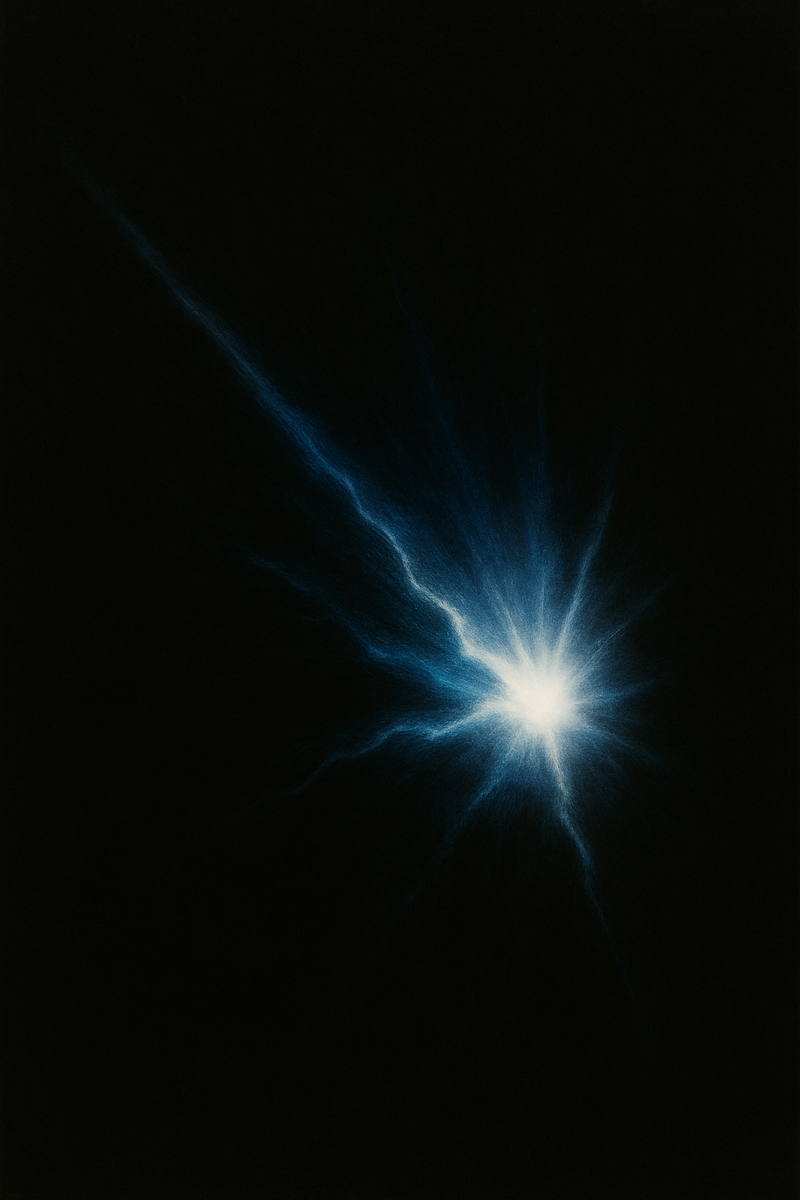
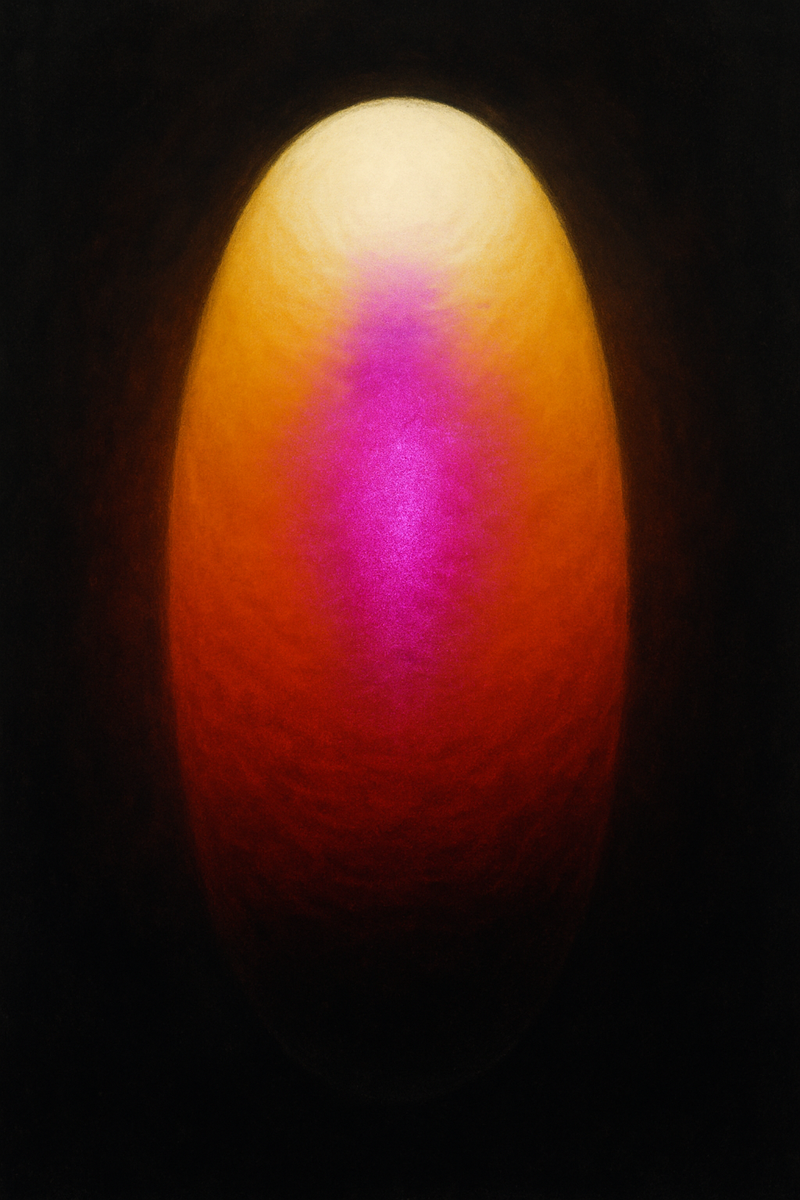
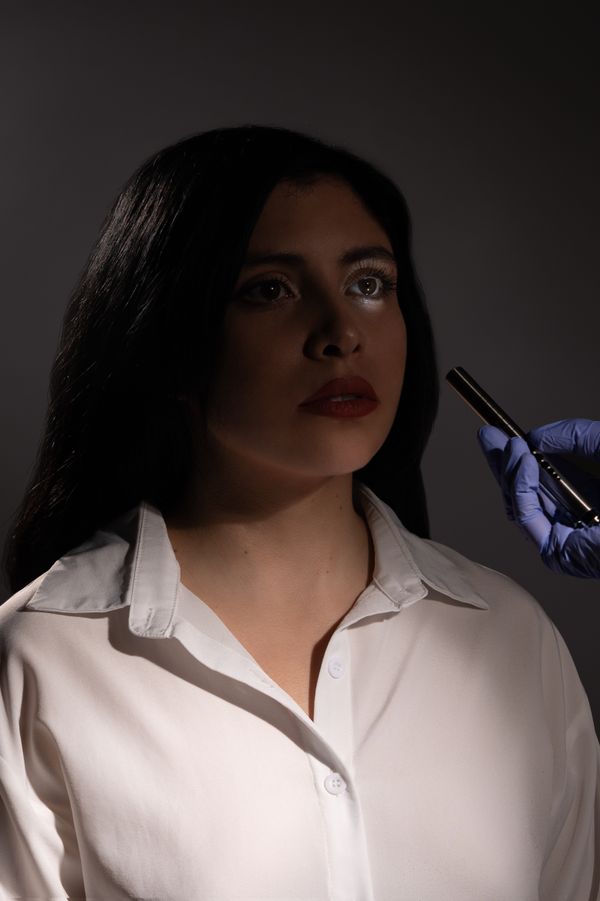
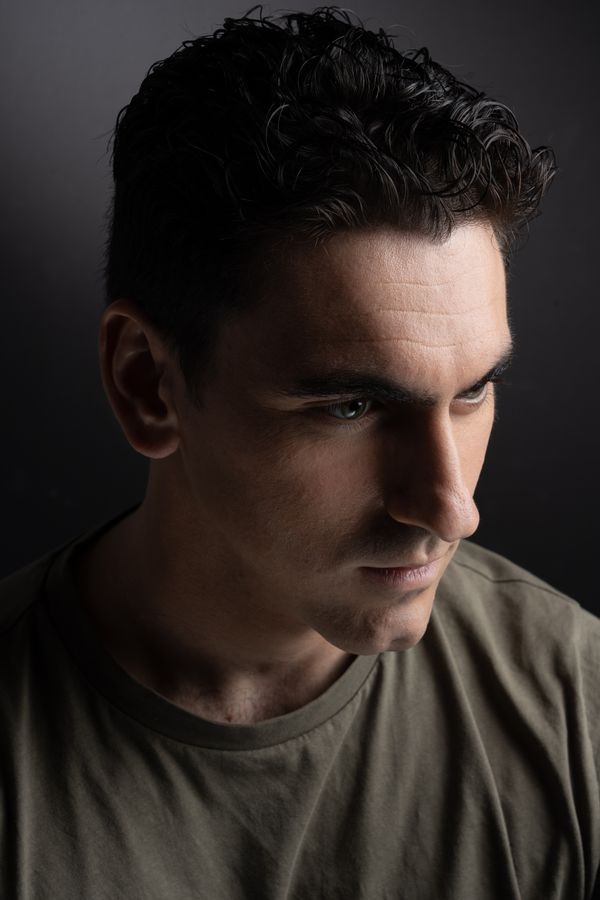
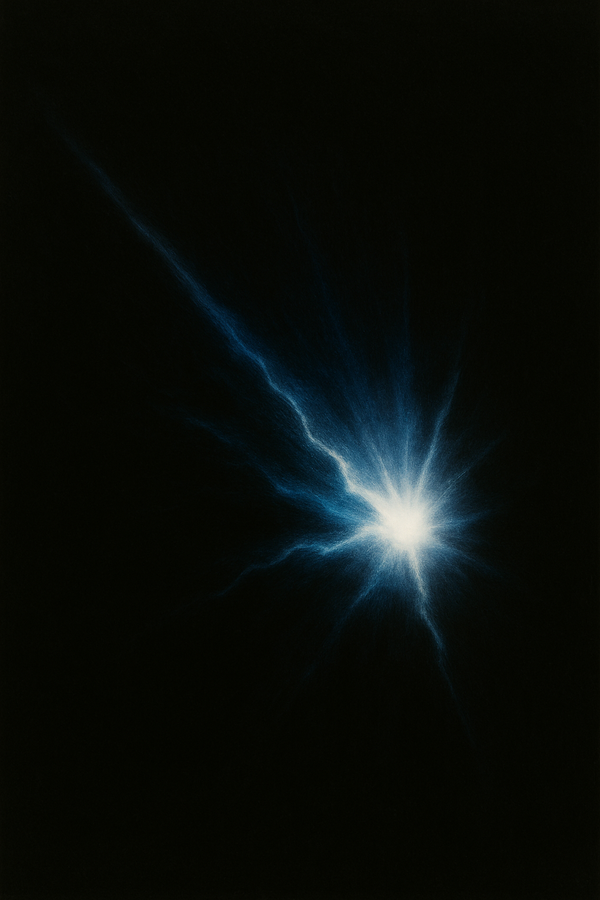
Whilst the map organizes the conceptual framework, the photographic research introduces experiences that go beyond conventional models of representation. Through Reddit, a community of people with synesthesia is identified and an archive of 73 testimonies is compiled. Some of these people are interviewed and photographed. Their descriptions are subsequently translated into images using artificial intelligence. These synaesthetic experiences are not directly visible as they occur at a neural level and can only be partially described because language is almost always insufficient; this challenges the idea that perception is homogeneous and classifiable. Similarly, AI is not used here as a creative tool, but as a statistical archive that collects collective structures of visual knowledge. In this sense, it can be understood as a contemporary Mary, a system that knows vision empirically but has never experienced it. Even so, its appeal is not based solely on the production of images through code, but on the data from which it draws. It operates on vast volumes of information, and its data sets are largely fed by information obtained precisely from Reddit. As the data from the testimonies is collected within the same interface , an epistemological loop is created: synesthesia is transformed into language, language into data, and data back into image.
Deviations in Mary’s Room places the image within a process of translation; Mary, the AI and synesthesia share a common condition: they operate on images that have not been seen in a direct sense, and these journeys are always interwoven with language. In this transition, the project examines how images are constructed and how the visual conventions that make them recognisable operate.