Cuerpo – Cuenca

"Cuerpo - Cuenca" documents, across three regions of water stress, how state policies under Javier Milei's government have shifted the burden of water scarcity onto women, the domestic and communal keepers of the resource.

In 2010, the UN General Assembly recognized access to safe drinking water as an essential human right. Four years later, Argentina's Supreme Court reaffirmed the State's obligation to guarantee that right.

Yet in 2026, Argentina — home to one of the world's largest freshwater reserves — there are between 4 and 7 million people without regular access to safe drinking water. The crisis stretches from the Patagonian foothills to Buenos Aires itself, fueled by the Régimen de Incentivo para Grandes Inversiones (RIGI) in 2025 and its 2026 expansion, the "Súper RIGI," which attracted mining, energy, and digital infrastructure investment through tax incentives without equivalent water protections.

"Cuerpo - Cuenca" documents, across three regions of water stress, how state policies under Javier Milei's government have shifted the burden of water scarcity onto women, the domestic and communal keepers of the resource.

In Chubut, AI data centers threaten water reserves already strained by drought. Mapuche women, historic guardians of the rivers, speak of "environmental refugees": families forced to abandon ancestral territory when they can no longer sustain themselves on trucked-in water.

In Villa Inflamable, Buenos Aires, women who watched their children born with high blood-lead levels manage, by makeshift means, the water reaching their homes — contaminated by decades of activity from the Dock Sud petrochemical hub.

In Vaca Muerta, the historic birthplace of Argentine fracking, the same extractive matrix is renewed under the new legal framework, and it is women in neighboring communities who walk kilometers to secure water for their households.

The reportage weaves legislative tracking of the RIGI/Súper RIGI with in-depth life stories, to show these are not isolated crises but a single structural policy — Argentina's new digital and energy extractivism — absorbed by the bodies that keep water flowing.

Field reporting is already underway.

© Daniella Fernandez - Image from the Cuerpo – Cuenca photography project
i

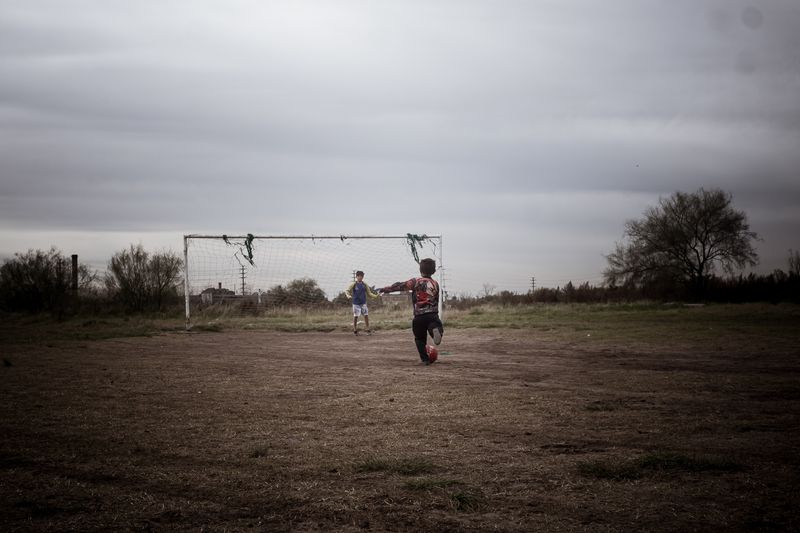
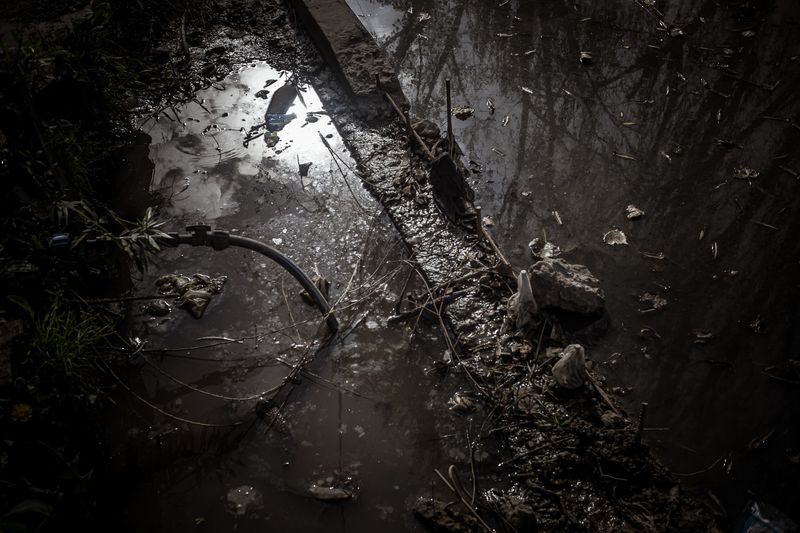
Villa Inflamable, just an hour from downtown Buenos Aires and less than four kilometers from Plaza de Mayo, is now a sacrifice zone, declared “uninhabitable” by the Argentine courts because of high levels of contamination in the soil, air, and over all, water.

© Daniella Fernandez - Image from the Cuerpo – Cuenca photography project
i

In her dimly lit kitchen, Mabel turns on the tap. The plumbing system in her home is entirely makeshift. The water runs with good pressure, but she does not drink it. “We use tap water for cooking, but not for tea or for the babies’ milk. It is not certified as safe to drink because the pipes run through contaminated soil,” she explains.

© Daniella Fernandez - Image from the Cuerpo – Cuenca photography project
i

In Villa Inflamable, Buenos Aires, families are forced to buy five-liter containers of drinking water on the open market, bringing their monthly spending on potable water to as much as $120 in a neighborhood of precarious workers.

© Daniella Fernandez - In Villa Inflamable, Buenos Aires, two children play soccer in a vacant lot surrounded by sources of contamination.
i

In Villa Inflamable, Buenos Aires, two children play soccer in a vacant lot surrounded by sources of contamination.

© Daniella Fernandez - Image from the Cuerpo – Cuenca photography project
i

Mabel arrived in the settlement at 19, newly married, in the late 1980s. “They used to grow all kinds of things,” she recalls, remembering the days when the area was made up of small farms. She remembers children bathing in the waterway, which also supplied water to the crops.

© Daniella Fernandez - Image from the Cuerpo – Cuenca photography project
i

New families are arriving in Villa Inflamable, pushed out by the lack of work and unaffordable rents in Buenos Aires. “They would rather live in a contaminated area than be left without a roof over their heads.”, says Mabel a local resident and grandmother of 12.

© Daniella Fernandez - Image from the Cuerpo – Cuenca photography project
i

Until 2024, ACUMAR distributed drinking-water containers free of charge in Villa Inflamable. After Javier Milei took office, the program was defunded and eventually disappeared altogether.

© Daniella Fernandez - Image from the Cuerpo – Cuenca photography project
i

“Are you worried about your grandchildren’s future here?” “Yes. If I had the opportunity, I would leave with them and go somewhere else,” Mabel replies.

© Daniella Fernandez - Image from the Cuerpo – Cuenca photography project
i

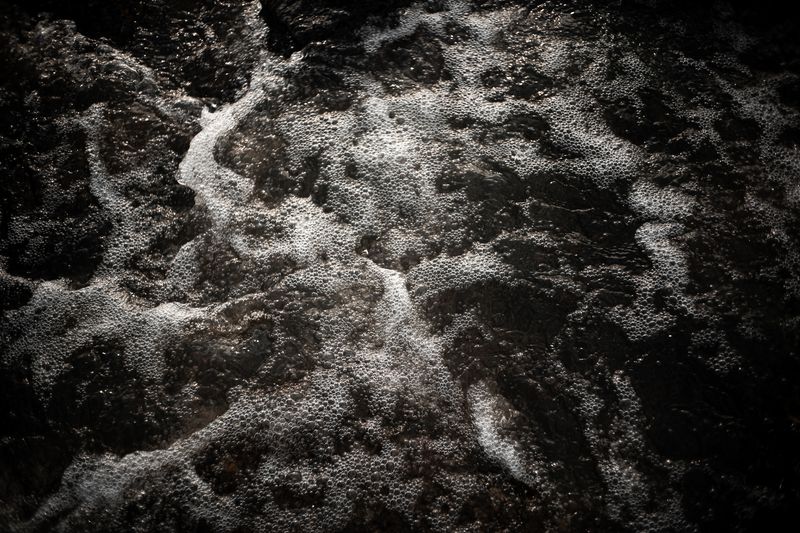
The weychafe (warrior) Moira Millán warns that when a river or stream appears in a dream, it is a sign to pay attention. “The state of the soul can be read in the color of the water,” she says.

© Daniella Fernandez - Image from the Cuerpo – Cuenca photography project
i

Jessica Gentile is a representative of the Ecosocialist Network, a political and environmental organization that rejects the commodification of the commons and advocates for food sovereignty and the protection of ecosystems.

© Daniella Fernandez - Image from the Cuerpo – Cuenca photography project
i

On August 19, 2026, Amancay Quintriqueo, the first woman to become lonko in the history of Lof Kinxikew, led the resistance against an eviction order in her community.

© Daniella Fernandez - Image from the Cuerpo – Cuenca photography project
i

In the Mapuche worldview, the land is not a resource but a conscious being. Animals, plants, stones, and human beings coexist, guided by the same life force (newen). In Wallmapu, everything is deeply interconnected.

© Daniella Fernandez - Image from the Cuerpo – Cuenca photography project
i

Marta, the great-granddaughter of a lonko and a victim of the state-led displacement that began in 1930, recognizes water (ko) as her primary newen. “Every Mapuche person has an origin, and that is where they return when they leave the earthly plane,” she says.

© Daniella Fernandez - Image from the Cuerpo – Cuenca photography project
i

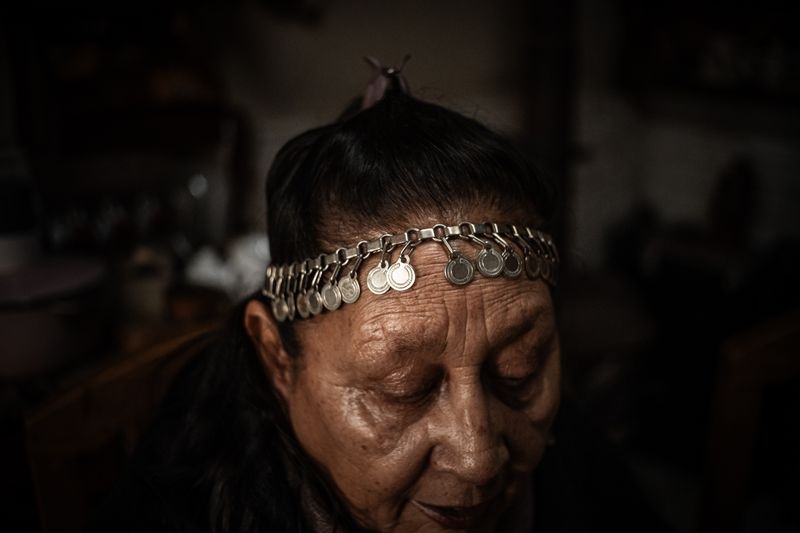
The relationship between “bodies-territories” has led Mapuche women to become some of the most visible voices opposing large-scale mining and other forms of extractivism in Argentine Patagonia.

© Daniella Fernandez - Displaced mapuche women in Argentina in the 20th century.
i

Displaced mapuche women in Argentina in the 20th century.