Cero Plumas (Zero Feathers)
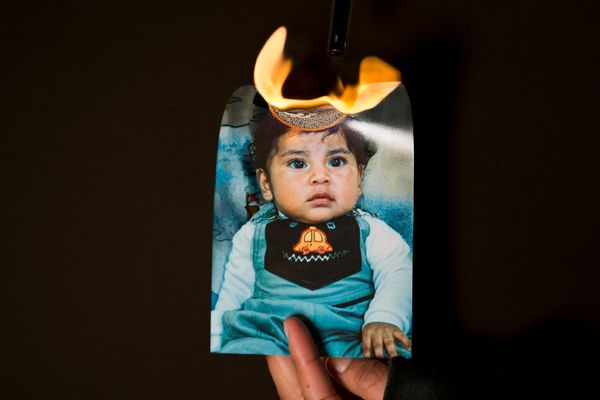
From a very early age, as an Indigenous child and adolescent in the Colombian context, the violence directed at my effeminate expression shaped the way I inhabit the world; this ongoing photographic project is born as a response to that wound.

From a very early age, as an Indigenous child and adolescent in the Colombian context, the violence directed at my effeminate expression shaped the way I inhabit the world. This ongoing photographic project is born as a response to that wound: a gesture of repair, care, and rewriting of memory from the place of dissidence, affection, and imagination.

Through interventions on my family archive, the staging of fragmentary memories, and the rereading of power apparatuses, I work with the body as a living archive: a place where what has been erased reappears, memory is sensorially activated, and the personal is transformed into the political.

Drawing on critical frameworks such as María Lugones's coloniality of gender and José Esteban Muñoz's disidentification, Cero Plumas (Zero Feathers) questions the binary, hierarchical regime imposed by colonialism and proposes, following Silvia Rivera Cusicanqui's formulation of ch'ixi, inhabiting mixture, ambiguity, and affective contamination between cuir/queer and Indigenous symbolic languages.
Confronting plumophobia and the disciplinary injunction to "not have pluma," the project chooses to expose and subvert it — restoring its potency as a sign of difference and disobedience. I reclaim the right to inhabit the anomalous, the strange; to reappropriate normative aesthetics in order to reinterpret them; and to celebrate sexual and gender dissidence against the politics of death and the narratives that constantly tell us we do not deserve to exist. To tell this story is to seek belonging — not in the place that was denied to me, but in the language I build from cuir/queer affirmation and the resignification of the colonial wound.
© Nicolás Bernal - Image from the Cero Plumas (Zero Feathers) photography project
i

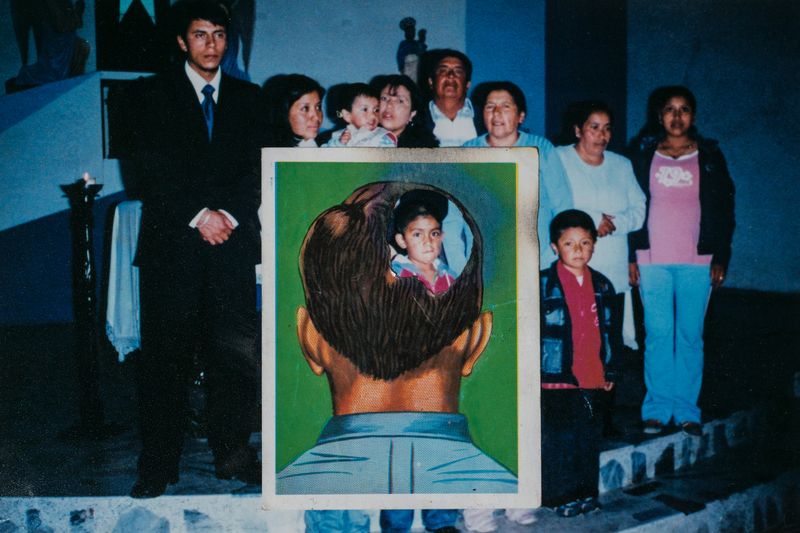
As a child, my paternal grandmother took me to the barber and left the back of my hair long; when we returned home, my father demanded she cut it “like a boy.” That seemingly domestic episode reveals how gender stereotypes become embodied through very specific acts: hair as a marker of identity, scissors as instruments of discipline, and parental authority as an enforcer of norms.

© Nicolás Bernal - Image from the Cero Plumas (Zero Feathers) photography project
i

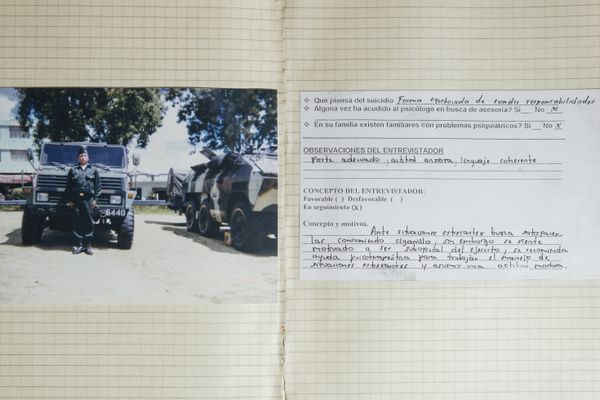
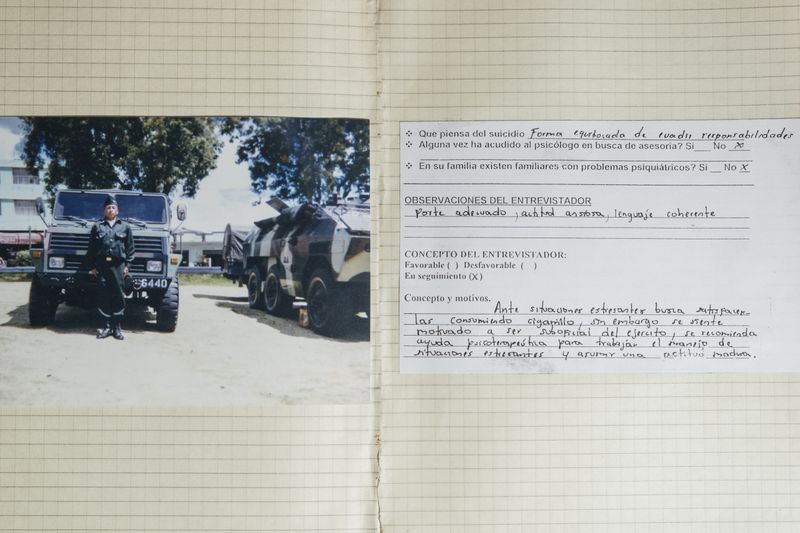
Photograph of a found archive, a psychological diagnosis of my biological father prior to his admission to the National Army of Colombia. In response to the first question, “What do you think about suicide?”, he answers: “An incorrect way of evading responsibilities.”

© Nicolás Bernal - Image from the Cero Plumas (Zero Feathers) photography project
i

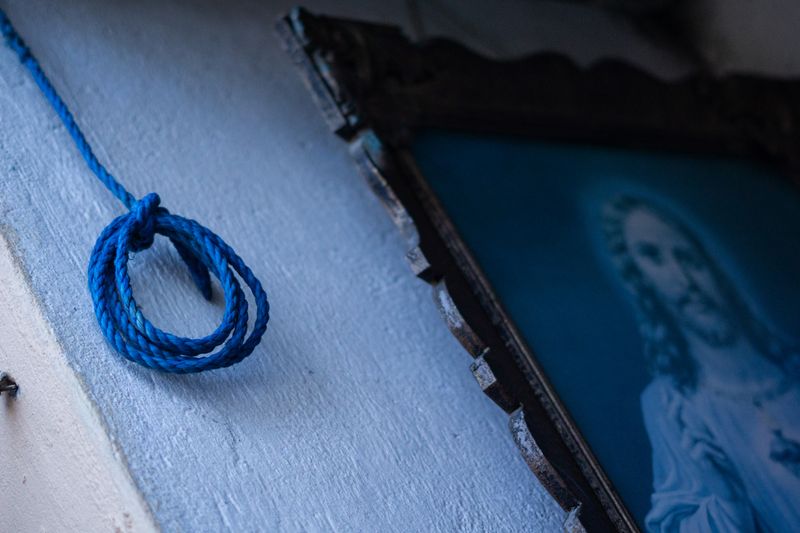
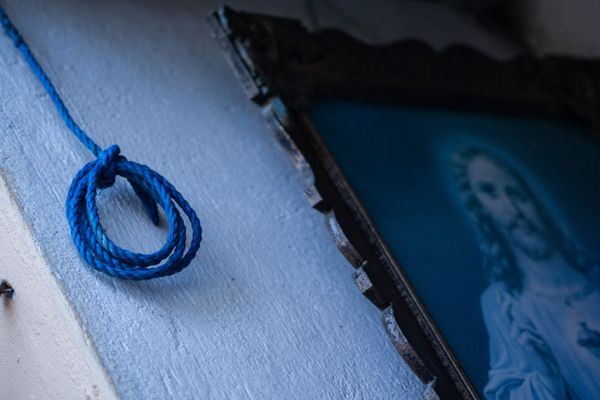
A blue rope hangs from a wall next to a picture of Jesus Christ in an interior space. Due to the constant harassment I endured because of my effeminate expressions, I began to develop suicidal ideation at a very early age.

© Nicolás Bernal - Image from the Cero Plumas (Zero Feathers) photography project
i

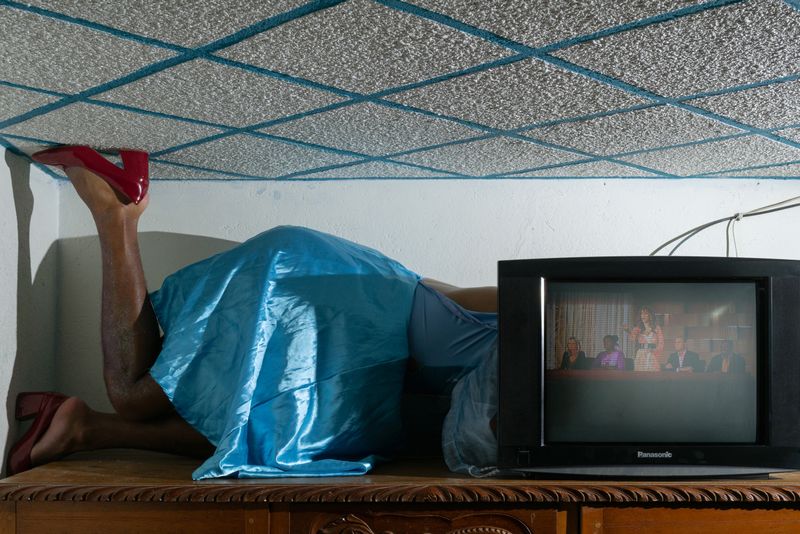
An autobiographical performative that reconstructs a childhood memory marked by the surveillance of hegemonicmasculinity. In a domestic room, my body—dressed in a satin blue suit and red heels—is elevated on top of a wardrobe, while a clip from America's Next Top Model, a show I secretly watched as a child, plays on thetelevision.

© Nicolás Bernal - Image from the Cero Plumas (Zero Feathers) photography project
i

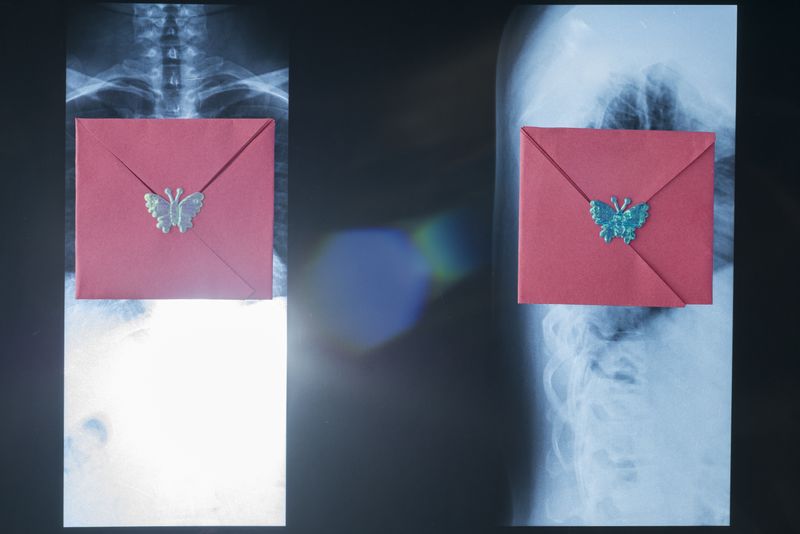
Collage of an X-ray image intervened with handwritten letters. The scene recalls a childhood act of writing letters and then swallowing them out of fear of being discovered. It becomes a metaphor for how silenced words later transformed into an unbearable cry — one that, through the act of coming out, eventually allowed me to live in peace.

© Nicolás Bernal - Image from the Cero Plumas (Zero Feathers) photography project
i

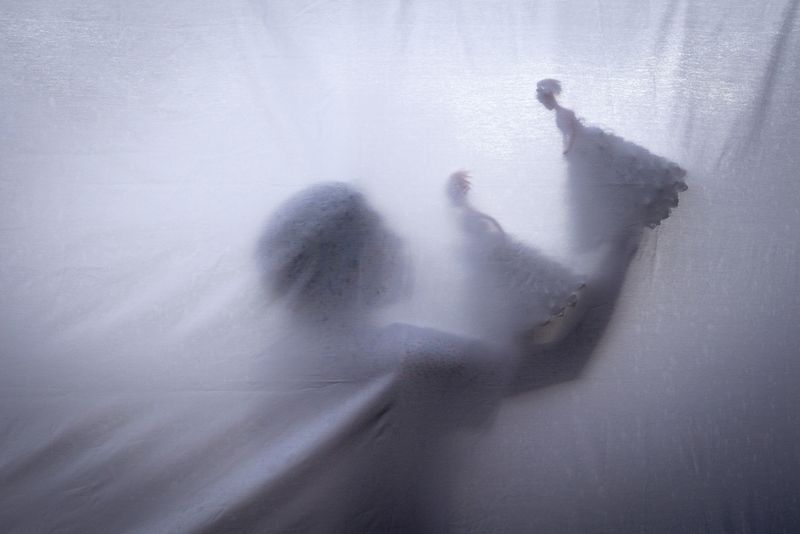
Portrait covered by a sheet. In secret, away from my parents’ eyes, I found refuge in practices that defied gender codes, such as playing with dolls, gestures associated with the feminine realm.

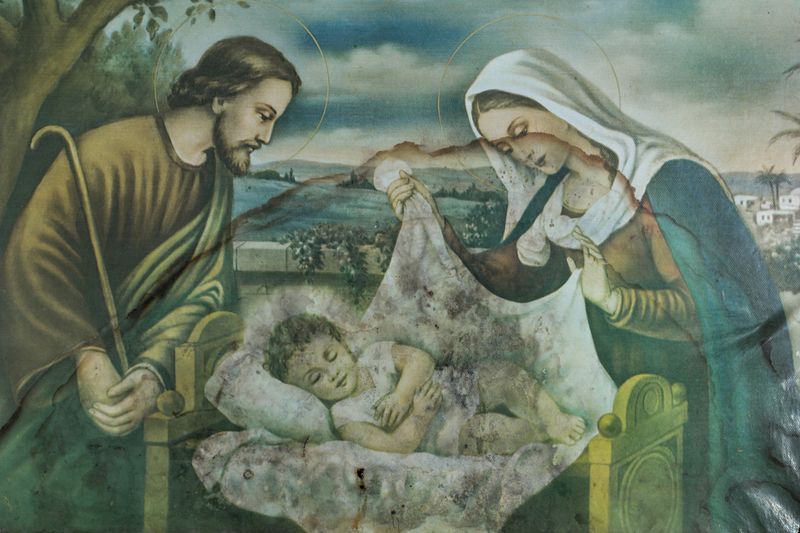
© Nicolás Bernal - A painting depicts the HolyFamily, with Joseph and Maryleaning over the infant Jesus, in an interior setting.
i

A painting depicts the HolyFamily, with Joseph and Maryleaning over the infant Jesus, in an interior setting.

© Nicolás Bernal - Image from the Cero Plumas (Zero Feathers) photography project
i

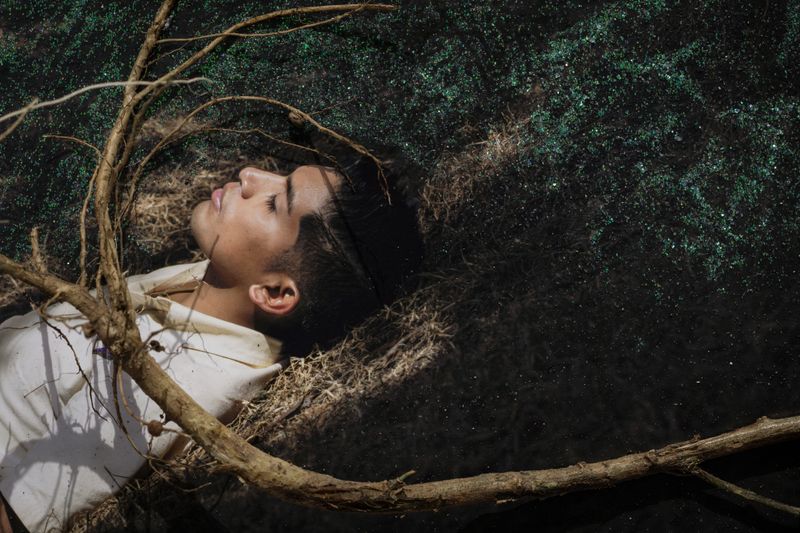
Self-portrait manually intervened with glitter and the root of the shrub Baccharis latifolia. In the Indigenous cosmology of the Pasto People in Ipiales, Colombia, time moves in a spiral: it does not advance linearly, there is no end, only a constant becoming. Furthermore, the Andean duality of our People teaches us that each person inhabits two forces: one masculine and one feminine.

© Nicolás Bernal - Image from the Cero Plumas (Zero Feathers) photography project
i

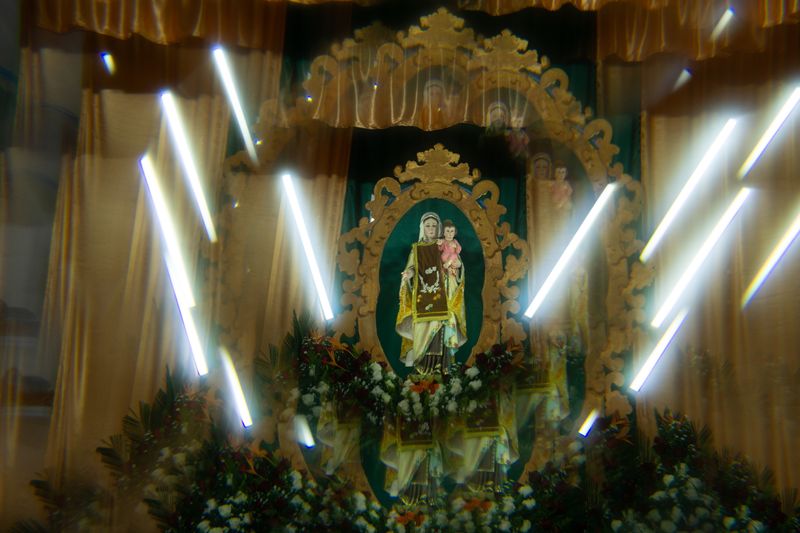
A statue of Our Lady of MountCarmel (Virgen del Carmen).Here, the Virgin, as a divinefigure, appears as a symbol ofprotection and refuge.

© Nicolás Bernal - Image from the Cero Plumas (Zero Feathers) photography project
i

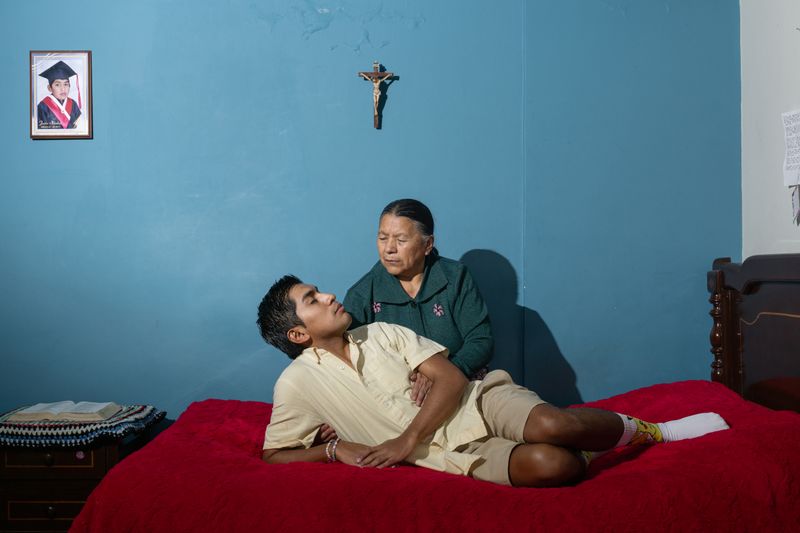
Portrait with my paternal grandmother in her room, a contemporary re-reading of Michelangelo’s Pietà. This photographic act reclaims tenderness as a political force: a territory from which I return to my mother as one returns to theearth, to the memory of my foremothers, and to thepossibility of being reborn.

© Nicolás Bernal - Image from the Cero Plumas (Zero Feathers) photography project
i

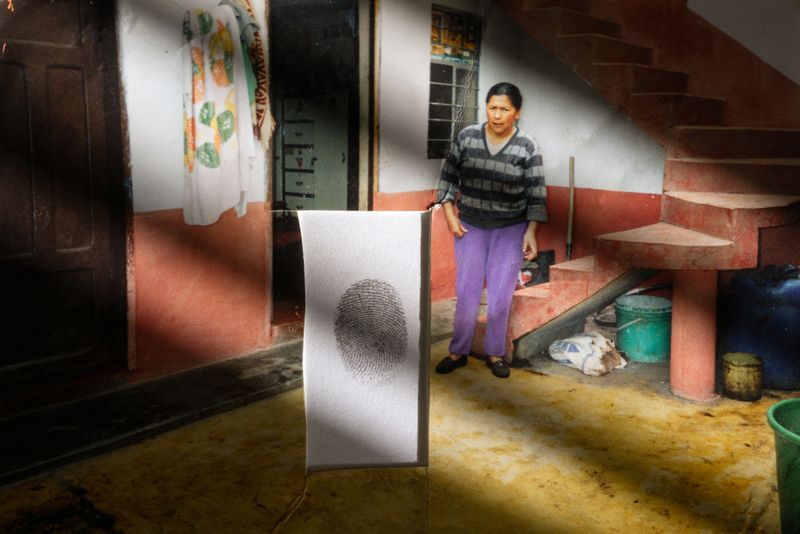
In the original scene, taken in the courtyard of our family home in Ipiales, Colombia, my paternal grandmother appears standing, while I once occupied a place that I chose to cut out during my childhood, in an early act of self-erasure. This gesture emerged from an experience marked by homophobia and by a life I believed to be not only unviable, but impossible in the long term.

© Nicolás Bernal - Photographic collage.
i

Photographic collage.

© Nicolás Bernal - Image from the Cero Plumas (Zero Feathers) photography project
i

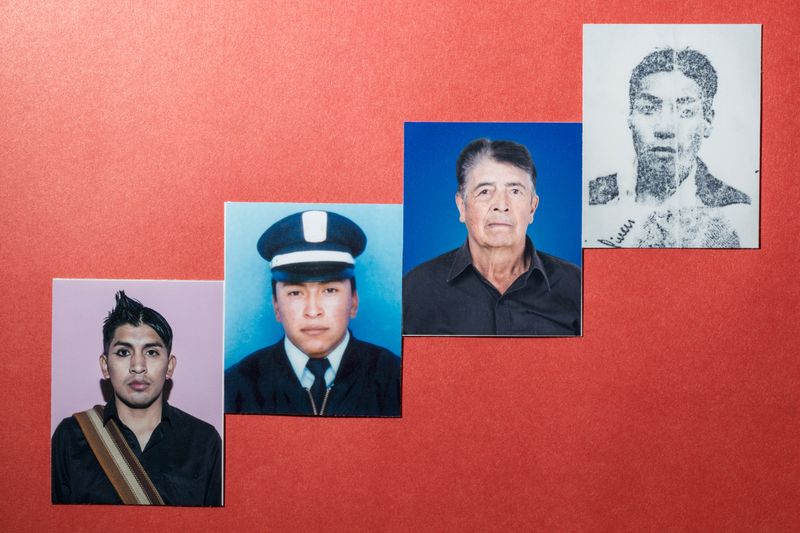
Collage composed of photographs —from top to bottom— of my paternal grandfather, my grandfather, my biological father, and myself. Through the attempt to understand my own history, the histories of the men in my family also emerge, revealing generations shaped by a culture marked by patriarchal violence. By acknowledging this wound, the artistic gesture becomes an act of rupture.

© Nicolás Bernal - Image from the Cero Plumas (Zero Feathers) photography project
i

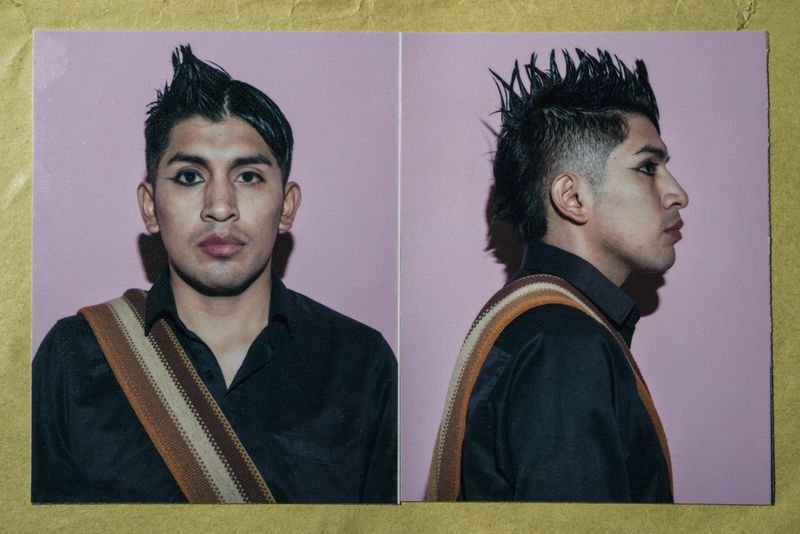
This work draws from the classical format of anthropometric photography, a tool developed in the nineteenth century by physical anthropology to classify, control, and racialize bodies. By exercising control over my own image and history, I resignify the violence inscribed in colonial photographic archives, transforming it into an act of self-determination and intergenerational healing.

© Nicolás Bernal - Image from the Cero Plumas (Zero Feathers) photography project
i

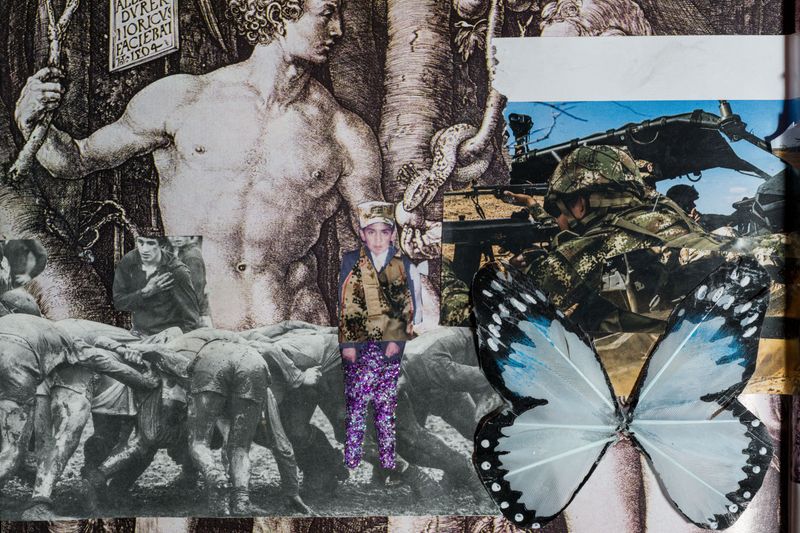
Intervened collage combining a portrait from my family archive with superimposed images. In this work I explore how the hetero-cis norm has domesticated childhoods and bodies, confining them to obedience and uniformity.

© Nicolás Bernal - Image from the Cero Plumas (Zero Feathers) photography project
i

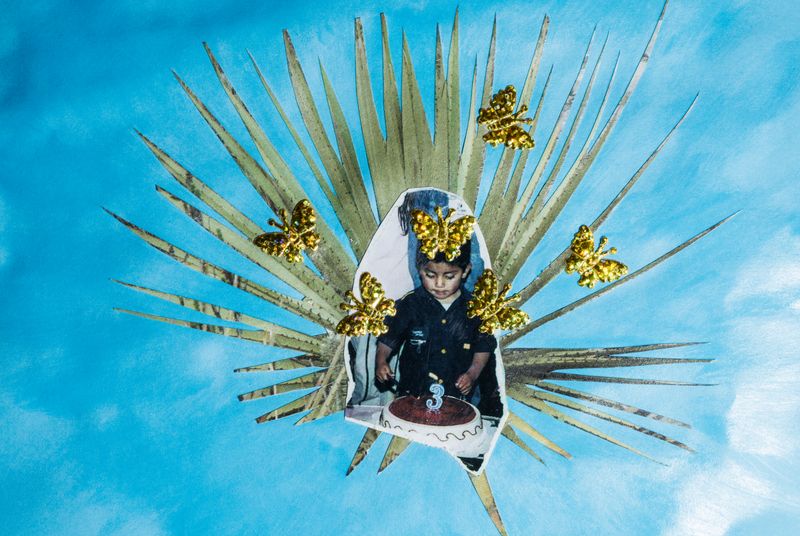
Intervened collage based on a family archive. As a child, in this photograph, I erased the presence of my cousins — without knowing what I was doing: an unconscious gesture, leaving only my figure and a void that spoke of loneliness. Within me lived a silent, contained queerness that, at the time, had no words.

© Nicolás Bernal - My hand holds a bird feather.
i

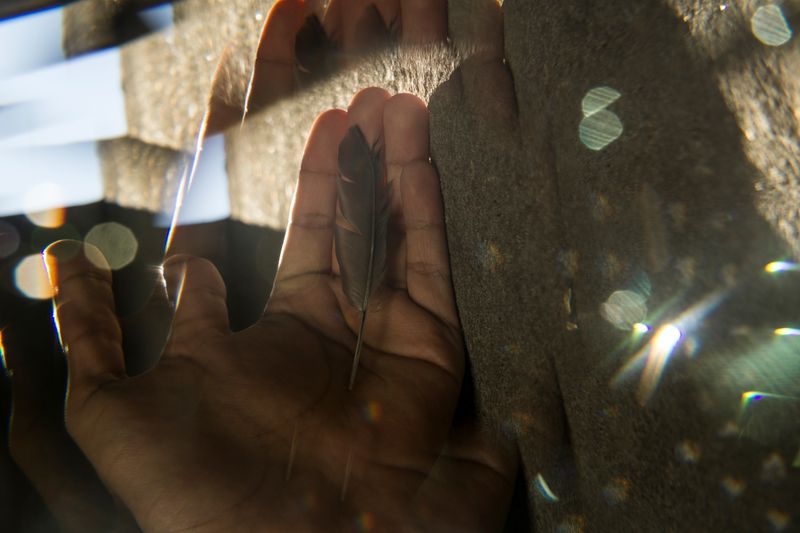
My hand holds a bird feather.

© Nicolás Bernal - The photograph shows meputting on high heels in theliving room of my home.
i

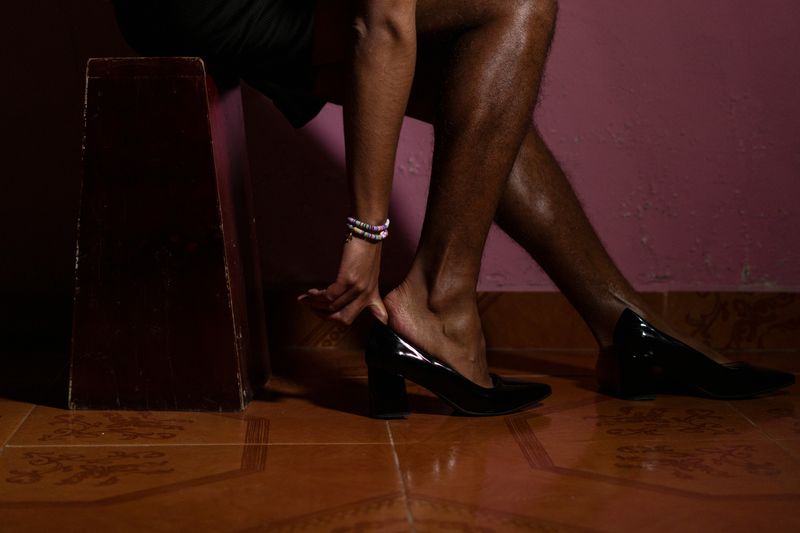
The photograph shows meputting on high heels in theliving room of my home.