Surveillance As Care: Utu-Tuuli Jussila On Exhibiting At PhMuseum Days
-
Published14 Apr 2026
-
Author
A security camera archive becomes an unexpected meeting ground between the artist and her grandmother, portrayed during the final years of her autonomous life with Alzheimer’s disease.
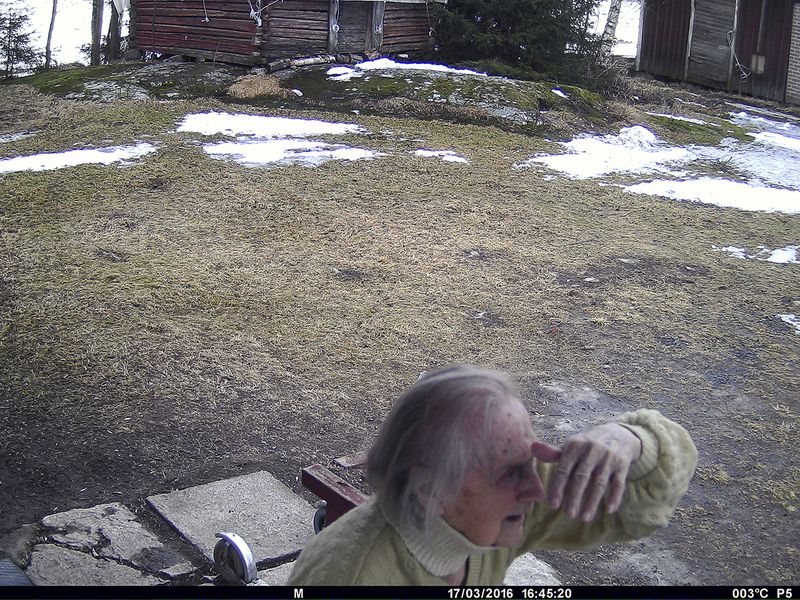
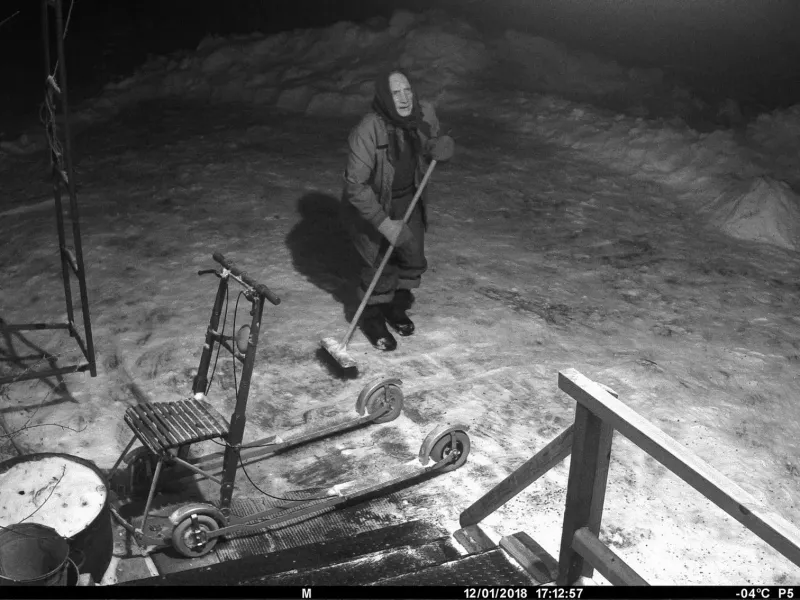
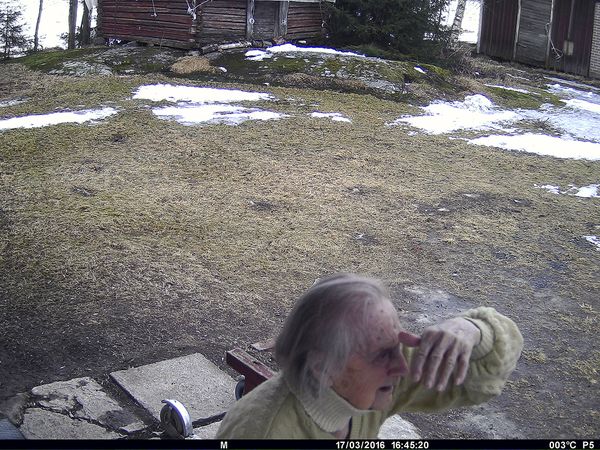
Utu-Tuuli Jussila’s grandmother lived to be 94 years old (1925-2019). Until the very end, she wished to live alone in her countryside home in Finland. When Jussila first sees the surveillance camera images, her grandmother has already passed away. These photographs – which weren’t intended to ever be looked at – turn into an archive to dig in. A place in which to spend time observing, searching for details: an expression, an object, an unusual framing.
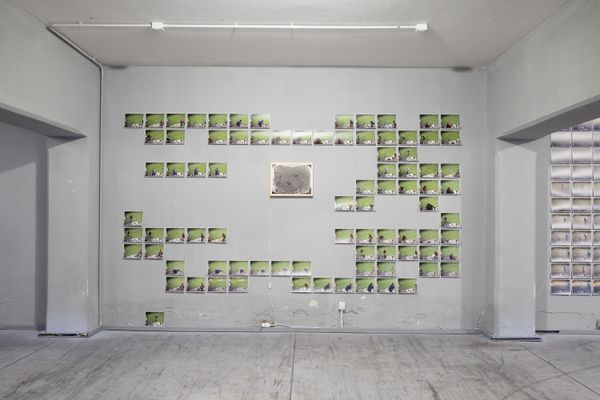
Exhibited in Bologna through the PhMuseum Days 2024 Open Call, the curation of Härmä/Hoar aims at creating the conditions for visitors to dissect, discover, and feel this body of unauthorized images. The act of seeing and being seen is made explicit, and questioned at their core: who is watching who, and to what extent are we allowed to look?
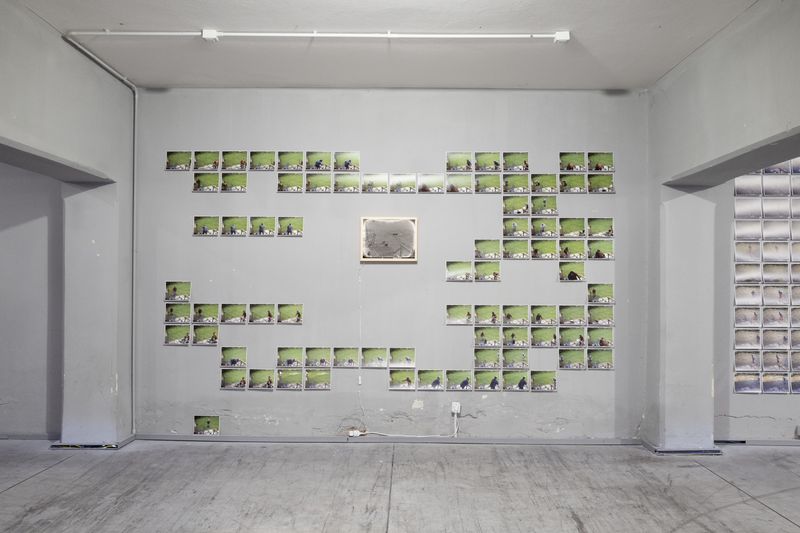
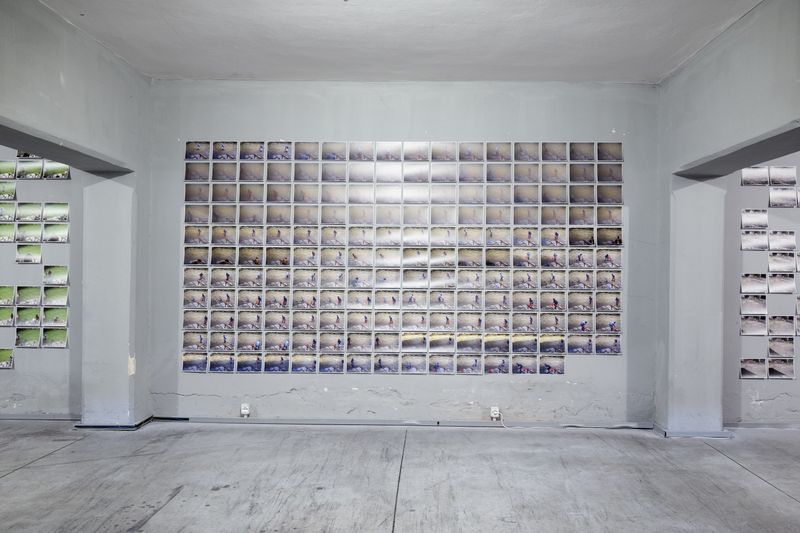
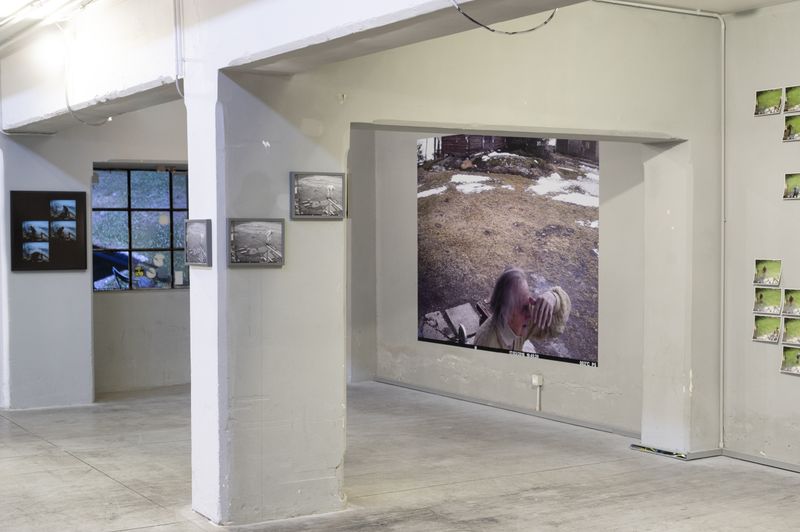
On the main walls, three grids reconstruct three days in the grandmother's garden. Gaps between images reflect the temporal distortions and cuts caused by Alzheimer's disease. The same approach extends to the columns, where framed screenshots are shown in broken, circular short sequences. As time loses its linearity we keep moving back and forward, zooming in and zooming out.
An out-of-scale, wallpaper print of Jussila’s grandmother states that she is not a passive subject of unintended observation – she is a protagonist whose routine shapes the narrative. We will never really know her, but we learn to read the patterns of her days. In her movements’ repetitiveness, we find the courage of her autonomy.
With the PhMuseum Days 2026 Photography Festival Open Call now open for submissions, offering more artists the opportunity to exhibit this October, we caught up with Utu-Tuuli Jussila to delve into the story of this archive, and in the experience of showing it in Bologna.
You came across surveillance images from your grandmother’s garden after she had already passed away. When did you realize that these functional photographs, which were never meant to be seen, could transcend their original purpose and become a meaningful archive?
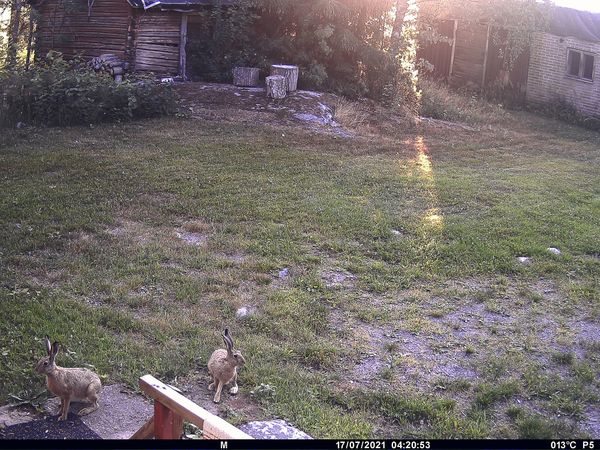
When I went through the images for the first time, I had no intent of using them for anything other than keeping them as a private archive. Quite quickly, however, I got intrigued by how the automatic camera operated - how it made haunting black and white images at night, how it sometimes glitched and distorted the colours or how it on some days took a hundred photos of the seemingly empty yard. Even though the motion-sensing camera operates automatically, it felt like it was doing more than just objectively documenting. And most importantly, it captured the daily life of my elderly grandmother that no one else saw.
How did you start building a personal relationship with these found images? What was your time spent with them like – what were the routine, rituals, and working criteria?
I paid attention to what changes while the camera stays put: the seasons, the weather, my grandmother's clothing, her chores, and the nonhuman animals roaming around. I started by looking for interesting single images, and there were a few striking ones, for sure. However, I was even more drawn to the seriality and sequences. At the time, I was using Lightroom, where I could alter the number of images I saw at once. I could see how the consecutive images formed sequences with appealing rhythms or coincidences. Like, for instance, when my grandmother is followed by a pheasant who wears the exact same colours as her, making it appear as if she were transformed into a bird.
Surveillance and operational images are overly, increasingly present in our lives. Working on this project, did you develop any thoughts around their role, and the way art or citizen practices can subvert it?
For me, the Härmä/Hoar series completes the question of surveillance photography by depicting surveillance as care in a more private setting. There is a tricky balance between care and control. The motion-sensing camera was a way to make sure my grandmother, who lived alone, was safe. On the other hand, it was probably a way for my parents to feel a bit more in control of something that was out of their control, which was the illness my grandmother had.
I only saw these images after my grandmother had already passed away, and I can only hope that she had agreed to let me use these images of her. However, in the series, I wish to show how she had agency in her life despite the illness, even though she eventually did not have agency over the use of images of herself.
I like to think of the images as self-portraits of my grandmother and the nonhuman animals as they, with their movement, trigger the camera. This is a way of shifting the perspective and not regarding my grandmother as a passive object for the automated camera, but as an active participant in the process of becoming an image through her movements.
Exhibitions allow the images in Härmä/Hoar to encounter a public. This is maybe the moment when they are the most distant from their original essence of private, ‘invisible’ pictures. What is the value of sharing this work for you, and are there any lines that you don’t want to cross in doing so?
If I were not certain that this was the way she wanted to live and that it was safe for her to do so, I would not share the pictures. I also made sure that when I was choosing the images, I left out the most vulnerable moments.
I wish to show the active life she led, not focus on the illness or her passing, even though, of course, they frame the series. I hope to highlight the importance of seeing the mundane as special. There is so much to see even in operational images when you listen to them closely, as Tina Campt phrased it. I hope the series invites us to look more closely at the beauty of the everyday.
In the PhMuseum Days installation, a window within concrete overlooked the very courtyard depicted in your work. What was it like to see the audience engage with an environment where they, too, become part of the act of surveillance, albeit from a different perspective?
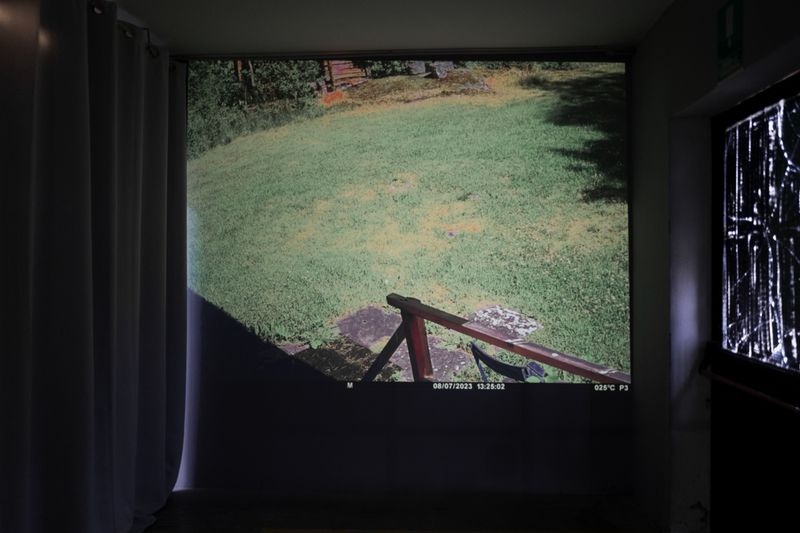
The separate space with a window was a perfect fit for the series. In the room, we placed a video consisting of images of the empty yard, with only shadows slowly moving across. The visitor could look through the window and imagine being in my grandmother's house, looking out from the kitchen into her yard. This way, they are not only observing my grandmother doing her daily task but can also switch places with her, seeing what she used to see.
Your work is extremely layered. Primarily, we meet a human being in her quiet, everyday life. At the same time, we reflect on the role of surveillance photography, on issues related to memory and privacy, while relating to universal experiences of loss, care, and death. How do you think your exhibition at PhMuseum Days reflected these layers, and what was it like for you to work with the curatorial team?
The process of working with the curatorial team was delightful. You really made an effort to incorporate the series’ layered content into the installation. For example, suggesting that we make gaps in the sequences to reference memory loss. Using the window I discussed earlier was also a great idea on your part. Rosa also reserves some extra love for installing over a hundred single images from the large sequences in the series. Sometimes I can be quite set in my ways when installing, but this time I decided to trust the curatorial team's expertise, and it was worth it.
The exhibition included images where the garden is portrayed without your grandmother. It might look empty, yet it isn’t – we see animals playing on the grass, as well as shadows changing throughout the day. What is the role of the garden, and its autonomous life, within the project?
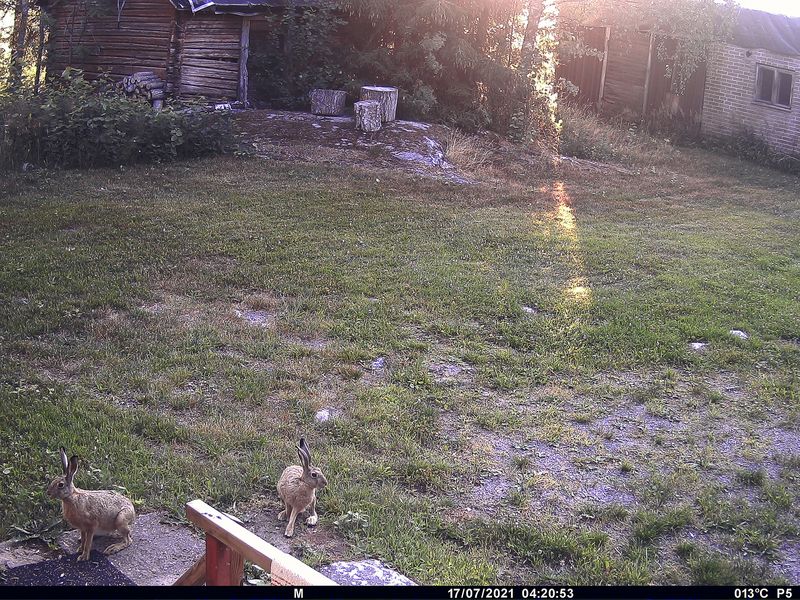
When I was going through the images, it was so wonderful to see the bunnies or the birds gather in the yard (in a perfect composition), or to witness a passing cat catching a mouse at night. I wished to show how my grandmother cohabited the yard with the nonhuman animals. And now that she is gone, the yard is not empty, but full of life.
What motivated you to apply for the PhMuseum Days 2024 Open Call, and what makes this a worthwhile opportunity for you?
The theme of the open call, Closer, initially drew me in. It was such a great fit with my Härmä/Hoar -series. I also appreciate the work PhMuseum does for the photography community online. From a more practical point of view, I tend to focus on open calls where the festival covers the expenses of the selected artists, as it's too expensive to ship works or travel without any support, especially from Finland.
What made the participation memorable for me was the dedication of the people who work on the PhMuseum Days and, of course, the wonderful group of photographers selected. Working in photography is often quite lonely, and communities like PhMuseum are valuable support. I also love how you still check in every now and then after the festival with an interview like this, for example.
Do you have any advice to share with applicants who are currently dealing with their submission process?
If you are unsure about anything, image selection, texts, etc., ask for help from your community. You easily become quite blind to your own work. In the text, for example, you often forget to write about key elements of your work because they seem so obvious to you. Good luck with the submission!
--------------
Utu-Tuuli Jussila's Härmä/Hoar was selected in 2024 through the PhMuseum Days Open Call. The 5th edition is now welcoming submissions, giving visual artists the opportunity to exhibit at our International Photography Festival taking place on 1-4 October in Bologna, Italy. For the first time, the festival will happen jointly with Photobook Mania, the 2nd edition of our publishing fair, offering a complete platform to enjoy contemporary photography in person.
The deadline is set for 7 May, while there is a reduced entry fee option until 16 April. Learn more and apply at phmuseum.com/d26