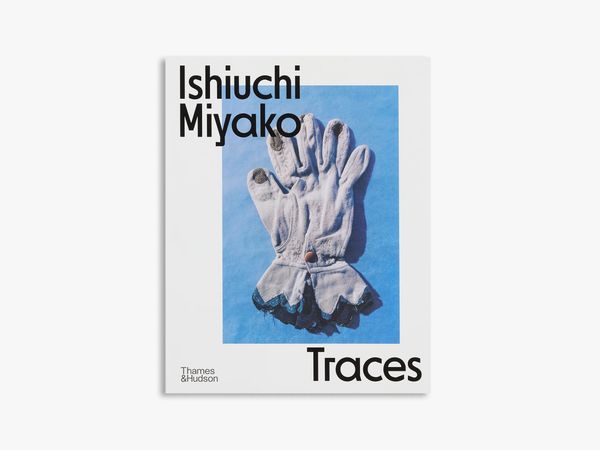
Photobook Review: Traces by Ishiuchi Miyako
-
Published23 Jul 2026
-
Author
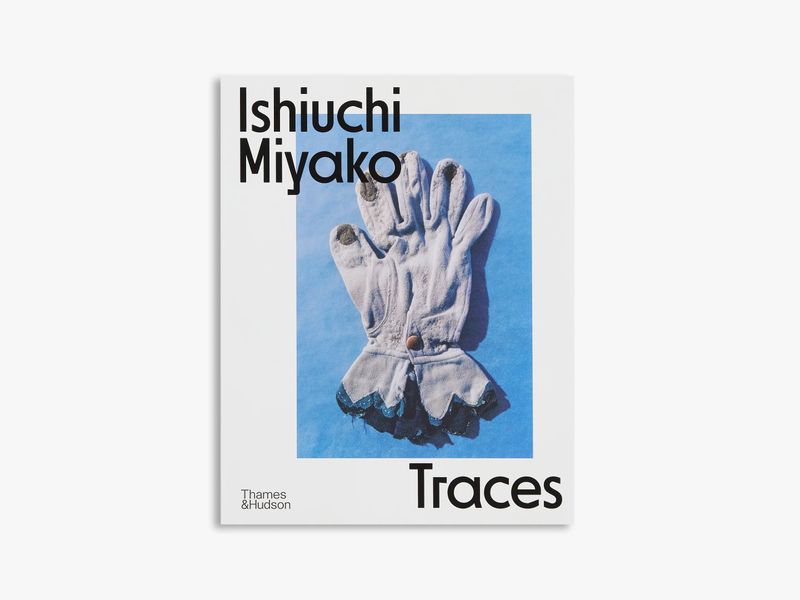
Traces is a catalogue of the work of Ishiuchi Miyako. Its heart revolves around the traces of life, of war, of her mother, of the histories that linger on in the fragments of threads, skin, shadows, and hair that they leave behind.
Born in 1946, Ischiuchi fought hard to gain her role as one of the pre-eminent women photographers in Japanese photography.
‘In 1976 I organised the exhibition Hyakka Ryōran [A hundred flowers bloom] at the Shimizu Gallery in Yokohama, which showed the works of ten women photographers, including myself. Women faced heavy discrimination in the field of photography at the time. We organised on our own and deliberately reversed traditional roles by choosing to take portraits of men. We reappropriated the subject for ourselves. I, for instance, chose to photograph male nudes.’
These nudes appear in the book, sculpted portraits of the butoh dancer, Hijikata Tatsumi (who features in Eikoh Hosoe’s photography, reviewed here on PhMuseum). Ischiuchi wanted to photograph his scars, but finding he had none, she photographed him naked instead.
The skin here serves as a surface on which life marks itself, if not through scars, then through the creases and folds of flesh on the body, the lines and wrinkles of the hand, the hills and the troughs of the muscle.
What lies inside the body comes to its surface, the marks become the person, and that idea of the traces is what this book is all about.
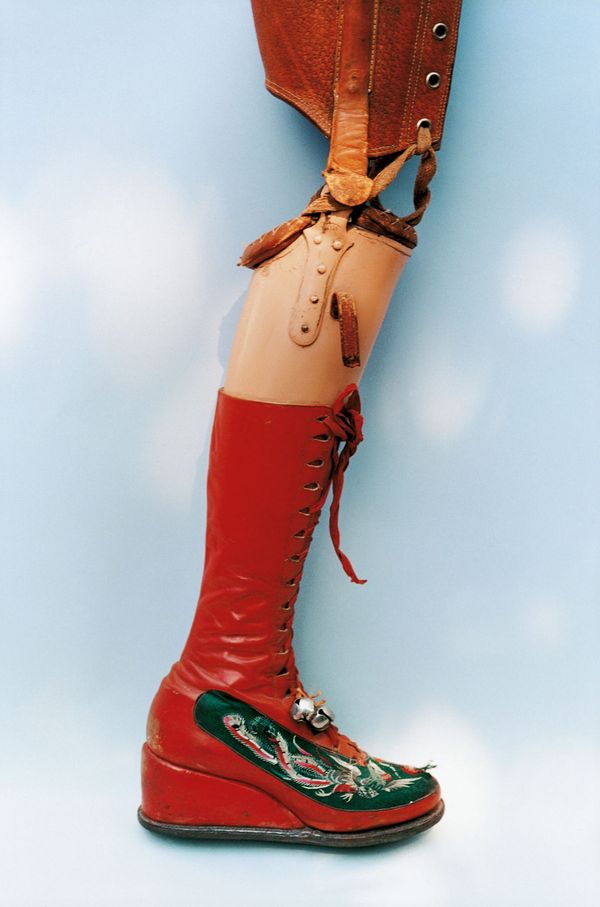
It’s an idea that is apparent in Ischiuchi’s pictures of feet and hands, the extremities of the body that fascinate her. ‘The body is like a vessel of time and air,’ reads one of her interludes in the book. ‘The things that make a body unique seem to gather at the tips of the body… I felt that in the feet, precisely because they stubbornly tread the earth, while all along supporting the rest of the body, was where one’s true character lay hidden.’
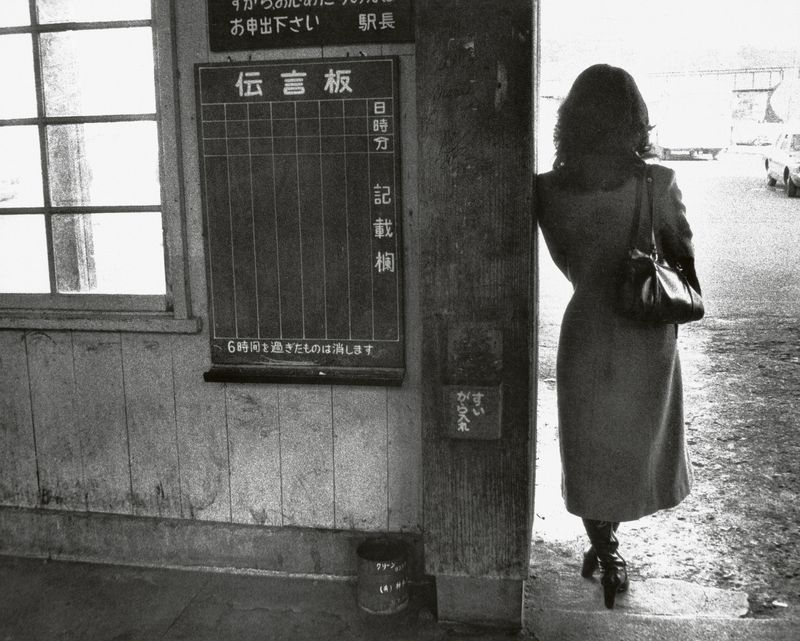
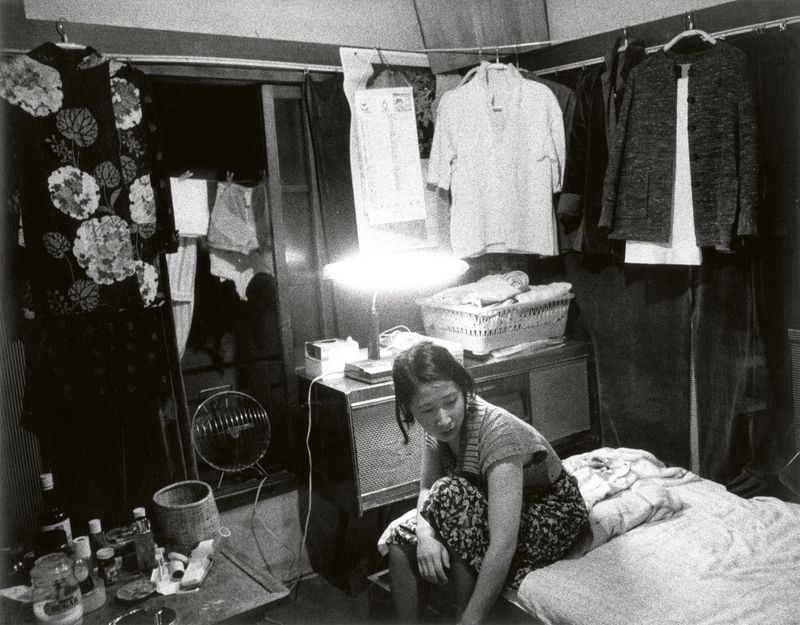
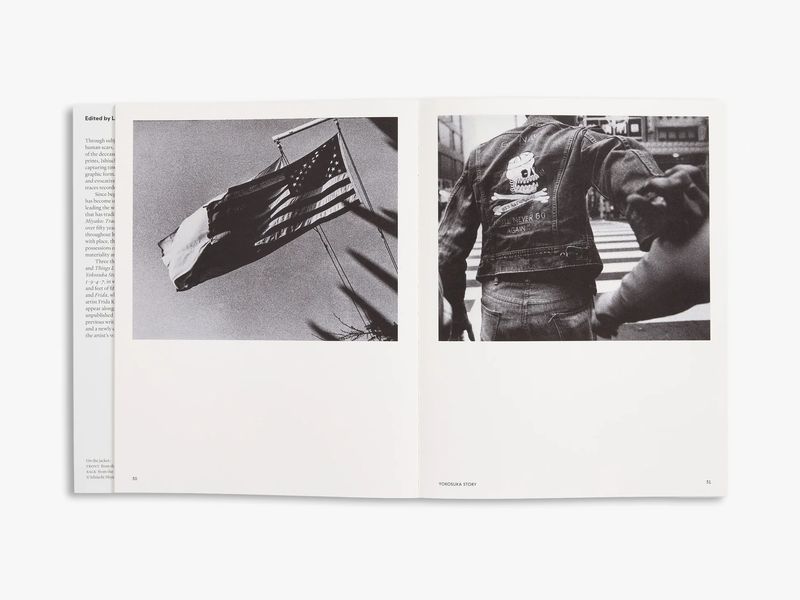
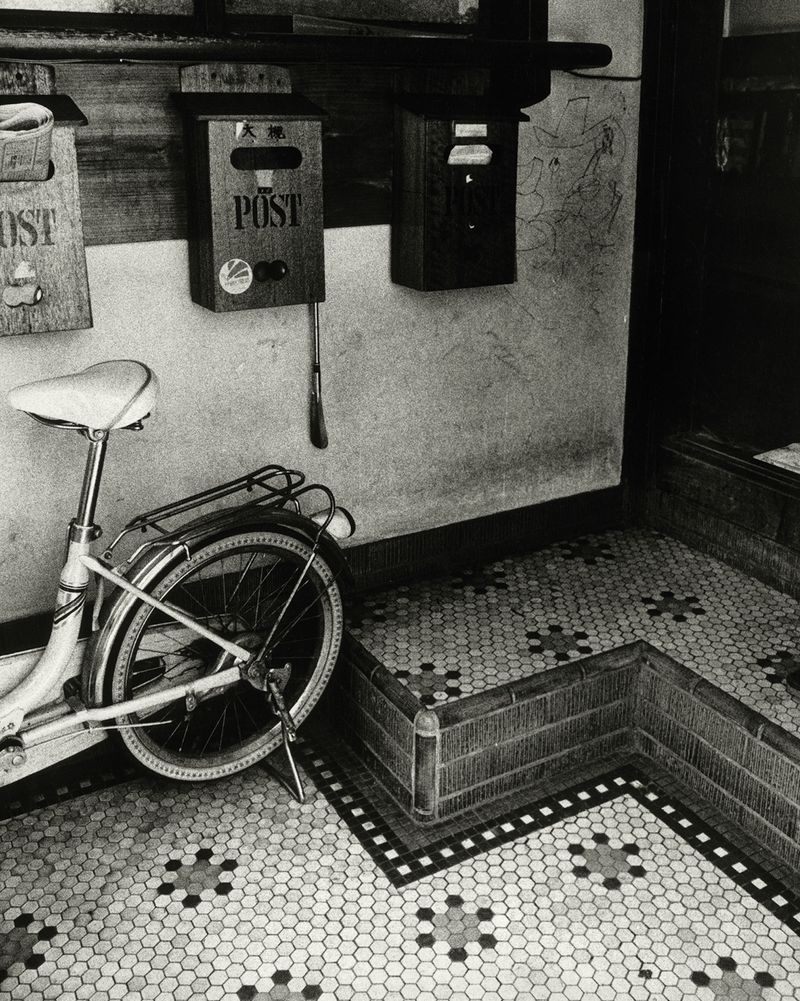
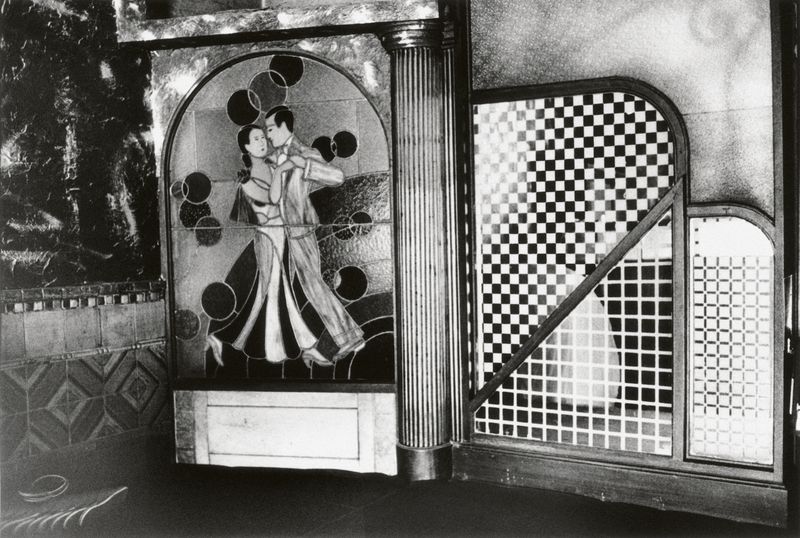
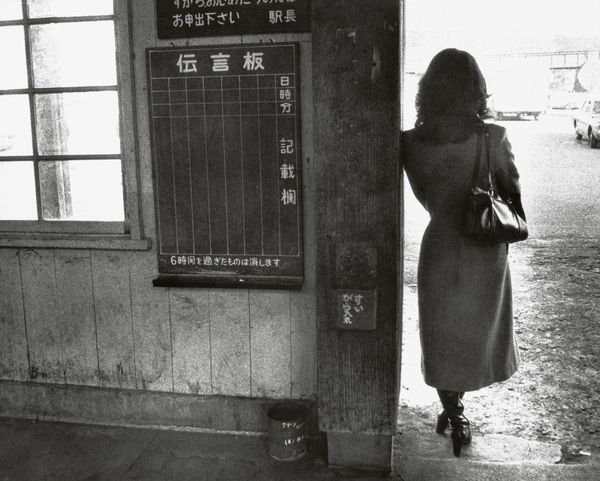
Different ideas of traces appear in the four sections of the book: Town, Skin, Scars and Things Left Behind. It begins with Town featuring Ischiuchi’s Yokosuka Story, Apartment, and Endless Night, stories where the traces of US military occupation, ordinary daily life, and former brothels are made apparent in grainy images of sunstruck street scenes, stairways leading to basements, heart shaped windows, and the detritus of compact living; there are bikes and umbrellas and kettles hung up, clothes on hangers, and food on table.
Ischiuchi was tied into Japan’s photography scene. She references photobooks by Kawada, Ken, and Tomatsu, she knew Araki and Moriyama, and she photographed Fukase for her Chromosome XY project. This kind of photographic heritage is apparent in these pictures made in the 1970s.
A different kind of heritage is apparent in her pictures of scars, a theme which, due to Hiroshima and Nagasaki, is especially relevant in Japanese photography history.
‘Illness, injury, accidents, war. These are all distressing, painful, unhappy experiences that one day suddenly befall a person,’ she writes in the book. ‘While a person hopes to remain unblemished through life, we must all sustain and live with wounds, visible and invisible. Running fingers over the smooth flesh, the encounter of some irregular coarseness, an unevenness of sensation, will tell you of the presence of a scar. It is an imprint of the past, welded onto a part of the body.’
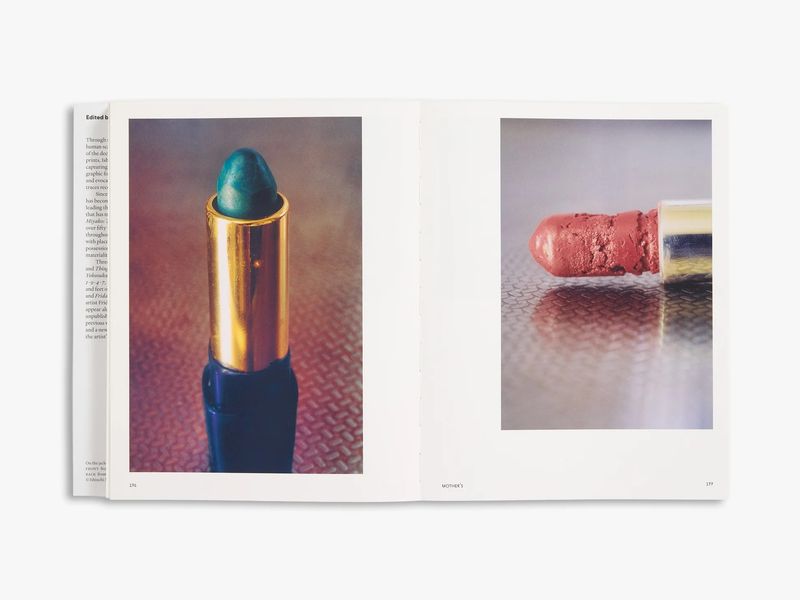
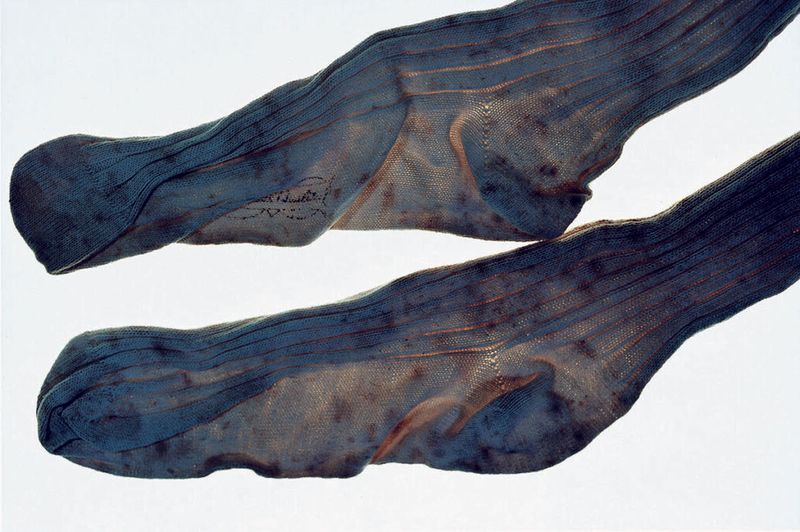
These images of scars come closer to home with pictures of the burn marks (from cooking tempura) on her mother taken on her birthday in 2000. Her study of her mother continues after she dies, as Ischiuchi suffers from "a grief surpassing imagination." She photographs her personal belongings: her lipstick, dentures, hairbrushes, sandals, and underwear.
There are traces of her mother all over these objects: loose hair, flecks of skin, and the imprint of where her mother ran the lipstick over her mouth. These images are also one of the ways she communicated to her family (including her ‘mean’ grandmother).
‘For many years I was pained by an inability to communicate with my mother,’ she writes, ‘but after my father’s death. Just when the discord between us was finally beginning to ease, she passed away…. Someone who had always been there was there no longer, and I was confronted by the reality of that loss of substance, helplessness and regret surged over me with a grief surpassing imagination.
What I have now are only the things my mother left behind for me. I bring them out into the light one by one, to sear their image onto photographs as a farewell to her.’
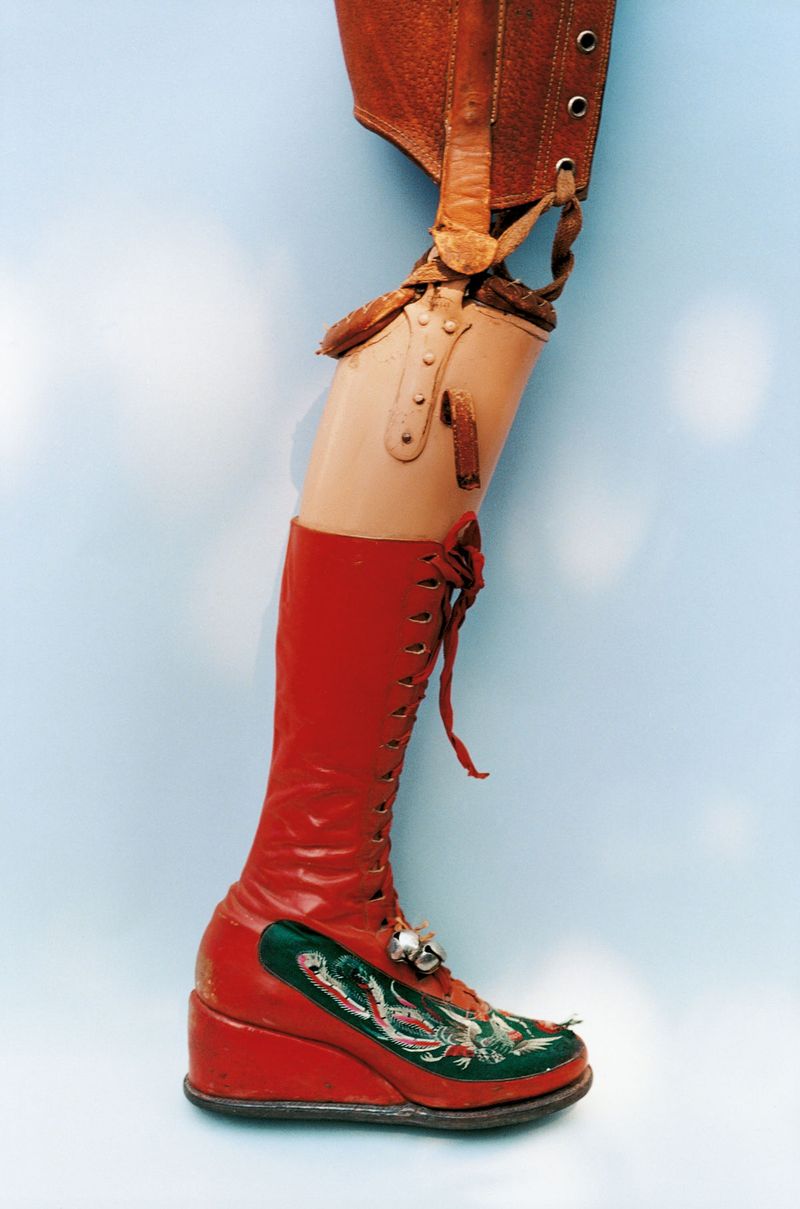
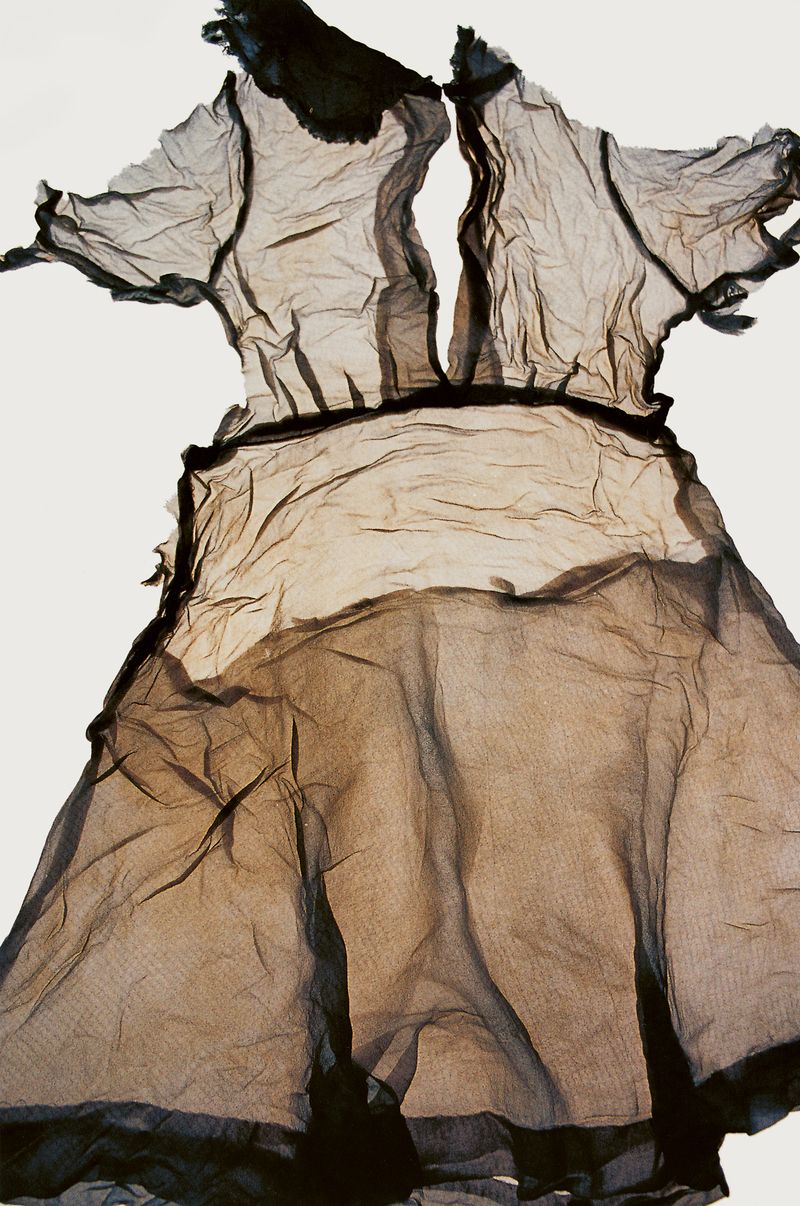
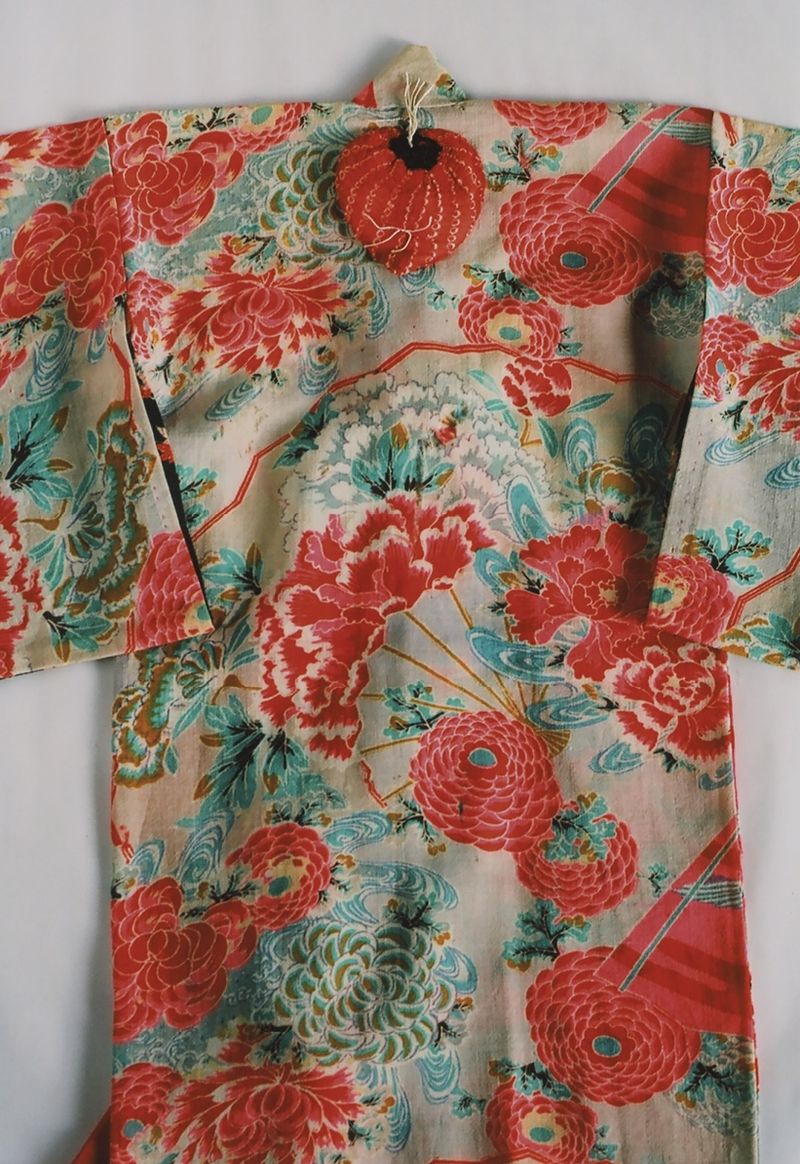
These flecks of skin, these shadows of what once was, are both traces of life and traces of death, and that theme continues with her lightbox photography of the kimonos owned by victims of the bombing of Hiroshima.
‘I thought about the way that the cloth had been woven, cut and sewn together,’ she says, ‘the appearance of the garment when it was worn on that fateful morning. … Countless threads of time drift in the light, intersect and create fountains of memory.’
There is a strong recognition of photographic history in Ischiuchi’s work, and the kimono, the clothes people wore at Hiroshima and Nagasaki are especially relevant.
In his book of eyewitness accounts of the Hiroshima bombing, John Hersey describes how if you were standing behind a wall, you might survive. If you were standing in the direction of the flash from the bomb, you were burned and would die. If part of you was in the light of the bomb, and part in the shade, the lit part would burn, the shaded part would not. Your body was like a photographic negative; the light would burn itself into the skin, and make an imprint of anything that stood in the way.
You can see that in the famous picture by Gonichi Kimura of the woman with the pattern of her kimono burned onto her skin. Photographed against the backlight of a lightbox, the kimonos Ischiuchi photographs are a reminder of that idea.
This book is a book about how history imprints itself into the world around us, into the clothes we wear, the places we live, the things we own. We are made up of the traces of life. We have them when we are alive, and they survive us when we are dead.
--------------
Traces by Ishiuchi Miyako is published by Thames & Hudson
Extent: 260 pp
Format: Paperback
Illustrations: 157 illustrations, 55 in full colour
Publication date: 2026-06-23
Size: 27.5 x 22.2 cm
ISBN: 9780500028384
--------------
All images © Ishiuchi Miyako
--------------
Ishiuchi Miyako began her photographic career shooting familiar streets and buildings in her hometown Yokosuka, which had been transformed during the post-war period into one of the largest American naval bases in the Pacific. Ishiuchi’s work has continued to record material traces of the passage of time, turning her lens away from locations towards the bodies and personal belongings of people. Her series Mother’s (2002), in which she documented her mother’s possessions as a means of coming to terms with her death, was selected to represent Japan at the 2005 Venice Biennale. This led the Hiroshima Peace Memorial Museum to invite her to capture everyday objects which had belonged to victims of the atomic bomb.
Colin Pantall is a photographer, writer and lecturer based in Bath, England. His photography focuses on domestic environments and family, and includes his books Sofa Portraits, All Quiet on the Home Front, Sofa Portraits, and German Family Album, projects where the conflicting narratives of family, cultural, and political histories overlap with ideas of memory, the environment, and fragile documentary. He teaches on the Falmouth University Photography MA and runs independent online workshops linking contemporary photography to global, historical, and theoretical perspectives. Follow him on Instagram.