Photobook Review: Static by Adil Hasan

-
Published24 Nov 2026
-
Author
Since the invention of the movies, screens have played an increasingly large part in our lives. Static is a documentation of that screentime; the ubiquity of it, the harshness of it, the violence of it.
At first the screens we watched were big enough for communal viewing. With the advent of television, the screens got smaller – as did the community who gathered round them. When television screen entered our homes and became a ubiquitous glowing presence, moral panic ensued. Our children spent too much time in front of it and, like the novel, the Box Brownie and children’s comic before it, it was seen as something that sapped our moral strength and eroded our sense of responsibility.
There’s a great line in John Cheever’s novel, Bullet Park, where Tony, a young boy who has become addicted to TV, is confronted by his father. “He loves his television. Can’t you see that he loves it?” says Tony’s mother.
To which the father responds, “I know that he loves it. That’s why I’m going to throw it out the door.”
And throw it out the door he does.
Decades later, and the television is almost dead. I remember going to school and there would be shared television events where kids would talk about what they saw on television the night before; I remember being in primary school and kids talking about seeing Kes on the telly, Boys from the Blackstuff or the nuclear fallout drama, Threads.
All good stuff, but then again, the other tv events kids would talk about (which I was even more jealous of) were killer whale attacks, Uri Keller’s latest spoon-bending tricks, dogs that could say sausages, or Saturday night family programming hosted by paedophiles and racists.
So there was crap on tv, but as Gene Roddenberry (who created Star Trek) said: "They say that ninety percent of TV is junk. But, ninety percent of everything is junk."
Now television is on its last legs and we negotiate the world through our laptops and phones. The communal element has changed. The things I share are videos of the guy trying to get AI to count to 100, or a man who makes his living through getting bitten by bugs, or natural disaster and car crash videos.
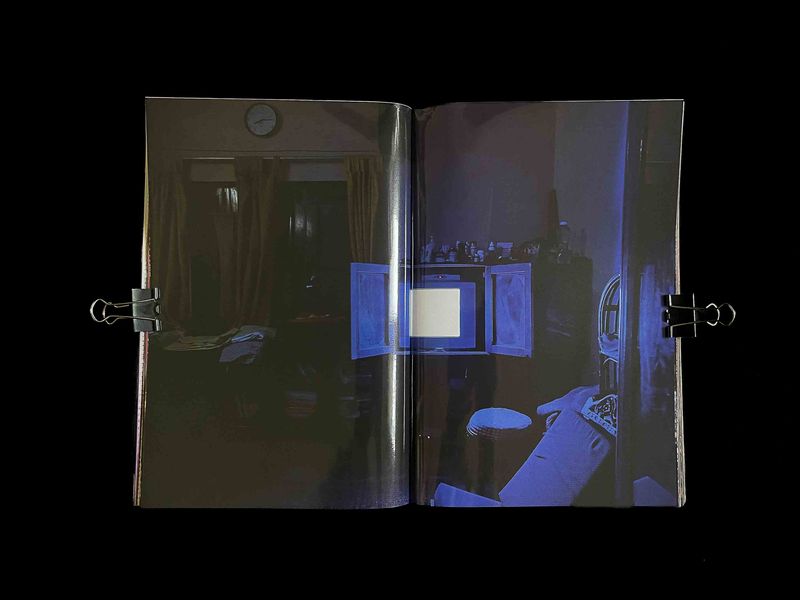
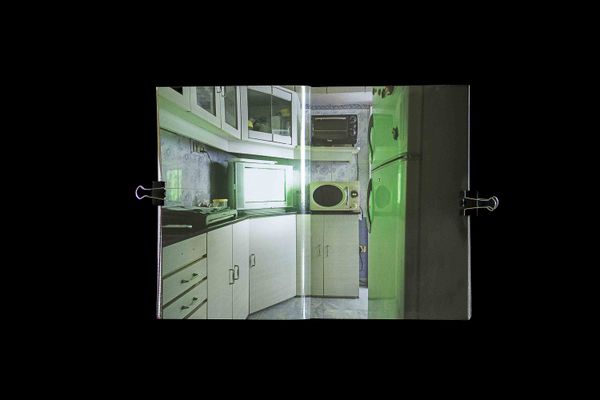
It’s a piss-poor state of affairs and one that Adil Hasan documents in his book, Static, a visual record of the End Times of television. It comes with a wrinkled foil cover which looks a bit screen-like. Open the book and then you’re into super glossy pages filled with a mess of visual colour noise.
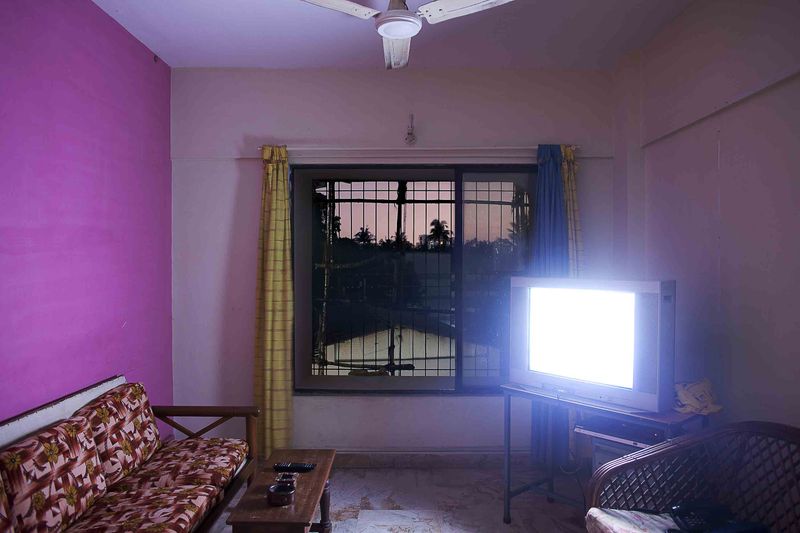
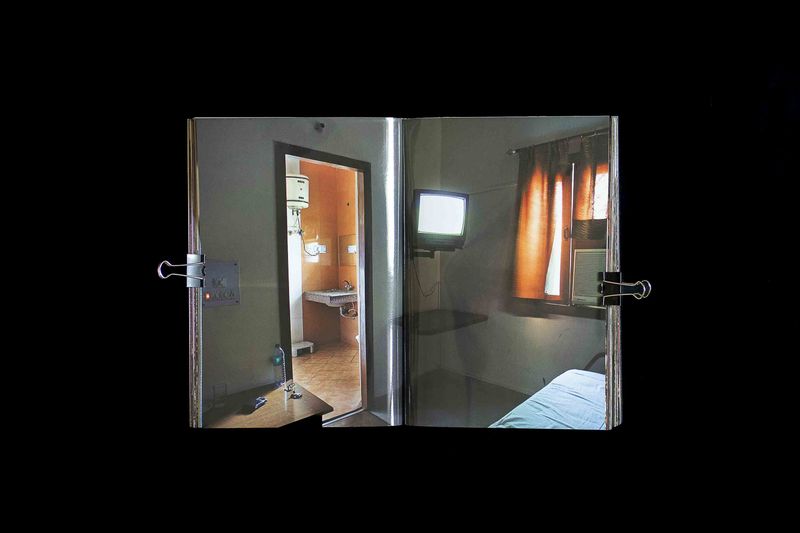
Half the book shows images of television screens in a variety of living rooms. There’s a great tradition of this in photography. Lee Friedlander made fantastic images of television in hotel rooms, John Myers’ Televisions of Middle England shows a later (but somehow less glamorous) side of the small screen, while Beijing Silvermine’s METV documents one Chinese woman’s fixation with the television in her home.
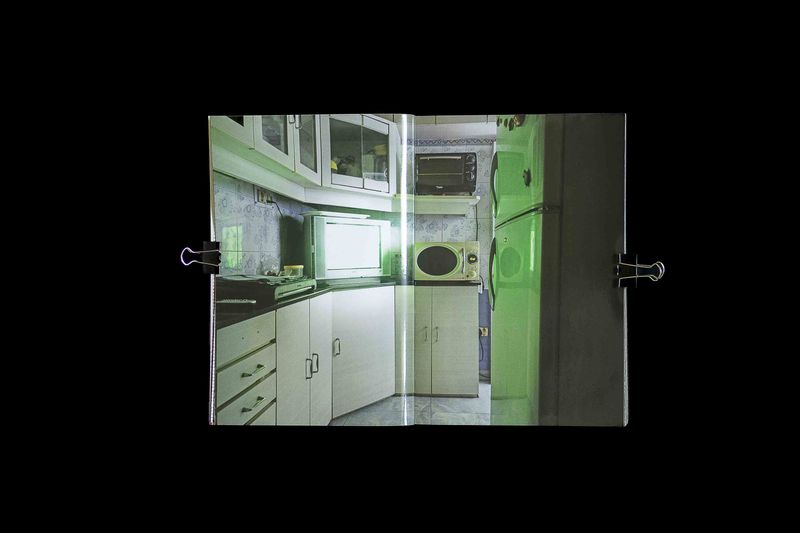
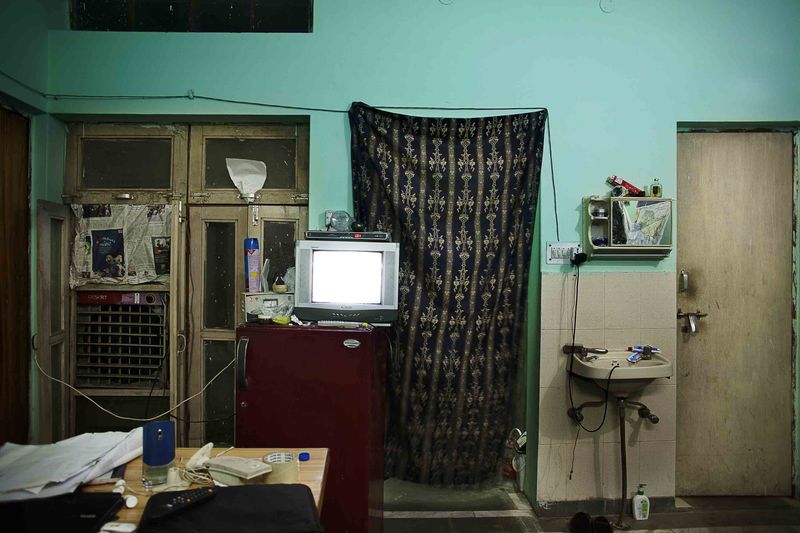
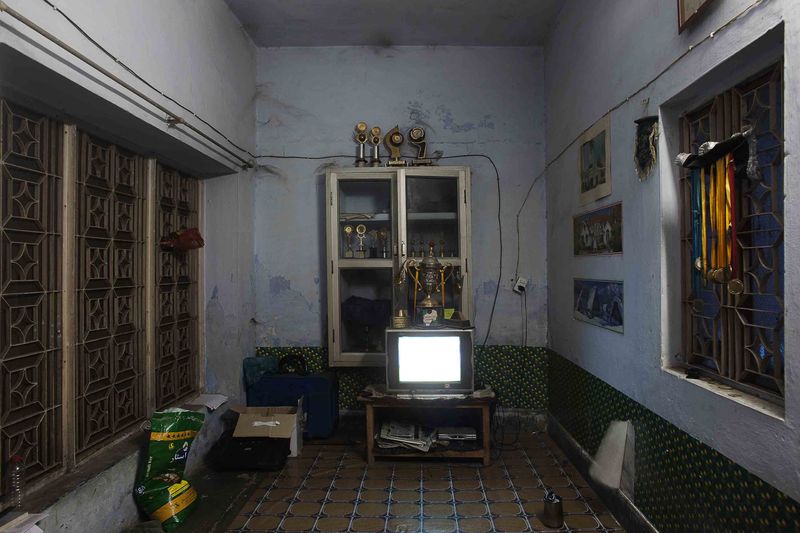
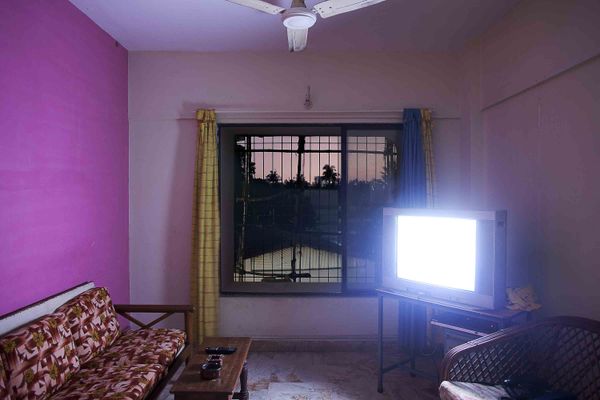
Hasan’s images fit into the dysfunctional side of the television. The images are made using exposures so the screens are mostly whited out, a sparkle of static energy which draws you, Poltergeist-like, into its grasp. And the interiors they appear in are interesting too, slightly dilapidated at times with corrugated iron rooves and old newspapers stuck in the windows. There are televisions in cabinets, in corporate offices, or perched on counters with the washing hanging above.
The high gloss of the paper works well with the warm, at times nauseous tones of the artificially lit interiors. And so do the French folds which conceal secondary images beneath the main spreads.
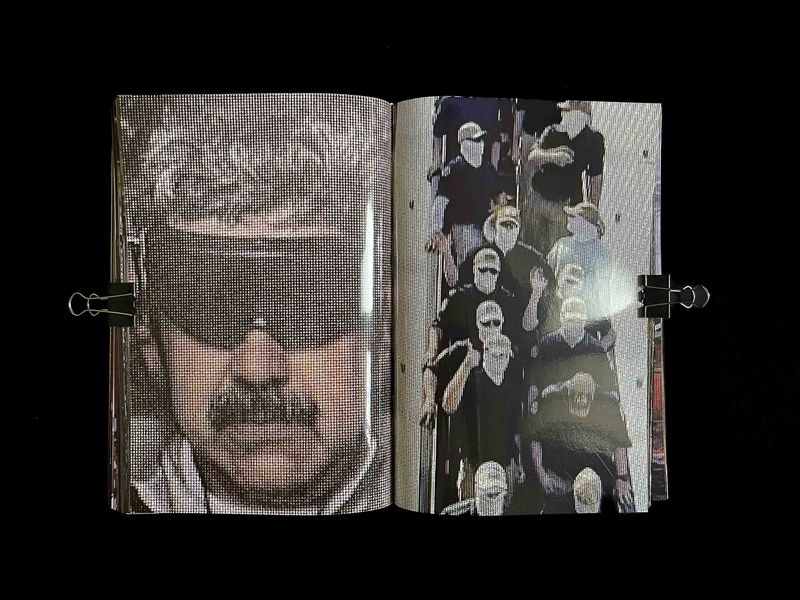
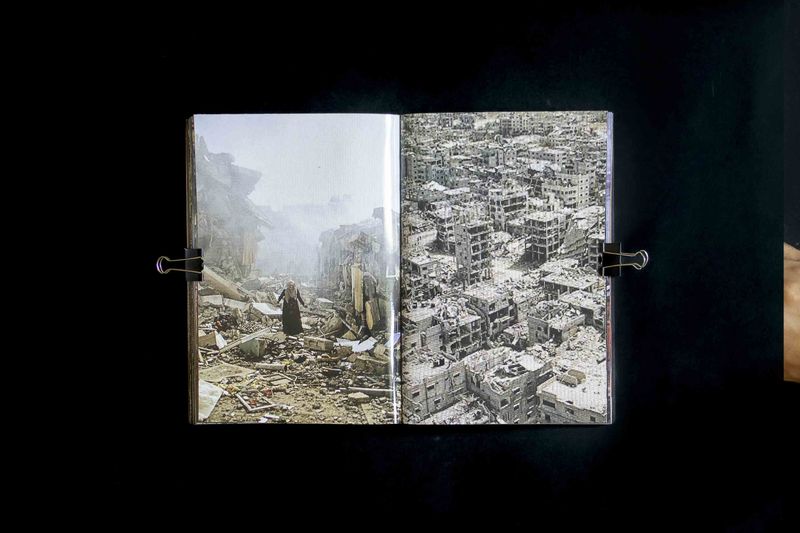
Many of these images are directly photographed from the screen. Some are from moving images, others are of stills such as the screaming woman standing on a Greek street as her home town burns, or the cropped image of the assassin of the Russian diplomat in Turkey.
Move through the book and more images of doom and disaster appear. Again, there’s a huge precedent for this. Daido Moriyama photographed numerous TV screens as he became cynical about the pointlessness of photography in the early 1970s, Harry Gruyaert’s TV Shots shows the Munich Olympics as photographed on the TV (you might have seen something similar but nowhere near as interesting for the World Cup this year), while Mochizuki Masao spent a year photographing the TV to make multi-image exposures. Every man needs a hobby and this is the one he chose.
Move on 50 years and Hasan reprises the scene. The medium is still the message, the spectacle is altogether more apparent and the more we look at our screens the less real our lives become.
So we move towards the end of the book and we see Trump, there are some Proud Nazi Boys going down a Washington D.C. escalator, Gaza getting flattened, outcrops of land destroyed by cyclones and tsunamis and we accelerate towards an intensifying end of smoke, fire, and brimstone.
We are all doomed and we’re all doomed together, sharing our doom through our junk-filled screens as we hurtle towards catastrophe.
--------------
Static is self-published by Adil Hasan
Design and Edit: Adil Hasan
Edition 300
192 Pages, 48 french folds (8 page fold technique),
Fine art gloss paper treated with high gloss laminate on all 192 pages
Black soft cover with reflective aluminium foil pasting, debossing and silver screenprinting and foiling
Language : English
ISBN : 978-93-6038-463-0
Price Rs 4,200 (India)
Price 90 USD (international) - includes international shipping
--------------
All images © Adil Hasan
--------------
Adil Hasan is an artist based in New Delhi, India, working across documentary, fashion and art photography. His practice explores the relationship between images, memory and perception, often questioning the boundaries between what is remembered, observed and imagined. Initially drawn to documentary photography and long term personal projects, Hasan has gradually expanded his practice to include fashion, approaching the genre as a space for visual experimentation and creative expression. His work moves between commissioned assignments and independent projects, with an interest in the ways photographs construct narratives and shape our understanding of the world. Hasan's practice is informed by an ongoing interest in the philosophical dimensions of photography and its capacity to question the nature of reality, recollection and observation.
Colin Pantall is a photographer, writer and lecturer based in Bath, England. His photography focusses on domestic environments and family, and include his books Sofa Portraits, All Quiet on the Home Front, Sofa Portraits, and German Family Album, projects where the conflicting narratives of family, cultural, and political histories overlap with ideas of memory, the environment, and fragile documentary. He teaches on the Falmouth University Photography MA and runs independent online workshops linking contemporary photography to global, historical, and theoretical perspectives. His next courses start in January 2027.