Niharika Chauhan's River That Remembers
-
Published4 Mar 2026
-
Author
- Topics Daily Life, Contemporary Issues, Nature & Environment, Documentary, Awards
Chauhan returns to her ancestral village in Uttar Pradesh to document a crumbling house – and finds time itself as her subject.
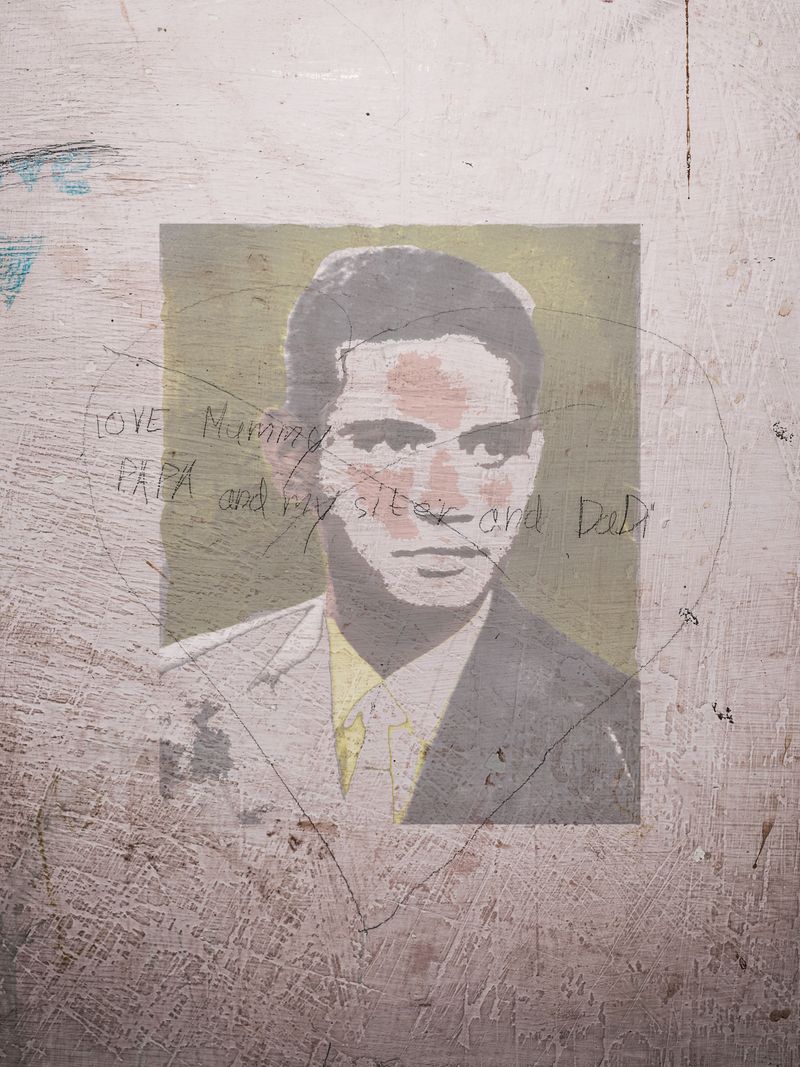
It began with the house. Not simply to photograph it, but to hold it in place. To salvage its memory – and the memories it sheltered. To find it again, even as the past was slipping. Shortly before the pandemic, Niharika Chauhan’s mother told her that their ancestral home – nearly 150 years old, in the village of Shahpur, Uttar Pradesh – was collapsing. One room in particular, built of older mud, had already fallen in: the room where she had spent long afternoons with her grandfather.
Chauhan returned to the village with a simple intention: to document the house before it disappeared, to hold on to something tangible. But when she arrived, during the stillness of the pandemic, the project shifted. The house had crumbled – but the village, too, felt altered. “As a child,” she says, “the house was the village.” As an adult, she began to see beyond its walls: the river, the deer, the fields slowly emptying. Memory had edited the landscape. Now time entered her work not as an abstract theme, but as an unavoidable presence.
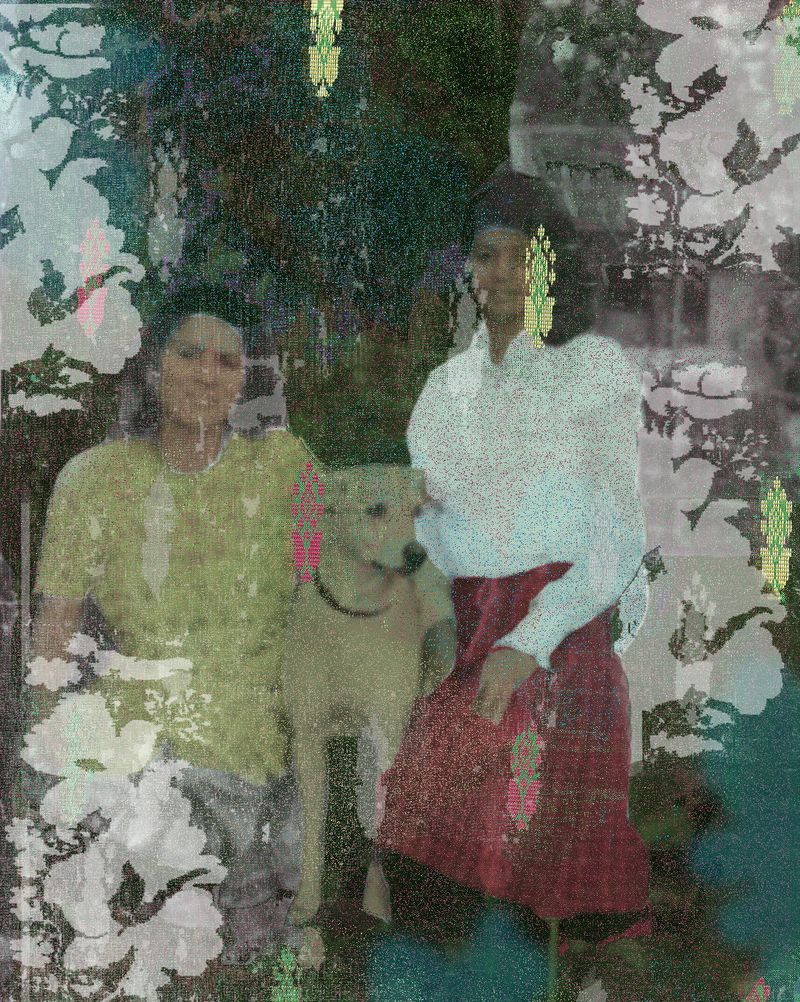
And then, preservation itself began to falter. Old family photographs were ruined in a monsoon flood. Soon after, her own hard drive crashed. The medium she had chosen to capture time – to resist disappearance – proved just as vulnerable to it. That realization altered her approach. She turned toward mixed media, layering and juxtaposing materials from different periods. Instead of fixing a single moment in place, she began constructing images that accumulate, that unfold like an onion being peeled back. Time, in her practice, was no longer a frozen instant, but sediment: gathered, compacted, and always in the process of becoming.
When she returned to the city, she had nearly 6,000 images. She searched for “anchor points” – elements that held the core of the story. The house became one. So did the river.
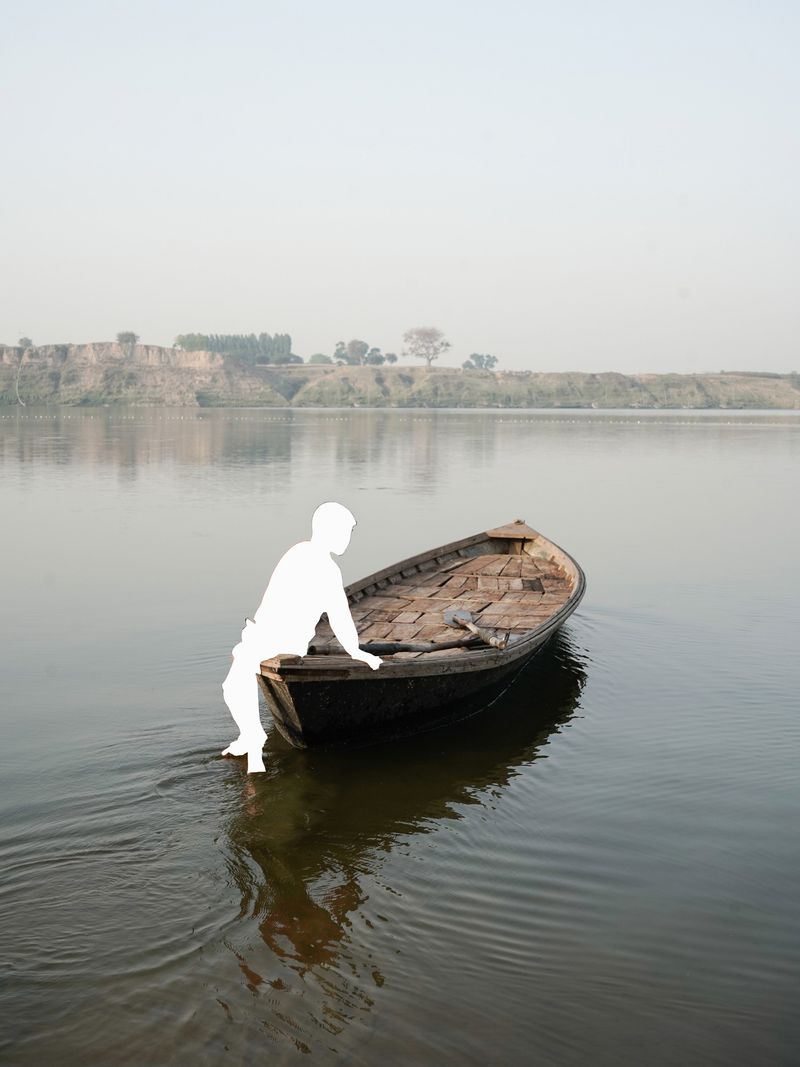
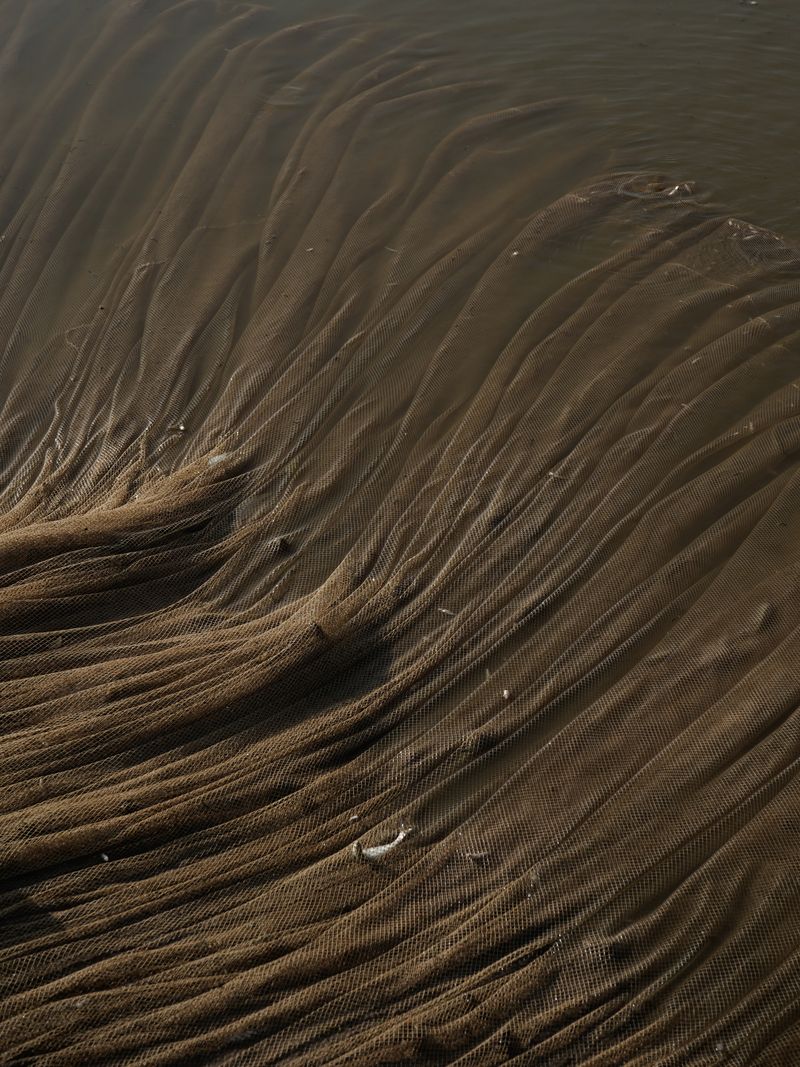
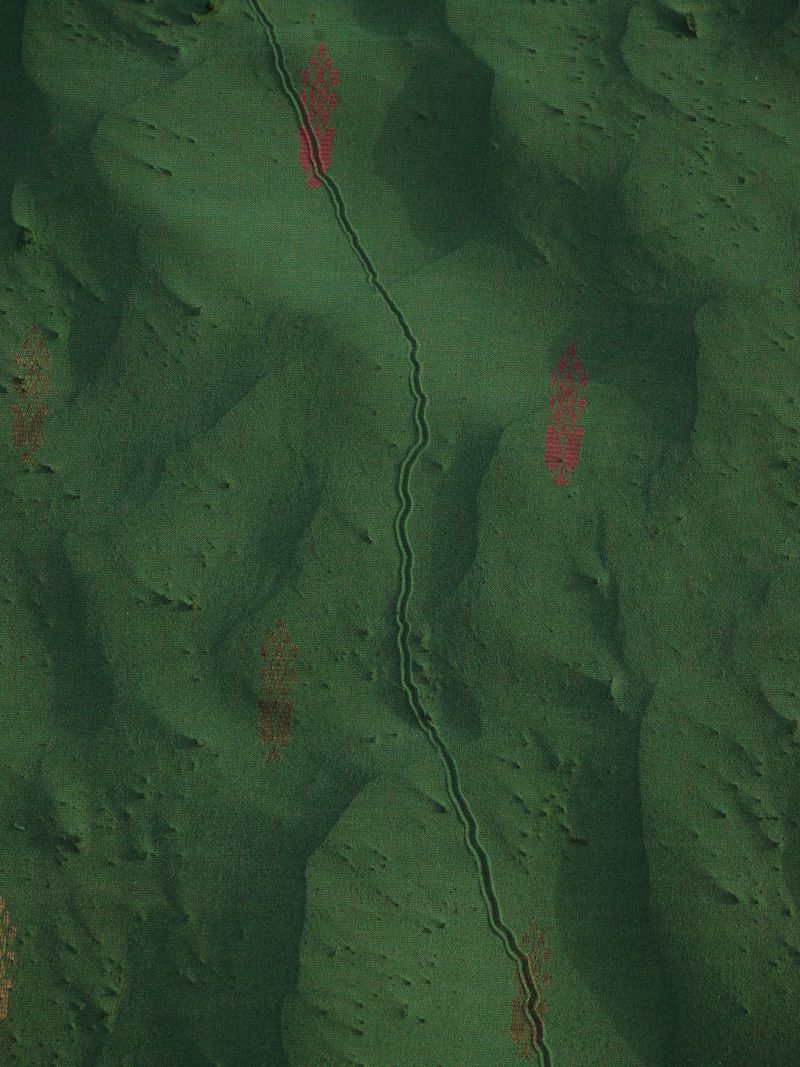
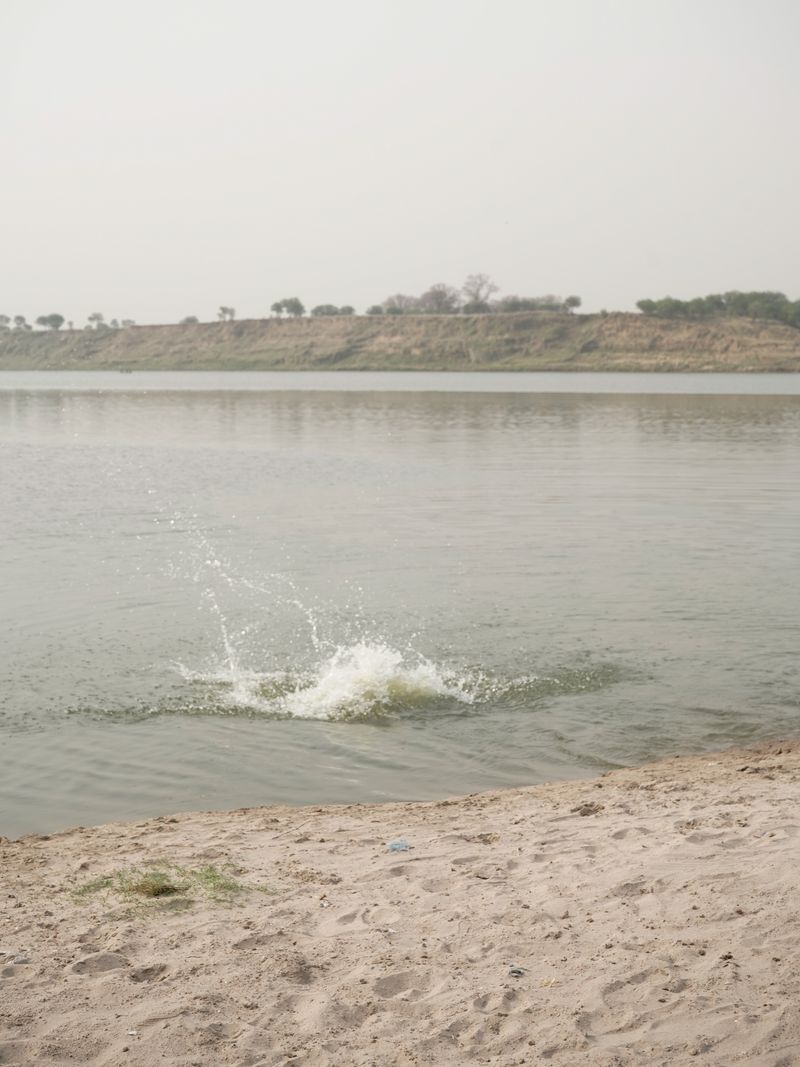
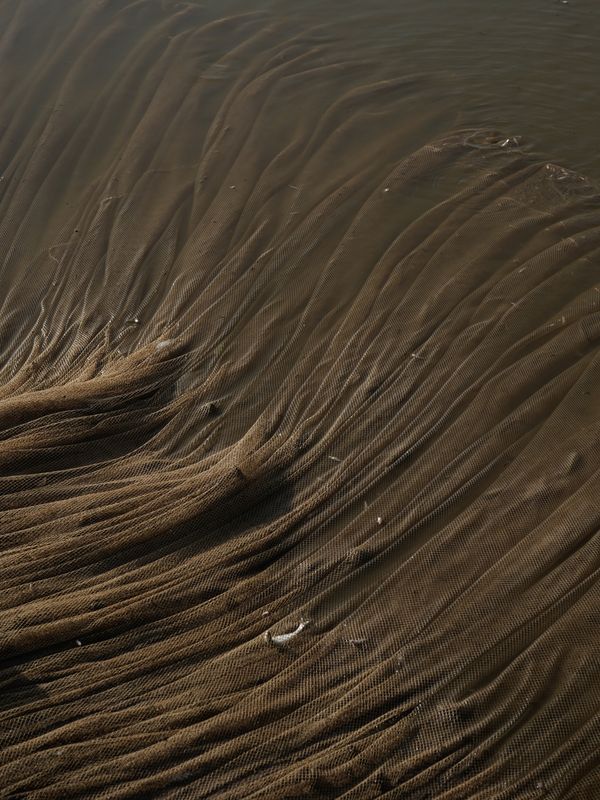
The project’s final title, Time Is a River, grew out of that realization. She photographed the Yamuna River, among the most polluted in the world, its contamination flowing downstream from Delhi toward her village. And yet, beyond pollution, the river carries a longer history: over centuries, it has shifted its course, inching closer to the village through floods and ecological change, and now beginning to move away again. It appears constant, but it’s never still.
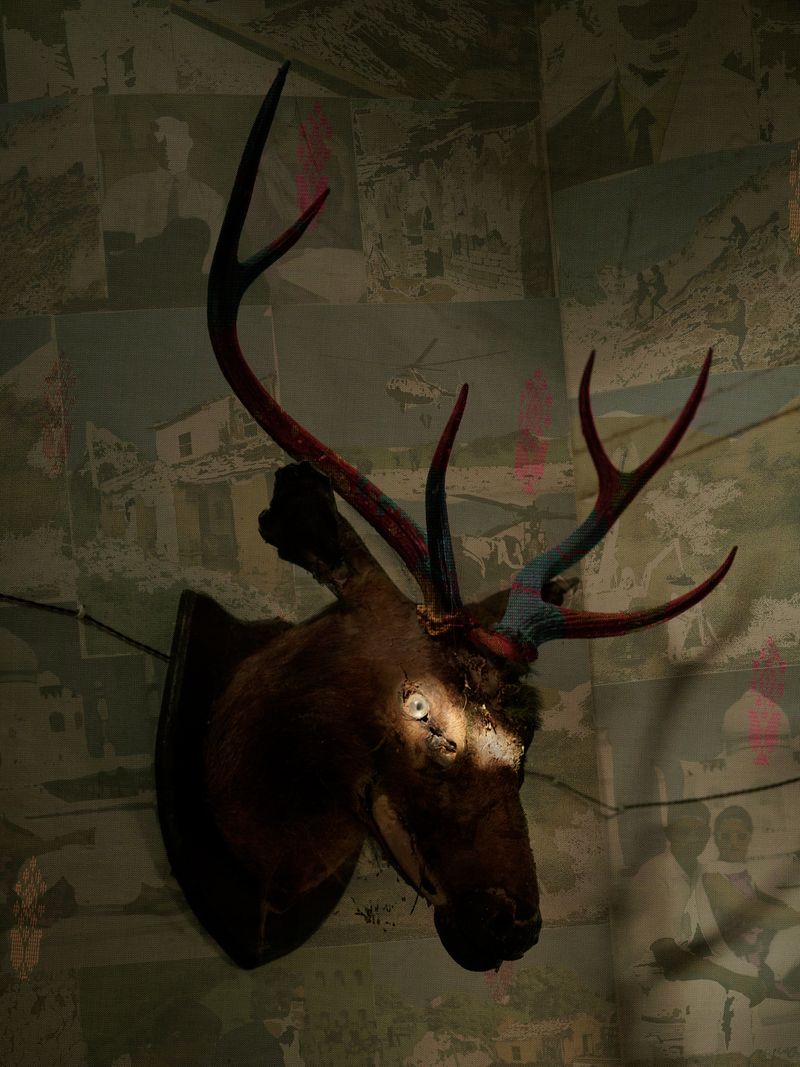
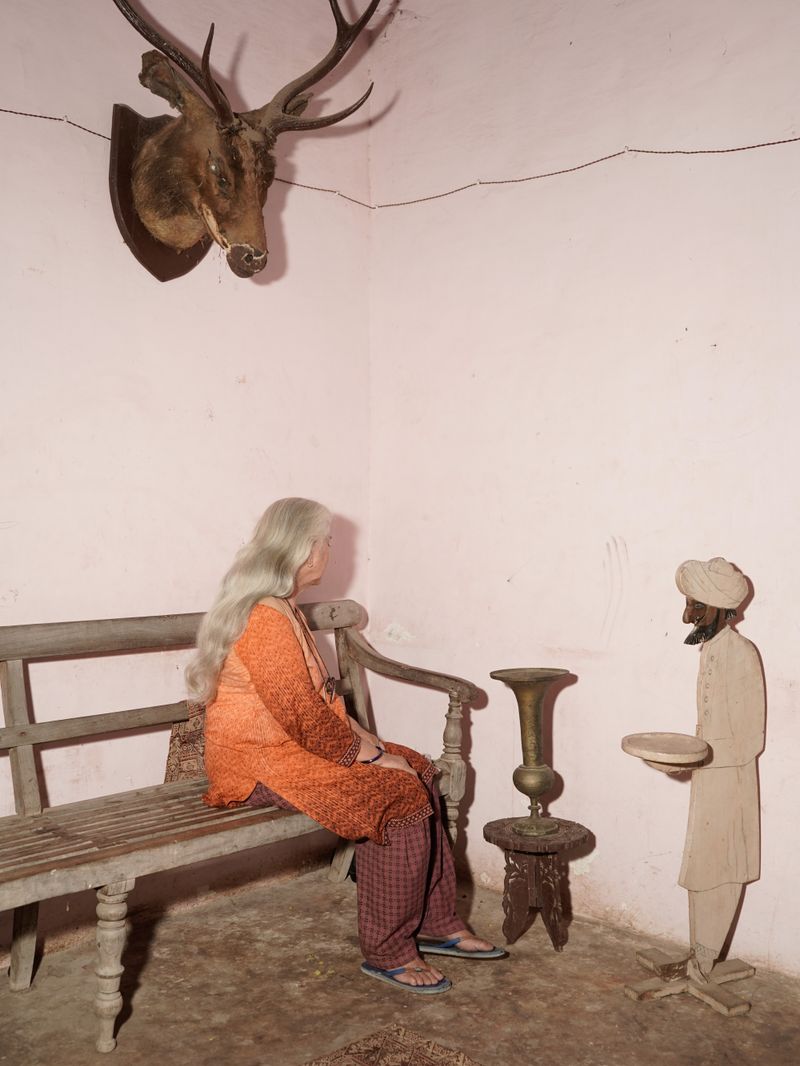
The house, too, holds more than it shows. Built generations ago by male ancestors, its space is marked by hunting trophies and carved wooden male figurines. A taxidermied deer hangs on the wall – once alive in the wild, now preserved, claimed. It is absence and presence at once. Not erased by time, but transformed by it.
There is one photograph of her grandmother in the series. She sits beneath the looming deer, her face partially obscured. The gesture is deliberate. Chauhan wanted to acknowledge the limited agency her grandmother held within that marital and social structure. The space she inhabited was real, but constrained.
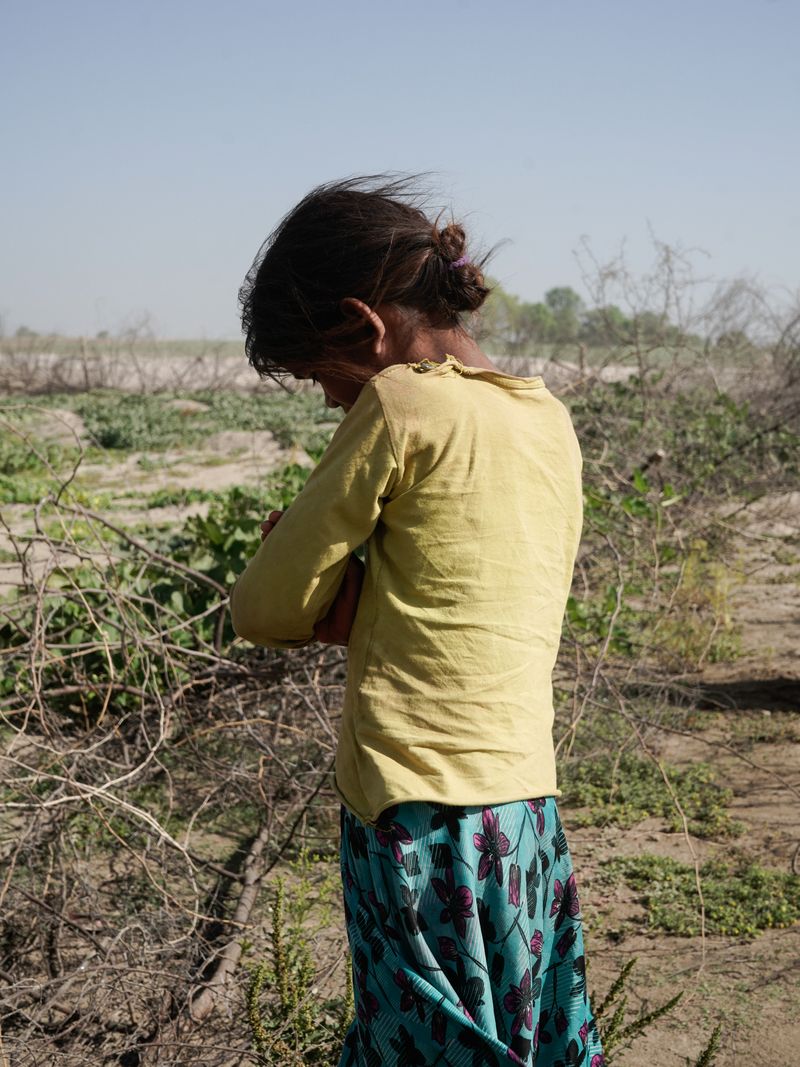
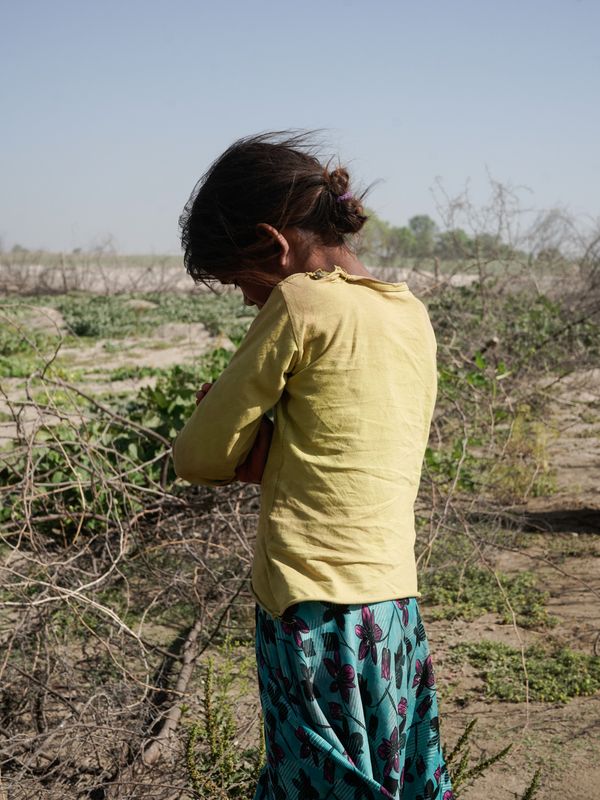
And yet, time can rearrange dynamics. Two young girls – her cousins, 10 and 12 at the time – move through the same house. The fathers built it; women now animate it. Time, again, acts like a river.
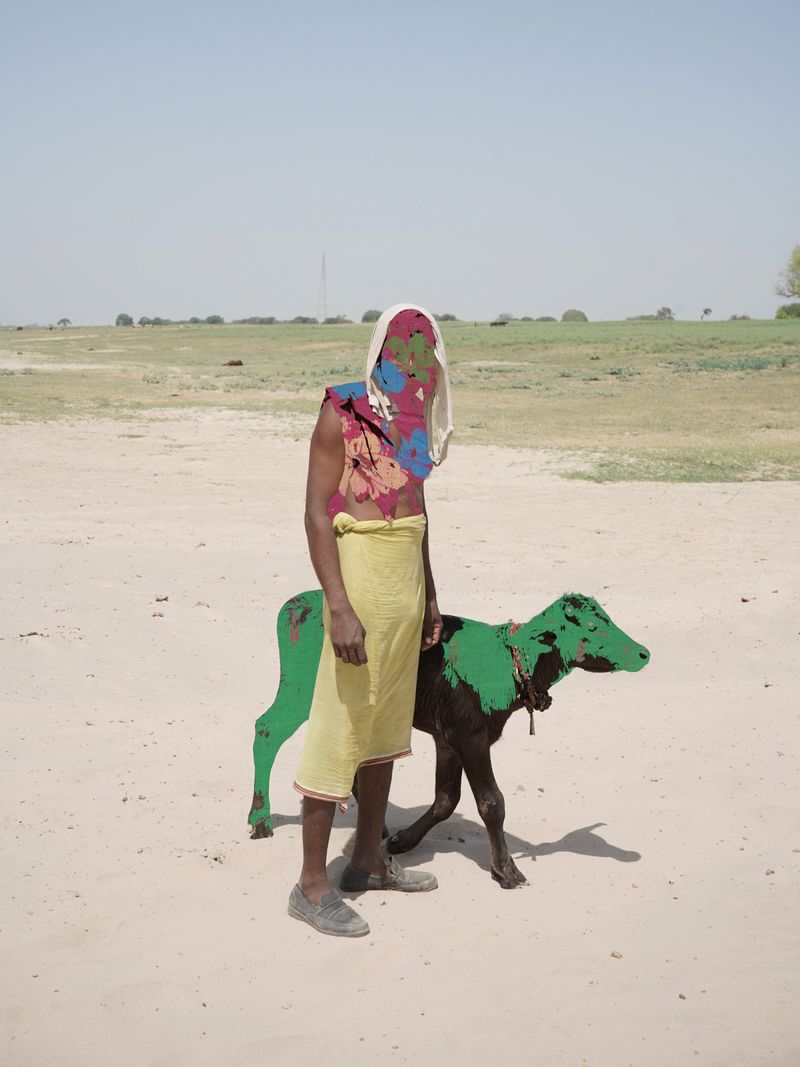
The riverbank itself is a contested terrain. When she came to Shahpur for her photography project, Chauhan was discouraged from going there alone. Women were not meant to wander that space. After much negotiation, she began photographing it – an area almost entirely occupied by men. In response, she layered pieces of her grandmother’s sari fabric into the landscapes – draped across the river, soft against sand and water, or covering a man’s face. A quiet act of reclamation: inserting feminine presence where it had been denied.
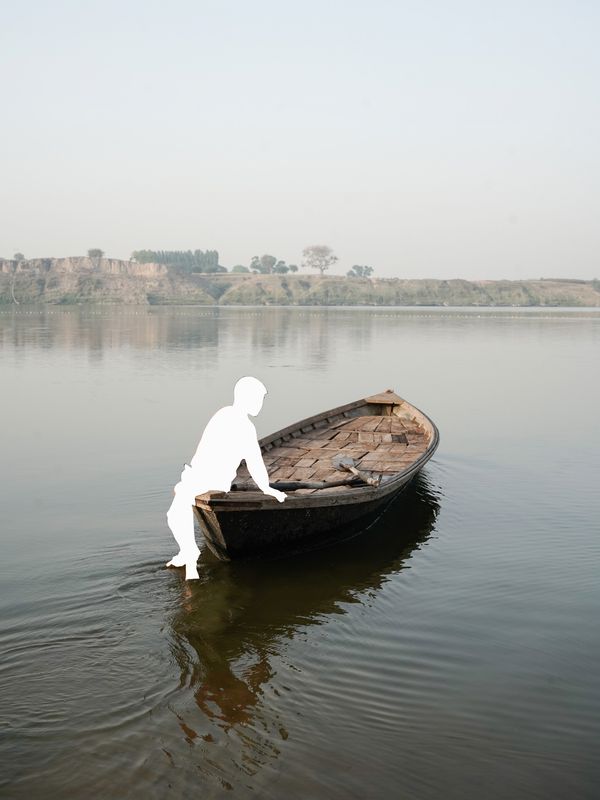
One night, under a vast red moon, she crossed the river with a boatman who helped her photograph. He spoke not of ancestry, but of survival. Fishing had declined; sand mining and pollution had hollowed out livelihoods. He had left his hometown for work. She realized that the village’s erosion was not just sentimental. It was economic, ecological, human. Time was not only decay; it was displacement.
Throughout the project, Chauhan returns to layering – belonging, memory, caste, gender, migration. None stand alone. What appears permanent is already shifting its course.
In the end, Time Is a River is less about nostalgia than about transformation. Chauhan does not try to restore time. Instead, she traces how it moves, gently opens new possibilities into its spaces. Like the river, it moves. Quietly. Relentlessly.
-------------
All photos © Niharika Chauhan’s work, from the series Time Is a River
--------------
Niharika Chauhan is a visual artist based in Goa, India. Her work explores home as a shifting site of memory, identity, and belonging – while tracing the quiet tension between permanence and change. Find her work on PhMuseum.
Lucia De Stefani is a writer and editor focusing on photography, illustration, and everything teens. She lives between New York and Italy. Find her on Instagram.