The Body, Everywhere: Mahalia Taje Giotto On Exhibiting At PhMuseum Days
-
Published5 May 2026
-
Author
Mounted on eleven public billboards in Bologna, Giotto's obsessive self-portraits are the testimony of a trans person's experience, and a strategy to evolve and survive.
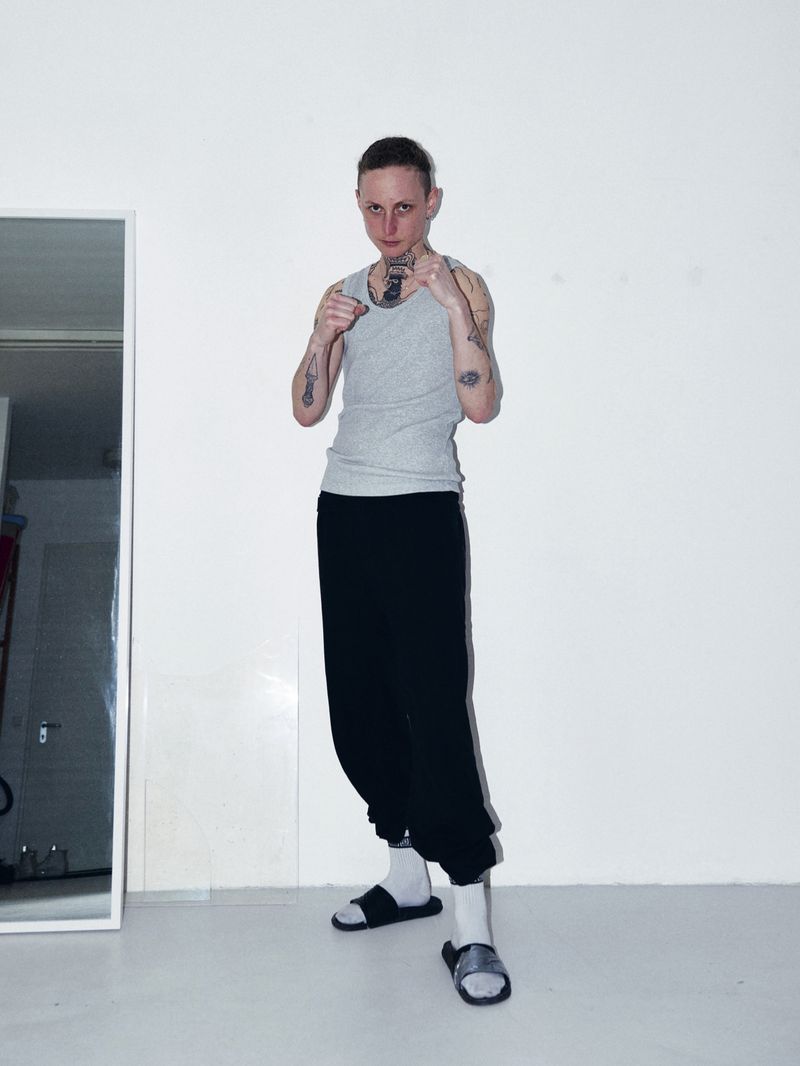
Mahalia Taje Giotto is, and has always been, a trans person. In November 2020, their gender-affirming hormone therapy began, and so did Existential Boner: the relentless photographic documentation of their transition, identity, and sexuality.
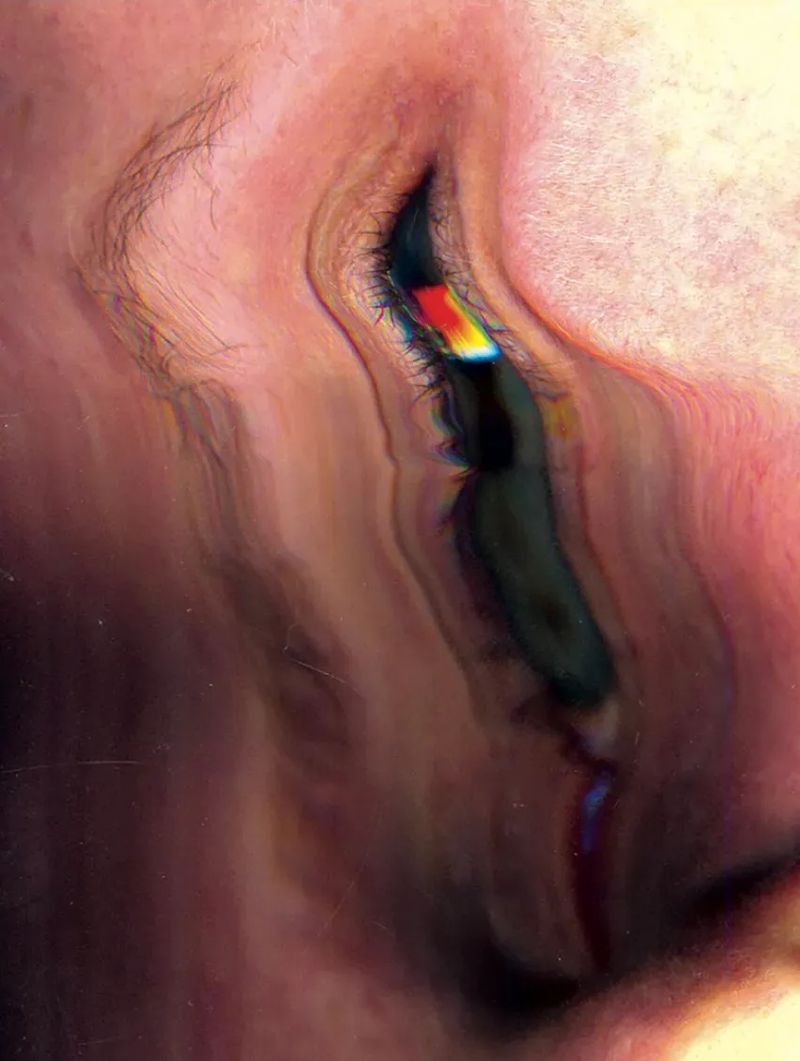
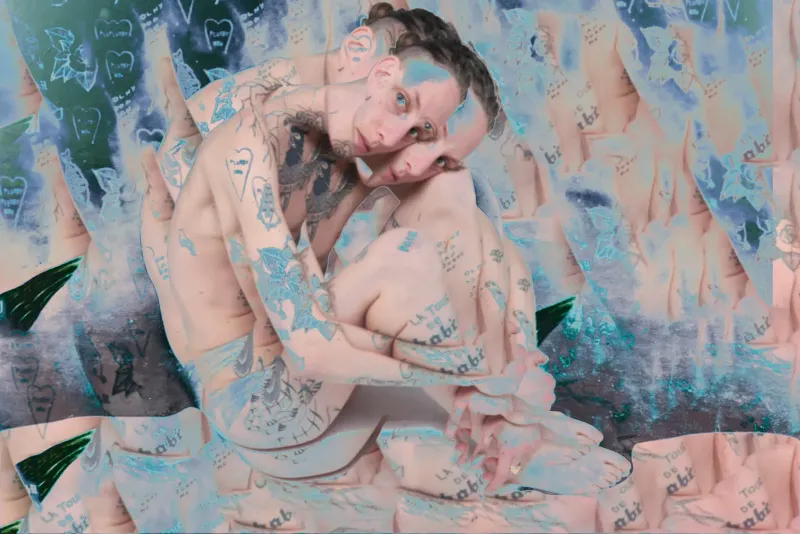
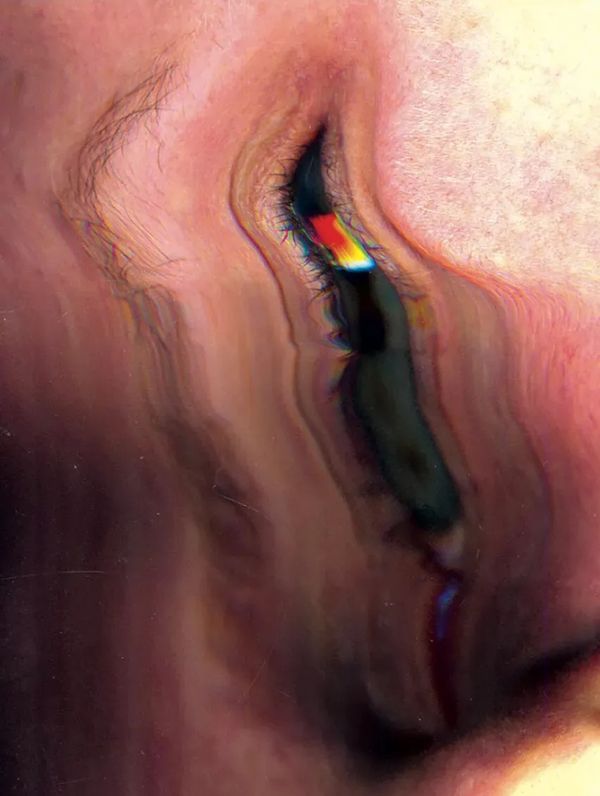
Taje’s body is everywhere: every portion of their skin is scrutinized, recorded, multiplied. The images’ never-ending rhythm follows that of their compulsive thoughts. Exhausting every angle, Existential Boner shows us how a photograph is not a body, and vice versa. But also how at the same time, if we take control of them, images can serve us in reclaiming our identity, sculpting it until it truly becomes ours.
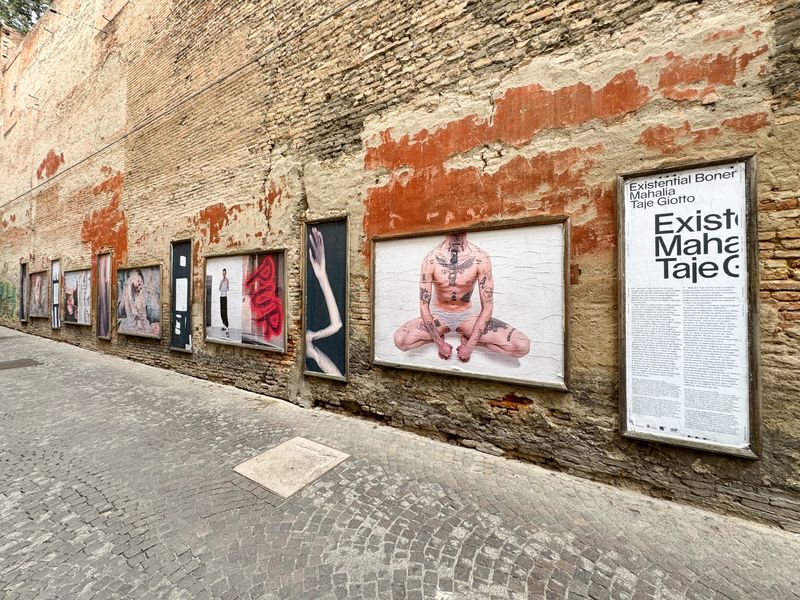
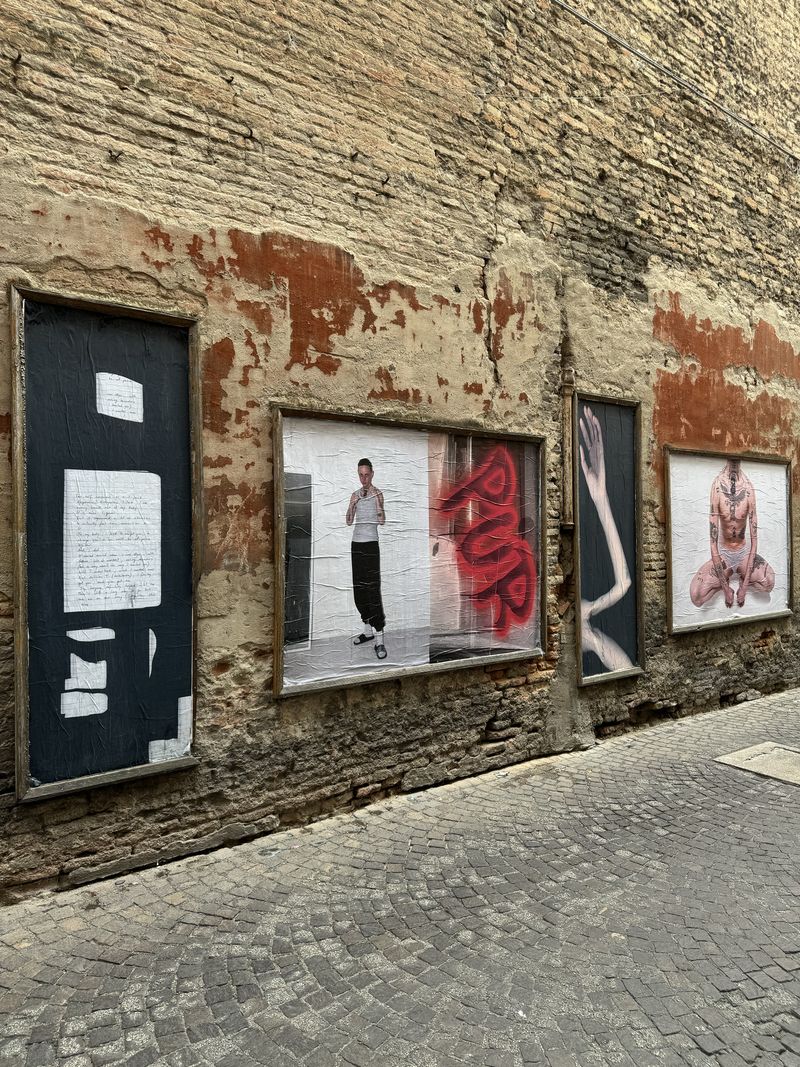
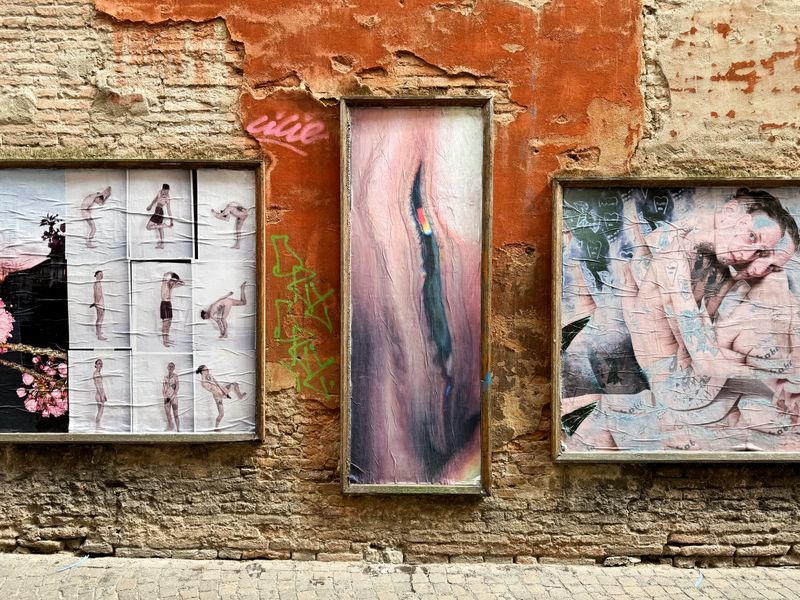
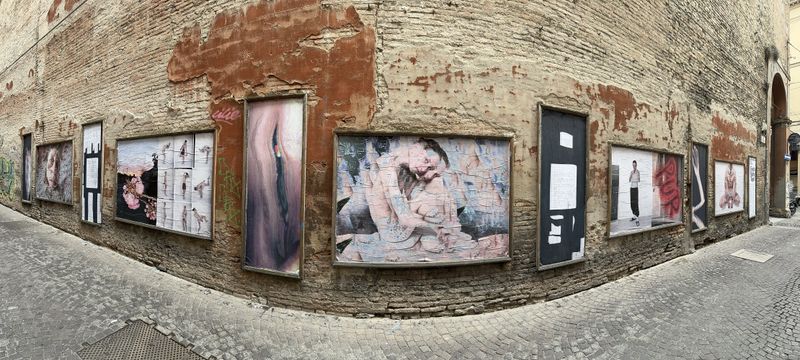
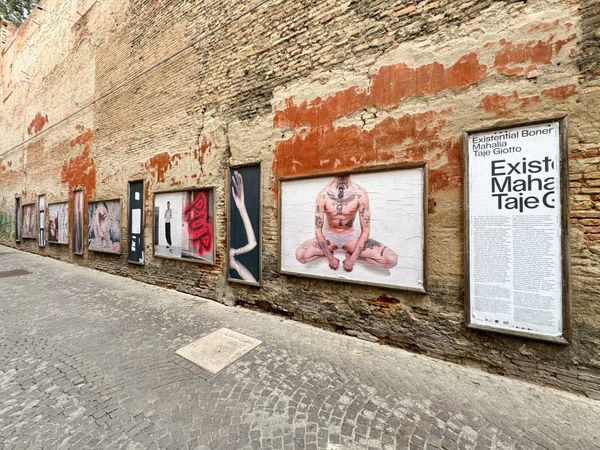
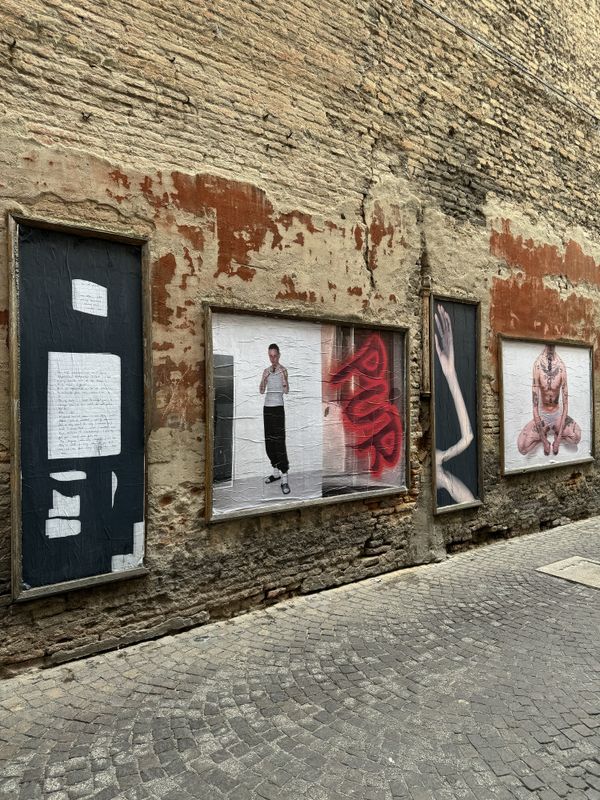
Selected through the PhMuseum Days 2024 Open Call, Existential Boner was displayed on eleven public billboards formerly belonging to the city’s municipality and today managed by the cultural association CHEAP. The scale and materiality of the prints allowed for Taje’s body details – manipulated, magnified, and stratified – to transform and come alive once more within the paper's folds and imperfections.
Closing this Thursday 7 May, the PhMuseum Days 2026 Photography Festival Open Call is offering one more artist the opportunity to exhibit in the same location, joining the legacy of Taje, Munirah Almehri, and Gloria Oyarzabal.
Ciao Taje. Why do you photograph yourself? Do you keep doing so today, six years after the start of your gender-affirming hormone therapy?
I think that I photographed myself like that as a way to kind of fight the never-ending body dysmorphia that would poison my daily life. You know every time you see your reflection in a mirror or a window, walking down the streets, or you see a picture of yourself someone else would have taken, and it makes you want to die because you hate yourself so much, well, you need to find strategies to survive. Mine was getting to know this body that felt so estranged to me, and therefore forcing myself to look at it in every way and inch possible. I still do it today, it’s a bit less obsessive though, and sometimes I even like what I see now.
For PhMuseum Days, Existential Boner took the shape of a public installation on the billboards of CHEAP, formerly belonging to the Municipality of Bologna. What did it mean to you, politically and personally, to occupy such a space and have your images visible 24/7 in the streets?
In the current political climate, with the rise of fascism in Europe and beyond, being a trans person is not always a piece of cake (then again, I’m white and kind of looking like a man, so it’s way easier than being a black trans woman, for example). To be given a public space to occupy felt a bit like an opportunity as well as a challenge. Because I didn’t want to be seen as THE trans experience. Each of our experiences is our own, and they are all unique. To be given the space was a chance to bring attention to the trans community as a whole and to my work as an artist, but it was very important for me that both these notions were separate. My experience was a very peaceful one as soon as I realized I was trans. The problems were before, when I didn’t know, me with myself, the constant struggle to find ways to survive something you’re not even aware of – the lack of representation in the media, etc., really didn’t help. We should show more trans people everywhere because it won’t turn your children trans, it will just help them feel less alone. Then, when I came out to my family, my friends, and my colleagues at the time, I felt only support. I was lucky to live in a country where access to trans care was a bit easier than in other places back then – it has changed today with a new medical system; now it’s more complicated. Anyway, long story short, I felt blessed to be able to represent the trans community, but I didn’t want people to think this is all there is; each and every one of us is a very special fairy, and no one can represent that only by themselves.
Your practice brings together a raw mix of media, from iPhone snapshots to body scans, studio shoots, writing, and collages. How did you find your language, or how did it find you? What do you think this clash of different visual textures helped you communicate, as your work and body evolved simultaneously?
This way of creating artworks makes sense to me because I have never been able to focus on only one thing in life. I always needed more and more of everything. It is kind of the opposite of what I usually like or what I would have hoped my language to be, which is less is more. It’s a bit of an easy answer, but I think it reflects my creative process and how things feel in my brain; it’s intuitive, raw, and messy. I’m not sure it helped me communicate anything very clearly, but it definitely helped me cope with stuff and offered a way to appease the relentless and obsessive thoughts that would cloud my head. What I’m trying to explain when I say my work and body evolved simultaneously is that those things are intertwined and that one needs the other to keep on going. I need my work to cope with my body, I need my body to cope with my work. Something like that.
Did you ever see any limitation in photography – a rather fixed, and defining medium – when representing fluidity and change? If so, how did you overcome that?
Yes, if you see the medium as pictures taken by a camera, printed and then shown (framed at best) on a wall. But really, no, I don’t. As soon as you start experimenting with the medium, from the way of making an image to printing and whatever can happen in between (a lot), I think the only limitation is your imagination. I think I was lucky to meet teachers and peers who would share their craft with me, and that’s how I learned to expect more from photography and to take it beyond our usually fixed notions. Therefore, I think it’s one of many tools possible to represent fluidity and change, you just have to keep an open mind.
The way images mediate our relationship with the body was made more confronting and complicated by social media, and front-facing phone cameras we carry with us all the time. How do you think we can overturn these dynamics, make them become empowering and self-affirming, rather than daunting?
I think the two ideas coexist, and it’s more about what we can achieve within this spectrum. Social media is not gone (yet), and we have to learn the rules of this concept in order to use it as a tool. You have to be ready to lose a few feathers (I don't know if that’s something we can say in English, but we do say it in French) when images and social media are your work. Sadly, at this point, I don't think I could pull off a career without social media, or maybe I could, but I'm too scared to try. So it’s less about overturning and more about trying to go with the flow, setting clear boundaries on the way. Also, I’m not a leader, more like a follower, so if anyone is ready to start a revolution to change all that, I’m down and ready.
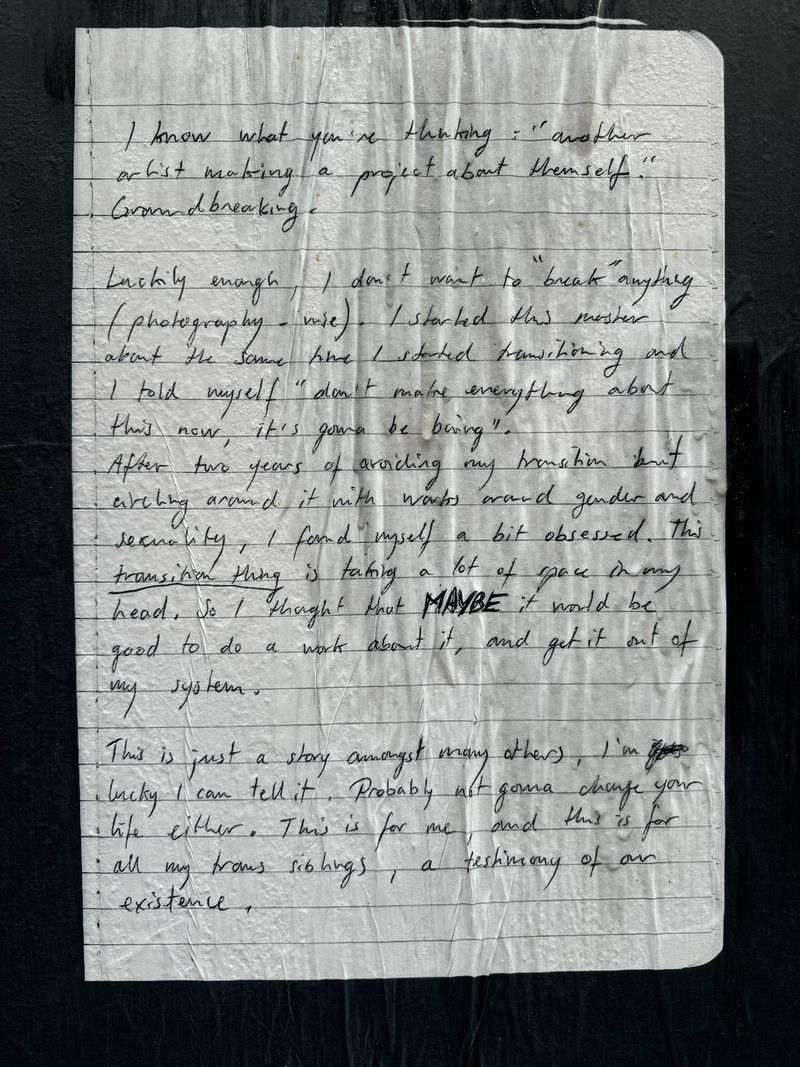
What is the role of written words in Existential Boner, and in the way you made them become images?
I never really believed that a picture is worth a thousand words, not for my work at least. I therefore needed the thousand words to become part of my creative process so I could be able to say everything I needed to say. I’ve been writing in diaries my whole life, from basic day-to-day entries to stems of ideas or just a sentence that would pop in my head that I liked. Quotes from songs, movies, books, etc., sometimes would get stuck in my head without really knowing why, so I would just collect them. At some point, I thought I could just use parts of these texts and apply them to my visual. The first experimentation was with the project No Tears, Just Dreams. I would randomly write one of the sentences I collected on an image I had printed, and I would print a lot of these pictures and just work in a very compulsive way of writing without thinking. In the end, for me, it's about choosing what you want people to see and how you work around it that makes an image.
Existential Boner was published as a book by SPBH and Ecal in 2023, and was exhibited multiple times. What space does materiality have in your work, and what was your process working around these formats?
The more I can distance myself from the medium of photography, the better. I like to create pieces that I won’t be able to reproduce the exact same way each time. It’s important for me that they each have their own story, that they insert themselves in a certain period of time. Materiality then comes naturally in the sense that by working around the medium and exploring the limits of photography, I can offer alterations of the project that is still the same at its core, but continues to live through my lived experiences. Since this project is so personal, I feel it’s normal for it to evolve with me. I’m not the same as I was in 2023. Finally, for the book, working with Nicolas Polli as a graphic designer who followed my upbringing as an artist really helped to encompass this need for corporality or materiality. He understood my practice and encouraged it when he was my teacher at Ecal, and I’m really happy we could work together on this very special project.
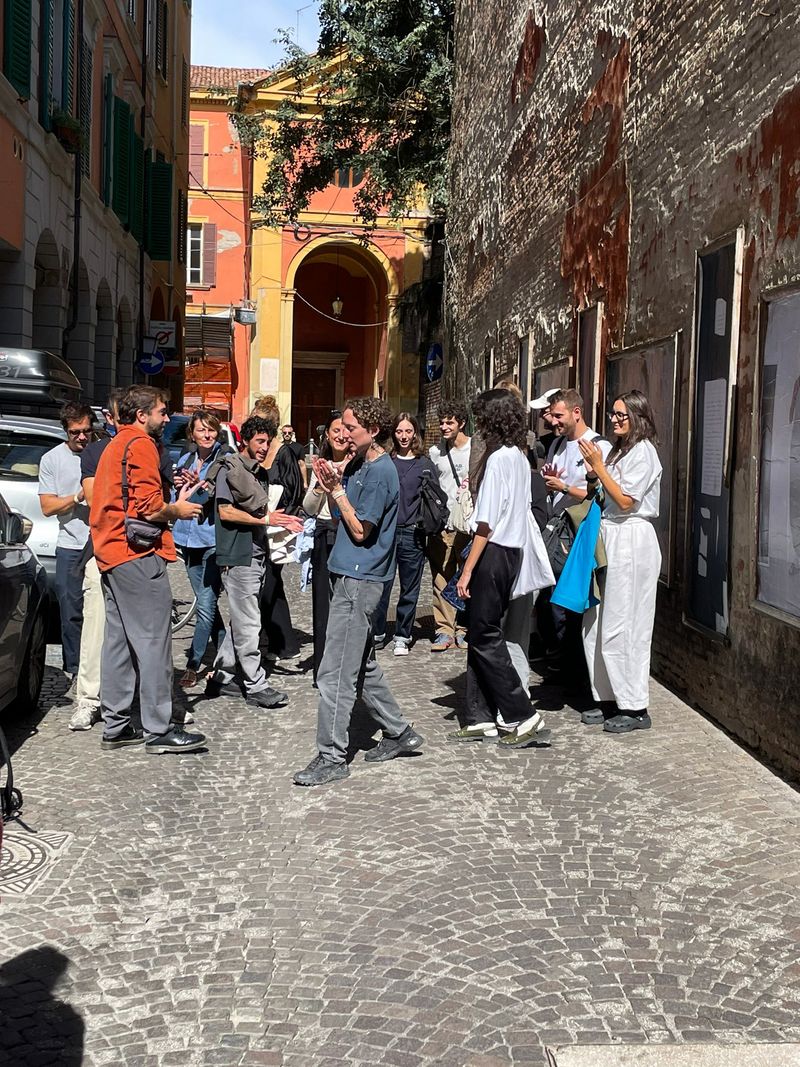
What memories do you have from the festival’s opening weekend in Bologna, as part of such a diverse international group of artists?
It was a great experience. I met a lot of people, and I’m still in touch with some of them today. I lived in Bologna during my Erasmus in 2017, so I was very happy to be back for a while. The team of PhMuseum is the cutest.
What are you currently working on?
I’m currently working on a project called On The Verge Of Becoming Completely Forgotten. It’s an artistic exploration of masculinities focusing on fracture, contamination, and potential repair – that part is hard. Rooted in my experience as a transmasculine and non-binary person, I want to reflect on how masculinities are embodied, performed, and internalized, both as a form of protective social armor and as an invasive, almost viral, presence.
-------------
Mahalia Taje Giotto's Existential Boner was selected in 2024 through the PhMuseum Days Open Call. The 5th edition is now welcoming submissions, giving visual artists the opportunity to exhibit at our International Photography Festival taking place on 1-4 October in Bologna, Italy. For the first time, the festival will happen jointly with Photobook Mania, the 2nd edition of our publishing fair, offering a complete platform to enjoy contemporary photography in person.
The deadline is set for 7 May. Learn more and apply at phmuseum.com/d26