IDEA 2025/26 Alumni On The Online Conceptual-Thinking Masterclass
-
Published11 May 2026
-
Author
With the next edition currently accepting applications, IDEA 2025/2026 participants reflect on the construction, positioning, and development of their projects.
IDEA - Online Masterclass on Conceptual Thinking is designed to guide artists creating a body of work, interrogating the process that transforms raw intuition into a refined visual language. Across eight months, participants acquire a range of visual and theoretical strategies to test, expand, and refine an idea until it becomes a conceptually grounded project. The upcoming edition will run from October 2026 to May 2027, led by the artist, photographer, educator, and art director Charlie Engman.
With enrollment open until 28 May, we touched base with Alina Cristea, Jatin Gulati, Javier Talavera, and Veronica Viacava, who are just now concluding the program's first edition under the guidance of photographer, educator, and activist Adam Broomberg.
Follow the evolution of their projects by joining IDEA’s Year-End Live Presentation this Thursday, 14 May, at 3pm CEST.
How did you come up with the initial idea for your project, and how did the Masterclass help you clarify and refine its concept?
Alina Cristea: I had the idea for a long time, but had made no progress on this project. When I saw the masterclass topic, I thought it would be the perfect context to try it.
Jatin Gulati: My process was largely intuitive, where I tried to trust my instincts and allow my feelings to guide my making. When I joined the Masterclass, I came in with a loose area of interest rather than a fixed idea. Through the collective sessions and one-on-one discussions about my practice, I was able to clarify and refine my direction. Over time, this led to the development of a project that now feels conceptually more resolved, along with a clearer understanding of the context, form, and material I want to work with. The work is still in progress, but I feel I’ve managed to move from an initial idea to a more grounded project – one that I plan to continue developing over the rest of the year.
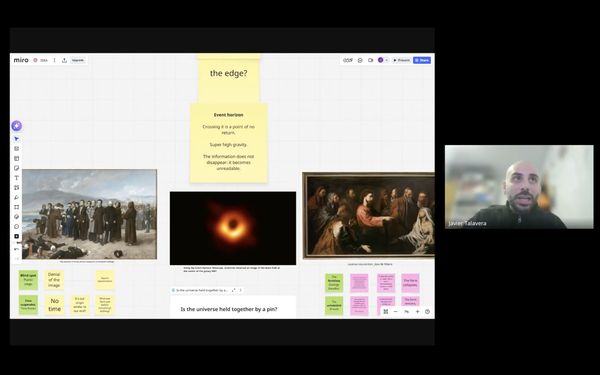
Javier Talavera: From an accumulation of images and situations gathered almost unconsciously over several months, I began to sense a possible line of work. It felt like a natural continuation of my previous exercises, but it also opened new questions. The Masterclass helped me identify what was actually there, separate intuition from inertia, and start constructing the project from a more conscious position, both theoretically and conceptually.
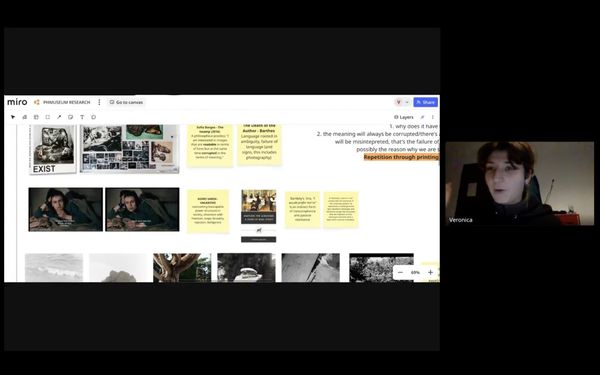
Veronica Viacava: The project grew out of my earlier work during my studies, but I wasn’t fully satisfied with how I had approached my practice. The Masterclass helped me both refine the concept and rethink my methodology, exposing me to different approaches for production and research. It offered concrete frameworks and strategies that clarified my direction and gave me new tools to structure my inquiry.
Was there a specific moment or feedback that made you reconsider your vision or progress in an unexpected way?
Javier Talavera: I joined IDEA intending to continue developing a project I had been working on privately for two years. Adam’s first comment forced me to question whether that work – strongly rooted in political and memory-related concerns – had the relevance I assumed and whether it was contributing new critical perspectives. Upon revisiting it, I identified positions I no longer wanted to sustain and decided to pause that project temporarily.
Veronica Viacava: The final one-on-one session with Adam was a breakthrough moment for me. His understanding and support throughout our work together helped me articulate precisely what I needed to improve, without feeling pressured. That feedback catalysed a shift in how I approached my goals and how I structured my progress.
Jatin Gulati: Along the way, I realised that this intuition is not neutral – it often carries traces of our biases, privileges, and personal entanglements. In that sense, Adam’s emphasis on conceptual rigour, ethical responsibility, and a certain discomfort with the camera felt both challenging and affirming. His feedback led me to sit with my ideas more critically, to question what I was taking for granted, to re-engage with my process and position myself more consciously. This shift has shaped and expanded my thinking around the work.
Alina Cristea: It was the first individual talk with Adam that made me realise I was not ready for a new project, the idea I kept wanting to develop, but that I still have unfinished business and potential in my current project.
How have the visual and theoretical strategies discussed in the seminars, such as archival research, AI, or critical thinking, affected the development of your project?
Jatin Gulati: Adam’s focus on archives was one of the reasons I was drawn to apply for the Masterclass. My work on investigating authority within the domestic space and its engagement with the family archive carries an underlying presence of the state, particularly because of my family’s history of migration during the Partition of British India in 1947. I was interested in exploring the intersection between the family and the state within this context. Through the collective sessions, I found myself returning to the archive in new ways. Listening to my peers speak about their relationships with their own materials, and Adam’s reflections on revisiting his own bodies of work, prompted me to reconsider how I was engaging with the archive. I think of institutional and state archives as sites of power – partial, constructed, and often marked by omissions – while seeing the family archive, with all its complexities, as part of a broader constellation of emotional, intimate, and counter-narratives. The latter could potentially deform the former.
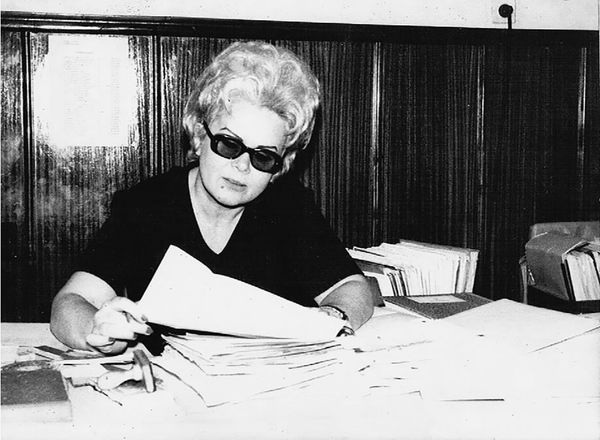
Alina Cristea: These things were already within my realm and area of interest, though I came out of an intense period of production and reflection that occurred outside the course.
Veronica Viacava: The seminars broadened my toolkit. Archival research provided a rigorous foundation for grounding my work in context; explorations of AI opened new possibilities for interpretation and presentation; and critical thinking sharpened my ability to interrogate assumptions and frame arguments more clearly. These strategies have deepened the project’s scope and the way I approach evidence, interpretation, and presentation.
Javier Talavera: For me, Adam’s comments were fundamental, both precise and intuitive. As for the rest of the process, I worked mainly with creative exercises based on free association, play, and movement. In terms of techniques, I was in an early stage; I have explored most of my repertoire. The current challenge now is to combine all or eliminate some.
Adam often emphasizes the political and ethical responsibility of the image-maker. How have your thoughts on this matter evolved during the Masterclass? Has anything changed in the way you claim or share a story?
Veronica Viacava: I’ve long admired Adam’s commitment to political and ethical responsibility. The Masterclass deepened that engagement by offering a practical lens through which to view both others’ work and my own. It’s given me a clearer, more nuanced vocabulary for discussing responsibility and has influenced how I present my ideas and make claims – through transparency, accountability, and intentionality rather than purely aesthetic or rhetorical aims.
Alina Cristea: I agree with this, which is why I also wanted to follow this Masterclass. However, politics has infiltrated my work over the last few years, and I weave it with the personal and my family’s history. So, it was more of an organic match than something that shifted radically through my participation in the course.
Javier Talavera: It has been important to understand this dimension from a self-critical position. Not only what images we produce, but from where and how they are produced, how they circulate, and the frameworks they respond to. More than a radical shift, it has been a displacement: a heightened awareness of the conditions that shape the practice.
Jatin Gulati: Earlier, I was looking at the family from a distance – a position that felt necessary in that context. Over time, that distance has become a catalyst to make work. I’ve begun to understand the family as a collective that I am embedded within, rather than separate from. The project now involves three generations of my family, who are not simply subjects but collaborators and participants in shaping the work. This raises ongoing questions around authorship and responsibility, and how a story is formed. I find myself thinking of my role less in terms of authority (unlike my grandfather, who was the subject of my earlier works), and more in terms of care – holding space through listening, conversation, and negotiation, rather than speaking on behalf of others.
Which Studio Visit particularly stuck in your mind, and why?
Alina Cristea: I particularly enjoyed the Studio Visits with Simon Gush and Ann Griffin. The first one was because I discovered his work during the session, and I felt a kinship in the long-term, research-based, very thoughtful choices in his work, though our work is visually very different. But I felt I understood the inner logic, the work's slow unravelling, and its depth. With Ann, beside her clean, minimal work, I appreciated her clear passion and drive for what she does, and her transparency about her process and working relationships.
Veronica Viacava: Brian Paul Lamotte’s Studio Visit was pivotal. It highlighted how collaboration across disciplines can shape outcomes. Seeing how designers and artists co-create – starting from a photographer’s concept and iterating through collaborative processes – showed me the value of cross-disciplinary dialogue in achieving a cohesive final work.
IDEA creates a space for intense dialogue. How has the exchange with your peers, both during and outside of sessions, influenced the maturation of your project?
Javier Talavera: For me, the group created a vulnerable and lucid environment, conducive to productive conversations. In my case, I decided to start a new line of work from scratch, opening it intuitively and allowing multiple branches to emerge. The readings and emotional responses from my peers to each part gave me clues on how to structure the project.
Veronica Viacava: Working with like-minded peers exposed me to other ways of thinking and making that differ from my own approach. The group discussions, feedback, and shared references were essential to the project’s development. This peer dialogue helped me reevaluate assumptions, broaden my horizon, and cultivate a more flexible practice.
Looking ahead, how do you envision developing or sharing your project after the Masterclass? Has this experience inspired any new directions for your future practice?
Jatin Gulati: The work is still in process, and I see it continuing to unfold over time. Alongside making images with my family and photographing the traces of colonial architecture, there is an ongoing component of research, documentation, and engagement with both institutional and family archives specific to the context of the work. I would want to approach this project slowly, allowing the ideas and materials to settle into a more resolved form, while remaining open to other ways of sharing the work as it develops.
Alina Cristea: I definitely wish to continue with the project, so I am looking for partners to collaborate on specific technical experiments and to dive back into research on some new material I found.
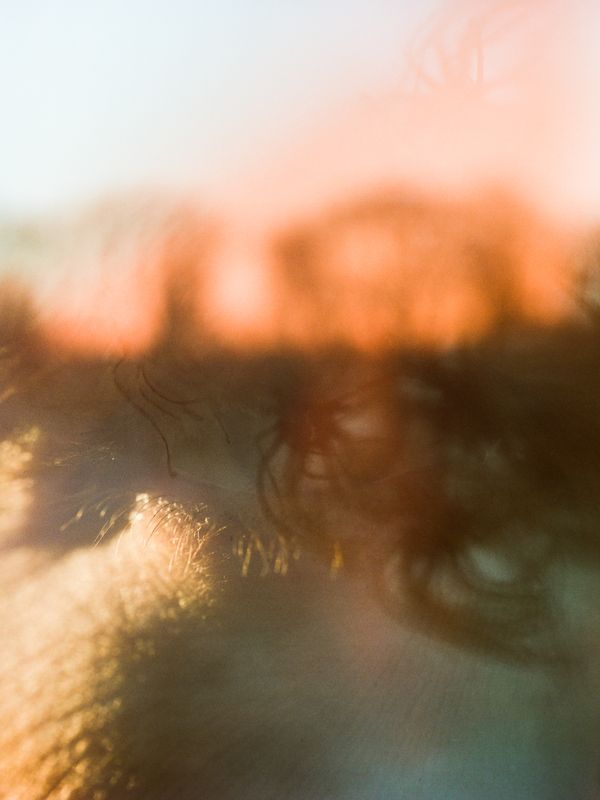
Javier Talavera: In my previous work, I operated within more objective or typological frameworks. Here, I have moved closer to the core of the images, making my own context more visible. I am giving more space to spontaneity, error, and what cannot be controlled, while extending the process beyond the instant and opening it to collaboration.
Veronica Viacava: The experience revealed that my practice can be looser and more playful than I previously assumed. While my BA and MA in London pushed me toward a linear, research-based approach, the Masterclass showed that I can produce freely and handle archive work iteratively –producing and researching in tandem. This is a breakthrough for me, easing the anxiety around production and opening space for experimentation and ongoing dialogue with my archive.
What advice would you give to future participants to make the most of their experience in the program?
Veronica Viacava: Manage expectations and let the course unfold at its own pace. As artists in late capitalism, we often feel pressure to “succeed” quickly, but true validation comes from creating work that you enjoy and that feels satisfying. Embrace curiosity, seek out diverse perspectives, and give yourself permission to experiment, revise, and grow.
Jatin Gulati: There are very few spaces that allow you to begin with something unresolved; to arrive without a fixed idea and let it take shape over time. It’s not simply about developing a project, but about sitting with your practice as something fluid and continuous. I would suggest coming in with openness – with a willingness to pause, to reflect, and to be in dialogue. The program offers a rare kind of time and space: where you can stretch and contract your thinking, revisit what has come before, and sit with what is still forming. It allows you to see your work from a distance and then return to it with greater attention and care.
Alina Cristea: Don’t take this as one of the million things you do in parallel in your creative life. Really invest time and leave enough room for reflection and experimentation.
Javier Talavera: Commitment to oneself and to the medium is key. Not in a moral sense, but as a way of sustaining a practice without shortcuts. Understanding the process as an intimate investigation, rather than a production, and working as if the project were only for yourself. This removes external expectations and demands a different level of precision. At the same time, I would not stop asking: “Does this matter to photography?” I think it is necessary to question the relevance of what we do and its critical contribution to the language itself.
--------------
IDEA - Online Masterclass on Conceptual Thinking is part of PhMuseum's educational program, comprising five different masterclasses that will all share a single intake period running until 28 May, with classes beginning in October 2026 and ending in May 2027. Alternating collective tutoring, seminars, individual sessions, and studio visits, each masterclass exists in a community-driven environment, while providing concrete opportunities to exhibit, publish and distribute your work.
You can take part in one or more programs. Check them out phmuseum.com/m26
--------------
Participation fee
Before 28 May – If you apply by this date, you can join the program by paying the Regular Fee of €2,200. Since applications will be reviewed on a continuous basis, early submissions receive priority for seat allocation.
If you are offered a place, PhMuseum is happy to write you a supporting letter when you try to secure any external funding opportunities. In previous editions of our masterclasses program, the candidates' fees were covered thanks to the generous contribution of the IWMF Howard G. Buffett Fund for Women Journalists, Mondriaan Fonds, Arts Council Malta, and other programs. Read our guide to 2026 Education Funding for Visual Artists to discover opportunities.