Byron Mohammad Hamzah On Statelessness And The Politics Of Visibility
-
Published10 Sep 2026
-
Author
- Topics Contemporary Issues, Documentary
Bunga & Tembok looks at childhood and statelessness in Sabah, Malaysia. Through photography, drawings, and collaboration, Byron Mohammad Hamzah works with stateless children to question visibility, representation, and belonging.
What does it mean to grow up in a country that does not legally recognise you as belonging to it? In Malaysia, stateless communities are often referred to as “The Invisible People”, yet face highly visible forms of discrimination, including limited access to education and healthcare. In Bunga & Tembok (The Flower & The Wall), Malaysian photographer Byron Mohammad Hamzah works with stateless children in Semporna, Sabah, where he has volunteered as a teacher for the past three years. What began as photographic documentation gradually became a collaborative process, bringing together his photographs with the children’s own images, drawings, and creative work.
Following his selection through the Kranj Foto Fest Open Call 2026, we spoke with Byron about collaboration, visibility, and creating images that look beyond statelessness as a defining identity. You can visit the festival until 27 September.
Ciao Byron, before we talk about the images themselves, could you introduce us to the world of Bunga & Tembok? What is the Alternative School in Semporna, who are the students you worked with, and what does this place mean within the project?
Bunga & Tembok (The Flower & The Wall) is a collaborative documentary photography project that began in late 2023 at the Alternative School for stateless children in Sabah, Malaysia. Statelessness is an issue in my home country, Malaysia, and the Alternative School was established approximately 10 years ago by the local NGO Borneo Komrad. The NGO identified a significant gap in access to education among stateless children in the East Malaysian state of Sabah, leading them to establish several so-called “Alternative Schools” across the state. Sabah has the largest population of stateless people in Malaysia, particularly in the coastal city of Semporna, which is home to a large stateless community, including many from the Indigenous sea-nomadic Bajau Laut community.
The students you worked with are often defined by their stateless status. How did you approach creating a work that acknowledges this reality while making space for their individuality, creativity, and identities beyond that label?
During the initial period at the school, I did not have any well-defined objectives or a specific visual framework for the project. I knew that I was there to teach, but I also had the intention to document the lives of my students. Consequently, my early approach veered into traditional photojournalistic documentation. Reflecting on this, this phase laid an important foundation for me to truly understand the community and form a close connection with the children.
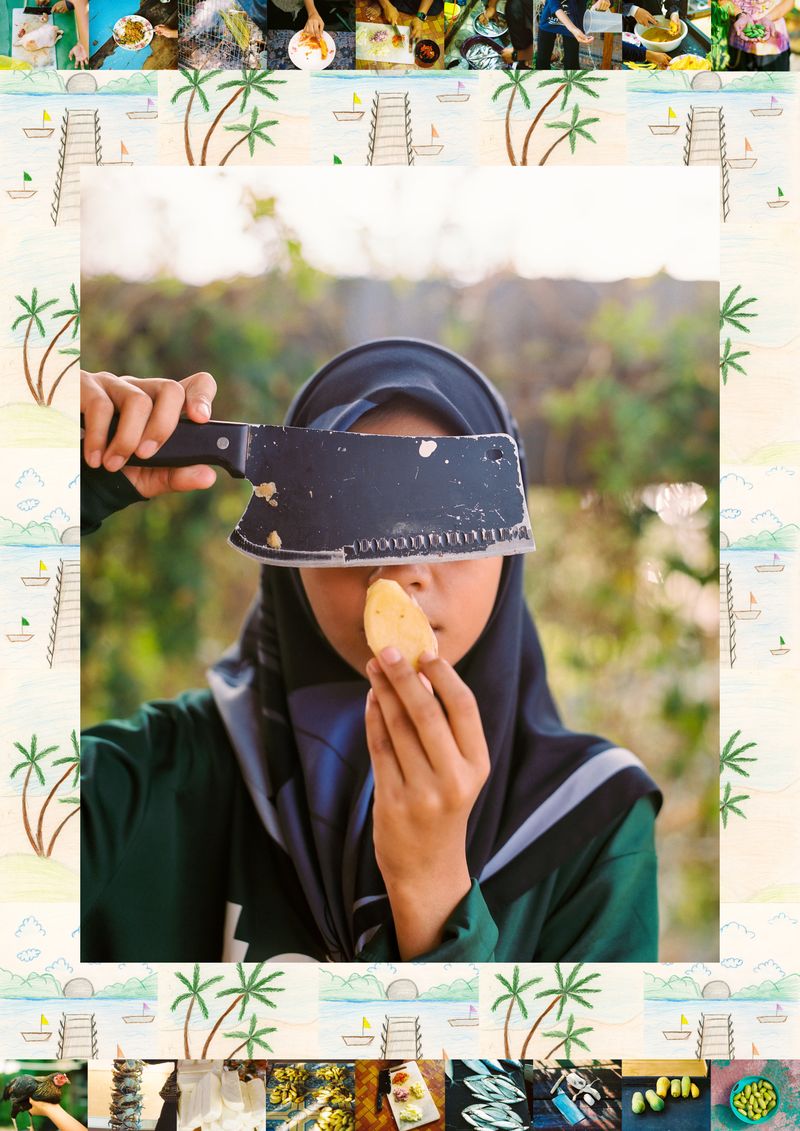
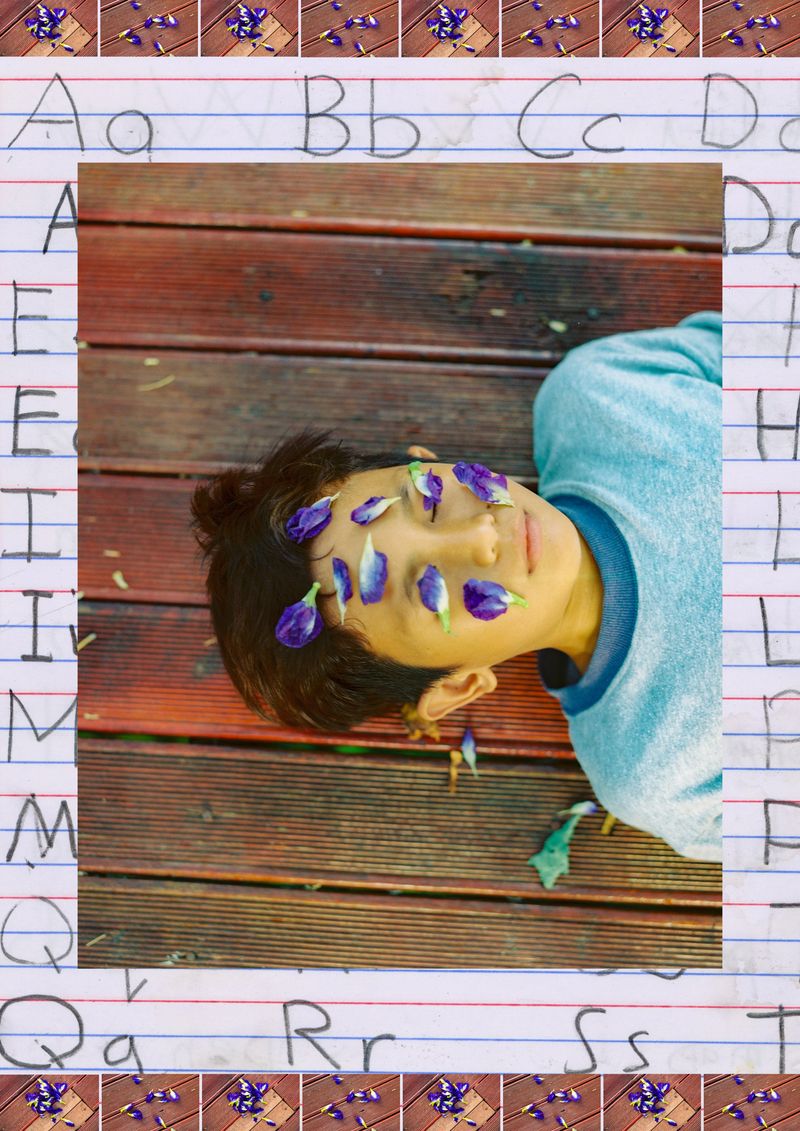
Over time, my intention for the project was no longer about documenting their plight or highlighting the complex socio-political and legal circumstances that led to their condition. This approach had already been explored by many other photojournalists, and I didn’t feel that doing it again would add further value to the existing visual narratives around statelessness. There was also the potential that this project could have descended into the tropes of “poverty porn”, and I actively wanted to subvert that. As a result, I focused more on the children’s relationship with life, their friends, community, and education despite being stateless. This approach opened up avenues for new modes of imagery that platform the children’s own artistic agency and points of view.
Your work often moves beyond the photographic image by adding layers of drawings, texts, and interventions. In this work, the students’ photo annotations and collages become part of the work. What attracts you to this layered approach?
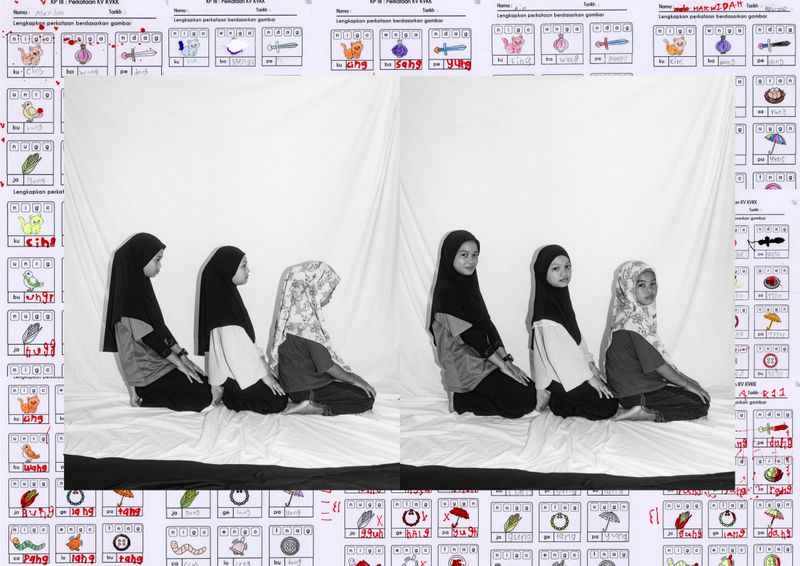
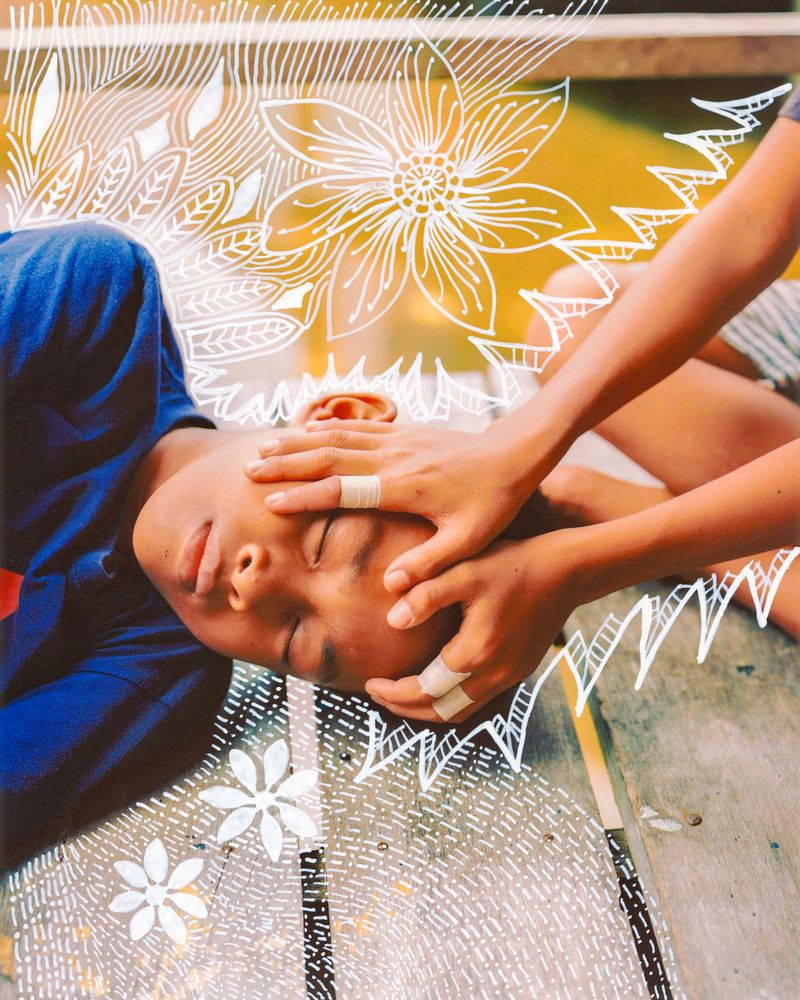
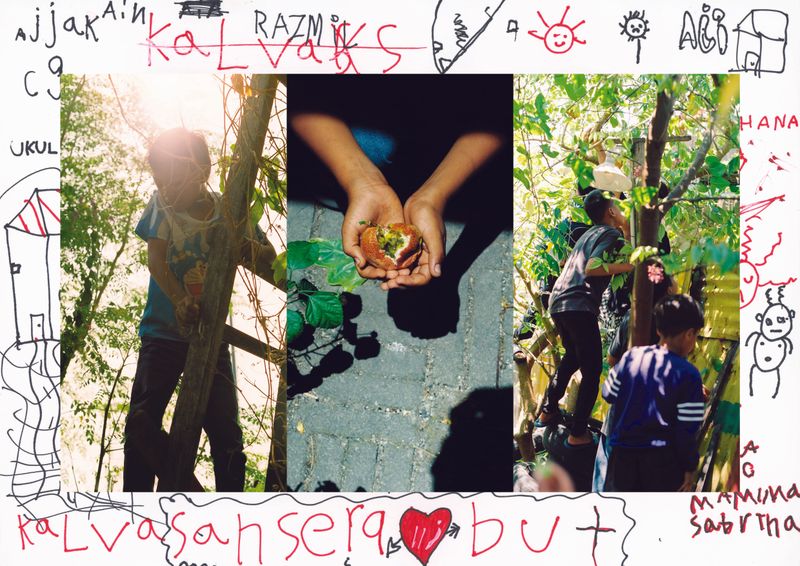
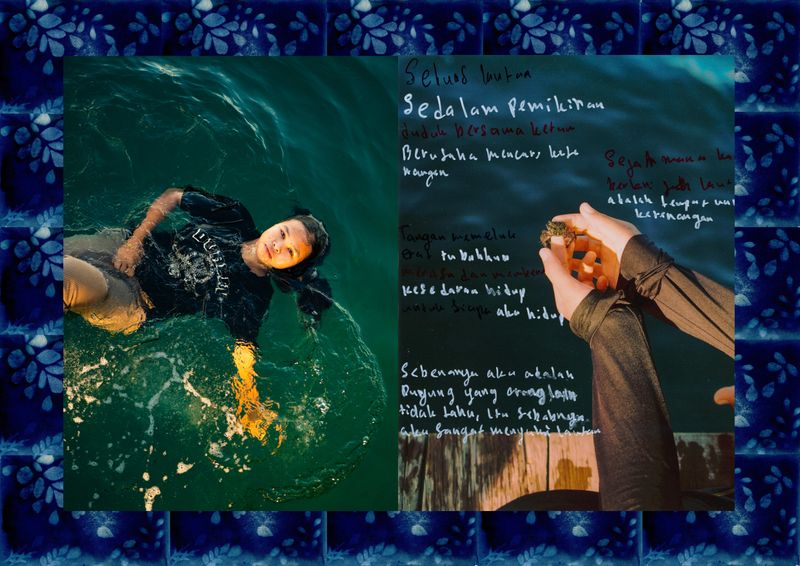
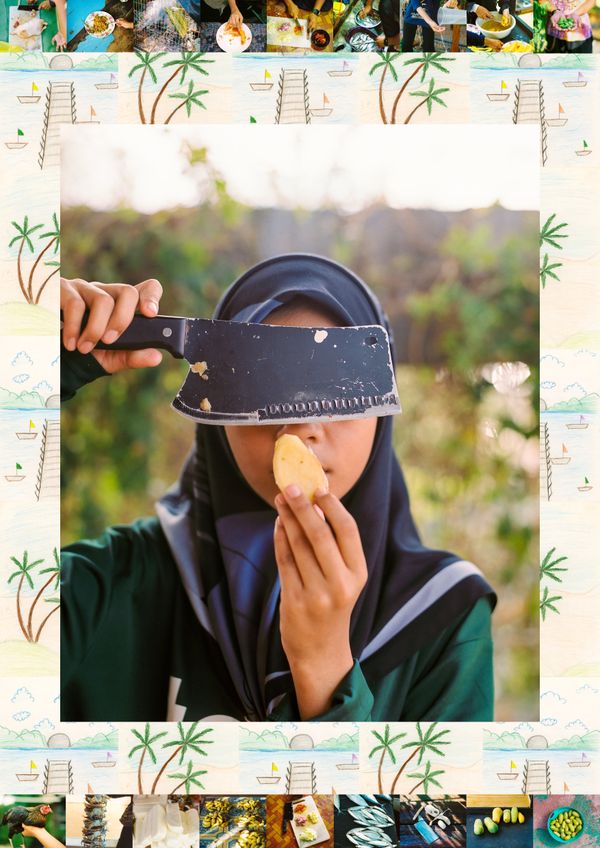
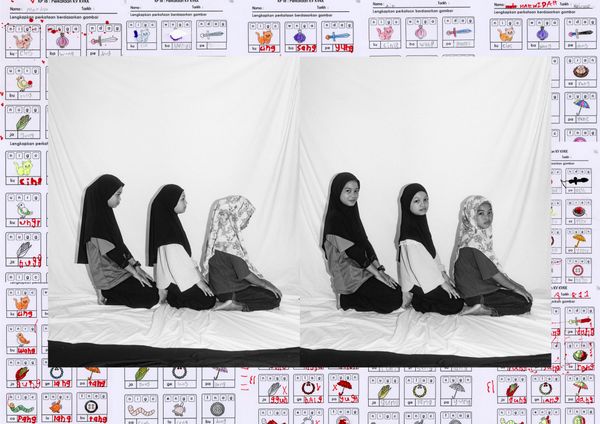
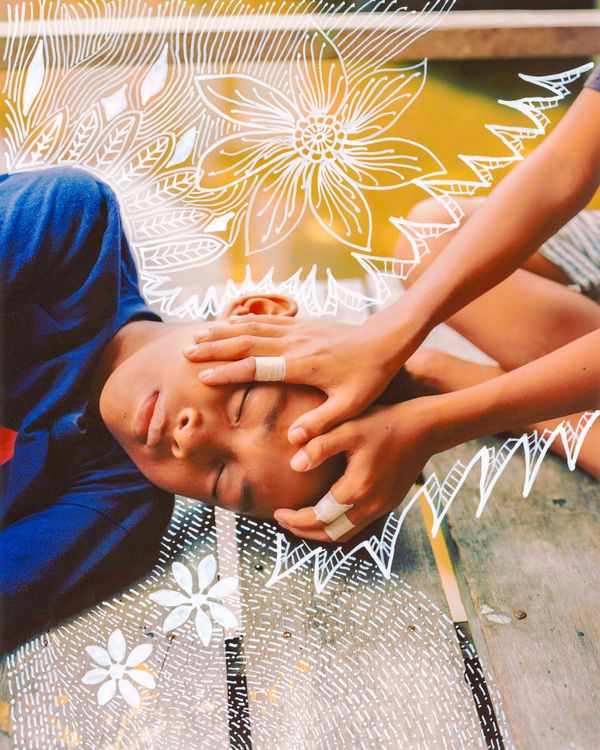
Over time, I became more aware of the children’s capabilities and interests, so I had to come up with methods that would further encourage their engagement with photography and art. This led me to research previous collaborative photographic works, and I discovered those by Nigel Poor, Eric Gottesman, Carolyn Drake, and Susan Meiselas, which gave me a lot of inspiration. I noticed that when the activities were more collaborative, the children were more stimulated and interested in the lessons. I also thought: “I have already taken so many photos of them and their community, why don’t I let them do something with them?” This led to various interventions, such as Batik art and photo annotations, which I felt were more profound than the passive, conventional photographs I had taken when viewed in isolation.
Even though we shared similar language and cultural backgrounds to a certain extent, I am still considered a privileged outsider. Through these collaborative works, I was learning so much from the children. For example, through the photo-annotation activities, I learned a lot about the children’s thoughts and psyche, with their responses ranging from the hilarious to the downright melancholic. This made me realise that despite their young age, these children have an astute point of view, sensitivity, and awareness of the world, their lives, and their surroundings.
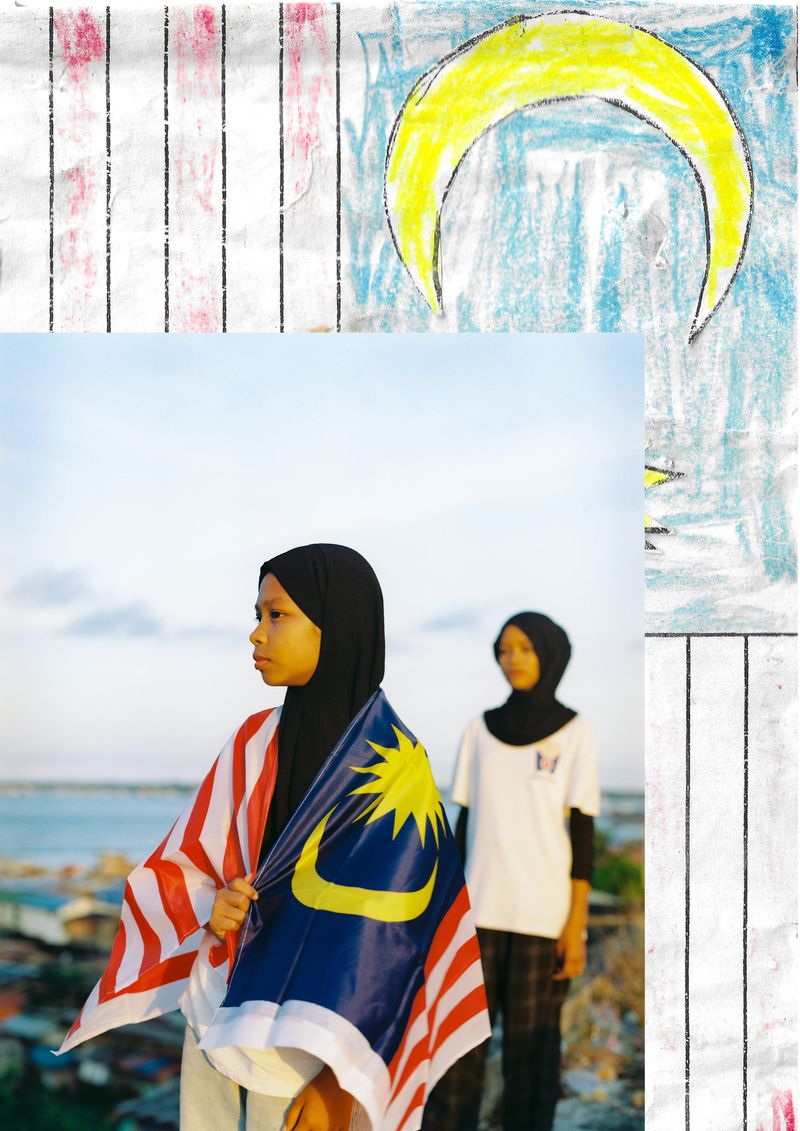
The image of a student wrapped in the Malaysian flag carries a powerful tension: a symbol of national identity placed on someone who is legally excluded from that belonging. Can you tell us more about the story behind this image and what made this moment meaningful to you?
In the photo, the children were rehearsing for a school performance, which, ironically, often involved themes of cultural pride, nationalism, and patriotism. Therefore, this photo became an example of such unintended symbolism. I was simply there to photograph the activity, and it was only after I developed the films and saw the images that I realised the rather sad and nuanced meaning the photo would come to represent.
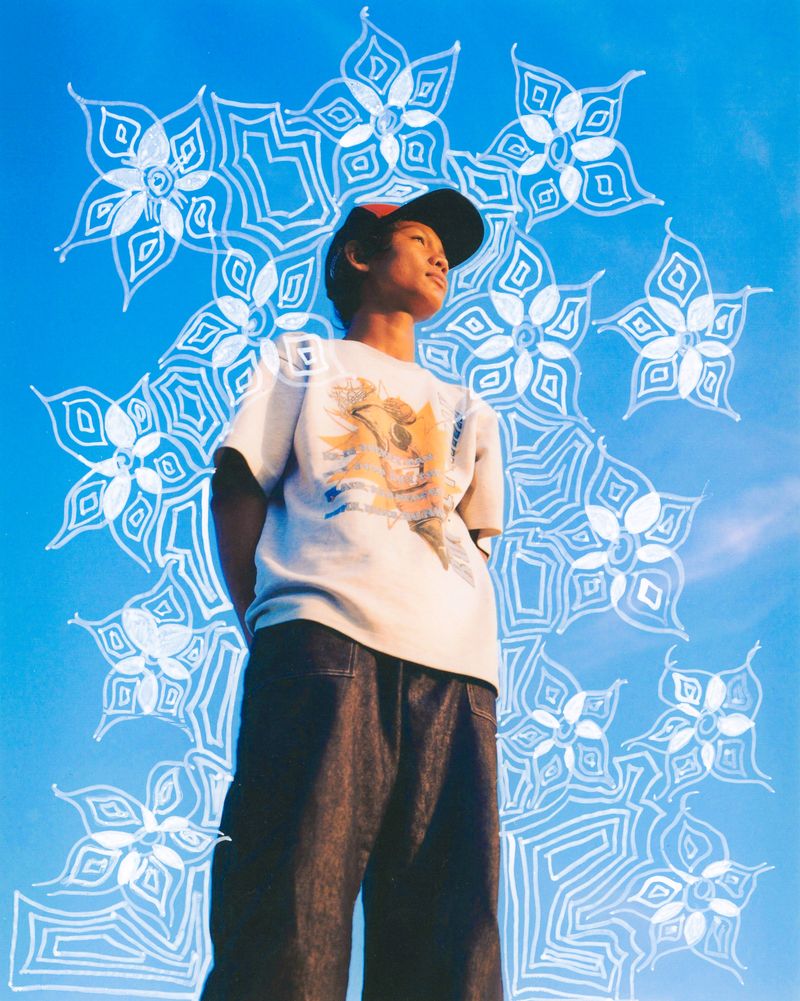
Throughout the project, you bring together photography, students’ drawings, and cultural references from Semporna, such as Batik. How did these elements shape the visual language of the project, and how important was it for you to create a work that emerged from the students’ own environment and experiences?
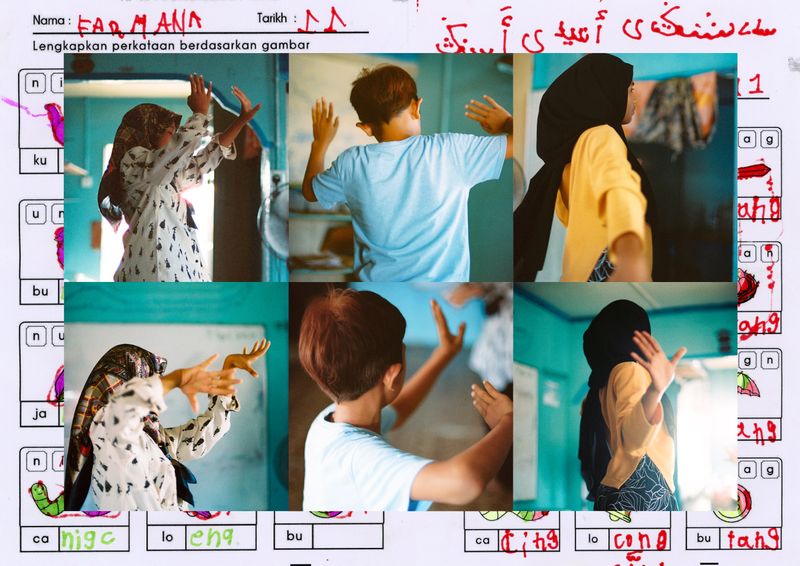
The function of this project was to serve as a visual record of the life and culture of a society that has been rendered invisible by the state. I also wanted the project to document the indomitable spirit of the stateless children, including their love of life and pride in their culture. I remember showing the students a video of the traditional dance of their own Bajau Laut people, called the “Igal-Igal”, as part of a cultural discussion. Their eyes immediately lit up, and I could sense their pride as they explained the cultural background and demonstrated the dance to me. Moments like this served as a reminder that they were more than just the “forlorn stateless” often portrayed in the media. I wanted the children to be proud of themselves and hopeful about the future, so I felt the best way to do this was to include their input in their visual representation. It was this desire that shaped the narrative of the project.
The title Bunga & Tembok (The Flower & The Wall) carries a strong contrast between fragility and resistance. How did this title emerge, and how does it relate to the images you created together?
The title of this project was taken from a poem by the late Indonesian poet and activist Widji Thukul entitled Bunga dan Tembok, which translates as The Flower and The Wall. It was a poem that the children were taught in class. It contains a message of resilience and hope: seeds taking root against the odds and standing against cruelty and tyranny. For me, it is a moving allegory for the experiences of the stateless. The vibrancy of the imagery produced is almost like a proud declaration of their identity and existence despite attempts at suppression and erasure through the law.
Just like the collaborative works that emerged from this project, I wanted the title to be closely tied to their education, since it was a poem the students learned in class.
This work began as a collaboration in Semporna and will now reach new audiences through Kranj Foto Fest 2026. What conversations do you hope the work can create beyond its original context?
I hope that this project will make viewers, particularly photographers, reflect on the many approaches to establishing different visual languages that can act as platforms for their subjects’ voices. Illustrating the realities of those who are marginalised does not have to be confined by the norms of traditional image documentation. In addition, I believe that my role here was not to provide a voice for the children, but simply to remind them that they already have one.
--------------
All images © Byron Mohammad Hamzah
Byron Mohammad Hamzah is a Malaysian documentary photographer based between Malaysia and the UK. With a background in medicine, his photographic practice is shaped by observation, empathy, and close engagement with the people he photographs. His work focuses on social issues, identity, cultural tensions, and the lives of communities often pushed to the margins. He holds an MA in Photojournalism and Documentary Photography from the University of the Arts London.
--------------
Kranj Foto Fest is an international photography festival in Kranj, Slovenia. Created to exhibit, promote, and support Slovenian and international artists, the festival brings together emerging and established photographers from around the world. Through exhibitions integrated into the city’s public spaces, guided tours, workshops, screenings, and other events, Kranj Foto Fest creates a platform for dialogue between photographers, curators, editors, students, and the local community.