Architecture Is Not A Still Object: Pedro Leão Neto On The Luis Ferreira Alves Award
-
Published18 Nov 2026
-
Author
How do images shape the way we see architecture, and vice versa? The Award’s founder reflects on the projects recognized in the first edition, as applications for the second remain open until 1 January.
“Cities are not coherent objects that can be understood through a single, polished image,” says Pedro Leão Neto. “They are made of overlapping times, unfinished processes and competing interests.” A layered understanding of architecture and its relationship with photography shaped the Luis Ferreira Alves Award, which Leão Neto and Catarina Providência founded in 2025 in memory of one of Portugal’s most significant architectural photographers. Offering €17,000 in prizes, it sits within a wider cultural programme of exhibition, book, public talks and podcast.
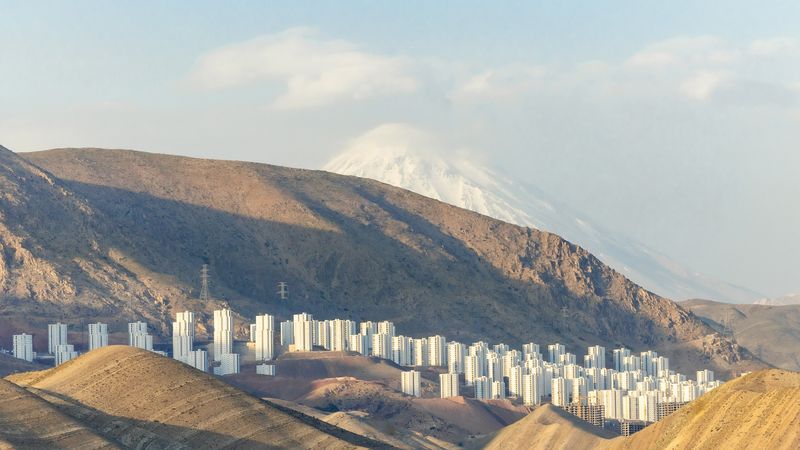
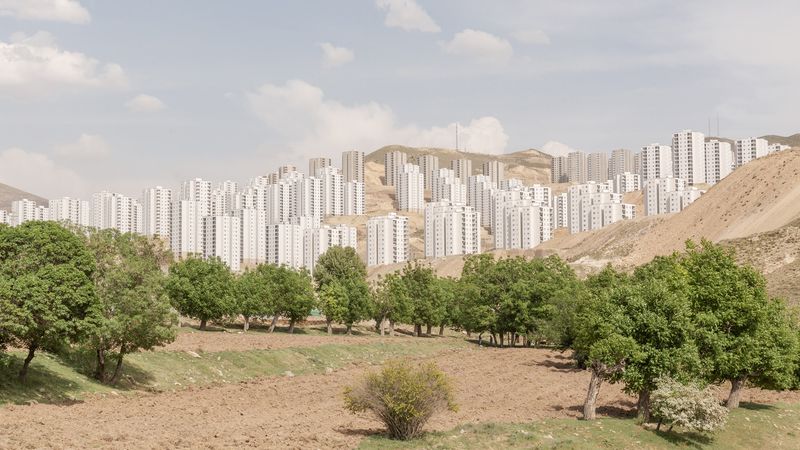
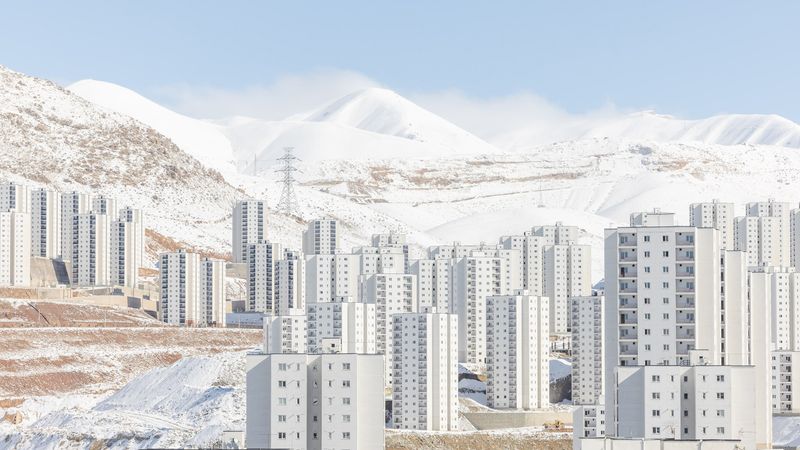
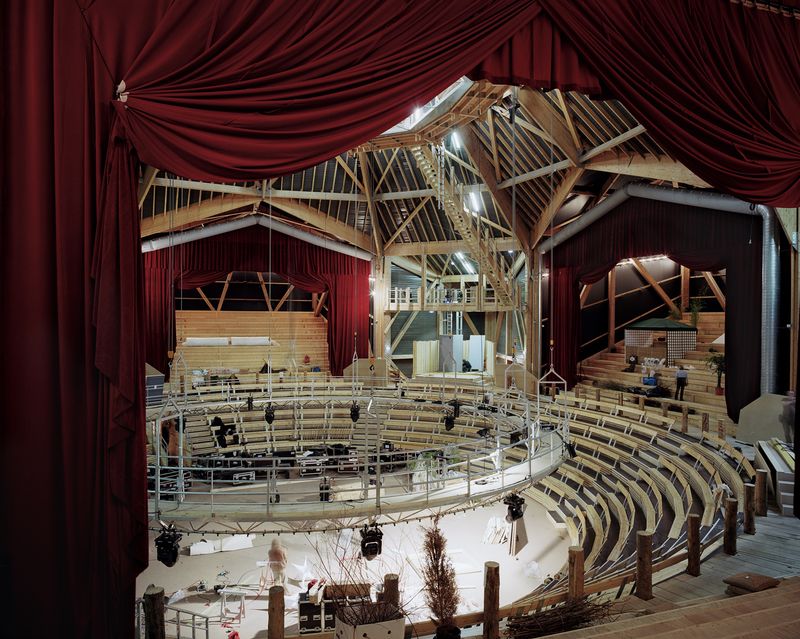
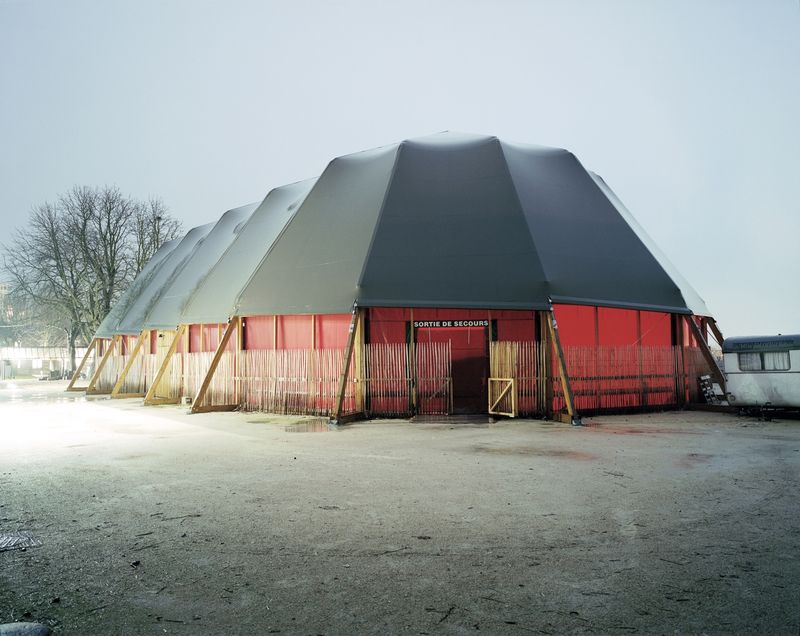
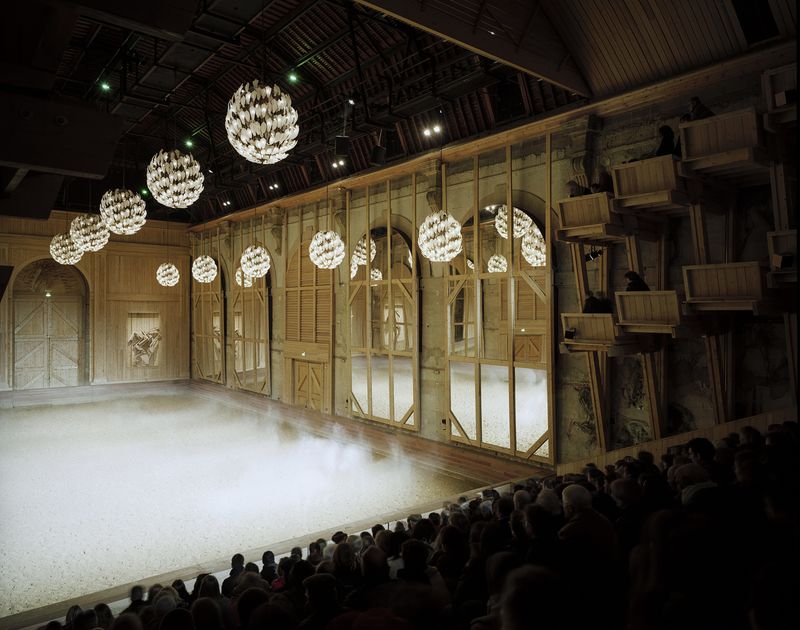
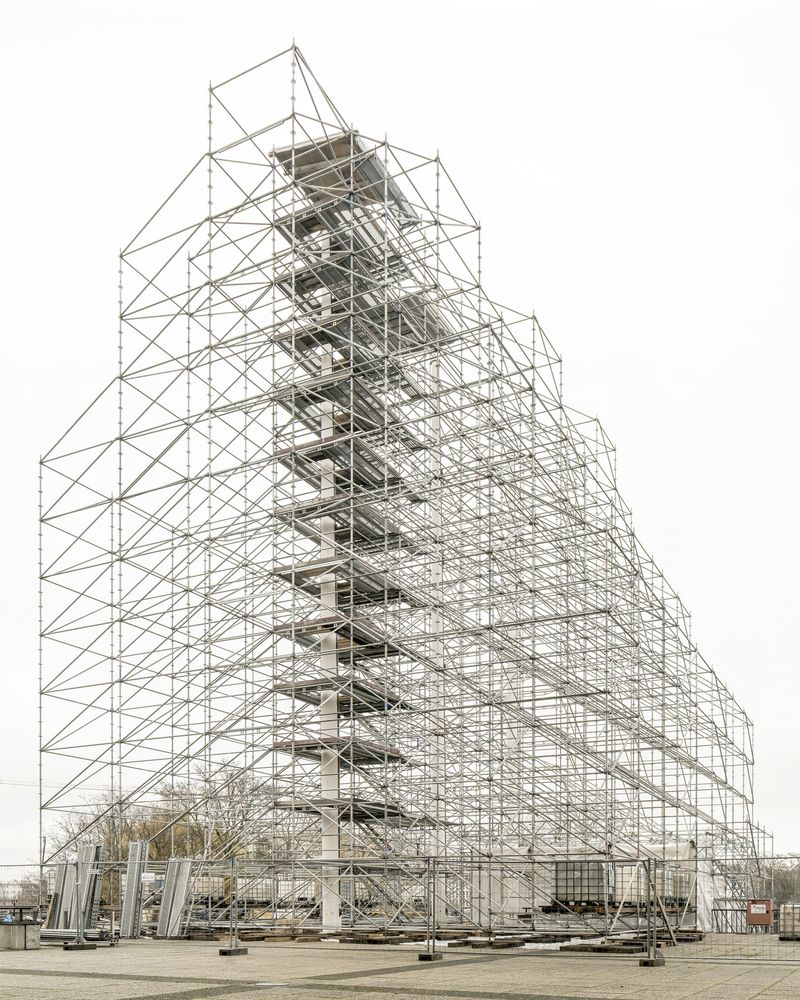
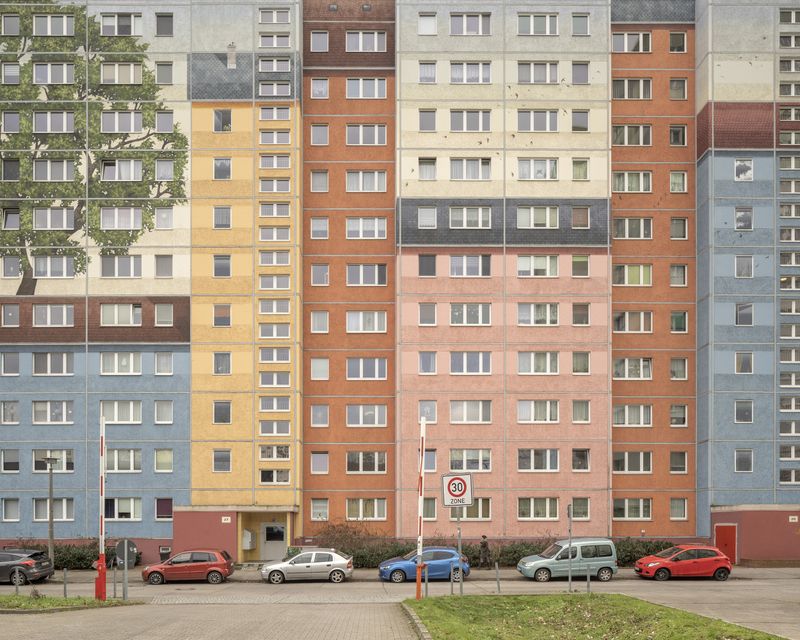
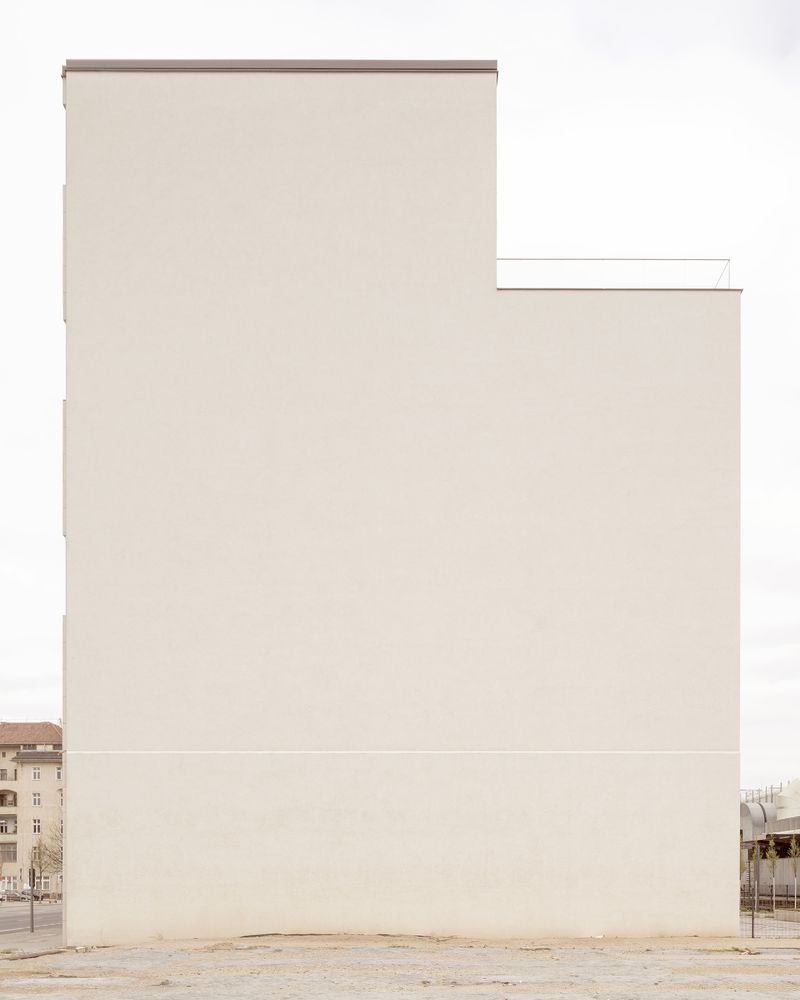
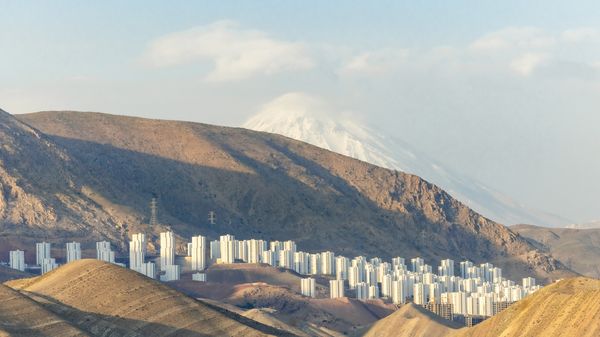
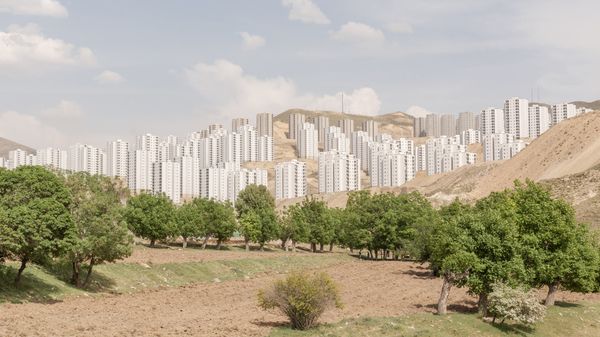
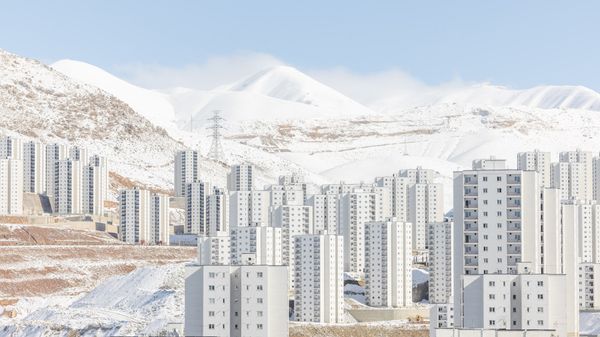
The three works awarded in 2025 – Frequent Whites by Maho (First Prize), Oui avec plaisir by Cyrille Weiner (Second Prize) and Provisional Atlas of Berlin by Sergio Belinchón (Third Prize) – embody that philosophy in different, yet connected ways. Maho looks at the white apartment blocks of Pardis, Iran, through the changing seasons, while Weiner observes the everyday life of theatres and circuses in France. Between documentation and pictorialism, Belinchón records Berlin’s rapid transformation and housing crisis.
Dear Pedro, in your view, what makes the difference between photography that simply records architecture and photography that is able to go beyond that?
There is nothing wrong with recording architecture. The documentary dimension is essential. Without it, we would lose a great deal of our architectural memory. The difference comes when the photographer is not satisfied with showing what a building looks like, but begins to ask what it means, how it is experienced, and what sort of relationship it establishes with its surroundings and with people's lives. Architecture is not a still object. It changes with the light, with time, with use, and with the memories we associate with it. A photograph can make some of these less visible dimensions perceptible. It can also reveal contradictions between an architect's intentions and the reality of a place. This calls for more than technical competence: it requires curiosity, patience, intuition and, above all, a critical point of view.
I believe Luis Ferreira Alves understood this particularly well and was rigorous. Still, never merely descriptive, he went to what was essential about space and the architect's ideas. He knew how to find what mattered in a work of architecture without making the photograph itself the centre of attention. That balance, between precision and sensitivity, is still very important to me.
What value does photography add to spaces after – and how do you think architecture can enrich the photographic medium in return?
A photograph does not physically alter a building, of course, but it can change the way that building is seen, understood and remembered. It gives architecture another life, beyond its immediate location and beyond the moment in which it was built. For many people, their first encounter with a work of architecture takes place through an image. And that image may influence how they later experience the actual space. Photography has the capacity to keep alive what is momentary, such as a particular light or the transient signs of how space is appropriated, and it can also capture a building before it disappears or is transformed into a ruin. Moreover, it can question the dominant perception of a place, highlighting aspects not always visible, such as bringing to light lives and conditions that conventional architectural representation tends to leave outside the frame. In this sense, photographs become part of the cultural history of architecture, not simply illustrations of it.
The relationship also works the other way round and, in fact, architecture presents photography with a fascinating difficulty: how do you translate a spatial, bodily and temporal experience into a two-dimensional image? Scale, movement, silence, material, and atmosphere are all dimensions that may be conveyed automatically. Architecture compels the photographer to invent a language for them. At its best, this is a genuine dialogue between two creative practices.
You stated that "Luis Ferreira Alves showed us that architectural photography could be poetic without being romantic, precise without being dry, and political without being polemic". Maho's work Frequent Whites seems to strongly resonate with this. Could the passing of time and of the seasons be a way of resisting forced monotony, order, symmetry, and coherence – one that also carries a political and social relevance?
Yes, very much so, although I would be careful not to suggest that nature somehow resolves the social conditions that Maho is photographing. What I find so compelling in Frequent Whites is precisely the tension between two different rhythms. There is the almost relentless repetition of the white housing blocks in Pardis, on the outskirts of Tehran. Then there is everything that refuses to remain uniform: the seasons, the light, the vegetation, the atmosphere, the presence of Mount Damavand.
Maho returns to the same urban landscape over time. That decision is crucial. Gradually, what might first appear to be a formal study of repetition becomes a reflection on displacement, belonging and the conditions of everyday life. The buildings may be similar, but the experience of living in them can never be reduced to a single pattern. For me this is, in fact, where the work becomes simultaneously poetic and political and in that sense, it does not need to make a loud statement to be effective. Patient observation reveals the distance between an imposed spatial order and the more complex reality of human life. The poetry does not soften the criticism; it gives it depth.
The image descriptions that Maho provided look more like short poems. Do you think this textual dimension enriches the poetic visuality? Can it add something that we cannot grasp through the pictures alone?
I think it does, particularly because Maho's texts do not behave like conventional captions. They do not simply tell us where a photograph was taken or what is represented. They introduce a voice, a rhythm and a sense of memory that extend the experience of looking. The landscape becomes more than a backdrop, and the passing of the seasons acquires an emotional and cultural resonance. At the same time, I would not want the words to explain away the images. One of photography's great strengths is its capacity to hold meanings that we cannot immediately put into language. A good photograph leaves room for uncertainty, for the viewer's imagination and personal experience.
In Frequent Whites, I see the relationship between image and text as a conversation rather than an illustration. The photographs give the words a physical reality, while the words allow us to sense something of the author's inner experience of that reality. Each opens a door that the other, on its own, might leave closed.
One of your jury members, Eduardo Souto de Moura, saw photography and Maho's work as a way to shape an alternative or a future distinct from the current reality. Do you think that this also applies to the other two works, as a way to speculatively reimagine the original architectures, and envision different ways of inhabiting them?
I think that possibility is present in all three works, but in quite different ways. Photography cannot, by itself, transform the material and political conditions of a place. What it can do is disturb what we take for granted. It can make us realise that the present arrangement of things is neither inevitable nor the only one imaginable.
In Maho's photographs, the changing landscape seems to resist the idea that life can be contained within an endlessly repeated architectural formula. In Cyrille Weiner's Oui avec plaisir, the possibilities are more directly connected with use: spaces for theatre, circus and collective experience are shown as places continually re-created by the people who inhabit them. Architecture becomes an invitation rather than a fixed prescription. Sergio Belinchón takes us in another direction. His Berlin photographs reveal what is being lost through redevelopment and, in doing so, ask us to consider what sort of city we wish to build and for whom. So yes, I believe these series allow us to imagine alternatives. Not because they provide ready-made answers, but because they make the right questions difficult to ignore.
Cyrille Weiner's images of performative spaces present a challenge: what happens when photography, with its static nature, captures a stage designed for dynamic action?
There is a lovely paradox here. Theatre and circus spaces are made for movement, voices, bodies, encounters – for something that happens and then disappears. Photography fixes a moment. That doesn't make it incapable of conveying performance. Sometimes the anticipation of an event, or the traces it leaves behind, can be just as revealing as the event itself.
Cyrille Weiner understands this. In Oui avec plaisir, which grows out of his relationship with the architect Patrick Bouchain, he is interested not only in the public face of these spaces, but also in entrances, backstage areas, technical structures, moments of preparation and apparent emptiness. In those quieter moments, we begin to imagine the life that animates the architecture.
What do these architectures tell us, compared to other types of buildings?
What they make especially clear is that architecture is not completed by its form alone. Its meaning emerges through use, through the people who appropriate it and the activities it makes possible. This is true of housing, schools or public spaces as well, but performance architecture makes that dependence wonderfully visible. Weiner's photographs capture not the performance itself so much as its possibility.
Despite these buildings' majestic scale or sheer size, the interplay of light, shadow, and composition somehow makes them feel remarkably familiar and welcoming. Was the sense of intimacy conveyed by Cyrille Weiner a relevant element to the jury's decision?
I believe intimacy is certainly an important quality of the series, though I would hesitate to isolate it from the work's larger achievement. As Hélène Binet emphasised when presenting the awards, what particularly impressed the jury was the strength and coherence of the visual narratives, rather than the beauty of individual images alone.
Weiner's intimacy, I think, comes from where he chooses to stand and what he allows us to see. Instead of insisting on grand perspectives or spectacular architectural gestures, he attends to the more modest aspects of these places — the light of winter, a backstage passage, a structure waiting to come alive. Even when a volume is large, we can imagine ourselves inside it. There is a human measure to the photographs. That is also closely related to Patrick Bouchain's understanding of architecture as something generous, open to use and participation. Weiner's photographs do not simply admire these spaces from a distance; they invite us into them. Their warmth is never sentimental, and that seems to me one of the series' greatest strengths.
The architecture Sergio Belinchón portrays in Berlin is fragmented, dispersed, and broken. How do these images inform us about our present reality?
What interests me in Provisional Atlas of Berlin is that the fragmentation is not only visual. It also tells us something about the fragmentation of the contemporary city – its social relationships, its memories, and the growing distance between those who can afford to remain in a place and those who are pushed out. Belinchón spent four years repeatedly walking through Berlin and observing its changes. The demolition sites, scaffolding, altered façades and occupied gaps become signs of a much wider transformation. Berlin has a particular history, marked by war and the Wall. Still, the pressures he records – speculation, rising housing costs, the loss of neighbourhood life – are familiar in many other cities, including Porto.
I would say that the apparent disorder of these photographs is itself quite revealing. Cities are not coherent objects that can be understood through a single, polished image. They are made of overlapping times, unfinished processes and competing interests. Belinchón asks us to look at what is usually dismissed as incidental or unattractive, because it is often in those fragments that the reality of urban change becomes clearest.
As in Maho's case, we observe the construction of a narrative surrounding housing and architectural injustices: in Berlin, buildings are transformed not to meet community needs, but to serve the profit-driven interests of a few. Yet, the style remains pictorial, striving to make these urban details resemble paintings. Are you particularly interested in photographic poetics that bridge these two ideas?
Yes, because I don't see documentary commitment and poetic expression as opposing positions. In fact, I think the most interesting work often exists in the tension between them. Thus, Belinchón is investigating very concrete processes, such as demolition, redevelopment, and gentrification, as well as the disappearance of affordable housing. Still, he does not limit himself to producing visual evidence. He composes images that make us pause, notice relationships and look again.
The pictorial dimension is important here. Through framing, colour and the arrangement of fragments, an ordinary building site or an awkward urban corner acquires a strange presence. The image can initially attract us through its formal qualities, only to make us aware, a little later, of the social questions it contains. There is, nevertheless, an ethical difficulty to be resolved, which means how we can avoid that beauty from becoming a way of aestheticising injustice or making displacement seem picturesque? I believe Belinchón has been able to do that because the aesthetic quality of his visual language does not cancel the critical reading. It sustains our attention long enough for it to develop. This is very close to what I meant when I wrote that photography can be poetic without being romantic, and political without being polemical.
Belinchón makes it clear that one of the struggles caused by urban regeneration is the dispersion of cultural heritage, characteristics of a city and a country that experienced a division like that of the Berlin Wall, which consequently resulted in a dual-natured landscape. Do you think that photography can somehow rebuild, reconstruct or at least help process loss and destruction?
Let me distinguish between rebuilding a place and helping us understand what has been lost. Photography may not be able to demolish buildings, or bring back a displaced community, nor can it repair the social bonds that redevelopment may have broken. It can, nevertheless, give those absences a presence, and preserve traces that would otherwise disappear and, perhaps more importantly, help us recognise why they matter.
Berlin constitutes a powerful example of all this. The urban identity of the city has been shaped by a series of ruptures, divisions, reconstructions, and ongoing interpretations and Belinchón's photographs suggest that the disappearance of familiar spaces is not merely a change in the city's appearance but, above all, signifies a loss of collective memory and possibilities for belonging. But we must avoid treating the past as fixed or necessarily better. Cities need to change. The question is what to preserve, what to lose and who has a say. Photography can keep that debate alive. It creates an archive, but also keeps memory active – not as nostalgia, but as a resource for imagining a more thoughtful and inclusive urban future.
---
Submissions for The Luis Ferreira Alves Competition are accepted until 1 January. Judges Paolo Rosselli, Valeria Carullo, and João Pedro Serôdio will select a shortlist of 10 projects. The First Prize is €10,000 with the support of Robbialac. The Second Prize is €4,000, with the support of “la Caixa” Foundation / BPI, and the Third Prize is a €1,500 voucher supported by Leica. The 2026 edition also introduces the Portuguese Emerging Photography Prize, created to recognise and give visibility to a new national talent (voucher worth €1,500 with the support from Leica, for the purchase of photographic equipment). Selected projects will become part of the official exhibition and publication. Find out more on their website.