Biennale Photo Mulhouse 2024
-
Opens13 Sep 2024
-
Ends13 Oct 2024
-
Link
- Location Mulhouse, France
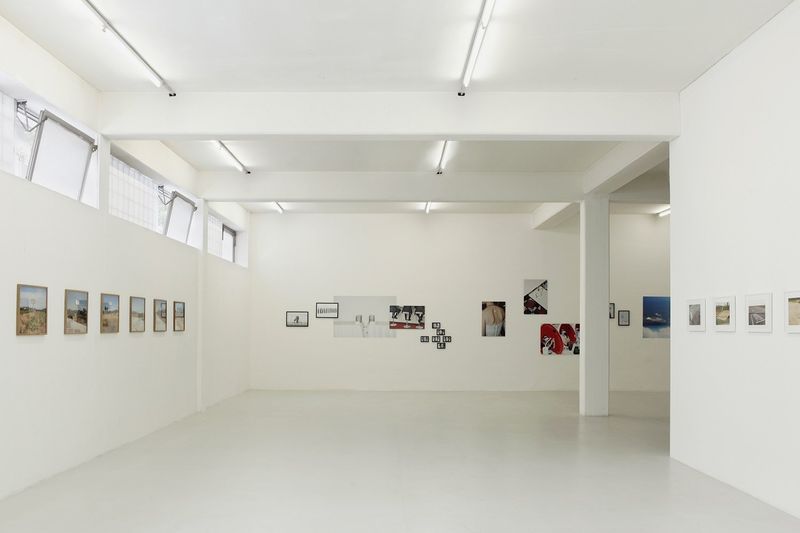
In 2024, Biennale Photo Mulhouse invites visitors to join them in the exploration of Impossible Worlds, admissions of defeat as well as promises for the future.
Overview
In a global context dominated by the risk of ecological disasters, future prospects seem to point towards worlds that are far less habitable. At a time when several dystopian scenarios seem to have become subjects of factual debate, connecting human and living cycles is becoming more critical than ever. The connection between human life and that of plants and the living world is essential if we are to transform worlds that have become impossible to live in for certain species, into possible worlds. This edition of the Biennial invites us to pay closer attention to the diversity of life forms, but also to enter into sensitive and sometimes projected worlds of possibility.
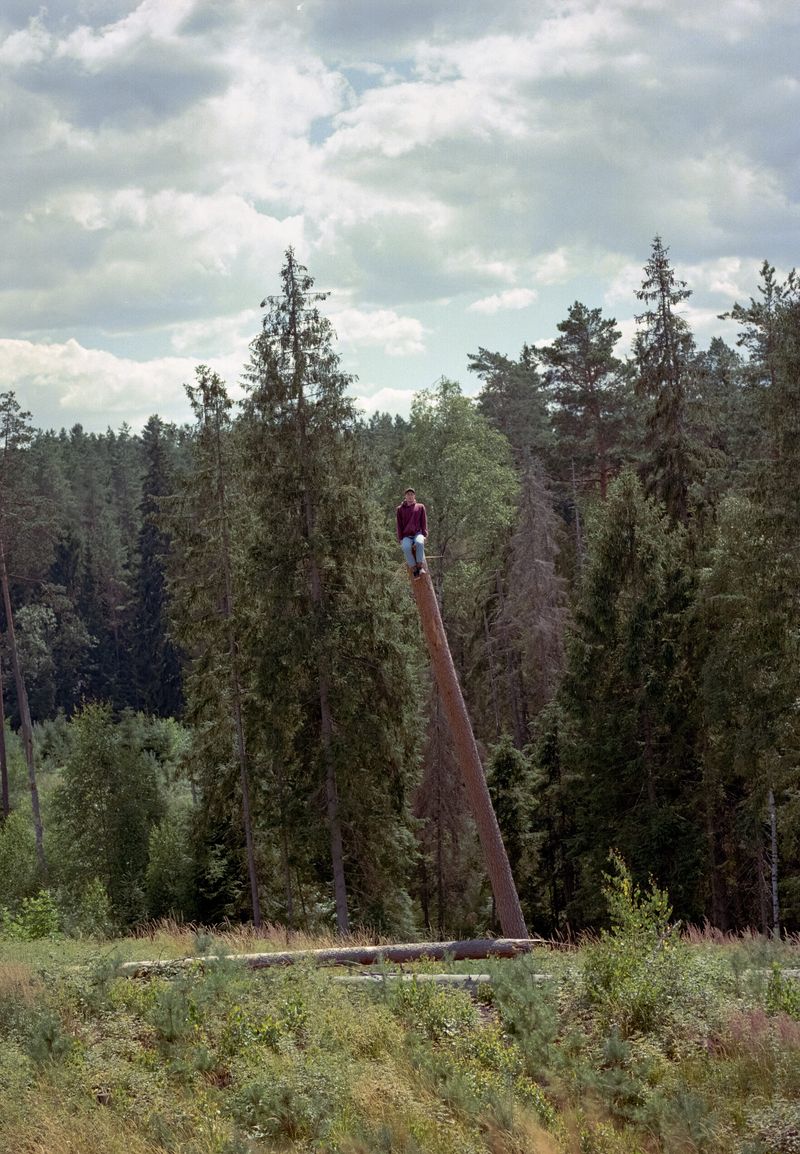
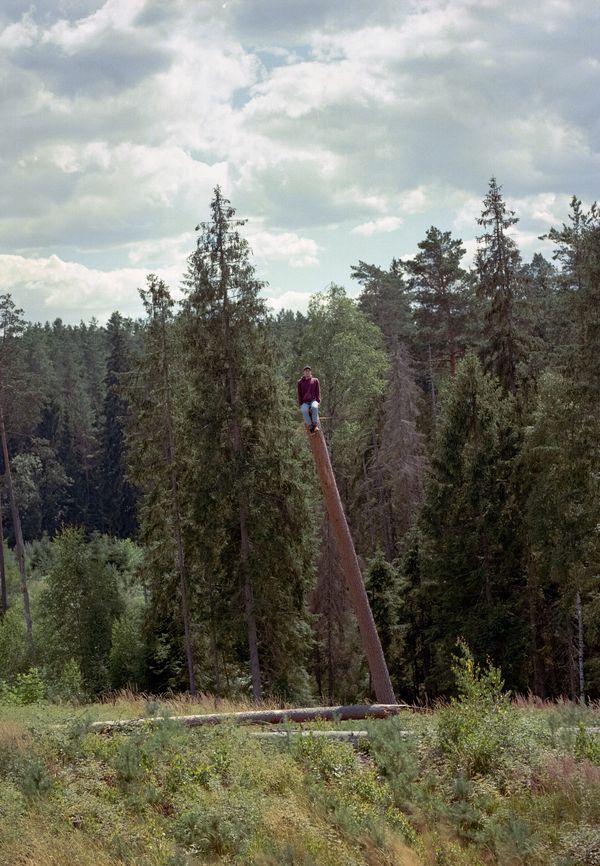
The program is anchored in our post-industrial era, in Mulhouse, one of the "cradle cities of industrial imagery". The exhibition on Paul Wolff (born in Mulhouse in 1887) reminds us of times when industrial progress was envisaged to hold the keys to a better world. Accompanying the invention of the Leica, in an aesthetic close to the "new vision", Paul Wolff produced numerous "industrial reportages" dedicated to specific sectors (steel, automobiles, textiles, etc.) or production regions. The Paul Wolff collection in the Municipal Library's reserves reflects Mulhouse's industrial heritage (textiles, chemicals, foundry and mechanical engineering, as well as graphic printing). From the 1920s to 2024, the beauty of industrial and urban forms and architecture, so exalted by the avant-gardes, gave way to concerns linked to the Anthropocene era and to landscapes of the "afternarth". Therefore, Raymond Meeks' most recent work (Erasure, After Nature) and his duo with Awoiska van der Molen, expose the ruins of capitalism. Scraps litter the Californian desert like stigmata, or the consequences of an ongoing war. Lithuanian photographer Andrej Polukord uses performance and photography to denounce the phenomenon of mass deforestation. The Ritual Inhabitual collective has elaborated a narrative of revolt by focusing on a ritual that the Purhépecha people (Mexico) engage in with the wild bees of the forests they protect.
The consequences of extractivist practices are also one of the themes of the PEP (Photographic Exploration Project) exhibition. Inspired by Dark ecology, Felix Lampe shows the landscapes formed as a result of mining operations in Germany. In Swiss Gold Entropy, Lisa Mazenauer draws on the archives of her grandfather, a gold miner in Zaire, while Valentin Joseph Valette focuses on the economic development of the Sultanate of Oman.
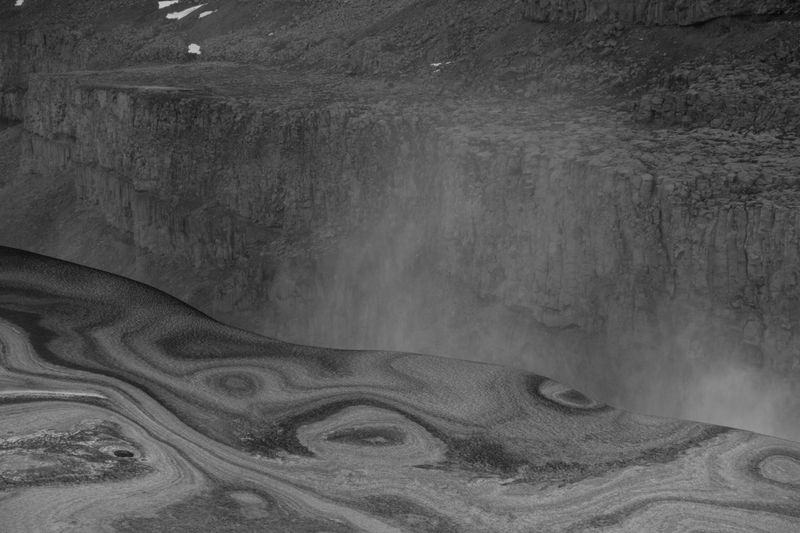
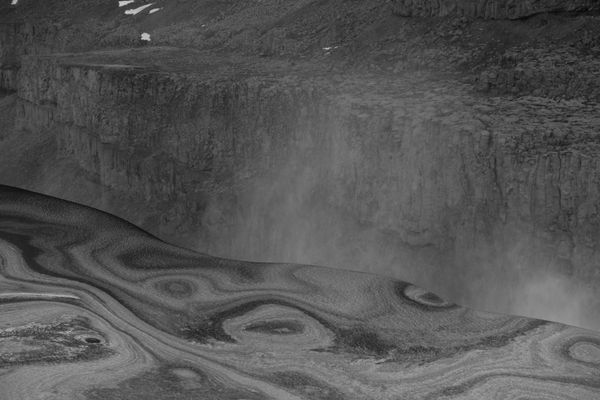
If the nature/culture opposition is questioned today, sensitivity to the underlying links uniting humans with living worlds is the poetic and meditative framework of those eyes - these eyes - they fade (Nigel Baldacchino, Bénédicte Blondeau, Bernard Plossu, Raymond Meeks, Awoiska van der Molen). This exhibition-experience is an evolving collective project. Following on from its first version (Malta, 2022), the exhibition at the Fine Arts Museum will explore the passages between the living world and human constructions. Bernard Plossu's La nature prisonnière bears witness to the artificial staging of nature in fully concreted spaces. "In the big cities, far from the peaceful havens of nature, it was obvious that man was trying to make people believe that everything was fine in the best possible setting," writes Plossu, introducing his "ecolo-visual" testimony. In his Pinetu series, Nigel Baldacchino photographs the unique shapes of urban trees, which have become metaphors for the various life paths and hazards of the users of this Maltese urban park. With Ondes, Bénédicte Blondeau presents photographs taken in Iceland that evoke the energy flows that shape our lives and overwhelm our powers of perception. The relationship with the living world is also a main driving force in Awoiska van der Molen’s work.
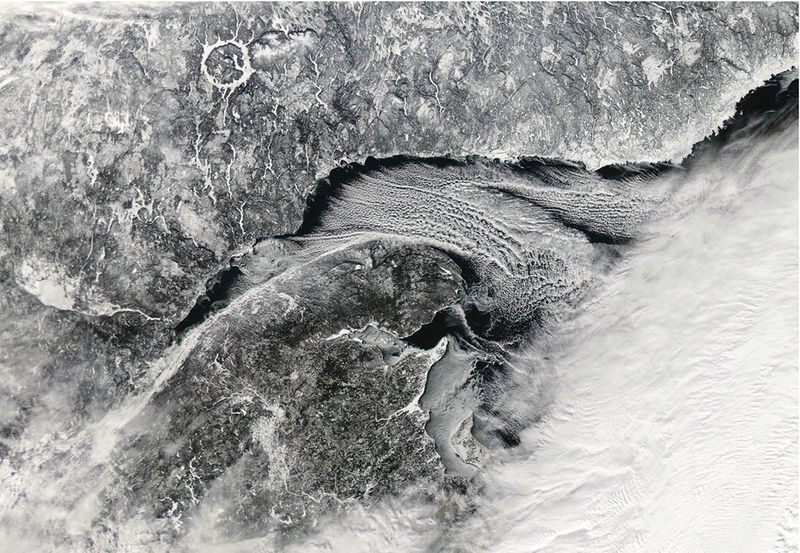
The emotional vector created between the photographer and his or her environment is one of the approaches taken in exhibitions by Terri Weifenbach and Vanessa Cowling (Thann), Léa Habourdin (Saint Jean Chapel, Mulhouse) and Ingrid Weyland (Hombourg). These photographers remind us of the fragility and vulnerability of living ecosystems, echoing that of human beings. In the Cloud Physics exhibition, Terri Weifenbach transcribes the air, the impalpable atmosphere and the infinitesimal that slips into a moment of life.
While photography itself has been part of an industry with environmental impacts since its invention, research into alternative printing techniques is expanding rapidly. In Fixing the Shadows, a series dedicated to the plant world, Vanessa Cowling uses camera-free photographic processes that do little harm to the environment. Léa Habourdin produces prints using plant pigments. For her installation, the photographer draws on the discoveries of an 18th-century canon-botanist to reflect on the future of the dunes and forests of Nida (Lithuania).
The circuits of globalized trade are addressed in Laurence Kubski's exhibition (presented by Bienne Festival of photography) and in the exhibition Troubled surface at DELPHI_space in Freiburg. In her Big Fish series, Laurence Kubski traces the supply chain of aquarium fish, from their capture in the ocean to the fishbowl. The Troubled surface exhibition features photographs by Gabriel Goller and Karin Jobst, linking two photographic positions that take different approaches to the subject of water and its poetic and political dimensions.
The city's spatial perspectives are also a theme of this edition. Taking the example of Hong Kong in his High Garden series, Tom Spach documents a rare urbanism combining high population density and close proximity to nature. Ultra-technological urban construction coexists with biodiversity in a new city format.
Last but not least, two exhibitions in the public spaces of Mulhouse will feature documentary approaches or imaginary visions of the future: one to mark the 10th anniversary of the festival, and the other to celebrate the Grand Est region's art schools.
The opening days on September 13, 14 and 15 will provide an opportunity to discover these visions, often critical but resolutely forward-looking, in the presence of photographers and curators. As the essential medium for these voices, the photo book will be the subject of a special highlight on the opening weekend.