Where the River Holds Us
-
Dates2025 - Ongoing
-
Author
- Location Republic of the Congo
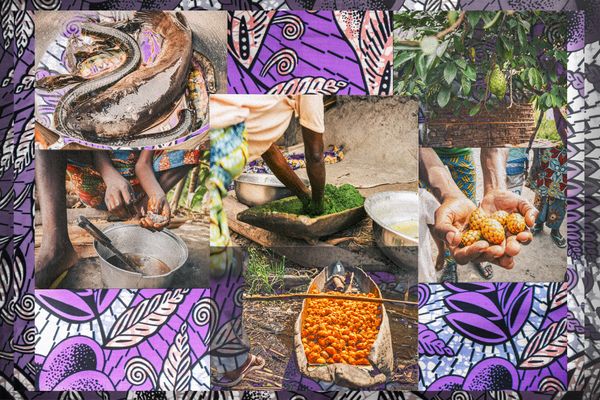
Through layered diptychs, this project explores the interwoven bonds between a Congolese river village and its environment, where human gestures echo the rhythms of the jungle and the river, and family history becomes a lens to reflect on belonging.
This project emerges from a return to the village of my grandfather, a small community nestled between the jungle and the Alima River in the Republic of Congo. What I expected to confront was distance, or rupture. Instead, I encountered a living system of interdependence, where relationships between people mirror the relationships between land and water.
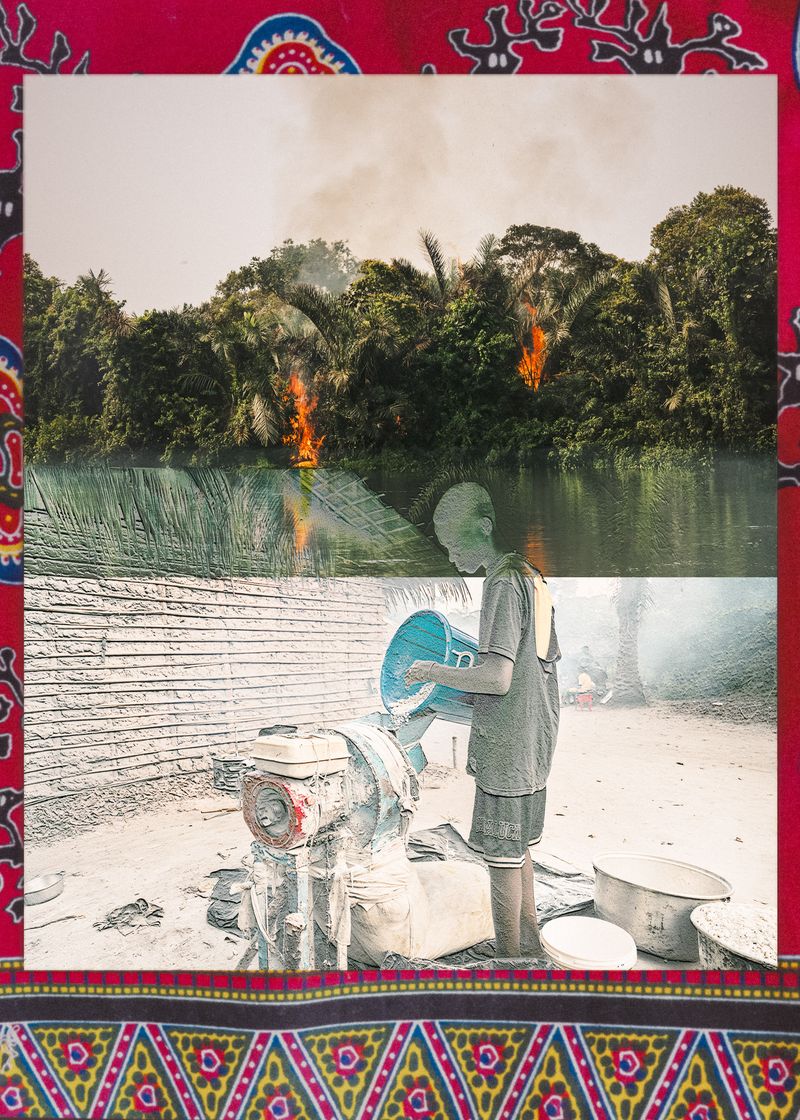
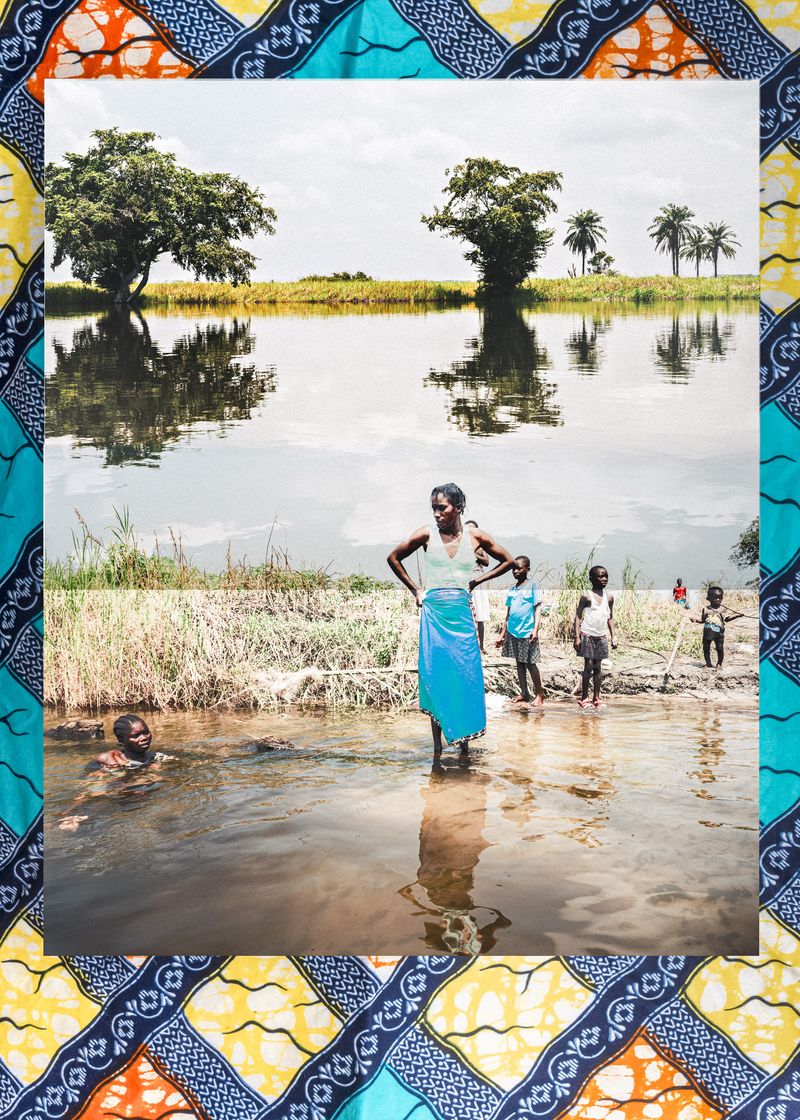
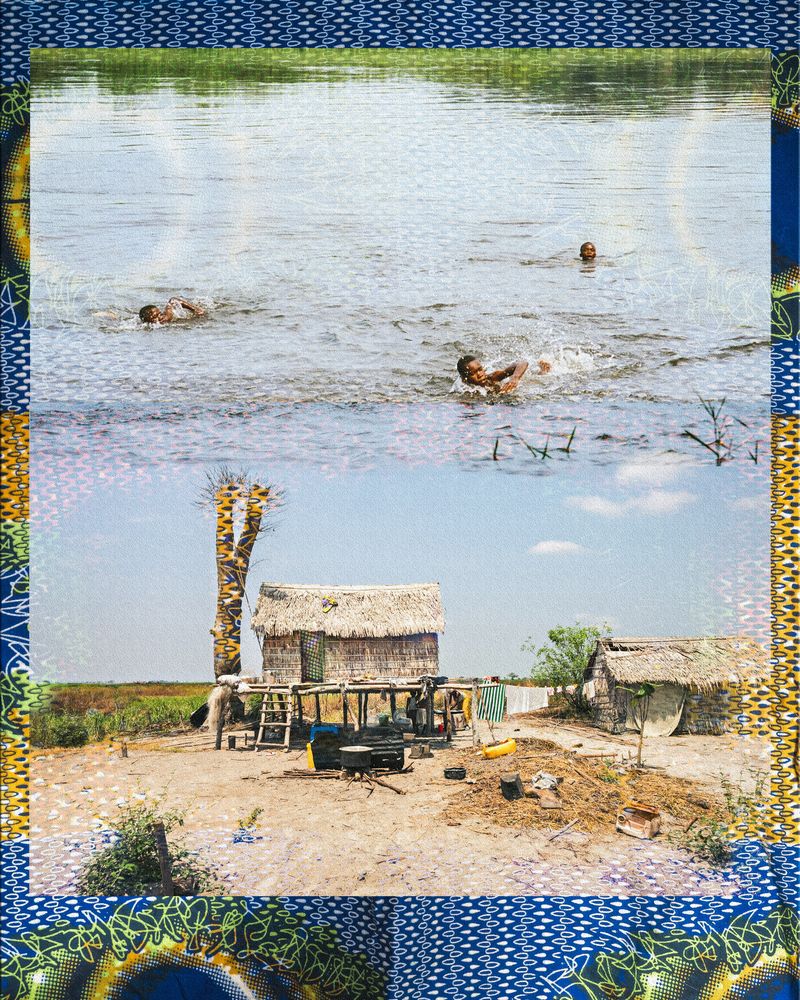
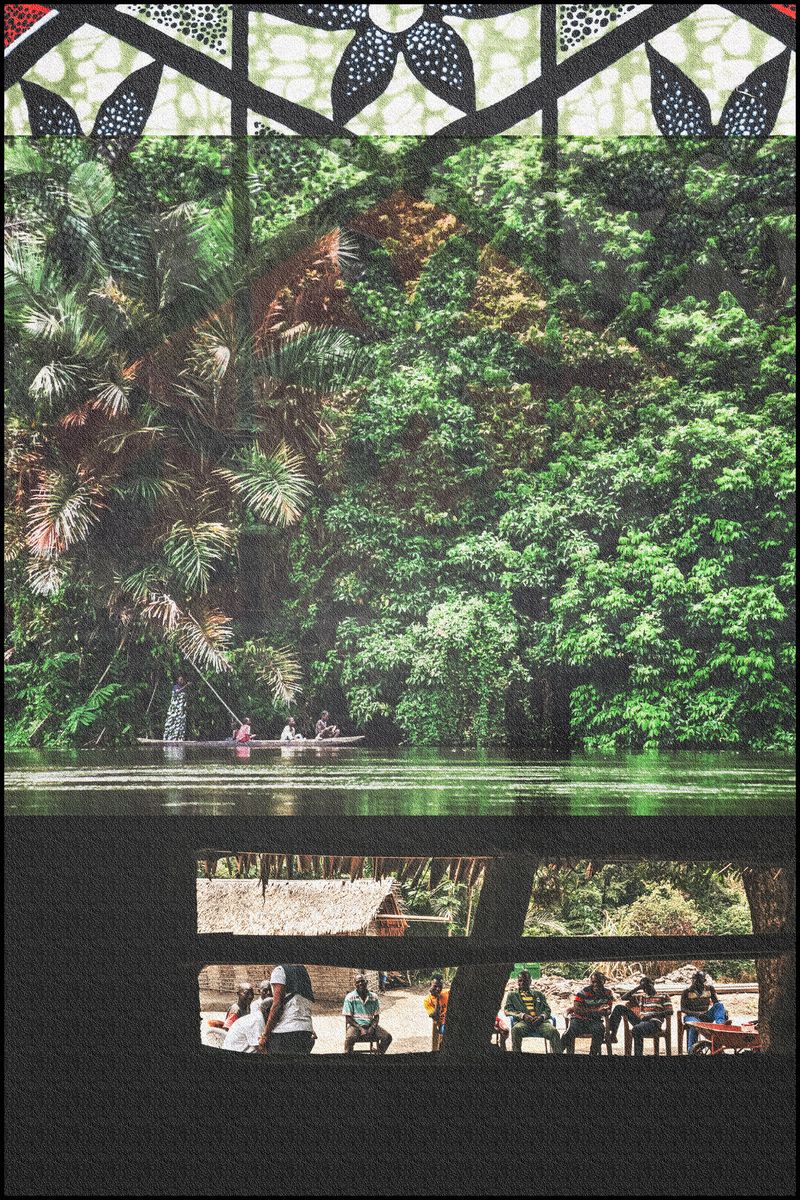
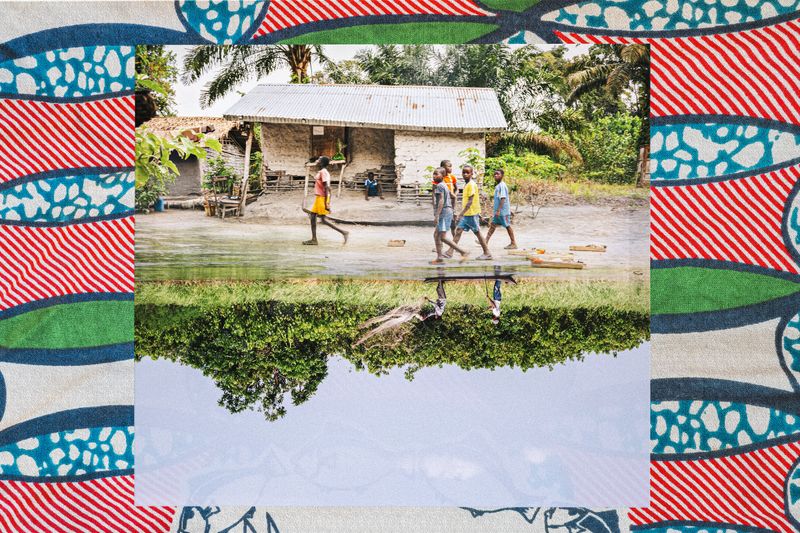
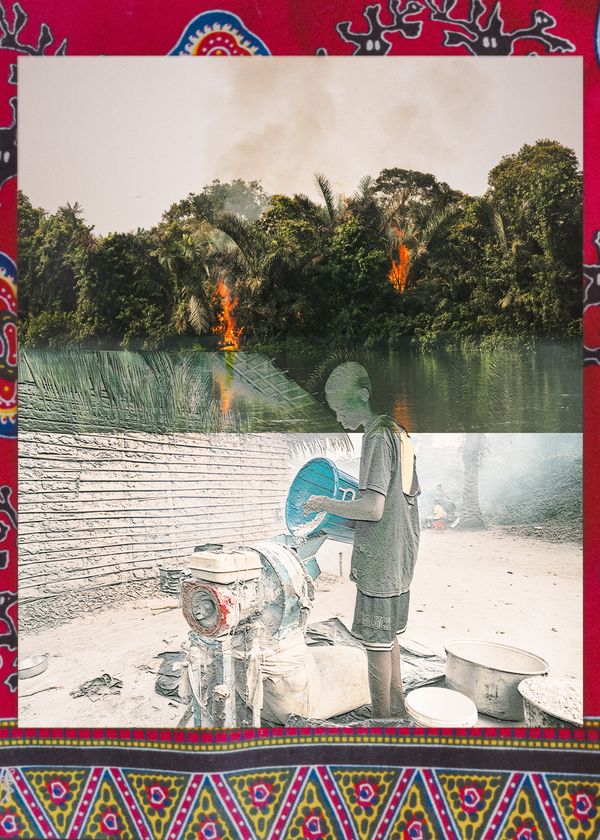
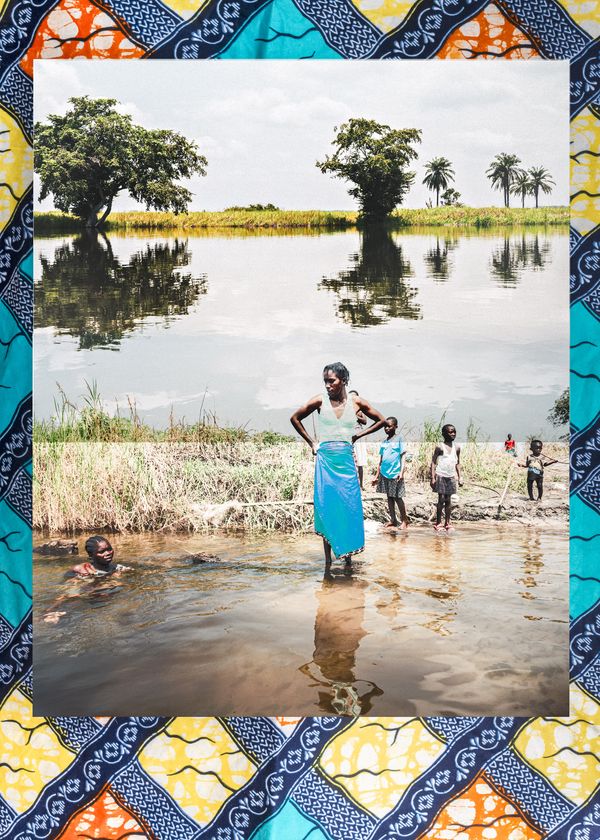
Through constructed diptychs, I pair scenes of daily life with images of the river or the jungle. A visible seam runs between them. It is a line that marks both separation and continuity. The two images echo and dissolve into one another, suggesting that the human body and the environment are not distinct entities but extensions of the same fabric.
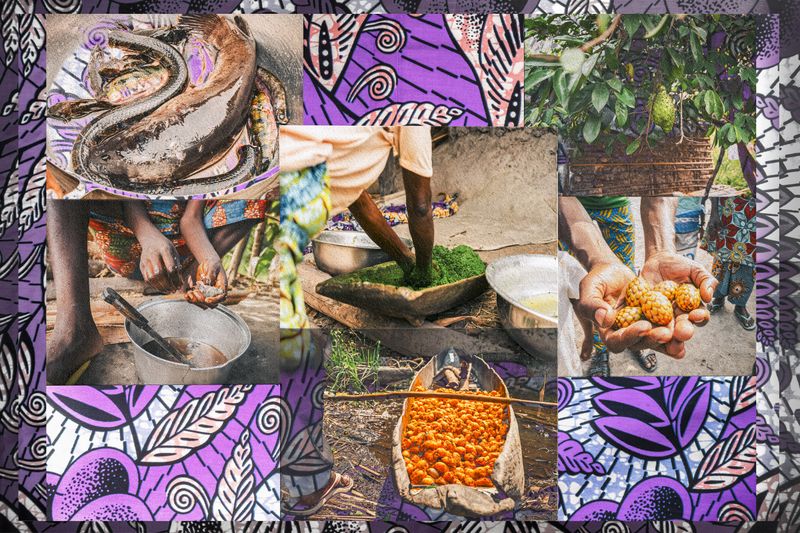
Each composition rests on a background of wax pagne fabric. The textile is not decorative; it functions as a cultural and symbolic ground. Its colors and motifs subtly resonate with the activities depicted whether it is waves beneath fishermen, fruit beneath harvested kola nuts, solar patterns beneath children swimming. The fabric becomes a connective tissue: between generations, between domestic and ecological space, between memory and present time.
In this village, smoke from cassava preparation blends visually with controlled forest fires used to open fishing paths. Children pulling handmade wooden pirogues mirror fishermen navigating the river. Women and children standing in eroded soil align with towering trees at the water’s edge. Interior and exterior spaces fold into one another; the river enters the home, and the forest reaches through the window.
These visual pairings are not metaphors imposed from outside. They arise from observation: from witnessing how labor, play, nourishment, architecture, and ritual are inseparable from ecological rhythms. The line dividing each diptych acknowledges tension and the environmental fragility, erosion, climate shifts. Yet the images insist on continuity rather than collapse.
Returning to this place as a descendant altered my understanding of belonging. The village is not simply an ancestral point of origin; it is an active, evolving network of care, knowledge, and adaptation. What began as a personal search for roots expanded into a reflection on something more universal: the human need to anchor identity within a landscape, and the quiet resilience of communities that live in reciprocal relationship with their environment.
In Where the River Holds Us, family history becomes a lens through which to observe a broader truth: that survival is collective, and that the bonds between people and place are woven as tightly as threads in cloth.