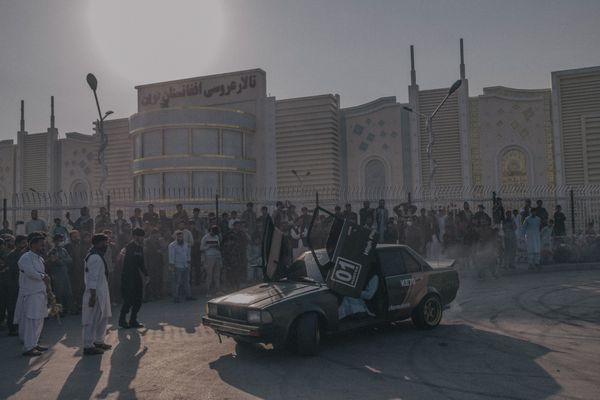
“Were Afghan Women to Unveil Their Tales”
-
Dates2024 - 2024
-
Author
- Location Afghanistan
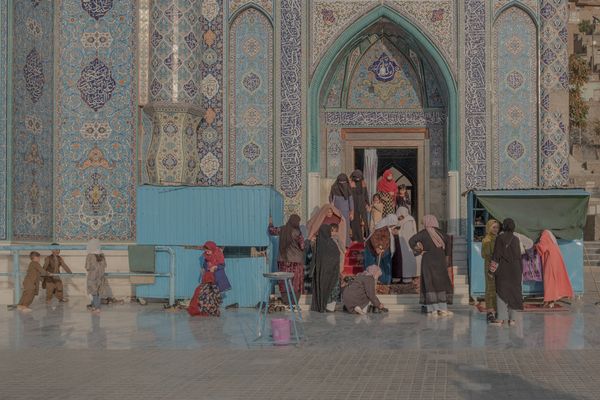
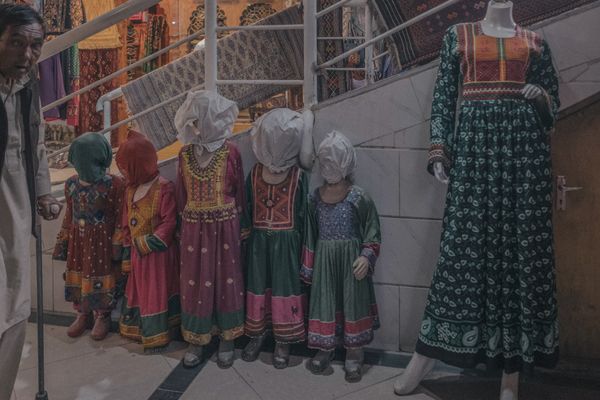
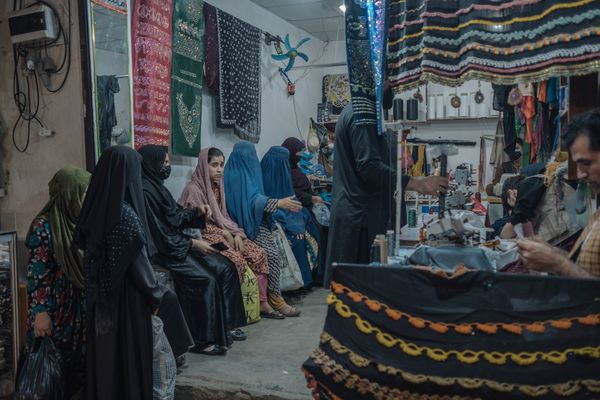
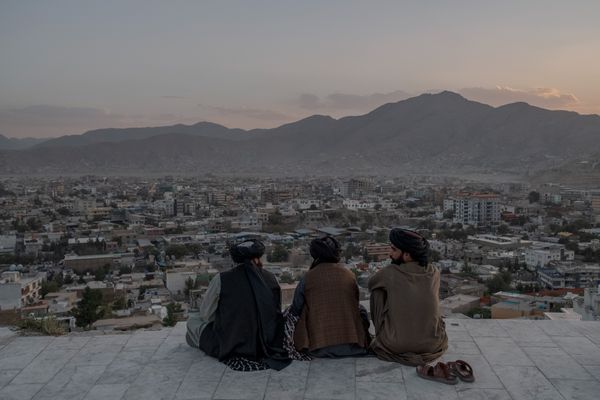
“Were Afghan Women to Unveil Their Tales” is a project that gives a close and respectful look into Afghan women’s lives, showing what they go through in a difficult reality.
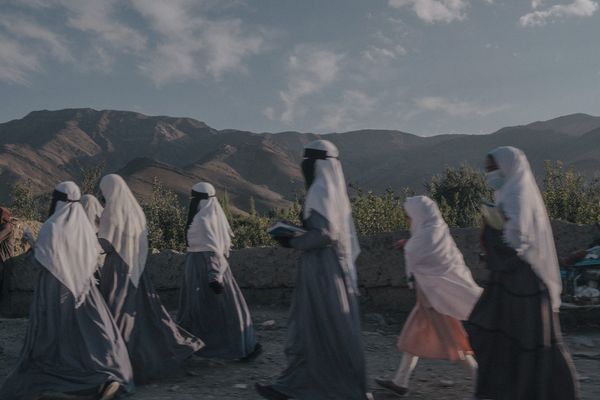
“Were Afghan Women to Unveil Their Tales” is a project that gives a close and respectful look into Afghan women’s lives, showing what they go through in a difficult reality. Afghanistan today faces many problems, and one of the most serious is the loss of women’s rights and freedom. Since the Taliban took control again, over seventy rules have been made to restrict women’s access to education, work, healthcare, and freedom to move. This harsh environment has greatly worsened the lives of Afghan women, as shown by their own stories and reports. These limits affect women everywhere, from public spaces to their own homes, where they face daily restrictions on movement, opportunities, and even small decisions.
Yet, Afghan women continue to show incredible strength. Their daily choices—like leaving home, running businesses, or organizing in their communities—are brave acts. These actions show a deep determination to hold onto their identity in a society that tries to limit their freedom. Afghan women’s lives are shaped by an inner strength that withstands the pressure of an environment set up to hold them back.
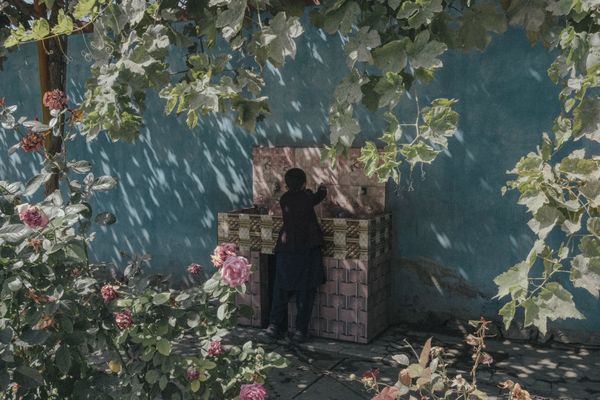
Through images that go beyond simple appearances, this project aims to capture not just the challenges Afghan women face but also their hopes, strength, and the layers of each woman’s story. Despite living in deprivation, their quiet resistance reflects dreams and identities that remain, even in harsh times. By sharing these experiences, “Were Afghan Women to Unveil Their Tales” reveals the courage of these women, showing that in a place where freedom is systematically blocked, every small act of self-expression becomes a powerful statement.
Aware of the limits of an outsider’s view, this project respects the rich and varied experiences that no single story can fully capture—the silent struggles, unspoken dreams, and daily battles that often go unseen.
Story:
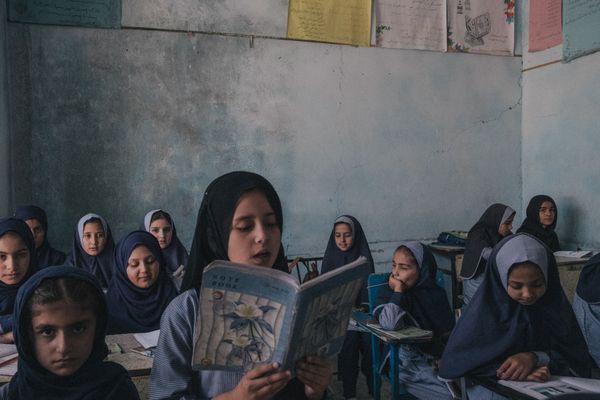
Bahareh’s story begins in the quiet stillness of a small classroom, where the air is thick. Once a student of science, Bahareh envisioned a future where she could contribute to the world with knowledge and passion. She was a woman with ambition, eager to make her mark. But those dreams were crushed when the Taliban returned to power.
The Taliban regained control of Afghanistan in August 2021, nearly 20 years after their initial regime was overthrown by U.S.-led forces.
The country she knew, had become a place of walls—both physical and emotional. She couldn't pursue her field of study anymore. “Before, I used to study science,” she says, her voice barely above a whisper. “But now, I can’t. I can only teach.”
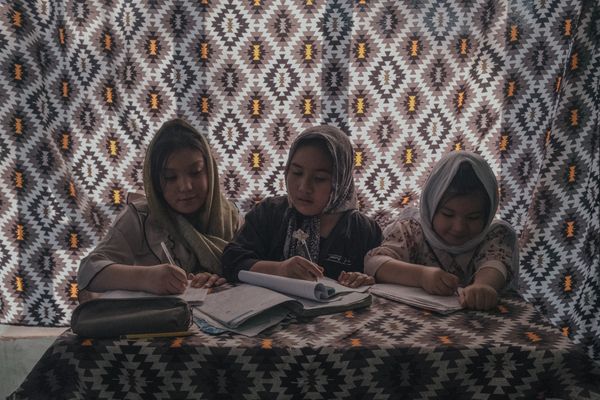
She looks around the room, where a group of young girls sit, their faces filled with the same longing for an education that once filled her own heart.
They are young, eager to learn, but their futures are uncertain, threatened by the return of the very forces that have stripped them of their right to dream.
Following the abrupt U.S. military withdrawal, the Taliban seized Kabul and quickly established a government, returning the country to a strict form of Islamic rule. This marked a dramatic shift in governance, with the Taliban imposing stringent interpretations of Sharia law, affecting all aspects of life, from personal freedoms to women’s education right.
“The weight of it all presses heavily on my chest” says Bahareh. "It’s heartbreaking," she continues, looking out the window as if she might be able to see a different world.
"After sixth grade, these girls must stop their education. There’s no future for them, nothing left to look forward to.”
Bahareh is doing what she can to keep the hope alive for these young girls, but it feels fragile.
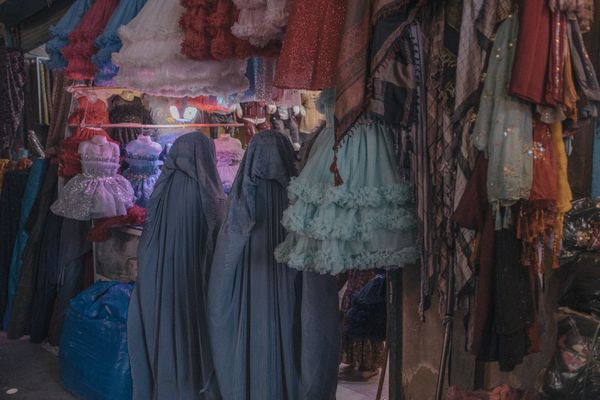
Under Taliban rule, girls are barred from attending secondary schools and universities, and women are excluded from most forms of employment, limiting their presence in public life and leading to widespread economic and social repercussions.
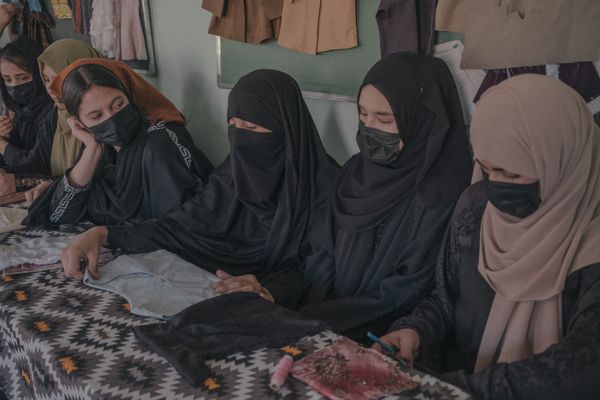
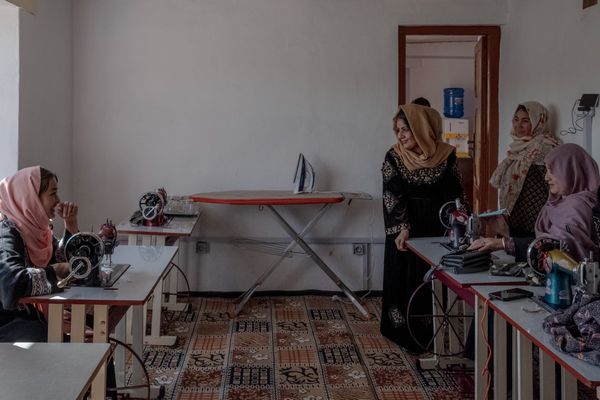
In an act of quiet defiance, Bahareh started a secret sewing class. “We started this class because we need to help our families,” she explains. "The economic situation is dire. We can’t survive without doing something.” She smiles softly.
Amid all the restrictions and dangers, this class has become a lifeline, a small act of rebellion in a world that wants to keep these women small.
Through sewing, Bahareh and the girls metaphorically stitch together their sense of worth, their pride, and their survival. It’s not just about creating things; it’s about holding on to something in a world that has taken everything from them. "It’s a way to survive. To hold on to our dignity," she says, her voice steady despite the anger she feels inside.
Najiyeh, a woman who shares the same quiet determination, lives about five hours drive far from Bahareh in Bmiyan. Her life, too, has been marked by the Taliban’s return, though her sorrow comes from a different source.
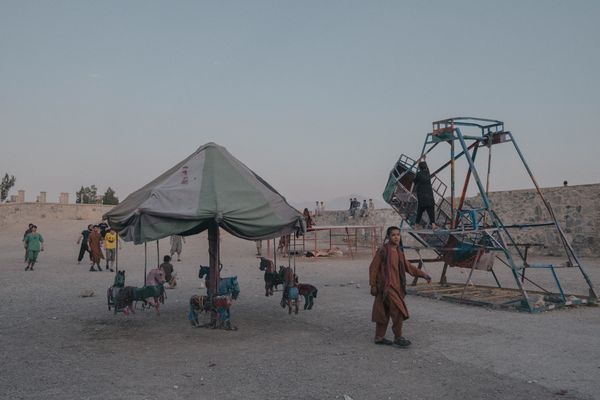
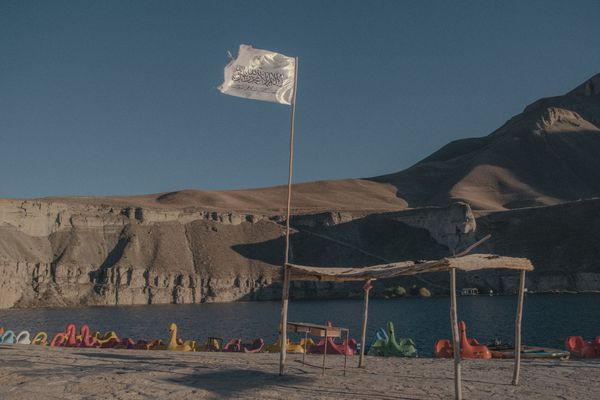
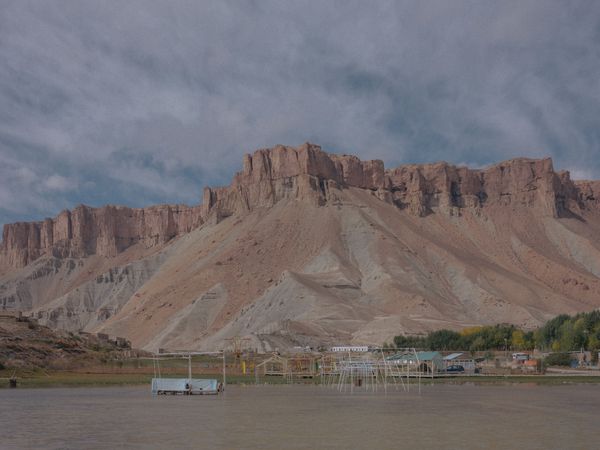
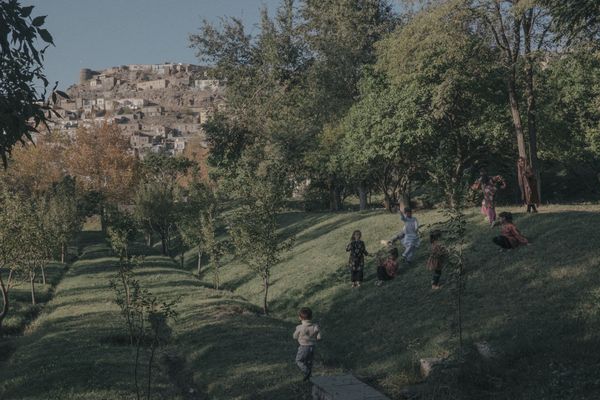
Najiyeh lives near the Band-e-Amir National Park, a stunning natural wonder known for its deep blue lakes and the towering cliffs that encircle them.
Once, this park was a place of joy where families could gather, and women could relax in the nature. But now, even the beauty of the land is out of reach. "We have no freedom," Najiyeh says, with her voice full of sadness. "We can’t go to the park anymore. It’s only for men now."
Now, those days are gone, replaced by a silence that presses down on everything. "Our families are so afraid for us. We can’t do anything without Taliban men watching us," she continues, her words heavy with the truth of life under the Taliban’s regime.
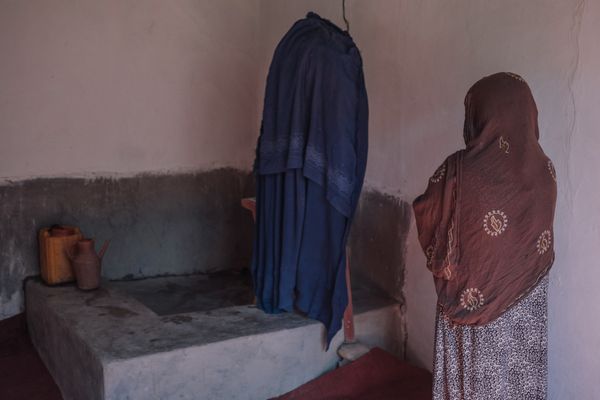
"We feel like prisoners in our own homes” says Najiyeh.
Female activists, journalists, and others who publicly voice dissent face severe restrictions, harassment, or imprisonment, leading to a stifled civil society and diminished freedom of expression.
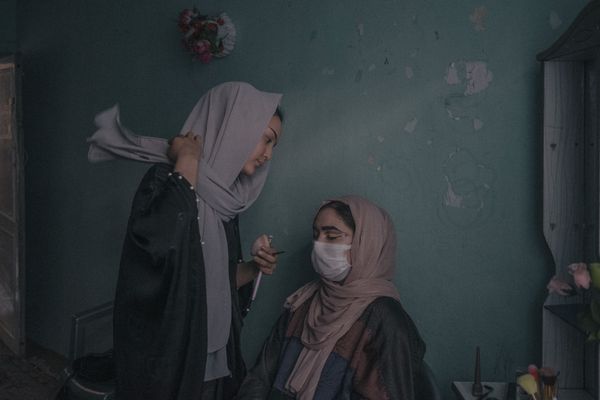
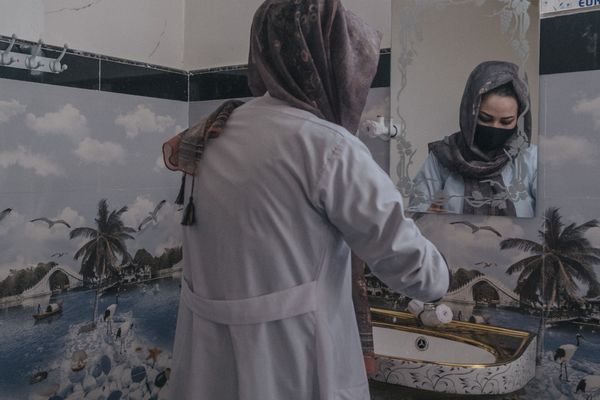
Zahra, remembers a time when Kabul was filled with beauty salons, places where women could go to be pampered, to laugh, to share moments of joy together.
"Before, there were many salons where women could go, especially for weddings," she says with a wistful smile. "We would spend hours there, enjoying each other's company, getting ready for the big day."
But now, the salons have gone underground, operating in secret to avoid the eyes of the Taliban. "Now, it’s all done in secret," Zahra says, her voice dropping. "And it’s dangerous." Yet Zahra continues to teach makeup in secret, a quiet act of resistance against the forces that seek to silence her. "We still do it, even though it’s risky," she says.
"Sometimes, we earn a little money, but it’s more than that. It’s about holding on to who we are, keeping a piece of ourselves alive, we refuse to be erased” continues Zahra.
Despite the danger, Zahra and the other women like her persist. They keep fighting, with small, everyday acts of survival. Each time they gather to share what little they have, they are making a statement. "We keep going," Zahra says. "Because if we don’t, we lose everything. We lose ourselves."
Fatimah, too, her entire life has been shaped by the Taliban, though in a way that sets her apart from the other women. Her husband is a long-time Taliban member.
During the republic time, she had to live a secret life for the fear of US led coalition airstrikes and sudden raids.
She is a housewife, living in a world shaped by her husband affiliation with the group. "I support the Taliban," she says, her words simple and unflinching. "Since they returned to power, security has improved. The economy is better." More importantly “we don’t need to hide anymore” says Fatimah.
Her acceptance of the Taliban’s rule is quiet but firm. "I believe in the rules they have set. I respect them," she continues. "And I am studying at a madrasa, religious school, to learn to read Quran.
"For Fatimah, this is not an act of resistance, but a quiet affirmation of the new order. It is her way of finding purpose in a world.
Fatimah’s story is one of acceptance, of finding a place within a new regime. While Bahareh, Zahra, and Najiyeh fight against the boundaries imposed on them, Fatimah has chosen to carve out a life that fits within those confines. She is a woman who has found
peace in obedience, who believes that through submission to the Islamic rules, there can be peace. Yet even in her acceptance, there is a sadness, a quiet resignation to a life she did not choose.
The socio-political landscape in Afghanistan remains tense, casting a shadow on the nation’s future stability and the well-being of its people.
The Taliban’s policies have also contributed to Afghanistan’s economic collapse. International sanctions, the freezing of Afghan assets, and a halt to foreign aid have led to widespread poverty, hunger, and a humanitarian crisis, with millions of Afghans in need of urgent assistance. But some decided to fight back.
In the industrial neighbourhood of Kabul, there is Mina’s story, a story that mirrors the struggle of so many other women in Afghanistan.
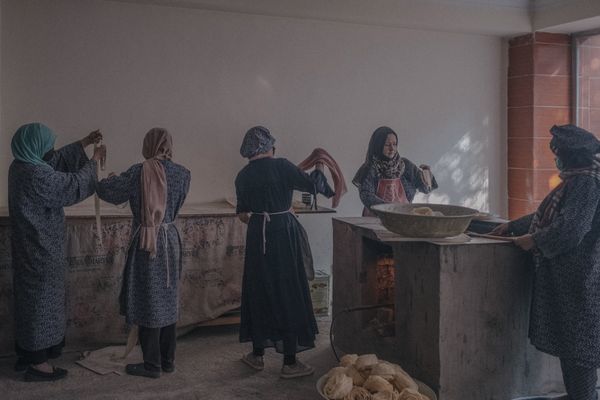
Mina runs a small bakery, almost hidden away from the eyes of most passersby. In her bakery, seven women work together, baking a traditional Afghan sweet known as kolucheh. The bakery, which was once a symbol of women’s independence and community, has become a place of quiet fear.
“I used to have thirty to thirty-five female employees,” Mina says. “But once the Taliban took power, I had to let them go. We couldn’t keep the business running with so many women.” The bakery, which had once been bustling with the energy and laughter of women working together, is now quiet. The joy has disappeared, replaced by a sense of depression and uncertainty. “We were like friends,” Mina says, her eyes distant. “The laughter and the noise of women could be heard for yards outside. Now, it’s just silence.”
Despite the quiet, Mina still bakes. She still makes kolucheh, though with a constant fear that any moment the Taliban might raid her bakery and shut it down. "Even though I have permission from the Taliban-run finance ministry, I fear that at any moment, the secret police will come and everything will be gone—everything we’ve built over ten years." Mina’s eyes lose focus as she speaks, her gaze drifting toward an unknown spot. "I’m terrified," she admits softly. "But we still do it. We still bake."
For her workers this is the only source of income. They are worried that if Taliban close this bakery they have nowhere to complain. “I have to admit that the Taliban regime this time is tolerating women much more” Mina compares it with 20 years ago when Taliban did not allow women to work at all.
Mina’s bakery may be small, but it represents something much larger than just a place to make sweets.
Through the quiet act of working, Mina and her female workers continue to defy the restrictions that have been placed upon them. “In every sweet we make, there is a rebellion—a rebellion against the forces that would rather see them fade into the background” says one of her worker.
The Taliban’s struggles to establish international legitimacy have been hindered by human rights abuses and their lack of inclusivity, as most countries remain reluctant to formally recognize their rule.
In the stories of Bahareh, Najiyeh, Zahra, and Mina, we see a tapestry of resilience. They are women who refuse to disappear, who cling to their dignity, to their dreams, in a world that seems to have no place for them. Through their struggles, they show the quiet strength of women who will not be erased. Their stories are a testament to the human spirit—the part of us that refuses to bend “no matter how strong the wind blows” says Mina.