Type 1.5.11.
-
Dates2021 - 2021
-
Author
- Topics Contemporary Issues
- Locations France, Marseille
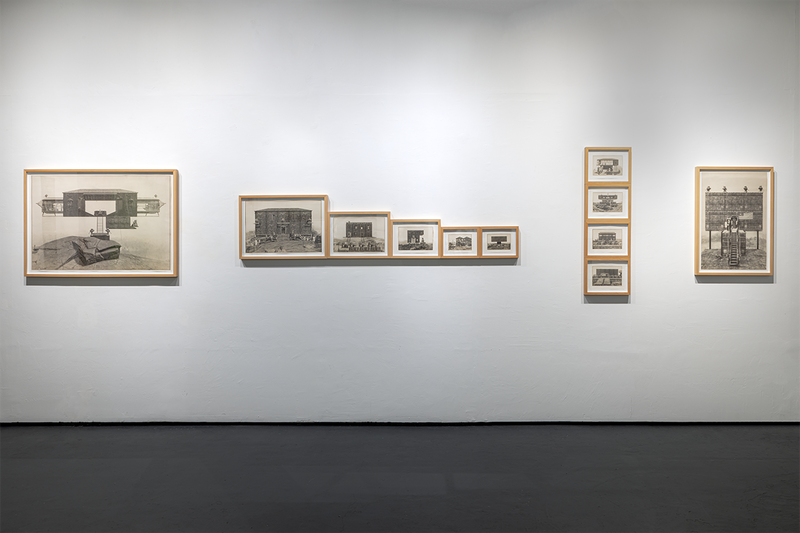
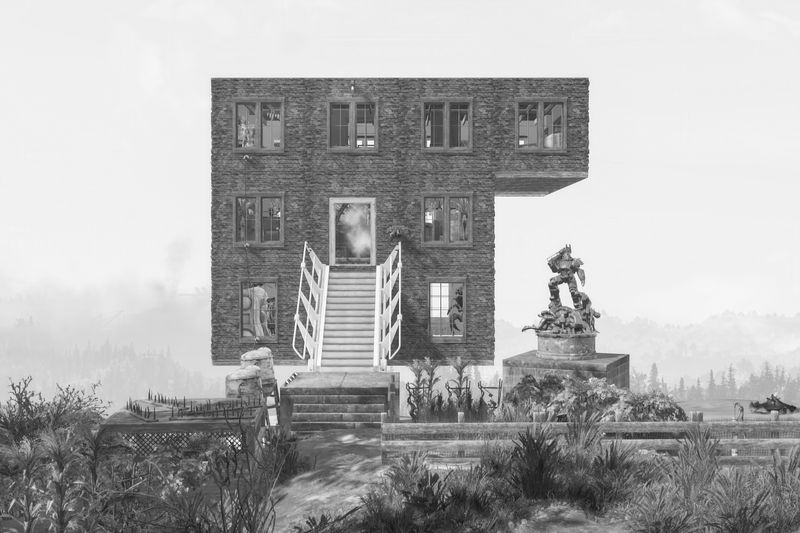
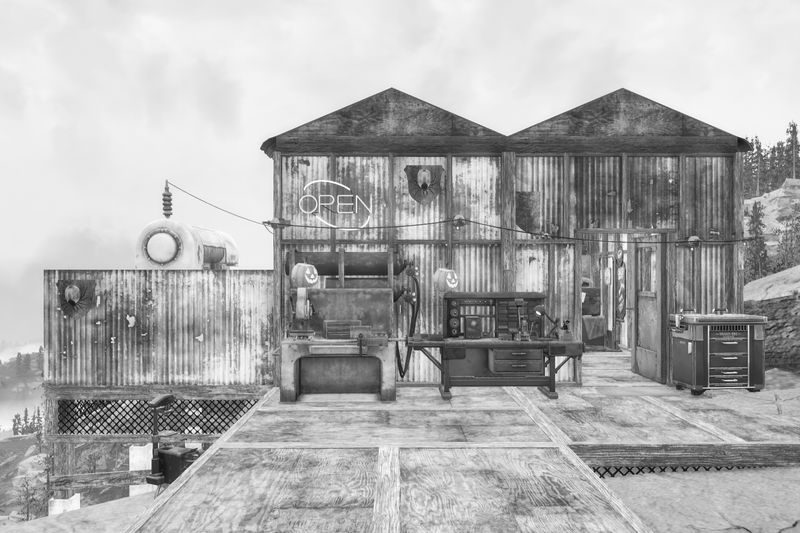
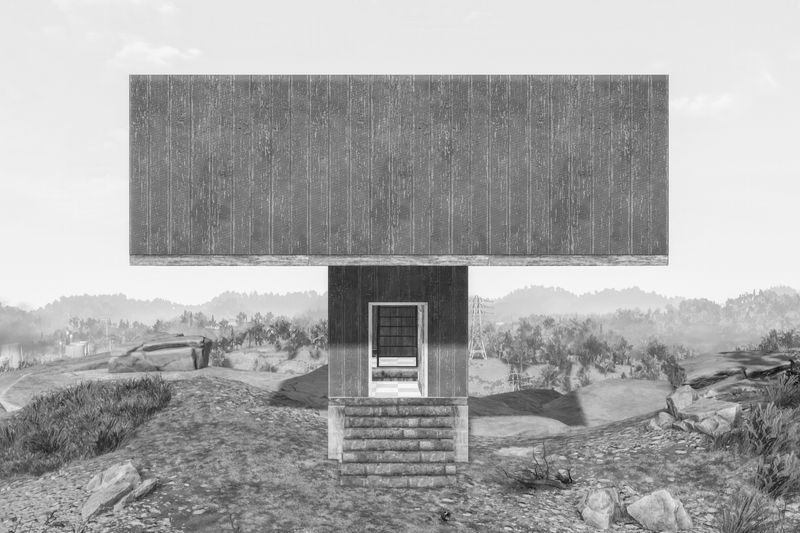
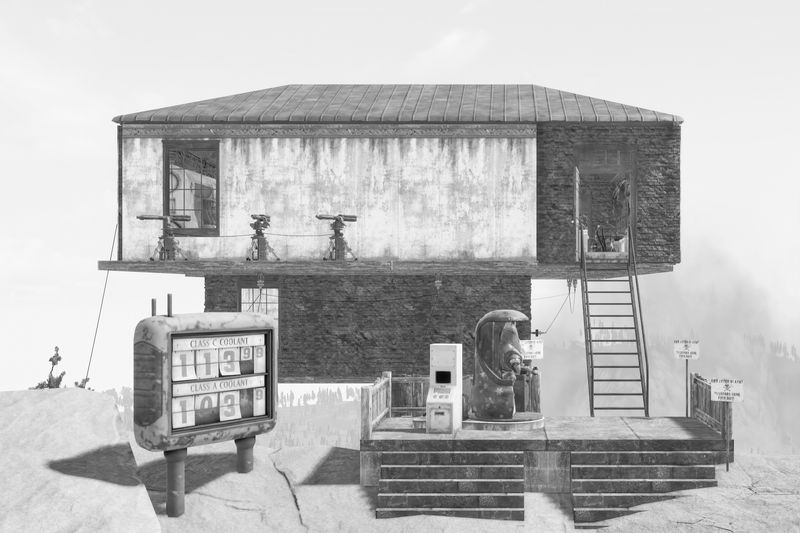
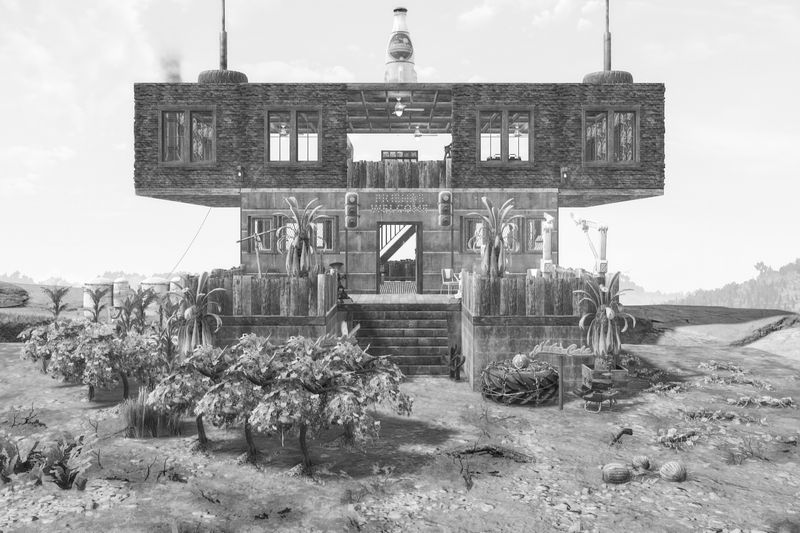
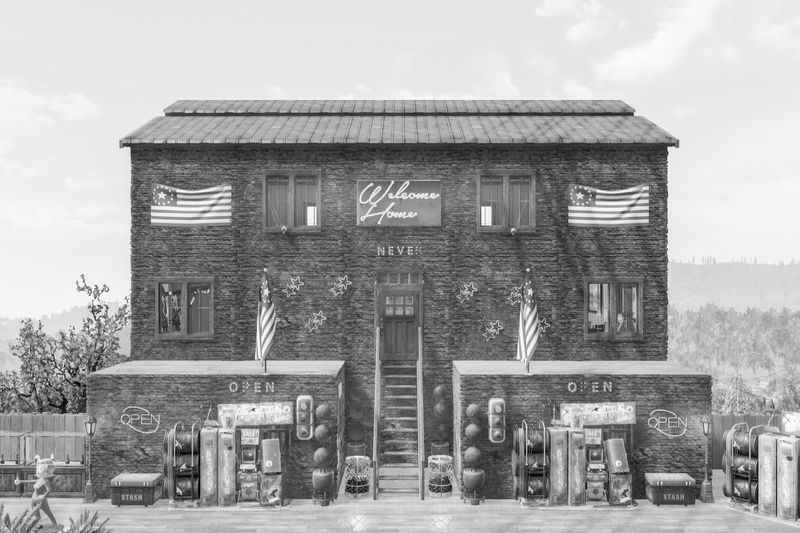
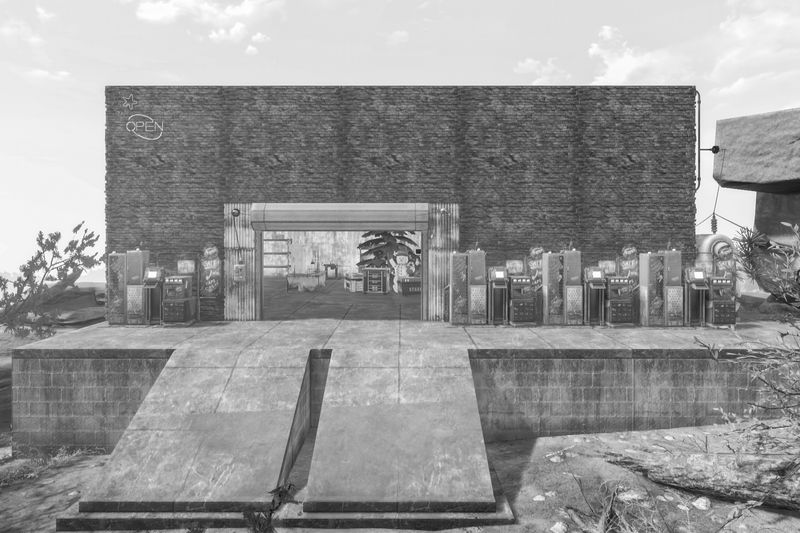
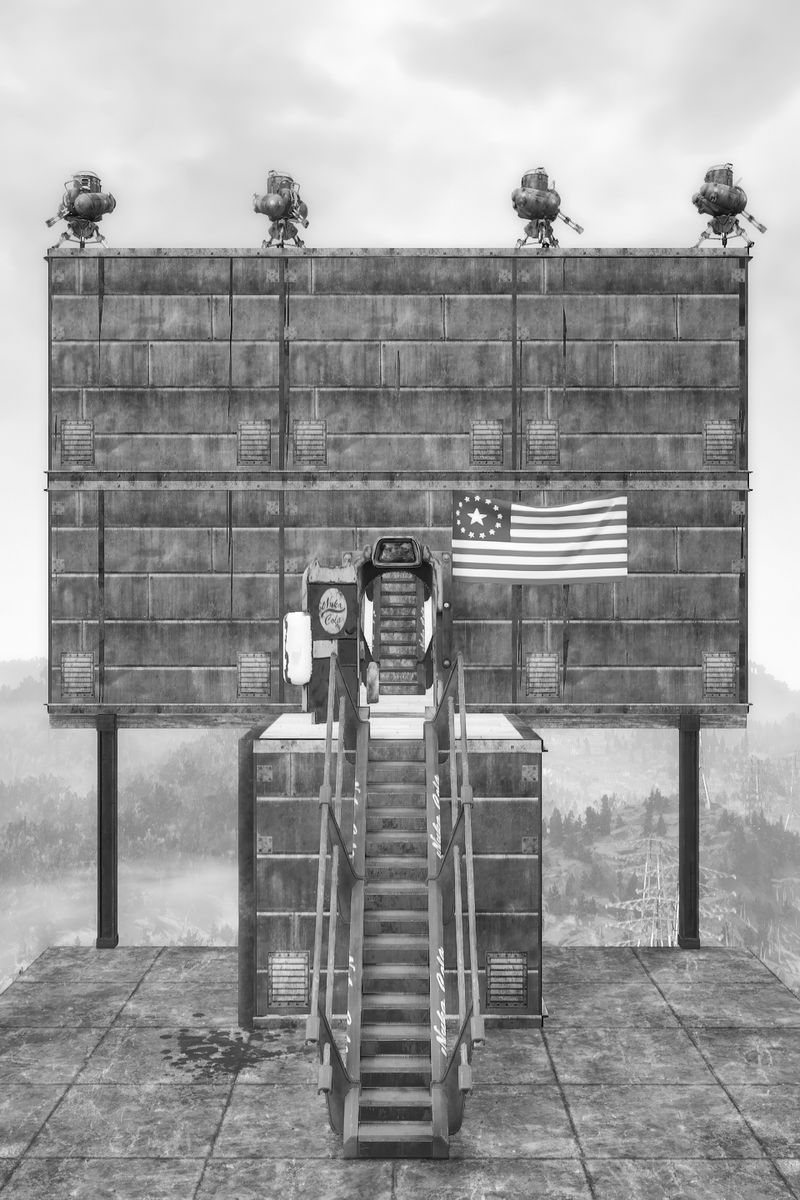
Type 1.5.11. studies player-built bases in the video game Fallout 76 as a typology of virtual habitats. Shot with the in-game camera and printed as kallitypes, these shelters reveal how social roles, status and ideas of home take shape through play.
Type 1.5.11. is a conceptual photographic series by Maxim Zmeyev, created inside the multiplayer post-apocalyptic video game Fallout 76 (MMO Action RPG). Players emerge from an underground nuclear vault after an atomic war and try to survive, rebuild habitats and negotiate relationships with the world and with one another. Alongside quests, character progression, crafting and combat, the game offers an optional system of personal bases — C.A.M.P.s.
Tied to a “game as a service” model, an in-game shop sells purely cosmetic items for decorating these bases in exchange for currency purchased with real money. What begins as a secondary feature becomes a space of free-form architecture, where personal bases turn into expressions of players’ roles, values and behaviour.
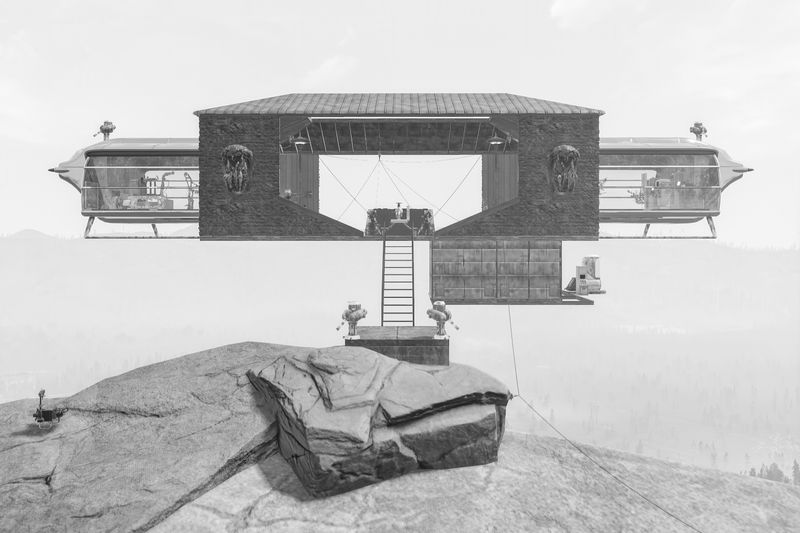
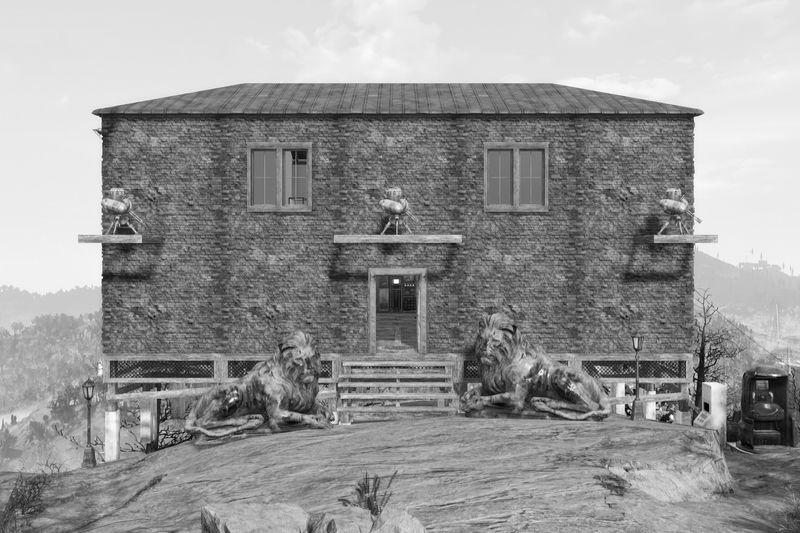
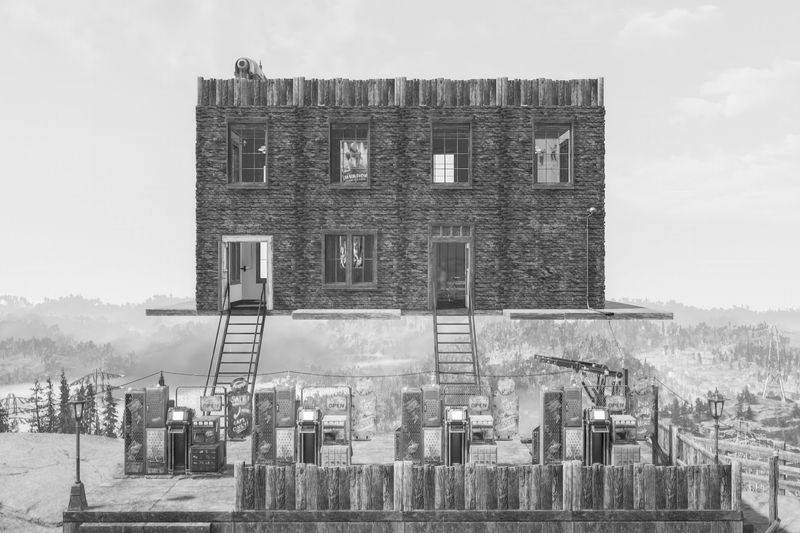
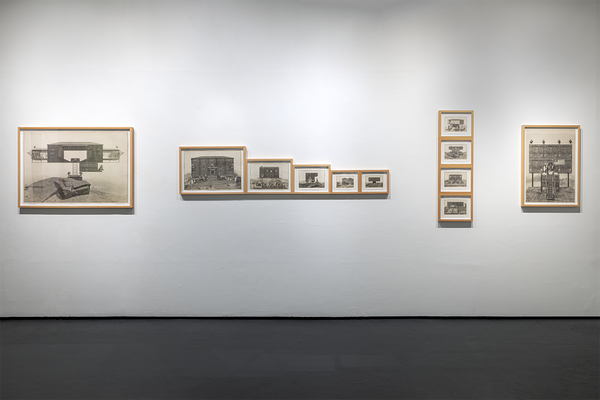
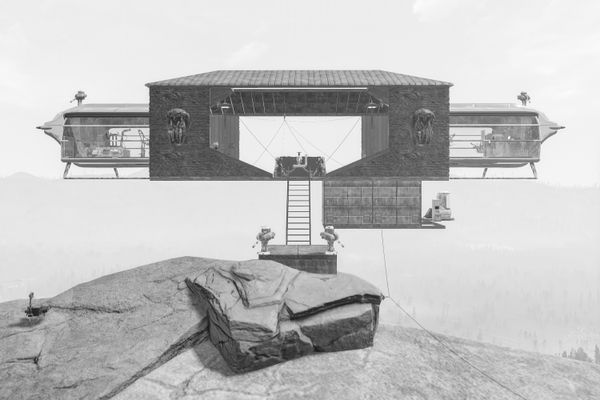
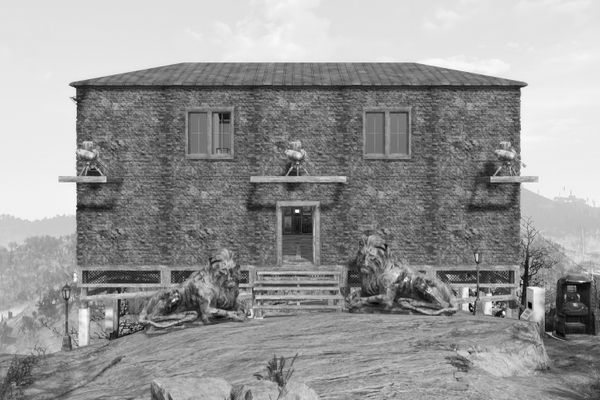
Inspired by the typological catalogues of Bernd and Hilla Becher, the artist uses the in-game camera to document the façades of player-built shelters and bases. Each C.A.M.P. is photographed frontally, as a neutral elevation, repeating the same distance and angle. More than two thousand personal bases were recorded, revealing patterns of interaction shaped by architecture, available resources and functional choices.
Drawing on methods of classification from Plato’s Republic to contemporary sociology — in particular Luc Boltanski and Laurent Thévenot’s On Justification: Economies of Worth — the project explores how virtual constructions reproduce real “worlds of justification.” Player roles such as Guardians, Merchants, Farmers, Artisans and Philosophers echo social structures in which status, usefulness and moral legitimacy must constantly be argued and defended.
These virtual habitats operate as microcosms of actual societies, structured by utility, hierarchy and symbolic codes. Zmeyev distinguishes five main types: Guardians — security / military; Merchants — trade; Farmers — ecology / production; Artisans — craft; and Philosophers — ascetic, reflective forms of dwelling. These types are presented in a research diagram, where the height of each photograph corresponds to the proportion of that type within the observed population, turning the series into both a typology and a statistical graph.
The final works are printed as kallitypes, a historical photographic process patented in 1889 by chemist William Walker James Nicol. Based on iron salts, oxalic acid and silver nitrate, kallitype requires contact printing, long exposure and careful manual processing. The slow, material procedure contrasts with the instant, immaterial nature of in-game screenshots, giving these digital architectures the weight and fragility of archival objects.
In these digital dwellings, the player’s appearance, age and origin remain unknown, yet their social logic becomes visible. Under the cover of anonymity, hierarchies, strategies of survival and ideas of “good” dwelling are replayed. Type 1.5.11. traces the evolving relationship between individuals and their habitats — from Roman notions of property as ancestral space and house of the family, to contemporary forms of home within virtual worlds, where a base becomes at once an interface, an avatar and a social statement.