TO SAVE A FOREST

-
Dates2019 - Ongoing
-
Author
- Location Uruguay
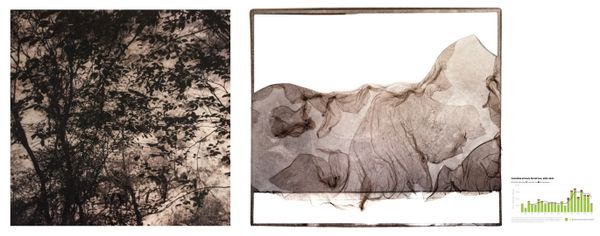
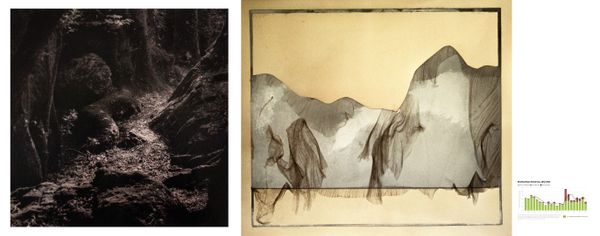
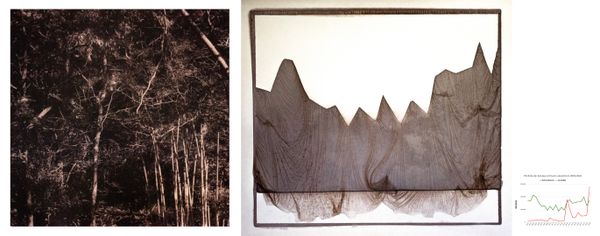
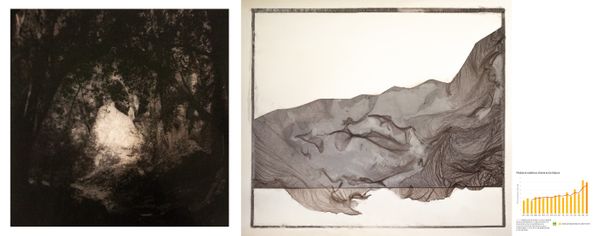
My goal is to awaken a collective awareness to understand the consequences of deforestation on the planetary balance. Art cannot be indifferent to this problem. (Analog darkroom images, based on statistics. Enclosed there are a few representative images).
TO SAVE A FOREST
Preliminary words
Approximately every four years, most democratic countries elect their Rangers, that is, their Presidents and Heads of State. Once installed in their workplaces, it is our responsibility to closely observe their performance.
There are some Rangers who allow their forests to be burned or felled giving priority to what they call progress. Therefore, it is necessary to be alert to what they do in their own countries and what they vote on in global meetings concerning environment.
Recently, COP30, where almost a hundred countries participate, did not take into account the issue of global deforestation in its drafts. This is a worrying message.
Business is done with goods. Nature is not a business.
When the time comes, you have to vote for Life.
................................................................................
TO SAVE A FOREST
Conceptual framework
I live relatively close to a forest called Amazonia. I can't visit it, so I inform myself of its status through photographs and comments from my neighbors in the region.
The last news I received were not good. Apparently it is being overrun by vandals who intend to use that territory for their own benefit, regardless of the damage they will cause to future generations.
The problem has multiple facets: there are powerful and petty interests, and for the worse, much of the community is not informed of what is happening. Others simply don't care: they don't feel the forest as if it were their home. They ignore the importance of forests in the balance of the environment.
Faced with this situation, I began to write a short Manual of Instructions as a project that aims to preserve my forest.
(I apologize if I mention it as if the forest were my own, because I consider it a vital part of my existence, I, who never walked through its thicket or heard the song of the birds that inhabit it, nor contemplated the vegetation that adorns it, nor tasted the fruits that feed all those who live in it).
My forest, as I said, can and must be saved. There are many people like me, people that although they do not know it from inside, feel that worldwide life depends on it.
These people fight in its defense, while communities formed by natives and researchers from various regions, live and die on its soil, where for now, trees are still born.
The vandals, the predators, the insane, have the time that we allow them to destroy and burn, until the time comes when we do not let them use anymore their fire and their saws to mutilate the forests of the world, that is, Life.
I firmly request to share this first version of the Instruction Manual to Save a Forest, in order to reach those people who want to add their efforts for the benefit of the present and future inhabitants of the planet.
(Dedicated to the Amazonia and all the forests. - RFI / April 2019 - Ongoing)
...............................................................................................................
INSTRUCTION MANUAL TO SAVE A FOREST
1 - Introduction and scopes
This Manual is a description of the actions and responsibilities to be implemented in the Forest Salvation Project (hereinafter FSP) with the aim of protecting and preserving its permanence and balance, as well as the ecosystem it contains.
The Forest Salvation Project has as its scope:
· To control the proper administration of the use of its original resources.
· To monitor actions generated to guarantee the preservation of the geographic space and the conservation of life in all its manifestations.
· The scope can be extended and applied to all forests in the region.
This Manual is of the property of its author, and may not be copied in whole or in part without his approval.
Author: RFI
Revision Number: 0
Valid from: February 18, 2026.
References:
Kyoto Protocol.
Paris Agreement.
UN Environmental Acts and records.
Proceedings of COP30.
Legislation of the regions involved.
2 - About this Manual
This document describes the policy of how the FSP should be applied for the purposes of conserving natural resources and preserving life within the forest.
The Manual encourages the use of ethical paths that benefit society and the environment, using methods that seek and incorporate public opinion.
3 - Responsibilities
The Ranger is responsible for the people who enter the forest and the operations that are carried out there.
He must resort to all legal means to avoid accidents or incidents that endanger the forest ecosystem.
He must allocate the Human Resources and materials necessary to implement, supervise and maintain the procedures that ensure the survival of the forests of his country or region.
4 - Ranger's Tasks
To keep the FSP active and updated.
To preserve, to care for and to facilitate the development of the living beings in the forest.
To promote the involvement of society for the preservation of the forest, implementing clear and efficient communication mechanisms.
To provide reliable information about the FSP. Communication should be directed to both the entities involved and to public in general.
To look for partnerships and to work together with related entities in order to solve problems concerning the forest.
To know and to follow legislation, regulations and rules issued by the agencies linked to the environment, in order to see their compatibility with the FSP.
To respect the life and the customs of the communities that inhabit the forest, ensuring their well-being and permanence in their birthplace.
To denounce any fact that is against the safety of the forest and its inhabitants.
To collaborate in the drafting of environmental protection protocols, and to defend compliance with their goals and objectives.
5 - Preventive and corrective actions
The Ranger must actively collaborate in the investigation of negative impacts in the forest.
His task includes the evaluation of potential risks and the implementation of preventive and corrective actions, and must inform the community about them.
To do this, he must have qualified and trained groups that carry out periodic tours within the forest, including audits and routine inspections. The records must be used for decision-making.
6 – Procedures and protocols for visitors
Designated personnel must write a document that explains the rights and obligations of visitors. It must be available to all interested parts.
The Ranger must periodically summon public and private entities, as well as the community in general, for the update of said protocol document, which must be of public knowledge.
7 - Protected areas
Based on the collected information, the Ranger must participate in decision-making for the delimitation of protected areas and restricted access places.
8 - Accidents and incidents
In the event of an environmental accident, the Ranger must collaborate in the investigation of the causes and in the implementation of relevant actions to prevent its recurrence.
It is his responsibility to actively participate during the restoration tasks of the affected areas by providing resources for their repair.
9 - Related documents
Environmental legislation.
Records of preventive and corrective actions.
Registrations of communications.
Inspection minutes and audits records.
Maps of the region.
Graphs and statistics on afforestation and deforestation.
Inventories of flora and fauna species.
..................................xxx.............................................