To a thousand sources, the good life" / " Aux mille source la belle vie"
-
Dates2022 - Ongoing
-
Author
- Location Creuse, France
This project explores the interaction between childhood, nature and ecological awareness. It looks at the child's relationship with the living world, seen as a state of porosity where sensations and perceptions pass through the body.
“Why is it that nature—or perhaps less nature itself than a corner of the world—returns us to childhood, to our spatial inscriptions that are also vital inscriptions? (…)
It is in childhood, before the subtle distinctions of the adult who conceptualizes and distances the world in order to master it, that these synesthesias become explicit, are inscribed in the flesh, and are experienced. In an open, offered body-to-body with this polysensoriality (…), our body makes flesh with the flesh of the world.
Childhood then becomes the mobilization of a singular texture of the world, inhabited by secret fragrances.”
Jean-Philippe Pierron, Je est un Nous. Enquête philosophique sur nos interdépendances avec le vivant, Actes Sud
At Mille Sources, the good life takes root in my immediate surroundings.
I settled in Creuse during the summer of 2023, more precisely in the Limousin mountains or on the Millevaches Plateau, in this so-called “hyper-rural” department where the population seems to carry visions, shared desires, initiatives, and collective projects; where new forms of social life are being reinvented, along with new ways of perceiving the landscape, inhabiting rural space, relating to one another, and making a common world. A territory where we hope to offer our children the chance to be in constant and direct contact with nature, to establish a different relationship with the living world.
I always photograph what surrounds me – the situations, the landscapes, the objects of my immediate environment. Intertwined are scenes of life, trees, animals, bodies, inert and abandoned things, and life itself.
This project interweaves my eco-sensitive concerns with two motifs that particularly interest me: childhood – in its relationship to the body, to space, to the world – and the bond with nature.
In the face of the current crisis in our relationship with nature, this project questions our connection to the world, inviting a possible reconciliation, a sense of wonder, a (re)enchantment; it explores pathways toward a sensitivity that adults seem to have lost. This work seeks to awaken a form of attentiveness, “a poetic state,” a way of being in the world—“sensitive, attentive, contemplative” (Patrick Chamoiseau) – an imagination.
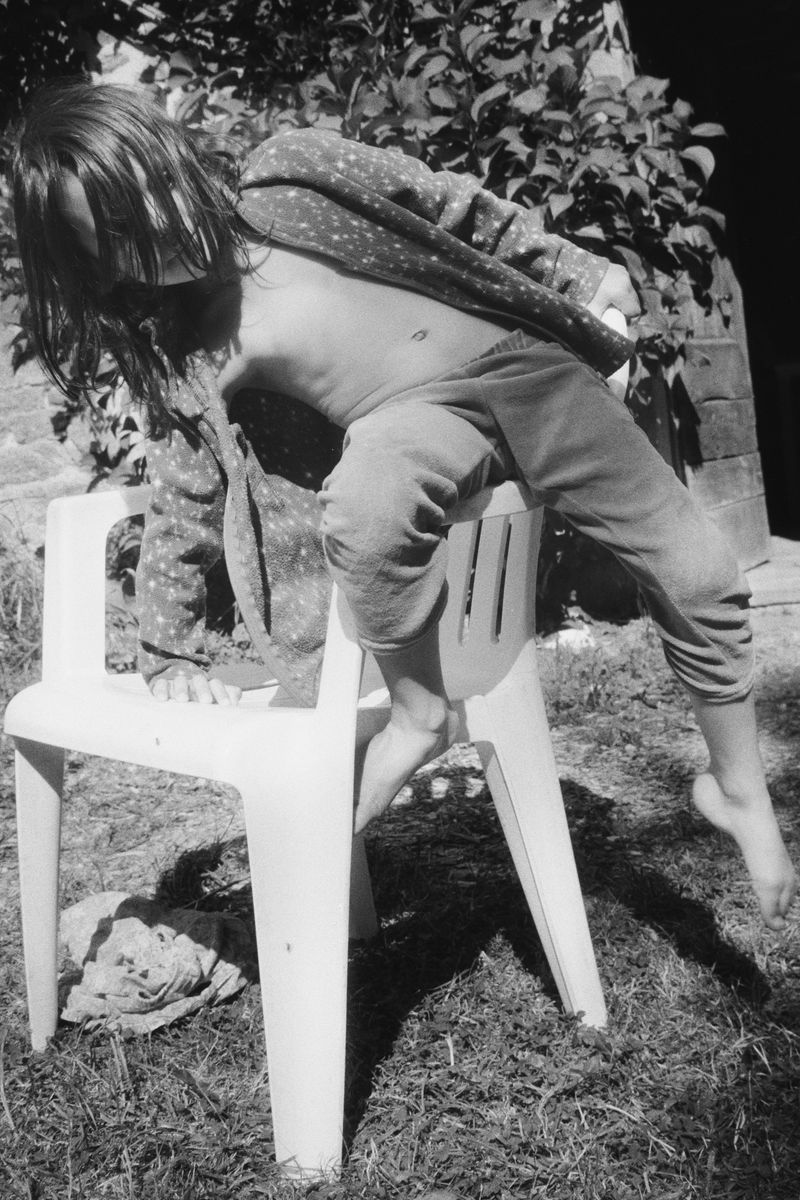
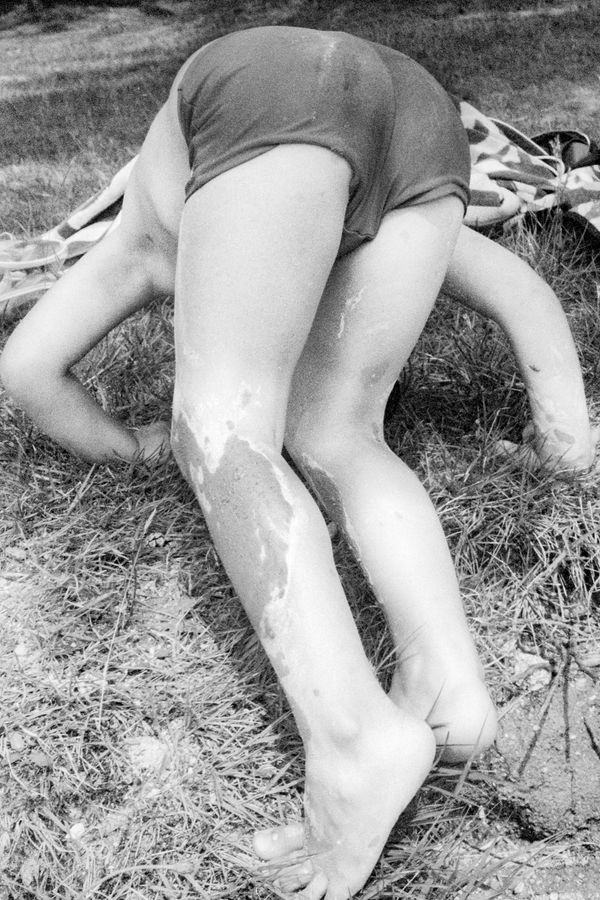
I am drawn to this time of childhood, sometimes considered an Arcadia – a bygone era – in its original relation to the world, before the Great Divide. I photograph this state of being, this porosity of the child to the world, where interrelations between subject, matter, and the living are primary and mediated through the body, through the senses. The child is a dreamer, an explorer, maintaining an imaginative, sensitive, and intense connection with the world. In this time of childhood, imagination and reality converge, and the child becomes a woodland figure, an intercessor, a “transitional being.” ( L’enfance exposée, Georges Didi - Huberman, ed Yvon Lambert )
This figure of the child, beyond its poetic dimension, also carries a political resonance: it sketches the possibility of another relationship with the world – less anthropocentric, more interconnected and respectful of the living. It invites us to think of childhood as a model of ecological sensitivity to be reactivated, a way of relearning how to form community with all that surrounds us.
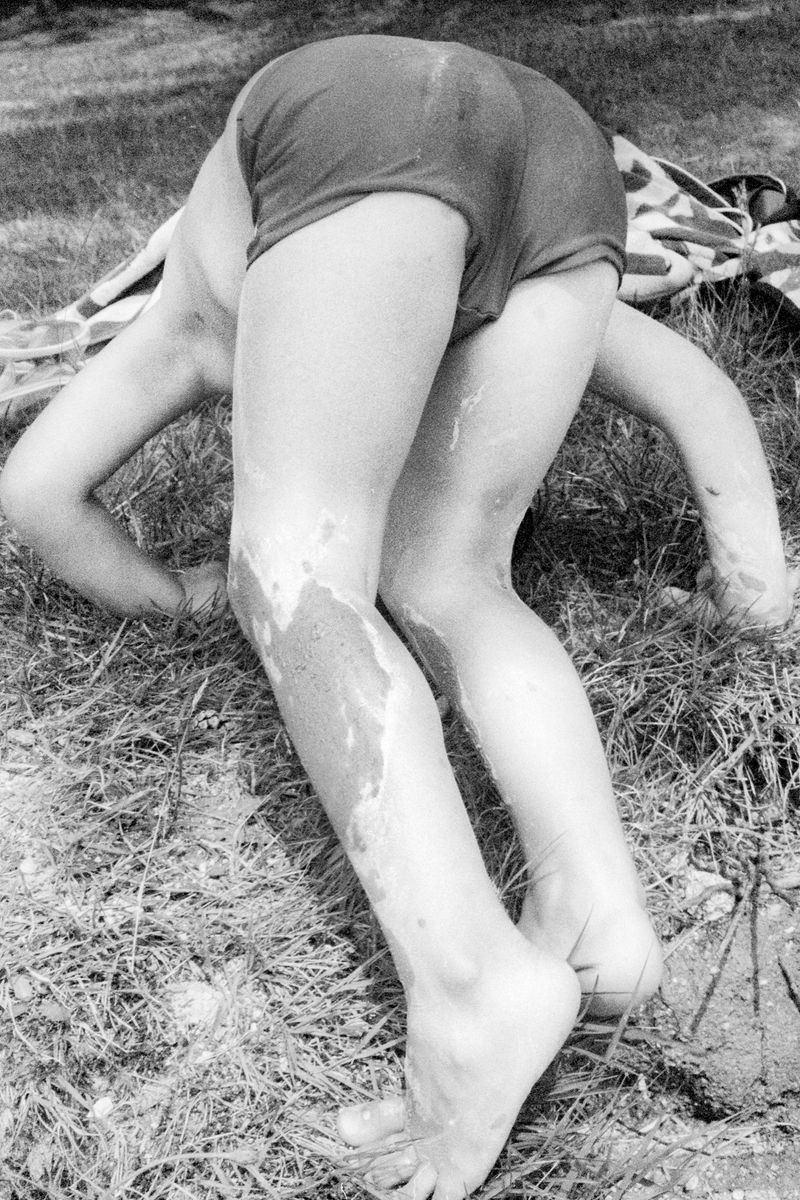
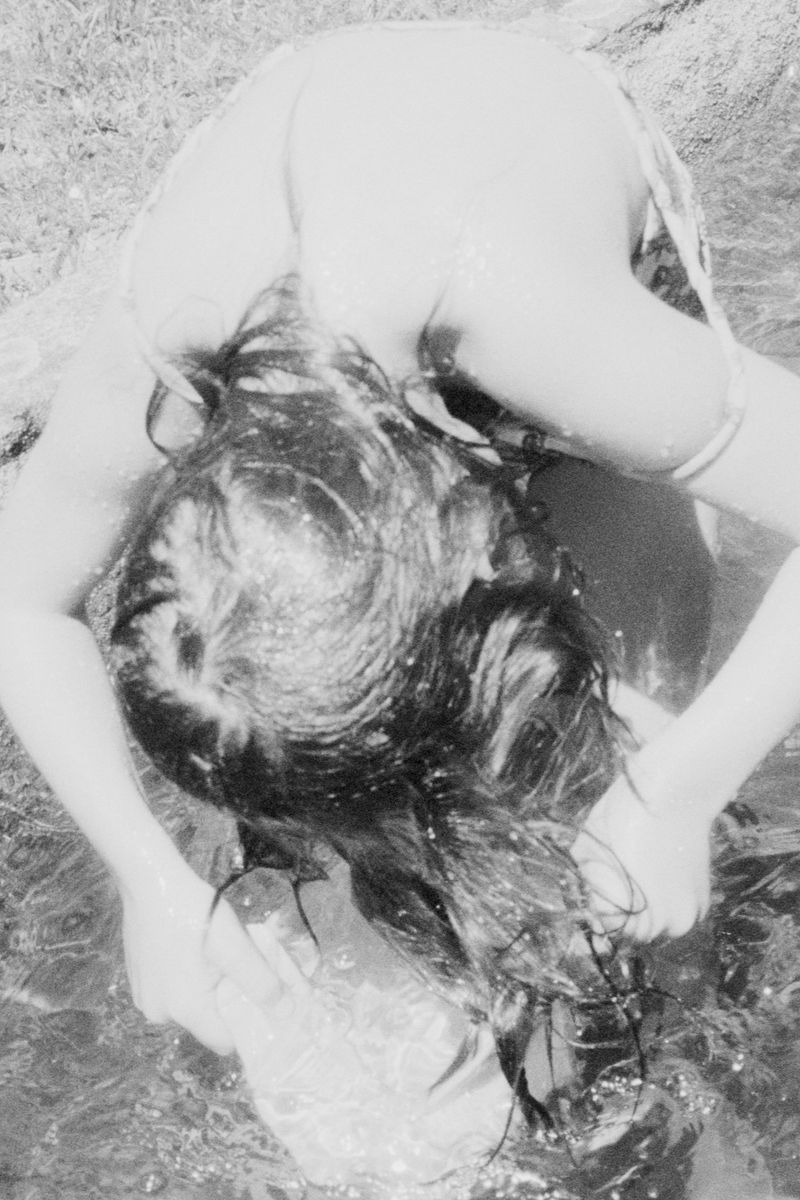
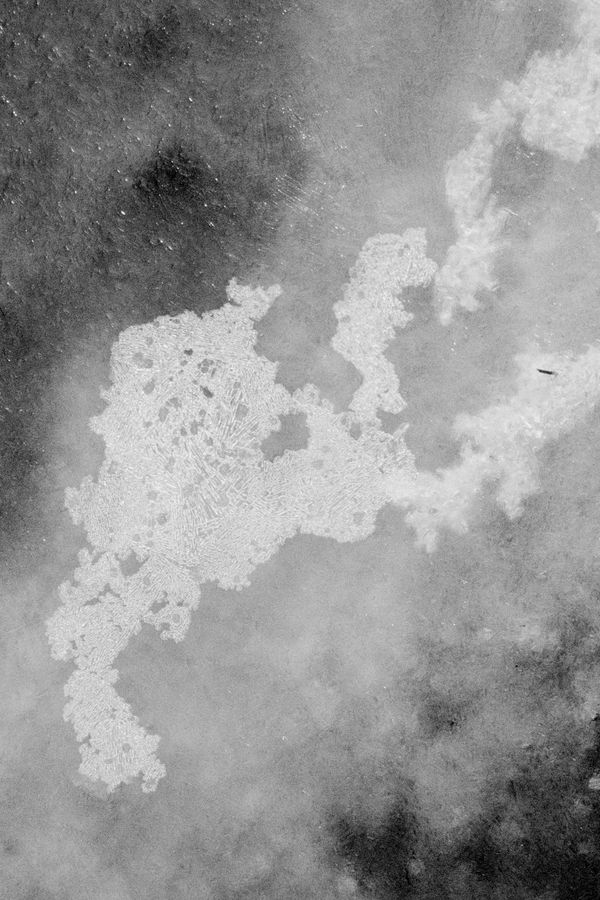
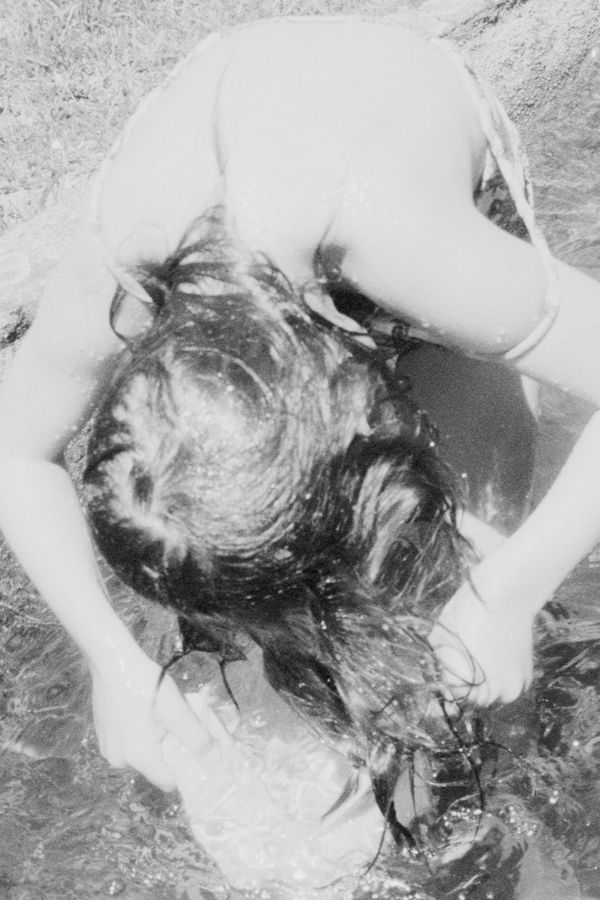
The images evoke felt sensations, allowing us to (re)experience softness: of plants, of the sun warming the skin in summer, of the body immersed in the lake’s water… The primordial elements are summoned –water, air, fire –sometimes echoing a form of ritual.
The photographs are at times enigmatic –just as the child keeps a secret.
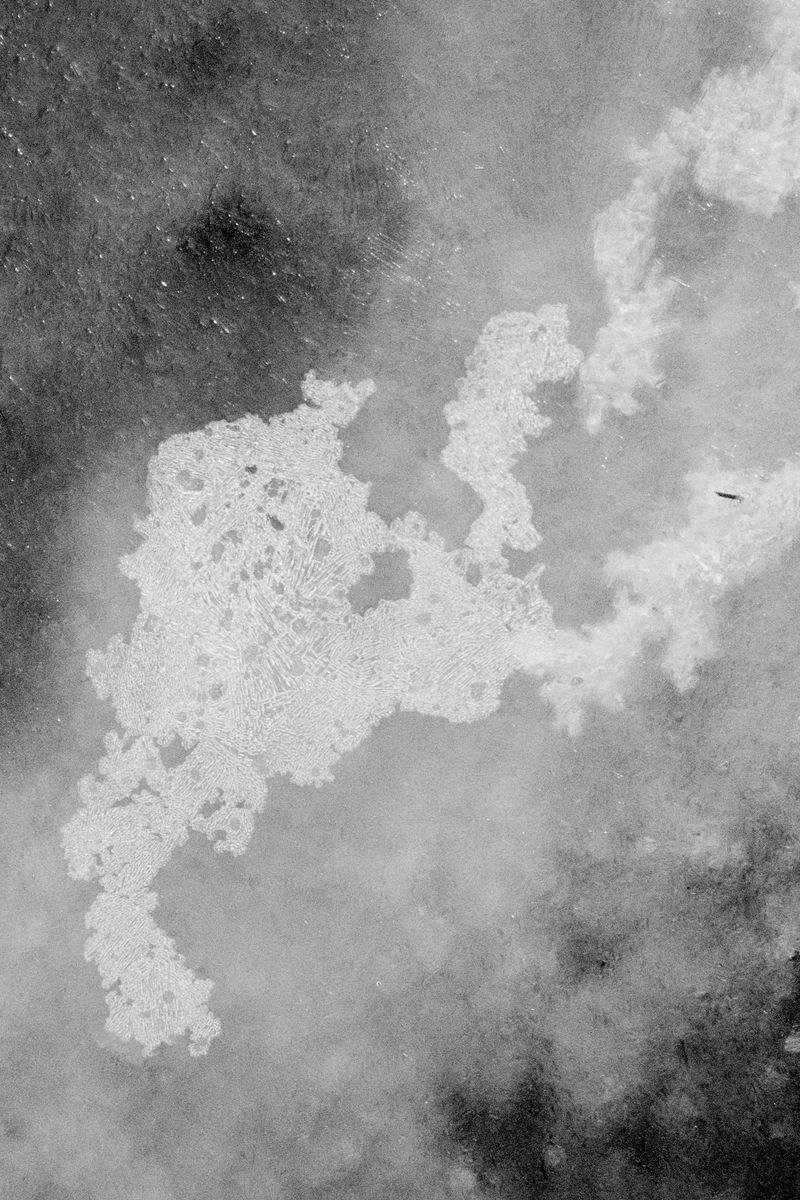
Bodies and plants are apprehended in their sculptural dimension, playing with and overflowing the frame. Beings, without distinction –human and more-than-human –cohabit and respond to one another, in familiarity, in complicity. The close-up views –sometimes almost abstract –of vegetal matter are perceived as vegetal force. These fragments of nature act as synecdoches and as matter for dreaming. The environment, the landscape, the natural elements are no longer considered as mere backdrop but also as subject.
This project seeks to open a space where attentiveness, poetry, and ethics converge.