The Rocket's Red Glare
  • Dates
    2018 - Ongoing
  • Author
  • Topics Social Issues, Contemporary Issues, War & Conflicts
  • Locations Germany, California, Alabama

The Rocket's Red Glare uses the life of instrumental German rocket scientist, Wernher von Braun, as a metaphor for the selective way history is told.
The Rocket's Red Glare uses the life of instrumental German rocket scientist, Wernher von Braun, as a metaphor for the selective way history is told. This series challenges the often dual retelling of significant 20th century events, starting in Nazi-era Germany and culminating in the moon landing. My interest in interpreting this chain of events comes from my own reckoning with history and my complicated German heritage surrounding World War II.

I was born and raised in Germany to an American mother and German father. The latter, who passed away in 2007, was a young boy during World War II. It was hard for him to talk about the war and therefore unclear to me where my family fit into that historical moment. As far as I know my grandfather and uncle did not join the Nazi Party but both fought in the war for Germany. My uncle was 18 when he was wounded at the end of the war and died of his injuries.

My complex feelings about my heritage are embodied in von Braun’s life. A Nazi turned NASA scientist, von Braun’s life was filled with as much contradiction as his groundbreaking rockets were, which were used as missiles and spacecraft alike. Much of his Nazi past was classified for decades to celebrate his contribution to the U.S. space race.

Rather than presenting a complete view of this history, I leave intentional holes in the narrative. These gaps serve as questions, looking at how stories pass through generations and how facts are distorted, embellished or undermined.
© Barbara Diener - Image from the The Rocket's Red Glare photography project
i

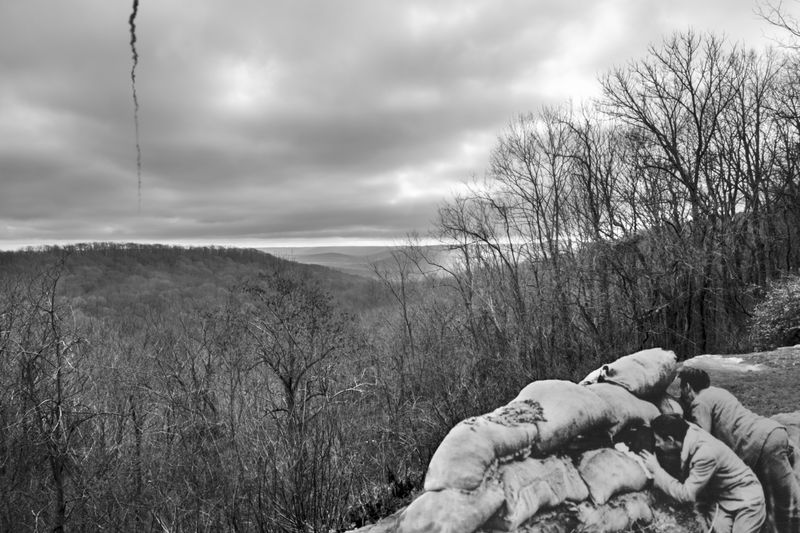
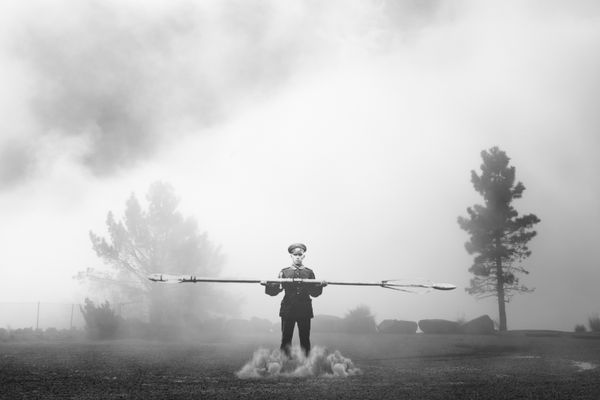
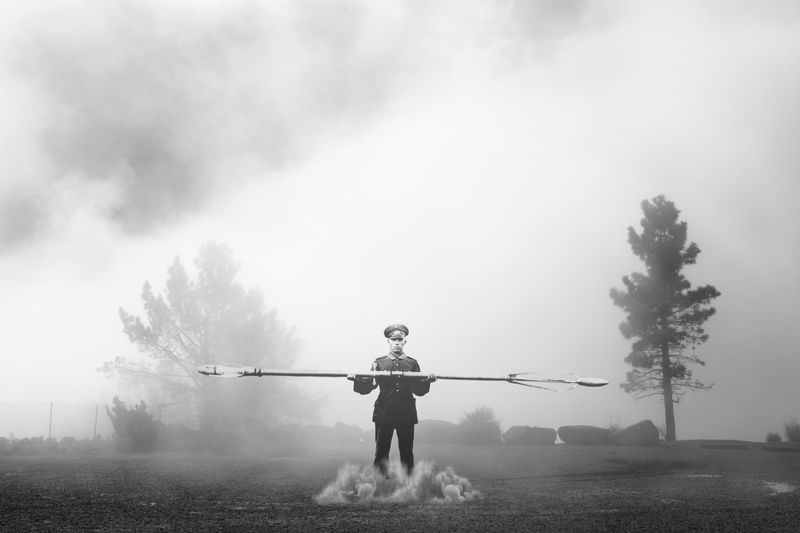
Holding Missile, Peenemünde, 1940/2019. To create Holding Missile, Peenemünde, 1940/2019 I superimposed archival images found in the Wernher von Braun Archive in Huntsville, AL with my own landscape. The first date indicates the year of the archival photographs, the second the year in which I made my photograph and the composite. With this piece I am literally compressing time and place and re-contextualizing the historical images.

© Barbara Diener - Image from the The Rocket's Red Glare photography project
i

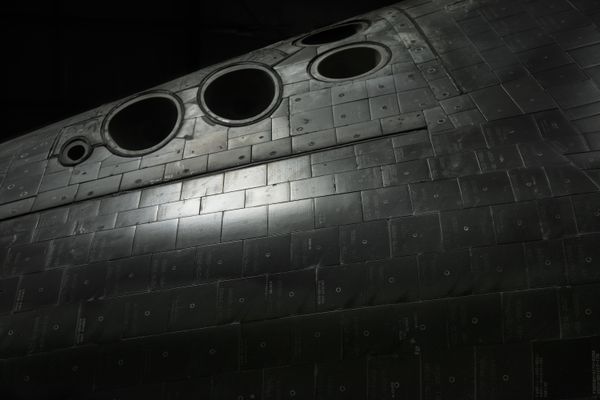
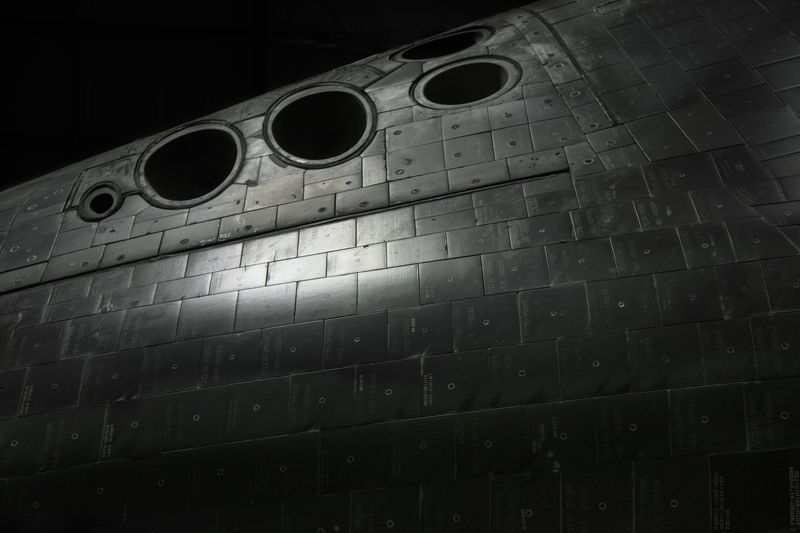
Endeavour, 2019. The Endeavour space craft was NASA's fifth and final shuttle transporting humans until SpaceX's Dragon made its trip this year to the International Space Station with astronauts on board. In 1992 Mae Jemison became the first African-American woman in space, traveling on Endeavour.

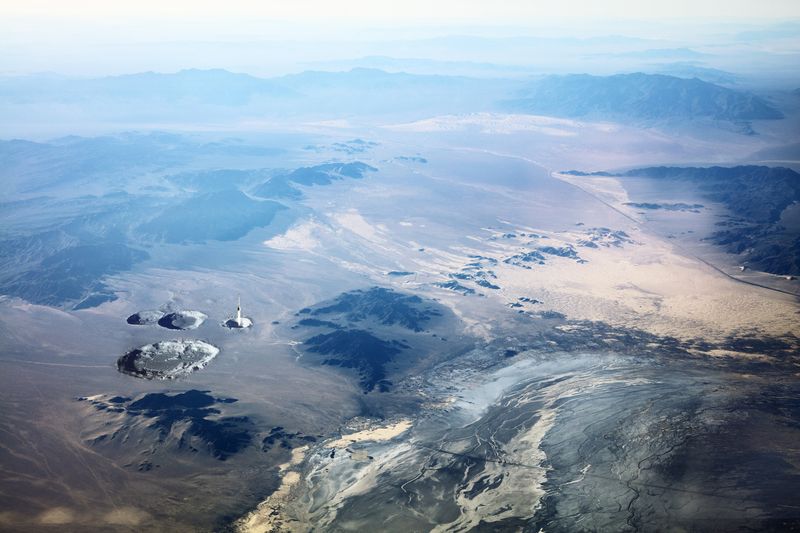
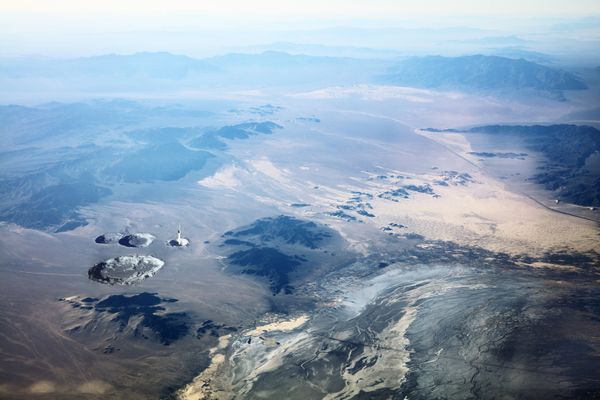
© Barbara Diener - Rocket Test, Mojave Desert, 1942/2019. The desert—a frequently used site for rocket and missile tests.
i

Rocket Test, Mojave Desert, 1942/2019. The desert—a frequently used site for rocket and missile tests.

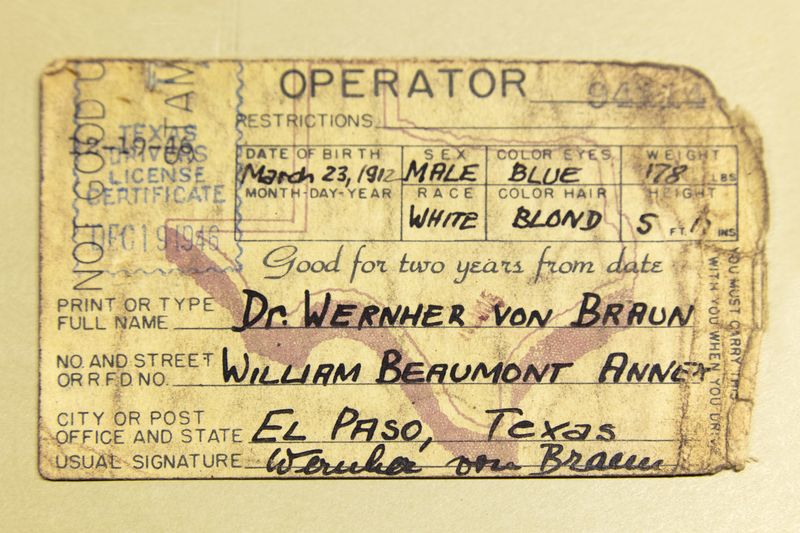
© Barbara Diener - Dr. von Braun’s First US Driver’s License Certificate, 1946/2019.
i

Dr. von Braun’s First US Driver’s License Certificate, 1946/2019.

© Barbara Diener - Image from the The Rocket's Red Glare photography project
i

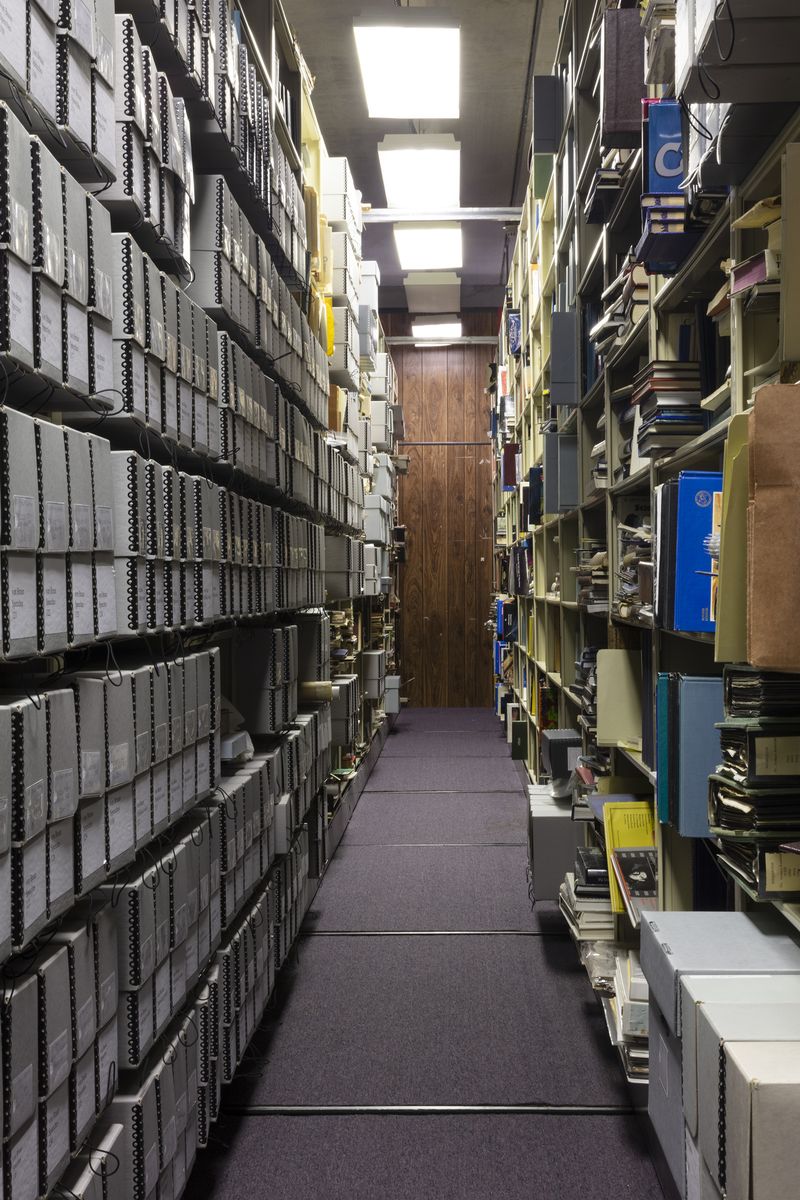
Wernher von Braun Archive, U.S. Space and Rocket Center, Huntsville, AL, 2019. I spent many hours sifting through photos and documents in the Wernher von Braun Archive at the U.S. Space and Rocket Center, Huntsville, AL.

© Barbara Diener - Image from the The Rocket's Red Glare photography project
i

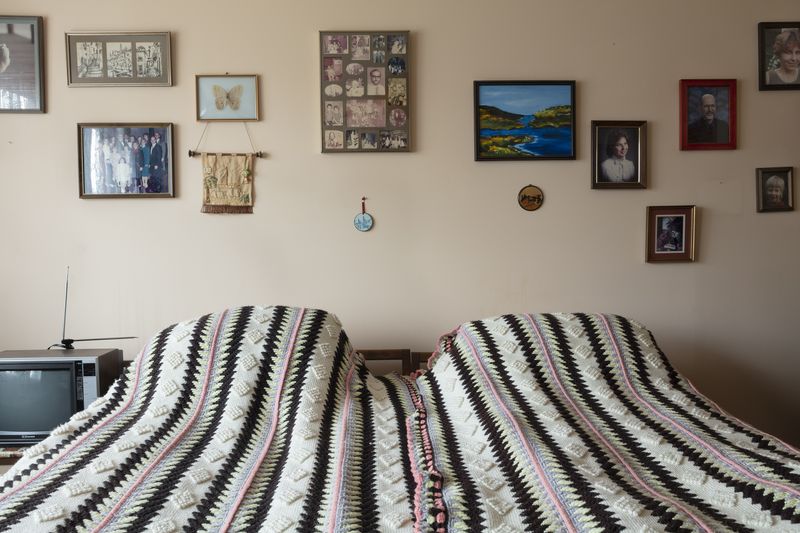
Bed of the Late Georg von Tiesenhausen, Which he Shared with his Wife for over Seventy Years, Huntsville, AL, 2019. Georg von Tiesenhausen was the last remaining member of Wernher von Braun's original rocket team in Peenemünde, Germany. He passed away in 2018. This is the bed he shared with his wife for over seventy years in Huntsville, AL.

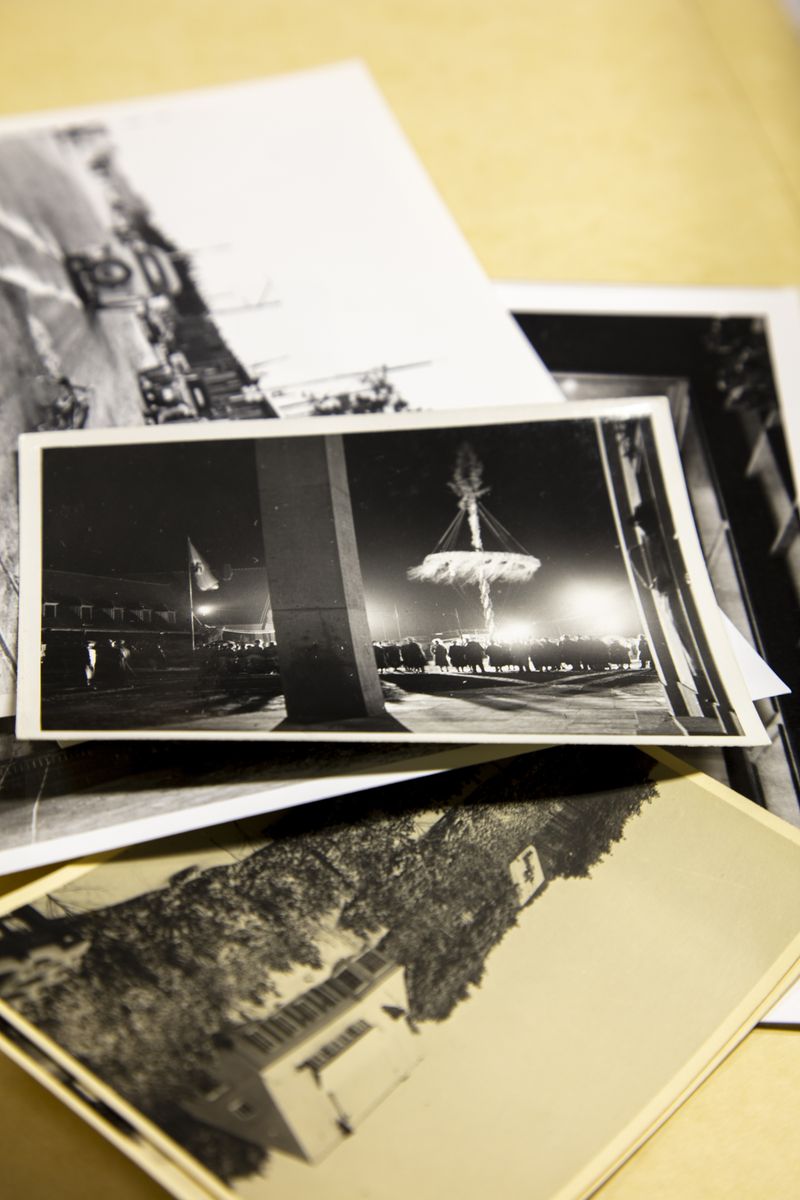
© Barbara Diener - Nazi May Day Celebration, 1938/2019. Rephotographed historical prints in the Wernher von Braun Archive in Huntsville, AL.
i

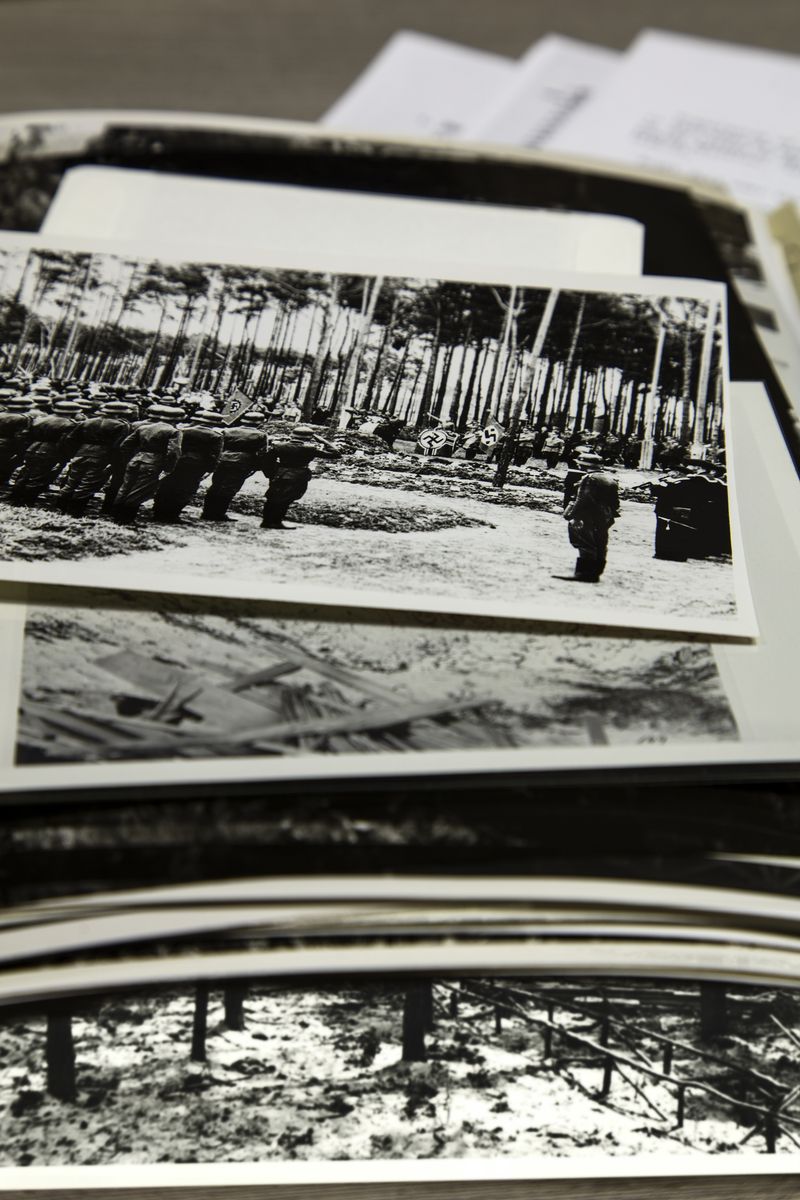
Nazi May Day Celebration, 1938/2019. Rephotographed historical prints in the Wernher von Braun Archive in Huntsville, AL.

© Barbara Diener - Image from the The Rocket's Red Glare photography project
i

Sandbags, Huntsville, AL, 1940/2019. To create Sandbags, Huntsville, AL, 1940/2019 I superimposed archival images found in the Wernher von Braun Archive in Huntsville, AL with my own landscape. The first date indicates the year of the archival photographs, the second the year in which I made my photograph and the composite. With this piece I am literally compressing time and place and re-contextualizing the historical images.

© Barbara Diener - Image from the The Rocket's Red Glare photography project
i

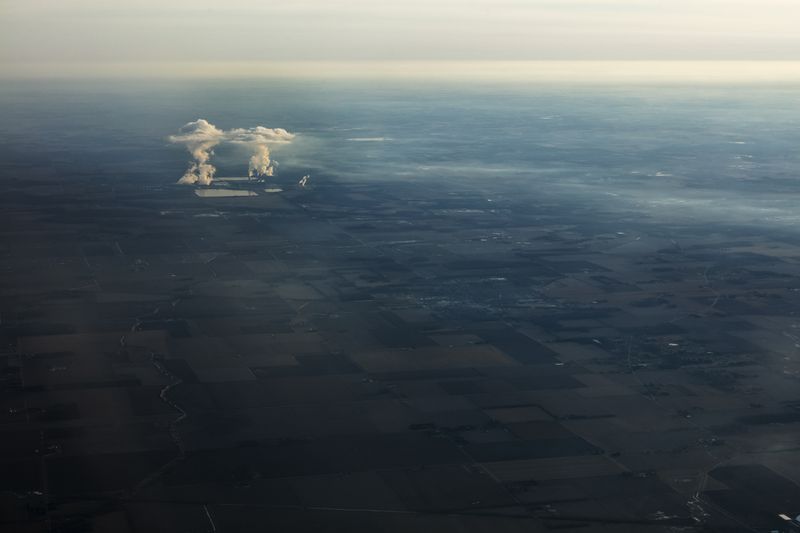
The Roar was Heard in the Distance, 2019. With this photograph I am addressing how crucial historical events are embedded in the landscape and specifically drawing attention to the environmental impact that rocket and missile testing has had.

© Barbara Diener - Image from the The Rocket's Red Glare photography project
i

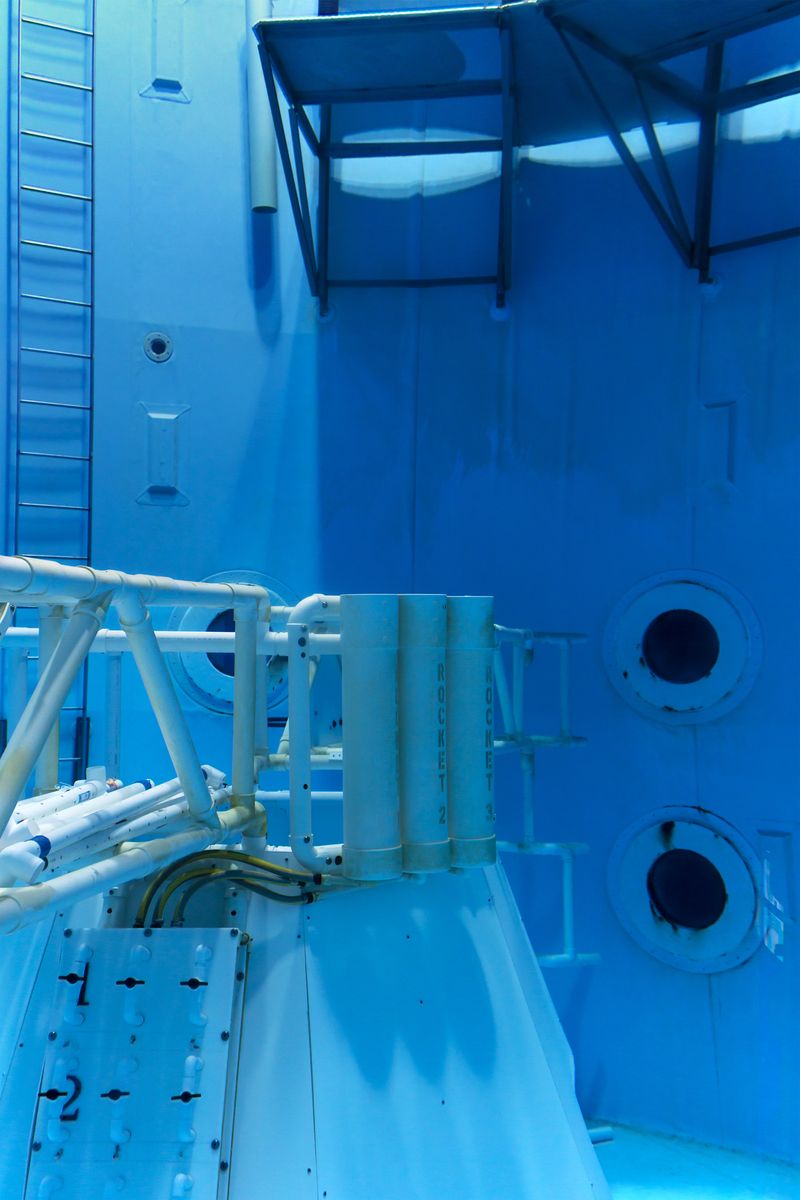
Neutral Buoyancy Simulator, 2019. A neutral buoyancy simulator is used by astronauts in training to practice working in zero gravity.

© Barbara Diener - Image from the The Rocket's Red Glare photography project
i

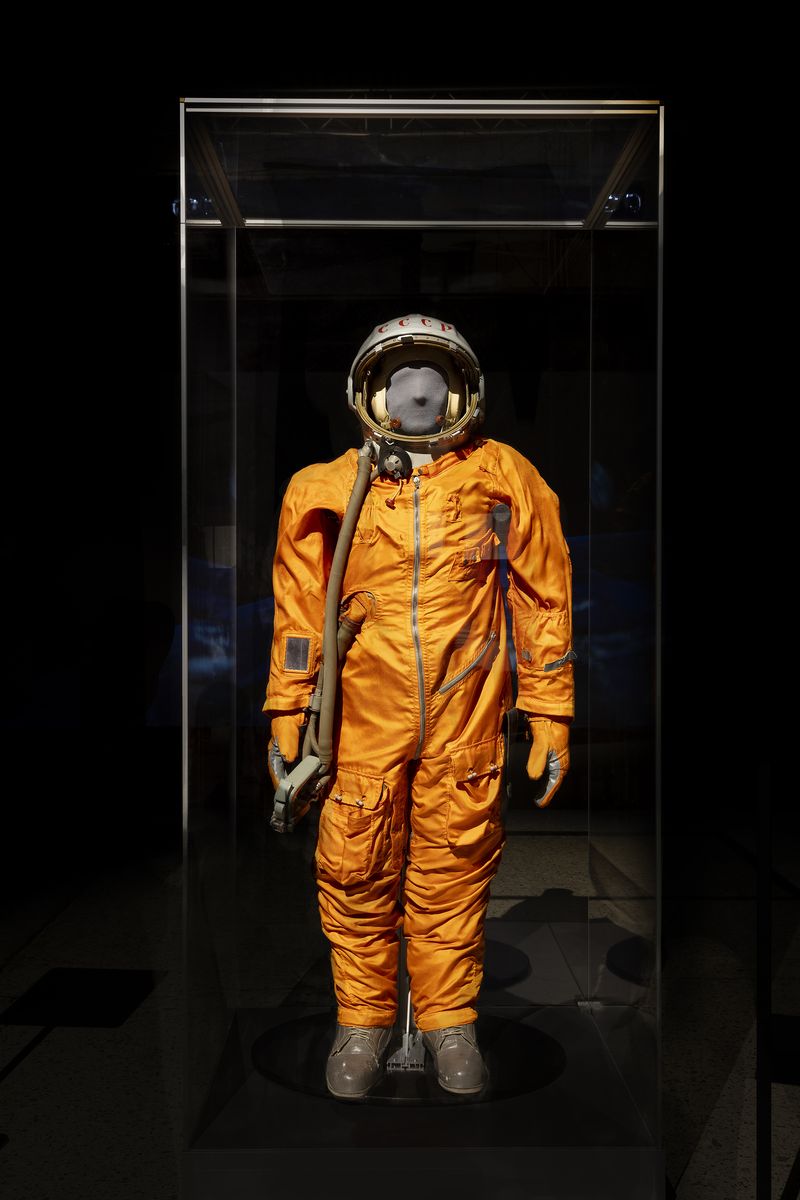
First Space Suit, 2019. The first space suit to go into orbit, worn by Yuri Gagarin, displayed at the US Space and Rocket Center in Huntsville, AL.

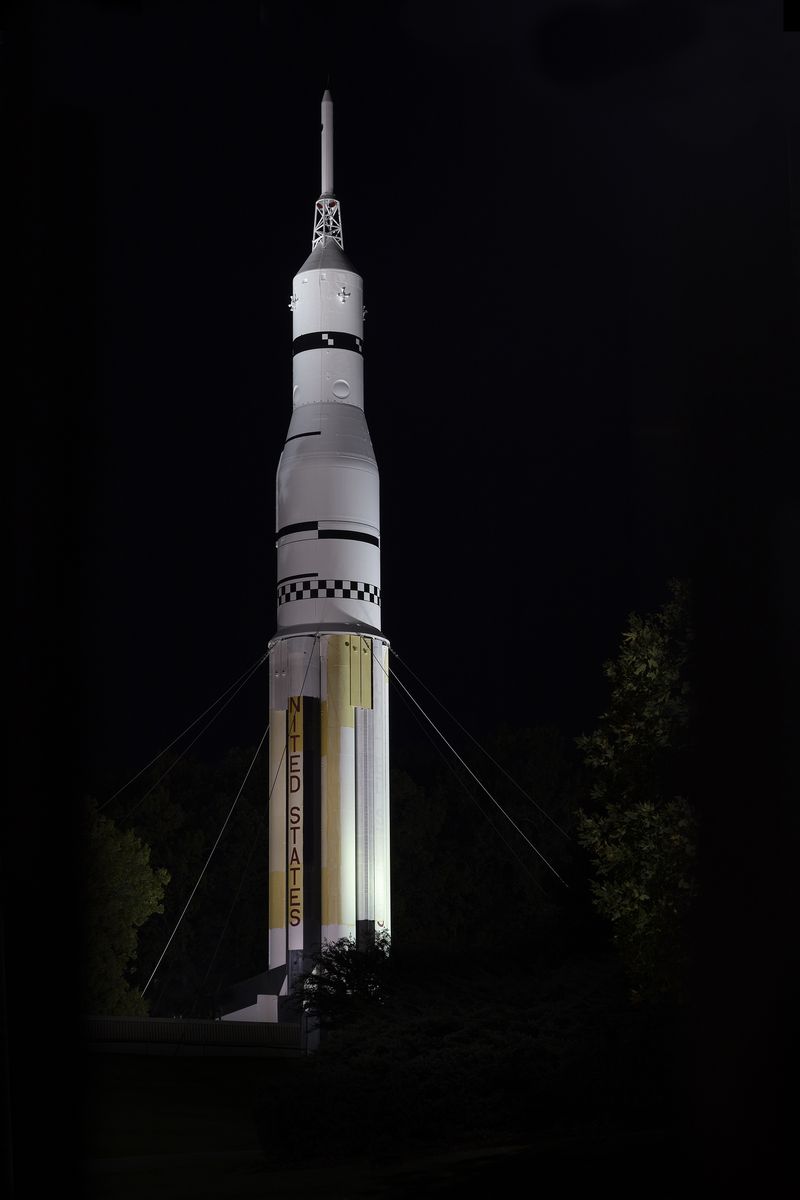
© Barbara Diener - Saturn I at Night, Huntsville, AL, 2019. Model of the Saturn I at the U.S. Space and Rocket Center in Huntsville, AL.
i

Saturn I at Night, Huntsville, AL, 2019. Model of the Saturn I at the U.S. Space and Rocket Center in Huntsville, AL.

© Barbara Diener - Image from the The Rocket's Red Glare photography project
i

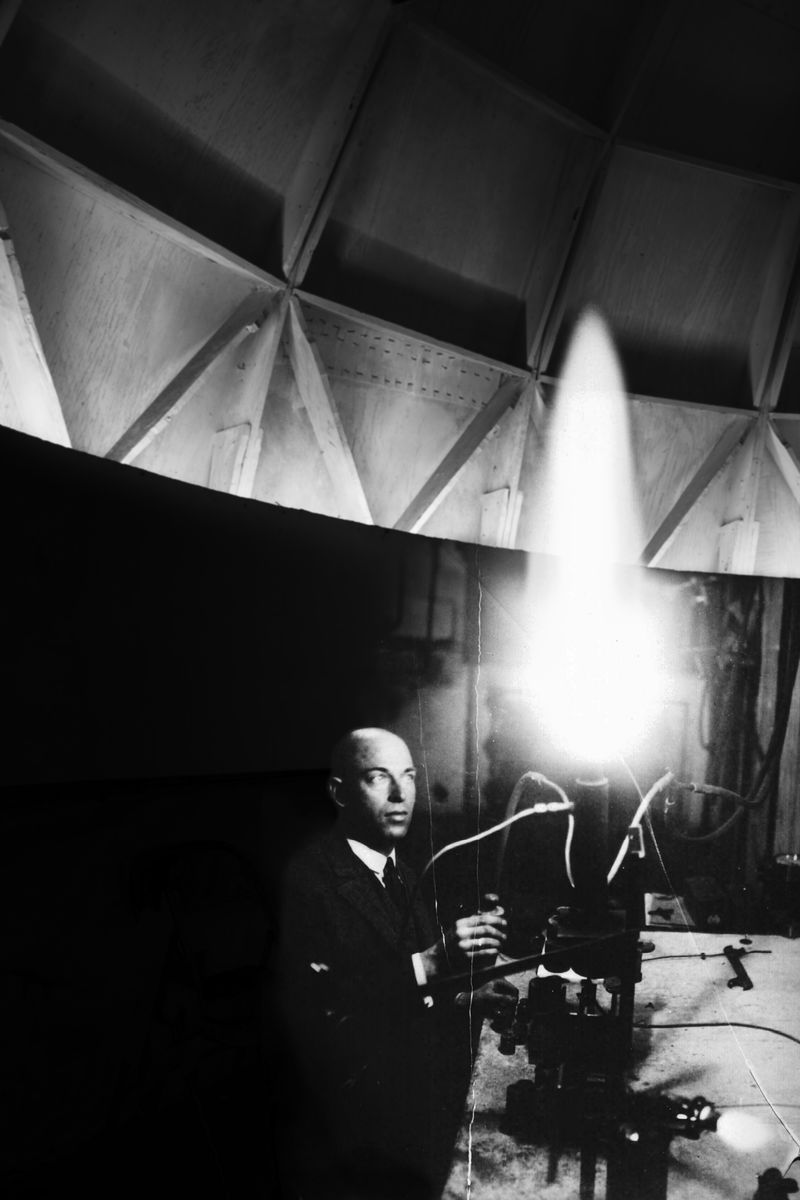
Fuel Test, Peenemünde, 1939/2019. To create Fuel Test, Peenemünde, 1939/2019 I superimposed an archival image found in the Wernher von Braun Archive in Huntsville, AL with my own photograph taken in the Wernher von Braun Observatory. The first date indicates the year of the archival photograph, the second the year in which I made my photograph and the composite. With this piece I am literally compressing time and place and re-contextualizing the historical image.

© Barbara Diener - Image from the The Rocket's Red Glare photography project
i

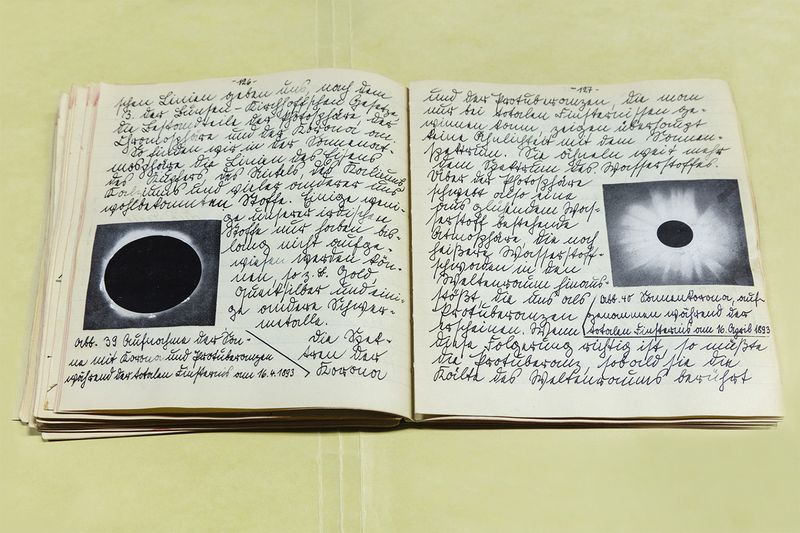
Wernher von Braun’s Astronomy Manuscript, Written at Age 15, 1927/2019. Wernher von Braun's fascination with space exploration started when he was a child experimenting with homemade rockets and rocket propellant. He wrote this manuscript for an astronomy book when he was 15 years old.

© Barbara Diener - Image from the The Rocket's Red Glare photography project
i

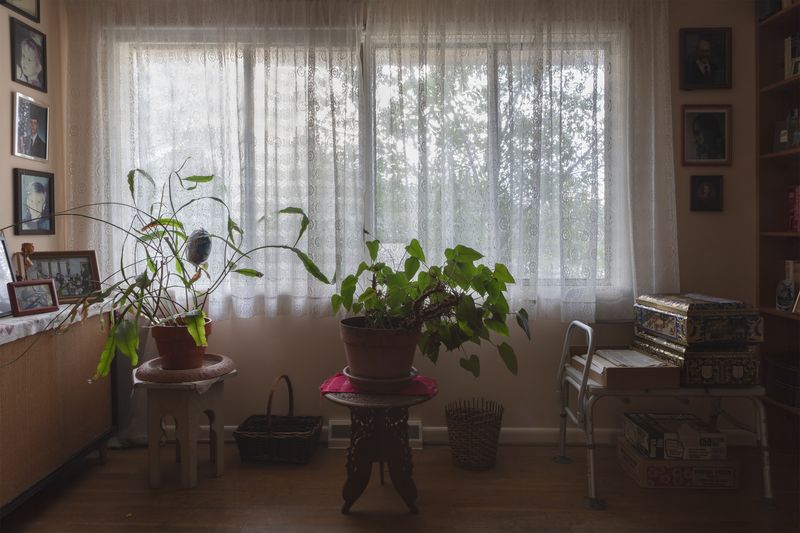
Plants, von Tiesenhausen Residence, Huntsville, AL, 2019. Plants and family photographs in the residence of the late Georg von Tiesenhausen. He represents the lesser told stories of the young scientist ordered by the Nazis to join von Braun's team at the Army Rocket Center in Peenemünde, Germany and subsequently relocate to the United States as part of the CIA initiative Operation Paperclip.

© Barbara Diener - Image from the The Rocket's Red Glare photography project
i

Funeral for Victims of Air Raid, Peenemünde, Germany, 1943/2019. Rephotographed historical prints in the Wernher von Braun Archive in Huntsville, AL.

© Barbara Diener - Image from the The Rocket's Red Glare photography project
i

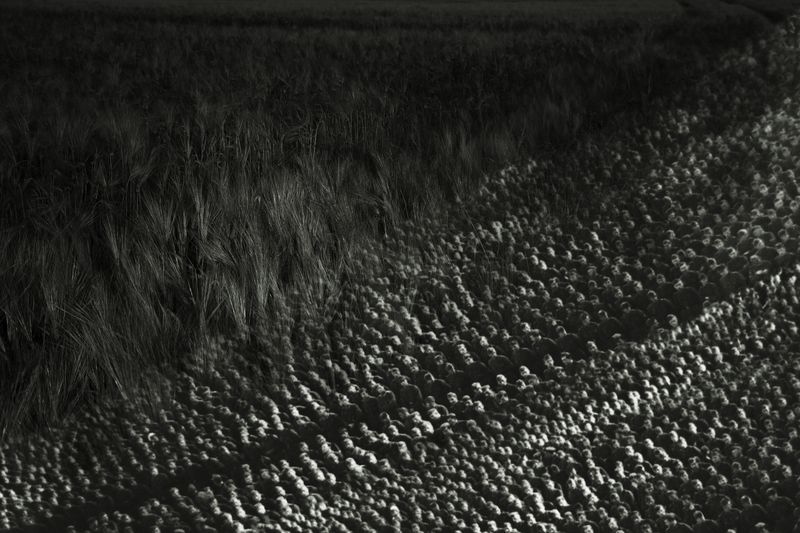
Soldiers in Wheatfield, 1939/2020. To create Soldiers in Wheatfield, 1939/2020 I superimposed an archival image found in the Wernher von Braun Archive in Huntsville, AL with my own landscape taken in Germany. The first date indicates the year of the archival photograph, the second the year in which I made my photograph and the composite. With this piece I am addressing how crucial historical events are embedded in the landscape.

© Barbara Diener - Image from the The Rocket's Red Glare photography project
i

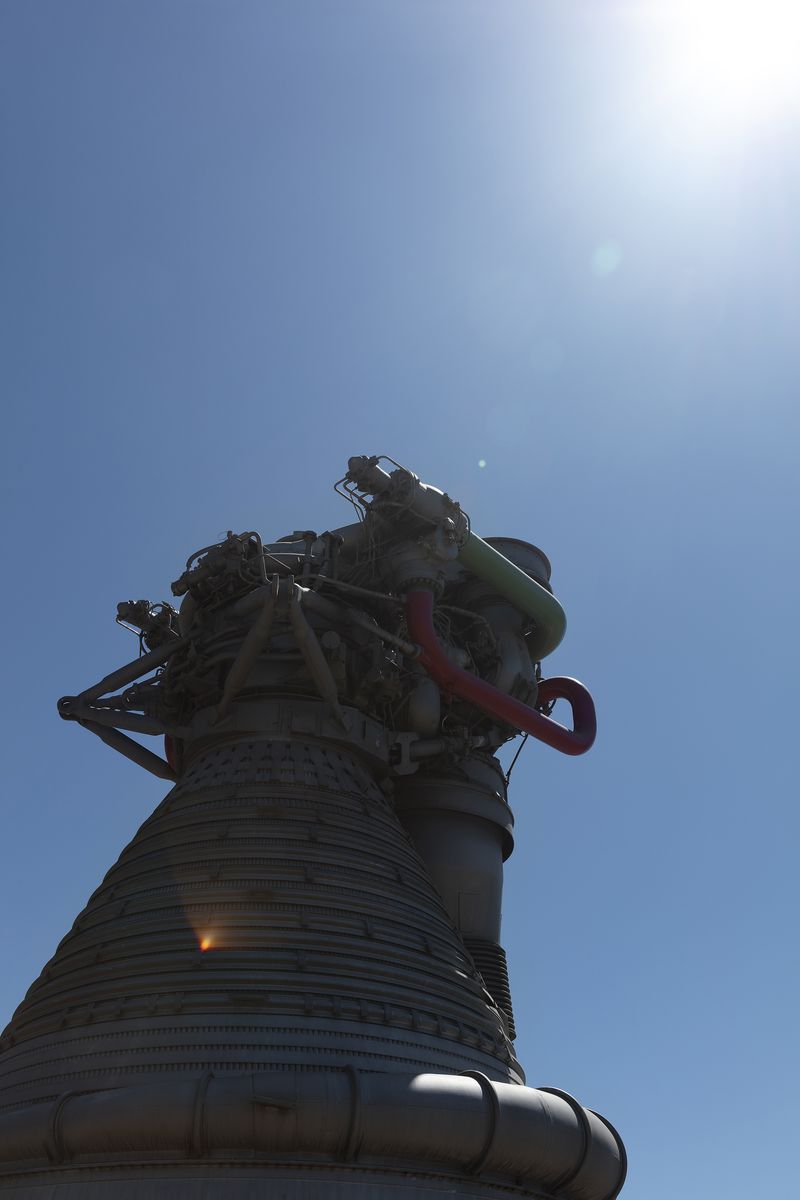
F-1 Engine, Aerojet-Rocketdyne, Los Angeles, CA, 2019. The F1 engine was used to launch the Saturn V, the rocket developed by Wernher von Braun, which landed the first man on the moon.

© Barbara Diener - Image from the The Rocket's Red Glare photography project
i

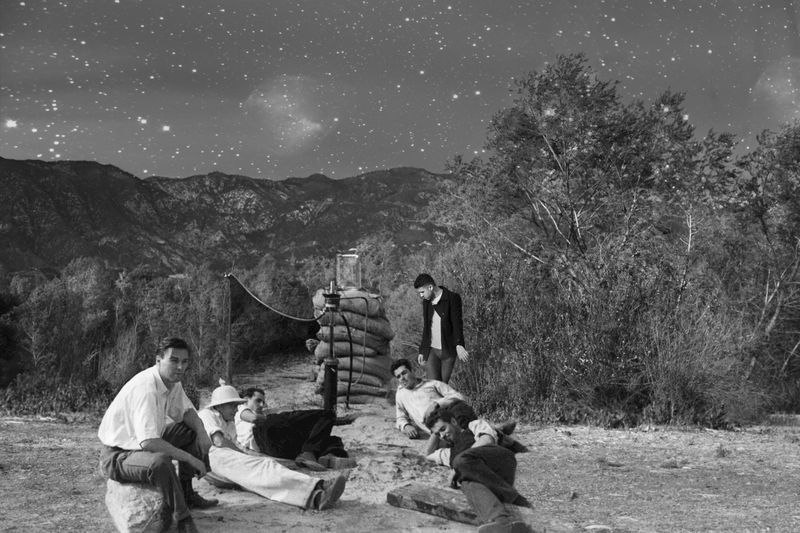
“Suicide Squad,” Arroyo Seco, Pasadena, CA, 1936/2019. In “Suicide Squad,” Arroyo Seco, Pasadena, CA, 1936/2019 I have composited a photo of the “Suicide Squad” into an environmental portrait/landscape that I took in 2019 in the same location. The original photograph was taken during the first rocket fuel test in 1936 in the Arroyo Seco. The first year, “1936,” refers to the date in which the historical photo was made and “2019” refers to the year I took my image and created the composite. With this piece I am literally compressing time and place and re-contextualizing the historical image.

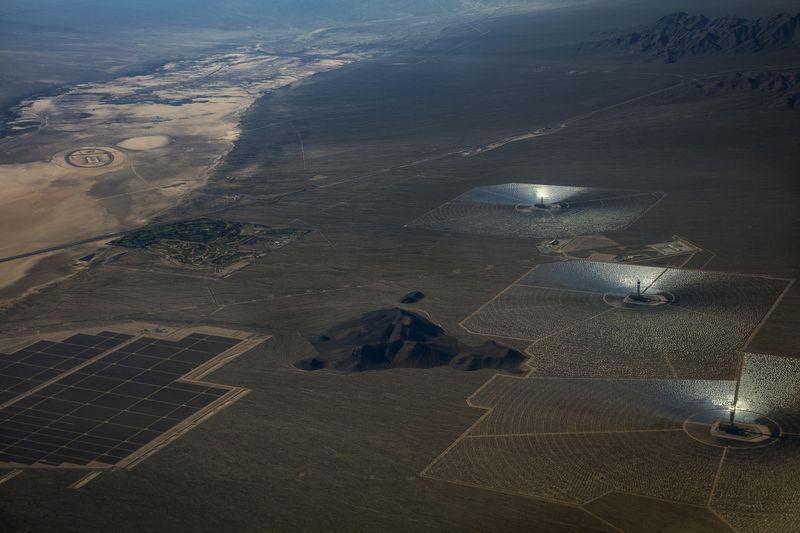
© Barbara Diener - The Desert a Banquet Hall set for a Festival, 2019. The desert—a frequently used site for rocket and missile tests.
i

The Desert a Banquet Hall set for a Festival, 2019. The desert—a frequently used site for rocket and missile tests.