The Place Where I Used To Play...
The Place Where I Used to Play explores the human and environmental costs of rapid urbanization in Dhaka, Bangladesh. Through a surreal documentary lens, it captures disappearing landscapes and fading communities, questioning the true meaning of progress.

“What is the city but the people?” — William Shakespeare.

I often return, in memory, to Green Model Town, on the edge of Dhaka, Bangladesh, where I swam in a canal that flowed into the Balu River, and we played under wide trees, sharing laughter that echoed through the fields. The river is a cracked canal, fields are covered by concrete, and the trees—the silent witnesses of my childhood—have nearly vanished. The grief and nostalgia I feel toward this disappearing landscape are shared by the people I photograph.

Urbanization is global, yet Dhaka’s transformation is a striking example of human and environmental cost. With a population now exceeding 25 million, it is among the world’s 2nd largest megacities, expanding at roughly 3–4% annually—nearly twice the current global urban growth rate of about 1.8–2%. This population is compressed into approximately 306 square kilometers, resulting in a density of over 23,000 people per square kilometer, more than 15 times the global urban average. In 1974, only 18% of Bangladeshis lived in cities; by 2050, this figure is projected to rise to around 60–65%. Migration to Dhaka is driven by both the search for opportunity and climate displacement, as loss of arable land, river erosion, flooding, and rising seas push rural families into the city.

Dhaka sits in a high-risk seismic zone—where experts warn that even a magnitude-6 to 6.5 earthquake could turn parts of Old Dhaka into a “death zone.” With an estimated 90–95% of buildings constructed without proper approval or full compliance with building codes, this project captures a city where everyday living has become a silent negotiation with danger.

For the past three years, I’ve self-funded this project, building trust within communities and staying close as change unfolds. I’ve spent years walking the same lanes, photographing not just what’s being built—but what’s being buried. As an artist shaped by this landscape, I see myself as both participant and witness—carrying memory while confronting its erasure. My dreamy, surreal style evokes loss rather than simply showing it. Alongside photographs, I collect oral histories, ambient sounds, and fragments of memory, layering them with recorded voices, water, wind, and silences that speak of absence. This blending of mediums moves documentary beyond fact into felt experience, capturing not only what is seen but also what is remembered and longed for.

The urgency is immediate. Each week, new construction wipes away rivers, trees, and homes. If we do not record these changes now, they will be lost to memory alone. My work asks: What does development mean if it erases the spaces that once gave us joy, belonging, and connection to nature? What do people carry forward when their landscapes disappear?

To me, photography is a form of moral witnessing. This work is not only a record of what is disappearing in Dhaka, but a mirror for cities everywhere racing toward the same fate.

© Jubair Ahmed Arnob - Image from the The Place Where I Used To Play... photography project
i

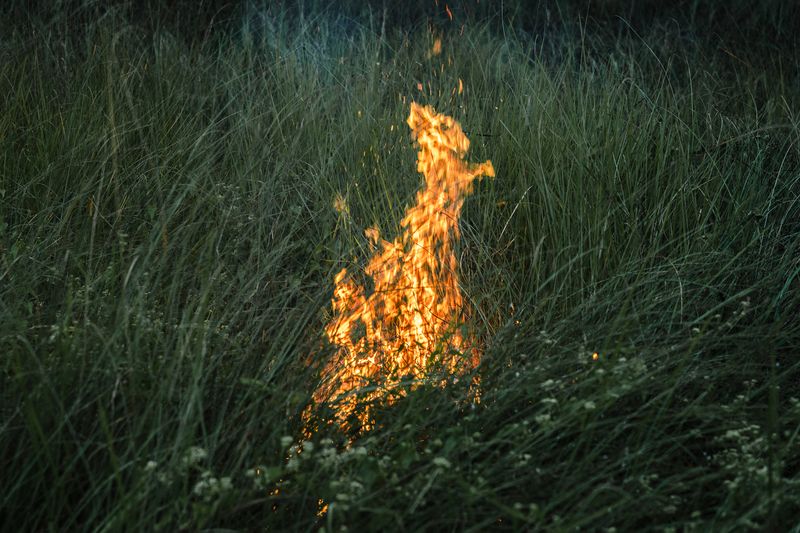
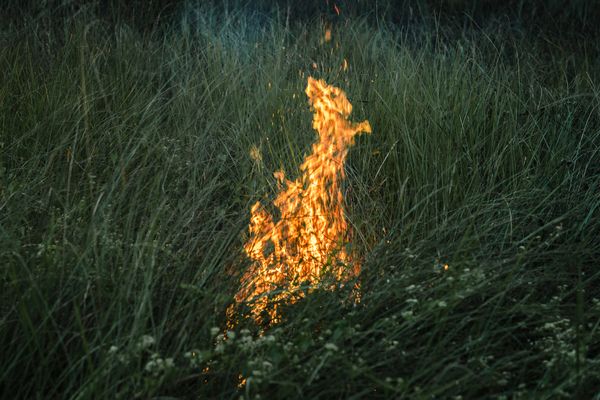
A fire burns quietly in the wild grass, its glow cutting through green like an omen. At Dhaka’s edges, such sparks mirror the city’s rapid, unchecked growth. Where rivers, fields, and trees once shaped life, concrete now swallows memory. This image captures both the fleeting beauty of fire and the relentless erasure of nature for development.

© Jubair Ahmed Arnob - Image from the The Place Where I Used To Play... photography project
i

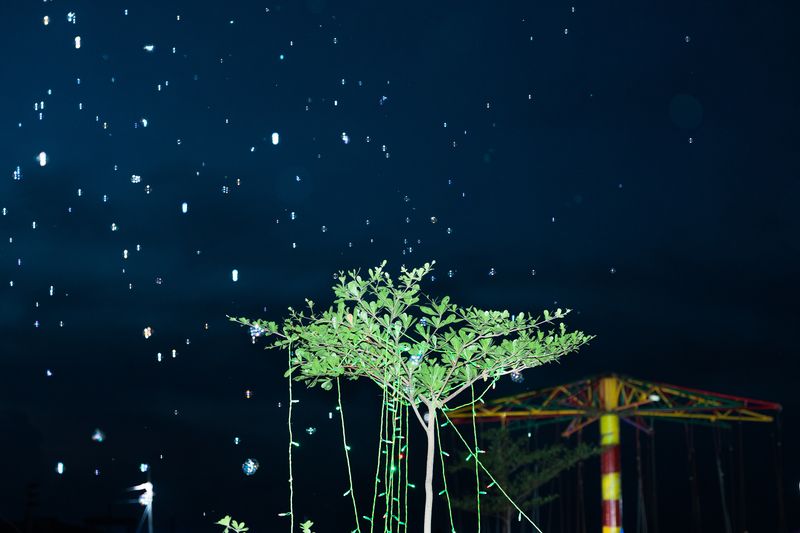
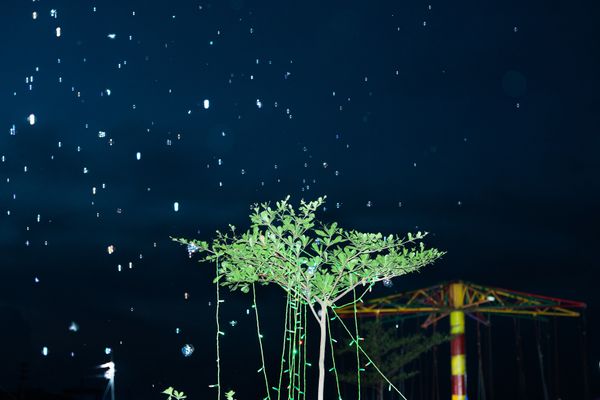
Bubbles drift across the night sky, glimmering like scattered stars. Beneath them, a young tree wrapped in green lights reaches toward a fleeting constellation. In the distance, the silhouette of a fairground lingers, evoking echoes of joy. The scene captures a fragile moment where childhood magic hovers before dissolving into darkness.

© Jubair Ahmed Arnob - Image from the The Place Where I Used To Play... photography project
i

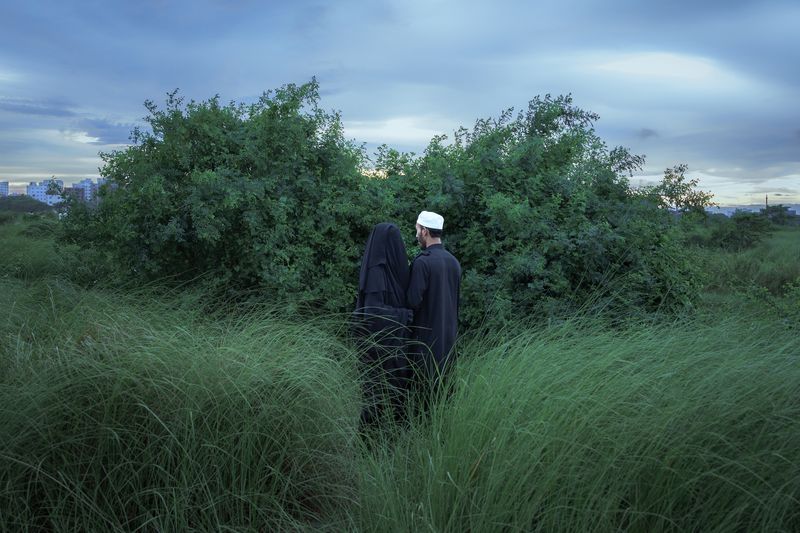
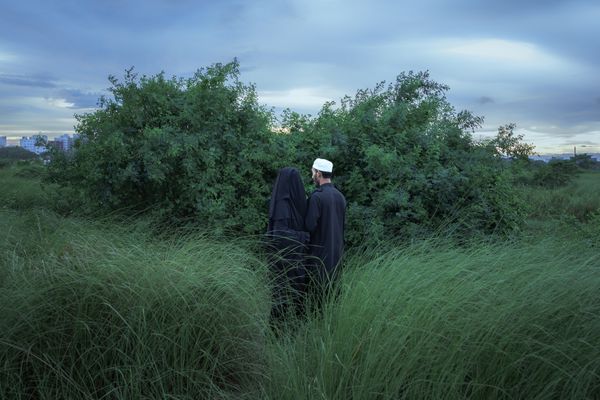
In the shadow of looming city blocks, a couple stands quietly in the tall grass, facing what remains of untamed land. Their presence is intimate and defiant, a claim to a space vanishing under relentless development. Nature lingers here like a fading memory—a tender pause before erasure.

© Jubair Ahmed Arnob - Image from the The Place Where I Used To Play... photography project
i

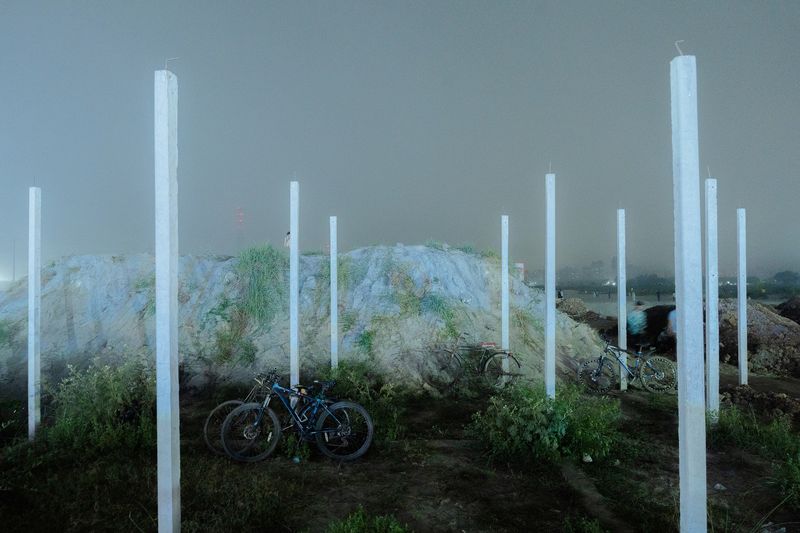
Concrete posts rise like skeletal frames against a hazy night sky, staking silent claims on once-open ground. Bicycles lean at their base, clinging to fleeting moments before transformation. This in-between landscape—no longer nature, not yet city—marks development’s inevitability. For those who once played here, the pillars are omens of a future where space serves profit, not people.

© Jubair Ahmed Arnob - Image from the The Place Where I Used To Play... photography project
i

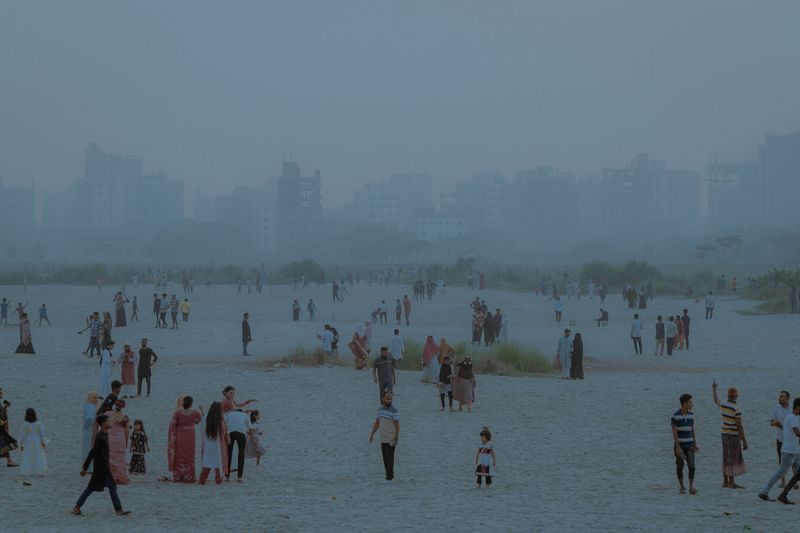
Once a riverbed, now a manufactured plain, the sand beneath their feet feels borrowed. Crowds gather, unaware of the water that once pulsed here, as towering structures loom in the mist. Nature is redirected, packed down, and rebranded as leisure—a river stopped, a park born, progress built on the bones of a past that cannot return.

© Jubair Ahmed Arnob - Image from the The Place Where I Used To Play... photography project
i

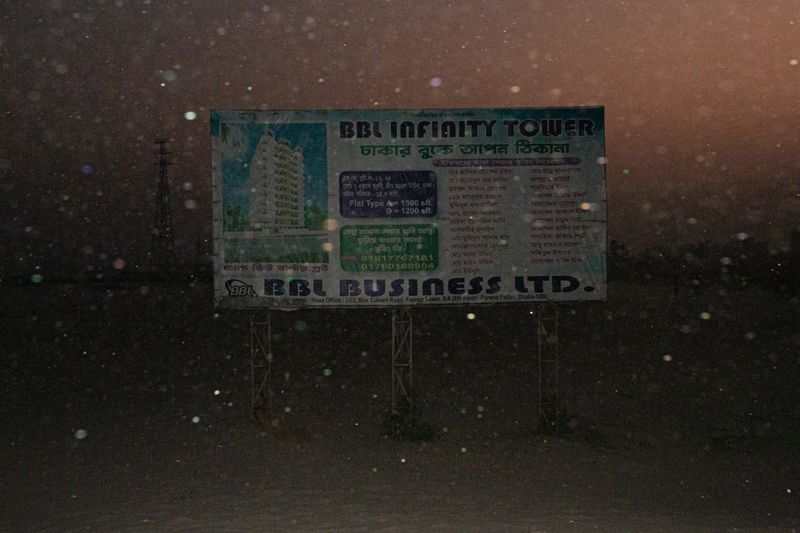
A glowing billboard promises luxury and progress—a modern high-rise in the city’s heart. Yet beneath it, swirling dust, barren land, and distant power lines reveal a city caught between aspiration and the cost of relentless urbanization. The image captures the tension between the dream of development and its environmental toll.

© Jubair Ahmed Arnob - Image from the The Place Where I Used To Play... photography project
i

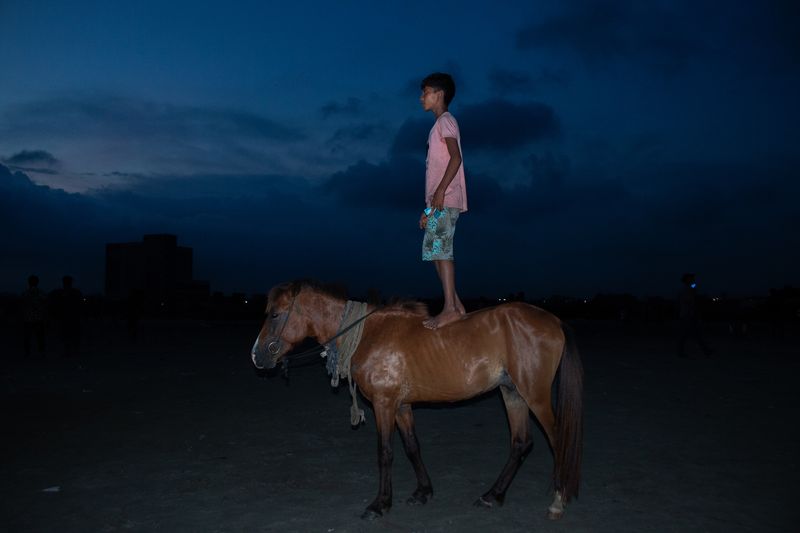
As twilight falls, a young rider on horseback stands as a symbol of a disappearing past. The wild horse contrasts with the rising concrete jungle, reflecting the fragile bond between humanity and nature. Amid the city’s glow, this fleeting moment captures a harmony that lingers even as urbanization advances.

© Jubair Ahmed Arnob - Image from the The Place Where I Used To Play... photography project
i

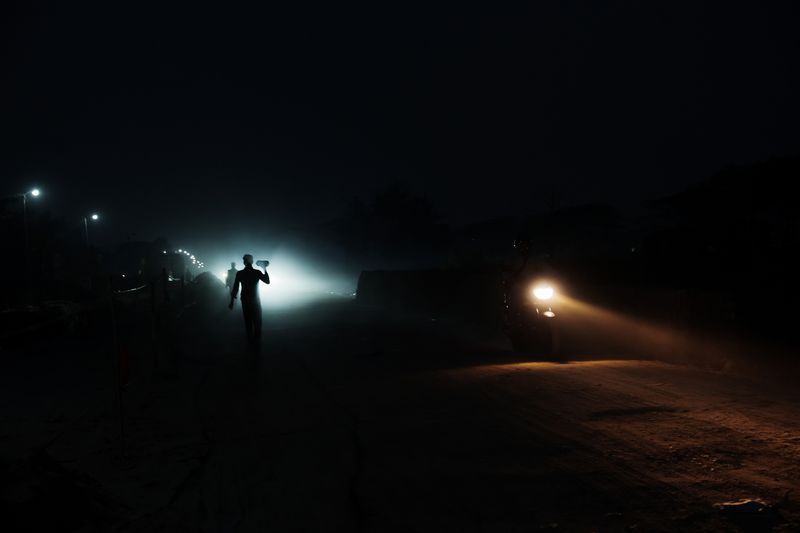
A lone figure walks into the glow of a blinding headlight, a bag over his shoulder like memory and burden. The unfinished, dusty street is edged by darkness as a motorbike’s light slices through the night. The scene hangs between survival and disappearance—where play once lived, only shadows remain under the weight of development.

© Jubair Ahmed Arnob - Image from the The Place Where I Used To Play... photography project
i

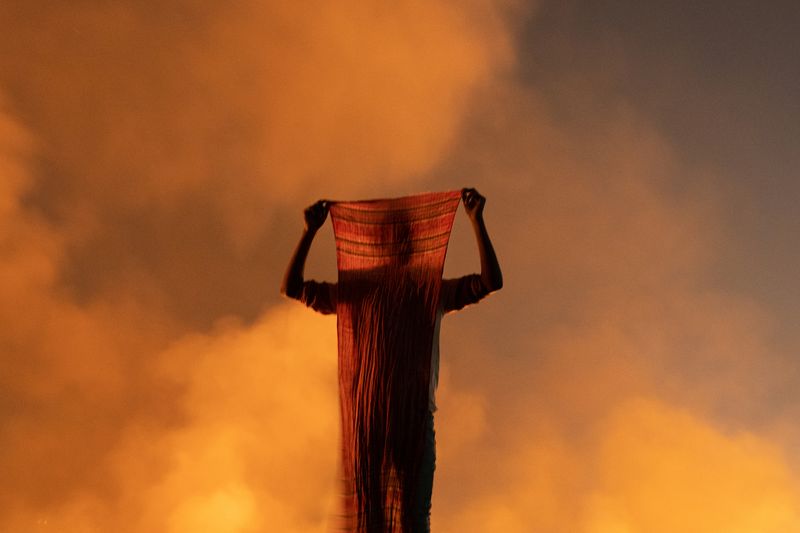
A construction laborer poses amidst the haze, where the towel he holds becomes a metaphorical colonial wall. It stands as a silent barrier between the heights of global development and the machinery of capitalism—a system where the migrant worker remains perpetually oppressed, building the world while being held apart from its promise.

© Jubair Ahmed Arnob - Image from the The Place Where I Used To Play... photography project
i

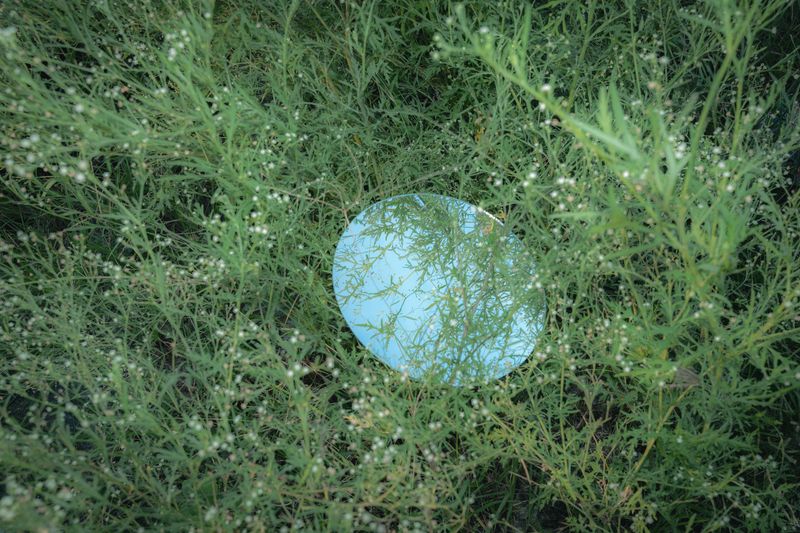
Amid tangled weeds, a discarded mirror reflects the sky—a fleeting openness in a city where horizons close. Once offered by fields and rivers, now reflection is the only window. The image is quiet yet unsettling, reminding us how urban growth reduces nature to fragments and symbols, asking: what remains of freedom when the landscape is lost?

© Jubair Ahmed Arnob - Image from the The Place Where I Used To Play... photography project
i

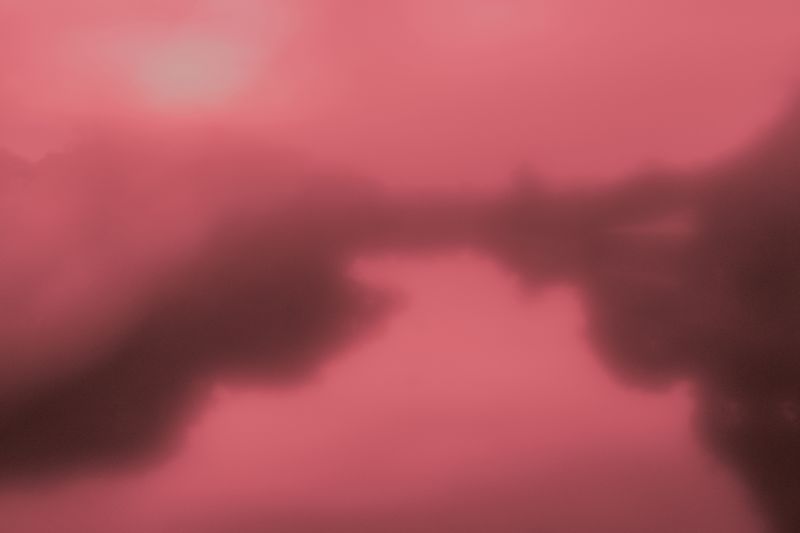
Awash in a surreal red haze, the image blurs memory and reality. Once the flowing Balu River, now a diminished canal, it fades into abstraction. The crimson reads like a warning—urbanization staining nature. A lifeline reduced to an echo, the water mirrors a society where rivers are commodified and reshaped. This is not just a landscape; it is a wound.

© Jubair Ahmed Arnob - Image from the The Place Where I Used To Play... photography project
i

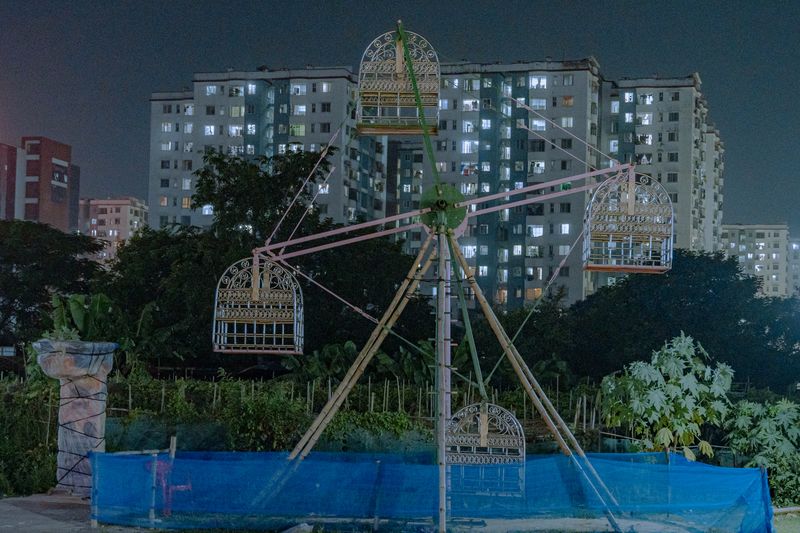
A manually operated Ferris wheel stands frozen at night, dwarfed by the towering apartment blocks behind it. Once a symbol of simple leisure, it now reflects the tension between fleeting human joy and the relentless, vertical expansion of the city.

© Jubair Ahmed Arnob - Image from the The Place Where I Used To Play... photography project
i

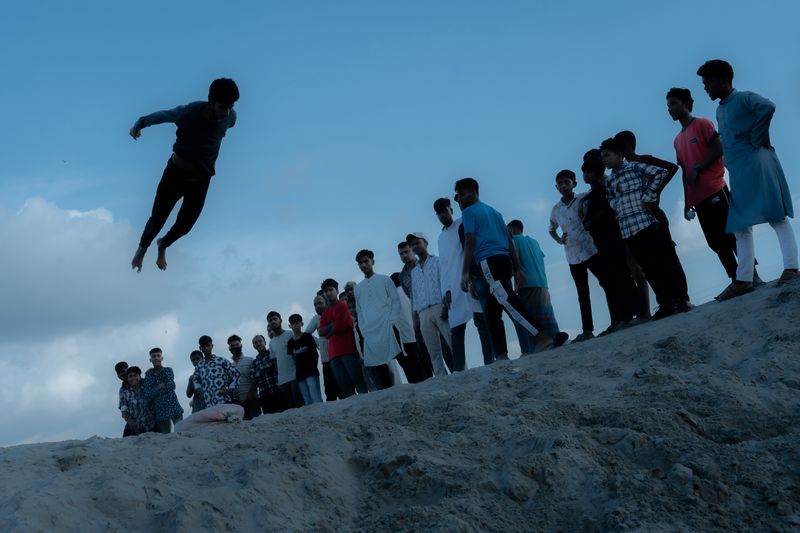
A young man leaps into the air, suspended against a pale blue sky as boys and men watch below. Once a riverbed, the sandy patch holds fleeting acts of play, defiant gestures in a city where capitalism leaves little room for joy. The jump is not just a stunt—it is a metaphor for holding onto freedom amid shrinking spaces.

© Jubair Ahmed Arnob - Image from the The Place Where I Used To Play... photography project
i

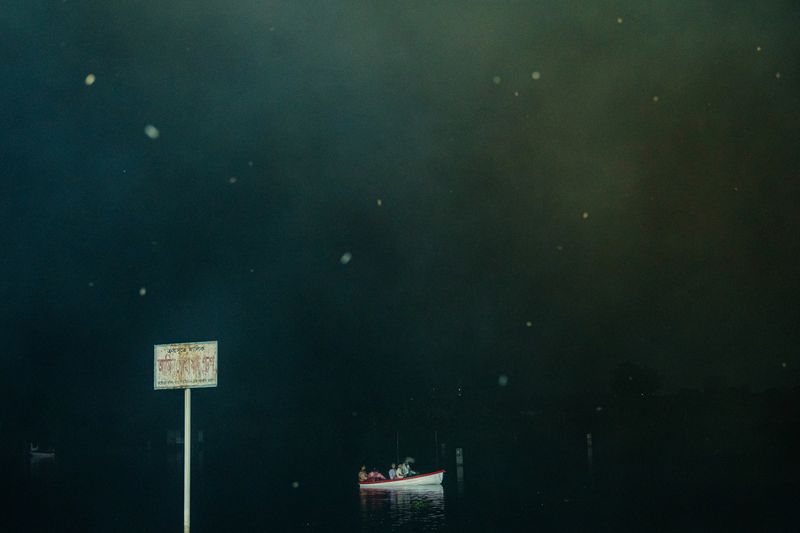
The picture captures a scene where people are happily enjoying boat rides at a location, in Dhaka, where boats can be rented for half an hour for USD 2 dollar. A nearby billboard displays the owner's information, highlighting their acquisition of this riverside area.

© Jubair Ahmed Arnob - Image from the The Place Where I Used To Play... photography project
i

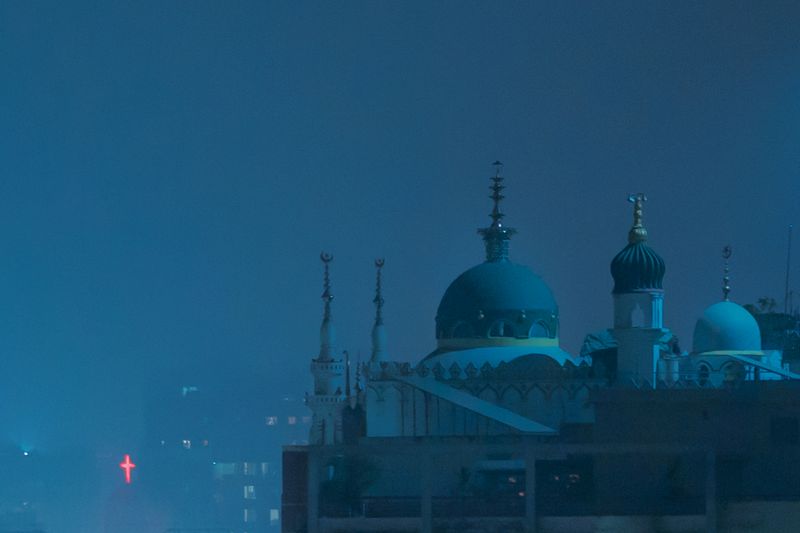
As the city settles into the evening, the skyline tells its quiet story. A mosque rises in the foreground, its domes and minarets glowing against the fading blue light, while far off, a church’s red cross cuts through the mist. Here, faiths live side by side, each leaving its mark on the same streets and skies—a subtle reminder of coexistence in the heart of the bustling city.

© Jubair Ahmed Arnob - Image from the The Place Where I Used To Play... photography project
i

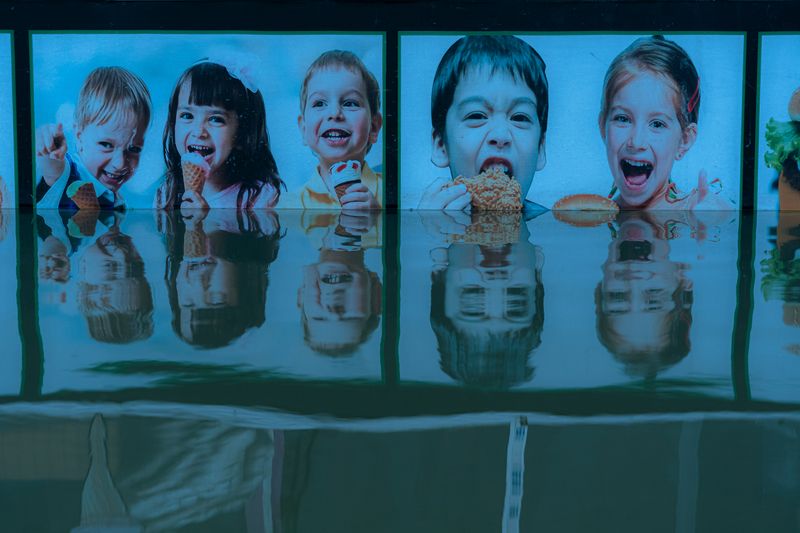
Children beam from a fast-food ad, but rising floodwaters distort their reflections, exposing the fragility of capitalist dreams. The image captures modernity’s illusion—joy marketed, while reality drowns.

© Jubair Ahmed Arnob - Image from the The Place Where I Used To Play... photography project
i

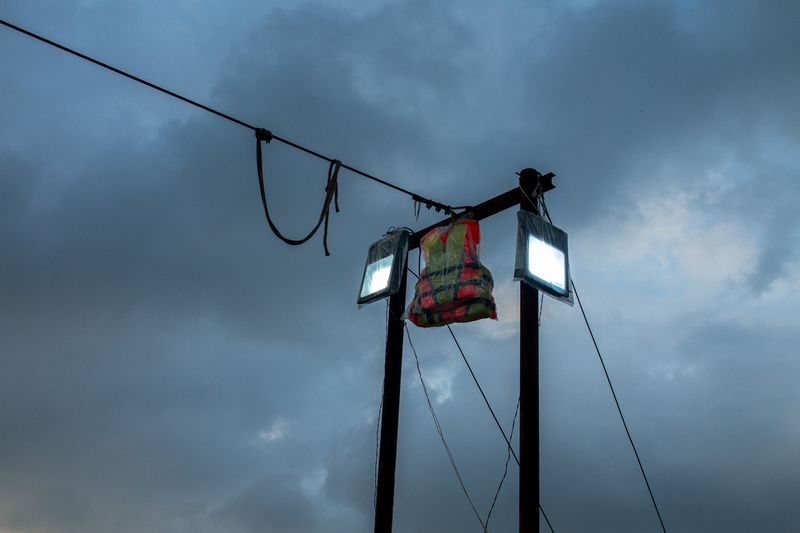
As urbanization rapidly transforms the landscape, makeshift infrastructure emerges as a symbol of resilience. Beneath the glow of artificial light, against a stormy sky, this structure stands as a symbol of resilience in an environment where progress is a matter of adaptation, not perfection.

© Jubair Ahmed Arnob - Image from the The Place Where I Used To Play... photography project
i

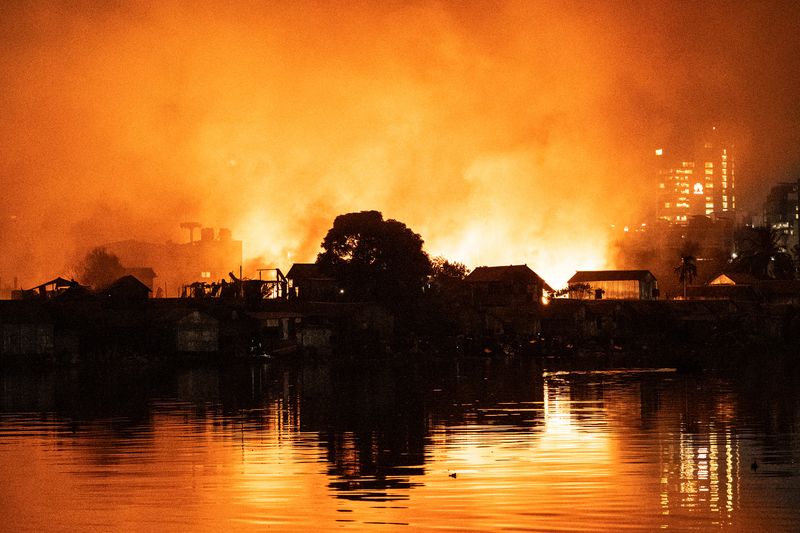
A massive fire ripped through Dhaka’s Korail shantytown, destroying around 1,500 tin-roofed homes. Thousands of residents were left homeless as flames spread quickly through the densely packed settlements—an outcome made worse by overcrowding and the city’s rapid, unplanned urban growth.

© Jubair Ahmed Arnob - Image from the The Place Where I Used To Play... photography project
i

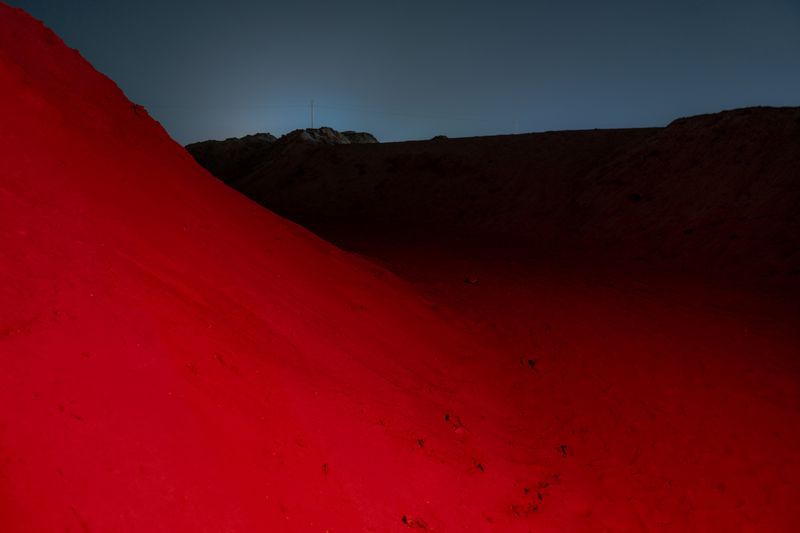
Under a blood-red wash of artificial light, the earth lies wounded—its contours shaped by relentless extraction. This surreal landscape, devoid of human presence, evokes a planetary crime scene. The sand’s crimson hue is not natural but imposed, a metaphor for violence done quietly, beneath the radar of daily life. In this silent hollow, the land speaks—not through sound, but through absence.

© Jubair Ahmed Arnob - Image from the The Place Where I Used To Play... photography project
i

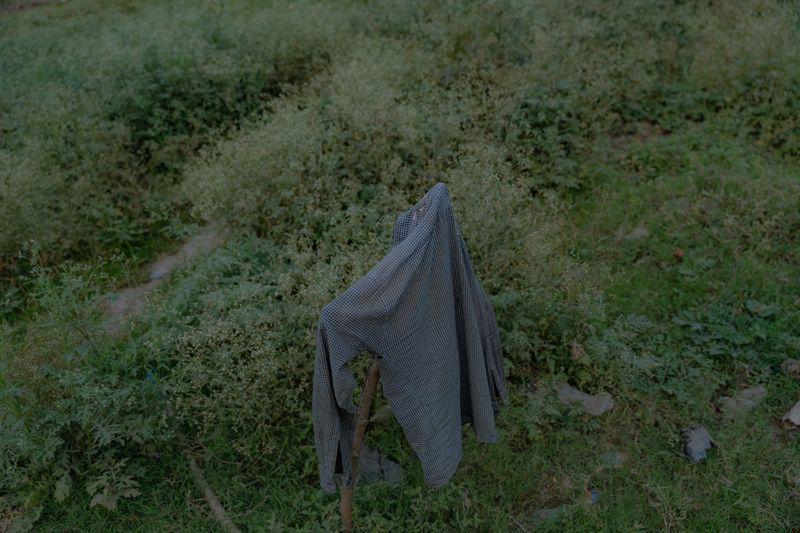
A shirt hangs limply on a stick; its sleeves spread like arms reaching for what is no longer there. The land itself, now untended and wild, seems to reclaim what capitalism discards. This fragile figure stands as testimony to the human traces erased by development, lingering just long enough before the weeds swallow it whole.