The People Behind the Border
“The people behind the border” by Sitara Thalia Ambrosio

Far from the public gaze, Bihać, a small town in north-western Bosnia-Herzegovina, has become a focal point of migration to Europe. Since February 2021 approximately 300 to 400 young refugees live in several abandoned buildings across Bihać, stranded during the attempt to cross into the European Union. People search for alternatives to official camps that are overcrowded, in horrendous conditions and set up in remote areas.

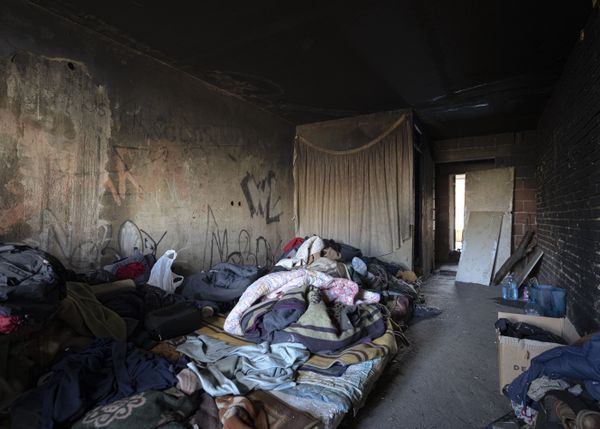
In 2021 the two biggest self-organized shelters in Bihać are an old paper factory and an unfinished retirement home, called „Dom Penzionera“. The shells are in a very bad condition with no windows, electricity or running water. Heating and cooking is only possible with open fire. The inhabitants are mostly left on their own, as aid work is criminalized, with just a few inhabitants of Bihać and international activists secretly supporting them. Most of the young men that live here have tried to reach Croatia numerous times. Often they are stopped by the Croatian authorities and violently deported back to Bosnia. Some even report, having gone to “the game”, as they call the attempt to cross the border, up to thirteen times. Very little is known about the people forced to live behind the border, their fears, what they experienced and what they wish for.

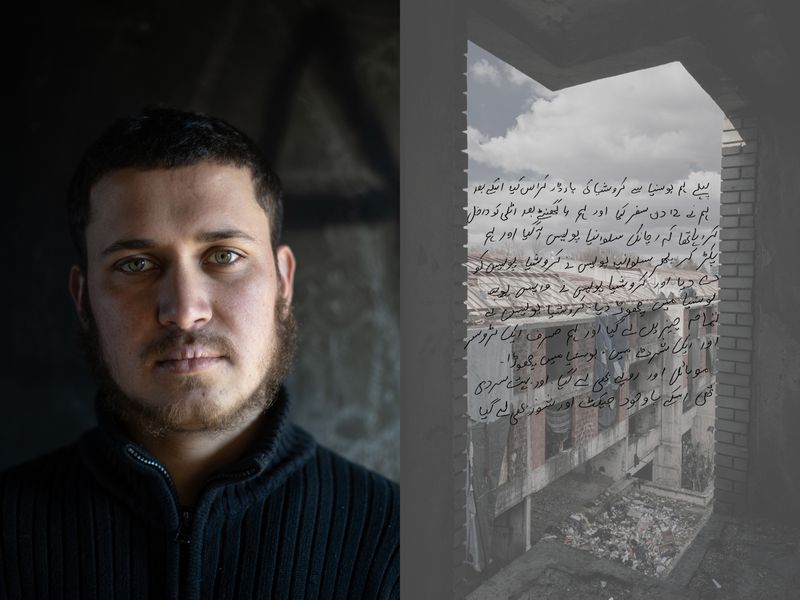
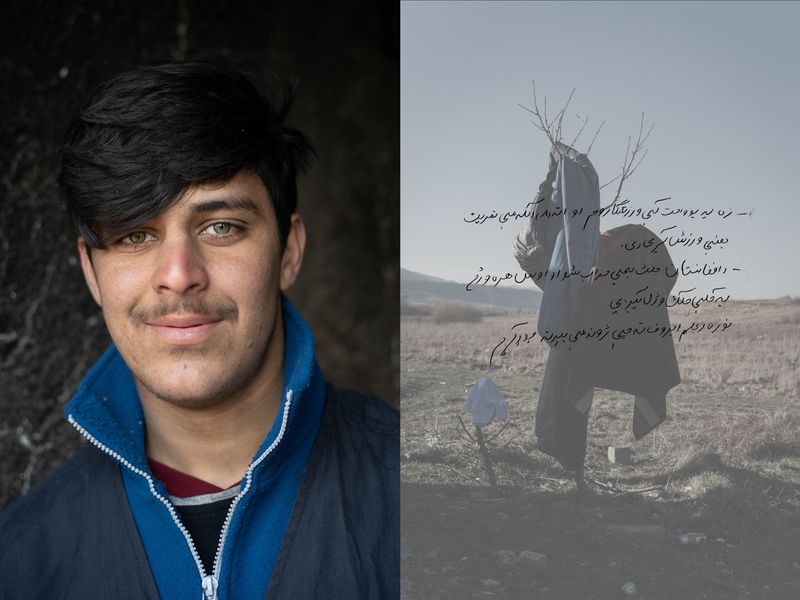
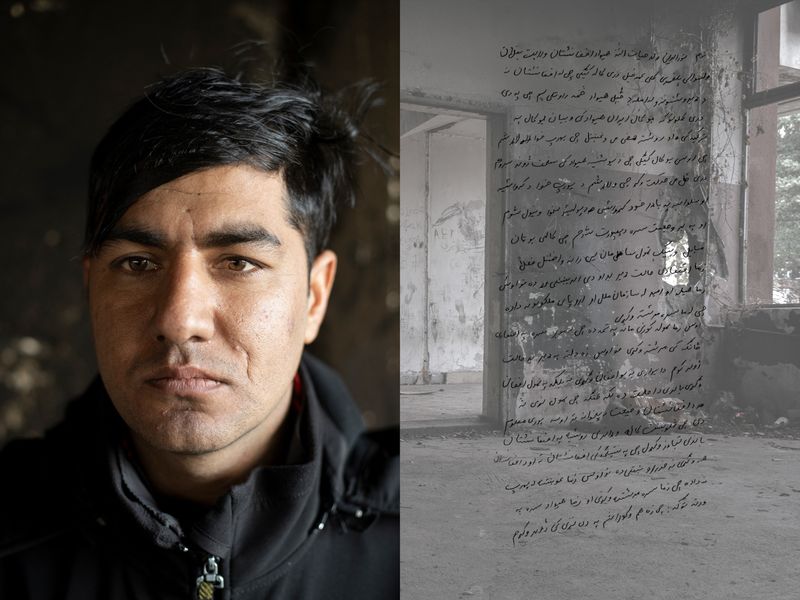
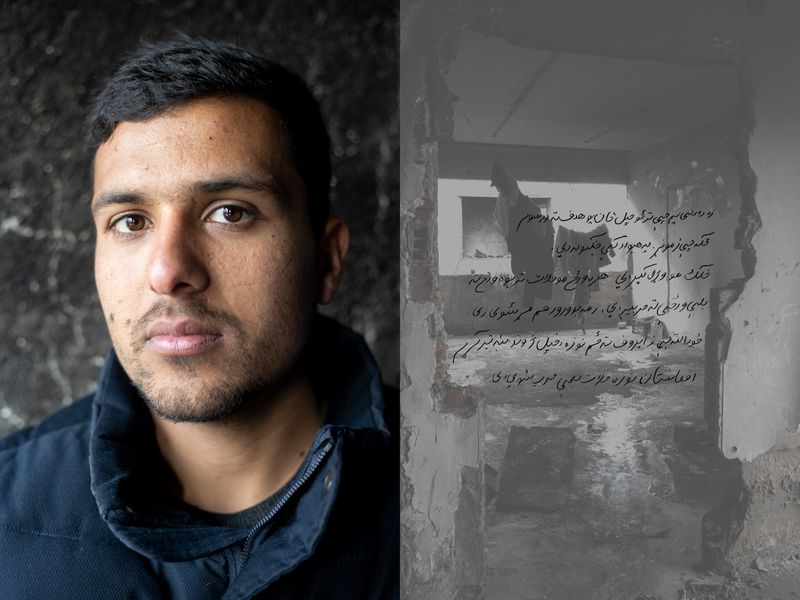
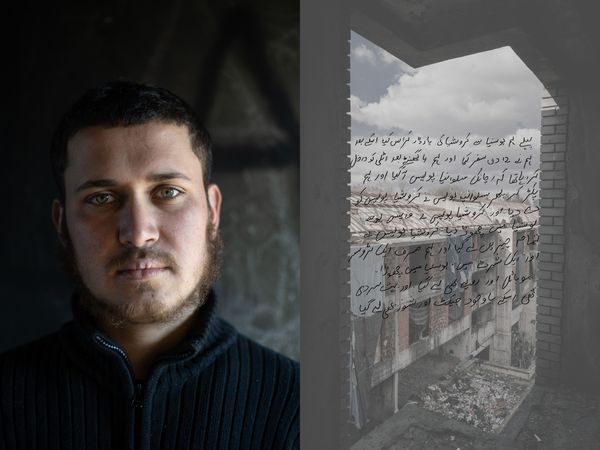
Therefore, the concept of the project is, to let the people who are affected, participate in the representation of the situation. Handwritten letters are juxtaposed with portraits in front of a neutral background, so the poor conditions they live in do not distract from their faces and words. This is an attempt to counteract the dehumanization they are exposed to every day. The people were given as much time as they wanted to decide what and how much they wished to share. The surrounding images additionally show the reality of their everyday life.

“The people behind the border” is a long-term documentary project and an attempt to shine light on the harsh conditions that people face, attempting to enter the European Union.The photographic essay was created in connection with a multimedia project (story.multim3dia.de/kandvala) that has been awarded with the renowned “Grimme Online Award” in 2022. The pictures were taken in February 2021 and January 2022. Photojournalist Ambrosio plans to continue to document the misery behind the border.

© Sitara Thalia Ambrosio - Image from the The People Behind the Border photography project
i

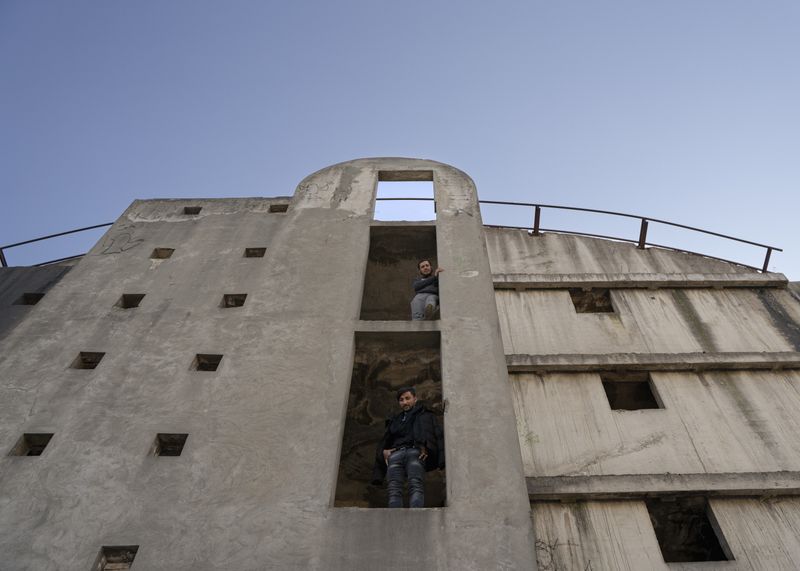
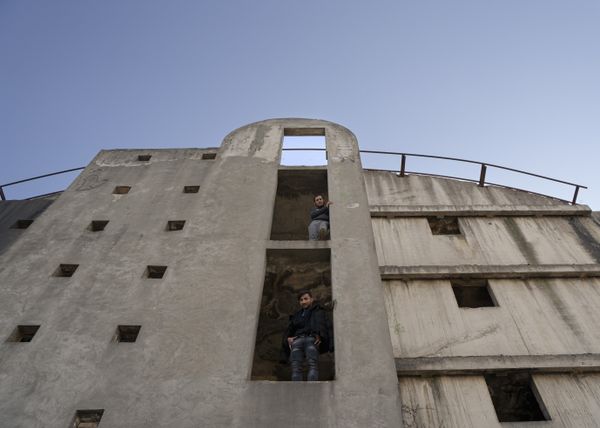
The Afghan refugee Danny (18) and another man are standing in the front stairwell of the ruins of the "Dom Penzionera" retirement home, which was never completed. Both live in the building.

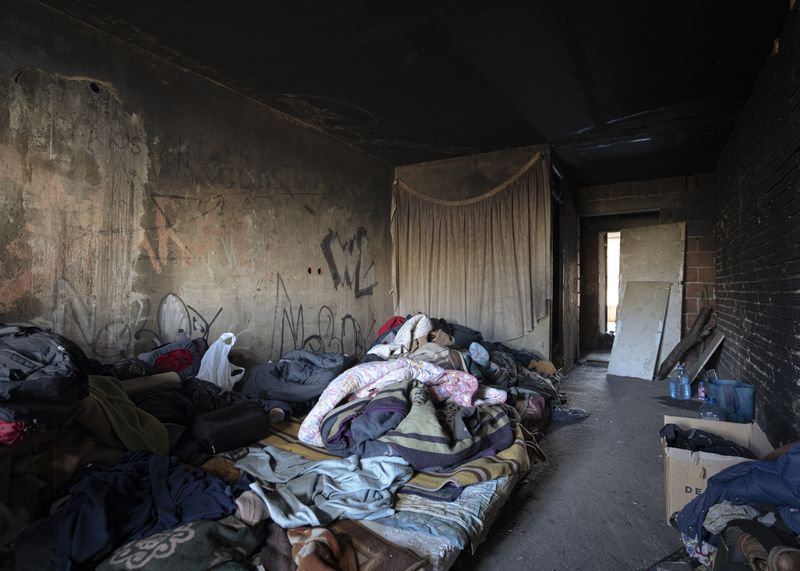
© Sitara Thalia Ambrosio - One of the run-down rooms in the abandoned building "Don Penzionera", where Danny sleeps with 8 other people.
i

One of the run-down rooms in the abandoned building "Don Penzionera", where Danny sleeps with 8 other people.

© Sitara Thalia Ambrosio - Image from the The People Behind the Border photography project
i

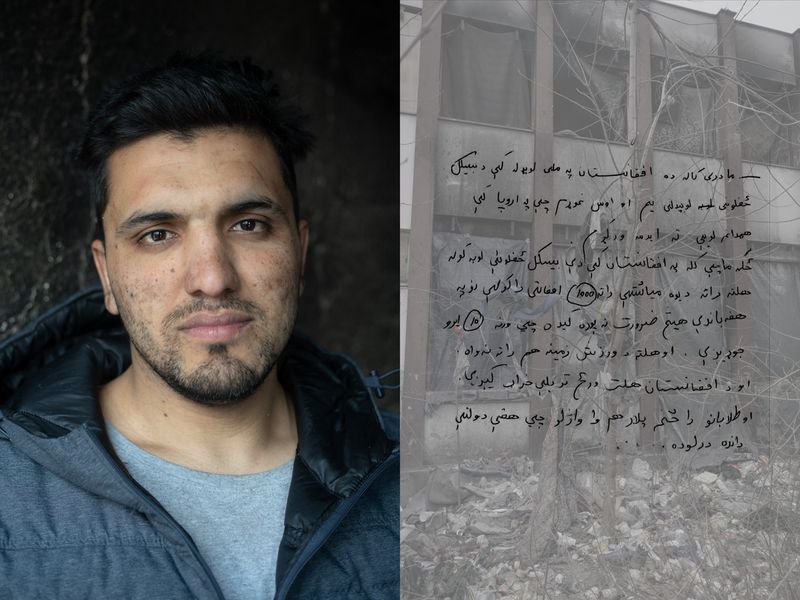
Danny, 18, from Afghanistan, lives in the unfinished retirement home "Don Penzionera" in the center of Bihać. He shares his room with seven friends. Translation of the letter: We walked into Croatia, from what was earlier the border to Bosnia. We walked for 12 days to get into Slovenia. Not even four hours had passed, before we arrived in Slovenia - until the Slovenian police arrested us and handed us over to the Croatian police. And then we were handed over to the Bosnian police. The police took everything - the money and the phones.

© Sitara Thalia Ambrosio - Image from the The People Behind the Border photography project
i

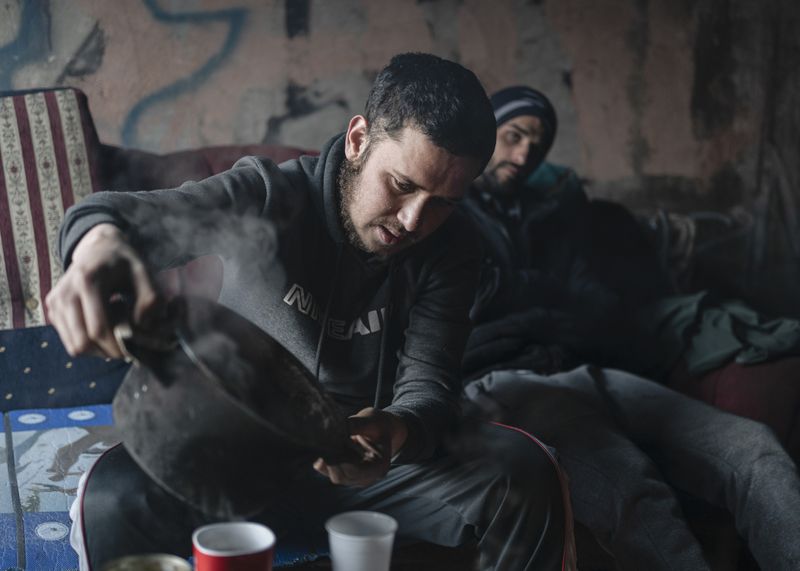
Danny pours tea that he has previously made on a homemade stove. The temperature in the ruined building where he sleeps is below zero. There is neither heating nor windows.

© Sitara Thalia Ambrosio - Image from the The People Behind the Border photography project
i

Naseebullah, 19, from Afghanistan, lives in a room together with Qudrat, Jahadullah and more than 20 other young men in an abandoned paper factory in Bihać. Translation of the letter: I was a road cyclist in the Afghan national team for three years and now I plan to continue cycling here in Europe. In Afghanistan I received a monthly amount of 1000 Afghani as a road cyclist, with which I could not cover my daily needs. That is almost 10 euros. And besides that, I had no other opportunities aside from sports. And day by day the security situation in Afghanistan is getting worse. And the Taliban also killed my father because he was working for the government.

© Sitara Thalia Ambrosio - Image from the The People Behind the Border photography project
i

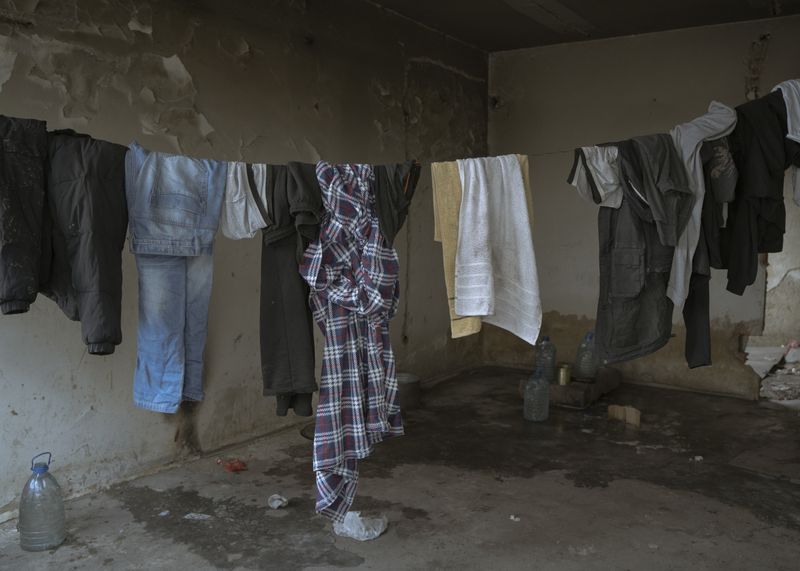
Laundry in one of the rooms of an abandoned paper factory hung up to dry. Due to low temperatures the water dripping from the clothes is freezing on the floor. In February, temperatures regularly fall below freezing point, at night even to -12 degrees Celsius.

© Sitara Thalia Ambrosio - Image from the The People Behind the Border photography project
i

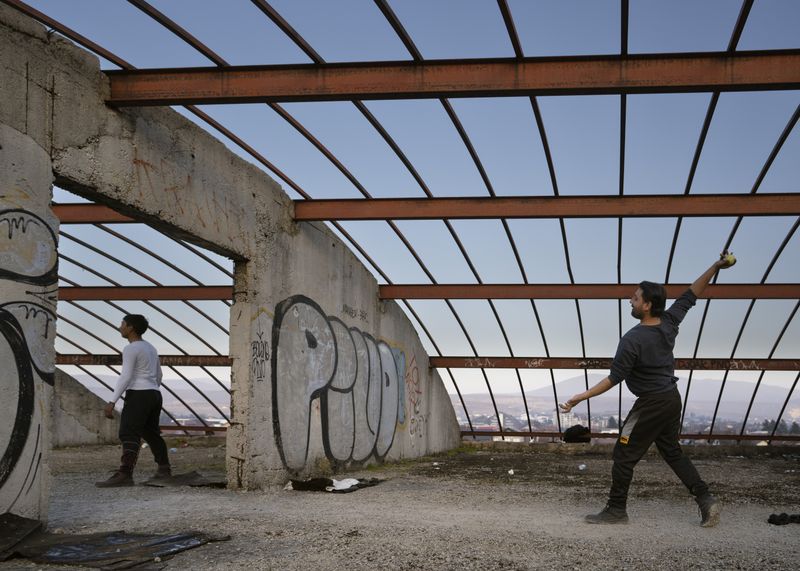
Ubaid is throwing a ball while playing cricket with homemade wooden bats on the roof of the building called "Dom Penzionera" in the center of Bihać.

© Sitara Thalia Ambrosio - Image from the The People Behind the Border photography project
i

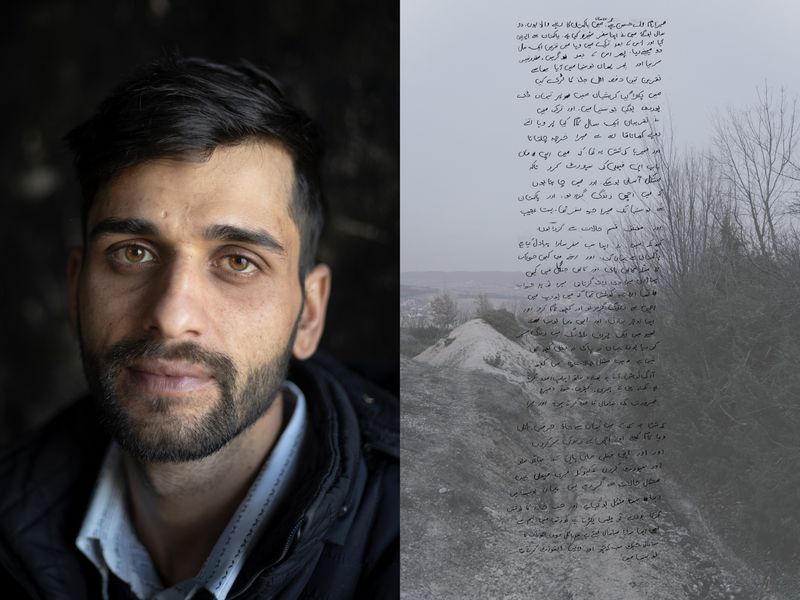
Hassan, 24, from Pakistan, lives in the unfinished retirement home "Don Penzionera" in the center of Bihać, in a small room just under the roof. Translation of the letter: My name is Wali Hassan, 24 years old, from Pakistan. I started my journey from Pakistan hoping to build a good, prosperous life for my family. I started working hard for a year in Turkey with hard work. I worked just hard enough to be able to survive. After a year, I went from Turkey to Greece, from there to Macedonia, then to Serbia. I tried to go to Croatia three times but was deported to Bosnia again. The journey from Pakistan to Bosnia was very difficult. I walked most of the time, sometimes in the woods, sometimes dry on the plains and in the desert, often hungry and thirsty. I hope for a good life and to help my family. I still live in an old run-down building with no electricity, water or amenities. Only sometimes an organization helps with several cups, teapots, spoons etc, that help me.

© Sitara Thalia Ambrosio - Image from the The People Behind the Border photography project
i

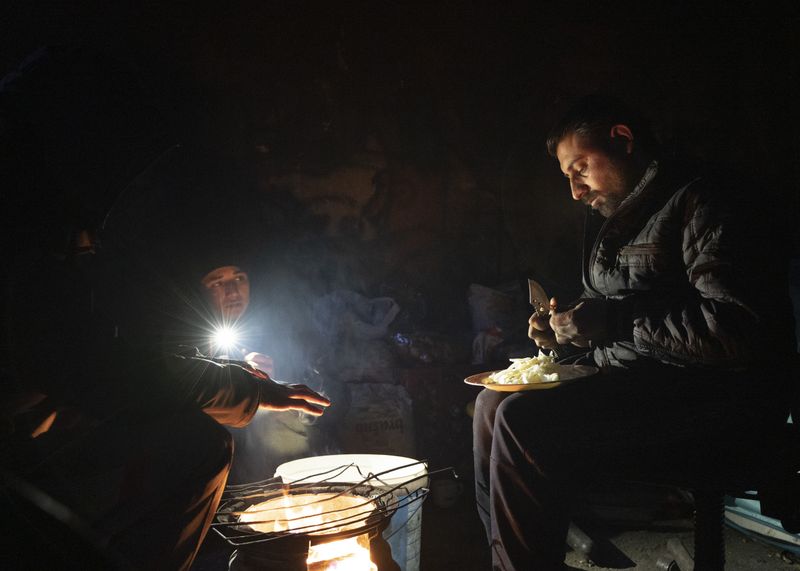
Hassan and his cousin Ubaid (fLTR), both from Pakistan, sit around an open firepit in "Don Penzionera" in Bihać and cook. The flashlight of their phone is one of the few sources of light during nighttime.

© Sitara Thalia Ambrosio - Image from the The People Behind the Border photography project
i

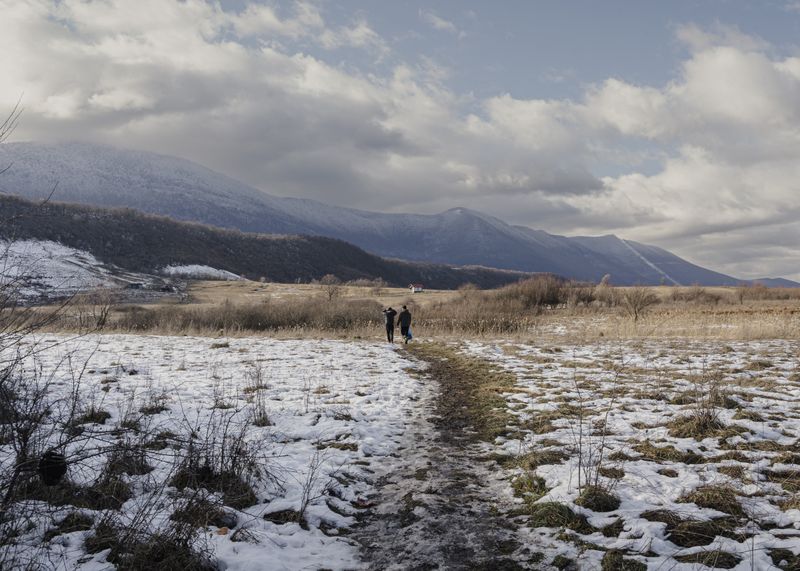
Musafa (right) and his friend run across snowy fields on the outskirts of the town of Bihać. The ruin in which they are sheltering with other people on the move, can be seen in the background. To get to the city center, it takes at least forty-five minutes of walking.

© Sitara Thalia Ambrosio - Image from the The People Behind the Border photography project
i

Qudrat, 17, from Afghanistan, lives together with Naseebullah, Jahadullah and more than 20 other young men in a room in an abandoned paper factory in Bihać. Translation of the letter: I was an athlete in Afghanistan and played sports for 8 years. The security situation has completely worsened in Afghanistan. Now people are being killed every day. That's why I came to Europe, to rebuild my life.

© Sitara Thalia Ambrosio - Image from the The People Behind the Border photography project
i

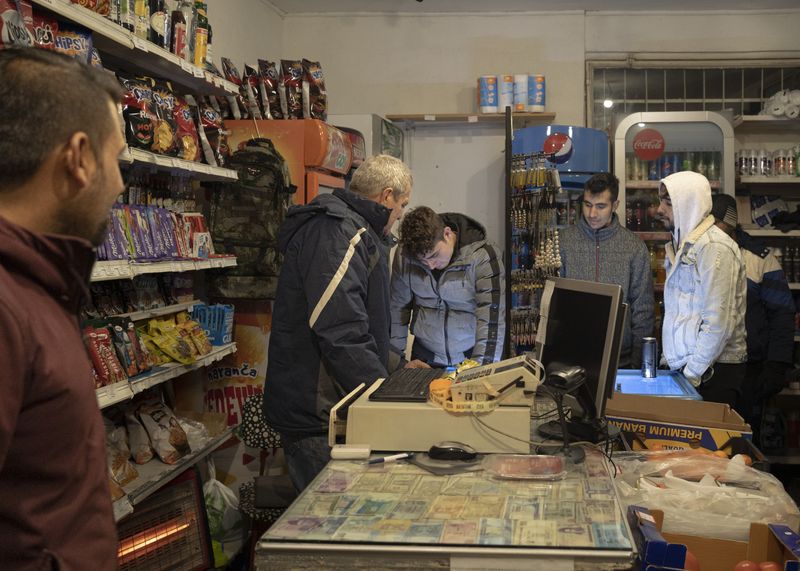
Ubaid visti the small kiosk, in the center of Bihać, right next "Don Penzionera". A lot of refugees come here, to charge their phones and refill water bottles. The owner warmly welcomes them. Most of them affectionately call him "Baba", which means "father". His real name remains a mystery. Almost every evening, the refugees spend time together with Baba. He helps them, despite the criminalization

© Sitara Thalia Ambrosio - Image from the The People Behind the Border photography project
i

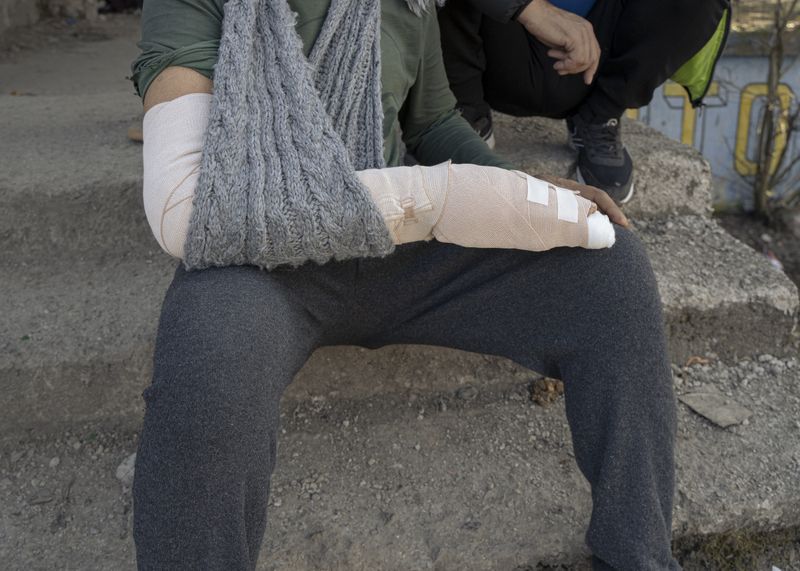
A refugee sits on the stairs of "Don Penzionera", after returning from an attempt to cross the border into Croatia by foot. His arm is in a cast and he waits to hear back from doctors if he suffered a fracture. The medical supply for refugees in the run-down squats is very poor. By law most volunteers and supporters are forbidden to help with medical conditions.

© Sitara Thalia Ambrosio - Image from the The People Behind the Border photography project
i

Nooruddin, 23, from Afghanistan, lives in an abandoned paper factory in Bihać. Translation of the letter: My whole family is waiting to be financially supported by me, but at the moment I am spending my life here in a very bad condition. This does not affect me alone, but also all Afghan citizens here. The whole world knows about the situation in Afghanistan from before to now. 40 years ago Russia invaded Afghanistan, as a result Afghanistan and its whole population suffered damage. Now I wish Europe to help me and also my country, so that I can also have a normal life in this world. Three years ago I left my country, Afghanistan, because of many difficulties. Of these three years, I spent one year in Iran and then one year in Turkey. After that, I decided to go to Europe. Now for one year, I have been spending a difficult life in Bosnia. I have made my way three times to get to Europe. At the border between Croatia and Slovenia, I was arrested by the Croatian police and deported in a bad condition. They took away my clothes, shoes, a cell phone and a backpack with my belongings. Currently, my financial situation is miserable and worrisome. Now I hope that the United Nations and European countries will help me.

© Sitara Thalia Ambrosio - Image from the The People Behind the Border photography project
i

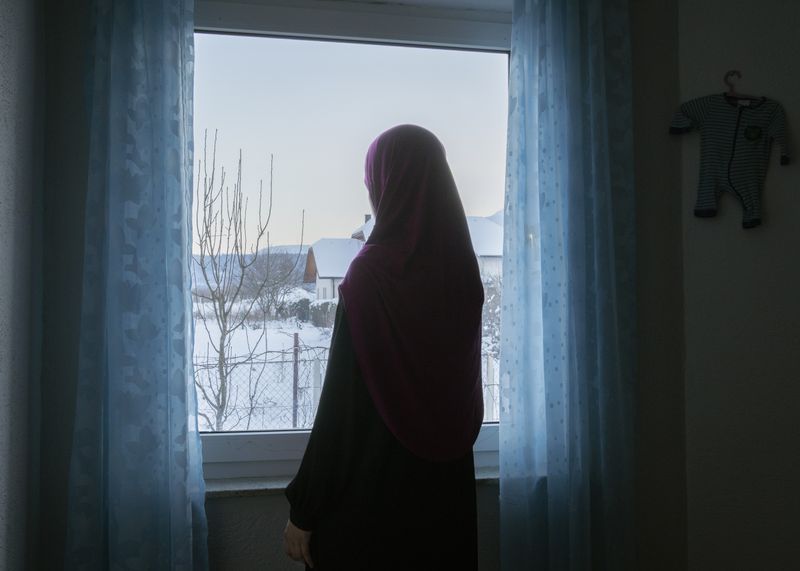
Portrait of Saida (name changed), a Bihać resident who helps refugees despite criminalization of aid work, standing at her window, looking onto the snowy fields in January 2022.

© Sitara Thalia Ambrosio - Image from the The People Behind the Border photography project
i

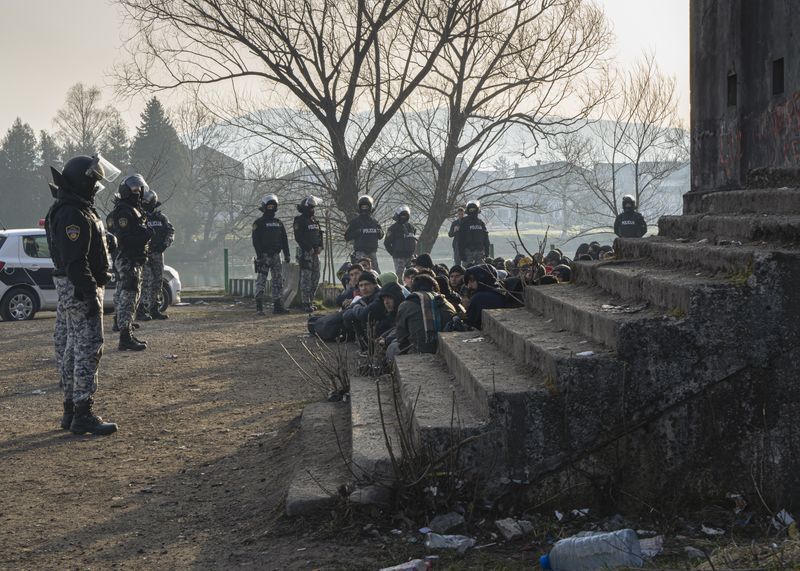
At 7:30 in the morning, police special forces clear two of the squated buildings from their inhabitants - refugees seeking shelter. After clearing the old paper factory, the abandoned building „Don Penzionera“ is evicted. The young men living here are rounded up like high profile criminals and forced to sit on the floor in freezing cold weather.

© Sitara Thalia Ambrosio - Image from the The People Behind the Border photography project
i

Jahadullah, 18, from Afghanistan, lives in a room with more than 20 people in an abandoned paper factory in Bihać. Translation of the letter: I came here to achieve a goal, because there is a war going on in our country. Our people are being killed and day by day the security situation is getting worse. One of my brothers was also killed. For this reason, I am going to Europe to have a better life. Meanwhile, the security situation in Afghanistan has completely worsened.

© Sitara Thalia Ambrosio - Image from the The People Behind the Border photography project
i

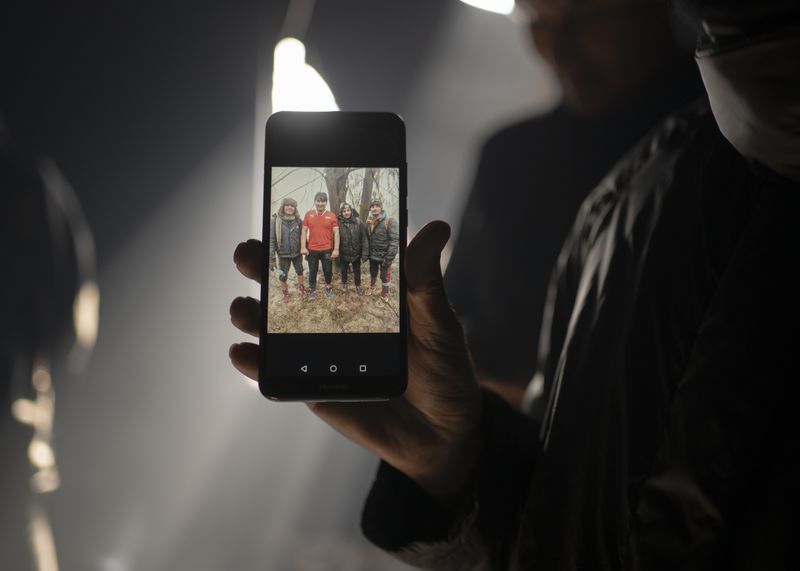
Khan (name changed) shows the last picture he shared with Ijaz (second person from the right) while trying to cross the border into Croatia. At noon on December 28th, the group of five men attempted to cross the Stara Novska river in Croatia, wading and swimming. Of five young men, only four made it to the other side. Ijaz K.

© Sitara Thalia Ambrosio - Image from the The People Behind the Border photography project
i

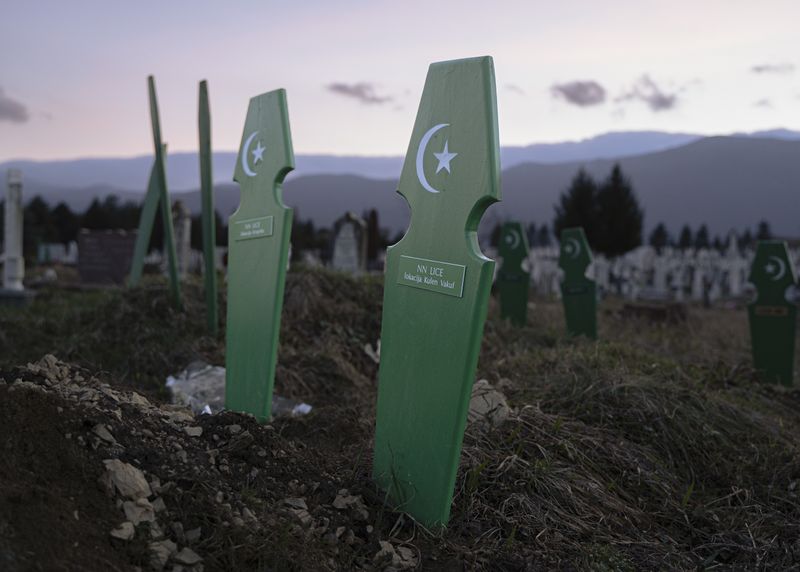
Cemetery on the outskirts of Bihać. Some refugees, that lost their life on their way to Europe, are burried here. Often the identities of the dead are hard to determine. Therefore „Unknown Face“ is written on many graves of refugees.