The Living Patterns of the Pacific San Diego from Above
-
Dates2026 - Ongoing
-
Author
- Location San Diego, United States
Aerial photographs of San Diego’s Pacific coast reveal kelp forests and breaking waves as living abstractions. From above, currents, foam, and organic forms create patterns echoing veins, roots, and river systems across the natural world.
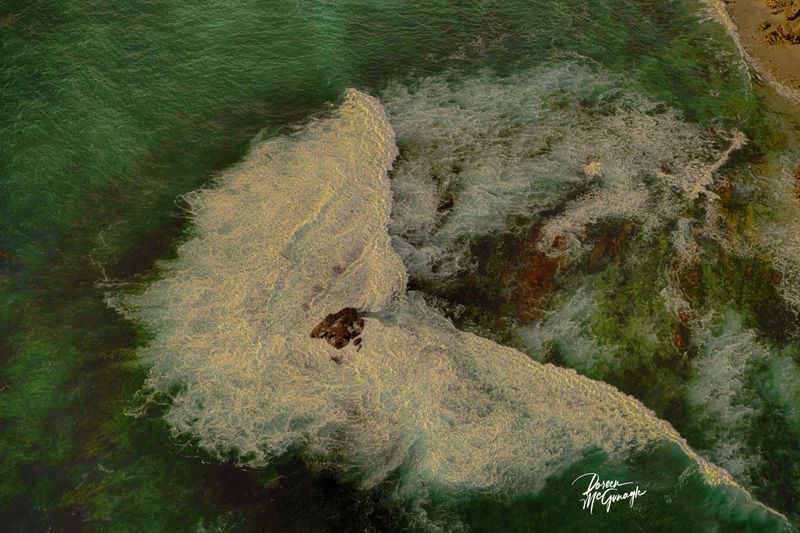
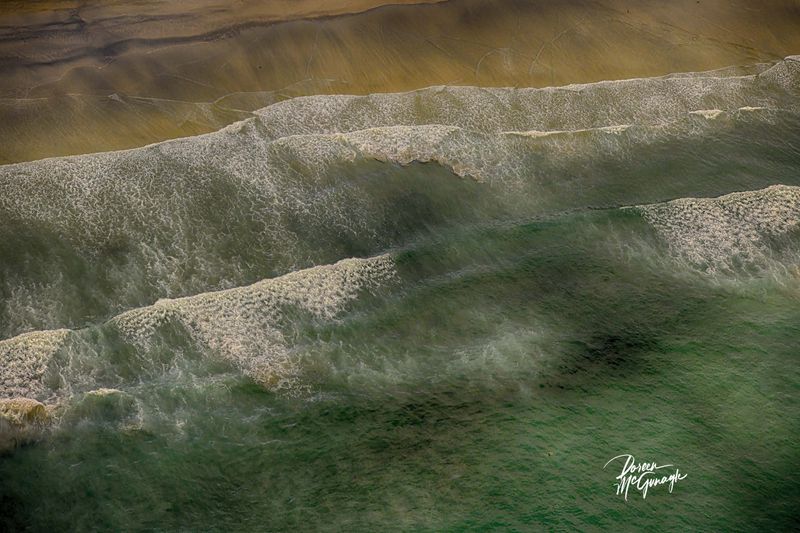
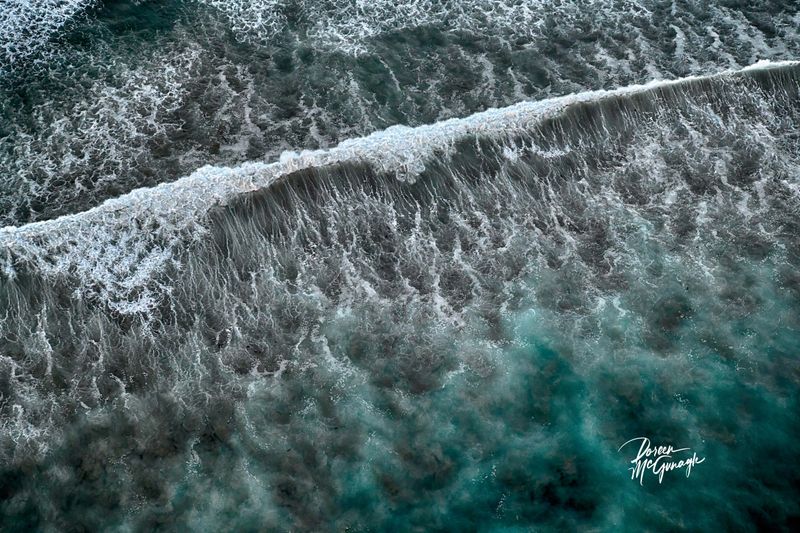
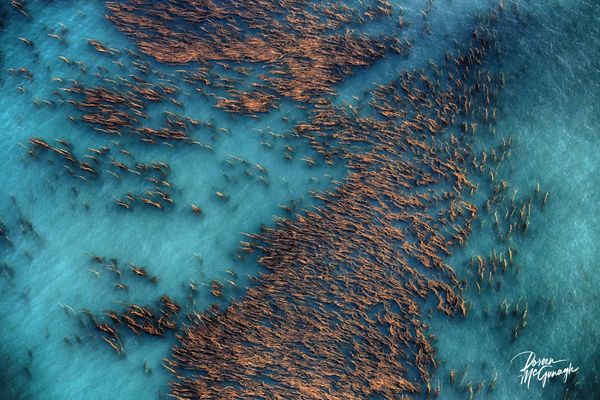
The Living Patterns of the Pacific examines the visual structures hidden in San Diego, California's coastal environment. Photographed from a helicopter above the Pacific, the series moves between submerged kelp forests and the temporary geometries waves create as they meet rock and shoreline.
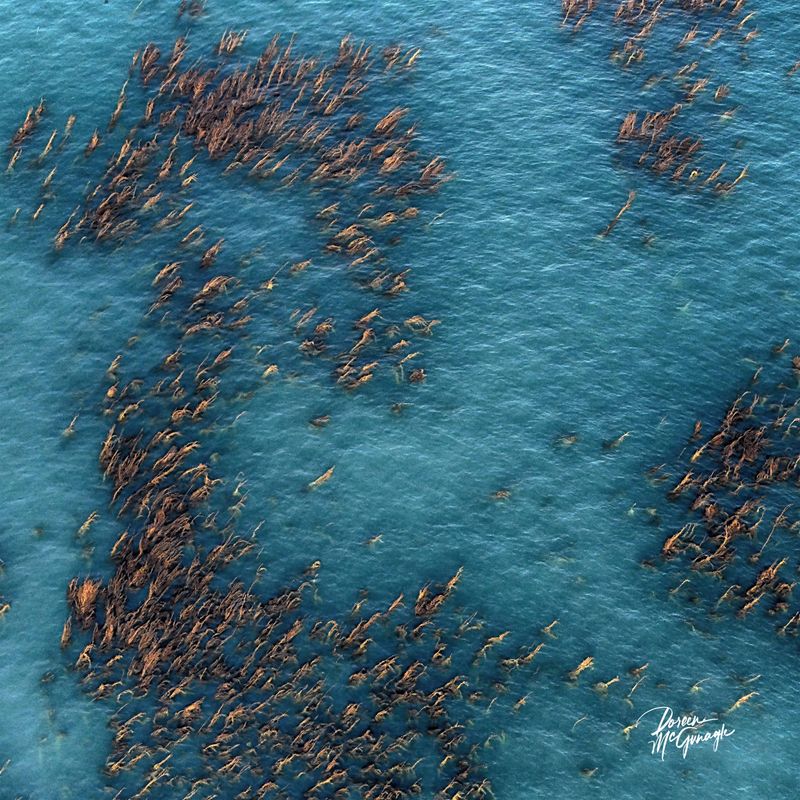
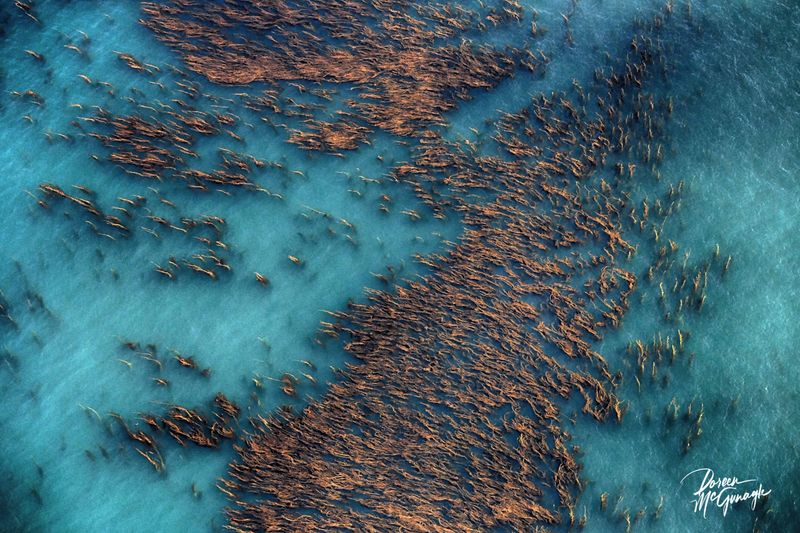
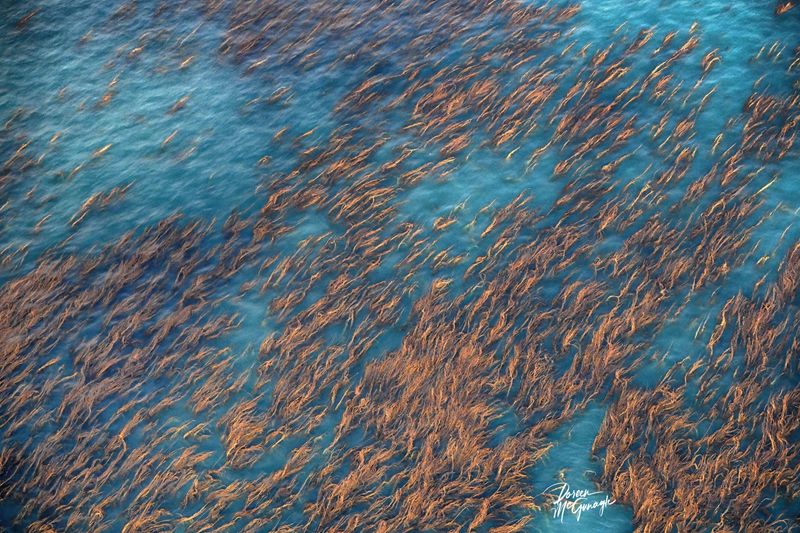
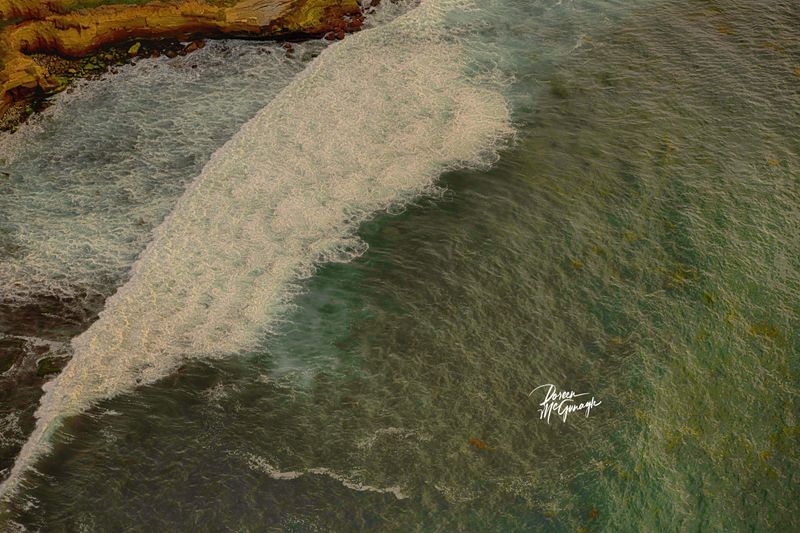
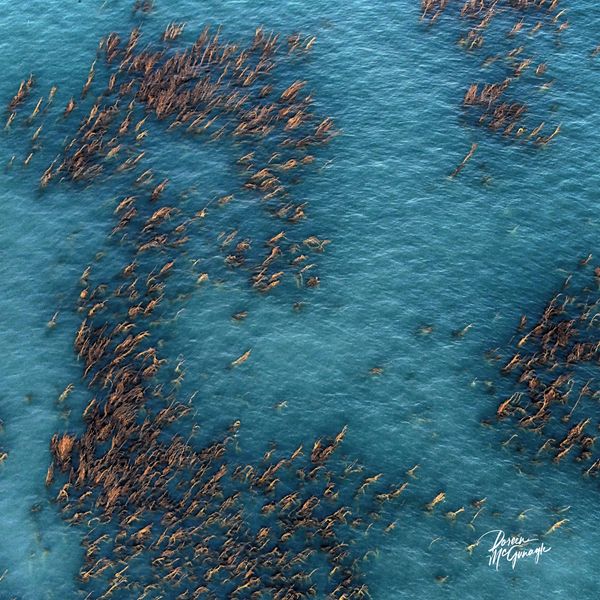
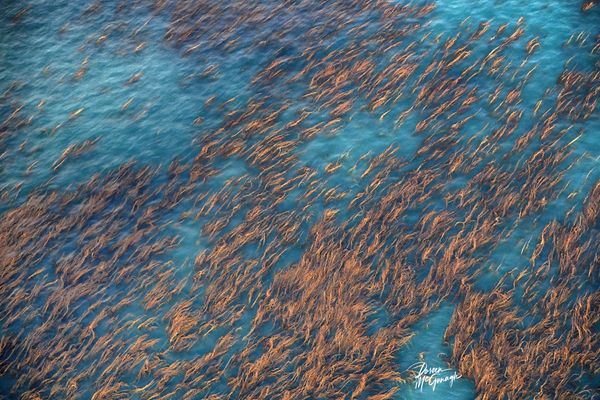
Removing the horizon fundamentally changes how we understand this landscape. From above, scale becomes uncertain and familiar subjects begin to lose their conventional identities. Kelp drifting through turquoise water becomes a living mosaic. Ocean currents become sweeping lines. Breaking waves divide into intricate pathways of white foam that resemble veins, roots, river systems, and branching forms found throughout the natural world.
The photographs are not constructed or digitally invented. Their abstraction is created through perspective. By changing altitude, patterns that are difficult to perceive from the shoreline become visible, revealing relationships between biological structures and the physical forces that continually reshape the coast.
The first movement of the series follows San Diego's kelp forests. Golden-brown forms gather, separate, overlap, and drift through varying depths of blue and turquoise water. Individual organisms gradually become part of a larger composition shaped by current, light, depth, and time.
The second movement turns toward the meeting of ocean and land. Here, the patterns become more fleeting. Waves arrive, fracture around rocks and shoreline, form branching networks of foam, and disappear almost immediately. Each composition exists for only a moment before the Pacific reorganizes itself.
Together, the photographs explore a recurring visual language across different natural systems. The branching structures of kelp and water suggest forms encountered at vastly different scales—from microscopic networks and human veins to tree roots, watersheds, and geological formations.
The Living Patterns of the Pacific is part of Doreen McGunagle's continuing exploration of aerial abstract realism and the relationship between perspective, natural systems, and environmental change. Rather than presenting the coastline as a conventional landscape, the series asks what becomes visible when familiar environments are viewed from an unfamiliar position.
From the air, representation and abstraction begin to converge. What first appears to be pattern is ecosystem. What resembles a painted gesture is current. What looks like a vein is a wave disappearing back into the sea.