Sotnya

On February 24, Russia launched a full-scale invasion of Ukraine targeting airfields, military headquarters and warehouses. Immediately, the Ukrainian parliament announced the general mobilization, implying that men between the ages of 18 and 60 had to register with their local recruitment center and were prohibited from leaving the territory. At dawn on February 25, these centers were already overrun by volunteers. Same crowds at the borders where thousands of others wanted to return to Ukraine to fight. A month later, the border posts had recorded more than 500,000 people returning to Ukraine, 75% to 80% of them men of enlistment age.

The general mobilization announced by President Volodymyr Zelensky was to be organized in four successive waves, which therefore only concern men. The first called on trained reservists, former soldiers and veterans of the special forces. The second wave, called March 15, included reservists who had not been drafted in the first wave, had done their military service before 2014, or had served under contract in the army. As of September 28, there are 700,000 soldiers fighting. President Zelensky has not yet needed to call the third wave, which will affect reserve officers and graduates of military departments of universities. Finally, the fourth wave will involve all citizens who can be mobilized, without restriction, aged 18 to 60.

In Ukraine, the war and mobilization have raised many questions among men. Some of them are still trying to leave the country alone or with their families to escape enlistment. Although the war reveals the deep attachment of the Ukrainian population for the fatherland, not all men are ready to sacrifice their lives to defend their country. These express a desperate gratitude for the troops who are fighting at the front, but would feel useless with arms in hand. They couldn't shoot other men. More rarely, they express their fear of dying.
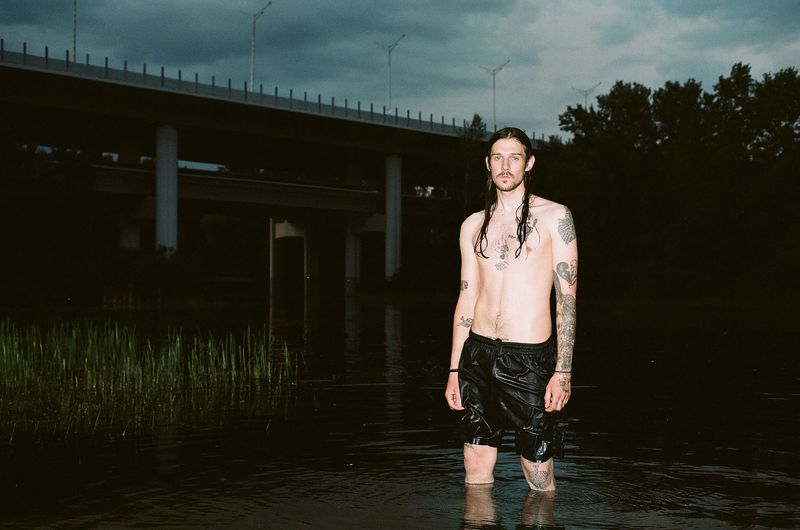
© lucile brizard - Image from the Sotnya photography project
i

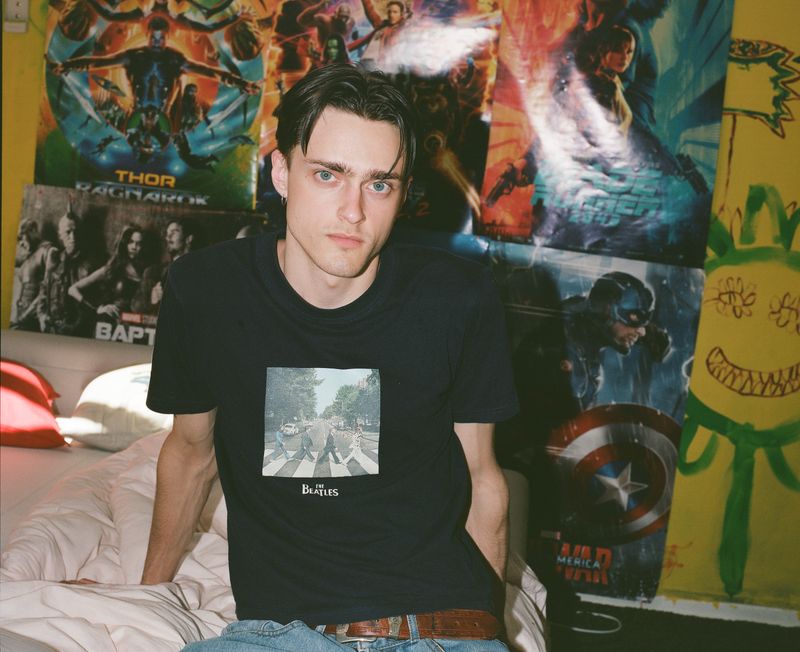
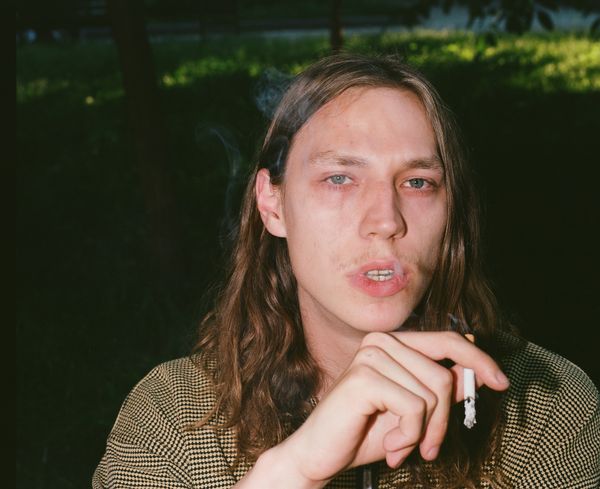
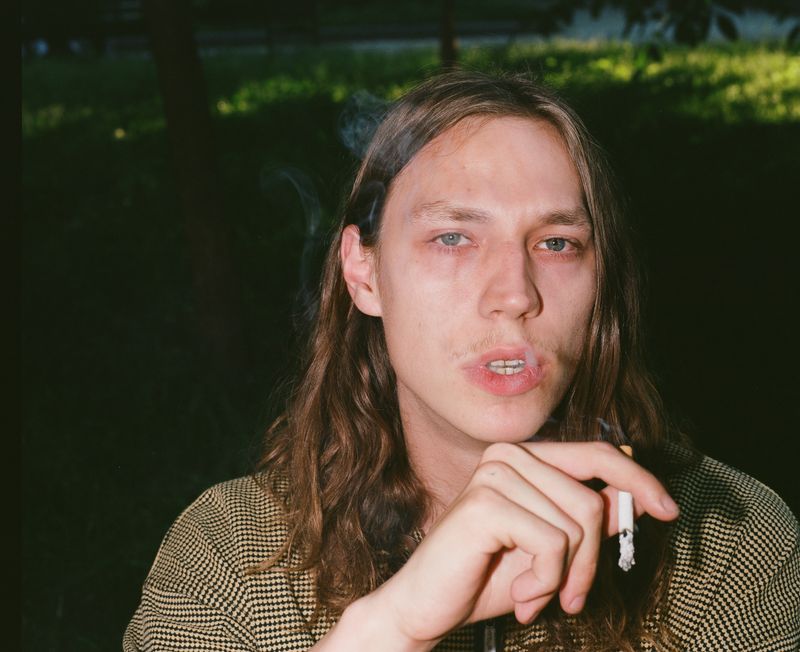
Andreis is 24 years old, he heard the first sounds of war when he visited his parents in northern Ukraine. He was then in his childhood room, under his blanket. He and his father tried to go and register but their commune burned their official documents because they feared the Russians would take them. He returned to Kyiv to continue working as a tattoo artist.

© lucile brizard - Image from the Sotnya photography project
i

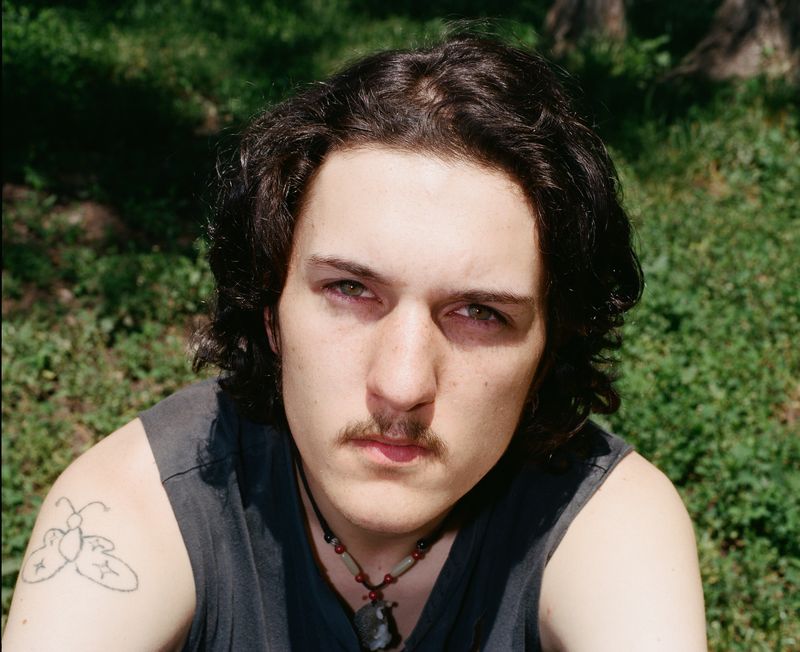
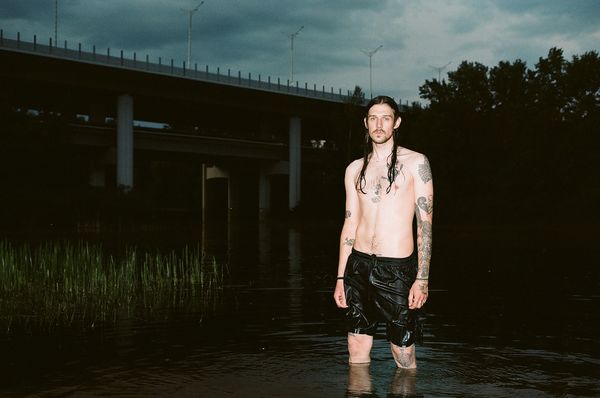
Matvey, 22, lived in Bucha but left town because of the war just before the Russians invaded the town. He is now with his family in his hometown of Pavlohrad near Dnipro, more than 100 km from the frontline. “The only thing I feel is fear, fear that war will come to my city and devastate it like it devastated Bucha. I feel like it's inevitable."

© lucile brizard - Image from the Sotnya photography project
i

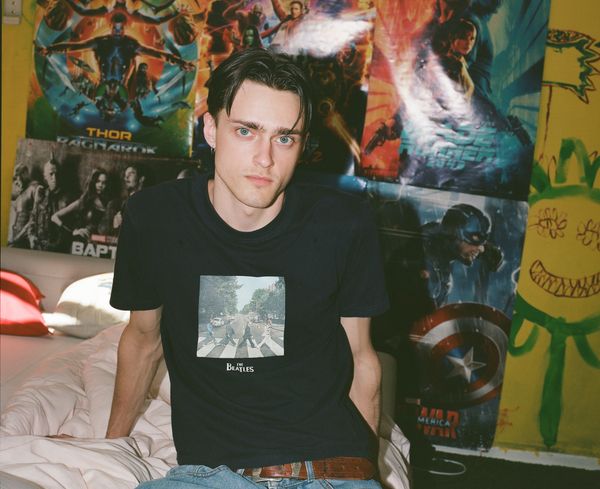
I asked Vlad, 21, how he feels in this new context of war. He comes from a village three hours from Kyiv where men are pushed, even forced, to join the army. Embarrassed when I question him, he replies: “I don’t want to talk about my stress. Me, I can lie in bed, relax, take a shower every day and eat whatever I want. The real stress is on the front line in the trenches, under artillery fire. I am sad that my girlfriend had to leave Ukraine and move to Great Britain, she settled there forever with her family.”

© lucile brizard - Image from the Sotnya photography project
i

Sasha is 21 years old. The war changed everything for him, he lost his job and he had to leave his apartment. At the start of the Russian invasion, he took refuge in his small village with his family, where he was safe. There he joined the Territorial Defence, a local militia. “One night it was thought that the Russians had fired a rocket into the sky, but it was actually a Ukrainian army exercise. We had to take our Kalashnikovs and prepare for an imminent attack. I was afraid. I understood at that very moment that I could never fight. He feels no pressure being a man at the moment in Ukraine. He knows he doesn't want to kill anyone, not even a Russian, he says he couldn't. "Everyone understands that you have to be in the right place to be effective, I know that I don't belong in the army".

© lucile brizard - Image from the Sotnya photography project
i

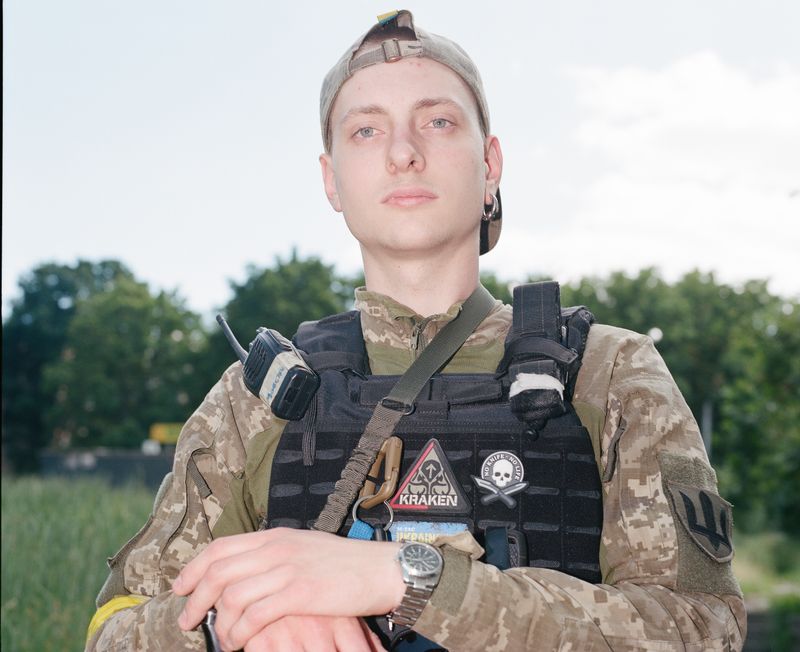
Max is a soldier in Kharkiv, he is in his twenties. We spend the whole day together: he shows me several devastated buildings, then the route of the "no-man's land" beyond which runs the front line. In a block of buildings where the only inhabitants are old people, we are both waiting for a war hero who shot down a Russian helicopter and wants to tell his story. The occupants all think I'm a Russian spy and come by to check on us. They thank Max for his commitment to the army, pray and bless him by making the sign of the cross over him. Max is on his cell phone a lot, and shows me videos shared on Telegram of the exploits of the Ukrainian army.

© lucile brizard - Image from the Sotnya photography project
i

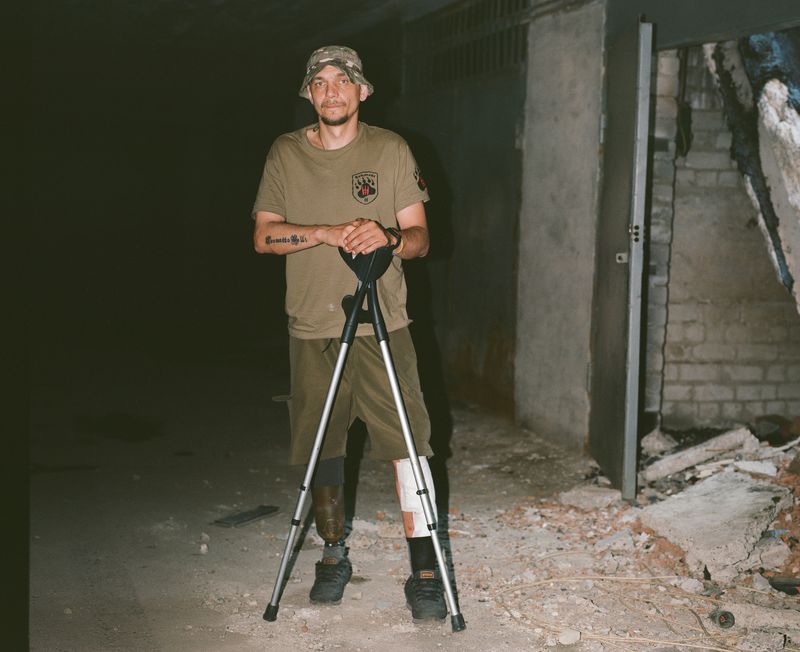
This is the photo I made of the war hero who fired at a Russian helicopter with an RPG, a shoulder-mounted rocket launcher. A month later, this soldier stepped on a mine and had to be amputated. He doesn't speak English, but explains his story in Ukrainian: "We always talk about civilians who did heroic deeds, but never about soldiers."