Sliver Lining
-
Dates2025 - Ongoing
-
Author
- Locations Rotterdam, Guangzhou
Sliver Lining revisits my father’s archive through family photographs, medical records, notes and objects. Moving between grief, memory and belated knowledge, the project traces how I continue to
Sliver Lining began as a journey through my father’s archive, through which I revisit the loss I experienced as a child and try, from the position of an adult, to understand the person he was through the slivers of a life he left behind. For many years I avoided looking directly at his death. I began confronting it only in my mid-twenties, when I started returning to family photographs, medical records, handwritten notes, drawings and objects that had remained after his death.
At its current stage, this project has grown into four interconnected bodies of work: Echo Only Post Office, Hospital Archives, Everyday, Everyday, and Lily in Flames. Rather than forming a linear, definitive narrative, they approach him from different and partially overlapping positions.
The title Sliver Lining comes from John Milton’s line in Comus: “Was I deceiv’d, or did a sable cloud / Turn forth her silver lining on the night?” I do not believe there is a “bright side” to my father’s death, and to search for one would be delusional. Yet, as I moved through his archive, I found belated glimpses of light along the edge of the cloud: pieces of knowledge, intimacy and recognition that reached me after he was gone. They can never form a complete lining, nor a complete image of him. They come only as slivers - fragments of tenderness found within something that can still cut.
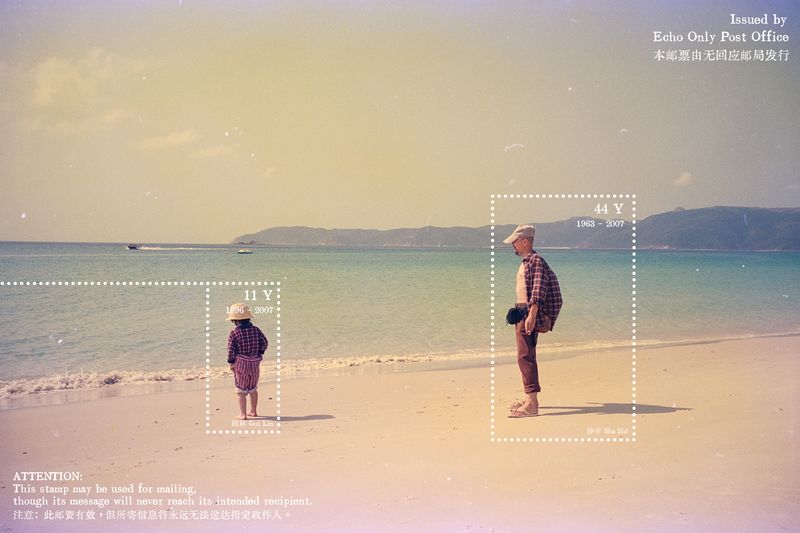
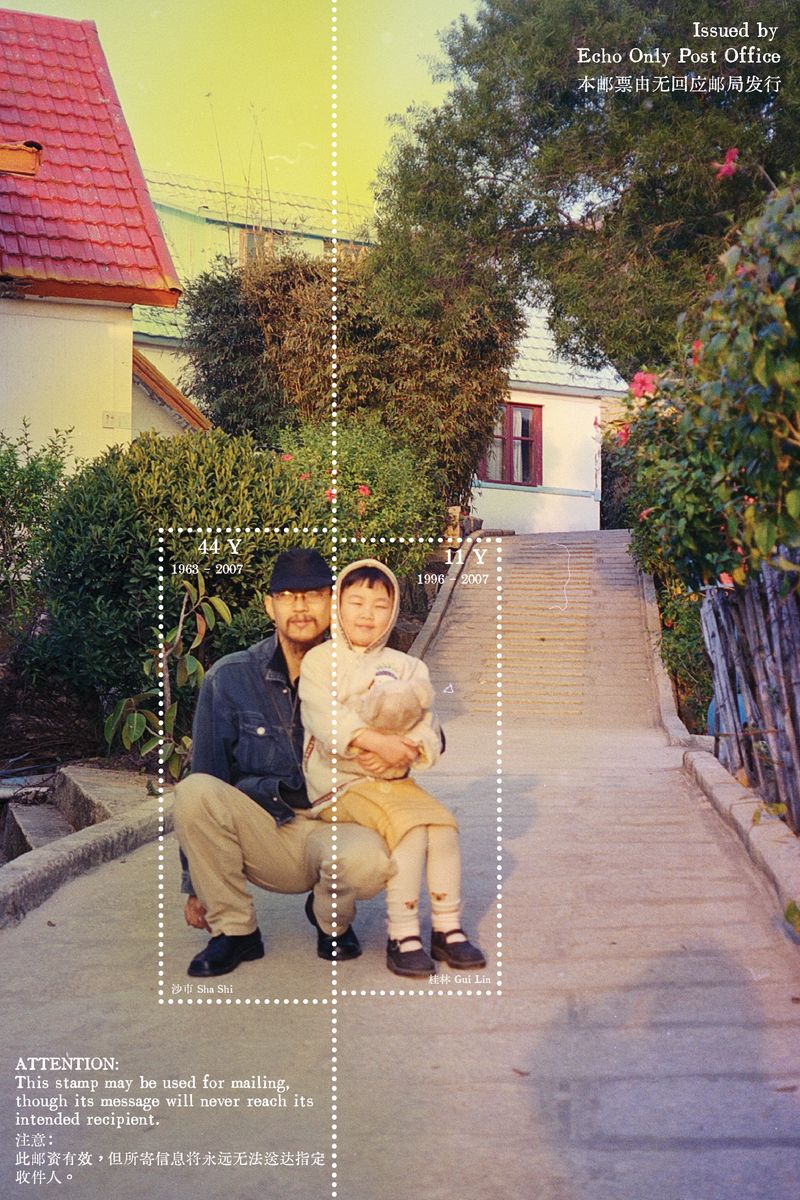
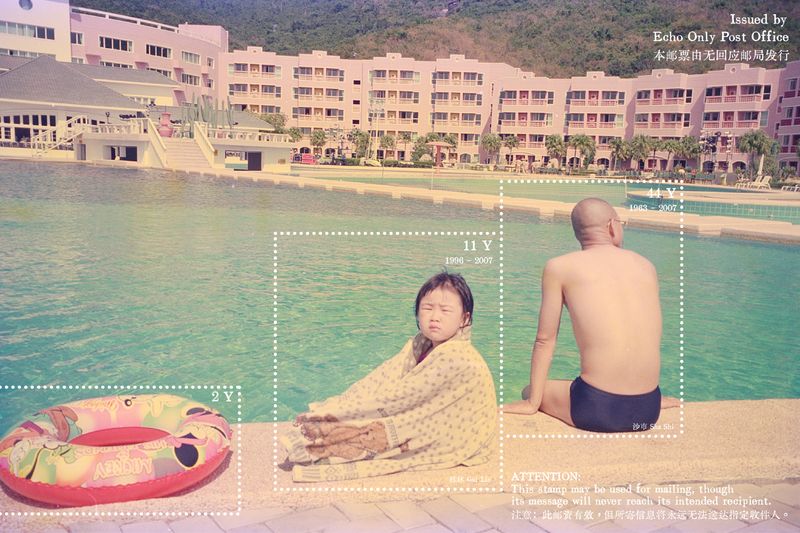
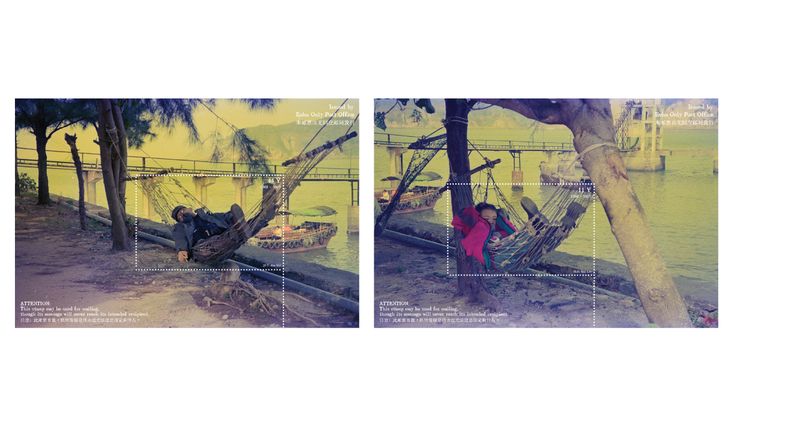
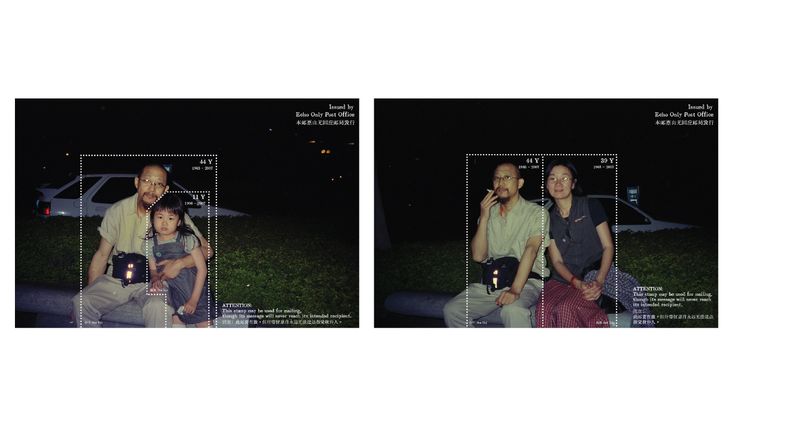
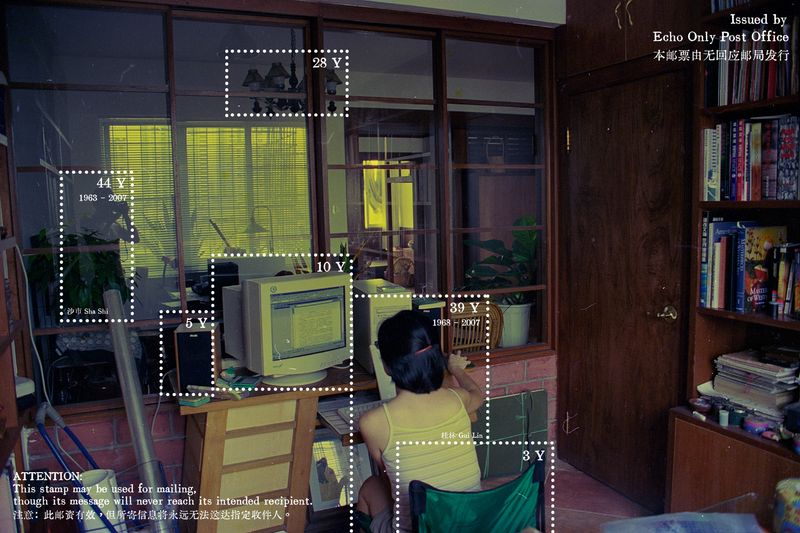
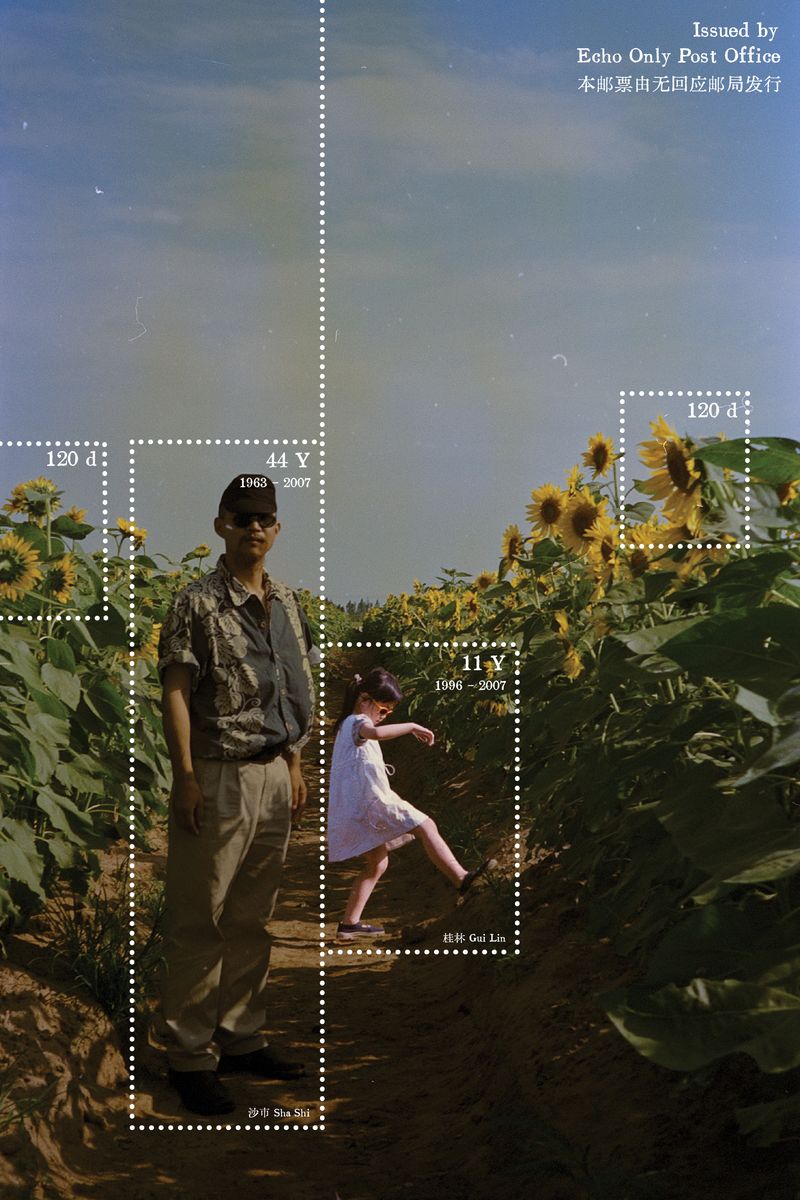
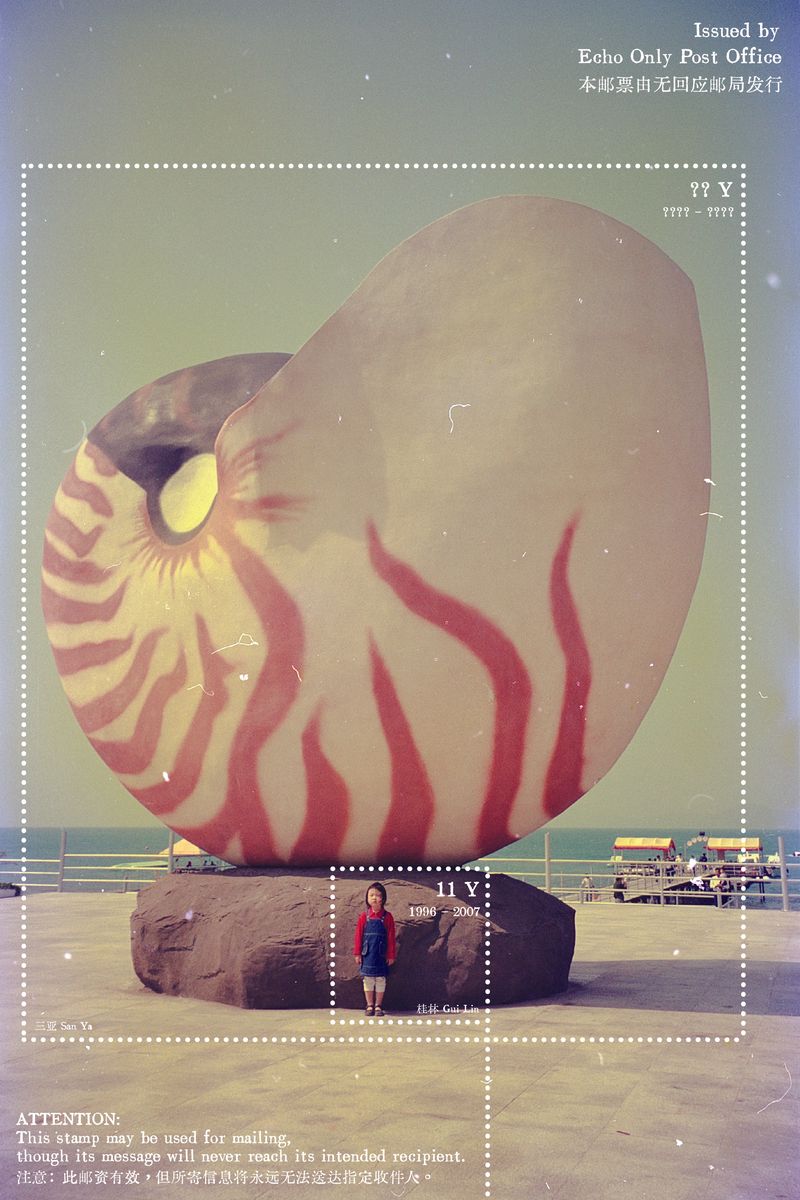
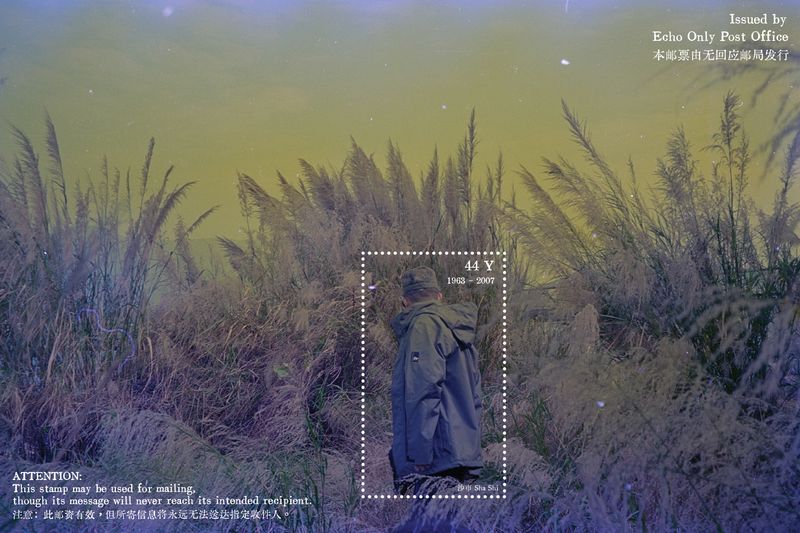
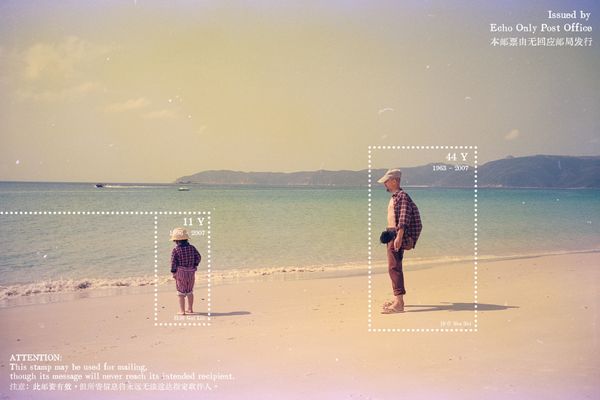
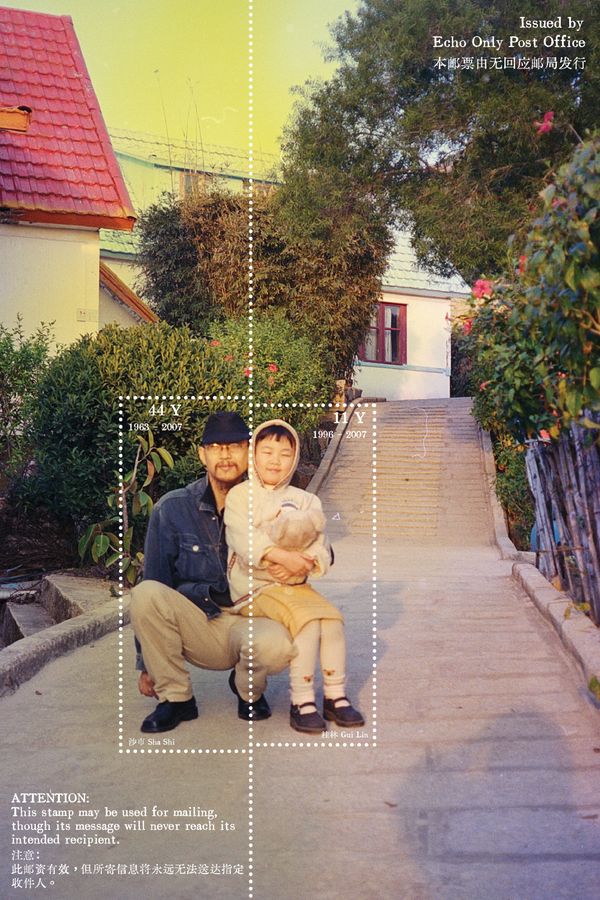
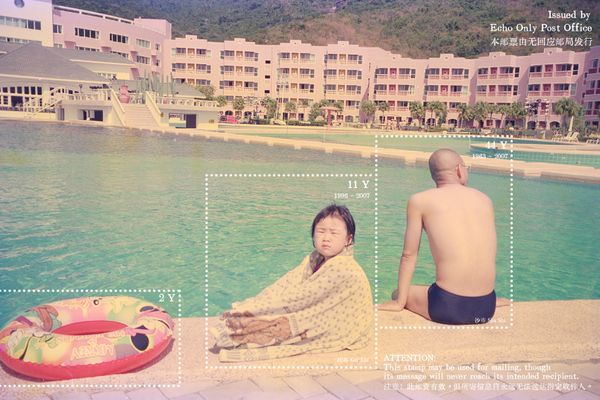
The journey begins with Echo Only Post Office. In 1994, two years before I was born, my parents bought a camera, and photography became part of our everyday life. Thirty years later, I returned to these photographs from a position the people inside them could never occupy: I already knew the ending. My father died in 2007, when I was eleven. The people inside the images are still living forward, unaware of what will happen, while I look from the other side knowing how everything will unfold.
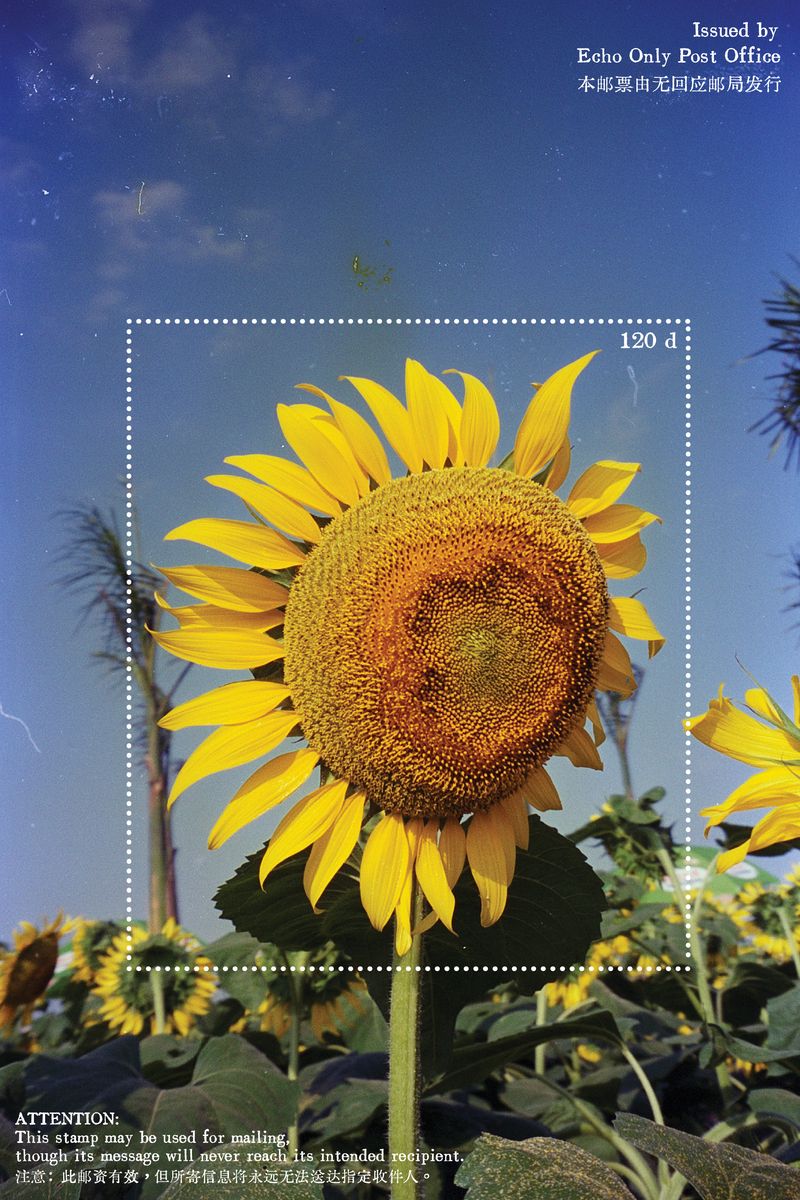
I reworked the photographs and created an Existential Value System. Each image becomes a postage stamp whose “value” measures not monetary worth, but the duration or mode of existence. My father is marked by “44Y”, the years he lived; I am marked by “11Y”, the years I had with him. Objects are valued by their material lifespan, from the brief bloom of a sunflower to the near infinity of stone. The fictional post office allows sending but not receiving, and mirrors grief as a lifelong one-way dialogue with the dead.
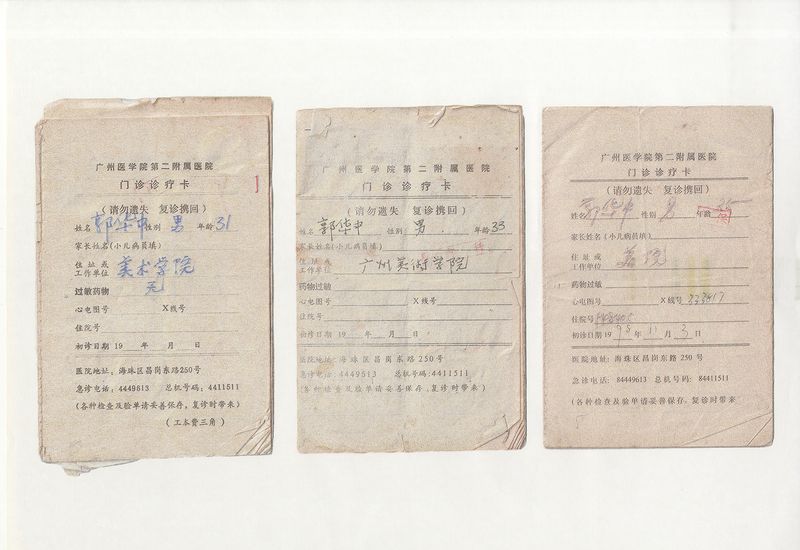
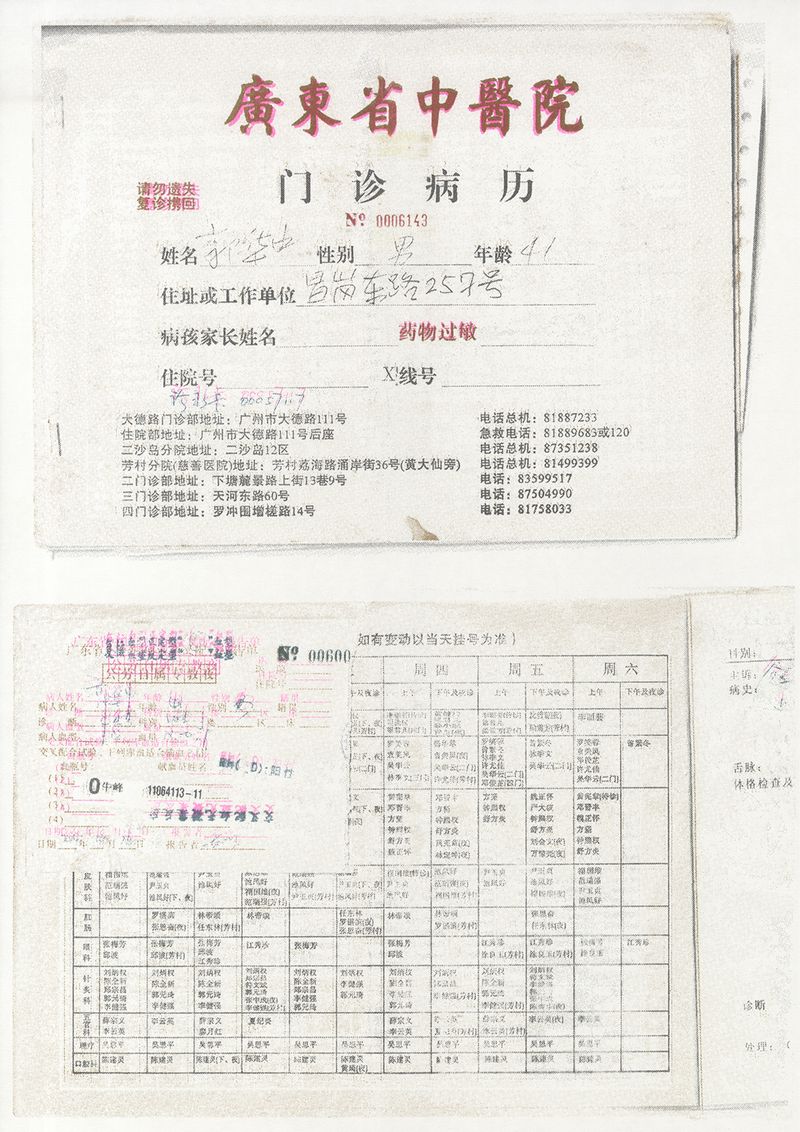
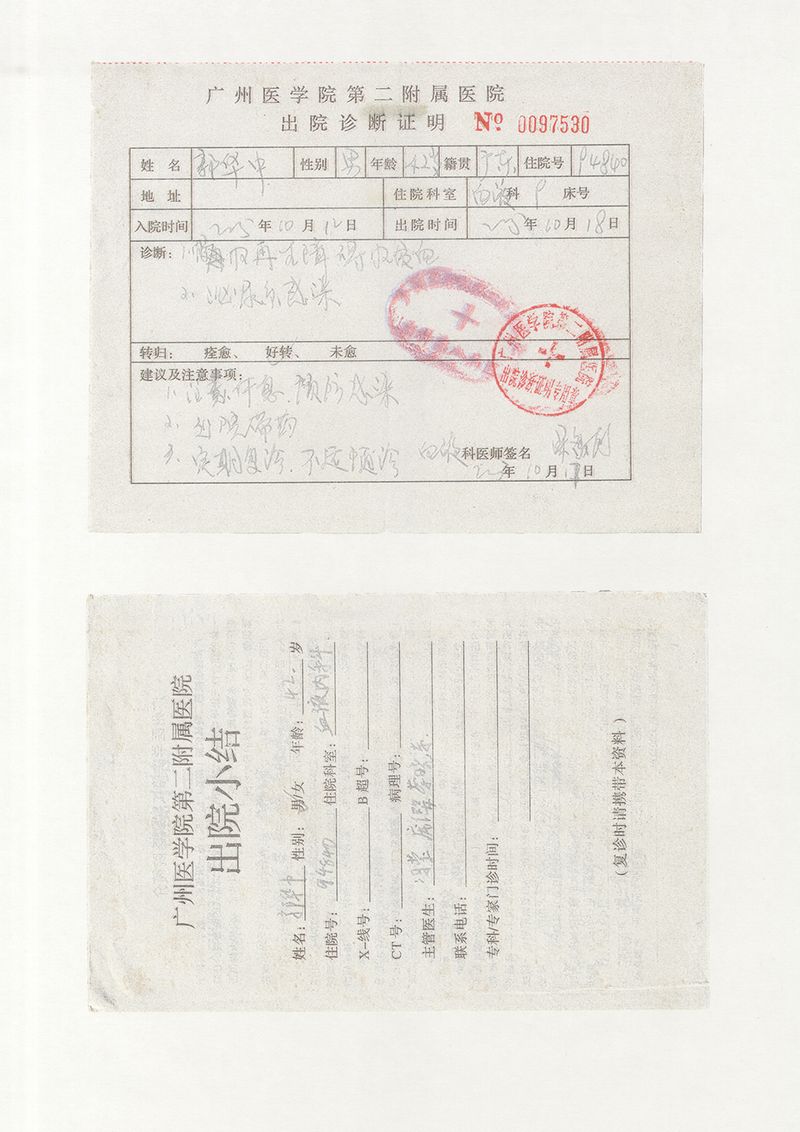
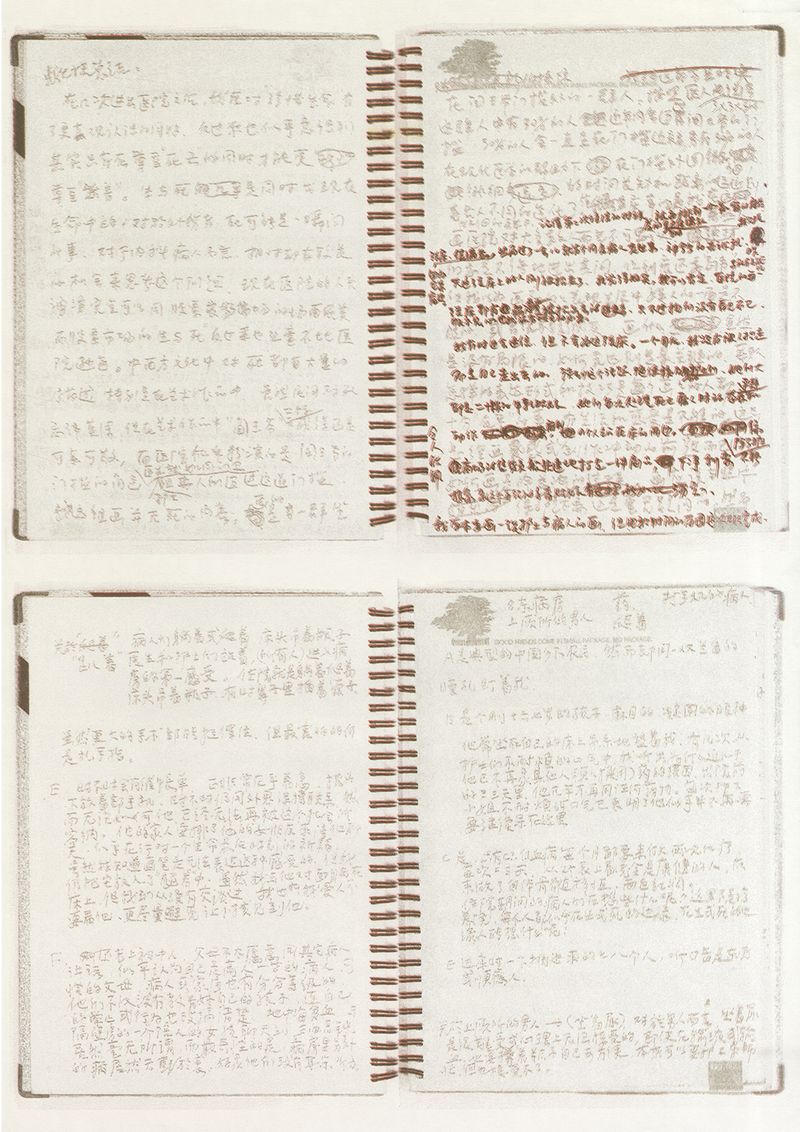
His illness is impossible to separate from this family archive. He was diagnosed with leukaemia long before I was born, and alongside the pile of family photos is a pile of his hospital records and prescriptions. As I measured his completed life retrospectively through duration, the hospital had already measured his living body through age, diagnoses, and treatments.
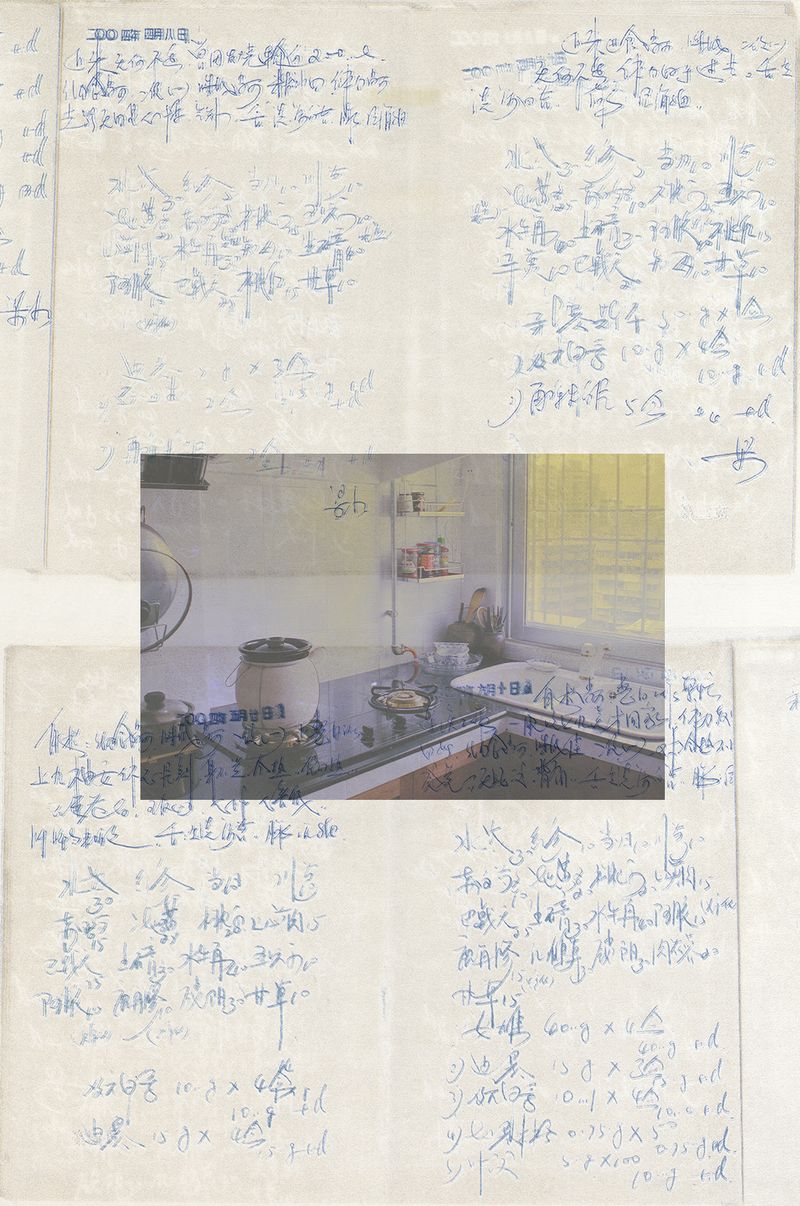
His illness had entered my memory before I could read the hospital documents. I remember the Chinese herbal prescriptions. As a child, I would tear open each packet of herbs and pour them into the ceramic pot; my mother would then boil the medicine. I could not read his illness back then, but I knew it through routine, smell and touch.
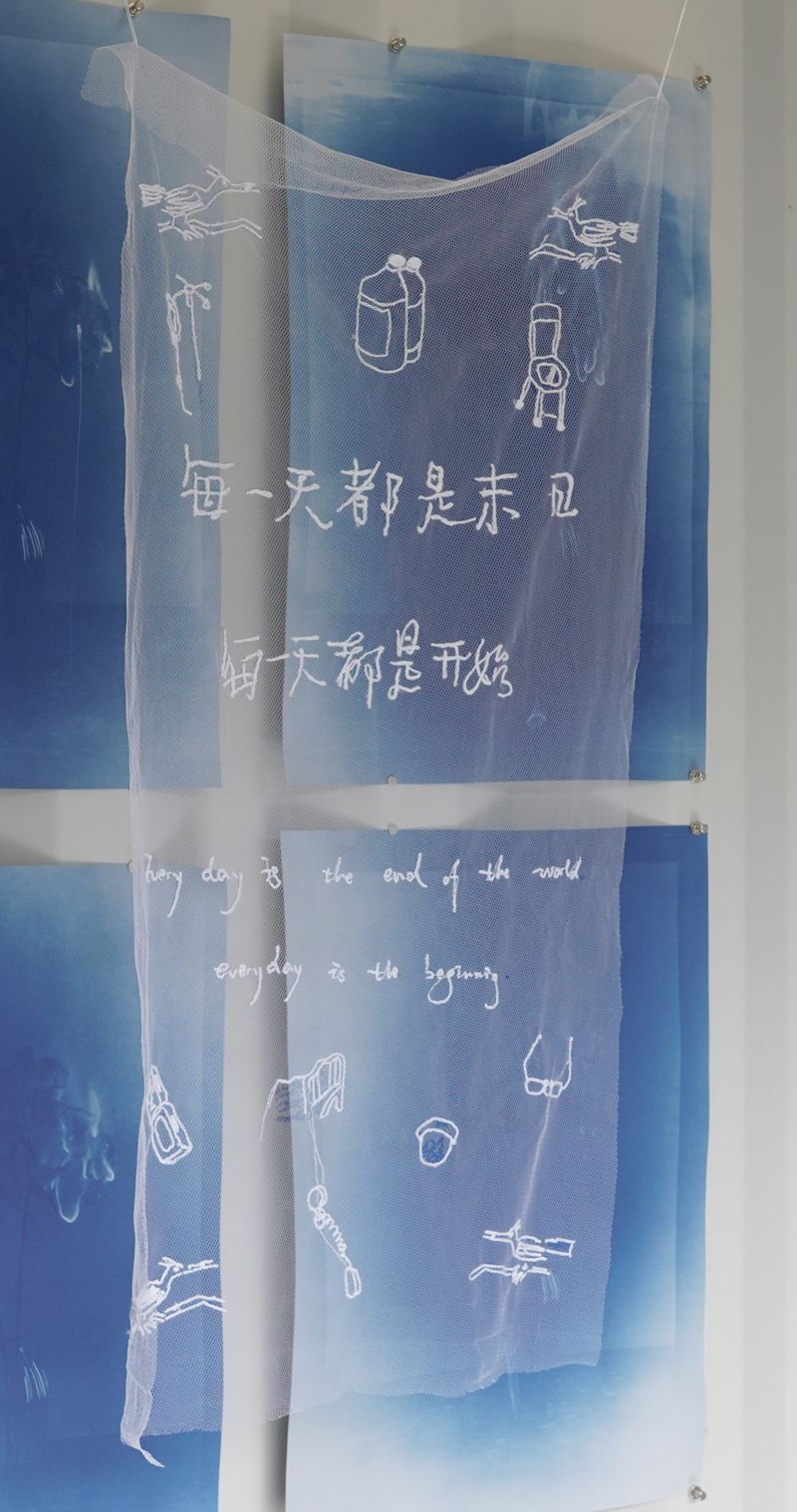
Among the medical archives, notebooks kept by my father drew my attention. In notebooks from his hospital stays, I encounter his handwriting, sketches, observations of other patients in the same room and his thoughts as someone living with illness. One sentence reads: “每一天都是末日,每一天都是开始” — “Every day is the end of the world, every day is the beginning.” In Everyday, Everyday, I translate this sentence and his sketches into hand-crocheted lace on tulle, allowing his hand to pass through mine into another material.
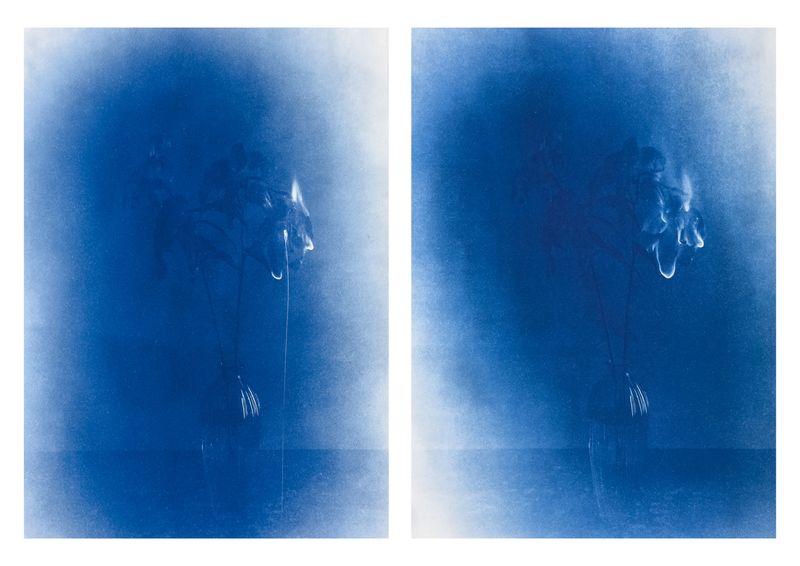
Other knowledge about him arrived even later. I learned from my mother only after his death that lilies had been my father’s favourite flowers. They are mine too. Lily in Flames grew from this small discovery. His life had ended, yet my adult knowledge of him had only begun to grow.
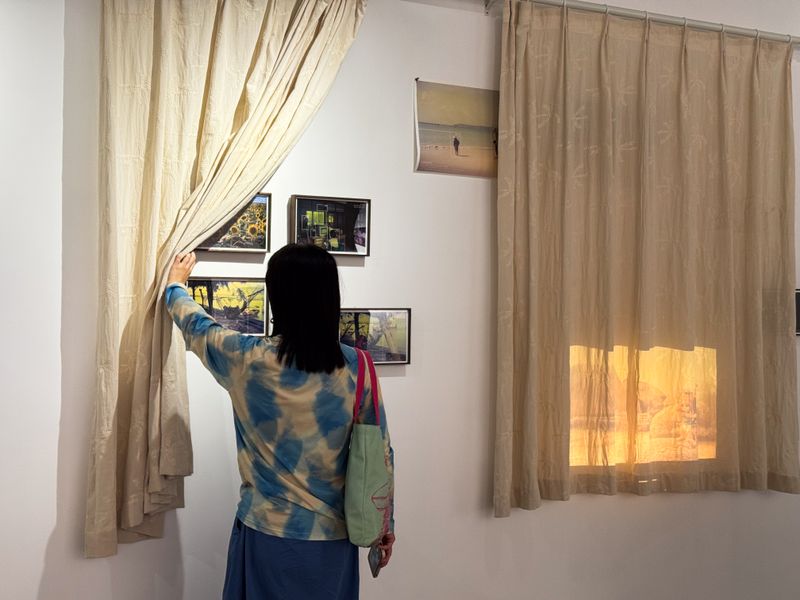
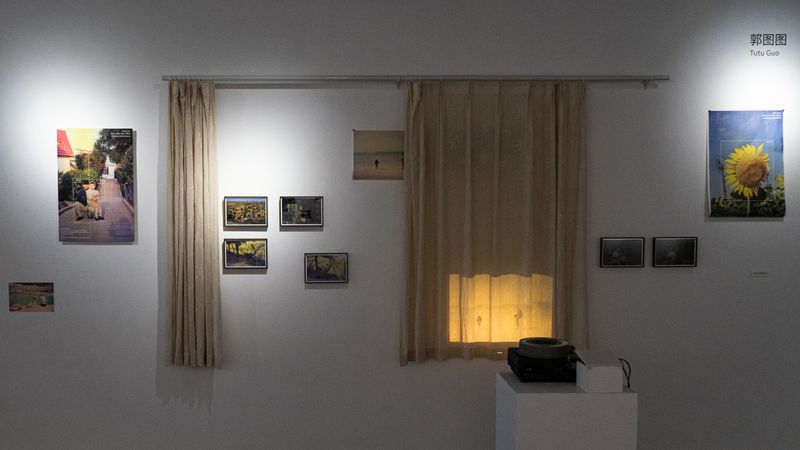
The installation returns these fragments to a space shaped by my childhood. My mother made curtains for our home and used slide projectors in her early teaching as an art historian. I used to stand behind the curtains to look outside. In the installation, visitors lift them to encounter the archive, repeating a gesture through which I once looked at the world.
His death made a firsthand relationship with my father as an adult impossible, no matter how many photographs, records or stories I accumulate. But mourning did not stop me from becoming curious about him. Death is brutal, yet through this process I have gained the courage and ability to confront it. Love and grief remain entangled, like darkness and the small, fragile glimpses of light that appear along the edge of the cloud.