Sicily 49 -

-
Dates2014 - Ongoing
-
Author
- Location Sicily, Italy
Sicily 49 is a documentary project aiming at reframing Sicily’s recent history. Investigating how the region’s cultural heritage and political history have been influenced and shaped by the U.S. Government presence on the territory since 1943.
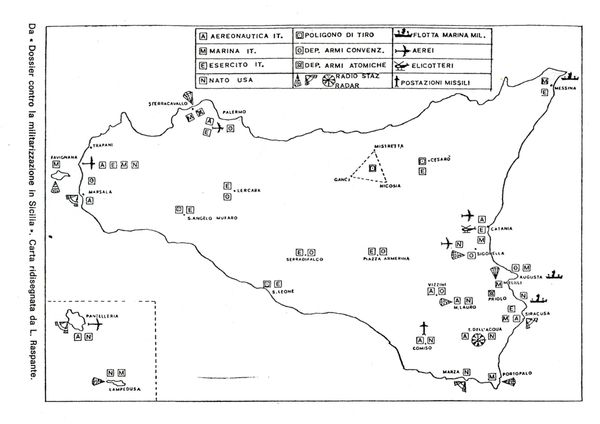
During this fellowship, I aim to finalize my decade-long documentary project, "Sicily 49," which investigates the deep and unspoken influence of the U.S. military presence on the island of Sicily since 1943. With a long-documented history as a contested place in the Mediterranean, the region’s strategic role continues today under NATO and U.S. military control.
My project examines how this military dominance, dating back to the Allied invasion during WWII, has shaped the island’s political landscape and cultural identity. Through this work, I aim to explore the traces of a conflict that is physically consumed elsewhere, and to enlight how Sicily remains connected to the global warfare and U.S. imperial power via its military infrastructure and political influence.
The project retraces U.S. Military role during Italy’s liberation from the Nazi occupation, diving deeper into the aspects of history often left out of textbooks. From the involvement of Lucky Luciano prior to the Husky Operation, to the latter participation of criminal figures affiliated to Italo-American mob families into the Sicilian political structure, the work interrogates the ethics of the U.S. military presence and its lasting impact on both the Sicilian and Italian society, examining the broader influence of American power on our cultural and political evolution.
Central to my investigation has been the question: What could our history have looked like without the American influence, and in what direction might Sicily—and Italy as a whole—have evolved? Aiming for a wider revision of the U.S.A as a cultural and political entity that influenced and shaped our country.
Blending contemporary photographs with archival documents, FBI declassified files, and historical images from the 1943 Allied invasion, the work’s natural output will be a Photo-book. The chapters delve in untold stories, unfolding case studies on the Allied Military Governance’s controversial appointment of 62 mob-affiliated mayors, which re-empowered the criminal structure and influence on the island, to examining key figures such as Charles Poletti, Don Calogero Vizzini, and the notorious bandit Giuliano, whose actions intertwined with Mafia, Italian, and U.S. governance.
The final chapter examines the rise of the Sicilian separatist movement, which aspired for Sicily to become the 49th U.S. state. Titling the project, this facet explores the complex intersection of Sicilian nationalism with American imperialism and the enduring unresolved historical tension between South and North of Italy that has shaped the island's identity to this day.