Saving Orangutans

This series documents the incongruous behavior between man and the environment in Sumatra, Indonesia. On the one hand humans destroy virgin forests, wounding and killing animals, while on the other hand they do everything possible to save them. One day, an orangutan is found peppered and blinded by 74 air bullet wounds, and the very next day a surgeon travels halfway across the planet to save it.

Indonesia’s Sumatran orangutan is under severe threat from the incessant and ongoing depletion and fragmentation of the rainforest.  As palm oil and rubber plantations, logging, road construction, mining, hunting and other development continue to proliferate, orangutans are being forced out of their natural rainforest habitat. 

Organizations like the OIC (Orangutan Information Center) and their immediate response team HOCRU (Human Orangutan Conflict Response Unit), rescue orangutans in difficulty (lost, injured, captive...) while the SOCP (Sumatran Orangutan Conservation Programme) cares for, rehabilitates and resocializes orangutans at their purpose-built medical facility, aiming to reintroduce them into the wild and to create new self-sustaining, genetically viable populations in protected forests.

That we share 97% of our genetic heritage with orangutans seems obvious when you observe their human-like behavior. Today, with just over 14,000 specimens left, the Sumatran orangutan (Pongo Abelii) along with the 800 specimens of the recently discovered Tapanuli species (Pongo tapanuliensis), are listed as critically endangered by the International Union for Conservation of Nature (IUCN).
© Alain Schroeder - Image from the Saving Orangutans photography project
i

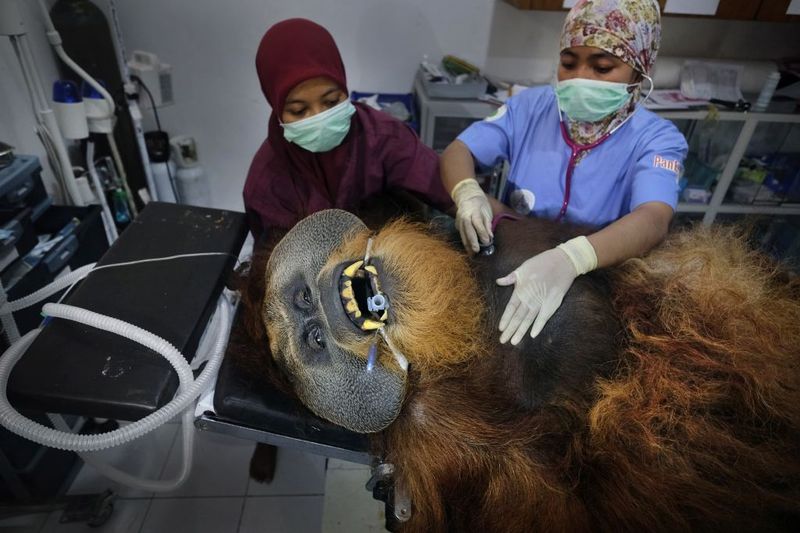
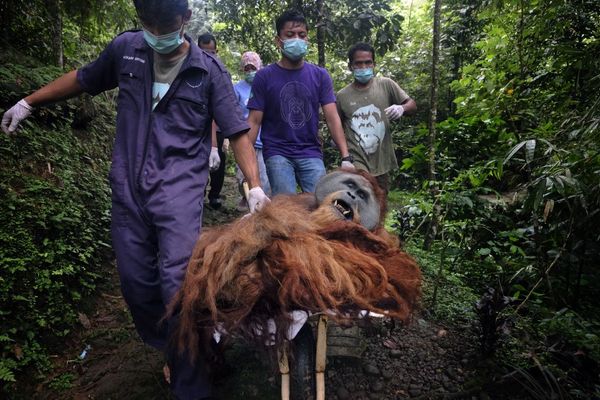
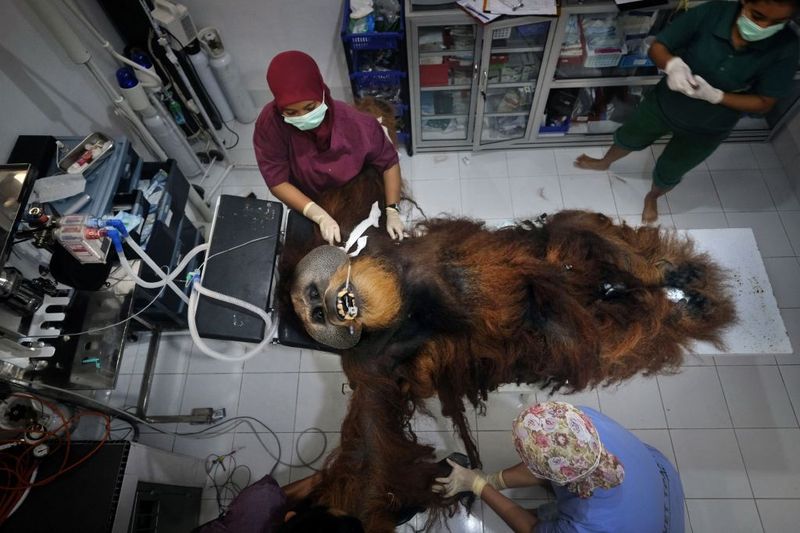
Sibolangit, SOCP Quarantine Centre, North Sumatra, Indonesia.  Fahzren is undergoing a routine medical check. Fahzren is 30 years old and comes from a zoo in Malaysia where he has lived since he was a baby. His medical condition is fine but he does not have the skills to survive in the wild. As such, he will live out the rest of his life at The Haven, the SOCP’s soon-to-open sanctuary, where orangutans like Fahzren can thrive in a natural setting under the loving care of dedicated caregivers.

© Alain Schroeder - Image from the Saving Orangutans photography project
i

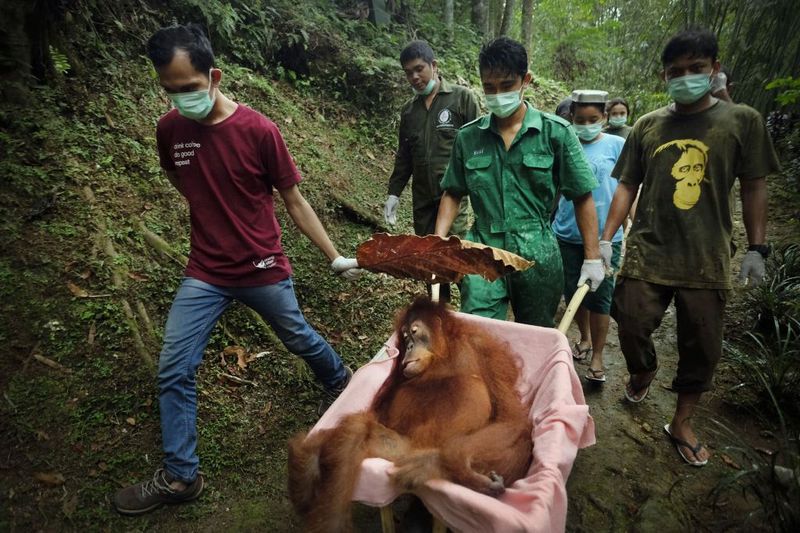
Sibolangit, SOCP Quarantine Centre, North Sumatra, Indonesia.  Preparation for a release. Asha, a 20-year-old female, arrived 2 years ago (2017) in critical condition with a broken right hand, a fractured hip and gangrene of the left hand from being beaten, leaving her thumb nonfunctional.  She is going for a medical check before her release in Jantho. As rain falls, a team member shelters her with a giant leaf.

© Alain Schroeder - Image from the Saving Orangutans photography project
i

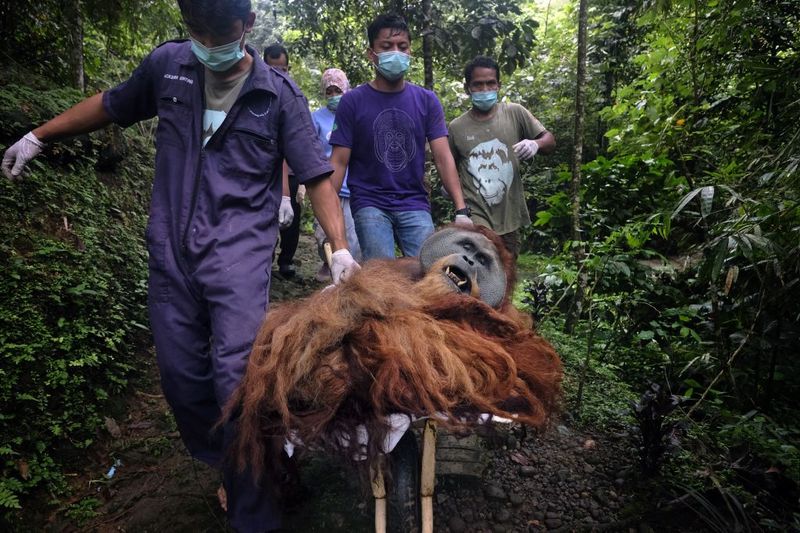
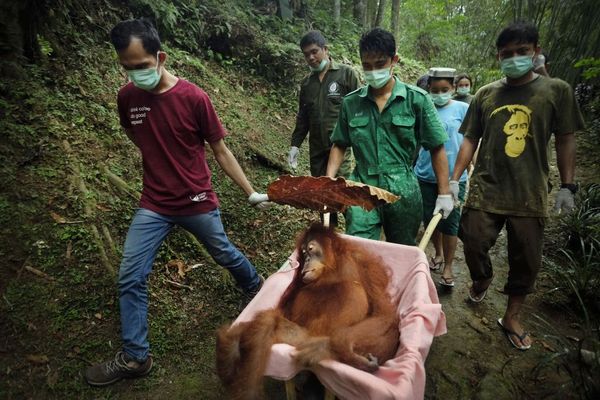
Sibolangit, SOCP Quarantine Centre, North Sumatra, Indonesia.  After the medical check, Fahzren is carried in a wheelbarrow by the caretakers to his private cage. Fahzren is 30 years old and comes from a zoo in Malaysia where he has lived since he was a baby. His medical condition is fine but he does not have the skills to survive in the wild. As such, he will live out the rest of his life at The Haven, the SOCP’s soon-to-open sanctuary, where orangutans like Fahzren can thrive in a natural setting under the loving care of dedicated caregivers.

© Alain Schroeder - Image from the Saving Orangutans photography project
i

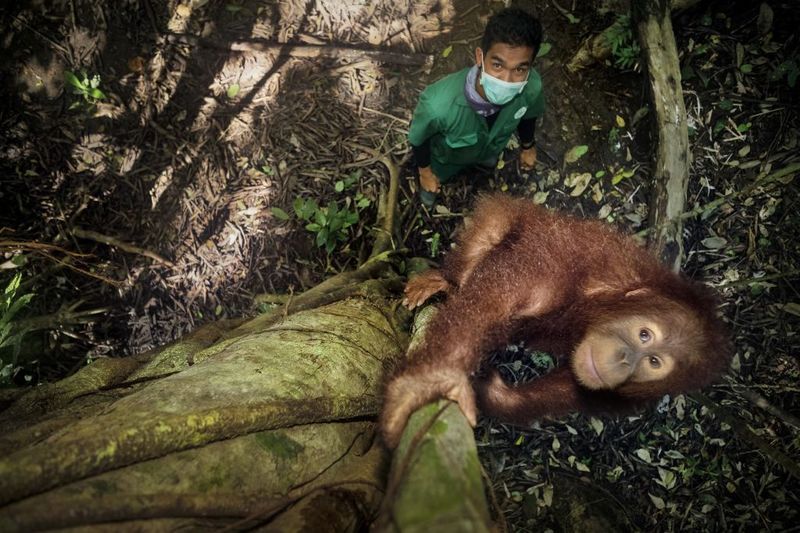
Indonesia, Sumatra, Aceh province, Jantho Reintroduction Centre located in the Jantho Pine Forest Nature Reserve. Nazarudin (26), is a member of the orangutan release and monitoring team in Jantho. Today, he is handling the first soft release of Kamala, a 6-year-old female. Over the next several weeks (or more), he will take Kamala from her cage in the morning and put her at the base of an easy-to-climb tree, then monitor her movements and activities throughout the day, noting specific behavior. Caregivers are particularly interested in three factors: the ability to build a nest, find fruits and leaves (it is estimated that 60% of an orangutan’s day, +/- 7 hours, should be spent looking for food), and finally, how willing they are to distance themselves from the humans that have been caring for them; often from a very early age.  As night falls, the orangutans return without incident to the safety of their cages. Caregivers repeat this exercise daily until they feel certain that the animal will thrive alone in the wild.   Once the orangutan graduates this forest school, it is transported across the river for the ultimate release in the protected national park.   The goal of the Jantho Reintroduction Centre is to establish a new, wild and sustainable Sumatran orangutan population within the Jantho Pine Forest Nature Reserve. Since 2011, over 100 orangutans have been released back into their natural habitat and several new births have been recorded.

© Alain Schroeder - Image from the Saving Orangutans photography project
i

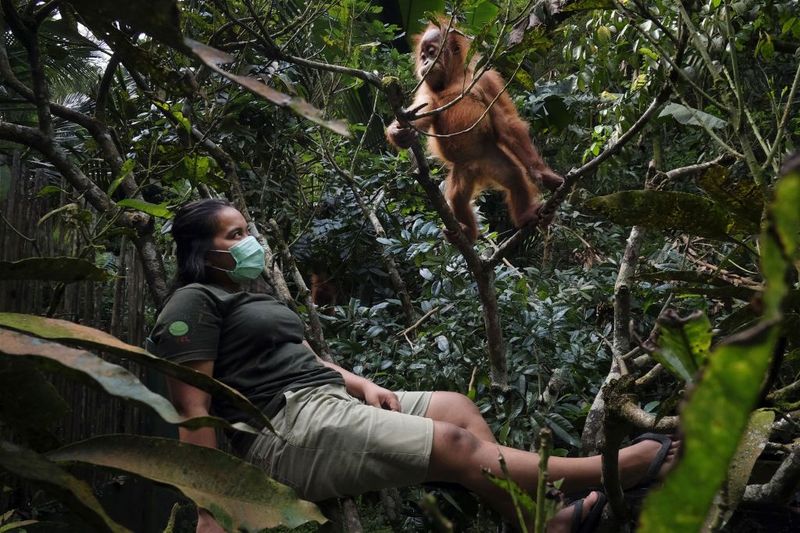
Sibolangit, SOCP Quarantine Centre, North Sumatra, Indonesia.  Substitution mother Selvi, is teaching Jating, a 1-year-old-orphaned-male orangutan, to climb trees in the forest school at the SOCP Quarantine Centre. Like humans, the mother orangutan has to teach her kids everything they need to know to survive on their own. Here at the center, human caregivers take on that maternal role. It is the first step in a teaching, socialization and rehabilitation program with the goal of release at the age of 7 to 8 years old. This corresponds with the age when orangutans naturally leave their parents in the wild.

© Alain Schroeder - Image from the Saving Orangutans photography project
i

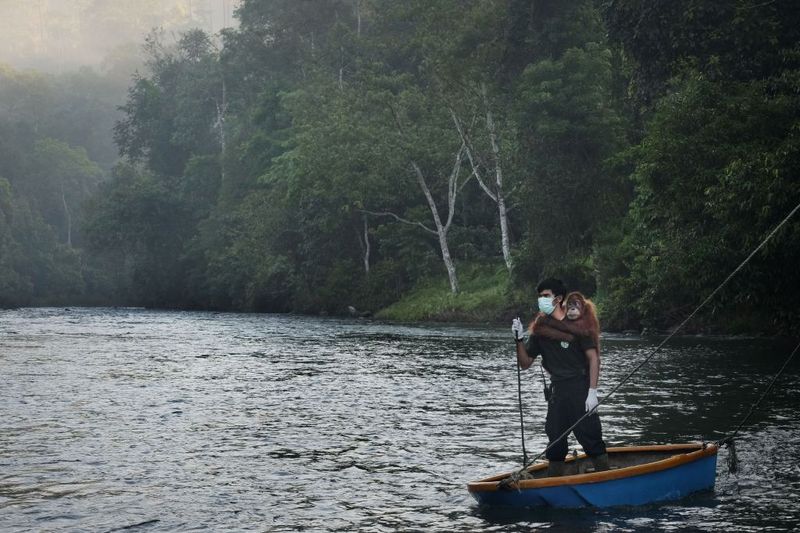
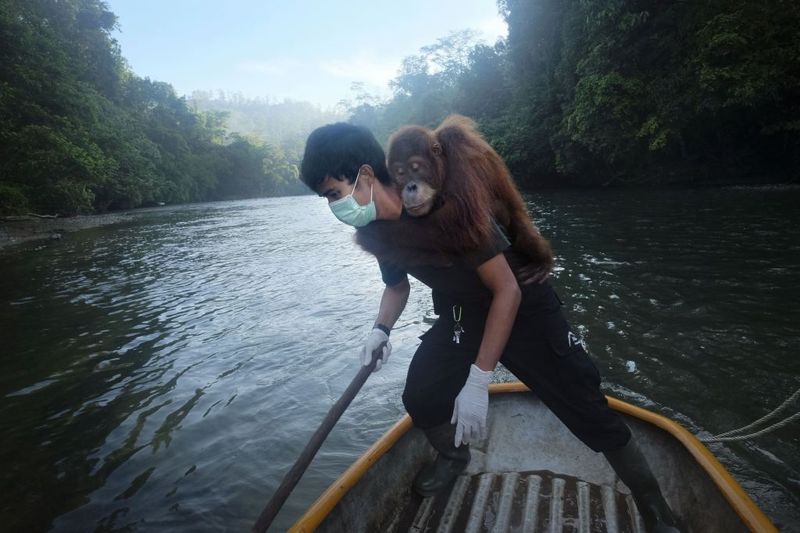
Indonesia, Sumatra, Aceh province, Jantho Reintroduction Centre located in the Jantho Pine Forest Nature Reserve. At dawn, veterinarian Pandu crosses the Krueng Aceh river in a small boat carrying Diana, an 8-year-old female orangutan, for a final release. But this is not Diana’s first attempt. Five years ago in 2014, she was released unsuccessfully having to return several times to the SOCP Quarantine Centre in Sibolangit for a variety of ailments. Having been domesticated, Diana had difficulty adjusting to forest food and on her last visit to the clinic, they discovered she had malaria (an extremely dangerous illness for an orangutan) that required a blood transfusion. Since, she has been on a strict diet of leaves but it remains to be seen if she will successfully adapt to the jungle this time. In order to follow and monitor orangutan behavior, caregivers and other staff members have to develop bonds of trust with the animals. By always maintaining a safe distance and only observing, never getting too close, the orangutans get used to seeing the humans. The goal of the Jantho Reintroduction Centre is to establish a new, wild and sustainable Sumatran orangutan population within the Jantho Pine Forest Nature Reserve. Since 2011, over 100 orangutans have been released back into their natural habitat and several new births have been recorded.

© Alain Schroeder - Image from the Saving Orangutans photography project
i

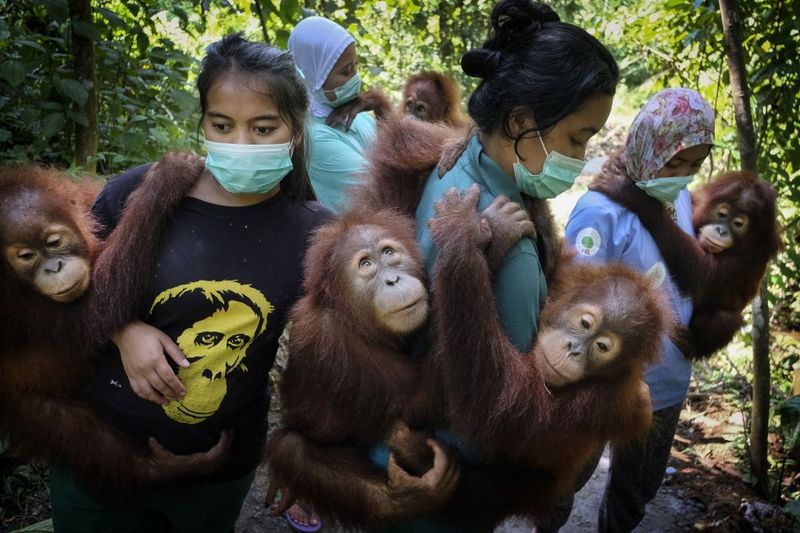
Sibolangit, SOCP Quarantine Centre, North Sumatra, Indonesia.  Substitution mothers are on the way to the forest school with orphaned orangutans where they will teach them to climb trees. Like humans, the mother orangutan has to teach her kids everything they need to know to survive on their own. Here at the center, human caregivers take on that maternal role. It is the first step in a teaching, socialization and rehabilitation program with the goal of release at the age of 7 to 8 years old. This corresponds with the age when orangutans naturally leave their parents in the wild. from left to right in the front ; - orangutan FIONA, with keeper SELVI - orangutan BINTANG, - orangutan SIBRING, with keeper YANTI - orangutan IPIN with keeper MEUTYA (Vet) in the back ; - orangutan BINAWANA, with keeper YENNY (Vet)

© Alain Schroeder - Image from the Saving Orangutans photography project
i

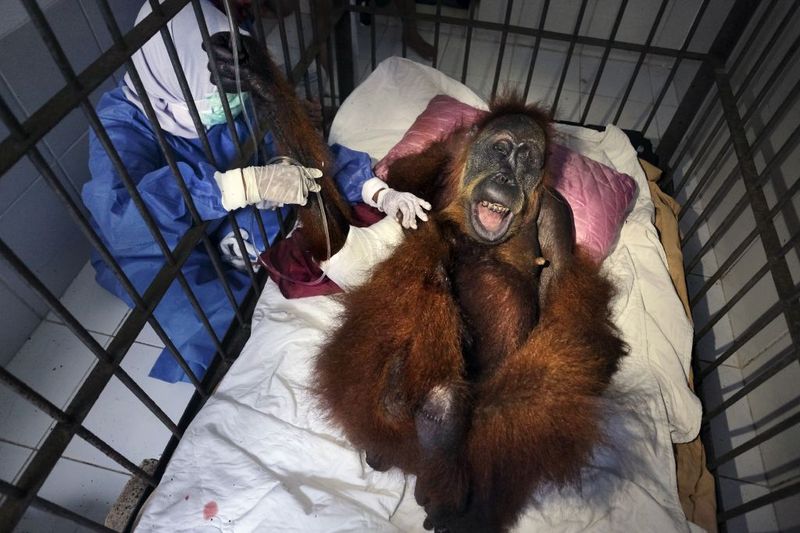
Sibolangit, SOCP Quarantine Centre, Northern Sumatra, Indonesia.  After the surgery, Hope is placed on a comfortable bed in a low cage to restrict her movements as the collarbone (clavicle) heals. She will remain in intensive care until full recovery. Though the SOCP has successfully patched her up, Hope's situation is tragic. Totally blind from being shot in both eyes, she can no longer survive in the wild. However, Hope is a candidate for The Haven, the SOCP's soon-to-open facility where she can live out her life in a natural environment under the loving care of dedicated caregivers.

© Alain Schroeder - Image from the Saving Orangutans photography project
i

Sibolangit, SOCP Quarantine Centre, North Sumatra, Indonesia.  Fahzren is undergoing a routine medical check. Junior vet Miuthya (r) and senior vet Yenny (l) left examine the orangutan. Fahzren is 30 years old and comes from a zoo in Malaysia where he has lived since he was a baby. His medical condition is fine but he does not have the skills to survive in the wild. As such, he will live out the rest of his life at The Haven, the SOCP’s soon-to-open sanctuary, where orangutans like Fahzren can thrive in a natural setting under the loving care of dedicated caregivers.

© Alain Schroeder - Image from the Saving Orangutans photography project
i

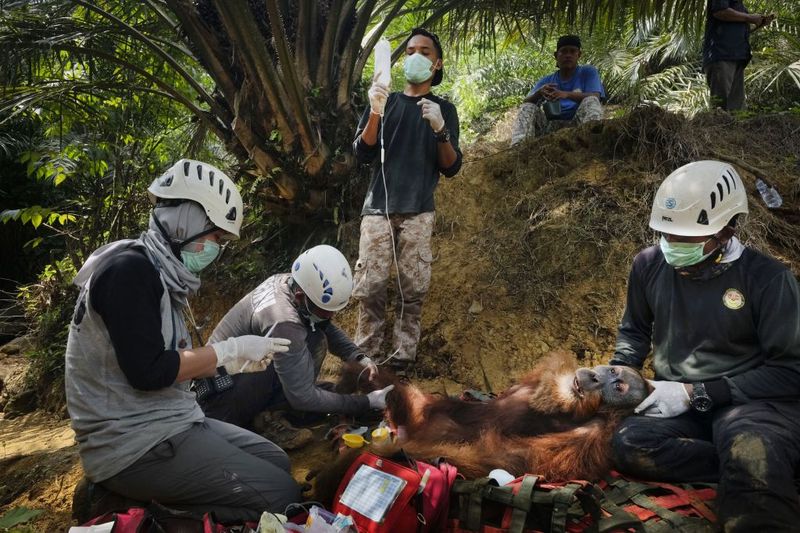
Indonesia, North Sumatra, Langkat district, west Aceh. Rescue of Prime, a 15-year-old male orangutan, lost in a palm oil plantation. A member of the rescue team monitors an IV drip hung (ironically) on a branch of an oil palm while the vet and other assistants examine the orangutan at the pop-up medical facility they’ve installed in the shade of the tree. In the urgency of attending the animal under sedation, the guys have yet to remove the protective helmets worn during the arduous rescue over rugged terrain.

© Alain Schroeder - Image from the Saving Orangutans photography project
i

A small plantation owner has called in HOCRU, the Human Orangutan Conflict Response Unit (a division of the Orangutan Information Centre - OIC), to rescue an orangutan from a rubber plantation. It is not the first time.  After hours of tracking through thick brush, the team is able to tranquilize the animal. Once on level ground, veterinarian Jeni, assisted by the team, proceeds with a thorough medical check measuring the animal’s vital statistics and noting all visible markings. Although this 15-year-old female, who the team names Linda, is blind in one eye and displays several other wounds from previous encounters with humans, her vitals are good and Jeni, the team veterinarian determines that she is fit to be returned to the Tenggulun protected forest, a two-hour drive (shortcut through a palm oil plantation) from here.

© Alain Schroeder - Image from the Saving Orangutans photography project
i

Indonesia, Sumatra, Aceh province, Jantho Reintroduction Centre located in the Jantho Pine Forest Nature Reserve. At dawn, veterinarian Pandu crosses the Krueng Aceh river in a small boat carrying Diana, an 8-year-old female orangutan, for a final release. But this is not Diana’s first attempt. Five years ago in 2014, she was released unsuccessfully having to return several times to the SOCP Quarantine Centre in Sibolangit for a variety of ailments. Having been domesticated, Diana had difficulty adjusting to forest food and on her last visit to the clinic, they discovered she had malaria (an extremely dangerous illness for an orangutan) that required a blood transfusion. Since, she has been on a strict diet of leaves but it remains to be seen if she will successfully adapt to the jungle this time. In order to follow and monitor orangutan behavior, caregivers and other staff have to develop bonds of trust with the animals. By always maintaining a safe distance and only observing, never getting too close, the orangutans get used to seeing the humans. The goal of the Jantho Reintroduction Centre is to establish a new, wild and sustainable Sumatran orangutan population within the Jantho Pine Forest Nature Reserve. Since 2011, over 100 orangutans have been released back into their natural habitat and several new births have been recorded.

© Alain Schroeder - Image from the Saving Orangutans photography project
i

Sibolangit, SOCP Quarantine Centre, North Sumatra, Indonesia.  Substitution mother Selvi, is teaching Otan, a 3-year-old male confiscated from a home in West Java by JAN (Jakarta Animal Network), to climb trees in the forest school at the SOCP Quarantine Centre. Working together on a daily basis, Selvi and Otan have developed a strong mother/child bond. Like humans, the mother orangutan has to teach her kids everything they need to know to survive on their own. Here at the center, human caregivers take on that maternal role. It is the first step in a teaching, socialization and rehabilitation program with the goal of release at the age of 7 to 8 years old. This corresponds with the age when orangutans naturally leave their parents in the wild.

© Alain Schroeder - Image from the Saving Orangutans photography project
i

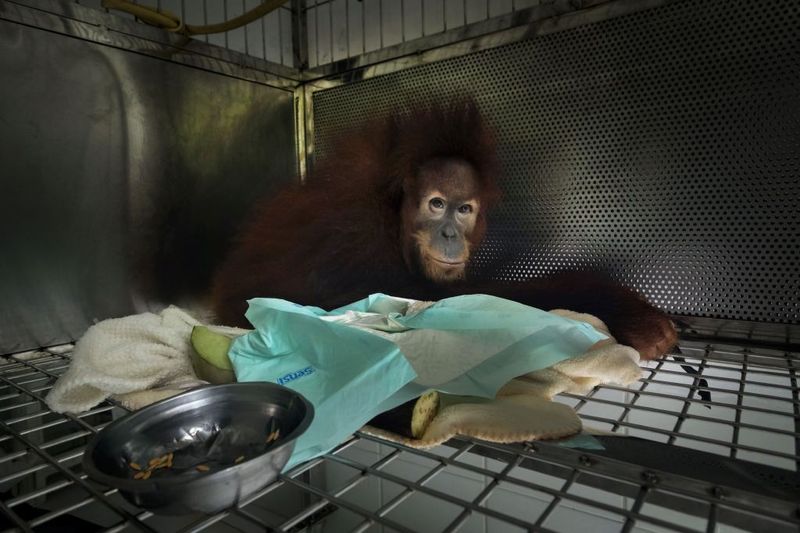
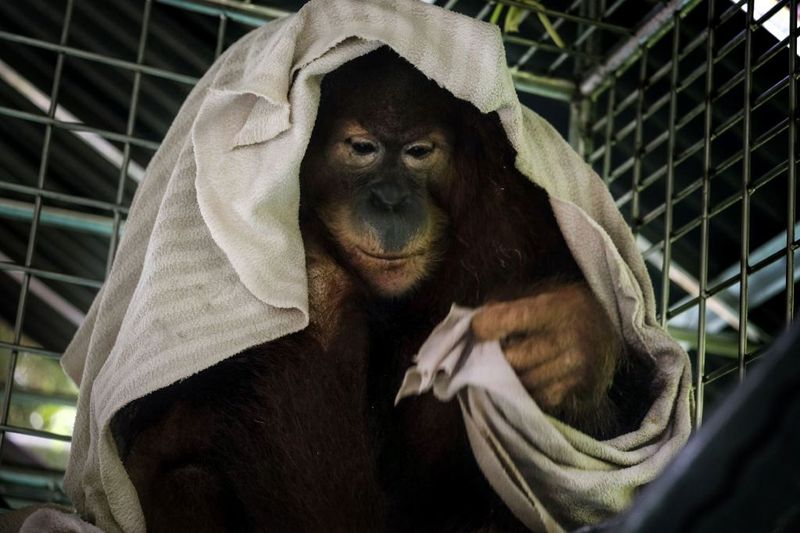
Sibolangit, SOCP Quarantine Centre, North Sumatra, Indonesia.  Serja, an 8-year-old female, sits in a private cage (one of 20 isolation cages) in the quarantine area separated from the other orangutans. The veterinarian has removed a cancerous tumor from her ovaries. For the moment, she is refusing to eat, does not want to see anybody and protects herself by hiding under her blanket which according to some experts is a sign of impending death. Regretfully, she died one week after this photo was taken.

© Alain Schroeder - Image from the Saving Orangutans photography project
i

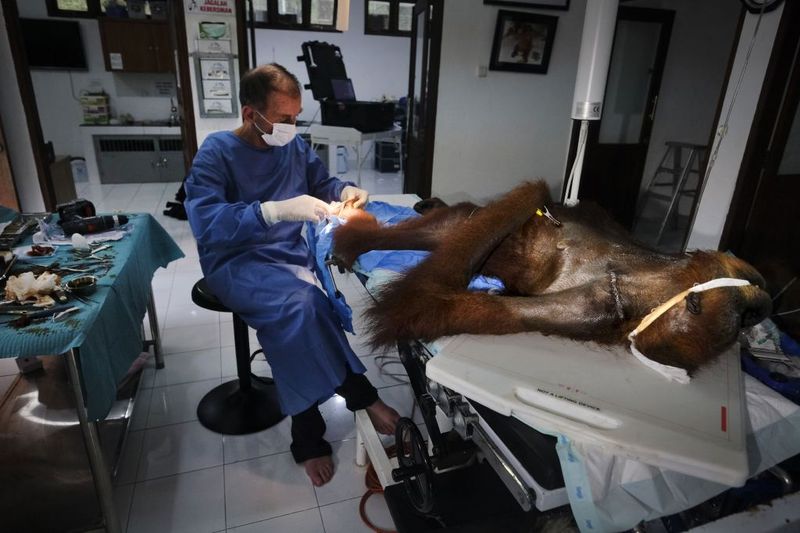
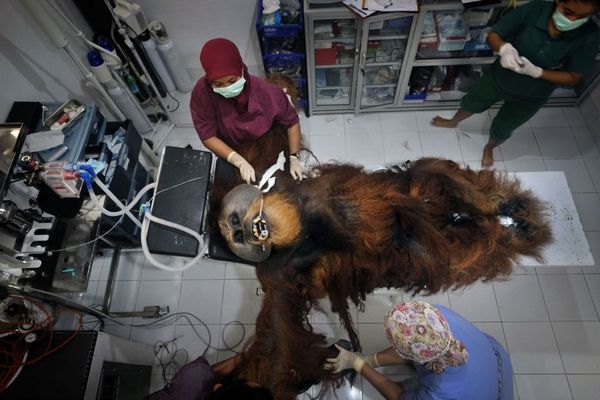
Sibolangit, SOCP Quarantine Centre, North Sumatra, Indonesia.  Hope undergoes surgery after being rescued in near death condition. With 74 air rifle bullets in her body, she is totally blind. A broken collarbone (clavicle) has pierced her air sac (the large throat sac that orangutans have in the upper chest) which has subsequently become infected. Therefore, the first priority is to clean the area and remove infected bone and tissue before placing a pin and 6 screws to secure the bone in place. The operation is led by Dr. Andreas Messikommer, a renowned orthopedic surgeon invited from Switzerland whose more usual patients are people in and around Lausanne and Montreux. Dr. Messikommer, has assisted the SOCP on many surgeries over the last 15 years.

© Alain Schroeder - Image from the Saving Orangutans photography project
i

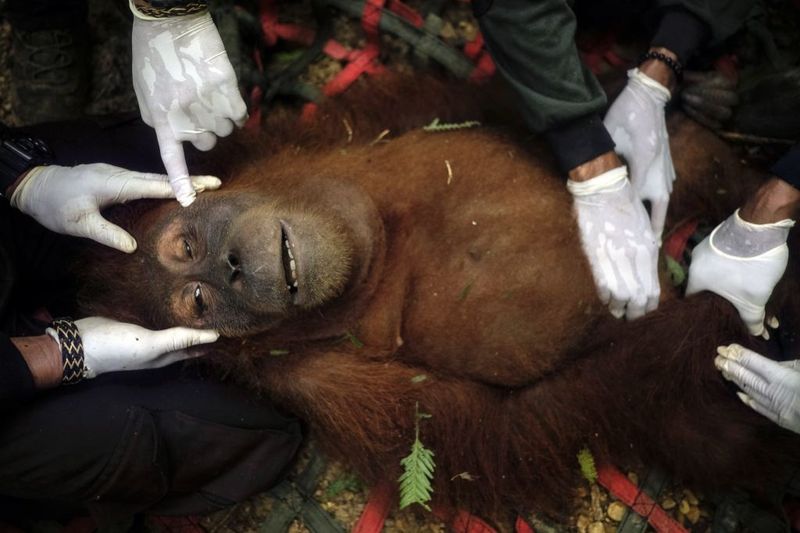
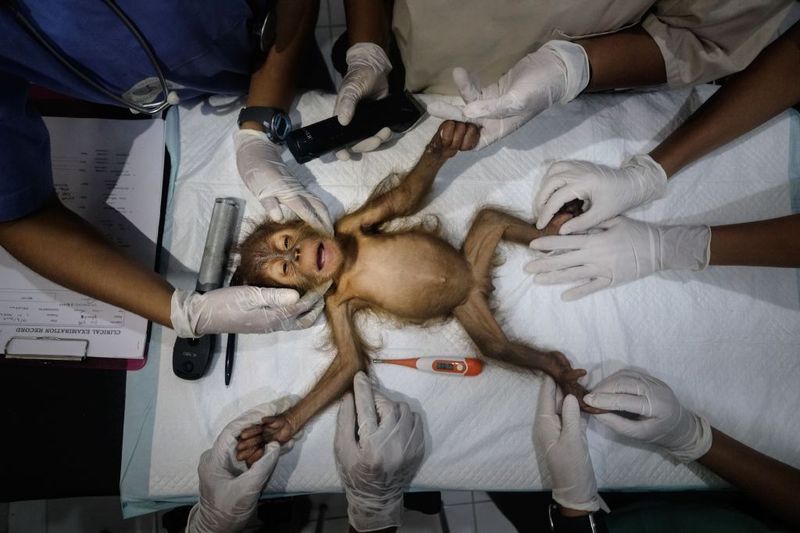
Sibolangit, SOCP Quarantine Centre, North Sumatra, Indonesia.  The whole SOCP team works together to prepare Brenda, an estimated 3-month-old female orangutan (she has no teeth yet), for surgery.  A sedative is administered, the arm is shaved, her temperature is taken, while others hold her head or her hand out of compassion for the baby.   During the three-hour procedure, Dr. Andreas Messikommer, a renowned orthopedic surgeon invited from Switzerland, will place a pin and screws to secure the damaged humerus. Brenda was confiscated from a villager in Blang Pidie on the west coast of Aceh who was keeping her as a pet.

© Alain Schroeder - Image from the Saving Orangutans photography project
i

Sibolangit, SOCP Quarantine Centre, North Sumatra, Indonesia.  Serja, an 8-year-old female, sits in a private cage (one of 20 isolation cages) in the quarantine area separated from the other orangutans. The veterinarian has removed a cancerous tumor from her ovaries. For the moment, she is refusing to eat, does not want to see anybody and protects herself by hiding under her blanket which according to some experts is a sign of impending death. Regretfully, she died one week after this photo was taken.

© Alain Schroeder - Image from the Saving Orangutans photography project
i

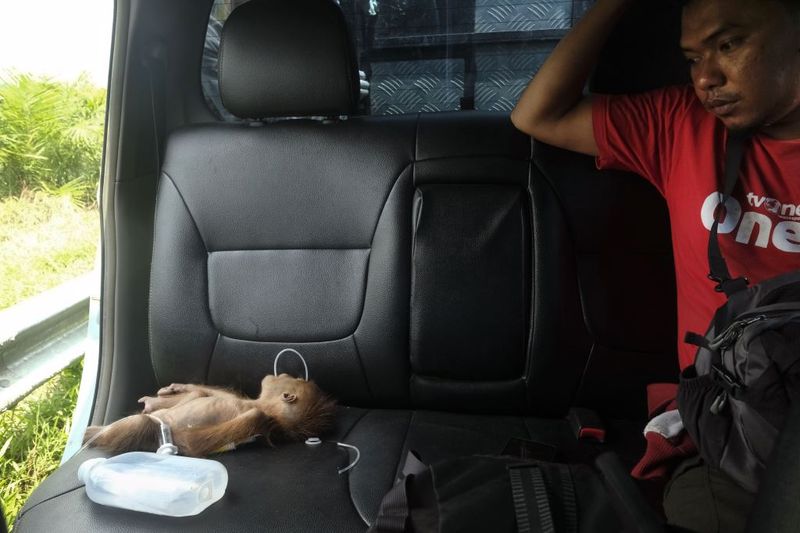
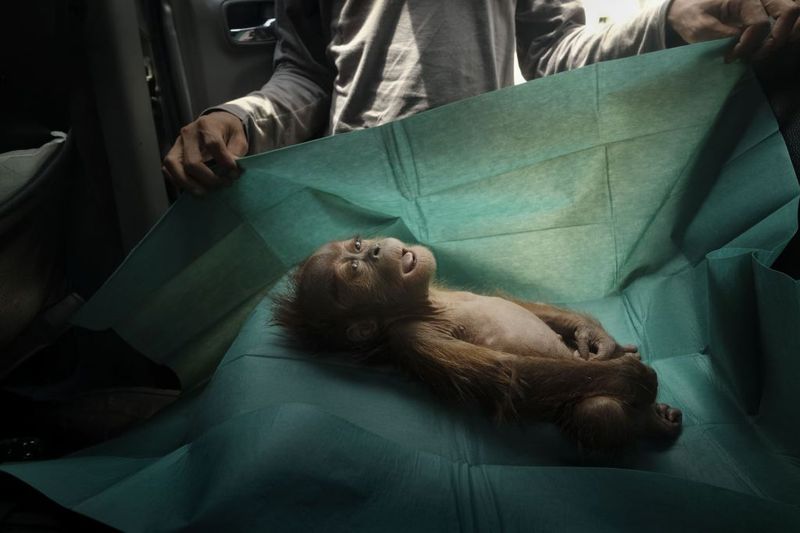
Near Subulussalam city, Aceh Province, Sumatra, Indonesia This (estimated) 1-month-old baby was rescued from a palm oil plantation in Bunga Tanjung village (Sultan Daulat subdistrict, Subulussalam city - Aceh Province) with her mother Hope (named by the rescue team). Hope was found with serious injuries from sharp tools on her right arm, left finger and right leg, 74 air rifle bullets on her body and totally blind. The baby died in the car on the way to the SOCP Quarantine Centre a few hours after the rescue, probably due to malnutrition.

© Alain Schroeder - Image from the Saving Orangutans photography project
i

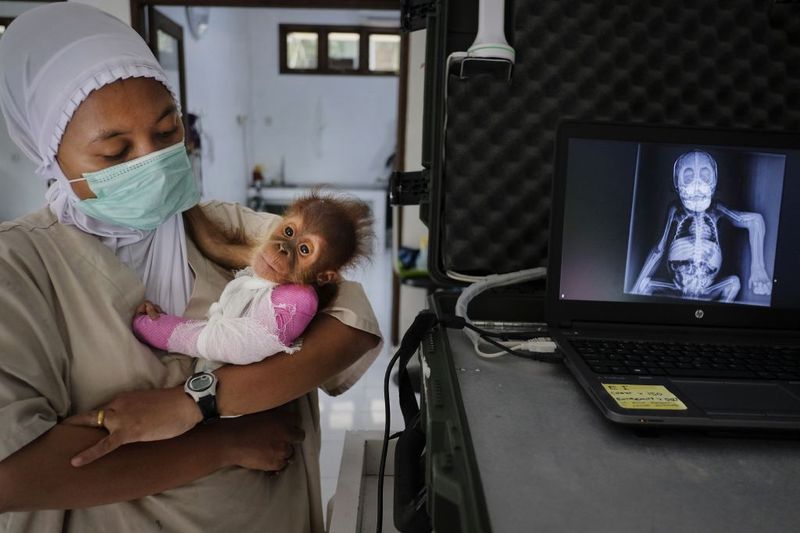
Sibolangit, SOCP Quarantine Centre, North Sumatra, Indonesia.  Brenda, an estimated 3-month-old female orangutan (she has no teeth yet), was confiscated from a villager in Blang Pidie on the west coast of Aceh. Her left arm humerus was completely snapped in two. Yenny, the SOCP’s vet, is standing next to Brenda’s X-ray that reveals the broken bone. The 3-hour operation was led by Dr. Andreas Messikommer, a renowned orthopedic surgeon invited from Switzerland whose more usual patients are people in and around Lausanne and Montreux. Dr. Messikommer, has assisted the SOCP on many surgeries over the last 15 years.

© Alain Schroeder - Image from the Saving Orangutans photography project
i

Near Subulussalam city, Aceh Province, Sumatra, Indonesia This (estimated) 1-month-old baby was rescued from a palm oil plantation in Bunga Tanjung village (Sultan Daulat subdistrict, Subulussalam city - Aceh Province) with her mother Hope (named by the rescue team). Hope was found with serious injuries from sharp tools on her right arm, left finger and right leg, 74 air rifle bullets on her body and totally blind. The baby died in the car on the way to the SOCP Quarantine Centre a few hours after the rescue, probably due to malnutrition.