ReciclARTE

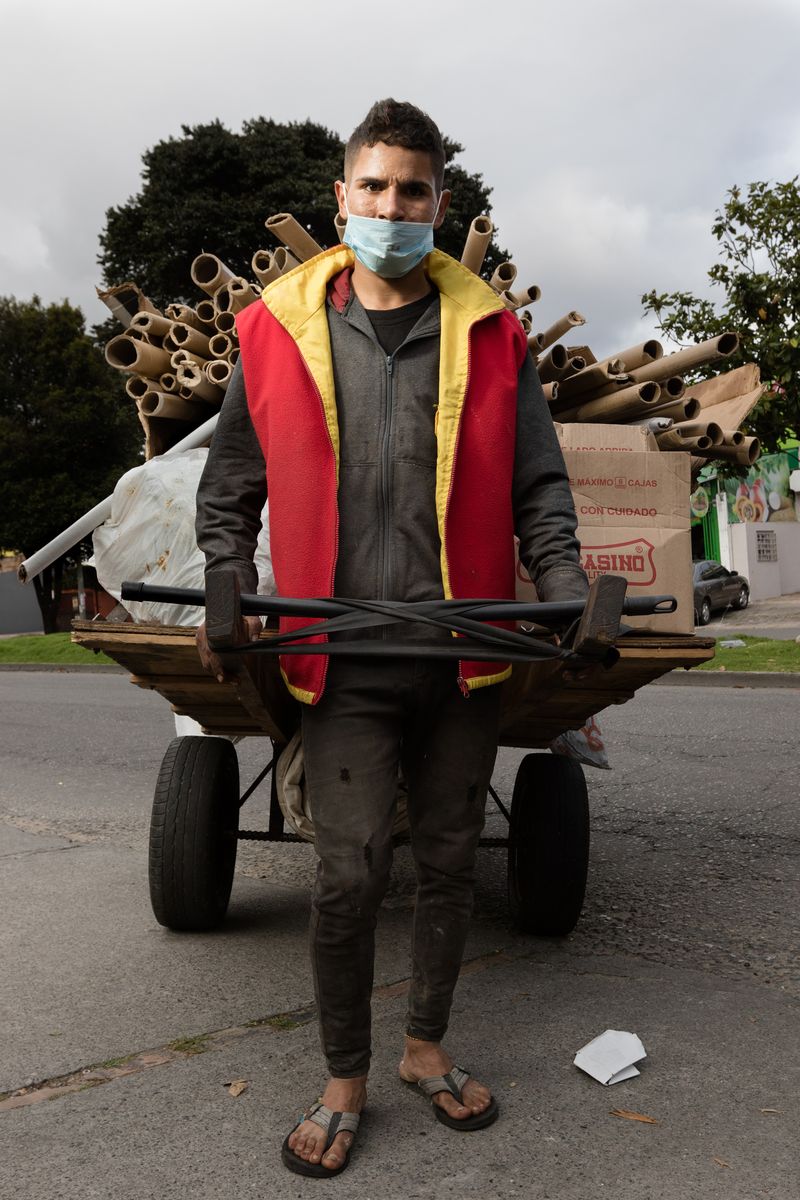
Photos and interviews with Colombian recicladores - people, who is collecting, sorting and selling rubbish from the streets. With pandemic their number started to grow up very fast.

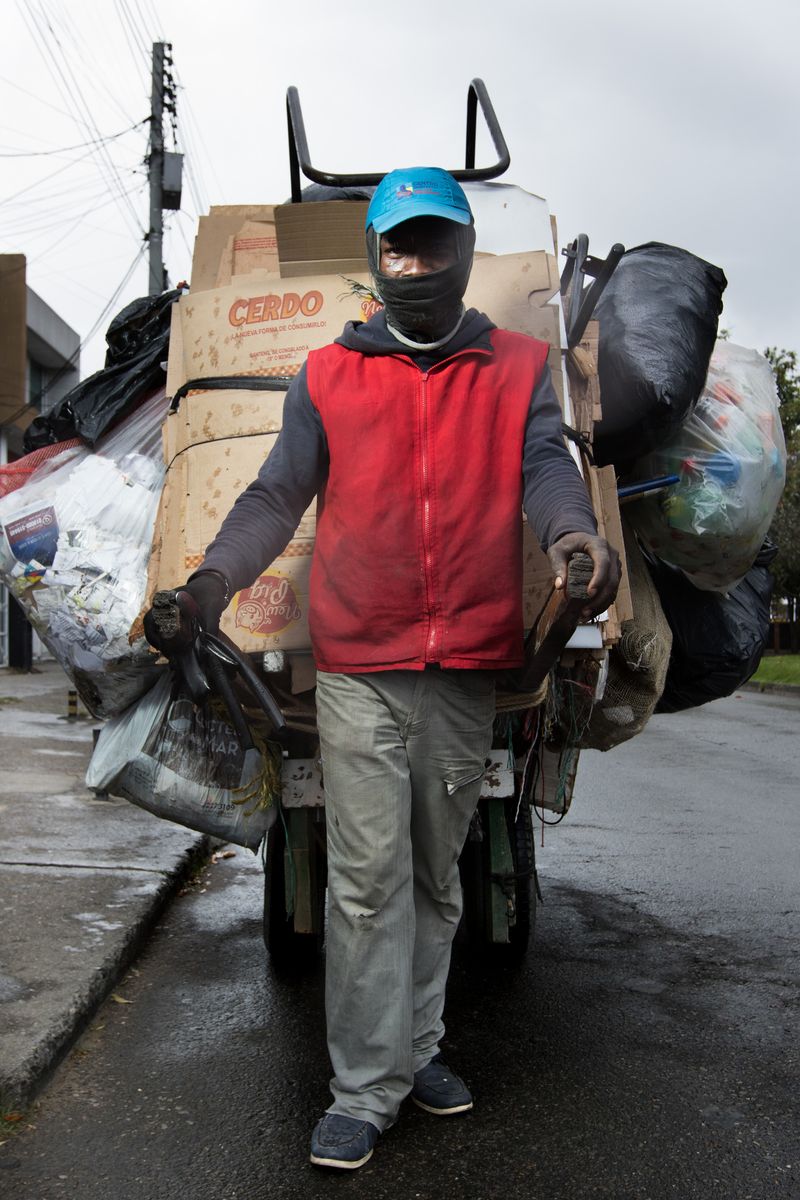
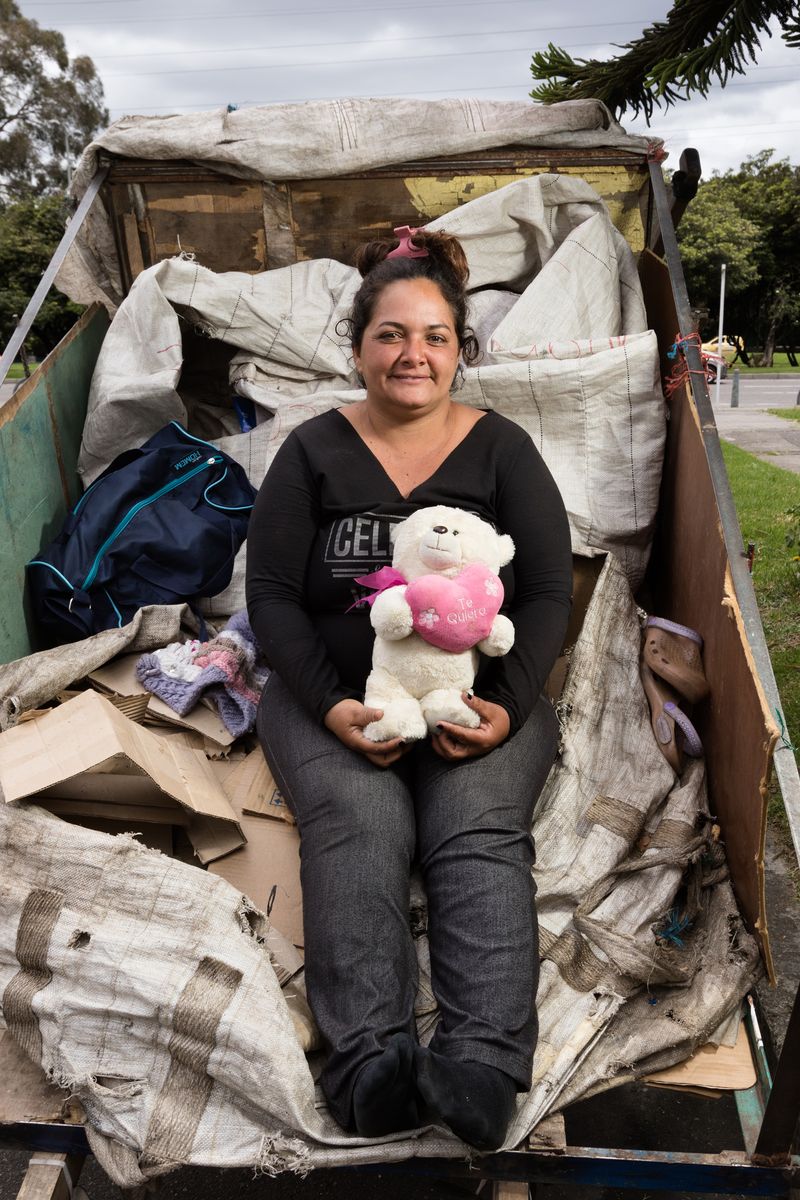
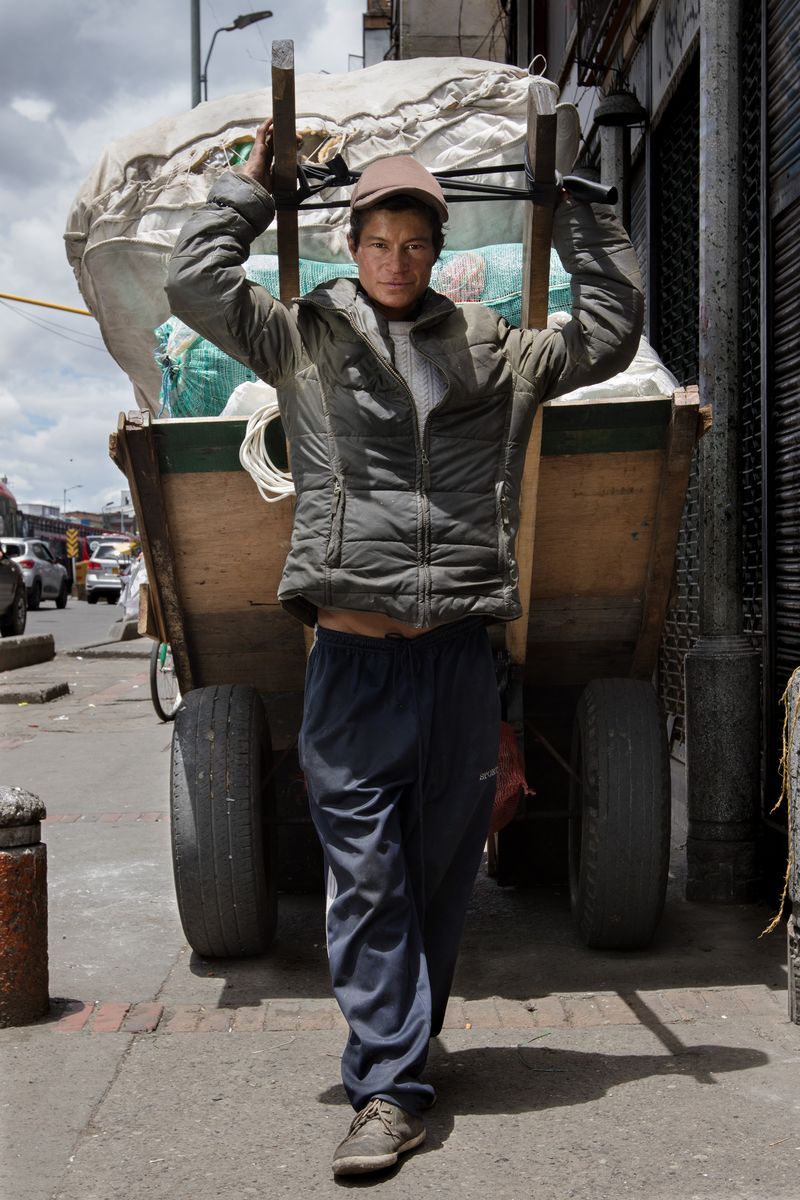
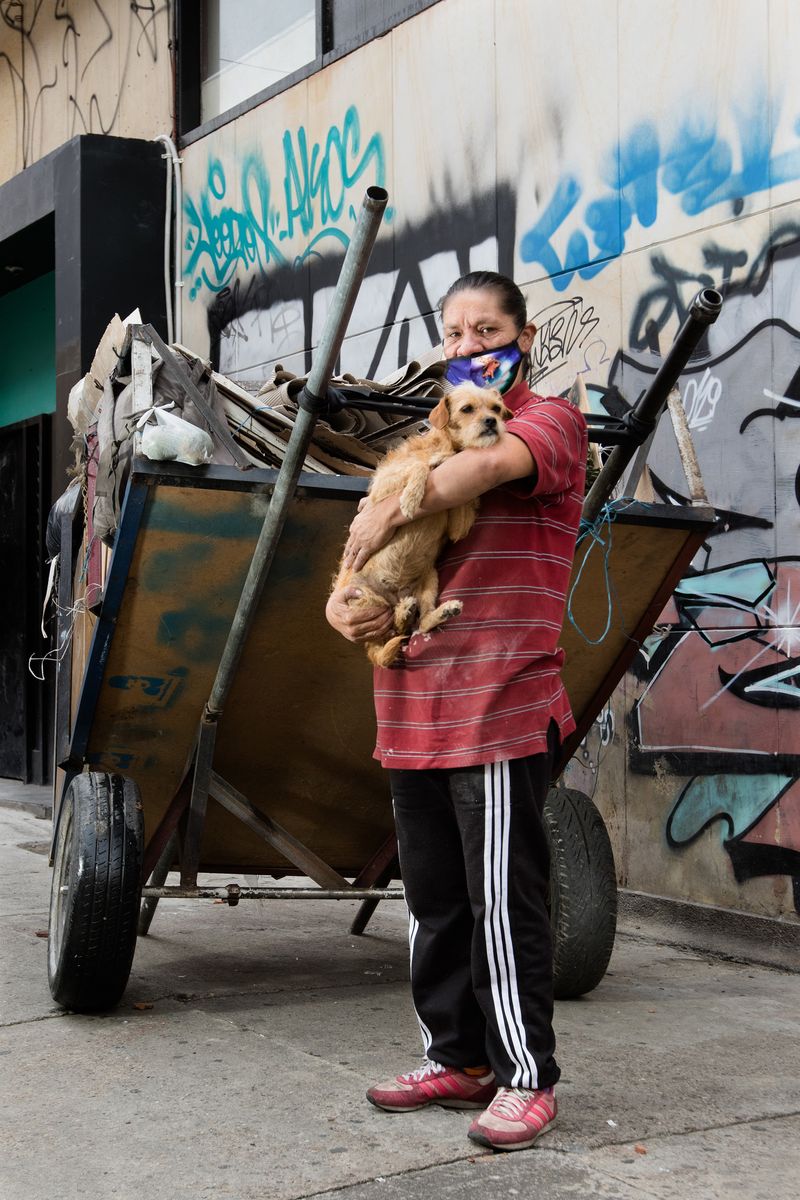
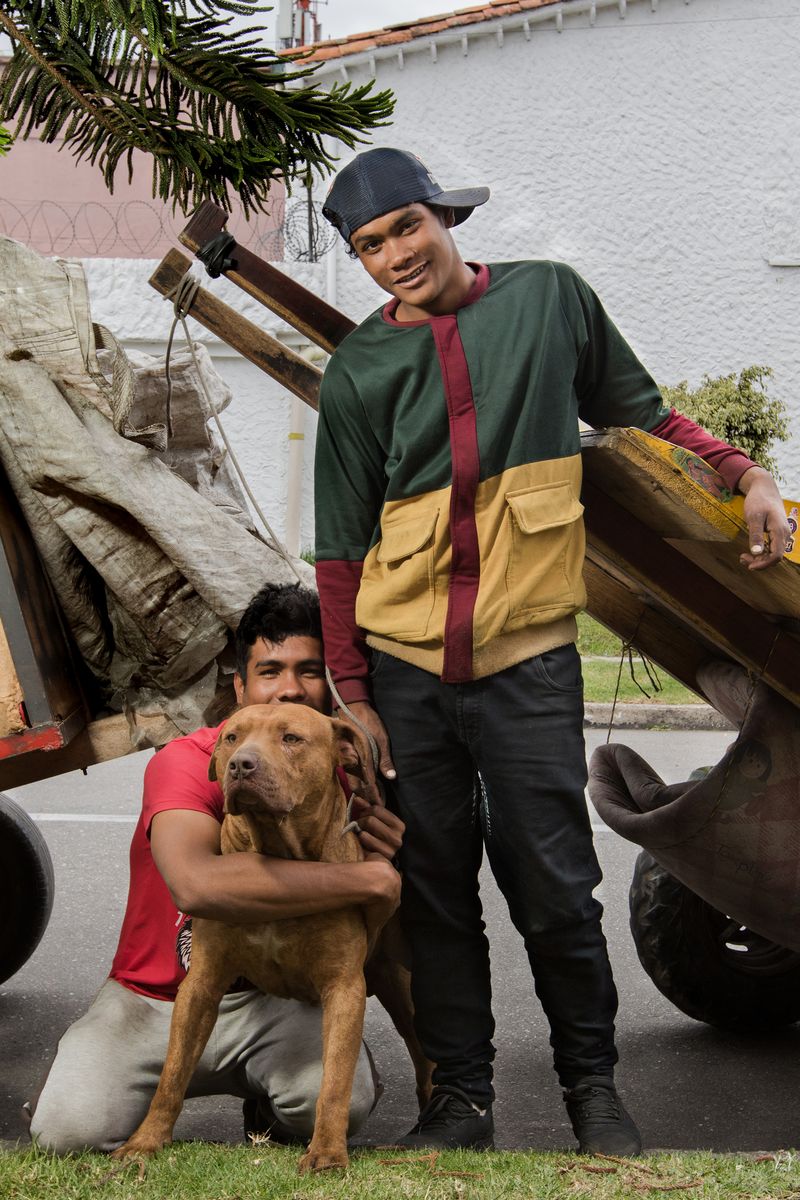
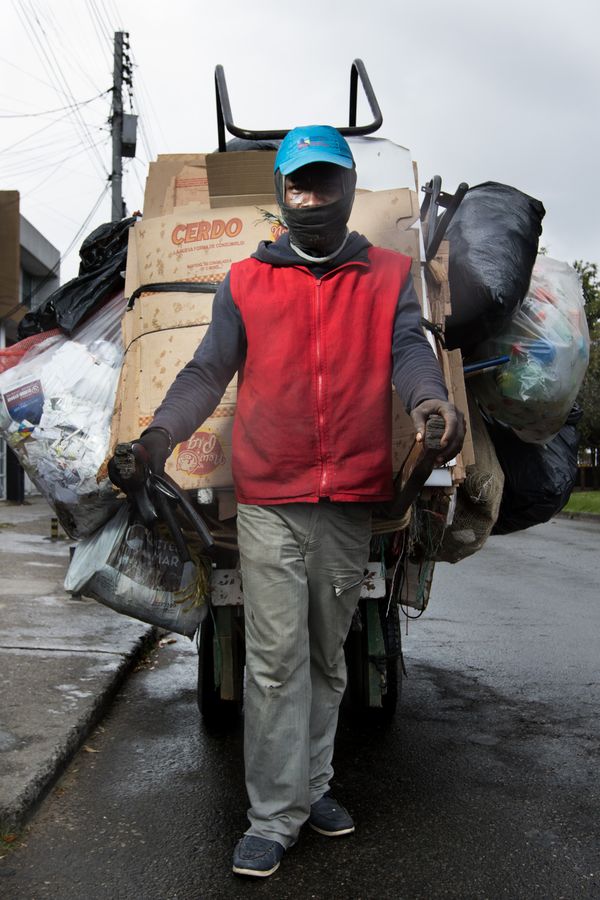
After the quarantine started in Colombia in March 2020, a lot of people lost their jobs and had to accept any new opportunities they could find. One of the most available jobs now, aside from delivering various goods, is sorting and recycling rubbish in the city. Recicladores - how they are called in Spanish - move through the city with their huge handcarts (each cart can weigh about 60 kg) and try to find cardboard, metals, plastics and other elements in the garbage, which can be sold later to special areas. This activity has been part of Colombian urban past for over 30 years, when the carts were pulled by horses and the carts themselves were known as zorras, but nowadays it is more popular and competitive. 

With journalist Claudia Del Castillo we decided to make the project about recicladores as their numbers in Bogotá grew day by day and their presence became visible. We wanted to show how they work and deal with dangers in the city, what are the hardest parts of their labour and to which jobs they would love to change when the pandemic is finally over. 

Most of the recicladores are Venezuelan migrants, who came to Colombia during the last 2-3 years. After the deep economic crisis in Venezuela, they had to flee their country, looking for new homes. Some of the migrants came to

Colombia by bus, others by foot, with their children on their shoulders and without a clear idea of what they are going to do in a new country and with a new life. If at home they had simple, not high qualified jobs, it’s a very low chance to find

a good vacancy here. Colombia now hosts around 1.8 million Venezuelan migrants and refugees and thousands of people still enter the country every day through various legal and illegal entry points. 

Another visible point, which appeared in interviews, is drugs and its influence on people’s life. Some heroes of this project lost everything they had because of addiction: families, houses, better jobs. Some could not do any other activities: recycling and drugs are very connected for them from a young age.   

ReciclARTE means in Spanish, “to recycle oneself, to change into something new”. We truly hope that the play of words in Spanish, between what it means to work in such a hard task and the act of changing a life,

is well understood by all those who see our work. 
© Irina Kovalchuk - Image from the ReciclARTE photography project
i

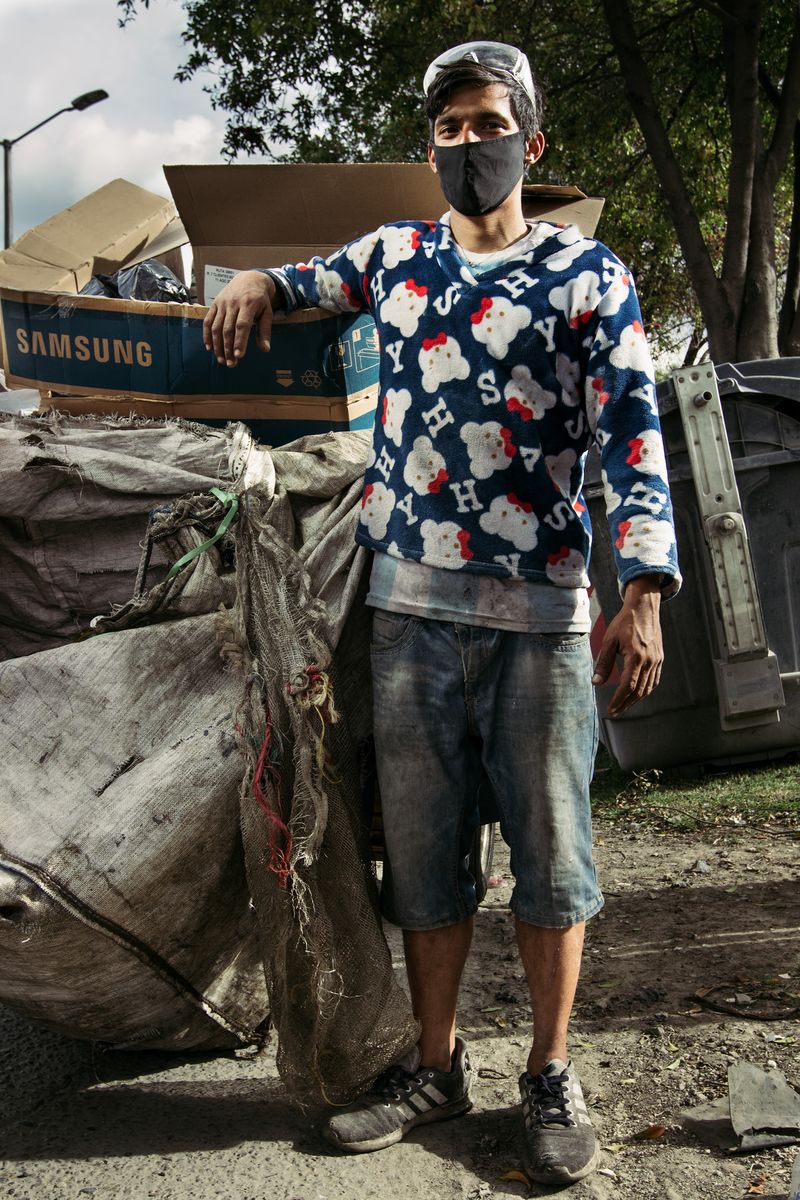
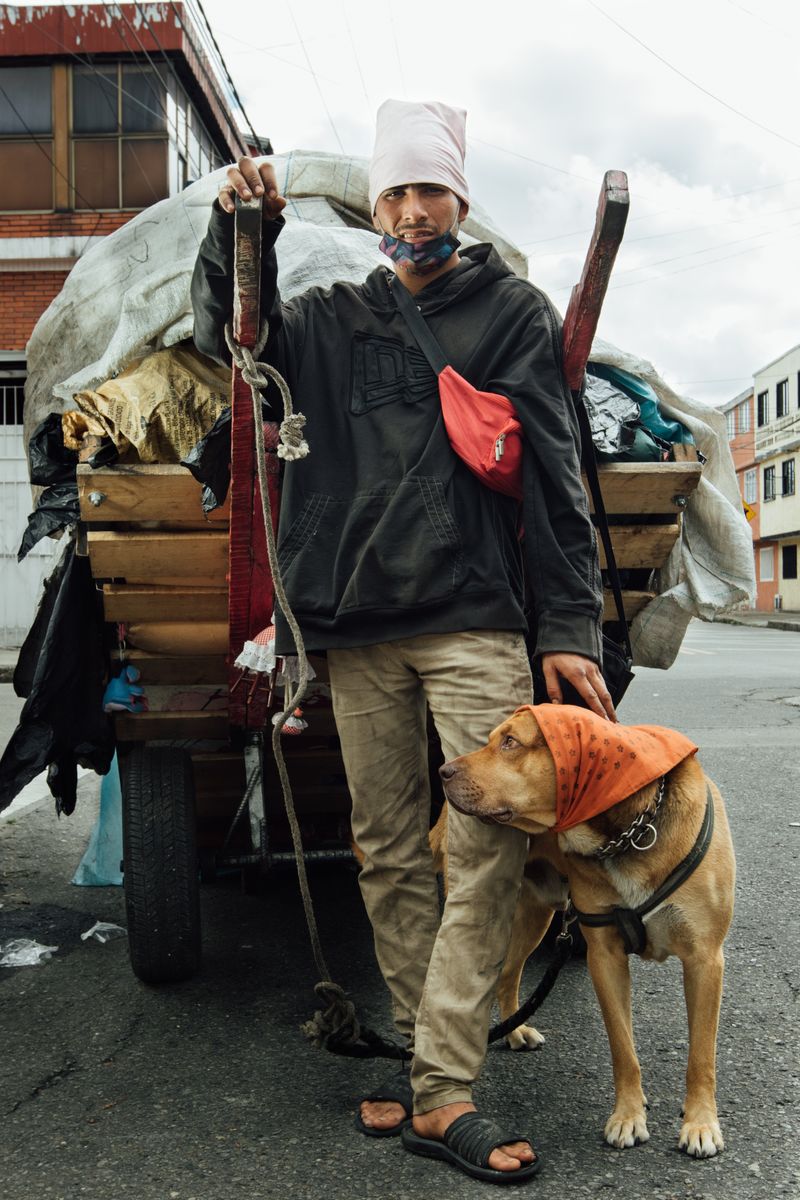
Hayder, 24 years old I’m from Venezuela, born in Yaracuí. I came here two years ago – on foot from Cucuta to Bogotá. It took me and my boy two weeks to walk, just the two of us. He’s 4 now, so at that time he was just a baby. His mom went to Peru and I never heard from her again. We Venezuelans have to keep going, whether we like it or not, whether it’s quarantine or not: pa’lante. We move forward, never back. Where I am working it’s only four Venezuelans: the rest are Colombians. I work one day without rest and the next day I rest, and give the cart to another friend. Around 6 am I finish and then I can rest a full day. Everything we collect we take to a specific chatarrería (place, where useful elements of garbage can be sold). The owner helped us a lot: gave us carts to work with and anything else, he can give us. We have to be warriors – otherwise, we don’t get anything. There’s a lot of competition among us. Sometimes, I just manage to earn 20.000 COP (around 5,5 USD) in one day and I have to be content with that. Before, I was independent. In Venezuela, I had a small food stall and fried plantains and potatoes. Ever since the economy went bad there, I was left with nothing. I lost everything, even my family: some of them can’t come, because the walk would kill them. I miss my mom the most. I’ve found some gold in the garbage. Here in Bogotá people are rich and they don’t even know it: in Venezuela nobody throws anything out. I’ve found some money too. If it wasn’t for Colombia, people would be worse in Venezuela. Regardless of the fame we have as Venezuelans, we found help here. They see us working, they give us food. This work is dangerous – there are areas where we as Venezuelans can’t go into. If we do, we get stabbed, we get hurt, we get killed. What would I like to do? I’d like to have my own business. I’ve always worked on my own and I want to have that again. Nobody knows what they have until they lose it. That’s what recycling has taught me. I want to go back home. We just have to wait for things to pass and then we’ll go back on foot. We don’t mind. The road teaches you. If you’re not aggressive, you have to become aggressive. Especially if you’re not alone, like I was with my boy. The road teaches you to be strong, whether you like it or not.

© Irina Kovalchuk - Image from the ReciclARTE photography project
i

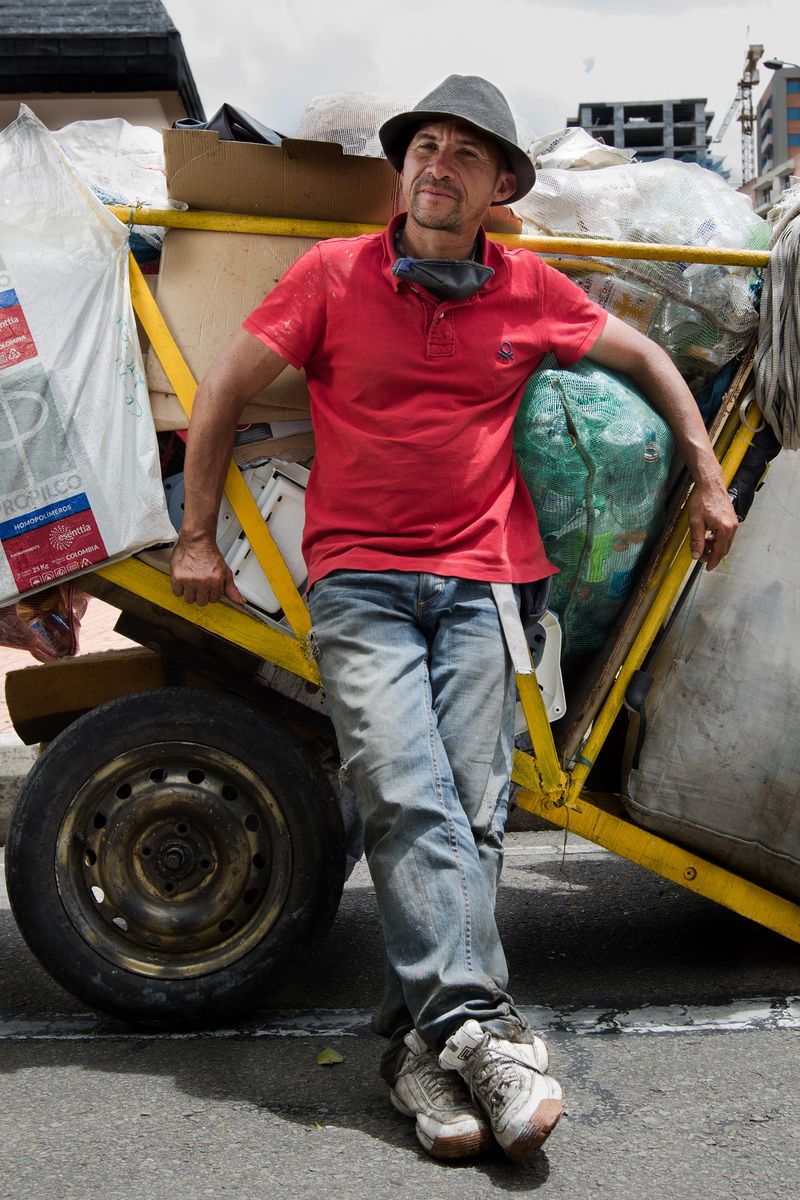
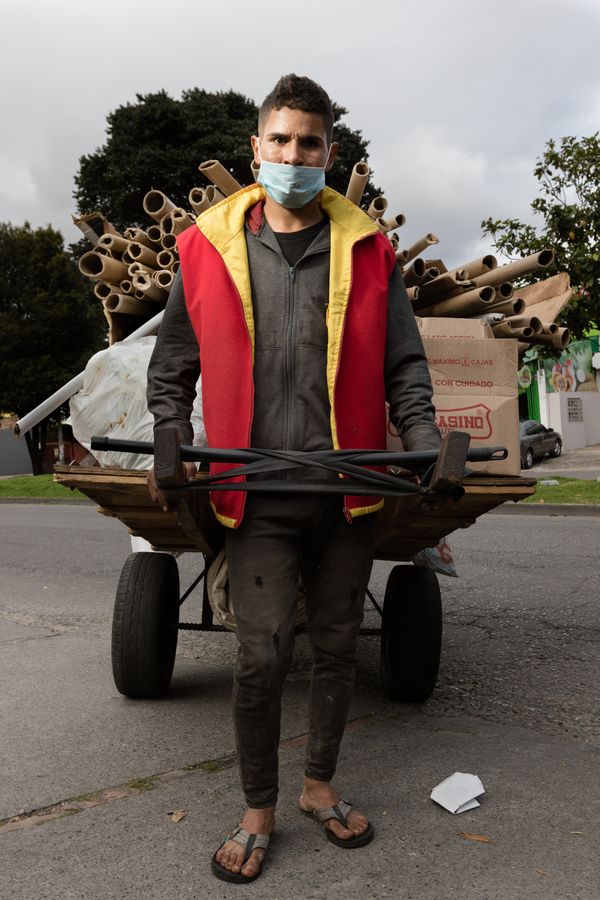
Leiner, 34 years old I've been working as a recycler since quarantine began. Originally I’m from a city called El Bordo in Cauca (region in the South of Colombia) and came to Bogotá for work. But there was nothing to do with the construction area, where I had a job for the last 10 years, so that’s how I ended up as a recycler. I live with my wife and two kids, who are 8 and 7 years old. I miss the tranquility of my previous job, but being a recycler, you can help the environment. It’s a lot of walking every day, because there are areas, where you are not allowed to go by other recicladores. We used to help each other before, but now there are too many of us working at the same time. People say this can be dangerous, because of the virus, but as long as you have faith in god, you will be okay. I start my day around 8 am, move around, picking up the trash, looking where to sell it, and finish around 8 pm. Sometimes people throw good stuff into the garbage, because they know, it can help us. Some of my friends even found stuff like a cell phone in a decent state. If I didn’t have to work as a reciclador, I would love to go back to construction. That’s what I know how to do.

© Irina Kovalchuk - Image from the ReciclARTE photography project
i

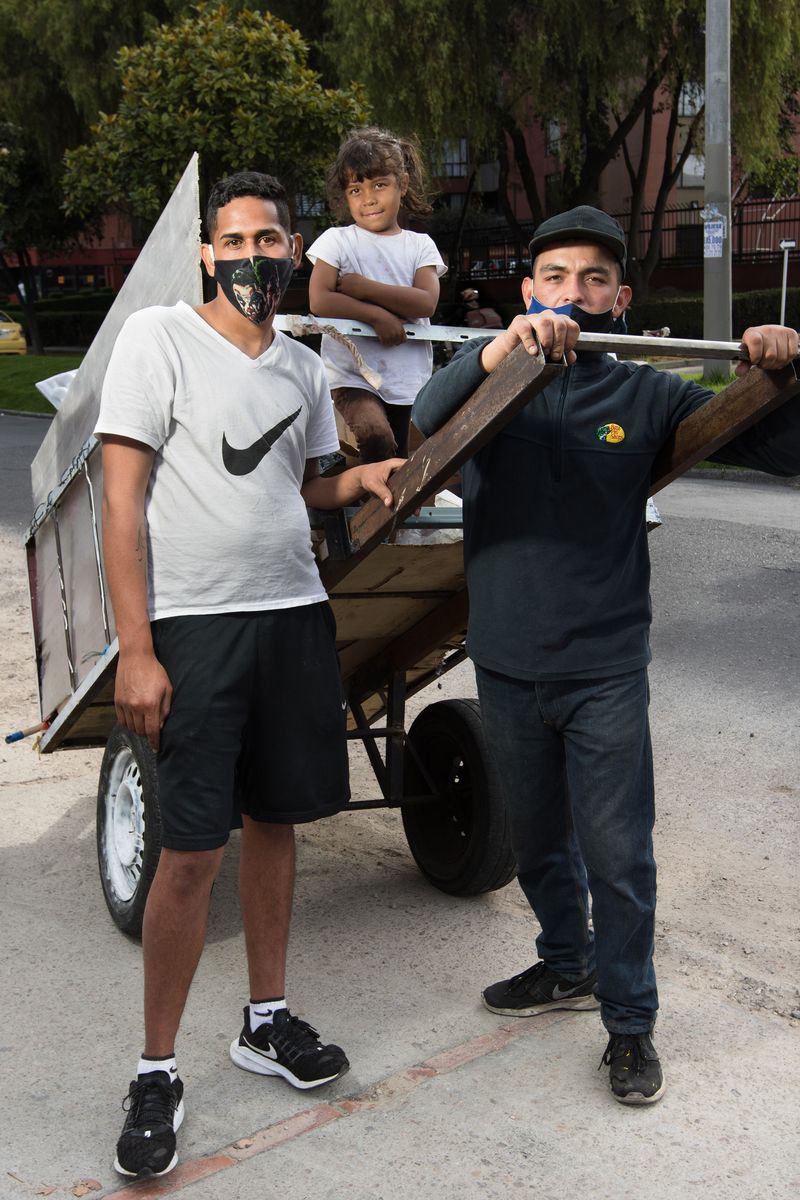
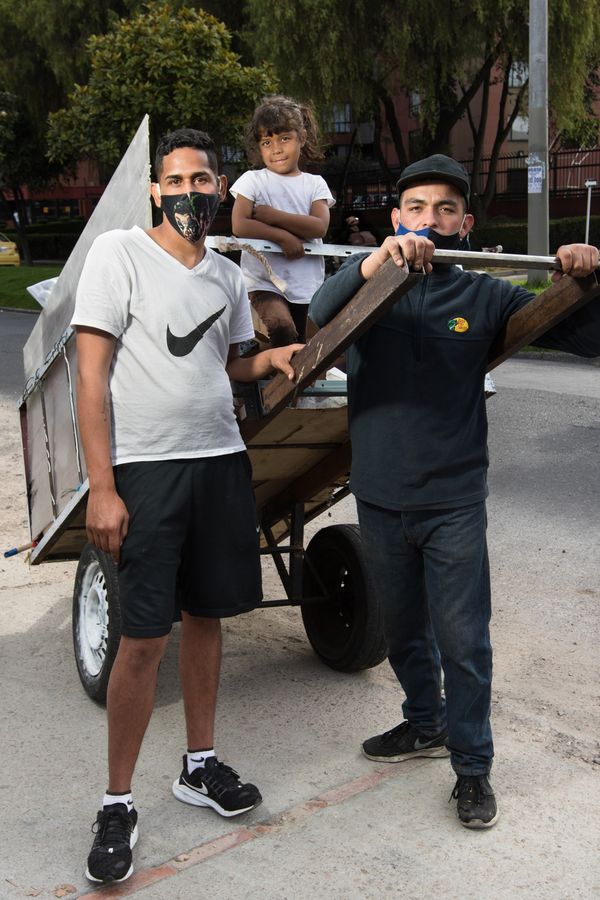
Gerardo, 25 years old, Ángel, 24 years old and Arantxa, 5 years old Ángel: “We’re from Valencia, Venezuela. Arantxa is our niece. I have been here for 5 months, Gerardo for 3 years. We had to emigrate, and work for living day to day, just to eat and pay for the room we are renting. I was studying to be a policeman, Gerardo worked in a company for packaging goods”. Gerardo: “Since we couldn’t find a job, we were offered a cart and that’s how we started. Right now, in the pandemic, we have to work harder, get up earlier, walk longer distances, and come home later than usual. We walk everywhere, and then go to “7 de Agosto” (an area in Bogotá where recyclers can sell their finds). We are here (in Suba district) on Tuesday, Thursday and Saturday – there’s more garbage to be found and less competition. The work is dangerous, because there’s glass, you can’t see, or an infected needle. You expose yourself to these things every single day. There are areas where we can’t go into, because the Colombians (recycles) will kick us out. They’ve been in that area for 30 or more years, so what can we do? The best thing we’ve found? White paper, aluminium. For us, it’s like seeing gold. That’s what brings more money – and you work hard for something, that pays better. It’s not a bad job (to recycle) or something to be ashamed of. We’ve learnt how to select garbage and be better citizens. We clean the city, it looks better, and we help the planet. We both want to go back to Venezuela; we miss our families”.

© Irina Kovalchuk - Image from the ReciclARTE photography project
i

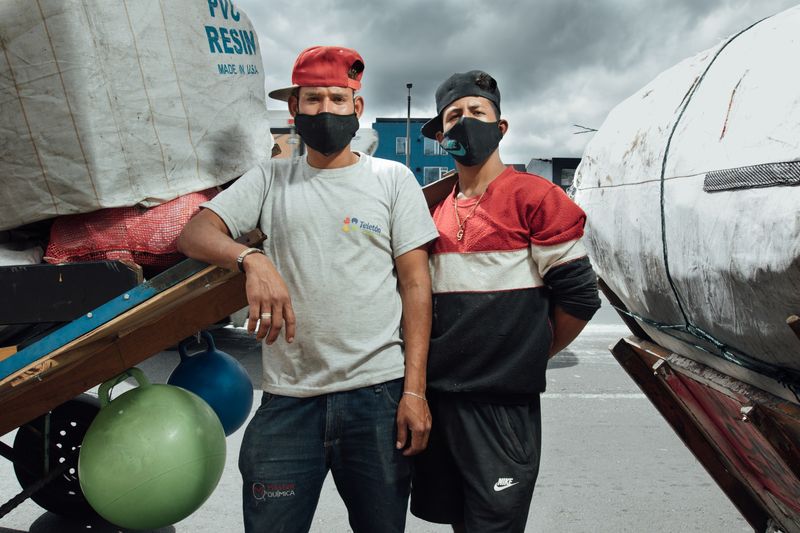
Luis, 18 years old (on the right) and David Ramos, 28 years old (on the left) Luis: “I’m from Venezuela, Caracas. I’ve been here in Bogotá for a year now, and recycling for about 5 months. Before the pandemic, I worked in a car wash. I was asked if I would like to come here, and then I realized I had been tricked, because it was a promise, that I would find a job quick: I didn’t find anything for 3 months, then I did a car wash, and now this. In Caracas, I worked in a liquor company. I’ve found clothes, phones, computers in the garbage here. Some strangers are conscious (about helping you), others will say rude words. This is a dangerous job: a lot of people see it as an excuse to steal, to use drugs. I see it as any other job. Sometimes I make enough money to live with. Sometimes not. I live with more family members together. I’m crazy about going home, regret being a dropout. I want to go back to my studies to become a cop. I just liked being a policeman, as most of my family are in the force”. David: “We’re cousins. I came here first, over a year ago, by bus. Things were just so tough in Venezuela – you couldn’t get any food. So, they told me: “Go to Colombia, you can find something there, earn some money and send it to your family”. I came with that illusion, and thanks god, was able to find work with a company that distributed fruits to schools. But with the quarantine they closed it and it’s been closed ever since. And now I’m here. We met a neighbor, who recycles, and he said to us: “If you want, I’ll get you a cart, so you can work”. Then we started to know the areas, both of us, to be introduced into the business. Sometimes we go together, sometimes not. It’s an interesting experience, to recycle: you meet interesting people, see new things. The weirdest thing we’ve found so far? How Colombians talk. What I’ve found in the garbage? Dentures. Gold. Here we see everything. In Venezuela you find nothing in the garbage, here you can find a stove, turn it on and it works. People throw out television sets, for instance. Last time I found a 42” Plasma TV. I turned it on, and it worked out fine. It’s more dangerous to find glass and needles in the garbage, because they could be infected. There is a lot of humiliation against us, just because we came from Venezuela. It’s like anger, that people feel against us. They characterize you as a bad person immediately. If one guy steals and he’s from Venezuela, then they think we all are stealing: just because of one person, we’re all bad! If I can go back, and I want to go back, I’ ll keep working and studying, something like business administration. In any moment Venezuela will get better, the question is when. It’s a critical situation right now: what you earn in a week there, it’s enough to eat for one day”.

© Irina Kovalchuk - Image from the ReciclARTE photography project
i

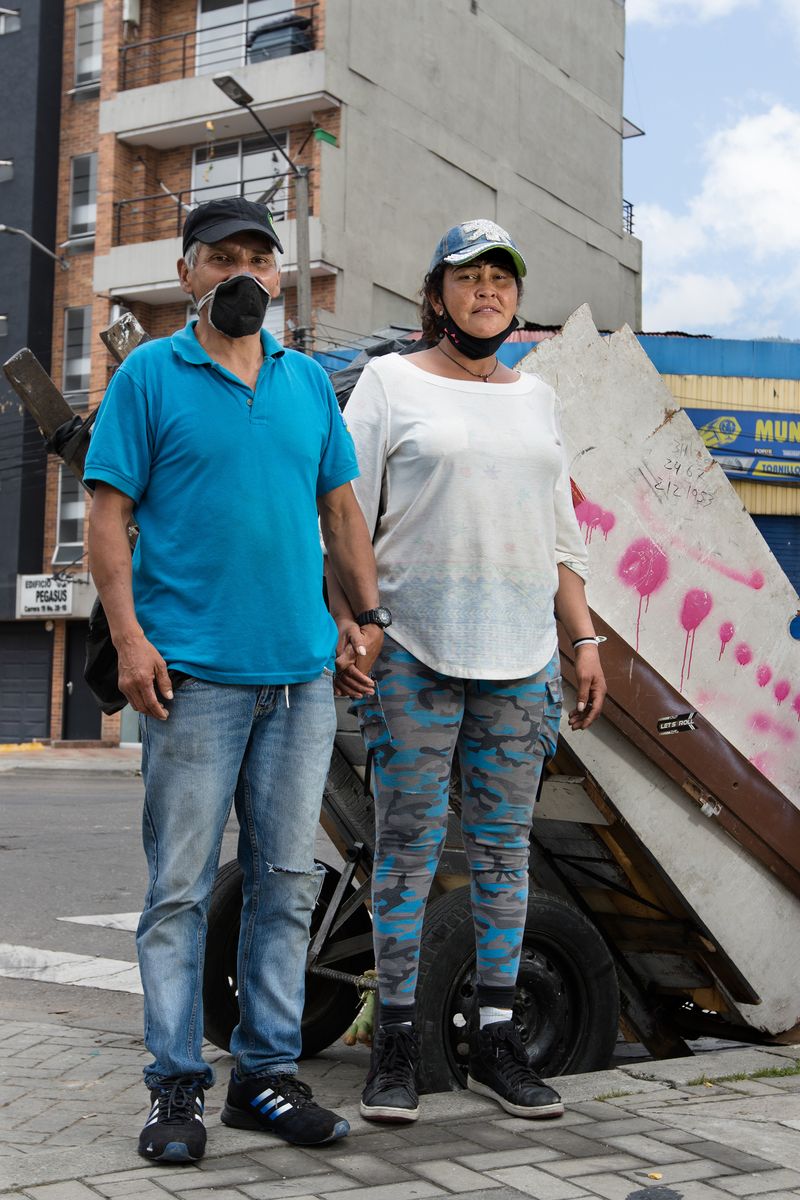
Amparo and Jorge, 45 and 56 years old Jorge: “We’ve been married for 20 years and came to this life because of drug addiction - before we smoked everything, and now not even a cigarette, thanks to the help of Jesus Christ. I’m clean now for a year . We lost the apartment because of drugs, but we still have a bicycle to sell food. I almost finished chemical engineering, so I can make soaps, creams… you name it. There’s a lot of competition in recycling - looks like the government imports Venezuelans. There's too many people and not enough help. And it’s also a stigma against us and against Venezuelans. I try to find help, but there is no help from the government”. Amparo: “I started to recycle, when I was 16, and I’ve been in this job for about 25 years. I was inside a circle of drugs and recycling and when we met, we were both involved in this. I thought “What are we doing with our lives? We need to stop and get out of it”. I lost my children because of drugs and never saw them again”. Jorge: “When I met her (Amparo), I had two companies, but I was deep into drugs. We ended up smoking 60.000.000 COP (around 16000 USD) - it’s an addiction, when you consume and you want more and more. We slept in the cart and after waking up, ran to get another hit. It was a very devastating life. We had doggies as companions: one died of old age, the other one was taken by police”. Amparo: “We walk everywhere - from downtown to the north of the city. All areas are difficult to work in, because there’s so many people who are recycling. Police sometimes tell us we can’t be in the park, we have to move”. Jorge: “There’s a lot of permissiveness from the Government towards people who consume drugs. If they see you smoking drugs in the park, they leave you alone: but people who work and want to find help and a better life, they don’t get help. Police kick us out, they don’t let us work. There’s tolerance for the drug addicts, but not for the recycling person: there's so much corruption is insane. Police are always on our case. But everything (except for the police) could be dangerous - I know how to defend myself, if someone comes to attack”. Amparo: “For me garbage is more dangerous (then people). Among us, there’s no issue. But when you put your hand inside the garbage, you don’t know what to expect. Broken glass, broken bottles”. Jorge: “We both want to get out of recycling. It’s not profitable: for some people it is, but for us it isn’t. I also want to make things to sell with the chemical knowledge I have. The craziest thing I’ve found in the garbage? Well, once I was forced to eat a human arm when I lived in the middle of the drug den in Bogotá. I’ve found guns, money, even diseases. You can find everything”. Amparo: “And you know what I’ve found? Rats”.

© Irina Kovalchuk - Image from the ReciclARTE photography project
i

Javier Eduardo Costa Riviera, 36 years old I’m from Cartagena, and the rest of my family is there. I've been recycling for 15 years now, and it’s because of drugs. It’s harder to work with people, then with garbage.

© Irina Kovalchuk - Image from the ReciclARTE photography project
i

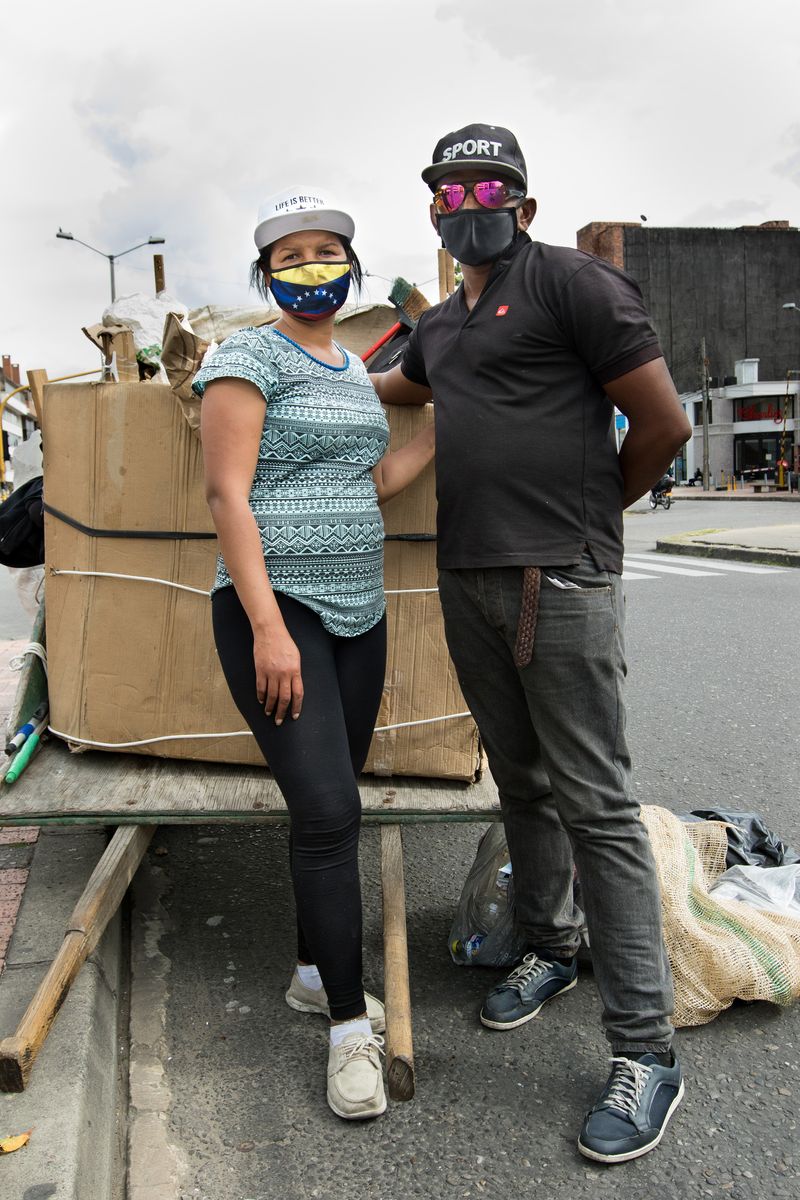
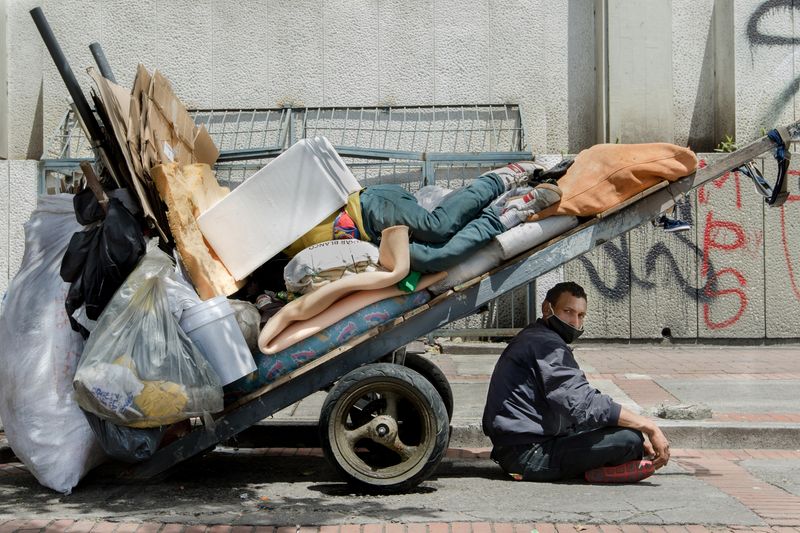
Leonardo and Tenmiré, 30 years old, couple We’re from Venezuela, Puerto Cabello city (Carabobo state). We’ve been here (in Colombia) for 2 years now, and it’s our second week working in recycling. Before, we were selling trash bags on the street. Tenmiré: “My brother works as a recycler and he bought a cart and gave it to us. He’s also in Bogotá. Most Venezuelans are working in this field. I used to clean carpets and rugs, but because of this pandemic, my boss left the city, and I’ve lost my job. I’ve learnt how to recycle, because before I didn’t know the value of paper or cardboard. Sometimes we have to sleep in the cart from one day to the other. What do we miss the most about Venezuela? Our families! Leonardo: “I worked in a bar, as a waiter and the bouncer of the place. This pandemic destroyed everything. Look at us now! We have to work on the street to survive, to eat. It’s been two years since I saw my mother. In Venezuela everyone has a house: it’s not like here, where you have this anguish every day to get money to pay for a room. I have a house, she has a house. Right now, we’re in debt. We sleep on the street, because we have no money to pay for the room. There are some Colombians, who work in their areas, and if we go there, they’ll tell us to leave. But when people see us, they help us. If we weren’t recycling, we’d like to each have our own jobs. We want and we don’t want to go back to Venezuela… Because the situation there is very tough, people can’t eat with the money they earn. A kilo of cheese costs 600, and the monthly wage is 400”.

© Irina Kovalchuk - Image from the ReciclARTE photography project
i

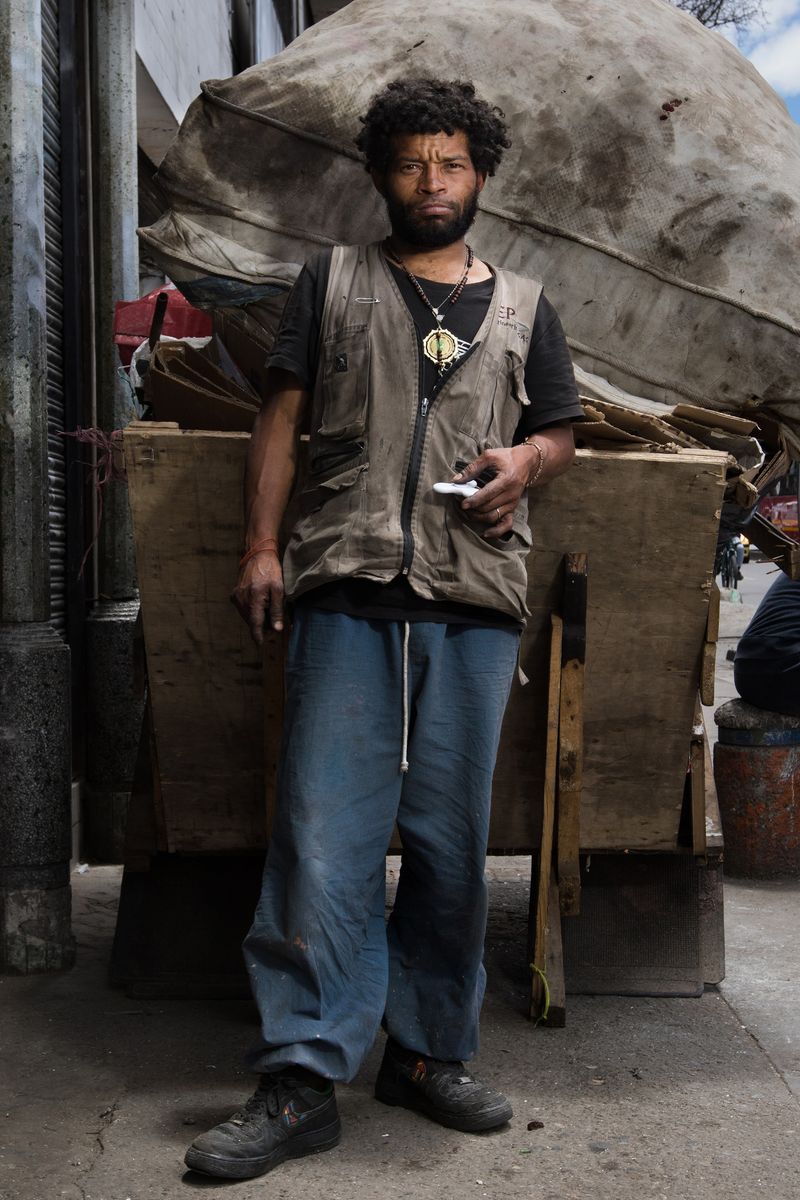
“Marihuano” , Osvaldo, 54 years old I’m from Bogotá. All my life I’ve worked as a reciclador: there was nothing else to do. I like my work, but if I hadn’t done this, I would love to be a teacher. The craziest story I’ve had working in this? I found once a set of dentures in gold and got about 700.000 COP (around 200 USD) for them! My day begins around 7 am, with some black coffee and cigarettes. I work all day until 9 pm and I walk with the cart crossing half of the city to sell what I collected. We live together with my little brother, he’s about 68. I love my family, enjoy being with my people. The least? Well, I have my own garbage containers, so I have to take care of them – I just yell and the other guys know not to touch them. And the police. They’re the only ones that make it crazy for us. When they’re bored, they pick on us. They always beat us up, always trying to make us leave the places we set camp at. I’ve been stabbed, I’ve been burnt. Someone who works in this poured gasoline and wax over me: because they were jealous, I guess. This is a dangerous job: other recicladores, police. I guess they are filled with envy, they see us here and start to mistreat us. We endure a lot. My kids don’t work in this – one is 12, one is 16. I don’t bring them here because they will become drug addicts. We have no need for anything, and that’s what makes me the happiest of my job. Everything we eat is expired, because we have nothing to eat. And that’s okay. The message is just for people and police to leave us alone, we do no harm to anyone. Oh, and I’m called Marihuano because I like weed a lot.

© Irina Kovalchuk - Image from the ReciclARTE photography project
i

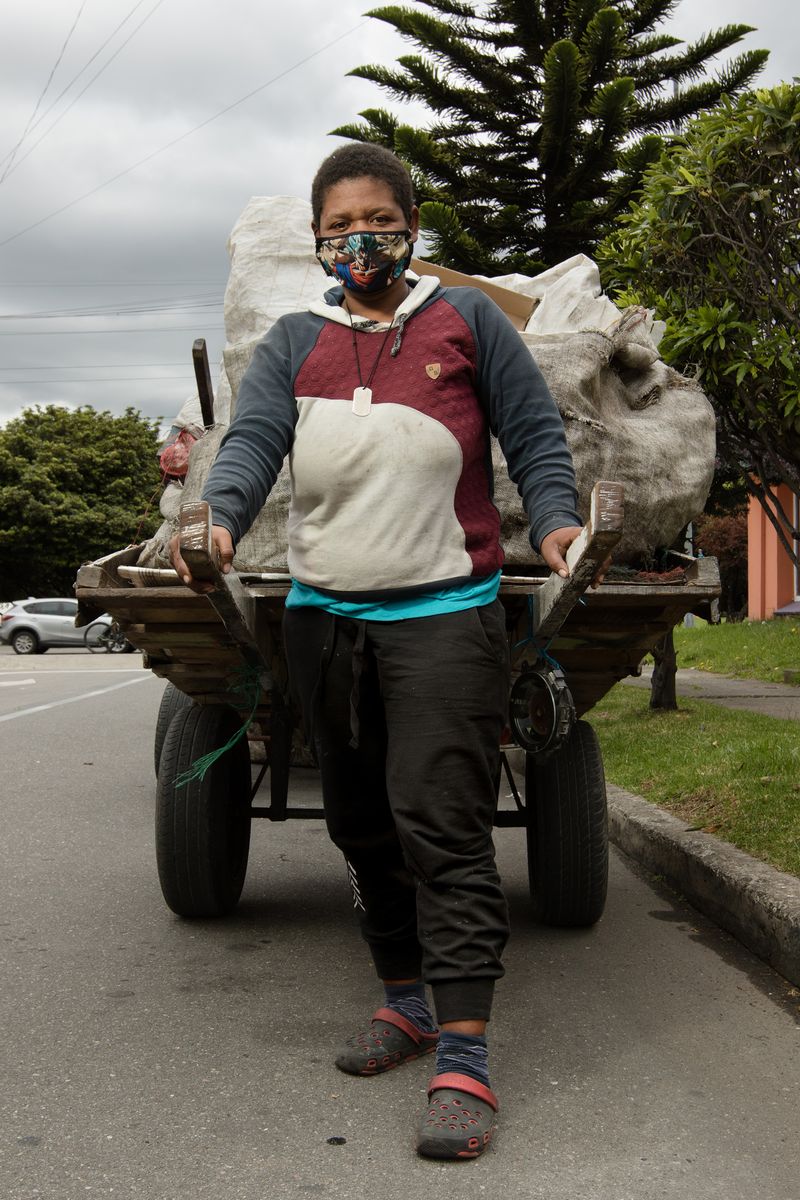
Eglimar Zubley, 28 years old I’m from Caracas (Venezuela), I’ve been recycling for about a year in Bogotá. It’s been a tough life. I have to walk a lot, from time to time not having any food. People have been kind to me and given me things, but sometimes police chase us and don’t let us be in a specific place. I walked for 8 days from Cúcuta to Bogota with some other people. I used to work in the military, but all the situations there pushed me to come here. My family still is in Venezuela, or in other countries. Being Venezuelan in Colombia for me is something that makes me proud. I am proud of my country, despite everything that’s going on. The hardest part of being a recycler? Everything. Sometimes we can’t find enough material, because there’s so much competition, and the pandemic made it harder. If I wasn’t doing this, I’d like to find stability. Have a small business of anything – selling Knick knacks, coffee, whatever. Something that gives me enough to pay the rent. It’s harder to be a woman who recycles, because of the danger of the street. The men. You never know who is next to you – the drug addict or the crazy person. Sometimes we have to cooperate with two or three men to feel like we have some kind of support. There are women who work alone, but they have their groups, which are waiting for them at a certain time and at a certain place. Every 3 days we have to walk from where we are to a specific point in the south, where these carts belong to. If we don’t go, the cart will be taken away from us. From 10 am to 2 pm, we just go through containers (designated containers in the city, where people can place their recycling). From 4 pm to about 5 pm, we go to specific neighborhoods. We don’t earn enough money to live, because the material could be taken from us, or the price is lowered. Sometimes we can’t find just enough to recycle, or we don’t find specific things. I still haven’t found something that makes me think “Wow, look at what I found!”. Once, I did find 20 USD! It was very exciting for me.

© Irina Kovalchuk - Image from the ReciclARTE photography project
i

Geraldine, 32 years old I’m from Maracaibo, Venezuela. I came here (to Bogotá) 6 months ago. My son was taken from me by Child Protective Services (In Colombia, it’s called ICBF or Colombian Institute of Family Wellbeing) because I was in the streets and he was with me. It’s been 5 months since I last saw him, due to the pandemic. I have to go back to Venezuela to bring the papers that prove he's my son. I have to stop recycling, find a stable job and a house, where we can live. If not, he won’t be given back to me. I never thought I’d end up in Colombia doing recycling. Before I worked in a disco, making cocktails. And I’m 5 months pregnant now. Police have not been good to us – they don’t let us sleep, they destroy the tires of our carts, they chase us, hit us. Sometimes people get mugged and they say it’s us. About three months ago, I was almost put in jail and I got tasered, because I got into a fight with a police woman. They didn’t care that I was pregnant. I like and I don’t like Colombia, cops give us a hard time here. If I get my son back, I want to go home to Venezuela. I don’t like recycling, but when you have to do it, you do it. After we sell what we collect, I can pay rent for a couple of days, and then stop to think about going out to the street and sleep there. There’s no rest for us in this work. This cart can weigh a lot, I just help my partner - he carries it. I was able to get checked by a doctor, finally.

© Irina Kovalchuk - Image from the ReciclARTE photography project
i

Elizabeth, 31 years old I’ve been recycling for a year, and actually I don’t remember how I got into it, I just had to do whatever I could to get food. Before I was begging for money on the street. It’s not dangerous for me as a woman to work, because it’s like any normal job. The rest of my family lives in Pereira (city in Colombia), so i’m alone here. If I wasn’t doing this, I want to go home, back to Pereira. Why are you asking? Are you offering me a job? The weirdest thing I’ve found in the garbage was a dead cat. I’ve found stuff like teeth, but who do you sell it to?

© Irina Kovalchuk - Image from the ReciclARTE photography project
i

Sofia Cuervo, mid forties (real age unknown, around 42) I’ve been in recycling for 35 years, since I was 8. I’ve only known this life. Thanks to the lord I have done well and I don’t need to hurt people anymore, because I even threw shit to people’s faces on the street before. I became a serious and sensible person. Job gives me enough to pay rent and food for my family. I have 4 grandchildren. The hardest part of this activity is pulling the cart, because it can weigh up to 130 kilos. I walk around 12 kilometers on working days: :Mondays, Tuesdays and Wednesdays. On Thursdays I don’t work because I have to take care of grandkids and my mother, who is disabled. Also a hard factor is police, who can burn our carts or take them away, and they leave us helpless. So we have to find another cart to start all over. Once, about a year ago, I found two girls inside the garbage. One of them was very little, missing part of her foot and her arm. And another, around 9 years old, was abused by her stepfather, as she said. Both I handed them over to the police, and the truth was known. If I wasn’t working in this, I would love to work in an office, but since I can't read or write, this is all I could do. I Never went to school - my mother burned my hands because I ate a panela, so I left the house.

© Irina Kovalchuk - Image from the ReciclARTE photography project
i

Douglas, 18 years old and Ricardo, 23 years old We are both Venezuelan, from Maracay and Barinas. We’ve been in Bogotá approximately 7 and 9 months. Things were bad and are still bad in Venezuela, so we came on an adventure and to create a new life, new friendship. The rest of the family is in Venezuela, and from the little we earn, we send some money to them too. Ricardo: “Douglas worked in construction, I walked from Cucuta to Bucaramanga, and from there, with a truck I came to Bogotá. I grew up on my father’s farm, and what we grew, we could also eat. People in the countryside don’t have it as hard as people in the city, because they help each other, they grow their own food. In the city people can’t produce anything, everything has to be bought. With the pandemic the situation here is tough, but let me tell you. There is work to be done in Colombia: you become legal and you can get a job. But there is danger on the streets – a car nearly killed me and they didn’t pay me anything”. Douglas: “The police are the worst, because they chase us, beat us, taser us. It’s better to work with garbage, than to be around the police. This is the only job we have now, but we thank god for it. We’re not doing anything bad; we are just trying to survive. For us, being Venezuelan in Colombia means to be proud of who we are. There is no other country like ours. Right now, it’s tough, but Venezuela is Venezuela. We saw Colombians, who lived there for many years, and were thankful. Some of those people, who came back from Venezuela, will give us a hand. We help each other, when we are in groups. Look, I have chicken and some bones, we can share. I tell the boys: “Let’s beg for some rice”, so we all pitch in, we all can eat. Even the dog eats – what I eat, the dog eats. I don’t complain about this country. I’ve been able to send stuff to my family. Colombia hasn’t treated me nor well nor bad: I’ve gotten what I’ve needed here. My clothes, my partner. And I keep moving forward. I have to go back with a lot of money to start my own business. Or anything. A bodega, an auto repair shop”. Ricardo: “I will go back to my family, but I have to take something from Colombia, that’s worth it. Also help my dad in the farm – I left so much planted there. You know, what life is like there, and you don’t let yourself die of hunger. We do something at least. The teachings recycling has left us? What belongs to you, belongs to you. Not everyone is so lucky, but what we have gotten, that is what we needed”. Douglas: “Not long ago one of my friends found a gold ring. And another one found 200 USD. In the garbage you can find food. In the garbage you can find money, clothes. Everything”.

© Irina Kovalchuk - Image from the ReciclARTE photography project
i

Fernando Dórian, 24 years old I’m from Venezuela, San Felipe. I’ve been here (in Bogota) for a year, doing recycling for six months now. It's been getting harder recently, because of the pandemic, but I keep working with the help of god. Before I had a cart, and was selling protective covers for cell phones, but with the pandemic, I couldn’t work in it anymore. In Venezuela I was in my fifth semester of veterinary medicine. And now I recycle. I came by bus, took some savings and came, because in Venezuela the situation is too hard. My mom and my two kids (5 and 3 years old) are still back there. I’d like to bring them, but it’s not easy: I don’t have papers, and I need to get an official job here. One day I had nothing to do, I didn’t know where to go, and someone told me to grab cardboard and some things, and get paid for them. I’ve been working so much with the cart, it’s mine now, and I know the place to sell things. I’ve found gold and some collectible magazines of the Atomic Man, things like that. It’s not a job everyone likes, but hunger has no face. Yes, it’s dangerous. First of all, because of the health risk. Trash is trash everywhere you go. If you don’t take care of yourself, nobody will. Some of my friends have lost fingers, because of glass cuts and infections. It isn’t easy. Having what you need isn’t easy. Being alone against the universe isn’t easy. I try not to mix a lot with Colombians: when you say you’re Venezuelan, there’s already a prejudice against you. I’m very limited in my interactions. I wish I could go back to studying, I really like it. Someday, I want to go back to Venezuela: that’s where my life is. Now it’s just a moment here. I am an immigrant, and I can move forward doing whatever I can: cleaning, recycling, doing whatever. You are who you are.

© Irina Kovalchuk - Image from the ReciclARTE photography project
i

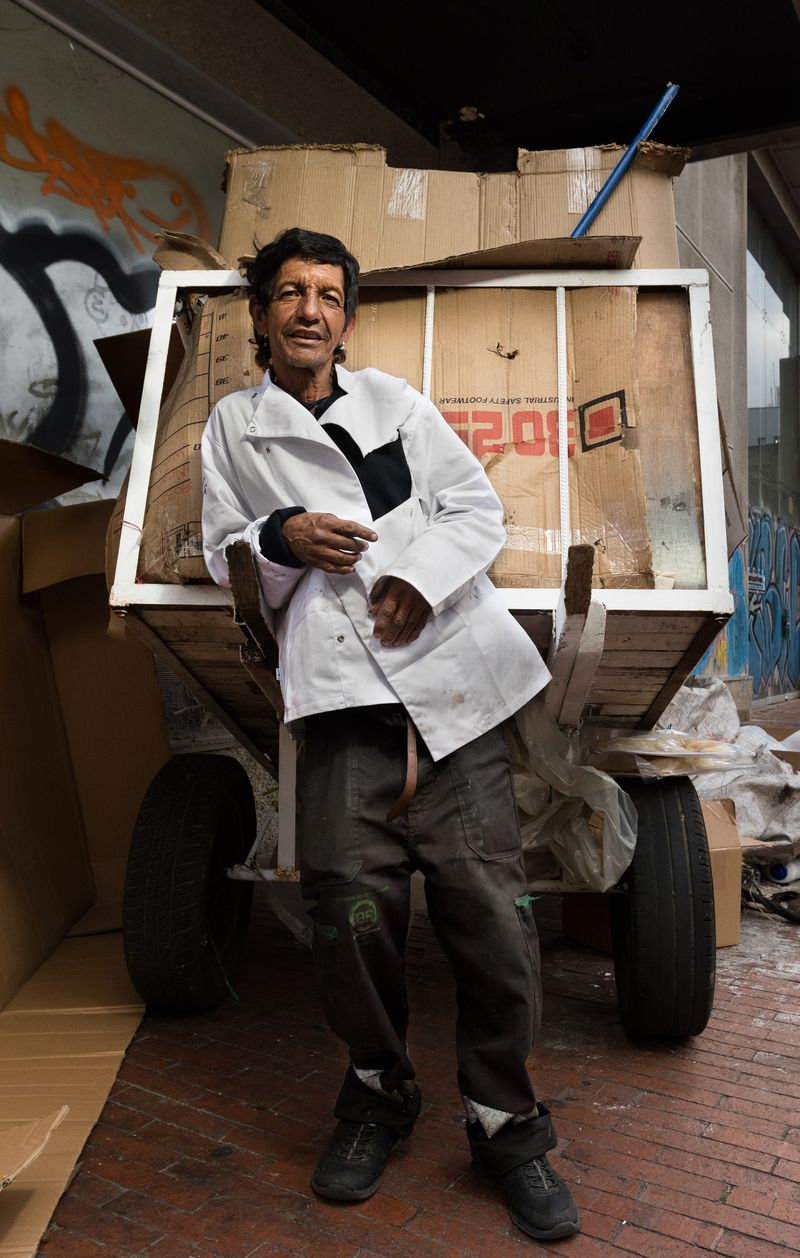
Jesus Fernando Gutierrez Trujillo, 42 years old I’ve lived in Bogota for 8 years, coming and going out of the city. I've been recycling for 16 months, and it’s better than my previous job - I was a carpenter. Now I earn much more. In our country finding a job is kind of a connection type of thing. In terms of recycling it’s a tendency to help Venezuelans more, because for them it’s harder to find anything else. I move every 4 days from the city centre to the north, working from 8 am to 7 pm. This job is dangerous because of people, who want to rob you or do other bad things. Each recycling person has his or her own area, and you can’t pick garbage there, if it’s not yours. Also there is a law not to touch anything at night. It’s respect that we can give to each other. The most interesting thing I’ve found in garbage is gold. I’ve sold it. It’s very frequent to find precious metals and money. Maybe because of the carelessness of people of high strata (people, who live in the most expensive areas of the city). If I wasn’t recycling, I would go back to the street theatre and Shekespeare, scenic arts. Also before I was involved in a project for renting costumes for film and TV companies. I would love to continue doing this. Part of my activity is to recover old stuff, antiques. I’m waiting for universities and galleries to open to offer them what I've found. I have old candelabra, hats in leather, things from the 60’s. I’m single. At night I sleep in my cart in the park.

© Irina Kovalchuk - Image from the ReciclARTE photography project
i

Diego Alexander, 37 years old I’ve been doing recycling since I was 8 because my family needed to get food on the table. I was raised by my uncles, and started to recycle with my cousin. With that job we could get money for lunch and other things in school. We have an addiction, which is bazuco (a type of synthetic drug). I’ve always lived in Bogotá, I’m local. In this pandemic, people have been nice and helpful. Depending on the person and how we behave, we will get treated as such. In regards to Venezuelans, they are cordial people, friendly, nice all around. We can not reject our brothers! Is our work dangerous? People can be more dangerous than trash, and vice versa. If the person who is recycling is also a thief, he will get chased down by police. If it's just a normal person, then he shouldn’t have an issue with any other authorities, nothing is going to happen. The craziest things I’ve found in the garbage were 3 cellphones and 4 tablets. I was stunned - they all worked fine. I’m fascinated by mechanics. Diesel, car and all kinds of mechanics. I would love to work in this field. Right now, I’m going through a trial, and I thank god every day. I have three daughters and I want to see them again soon.

© Irina Kovalchuk - Image from the ReciclARTE photography project
i

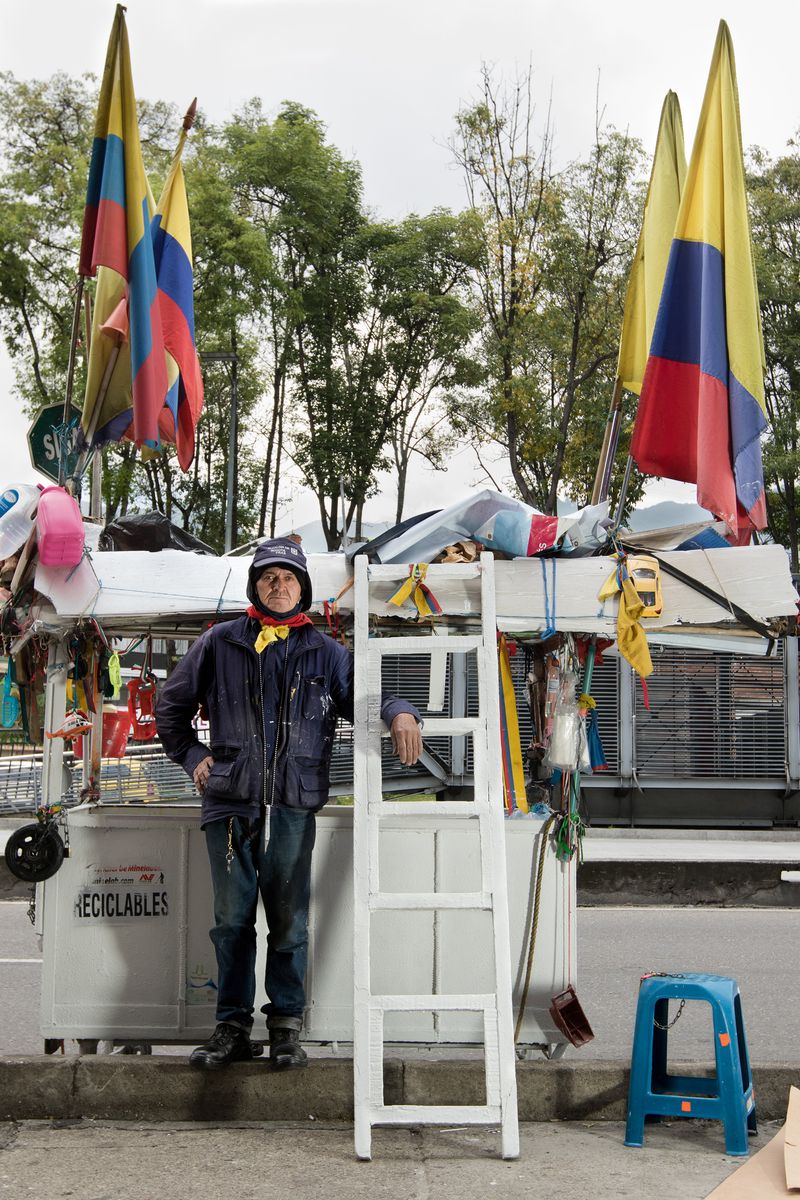
Harold Alvar Rojas, 64 years old I’m from Cali, and I’ve been in Bogotá for 3 years now. First year I worked as a guard, and then 2 years in recycling. It’s all good, I work for a company (recycling company) and never get involved with anyone bad. I work Monday to Friday, from 11 am to 5.30 pm, and only with offices. I’m called by them to go and pick up the supplies they don’t need. It’s easier like this. I like what I do. If it gives me money to live, then I keep it up. If not, I just leave it be and do something else. I live by myself and pay my own rent. It’s not enough money to live fully. You get what you need to eat, but no vice included. Sometimes, I like to play tejo or rana (local sports, from Pre-Columbian times) and have a beer. But that’s it. I don’t have family here in Bogotá. My parents and 11 siblings are in Cali and I’m still single. The weirdest thing I’ve found are watches and some jewelry. But nothing too crazy. I have so many flags on the truck because I like to have them. Patriotism I guess. And if I wasn’t in this business, I would like to work again maybe as a guard or a messenger or in construction.